Aotearoa’s nature is defined by its iconic species like kauri and pōhutukawa, kiwi and kea, and even insects like wētā. These species are undeniably important, but it’s now time for some credit to be given to a less visible group – arbuscular mycorrhizal fungi (AMF).
Little known to most, AMF have been an important part of the Earth’s ecosystems for 450 million years. Around 80% of all plant species live in symbiotic relationships with AMF.
AMF colonise plant roots and support the host plant by extending fine filaments, called hyphae, into the soil. These tiny hyphae can access water and nutrients that would otherwise be missed by the host plant’s roots. This gives plants a major boost. The extra intake of limited nutrients, like nitrogen and phosphate, enhances the plant’s resistance to environmental stressors – such as disease or climate change.

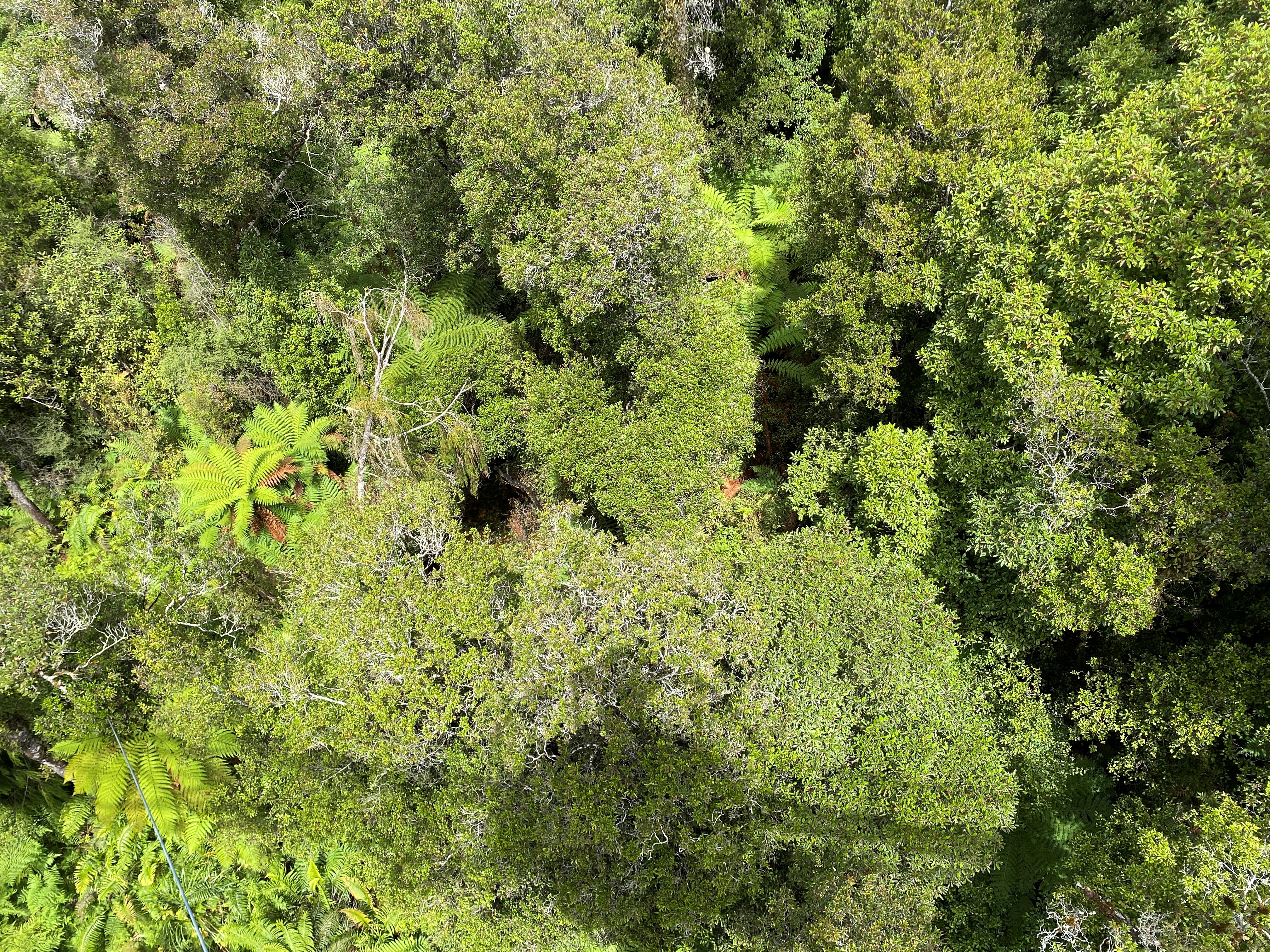
Native Forest, Tauranga. You can’t see them, but AMF are in this photo! Photo by Ngaire Ferriss
But it’s not all one-sided. AMF benefit too, receiving carbohydrates and fatty acids from the plants in return for their work.
It’s no secret that native Aotearoa ecosystems are struggling. Anthropogenic challenges, like climate change, deforestation, invasive species, and soil depletion (I could keep going), make it difficult for our native plants, and the fauna which they support, to thrive.
The same goes for our valuable agricultural systems, which struggle with similar challenges. Luckily, a recent review of AMF in Aotearoa’s ecosystems suggests that these fungi may be able to help us out.
Aotearoa is home to 38 identified species of AMF. It is thought that there is functional specialisation across species, meaning that each species can offer different benefits to its host plant.

Kānuka forest, Paparoa. Kānuka commonly interacts with AMF. Photo by Ngaire Ferriss
Studies show that AMF have the ability to improve plant growth. For example, kānuka and mānuka growth was significantly enhanced when AMF was added to the soil. Another study showed an increase in root and shoot growth in the sample apple trees. These benefits can assist with disease resilience, as greater size means greater defence.
Crop plants can also benefit from this growth. When New Zealand-made mycorrhizal products were applied to plants like lettuce and plantain it increased the size of the crops. Other plant species saw an improved nutrient uptake, which can assist with carbon storage in soils. Aside from helping plant health, this is a global warming win, locking carbon away and preventing it from accumulating in the atmosphere. And unlike chemical fertilisers, mycorrhizal products don’t contribute to soil depletion. While a great temporary solution, crops relying on fertilisers lack many of the components soil needs to thrive. On the other hand, AMF add organic matter, nutrient availability, and long-term soil health.
So far, it’s sounding pretty good. However, AMF isn’t the solution to all our problems yet. Research is expensive, and we currently lack knowledge on AMF species, functions, and relationships with plants. The next steps in advancing AMF research include increasing AMF culture collections, characterising communities at a precise level, and discovering associations with plant species. If this can happen, a whole world of benefits could be unlocked. Native plant diversity and abundance could shoot up with specific applications of AMF – increasing resilience to stress, enhancing growth, improving soil quality, and improving competition with invasive species. Agriculture could also be supported by these fungi, using crops which support diverse AMF communities. By making use of the skills of different AMF species, crop plants could enjoy increased nutrient uptake and resilience, creating more productive and sustainable farms.
It seems our secret weapon has been beneath our feet all along. Now that AMF have had their big introduction, perhaps they can help forge a new path toward healthier soils, healthier ecosystems, and a healthier Aotearoa.
This article was prepared by Postgraduate Diploma in Applied Science student Ngaire Ferriss as part of the ECOL608 Research Methods in Ecology course.