Category: biodiversity

  • Wings of change: Protecting parrots where they belong

    Wings of change: Protecting parrots where they belong

    I had always wanted a parrot as a kid.

    My obsession was inspired by Meena, a Bangladeshi animated TV series created by UNICEF, where the protagonist, Meena, had a clever parrot named Mithu who could speak and even help with homework from school. In the very first episode, Meena wishes to go to school, but her parents don’t think it is worth educating a female, a sad reality in many Asian countries, even now.

    Determined to learn, Meena finds a creative solution: Mithu goes to class for her, memorising the lessons and teaching her later. Having grown up with this story and often seeing parrots caged in people’s houses, I had subconsciously believed that parrots were meant to be pets, friends to humans rather than untamed animals.

    That belief was shattered the first time I saw a flock of parrots flying freely in the jungle. As I saw them calling to one another, I came to see that they were more than simply colourful birds living in cages; they had families, friendships, and a world of their own.

    And then another surprising revelation struck me: Mithu wasn’t even a parrot; he was a parakeet! I discovered the distinction during my first birdwatching trip as an undergraduate. In that moment, I realised how early influences, particularly those from television, can shape, and sometimes mislead our views of the natural world.

    Indian Rose-Ringed Parakeet
    A caged rose-ringed parakeet © Geoff McKay / Flickr

    This memory came flooding back as I read about kea (Nestor notabilis), a playful and highly intelligent alpine parrot of New Zealand. Unlike the caged parakeets of Nepal, kea are renowned for their curious nature, a trait that has both fascinated and frustrated humans. Kea are unique among parrots. Their sharp intelligence and flexibility have allowed them to survive in the harsh alpine conditions of the South Island of New Zealand.

    Using observations in a plantation-native forest matrix, a team of researchers led by Aitken in 2023 conducted a study in the Whakatipu Kā Tuka (Dart-Rees Watershed) area and discovered that kea were commonly seen in plantation forests. These birds, although strongly associated with alpine and native forest habitats, spent a surprising amount of time in exotic plantation woods, probably because these managed landscapes offered new foraging options.

    Aitken also tracked individual kea and mapped their home range and habitat use using VHF (Very High Frequency) radio transmitters that were attached to three individuals as lightweight backpacks. This method confirmed the keas’ active usage of plantation forests, not only for foraging but also as part of their usual range, and helped to better understand how they navigate various settings over time.

    This kind of fine-scale tracking is relatively new for kea and adds an important layer to our understanding of their behaviour in human-modified landscapes. However, it is worth noting that catching wild kea for such work is not a small feat – thanks to their sharp beaks and mischievous personalities!

    Kea
    A kea in its natural habitat CC BY-NC-SA 2.0 fremat/Flickr

    Kea are opportunistic omnivores that consume a wide variety of foods, ranging from seeds, native fruits, nectar, to even meat from dead animals. Jodanne Aitken, a PhD student at Lincoln University, found that although kea frequently fed on seeds from Pinus radiata trees in plantation forests, their poop told a fuller story. The faeces was full of insects and other invertebrates, showing just how flexible and opportunistic their diet really is. In plantation forests, they take advantage of exotic tree species and the insects that come with them.

    In contrast to many birds that avoid human-dominated landscapes, kea seem to do OK in them; curious and always eager to explore.The study also found that kea were more active in the morning and that their behavior changes with seasons, possibly linked to food availability or breeding. What’s truly fascinating is how their sharp intelligence allows them to survive not just in harsh alpine conditions, but also learn how to make the most out of new environments, like the pine plantations.

    Jodanne in action detecting kea. Image by Adrian Paterson

    Just like Mithu, the parakeet from my childhood who memorized lessons for Meena, kea are constantly learning from their surroundings. It is this intelligence, combined with their bold and exploratory nature that makes them such incredible survivors.

    While plantation forests provide new foraging grounds, they may also expose kea to new threats. This raises a vital question: are we simply giving kea new places to forage, or are we asking them to survive in habitats that may not fully meet their needs? Human-modified landscapes, while rich in opportunity, also bring risks such as increased exposure to toxins like lead or conflict with people. These findings offer hope for kea resilience in human-altered habitats, while also informing future forest management practices.

    On the other hand, the parakeets of Nepal, such as the Alexandrine and Rose-ringed parakeets, are often kept as pets, and their social skills and intellect are used for human entertainment rather than for their survival. The thought of birds with such intricate habits and close social ties being denied their natural life saddens me.

    Wild parakeets form large flocks, communicating and interacting in their own ways across wide-ranging Himalayan landscapes. Unfortunately, they face growing threats from habitat loss due to urban expansion, deforestation and especially the illegal pet trade. In fact, both Alexandrine and Rose-ringed parakeets are among the most commonly trapped and sold birds in south Asia. Without stronger awareness and conservation action, their role as seed dispersers and forest connectors may be lost.

    While it is heartbreaking to see parakeets in cages, it is crucial to remember that simply releasing pet birds into the wild isn’t the solution. Doing so can introduce diseases to native bird populations or create invasive species that disrupt ecosystems, as has happened in parts of the world where feral parrot colonies now compete with native wildlife. The real solution is prevention: parrots should never be taken from the wild in the first place. Instead, our focus should be on protecting their habitats and fostering respect for their role in nature.

    What if we saw Nepal’s parakeets not as possessions but as individuals with a right to freedom? Kea, despite facing habitat loss and human-wildlife conflicts, still roam wild, adapting to changing landscapes. Their ability to explore, learn, and interact with their environment is a reminder of what many of Nepal’s parakeets have lost.

    An AI generated image of Nepal’s parakeet and New Zealand’s kea in their natural habitat © OpenAI

    Kea’s willingness to venture into plantation forests for sustenance demonstrates their adaptability, but they are not immune to human pressures. Habitat changes, exposure to toxins, and climate change are pushing their predators higher into alpine zones, creating new challenges for their survival.

    Meanwhile parakeets in Nepal often face shrinking natural habitats with fewer options for survival. While kea find new ways to navigate a changing world, Nepal’s parakeets are being held back by cages or by degraded ecosystems. If we could foster the same appreciation for the natural behaviors of our own native birds, perhaps we could shift away from the practice of caging them and towards efforts that protect their wild populations.

    Kea are naughty, sometimes destructive, but ultimately, they are wild; free to roam and explore. Nepal’s parakeets deserve the same fate. Instead of keeping them as pets, we should prioritize protecting their habitats, enabling them to play and be curious in the Himalayan forests of Nepal. The lesson is clear: birds, whether in Nepal or New Zealand, belong in the sky, not behind bars.

    This article was prepared by Master of Science student Naresh Shrestha as part of the ECOL608 Research Methods in Ecology course.

    Read full research article here:
    Aitken, J., Paterson, A., Ross, J., Orr-Walker, T., & Young, L. (2023). A preliminary study of kea (Nestor notabilis) habitat use and diet in plantation forests of Nelson, New Zealand. New Zealand Journal of Zoology. https://doi.org/10.1080/03014223.2023.2251904
  • Keeping up with the Kiwis: Translocations and their forever holiday homes

    Keeping up with the Kiwis: Translocations and their forever holiday homes

    New Zealanders, also known as the ‘kiwis’, are known for tramping up great mountains, and travelling around the globe. For the actual kiwi bird, their adventures are limited to islands and protected environments. Even our New Zealand mascot, Goldie the kiwi, manages to ‘fly’ all around the world, which I’m sure would make the national birds jealous.

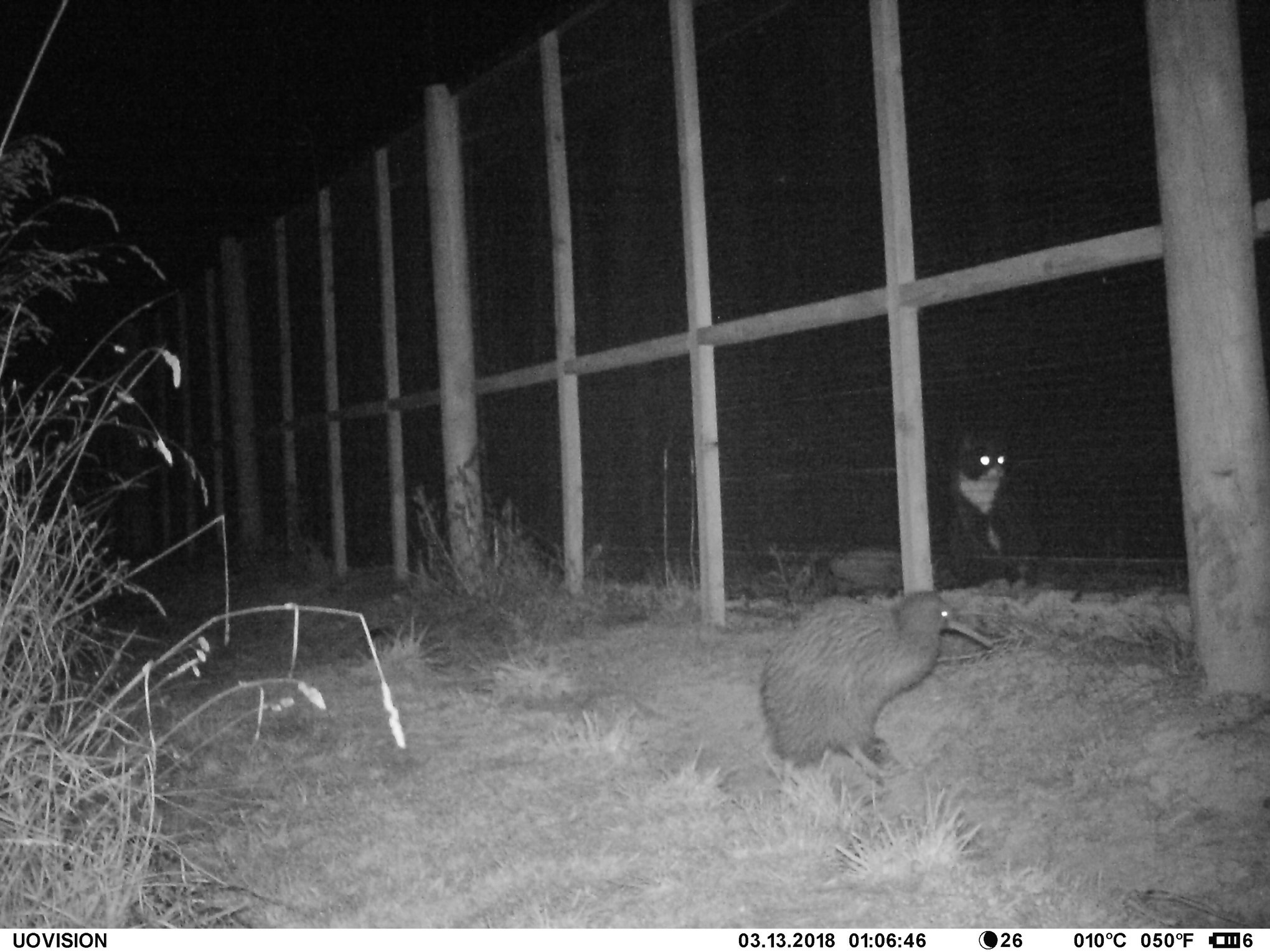
    That’s not to say that actual kiwi don’t get around. Our national icon is the most translocated bird in New Zealand. We have been translocating kiwi since not long after the Treaty of Waitangi (1840) due to predation and habitat loss, often with limited success. When we try our hardest to save populations through transfers, most or all birds die. So, we created protected (fenced) sanctuaries that allow a safe environment for kiwi and other native species to thrive. But after decades of conservation work and relocating kiwis out of their homes to a safer habitat, are they truly happy in their new homes?

    Fenced Sanctuary – Zealandia. Image by Russellstreet

    Methods for successful translocations have been developed. Methods, including the introduction of Operation Nest Egg (ONE), allows the hatching chicks to become mature before releasing into the wild. These methods has required the involvement of community groups, iwi and hapū. However… there are no resources that include information from past kiwi translocations, so we don’t know the past outcomes, whether they were effective, or how to improve them — which is wild!

    Researchers at Lincoln University, Peter Jahn and James Ross, and other colleagues reviewed 102 kiwi translocation projects (mainly from the last four decades — older information having been lost or ‘poorly documented’), and they examined the mitigation translocations and rehabilitation releases. But how do you define a ‘successful’ translocation?

    We can’t assume that if we release birds into a new environment that everything will magically lead to success. We must investigate if the kiwi population can settle in, grow in numbers and maintain a healthy balance on their own for it to succeed long-term. The primary goal of translocations is to “establish or restore a population with a high probability of persistence”. Unfortunately, kiwi behaviours have made it hard to grow a population, as they are irregular breeders and take several years to reach sexual maturity.

    To address this, objectives were set for releases:

    • To grow all kiwi populations by at least 2% per year.
    • To sustain genetic diversity, each translocation will have at least 40 unrelated individuals released (a ‘founder population’).
    • A minimum timeframe of 15 years is required for the population to grow (and adapt to its new environment).

    By collecting data and analysing the translocation trends over the decades, we can better understand how different projects affect the survival of kiwi taxa.

    Stewart Island Brown Kiwi (Tokoeka). Image by Jake Osborne

    Since 1863, there have been 102 translocations, with an impressive 76 kiwi translocations just in the last 20 years. Translocated kiwi species included: Rowi, Great Spotted Kiwi, Little Spotted Kiwi, Tokoeka, and Brown Kiwi. Most of the release sites (63% since the 1860s) were in the North Island or on offshore islands (sorry Lincoln — too much farmland). However, 20 of these projects’ reports do not exist or are unavailable. But here’s what is fascinating… just over half of the translocations (58%) introduced kiwi taxa where they were not seen before (a giant leap of ‘kiwi-kind’)!

    In the past, effects to reduce harm for the kiwi were deemed as an ‘emergency’ to secure populations. Recent translocations cited ecological restoration and supporting kiwi taxa across different areas as a priority (which supports natural differences, and resilience – perfect for long-term conservation outcomes)!

    Unfortunately, not all kiwi species have received the same level of attention. Those with more attention are spoilt with support (more management) and obtain an improvement in their conservation status. Other kiwi species are not as lucky, such as the Great Spotted Kiwi, Fiordland Tokoeka and Rakiura Tokoeka, as their conservation status has worsened. So even though translocation effort aims for an improvement in kiwi populations, other factors, such as population sizes and lack of predator control, make this already difficult job… even more challenging.

    If you look at past scientific literature on initial survival of released birds, these translocations will be reported as ‘successful’, which seems good, right? But are they ‘self-sustaining populations’? Only one project (Zealandia) has been considered as ‘successful’ due to having an increased population. Even worse…. there is little information on the genetic make-up of the new population (which defeats the purpose of becoming a long-term project).

    Little Spotted kiwi at Zealandia. Image by Kimberley Collins

    For future translocations, the number of releases should be adjusted (by changing the total number kiwi released in a specific area) depending on the situation — for example, when there is a low founder population, or a high mortality rate. If a population is not looked after, this can result in reduced fitness and genetic variability. Having a database that holds the records of all the kiwi translocations would make it easier to analyse the factors that could influence kiwi populations.

    So, what does the future hold for kiwi translocations? The main recovery goal, which was “restoring former distributions of all kiwi taxa”, has shown an increase in populations through translocations. Translocations have created new populations on islands, which can “fill in the gaps” in nature, which is a huge win! Guidelines suggest releasing 40 kiwi into a new population and that they are not related to the ‘founder population’ (this number can vary depending on specific factors to maintain high diversity).

    As translocations start from newly established populations, it’s only through time that we will see if kiwi populations can further grow and maintain sufficient genetic diversity.

    This article was prepared by Master of Science student Jessica Przychodzko as part of the ECOL608 Research Methods in Ecology course.

    Jahn, P., Fernando Cagua E., Molles, L. E., Ross, J. G., & Germano, J .M. (2022). Kiwi translocation review: are we releasing enough birds and to the right places? New Zealand Journal of Ecology, 46(1): 3454. https://dx.doi.org/10.20417/nzjecol.46.1

  • Never ask a lizard its age (Calculate it using science!)

    Never ask a lizard its age (Calculate it using science!)

    Where were you during the 1969 moon landing? What about at the turn of the century when the world was bracing for the Y2K Apocalypse? Or during the 2020 Covid-19 pandemic?

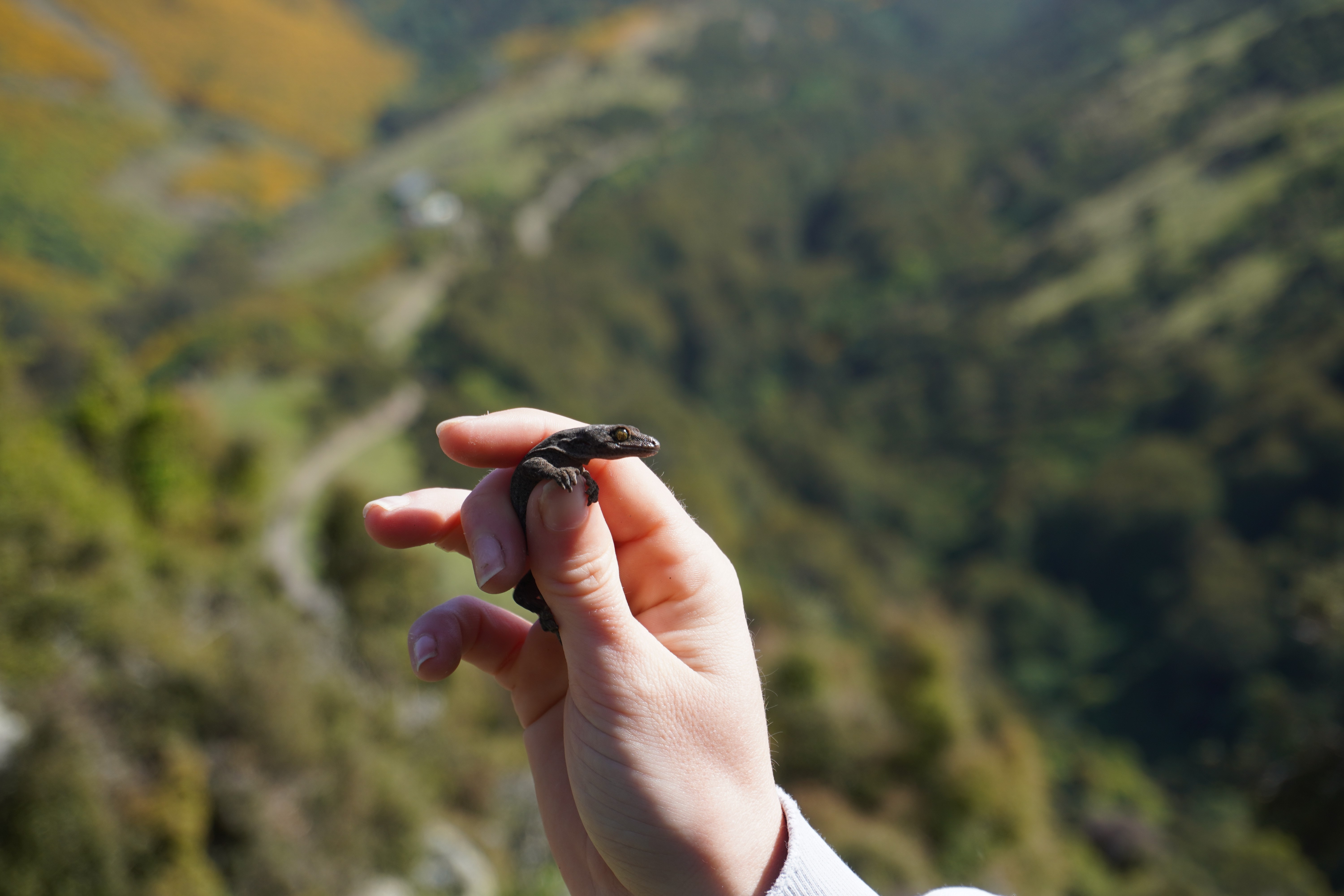
    What if I told you that there are world record-breaking geckos in Canterbury that were here through it all? That two geckos in particular, ‘Antoinette’ and ‘Brucie-Baby’, recently celebrated their 60th and 64th birthdays? That might seem unimpressive compared to a human lifespan, but most geckos are lucky to live 10-15 years elsewhere in the world.

    So, what’s their secret? And how do we know this? It’s not like you can just ask a gecko its age (that would be rude! as well as difficult…). If you’ve worked with geckos or other lizards like I have, you’d also know that they’re elusive at the best of times and all look the same to an untrained eye. Well, like all great scientific breakthroughs, this story involves good record keeping, a bit of fancy maths, and, of course, Lincoln ecologists!

    Antoinette and Brucie-Baby, the world’s oldest Waitaha geckos (Woodworthia brunnea). Image: Allanah Purdie | Department of Conservation 2025 (CC BY 4.0)

    The Beginning

    Let me take you back to the summer of ‘67. Staff from the Department of Scientific and Industrial Research (DSIR) are tramping across Motunau Island, which lies 64 km north of Ōtautahi Christchurch and 1 km off the Canterbury coast. Weeds, fire, and rabbits had drastically changed the island’s vegetation since the 1850s, but rabbits were eradicated in 1962 and Motunau had otherwise never seen an introduced mammal. That absence makes the island a decent refuge for native lizards and seabirds.

    Under the leadership of ecologist, Tony Whitaker, a team of DSIR staff surveyed lizards there every summer until 1975. As part of this, they caught Waitaha Geckos (Woodworthia brunnea) along a 20 x 20 m grid using pitfall traps, which are essentially baited holes in the ground that lizards fall into trying to get a sweet treat (don’t worry , this doesn’t harm them!).

    Motunau Island in Canterbury, New Zealand. Image: Wikimedia Maps n.d. (CC BY-SA 4.0)

    Back then, Whitaker’s surveys had two main goals. The first was to test what kind of bait the lizards liked the most and the second was to figure out how to find nocturnal geckos in the dark. In case you were wondering, they found that lizards LOVE canned pear and that you can find geckos at night by spotlighting because their eyes reflect light like cats. For this story, though, the basic measurements taken from individual geckos over the years turned out to be far more interesting…

    An Exciting Realisation

    Fast forward several decades to the late 1990s and enter our Lincoln ecologists: Masters student Carol Bannock and Senior Lecturer Graham Hickling! Together with Tony Whitaker himself, they were going through Whitaker’s notes and realised that because geckos caught in the 1967-75 DSIR surveys were permanently marked by a unique combination of toes being clipped, they may be able to identify some of the same individuals 30 years later*. They also realised that because each individual had its snout-vent length (SVL) recorded, they could use growth rates to figure out how old each gecko was when first captured.

    * Side note: I know toe clipping sounds brutal. We’ll unpack that later… For now, understand that although this method of identifying individuals is not used anymore, it was the best method for ecologists at the time because lizards shed their skin and therefore can’t be permanently marked by things like paint or dye.

    Measuring the SVL of a Waitaha Gecko (Woodworthia brunnea) in Akaroa, Canterbury. Image: Alice McCormick 2024 (used with permission)

    With no time to lose, the trio raced back to Motunau! With some searching, they found the original lizard grid from old survey pegs (who needs modern GPS?) and diligently caught and measured geckos between December 1996 and February 1997. Overall, they found 61 new geckos and recaptured 16 of the 133 toe-clipped between 1967-1975 (~12%).  

    To determine the growth rates of Motunau’s Waitaha Geckos, Bannock, Whitaker, and Hickling used the average SVL of one-year-old geckos caught in 1996-97 (identified by their small size) and the differences in SVL length for geckos caught 12 months apart in 1967-75 to create a growth curve. They then used that curve to estimate how old each gecko was when first caught in 1967-1975 (large geckos were categorised as 6+ years because Waitaha Geckos tend to stop growing after this). Next, they calculated the age of the 16 geckos recaptured in 1996-97 by adding their estimated ages to the number of years since first capture. The modelling for this is a little tricky, but it’s thoroughly explained in this paper by Ebert (1980), if you are interested. What you really need to know is that 10 of those 16 geckos turned out to be at least 36 years old!! The remaining 6 were between 29 and 34.

    2025 and Beyond

    In 1999 when Bannock, Whitaker, and Hickling published their paper, finding 30+ year-old geckos was huge news. It proved that Waitaha Geckos on predator-free Motunau could live equally as long in the wild as they do in captivity and added at least 15 years to the previously estimated maximum age for the species (or any gecko species in the world for that matter!).

    The discovery was so exciting that it also prompted the Department of Conservation to immediately take charge of regular surveys on Motunau. In fact, it was in their most recent 2024-25 survey that ‘Antoinette’ and ‘Brucie-Baby’ were rediscovered (named in honour of Tony Whitaker and his co-worker, Bruce Thomas, in 1967 and 1969).

    Iris pattern of a Waitaha Gecko (Woodworthia brunnea), annotated in I3S Pattern. The three reference points (blue) and outlined identification area (green) were manually selected to allow I3S to generate and compare key points (red) with other annotated photos. Image: © Samantha Dryden 2025.

    That is not the end of Lincoln’s gecko searching though! Since 2021, our very own Dr Jennifer Gillette has been testing photography as a technique to identify individuals and to, hopefully, replace toe clipping in long-term studies. Together with her summer students, she has taken 1000s of photos of Waitaha Gecko iris and dorsal patterns around Akaroa Harbour and tested the ability of a pattern-recognition software called I3S to correctly match new photos with existing individuals in her database.

    Dorsal pattern of a Waitaha Gecko (Woodworthia brunnea), annotated in I3S Pattern. The three reference points (blue) and outlined identification area (green) were manually selected to allow I3S to generate and compare key points (red) with other annotated photos. Image: © Samantha Dryden 2025.

    According to Jennifer, the research on Motunau’s geckos has significantly impacted the way we understand and manage gecko populations in Aotearoa today. Because they live so long, Waitaha Geckos have evolved to be K-selected species, which means they mature slowly and have very few offspring. This strategy worked well before humans arrived, but today, most gecko populations in Aotearoa don’t have the luxury of living on predator-free islands like Motunau. This means that many geckos may be eaten before they are old enough to have babies, and their populations may take decades to recover from predation.

    That is why being able to identify individuals like Antoinette and Brucie-Baby is so important! It’s also why no pest species can be overlooked in conservation and environmental management efforts!!

    Lincoln University senior tutor, Jennifer Gillette (second from the right) and her students monitoring Waitaha Geckos (Woodworthia brunnea) around Akaroa Harbour, Canterbury. Image: © Samantha Dryden 2024.

    The author, Sam Dryden, is a postgraduate student in the Master of Science at Te Whare Wānaka o Aoraki Lincoln University. This article was written as an assessment for ECOL 608 Research Methods in Ecology.

    Article reference: Bannock, C. A., Whitaker, A. H., & Hickling, G. J. (1999). Extreme longevity of the common gecko (Hoplodactylus maculatus) on Motunau Island, Canterbury, New Zealand. New Zealand Journal of Ecology, 23(1), 101-103.

  • A Knobbly Future?

    A Knobbly Future?

    The Story of the Canterbury Knobbled Weevil

    In 2011, scientists found a mere 26 individuals of Hadramphus tuberculatus, an endemic weevil species, nestled within a small reserve in the tawny high country of Canterbury, New Zealand. This was down from 49 individuals found in 2009. Why was the Canterbury knobbled weevil on the brink of extinction, and where does the population stand now – 14 years down the track?

    Burkes Pass is like a portal – a steep hill that suddenly transforms from the Canterbury Plains of green pastures, forestry blocks and hedgerows into the vast glacial basins, dry riverbeds, tussocks and jewel-like lakes of the Mackenzie Country. The Mackenzie of South Canterbury is beautiful, but also brutal – the sweltering heat of summer paired with the freezing frosts of winter means few people live here.

    On the saddle of Burkes Pass, it was discovered that a long-lost species of weevil did indeed live in this brutal landscape. Called the Canterbury knobbled weevil or Hadramphus tuberculatus, it was scientifically named in 1887, and was found in reasonable numbers, on the then-uncultivated Canterbury Plains. Since then, it has been seldom encountered, particularly after the clearing of its favourite host plant, the Aciphylla – commonly known as the Speargrass plant.

    The weevil was considered extinct, until 2004, when a University of Canterbury student – Laura Young – stumbled across one of these knobbly weevils in a Burkes Pass reserve, rediscovering the species. However, a following study conducted in 2013 found that the species was in decline in Burkes Pass. So, how did they monitor it? How does this weevil survive and what is its future?

    Illustration of Hadramphus tuberculatus, by Des Helmore.
    Illustration of Hadramphus tuberculatus, by Desmond W. Helmore (CC BY 4.0).

    Like the birds of New Zealand, the insects here have evolved without most mammalian predators – with the New Zealand bats being an exception. Many species exhibit traits, such as flightlessness, gigantism, and an inability to self-defend from mammalian predators. The weevil genus Hadramphus is endemic to New Zealand and is a good example of these traits.

    Hadramphus contains four species: H. spinipennis, H. stilbocarpae, H. pittospori and of course the Canterbury knobbled weevil, H. tuberculatus. A common feature amongst all Hadramphus species is their larger size relative to other New Zealand weevils, their flightlessness, and their unfortunate vulnerability to recently introduced mammalian predators.

    The relatives of H. tuberculatus survive in far-flung parts of New Zealand, such as offshore islands and the remotest parts of Fiordland. H. tuberculatus lives in the tussock grasslands of Canterbury, where introduced mammalian predators are much more common. This probably explains the scarcity of the species. The Canterbury knobbled weevil also relies on speargrasses – which are terribly spiky plants but grows impressive flower bunches called inflorescences. Speargrasses were once more common on the lowlands of Canterbury, but have disappeared, due to changes in land use.

    Interestingly, the Canterbury knobbled weevil is one of the few invertebrate species in New Zealand with a legally protected status – under the Wildlife Act. Most invertebrates in New Zealand are considered unprotected.

    A Canterbury Knobbled Weevil adult in hand by Warren Chinn via iNaturalist (CC BY-NC 4.0).

    Because of the apparent threats, entomologists (insect scientists) decided to conduct a survey-based study on the Canterbury knobbled weevil population at Burkes Pass. Through the summers of 2009-2011, pitfall traps were placed out in order to catch these weevils in a small section of a Department of Conservation reserve near Burkes Pass and in adjacent private farmland. This area has large amounts of the golden speargrass (Aciphylla aurea).

    Empty pitfall traps are a type of non-deadly trap to catch insects. They are usually cups placed discreetly in the ground, that unsuspecting terrestrial critters fall into to. The researchers checked these pitfall traps weekly, and a little piece of speargrass was kept in the pitfall trap to feed trapped weevils. Weevils found in a pitfall trap were recorded, measured, and even marked with a unique identification number – in case it was recaptured.

    Unfortunately, the study showed a worrying trend. In 2009, 49 weevils were captured in the pitfall traps, then 41 weevils in 2010 – and then in a drastic drop, 26 weevils were captured in 2011.

    In the 2009 season, a small number of the weevils caught were in the farmland pitfall traps – meaning that they existed beyond the confines of the reserve. But, by 2011, this number of weevils caught in farmland became zero. This might have meant that the reserve was a better place for the weevils, but ultimately they were declining all the same. Many weevils in the reserve were recaptured again and could be re-identified with unique numbers written on their wings! Although the weevils can’t fly, some had been recaptured up to 190 metres away within the reserve – that’s a lot of walking for a flightless insect!

    So, why were the weevils declining? The researchers make no specific discussion on this point, however introduced predators may be the main culprit – particularly rodents. A more recent 2024 study on large-bodied alpine invertebrates in southern New Zealand found that sites with mice had less wētā (a group of cricket-like insects) and these wētā were slightly larger on average when compared with sites without mice. Although wētā have a different ecology to weevils, there could be a similar story going on in the Canterbury high country.

    Since this study, the outlook for the Canterbury knobbled weevil has been grim. Although a ton of work has gone into the Burkes Pass site – including pest-resistant fencing, weed control, and continued searching, there hasn’t been any recent re-discoveries of the weevil here, although bugs have a special talent of hiding in plain sight. Most people are not looking out for funny-looking weevils that live on one of the most hostile plants in New Zealand.

    In a similar circumstance to the 2004 re-discovery, John Evans happened to come across a large weevil on a speargrass near Lake Heron – in the high country of Ashburton Lakes – in 2024. Uploading the observation to iNaturalist, it was quickly confirmed as a Canterbury knobbled weevil by entomologists – revealing a new population of the species. Later searches discovered even more weevils, creating new hope that the species could live on. Despite this amazing discovery, the same conservation issues remain – how can this species be effectively protected for long-term conservation? Perhaps new initiatives for pest control need to be developed – particularly for mice – but this has yet to be established.

    Lake Heron, in the Ashburton high country basin. A new population of Hadramphus tuberculatus was recently discovered nearby. Photo by the author.

    Unlike other species of Hadramphus, the Canterbury knobbled weevil cannot rely on remote offshore islands for survival – as the Canterbury speargrass ecosystems are important for its survival. Mammalian predator control and the protection of the weevil’s host plant should be the priorities.

    Translocation of the species is another option that could be considered, especially given that the weevil did survive in captivity. The Canterbury knobbled weevil could be considered a flagship species for these unique dryland ecosystems in eastern New Zealand, which are often overlooked as important part of New Zealand biodiversity.

    The critical status of this species is a reminder of the enormous loss of biodiversity that has occurred in the Canterbury region. Imagine if knobbled weevils were commonplace on speargrass plants again, living alongside various other native flora and fauna that is facing a similar fate? Losing this species to extinction would be a further loss of what makes this region unique.

    This article was prepared by Master of Science student Noah Fenwick as part of the ECOL608 Research Methods in Ecology course in the Department of Pest-Management and Conservation.

    Links/References

    Bertoia A., Murray T. J., Robertson B. C., Monks J. M. (2024). Introduced mice influence the large-bodied alpine invertebrate community. Biological Invasions 26:3281-3297. https://doi.org/10.1007/s10530-024-03370-x

    Fountain E. D., Wiseman B. H., Cruickshank R. H., & Paterson A. M. (2013). The ecology and conservation of Hadramphus tuberculatus (Pascoe 1877) (Coleoptera: Curculionidae: Molytinae). Journal of Insect Conservation 17:737-745. https://doi.org/10.1007/s10841-013-9557-9

    Department of Conservation (New Zealand) Website (20 December 2024). “New population of critically endangered beetle found”. https://www.doc.govt.nz/news/media-releases/2024-media-releases/new-population-of-critically-endangered-beetle-found/

    New Zealand Legislation. Wildlife Act 1953 (6 May 2022). “Schedule 7: Terrestrial and freshwater invertebrates declared to be animals.” https://www.legislation.govt.nz/act/public/1953/0031/latest/whole.html#DLM278595

    Pawson S. M. (2005). Weevil Upheaval. New Zealand Geographic, Issue 72. https://www.nzgeo.com/stories/weevil-upheaval/

    Young L. M., Marris J. W. M., & Pawson S. M. (2008). Back from extinction: rediscovery of the Canterbury knobbled weevil Hadramphus tuberculatus (Pascoe 1877) (Coleoptera: Curculionidae), with a review of its historical distribution. New Zealand Journal of Zoology 35:323-330.

  • How to help lizards in your back yard/paddock

    How to help lizards in your back yard/paddock

    Has your cat ever brought in a nice present only for you to find it’s a lizard? Have you seen a lizard scutling away on a nice sunny summer’s day while walking around the garden? Well, you may have lizards residing in your back yard!

    In New Zealand we have over 125 different lizard species, 76 are skinks and 48 are geckos, all but one one skink species is native. Of these 126 species, 49 (~36%) are Threatened and a further 67 (~50%) are At Risk (Hitchmough et al., 2021). Therefore 86% of our lizard species are threatened by various factors, such as predation, urbanisation, habitat fragmentation, and agricultural intensification.

    We all need to play our part to ensure that lizards do not continue to decline.

    There are simple tools we can use that can help the lizards in our back yard. Skinks love to hide under rocks and in small gaps when startled. Geckos love to live in tight crevices, like spaces in wood, stone and even in various human-made structures (e.g. power boxes and garages).

    We can create structures called Artificial Retreats (ARs) that mimic these natural retreats that lizards love so much. Artificial Retreats are a tool that we can easily implement that can support vulnerable lizards.

    Currently, artificial retreats have been designed for scientific monitoring and are commonly constructed from roof-cladding Onduline sheets, which isn’t an easily accessible or cheap material. My thesis investigated two other alternative designs that are constructed in a manner that is easily accessible to landowners and public members keen to do their part in lizard conservation.

    One AR type was constructed from a stack of three bricks (Figure 1) that have a 10 mm wooden dowel stuck between each layer so that the lizards can easily move between them.

    The second was constructed from two plywood sheets (Figure 2), bolted together, with the 10mm dowel in between the sheets.

    The third was the common Onduline design (Figure 3). I tested these ARs across Canterbury farms located at Cleardale Station in the Rakaia Gorge, as well as Flea Bay and Goughs Bay on Banks Peninsula.

    I captured 26 lizards to test in the three AR designs and there was no preference among the three. However, the geckos at Cleardale Station preferred some designs more than the Flea Bay lizards. At Flea Bay, the lizards were more commonly found in the brick (46%  of all geckos) whereas at Cleardale they didn’t use the brick ARs. At Cleardale Station, a equal number (17%) were found in both Onduline and wooden ARs. At Flea Bay, 17% lizards were captured and only 4% of lizards were found in the Onduline design at Flea Bay.

    Depending on the location of the property and the species of lizards present, there will be differences in which AR they prefer. Having an option of several different AR designs is preferable. 

    During the field trials I found that the ARs did not withstand heavy stock (cattle)interactions and were frequently interfered with. However, I did not have any problems with ARs placed in sheep paddocks.

    Landholders can implement any or all three of the designs into their property and all have a chance of lizard occupation. A variety of designs means that landholders can choose which AR design to use based on what available materials they have.

    Having a choice of AR designs make it accessible to whomever wants to conserve lizard species on their properties without having to spend large amounts of money or spending valuable time having to source the materials to construct the AR.

    Key design components and considerations when planning and building lizard ARs.

    • The ARs need to have at least one gap that has a 10mm gap.
    • Placed in an area where lizards or their poo have been seen.
    • Recommended not to be placed in a paddock in cattle.

    Acknowledgements: A massive thank you to the financial support for this project from The Brian Mason Trust and the North Canterbury Forest and Bird Trust.

    Reference

    Hitchmough, R., Barr, B., Knox, C., Lettink, M., Monks, J., Patterson, G., Reardon, J., van Winkel, D., Rolfe, J., & Michel, P. (2021). Conservation status of New Zealand reptiles, 2021.  

    Written by Sam Fitzgerald, a MSc student in the Department of Pest-management and Conservation at Lincoln University.

  • A bounty hunter in the Subantarctic

    A bounty hunter in the Subantarctic

    I’ve been a fan of Star Wars since I was a nine year old being driven to Dunedin to see this new SF film that was supposed to be quite good. There in the Octagon Theatre my young mind was blown by what I saw. We’d never seen anything quite like it. I still can vividly recall the final attack run down the canyon on the Death Star. It was like you were in the cockpit of Luke’s X-Wing.

    Over the last 47 years I have seen most of the Star Wars movies and series. I even didn’t mind the prequel movies. One of my favourite characters was Boba Fett, the bounty hunter. He seemed cool and I liked that he didn’t take off his helmet (I was also about to become a 2000AD Judge Dredd fan, probably for similar reasons). The Mandalorian, featuring more on the galaxy bounty hunters, is one of my favourite Star Wars series.

    Who doesn’t love Grogu? Image by Adrian Paterson

    I’m not sure why I enjoy the SW IP, the stories are reasonably predictable, the names are awkward and clunky, but I guess it is fun, looks good and has some interesting diversity (it’s definitely not all filmed in an abandoned British quarry like most other SF at the time). I particularly liked the islands on Ahch-To where the elderly Luke Skywalker was living as a recluse. Their ruggedness, isolation and ‘bird’ fauna seemed like our NZ Subantarctic islands.

    In the Subantarctic we have our own bounty hunter with the strangely Star Wars-like name of Pacificana cockayni. This spider species, like a Jedi hermit, is only found on the Bounty Islands (a wind-swept collection of small islets) that are very seldom visited by humans. It spends its time hunting among a sparse five other species of spiders and 22 insect species. There are a bunch of seabird species that use the islands for breeding. It’s a harsh place to live and has a precarious food web.

    Pacificana cockayni was first collected by the great botanist, Leonard Cockayne, in 1903. There were a handful of future visits where female adults and juveniles were collected and finally a male was found. When describing a species it is useful to have adults of both sexes (and in spiders differences are exaggerated and easier to find in males). In more recent times molecular approaches, sequencing DNA, allows for a more precise understanding of who your species might be related to.

    Pacificana cockayni. Image by Thomas Mattern.

    Cockayne sent the original samples to a leading British arachnologist of the time with a decidedly non-Star Wars name, but suitably impressive nonetheless, Henry Roughton Hogg (OK maybe a little Star Warsy… I can see an Imperial Star destroyer being commanded by Admiral Roughton Hogg). Hogg decided that Pacificana cockayni was different enough from other spiders to be in its own genus. He then guessed at the family. (“These aren’t the spiders you are looking for.”)

    Over the years other travellers collected a handful of specimens when their journeys brought them to the Bountys. These include the great spider specialist Ray Forster. (“May the Forster be with you‘), one of my first PhD students, Frances Schmechel, and recent masters student, Robin Long.

    Time moves on and we are not in that galaxy far far away now. Many of the spider species lumped together as a big group by Hogg have been moved to more accurate placements by spider specialists over the last century. Cor Vink (Lincoln University), Phil Sirvid (Museum of NZ) and Nadine Duperre (Liebniz Institute) decided to sort out the status of Pacificana cockayni. They could see that things were a mess (“Hogg, you have failed me for the last time“).

    They looked carefully at the various structures of Pacificana cockayni and compared these to the various options for relatives (“Hmmm aren’t you kinda short to be a Miturgidae?”). For example, they found that the stridulatory field on prolateral face of male coxa of leg 1 was different to other closely related species (which to most sounds about as meaningful to the uninitiated as midiclorians).

    Bounty Islands – birds, rocks and a few spiders…. Image by Tui de Roy.

    Vink and colleagues were also able to get DNA from these species as well (or use DNA data that had already been collected). In a recent NZ Journal of Zoology paper they were not able to definitively sort out who the closest relatives of Pacificana cockayni were, but they could show that they had been evolutionary distinct for a long time. Given this distinctiveness and the limited range of this species to the small Bounty Islands archipelago, Pacificana cockayni faces some big problems. “I have a bad feeling about this.“

    The maximum height of the Bountys is 73 m, creating a problem with sea level rise taking away land. Climate change is altering prey patterns for the seabird species that bring guano and carrion back to the islands, and which drives the simple invertebrate food webs. Bird populations are also declining through climate influences and from fisheries. Fewer birds means less food for everyone else that’s stuck on these islands (“It’s a trap!“). And, despite the isolation, there is always the risk of a rodent invasion from a visiting boat. Rodents love munching on large invertebrates.

    Like a rare Jedi knight on the fringes of the galaxy, Pacificana cockayni have faced and triumphed over tough times. Vink and colleagues have allowed us to know just how special this species is and why we should work hard to protect it to give it a fair chance to survive into the future.

    This is the way.

    This article was written by Adrian Paterson (Pest-management and Conservation at Lincoln University). With writing EcoLincNZ articles, do or do not, there is no try.

  • Collecting mammals: camera traps in eastern Nepal

    Collecting mammals: camera traps in eastern Nepal

    Collecting things seems to have deep roots in the human brain. There are few things more satisfying than finding something unexpected that you really need for your collection. The shock (woah!), the excitement (at last!), the surprise (how did this get here?), the urgency (I better grab this before someone else does), even though anyone standing close to you probably won’t care about this!

    My youngest son had a few years of thrifting where he would scour second-hand stores for ‘cool clothes’ that he could buy and then sell on for a reasonable profit to people who wanted that retro look but didn’t want to spend time searching. Edgar trained me up to spot certain brands, labels, styles and so on. For about five or six years I spent a lot of time browsing ‘dead peoples’ clothes’ as my middle son Arthur called them. I still remember a great trip with Edgar as I took him to a university semester in Dunedin. We struck gold in Waimate (a little off the beaten track) and found 30+ items!

    A small selection of Tanith Lee.Active from the 1970s till the 2010s – prolific and great for collecting! The Winter Players and Companions on the Road are two of my favourite (short) books ever. Image from Adrian.

    What do I collect? I guess there is a distinction between hobbies and collecting? I have a lot of small plastic figures that I love painting but I am not searching for some elusive or rare halfling commando. I buy a lot of boardgames and there are some older games that I might keep an eye out for, but I would count these as hobbies not collecting.

    Books, I have a lot of books…. Some of that is hobby – reading the latest books by Tad Williams or Lindsey Davis, for example. But I definitely collect some authors (Tanith Lee, Robert Howard) and spend time in second hand book shops with a list…. I still remember the day that I found the original D&D colouring book in absolutely mint, uncoloured condition! So rare! So elusive! All mine! (Sadly it has somehow gone missing from my collection in recent years!).

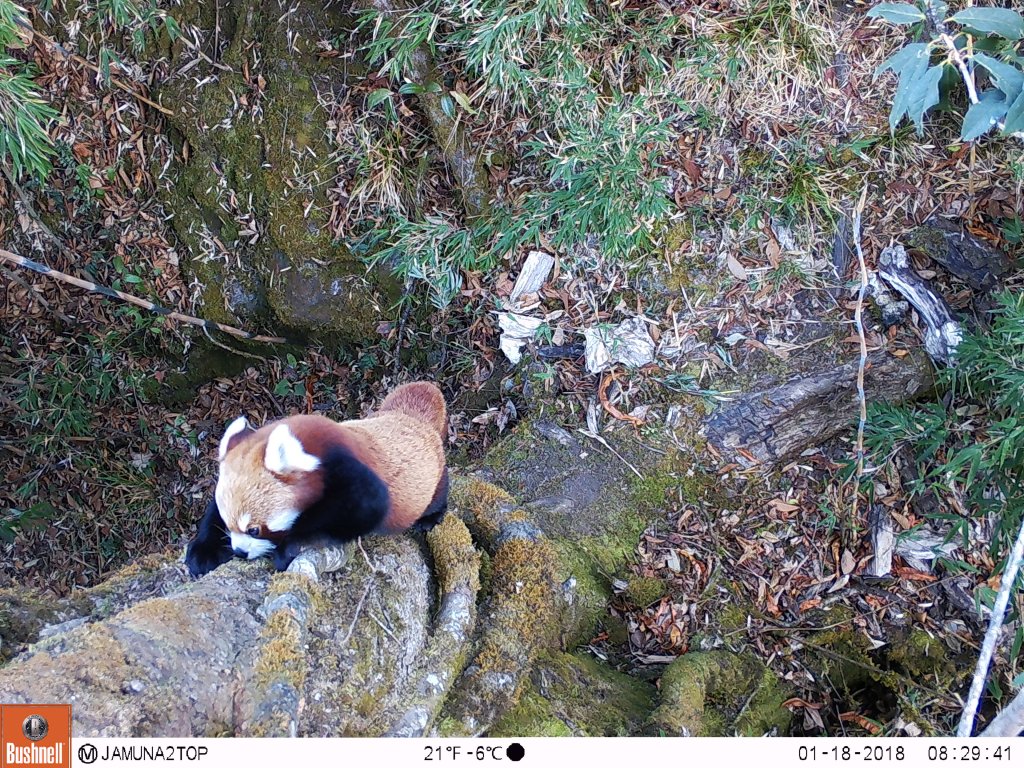
    Collected on camera – a red panda. Image by Sonam Lama

    As a zoologist interested in natural history, you are also dealing with collecting. Typically you want to collect the types of species found in an area. This tells us a lot about species diversity and richness, conservation, ecological interactions, evolutionary adaptations and so much more! This collection could be physical (like the hundreds of thousands of insect specimens found in our LU Entomology Research Museum) or it could be observational, where spotting an individual from a species can be logged (like with iNaturalist). But it certainly scratches the collecting itch.

    Observations can be direct (e.g. I saw that animal) or indirect (e.g. I found a footprint of that animal). Either way these are data that tell us that a species is found in the area. We are increasingly relying on indirect methods to collect observations – in fact much of our wildlife research here in Pest-management and Conservation is around developing better ways to monitor our mammal pests.

    Sonam Lama was a Master of International Nature Conservation student at Lincoln University. He had spent a lot of time working for the Red Panda Network back in Nepal. As part of his research, with Adrian Paterson and James Ross, he was interested in being better able to monitor red panda in the wild (but that will be another story!). Sonam was also keen to find what other species share the red panda habitat in far eastern Nepal. Were there many predators? Were there many competitors?

    Sonam in the forest of eastern Nepal. Image by Sonam Lama

    Sonam worked within the high altitude (between 2-4000 m abs) forests of Ilam, Panchthar and Taplejung, which provide a corridor between the rest of Nepal and India. Over this large area Sonam identified sites where he could put his 60 cameras. Typically the cameras were attached to the base of a tree. Observations from these camera traps were made through winter and spring. Results have now been published in the European Journal of Wildlife Research.

    So what did Sonam collect? Over 3000 camera trap days about 90000 images were recorded. Two thirds were false triggers (vegetation moving in the wind, sudden changes in temperature with sunrise and sunset) – such is the bane of the camera approach. About 11000 were of local people moving through the forest. Amongst all of this were over 5000 images of mammals, including 23 different species, and 3600 images of birds, including 37 species.

    Seventeen of these mammals were medium to large and could be identified. Red panda were observed. The commonly seen species were a deer – northern red muntjac, wild boar and leopard cats. The rarest were other cats: marbled cat (first record in Nepal), Asiatic golden cat and common leopard. The spotted lingsang was also collected for the first time, as was the first melanic (black) leopard.

    Collecting images and video also allows us to look at behaviour. We can get a sense of when species are active. We can see which species move around in groups. Wild boar foraged for tubers in front of the camera, red panda marked their territory, two porcupines mated! Red panda and macaques were active during the day, red foxes and porcupines were nocturnal.

    Collected on camera, a melanic form of leopard. A first for the region. Image by Sonam Lama.

    All of these collected images and videos provide little snapshots of natural history for these species, many of which are difficult to find any other way. Our understanding of potential threats for red panda has also increased. They definitely share their habitat with several potential predator species (and we found a few that were not even known from Nepal). Perhaps more importantly we were able to show that people are common in these habitats and that they are often accompanied by dogs. Good to know from a conservation point of view!

    Collecting images of different species using trail cameras is an increasingly common tool around the globe. It is becoming an essential tool for monitoring species. It doesn’t hurt that there is that thrill of the collector when you find an image of something surprising in amongst all of those misfires.

    This article was written by Adrian Paterson (Pest-management and Conservation at Lincoln University). Yes he is a collector ( I guess you could argue that he collects EcoLincNZ articles!).

  • Enemies with benefits

    Enemies with benefits

    The idea of ‘friends with benefits’ is reasonably widespread and understood. Having good interactions with others will often lead to even more productive outcomes. But what about ‘enemies with benefits’? Are there times where your enemy can give you some positive benefits?

    Invasive species cause ecological harm worldwide, threatening biodiversity, disrupting nutrient cycling and displacing native species. Pacific islands, with their characteristically high rates of endemism, experience out-sized effects from plant invasions (Bellard et al. 2014). In biodiversity hotspots, such as New Zealand, exotic invasive plant species now outnumber native species in area and in number.

    But, how do they do it?

    New Zealand habitats are prone to invasion by exotic plant species. Why is this?

    A study by Lauren Waller and other Lincoln University and University of Canterbury colleagues, published in Journal of Ecology attempts to find some answers. Lauren shows that exotic plants may gain their competitive edge by accumulating enemies in the soil and sharing them with neighbouring native plants, a phenomenon that plant ecologists call pathogen spillover.

    Lauren set up a large mesocosm (self-contained area) experiment. These were areas where new species could be added to a known group of native species in a very manageable process. The health and growth of all plants could be measured and microorganisms both present at the start and brought in on the introduced plants could be identified.

    Lauren expected exotic plants to experience improved growth due to escape from pathogens (leaving the burden of enemies behind when they come to NZ). This assumption comes in large part from two well-known hypotheses, the Enemy Release Hypothesis and the Evolution of Increased Competitive Ability (EICA) Hypothesis. Enemy Release states that exotic plants can gain incredible success when they move to a new location lacking the enemy pressure they experienced in their home range, particularly co-evolved specialist enemies. EICA goes a step further to suggest that if exotic plants can escape enemy pressure in their new range, those plants will have more resources to allocate to growth over defence.

    Somewhat supporting Enemy Release, exotic plants did not appear to suffer much from specialist fungal pathogens. However, exotic plants did associate with generalist pathogens. Also, in support of Enemy Release, exotic plants did not appear to allocate resources to defence. Instead, exotic plants appeared to tolerate generalist pathogen pressure without reducing their growth.

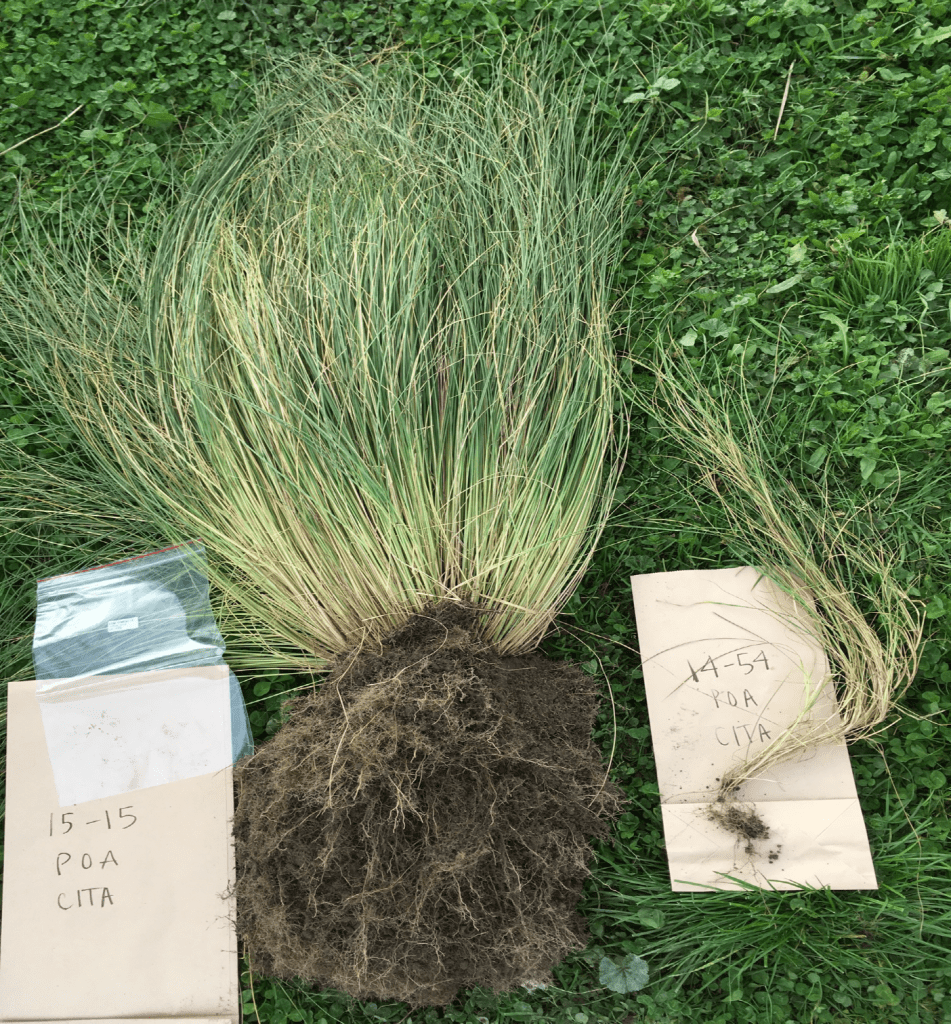
    Native Poa grown in a native versus exotic dominated plot.

    Lauren did not expect to see big impacts by exotic plants on native plants, and boy, did they! Native plants just wasted away when grown with exotic plants. It was very sad to watch. This photo shows an example of a native bunch-grass, grown with all native neighbours (left) or in communities dominated by exotic plants (right).

    What explained the out-sized effect of exotic plants on native plant growth? Our network analysis showed that exotics not only accumulated and tolerated generalist pathogens, but they shared their pathogens with native plants. Native plants did not appear to have the same tolerance for this enemy pressure like the exotic plants did. 

    We started by asking ‘are there times where your enemy can give you some positive benefits?’. It turns out that yes there are times when your enemies can help you a lot. In this case if species cause you problems it will be OK for you if they cause competing species even more problems! With invasive species, your microbial enemies can do you a good turn but taking out the opposition.

    Now that’s a real enemy with benefits!

    Lauren Waller and Adrian Paterson wrote this together (and not as enemies!). They are lecturers in the Department of Pest-management and Conservation.

    Bellard, C., Leclerc, C., Leroy, B., Bakkenes, M., Veloz, S., Thuiller, W., & Courchamp, F. (2014). Vulnerability of biodiversity hotspots to global change. Global Ecology and Biogeography, 23(12), 1376-1386

  • Why don’t restored streams bounce back?

    In New Zealand, many would agree that fresh water is one of our most loved natural resources. We drink it, we swim in it, we use it to farm and to make a living, we even use it to generate our power! Unfortunately, especially in Canterbury after some major earthquakes, many of our streams and rivers are struggling. They look something like this:

    Kowhai River, Kaikōura. From Environment Canterbury, ND.

    In stream restoration, we want to return the features of a stream back to their original state, before things like urban development or introduced species affected the quality. This includes adding native plants, allowing fish to make their way out to sea or further upstream, and making sure farm animals can’t walk straight into the stream. All of these things and more can help us to make healthier waterways.

    It does not always go to plan, with some hardy introduced species putting a spanner in the works and refusing to co-operate with careful scientific methods. Imagine a beautiful stream that’s been through tough times—pollution, habitat destruction, earthquakes you name it. People step in – scientists, council members, developers, maybe the general public, and they work hard to restore it, but here’s the kicker: sometimes, things just don’t bounce back like they should. Why? That’s exactly what a recent study by Issie Barrett and her team set out to uncover.

    To understand why streams struggle to recover even after the most thorough restoration efforts, we need to understand a few key factors.

    1. Species Interactions: In a healthy stream, different plants and animals interact in specific ways, such as some animals eating others or different plants competing for space. When a stream is damaged and then restored, these interactions might not work the same way anymore. This can make it harder for the original species to come back and thrive.

    A particular species of snail, the New Zealand mud snail (P. antipodarum) is particularly good at living in these degraded streams, they thrive under pressure and limited food sources. These snails are perfect species to take over a degraded environment and reduce the recovery ability! So even when original species are introduced, such as the mayfly, the same food source now has double the competition, meaning a negative reaction – that habitat can’t provide that much food even in a restored state.

    New Zealand mud snail Potamopyrgus antipodarum. Photo Credit Michal Maňas 2014

    2. Negative Resistance: This is a big concept, which in essence means that even when the physical conditions of a stream improve (like cleaning up pollution or adding new habitats), the plants and animals in the stream don’t always come back as quickly or fully as hoped.

    During the stream’s degradation years, new species like the mud snails might move in – kind of like uninvited guests crashing a party. Even after things are cleaned up, these newbies can stick around and hog resources, making it harder for the original gang to make a comeback. This is what they call “negative resistance.” This can happen because the habitat is too degraded for the ideal species to thrive even if they did before.

    3. Resilience Mechanisms: This means the ability of a system to absorb and adapt to change, ultimately returning to the restored ideal. This is where our negative resistance comes into play. If the species or the system is already not functioning as it should, we are going to have a hard time creating a resilient system that can adapt to a changing environment and overcome any future issues.

    For example, a high level of nitrogen could change the make-up of the riverbed so drastically that a species sensitive to nitrates may never repopulate that system. Understanding the relationship between negative resistance and resilience is important for predicting and enhancing any successful restoration efforts.

    What can we do?

    Look at the Big Picture: When restoring a stream, it’s not just about fixing what we can see. We need to think about how all the different plants and animals interact with each other. This includes what nutrients are in the water and what microscopic invertebrates might be living in that water.

    Keep Checking In: It’s important to keep watching restored streams over time to make sure they’re getting better and to fix any problems that come up. If we don’t see an improvement in 5 or 10 years, there must be something else we can do.

    Be Flexible: Sometimes, we might need to change our restoration plans based on what we learn from watching how the stream responds. As scientists we have to be okay with admitting our first idea didn’t work, and then be willing to help come up with a better solution for the future.

    Vegetated drain in Canterbury with optimum riparian planting. Photo credit Jon Sullivan, ND.

    Why it matters

    Overall, there are some pretty complex systems that are at play in stream restoration projects. It is not as simple as putting in some better plants and some bigger, cooler rocks and hoping it will all work out in 10 years. By paying attention to how plants, animals, and the environment all work together, perhaps we can work towards a deeper understanding of the best ways to help our New Zealand streams thrive for many more generations to come.

    I think it would be pretty cool to keep swimming in our rivers and looking for fish in the summer, but next time you go to your local river, have a look and see what plants and other animals would really love to keep living there too.

    This article was prepared by Postgraduate Diploma in Environmental Management student Tayla Cross as part of the ECOL608 Research Methods in Ecology course.

  • Wild hunters: Unveiling the hidden leopards of northern Pakistan’s borderlands 

    Our adventure begins in the breathtaking north of Pakistan, where the majestic peaks of the Himalayas, and their foothills, stand as one of the last sanctuaries, a place where the sky meets the earth. Here, clouds drift over rough mountains and lush valleys, into dense forests. Glistening lakes and spectacular waterfalls shape this natural paradise.

    In this wilderness, the air echoes to the calls of rhesus monkeys, while wild boars wander through the underbrush. The Himalayan red fox prowls the mountains, on the hunt for colourful pheasants, a tale as old as time. 

    But the fox is not the only hungry predator in these forests. A top predator, larger and stronger, with a powerful bite and covered in unique dots, reigns in the mountainous range. The majestic leopard (Panthera pardus), a mysterious and shy creature, expert at camouflage, is prowling these forests.

    Leopards are amongst the most iconic big cats. Just like other big cats, leopards are endangered. Human activity and landscape alteration pose significant threats to their survival. When leopards and humans cross paths, conflicts arise, turning this top predator from hunter to hunted. 

    Panthera pardus fusca is described as larger subspecies, with brighter
    coloration and smaller rosettes (Bellani, 2019).

    Photo Credit: CC BY 2.0 DEED, taken by Rupal Vaidya in October 2016

    Leopards are generally cryptic and shy, much remains unknown about these ferocious hunters. 

    Muhammad Asad, a PhD student at Lincoln University, started his dangerous journey to this wild region in the north of Pakistan. The dangers of the landscape were not limited to wildlife; humans also posed a significant risk in this troubled region. Undeterred, Asad was ready for the challenge that lay ahead. 

    Leopards are amongst the world’s most widespread carnivores, ranging from Africa to Asia. Prowling over such a vast distribution has led to the recognition of several subspecies, most of which are endangered. The forests in the north of Pakistan are known to be home to leopards, but their subspecies status has not been assessed.  

    Contrary to the legend of water-shy cats, leopards are excellent swimmers. Still, the mighty Indus River was believed to act as a barrier between populations, maybe even keeping subspecies apart.

    To unravel this mystery, Asad and his team collected and analysed tissue samples from leopards. Modern techniques have created a genetic tool as powerful as its name: mitochondrial DNA (mtDNA). Mitochondria, the powerhouses of our cells, have long been known for their role in providing power for our cells. These powerhouses also carry their own DNA, passed down maternally, making mtDNA incredible useful for studying population dynamics and subspecies differentiation.

    A key protein encoded on the mtDNA, NADH 5, is essential for energy production and is highly variable among big cats, making it an excellent candidate gene for subspecies identification.

    Through their research, Asad and his team found two distinct subspecies of leopard in the north of Pakistan, P. p. saxicolor and P. p. fusca, both belonging to the Asian group of leopards.   

    Panthera pardus saxicolor is commonly a bigger subspecies and is often
    more pale coloration, with bigger rosettes (Kiabi et al., 2002).

    Photo Credit: CC BY 2.0 DEED, taken by Guido Konrad in July 2021

    These findings mark the first subspecies identification in this region and hold significant implications for conservation efforts. The coexistence of both subspecies in the same region suggests an interesting natural corridor that connects leopard habitats, offering hope for their conservation in the face of habitat fragmentation.

    At the same time, discovering two subspecies living in the same area opens up the possibility of them interbreeding. This can create some challenges for conservation. We might wonder: could one or both of these subspecies disappear over time? Or will they blend together and create a new subspecies? Hybridisation is very unpredictable, which is why it’s important to work on conserving both subspecies. They each have unique evolutionary histories, which are the product of thousands of years of adaptation and survival, and could potentially be lost due to this phenomenon called hybridisation.

    These findings not only help leopard conservation in the paradise of the Himalayan belt in the north of Pakistan, but also contribute to global conservation efforts to protect this amazing species. By identifying subspecies and unveiling their genetic patterns, we can better protect them. It is important to protect both subspecies, which helps protect the overall species Panthera pardus.

    This article was prepared by Master of International Nature Conservation student Eric Tscherbatko as part of the ECOL608 Research Methods in Ecology course.

    Thank you to all scientist who contributed to these amazing results, namely Muhammad Asad, Francesco Martoni, James G. Ross, Muhammad Waseem, Fakhar I- Abbas and Adrian M. Paterson for your important work!

    Asad M, Martoni F, Ross JG, Waseem M, Abbas F, Paterson AM. 2019. Assessing subspecies status of leopards (Panthera pardus) of northern Pakistan using mitochondrial DNA. PeerJ 7:e7243 https://doi.org/10.7717/peerj.7243