Category: biogeography

  • Amaizing distribution: nematode infestations of NZ corn

    Amaizing distribution: nematode infestations of NZ corn

    Are your maize plants growing well in the field? If not,we can often blame plant parasitic nematodes.

    There are around 4100 known species of nematodes and they cause a considerable loss of agricultural produce, with estimated global crop damage of $US 358 billion every year.

    The life cycle of these plant parasitic nematodes have four stages, and the second-stage juvenile (J2) is the destructive phase. Most nematodes are sedentary inside the host and others survive in the soil.

    Written by Sambath in behavior, conservation, front page profile, invasive species, student blog, Uncategorized, zoology, pest management

    In the 2021/22 NZ growing season, about 196,000 tonnes of grain and 1,200,00 tonnes of silage were harvested, making maize one of the most cultivable crops in New Zealand. Around 58% of the harvest was grown for livestock feed demand, and the remaining 42% was for food and industrial processors.

    Plant parasitic nematodes are common in New Zealand and many horticulture industries have experienced a substantial loss of profits from these destructive plant pests. While maize is one of the most crucial crops in this country reported to be damaged by various species of nematodes, few studies have been conducted here compared to other countries.

    So, Nagarathanam Thiruchchelvan, a PhD student at Lincoln University, and his team conducted research to identify and quantify plant parasitic nematode infestations of maize production across New Zealand. Their purpose was to investigate the prevalence and diversity of several genera of plant parasitic nematodes.

    Plant parasitic nematode feeding types. Image from Paulo Vieira & Cynthia Gleason

    The researchers collected a total of 384 composite soil samples from 25 maize fields located in the North and South Islands, focusing on: Canterbury, Waikato, and Manawatu-Whanganui. Data collection was carried out at various maize growing stages and seasons during 2022.

    It was not good news!

    The researchers found that at least one genus of plant parasitic nematode was detected in 378 (98%) of the maize samples. Pratylenchus was the most prevalent and widespread genus (91%) followed by Helicotylenchus (38%).

    Plant parasitic nematode. Image from Scot Nelson

    The plant parasitic nematode population and diversity were higher in Canterbury than in Waikato and Manawatu-Whanganui. Thiru and his team believed that the inconsistent distribution was caused by different climate and geography conditions between the two regions. For example, the South Island is more diverse in soil physiochemical proportions than the North Island.

    Thiru also observed that soil orders, a soil classification system, affected the proliferation of plant parasitic nematode populations, with brown and pallic soil types promoting nematode reproduction, especially for Pratylenchus. Pallic soils refer to a soil type having pale, fragile topsoil and compacted subsurface. For the brown soil, its topsoil is dark grey-brown, and the subsoil is tan or yellowish-brown.

    The lowest number of plant parasitic nematodes was detected in organic soil. Organic-rich soils favor a wide range of beneficial fungi, bacteria, and nematode survival. These microorganisms can suppress the proliferation of plant parasitic nematodes by either feeding on eggs or predating invasive nematodes.

    The study further indicated that the population and diversity of plant parasitic nematodes increased alongside distinguishing developmental stages of maize. Most nematodes were reported from the harvesting stage, while the least were from the seedling stage.

    Root-knot nematode (Meloidogyne enterolobii). Image from Jeffrey W

    Thiru and his team noticed that rotating maize with other crops played a significant role in reducing the incidence and prevalence of plant parasitic nematodes in the field. These other crops included ryegrass, pasture, wheat, white clover, potato, peas, and winter crops. One maize field located in Canterbury was detected with a high significant intensity of 3000 nematode root lesions per kg of roots as a result of non-rotation practice.

    Thiru concluded that there was a requirement for a deeper understanding of dispersal, feeding characters, and life cycle of plant parasitic nematodes, in particular, root-lesion nematode (Pratylenchus) in maize fields across New Zealand. Specific pest management approaches are needed to control the prevalence and abundance of targeted nematodes impairing maize production in both islands.

    These article was prepared by Sambath Seng, a Master of Science student in the Department of Pest Management and Conservation at Lincoln University.

    Thiruchchelvan, N., Kularathna, M., Moukarzel, R., Casonato, S., & Condron, L. M. (2024). Prevalence and abundance of plant-parasitic nematodes in New Zealand maize fields: effects of territory, soil orders, crop stage, and sampling time. New Zealand Journal of Zoology, 1-22. https://doi.org/10.1080/03014223.2024.2424900
  • The munchy mountain mystery of the lost bark beetle!

    The munchy mountain mystery of the lost bark beetle!

    Have you ever bitten into a slice of bread, only to find out that it’s gone mouldy? Yuck! But what causes mould, and how does it spread? This was a mystery solved by scientists in the 1800s.

    Fungal branches. CC BY-SA 4.0 Rafał Szczerski

    Mould in bread is caused by a fungus (fungi for multiple). Fungi are made of many tiny branches that grow into a huge maze. These branches reach out to find food from the environment around them; the branches spread from a central point to search for food at the edges. As resources run low, the middle of the fungus dies, creating an expanding ring of live branches. There are many types of fungi out there, and mould is one type that we try to avoid when we store our fruit, vegetables, and bread. When scientists discovered fungi, they solved one mystery, but there are new questions to be answered.

    One mystery involves a type of insect that loves to eat fungi: beetles! Specifically, beetles in the group called Brontini. These little guys eat fungi when they are larvae (baby beetles before they’ve become adults). Usually, the these larvae eat fungi under the bark of trees, but recently a special Brontini beetle was found. This beetle, called Protodendrophagus antipodes by scientists, lives up in the mountains of New Zealand, above the treeline in the alpine zone. Protodendrophagus antipodes is a long name, so we’ll call them Anti.

    Anti (Protodendrophagus antipodes) larva. Photo credit: John Marris.

    Anti are special for more than one reason. First, they live way up in the cold alpine area, which is a harsh environment to live in. The freezing temperatures and dry environment even stop trees from growing there! Second, every other species of Brontini beetle feeds on fungi under tree bark. Confusingly, the area where Anti lives doesn’t have these fungi. Since it’s too high up the mountain for trees to grow, there’s no fungi under tree bark for the beetles to munch on. And so, one group of enthusiastic scientists decided to figure out what these little guys eat. Let’s meet our investigators!

    Our team is made up of three skilled diet detectives: John Marris (“The Mastermind”) – the strategic leader who knows the ins and outs of beetles; David Hawke (“The Brains”) – a science whiz with a flair for chemistry; and David Glenny (“The Sidekick”) – your friendly neighbourhood plant expert. Together, the team solved the mini mystery in the mountains: where is the food for Anti?

    Lichen on rock. CC BY 4.0 Caleb Catto

    In 2018, the team went into the Southern Alps on an exciting trip to examine the scene and gather more evidence. They found two very important clues. First, there were lots of lichens in the areas where the beetles live. Second, sometimes the beetles lived where there wasn’t anything else to eat. I bet you can guess what our prime menu suspect is!

    You’ve probably seen lichens around, though you may not have known what they were. Lichens grow on trees and rocks, but they’re not just one species; lichens are an example of a “symbiotic relationship”. This is when two organisms work together to boost each other’s chance of survival. In this case, the organisms work so closely together that the lichen itself is actually made up of both species! The body of the lichen is a strong skeleton built from fungus. Inside that skeleton live algae, plant-like organisms that can use the sun to make food. In this way, the fungus keeps the algae safe, and the algae feed the fungus. Win win! Cha-ching!

    Spores from a fungus. CC BY 4.0 Aurora Storlazzi

    Since lichens are made up of fungi, this seemed like a pretty good place for our detectives to start. Every good private eye needs evidence to make their case. Thankfully, our clever detectives saw a way to test their theory: the stomach contents of the beetles! They collected some Anti as “evidence” and looked at the food in their stomachs. Inside they found spores that came from a lichen fungus.

    “What is a spore?” you may ask. Remember that maze of branches that make up a fungus? Well, sometimes the branches can’t find enough food for the fungus to eat. If that happens, the fungus has a new strategy to survive: spores! These are little circular pieces of fungus that can spread to new areas and find the fungus a better home.

    CC BY 4.0 Luis Prado

    But their work wasn’t done yet: the detectives found more than just lichen spores in their beetle stomachs. They also found a whole bunch of mystery food which they couldn’t identify. The scientists needed to confirm that lichens really are the only food eaten by Anti. So, the scientists put their thinking hats on and decided to find a new way to solve this puzzle. They chose to use an approach called the “stable isotope test”.

    An isotope is a special form of elements, such as nitrogen and carbon, and organisms at the bottom of the food chain absorb them from the environment. If an animal eats something, then the isotopes of the animal should be pretty similar to its food.To solve this mystery, the scientists tested the isotopes of Anti and all of the potential foods in the area. A good detective looks at all the possible solutions, so they tested the soil, the mosses, the lichens, the tiny mountain plants, and even a type of spider.

    At last, the detective work was done. Their test showed just what we’re all thinking: the Anti beetle really does eat lichen. The link was so clear that David Hawke called it a “textbook example” of the test in action. The scientists were very excited because lichen-eating is pretty rare for beetles.

    After all their investigation, the detectives could finally declare: “case closed!” Now we have a new mystery: how do these beetles survive in the extreme cold of the alpine zone?

    This article was prepared by Master of Science student Heidi Allan as part of the ECOL608 Research Methods in Ecology course.

  • Kiwi Hedgehogs : A Journey of Curiosity and Connection

    Kiwi Hedgehogs : A Journey of Curiosity and Connection

    Curiosity often starts with a sense of wonder and a desire to understand the world around us. If you are a parent, I hope you have noticed and observed this in your children. Their endless questions and fascination with the world are a beautiful reminder of the joy and excitement that comes with learning and discovery.

    I have four lovely daughters, among them four-year-old Arshifa Gul is a bundle of curiosity and always gives me a tough time replying to all her unexpected questions. She also loves watching animated movies, stories and travelling. Back in 2023, I took her to the Pakistan Museum of Natural History for the first time. She was shocked by seeing the animal models and skeleton structures, especially the huge dinosaurs and their roaring, Asiatic lions and their growling, and the realistic models of sharks and dolphins. At first, she was quiet, observing closely, making sure they couldn’t attack. Then, her surprising questions began. “Why is the dolphin here? Who made the dinosaur roar? How did they get so big? When did they live?”

    As a wildlife biologist, I’ve worked with animals for years, but her questions confused me! It was the first time that I struggled to explain my own field. Her curiosity pushed me to think deeper and find ways to explain complex concepts in simple terms. Our trip ended but Arshifa Gul’s questions did not. Her curiosity shifted to linking the roars and growls to the human voice of the animals she heard in the animated movies


    AI-generated image (Grok) of Arshifa Gul standing in awe before a towering dinosaur skeleton in a museum, her eyes wide with wonder, surrounded by animal models like lions and dolphins.

    The next morning at breakfast, Arshifa Gul excitedly shared her thoughts about the characters from her favourite animated movie, “Allahyar and the Legend of Markhor”, set in Pakistan. She talked about the boy Allahyar and his animal friends, then asked where these animals lived, how big they were in real life, what their calls sounded like, and if we could visit them. I said yes we could, but explained that Khunjerab National Park, home to the markhor and snow leopard, was seven hours away.


    Landscape of Khunjrab National Park, Pakistan © Nisar Ahmed

    Her curiosity turned our breakfast into an adventure planning session. I gathered information on the park’s history, species like snow leopards, ibex, and Marco Polo sheep, and conservation efforts, including a trophy hunting program initiated by IUCN and WWF. 80% of the total benefits from this hunting initiative goes to the local communities while the remaining 20% is invested in habitat protection and improvement.

    We visited the site, and she enjoyed the trip thoroughly and I answered most of her questions and her confusion cleared regarding voices and the original habitat of different species. Answering her is always tough, but it makes me see the world through her bright, wondering eyes, full of love for animals. She makes me realise how important it is to nurture this curiosity, not just in her, but in all children.

    Curiosity is a powerful force that drives us to explore, learn, and grow. Arshifa Gul’s curiosity inspired me to write about the introduction of European hedgehogs into New Zealand. The European hedgehog, also known as the West European hedgehog, is a charming little creature native to Europe.

    Hedgehogs can live in a variety of terrestrial habitats and are mostly active at night. They have a slow, hesitant way of walking and often stop to sniff the air. Unlike other hedgehog species that 

    Hedgehogs have fascinated people for centuries. Their spiky charm has made them popular in history, from ancient amulets to modern pop culture icons, like Sonic the Hedgehog. Did you know that New Zealand is the only country outside Europe where European hedgehogs have successfully been established in the wild? This fascinating story of how these spiky little creatures made their way to both the North and South Islands of New Zealand is filled with twists and turns.

    Back in the 1869, acclimatisation societies in New Zealand introduced European hedgehogs to control pests. For a long time, it was believed that hedgehogs were first introduced to the South Island and later spread to the North Island. However, a molecular study in 2013 challenged this view and suggested that hedgehogs were independently introduced to both the islands directly from Europe. This means that the North Island had its own separate introduction of hedgehogs, rather than receiving them from the South Island.

    To uncover the truth, researchers from various universities, including Lincoln University, turned to historical records, especially old newspaper articles. They discovered that there were at least four independent shipments of hedgehogs into the North Island before 1900 (which were not documented in the first publication back in 1975). These findings confirmed that the North Island’s hedgehog population did not originate from the South Island. This study highlights the importance of combining observational data, molecular studies, and historical records to understand the introduction pathways of species.


    Hedgehog searching for food © Author

    The European hedgehog population thrived well in NZ, too well, as it has now become problematic for native wildlife. For example, they prey on ground-nesting birds and compete with native species for food. Leading conservationists have classified them as a pest, and the Department of Conservation New Zealand has launched a campaign to protect native species from hedgehogs.


    Arshifa Gul’s questions and the hedgehog share a common thread. Curiosity drives us to explore and learn. Whether it’s a child marvelling at a museum exhibit or scientists unravelling ecological puzzles, curiosity bridges wonder and action. It reminds us that conservation isn’t just about saving species—it’s about nurturing the spark that makes us care. As parents, educators, or stewards of the planet, or a teacher we can foster curiosity by encouraging, sharing stories, and exploring nature together by using interactive technologies.

    The author, Muhammad Waseem, is a postgraduate student in the Master of Science at Te Whare Wānaka o Aoraki Lincoln University. This article was written as an assessment for ECOL 608 Research Methods in Ecology.

    Reference: Pipek, P., Pysek, P., Bacher, S., Cerna Bolfikova, B., & Hulme, P. E. (2020). Independent introductions of hedgehogs to the North and South Island of New Zealand. New Zealand Journal of Ecology, 44(1), 3396. https://doi.org/10.20417/nzjecol.44.7

  • Collecting mammals: camera traps in eastern Nepal

    Collecting mammals: camera traps in eastern Nepal

    Collecting things seems to have deep roots in the human brain. There are few things more satisfying than finding something unexpected that you really need for your collection. The shock (woah!), the excitement (at last!), the surprise (how did this get here?), the urgency (I better grab this before someone else does), even though anyone standing close to you probably won’t care about this!

    My youngest son had a few years of thrifting where he would scour second-hand stores for ‘cool clothes’ that he could buy and then sell on for a reasonable profit to people who wanted that retro look but didn’t want to spend time searching. Edgar trained me up to spot certain brands, labels, styles and so on. For about five or six years I spent a lot of time browsing ‘dead peoples’ clothes’ as my middle son Arthur called them. I still remember a great trip with Edgar as I took him to a university semester in Dunedin. We struck gold in Waimate (a little off the beaten track) and found 30+ items!

    A small selection of Tanith Lee.Active from the 1970s till the 2010s – prolific and great for collecting! The Winter Players and Companions on the Road are two of my favourite (short) books ever. Image from Adrian.

    What do I collect? I guess there is a distinction between hobbies and collecting? I have a lot of small plastic figures that I love painting but I am not searching for some elusive or rare halfling commando. I buy a lot of boardgames and there are some older games that I might keep an eye out for, but I would count these as hobbies not collecting.

    Books, I have a lot of books…. Some of that is hobby – reading the latest books by Tad Williams or Lindsey Davis, for example. But I definitely collect some authors (Tanith Lee, Robert Howard) and spend time in second hand book shops with a list…. I still remember the day that I found the original D&D colouring book in absolutely mint, uncoloured condition! So rare! So elusive! All mine! (Sadly it has somehow gone missing from my collection in recent years!).

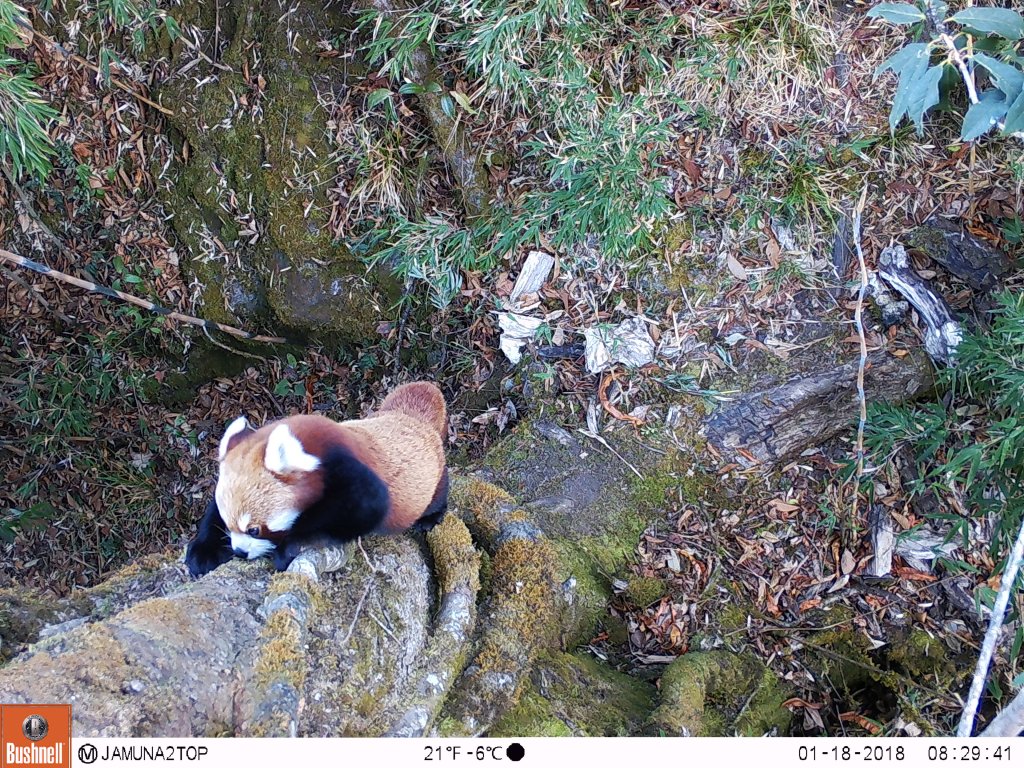
    Collected on camera – a red panda. Image by Sonam Lama

    As a zoologist interested in natural history, you are also dealing with collecting. Typically you want to collect the types of species found in an area. This tells us a lot about species diversity and richness, conservation, ecological interactions, evolutionary adaptations and so much more! This collection could be physical (like the hundreds of thousands of insect specimens found in our LU Entomology Research Museum) or it could be observational, where spotting an individual from a species can be logged (like with iNaturalist). But it certainly scratches the collecting itch.

    Observations can be direct (e.g. I saw that animal) or indirect (e.g. I found a footprint of that animal). Either way these are data that tell us that a species is found in the area. We are increasingly relying on indirect methods to collect observations – in fact much of our wildlife research here in Pest-management and Conservation is around developing better ways to monitor our mammal pests.

    Sonam Lama was a Master of International Nature Conservation student at Lincoln University. He had spent a lot of time working for the Red Panda Network back in Nepal. As part of his research, with Adrian Paterson and James Ross, he was interested in being better able to monitor red panda in the wild (but that will be another story!). Sonam was also keen to find what other species share the red panda habitat in far eastern Nepal. Were there many predators? Were there many competitors?

    Sonam in the forest of eastern Nepal. Image by Sonam Lama

    Sonam worked within the high altitude (between 2-4000 m abs) forests of Ilam, Panchthar and Taplejung, which provide a corridor between the rest of Nepal and India. Over this large area Sonam identified sites where he could put his 60 cameras. Typically the cameras were attached to the base of a tree. Observations from these camera traps were made through winter and spring. Results have now been published in the European Journal of Wildlife Research.

    So what did Sonam collect? Over 3000 camera trap days about 90000 images were recorded. Two thirds were false triggers (vegetation moving in the wind, sudden changes in temperature with sunrise and sunset) – such is the bane of the camera approach. About 11000 were of local people moving through the forest. Amongst all of this were over 5000 images of mammals, including 23 different species, and 3600 images of birds, including 37 species.

    Seventeen of these mammals were medium to large and could be identified. Red panda were observed. The commonly seen species were a deer – northern red muntjac, wild boar and leopard cats. The rarest were other cats: marbled cat (first record in Nepal), Asiatic golden cat and common leopard. The spotted lingsang was also collected for the first time, as was the first melanic (black) leopard.

    Collecting images and video also allows us to look at behaviour. We can get a sense of when species are active. We can see which species move around in groups. Wild boar foraged for tubers in front of the camera, red panda marked their territory, two porcupines mated! Red panda and macaques were active during the day, red foxes and porcupines were nocturnal.

    Collected on camera, a melanic form of leopard. A first for the region. Image by Sonam Lama.

    All of these collected images and videos provide little snapshots of natural history for these species, many of which are difficult to find any other way. Our understanding of potential threats for red panda has also increased. They definitely share their habitat with several potential predator species (and we found a few that were not even known from Nepal). Perhaps more importantly we were able to show that people are common in these habitats and that they are often accompanied by dogs. Good to know from a conservation point of view!

    Collecting images of different species using trail cameras is an increasingly common tool around the globe. It is becoming an essential tool for monitoring species. It doesn’t hurt that there is that thrill of the collector when you find an image of something surprising in amongst all of those misfires.

    This article was written by Adrian Paterson (Pest-management and Conservation at Lincoln University). Yes he is a collector ( I guess you could argue that he collects EcoLincNZ articles!).

  • Wild hunters: Unveiling the hidden leopards of northern Pakistan’s borderlands 

    Our adventure begins in the breathtaking north of Pakistan, where the majestic peaks of the Himalayas, and their foothills, stand as one of the last sanctuaries, a place where the sky meets the earth. Here, clouds drift over rough mountains and lush valleys, into dense forests. Glistening lakes and spectacular waterfalls shape this natural paradise.

    In this wilderness, the air echoes to the calls of rhesus monkeys, while wild boars wander through the underbrush. The Himalayan red fox prowls the mountains, on the hunt for colourful pheasants, a tale as old as time. 

    But the fox is not the only hungry predator in these forests. A top predator, larger and stronger, with a powerful bite and covered in unique dots, reigns in the mountainous range. The majestic leopard (Panthera pardus), a mysterious and shy creature, expert at camouflage, is prowling these forests.

    Leopards are amongst the most iconic big cats. Just like other big cats, leopards are endangered. Human activity and landscape alteration pose significant threats to their survival. When leopards and humans cross paths, conflicts arise, turning this top predator from hunter to hunted

    Panthera pardus fusca is described as larger subspecies, with brighter
    coloration and smaller rosettes (Bellani, 2019).

    Photo Credit: CC BY 2.0 DEED, taken by Rupal Vaidya in October 2016

    Leopards are generally cryptic and shy, much remains unknown about these ferocious hunters. 

    Muhammad Asad, a PhD student at Lincoln University, started his dangerous journey to this wild region in the north of Pakistan. The dangers of the landscape were not limited to wildlife; humans also posed a significant risk in this troubled region. Undeterred, Asad was ready for the challenge that lay ahead. 

    Leopards are amongst the world’s most widespread carnivores, ranging from Africa to Asia. Prowling over such a vast distribution has led to the recognition of several subspecies, most of which are endangered. The forests in the north of Pakistan are known to be home to leopards, but their subspecies status has not been assessed.  

    Contrary to the legend of water-shy cats, leopards are excellent swimmers. Still, the mighty Indus River was believed to act as a barrier between populations, maybe even keeping subspecies apart.

    To unravel this mystery, Asad and his team collected and analysed tissue samples from leopards. Modern techniques have created a genetic tool as powerful as its name: mitochondrial DNA (mtDNA). Mitochondria, the powerhouses of our cells, have long been known for their role in providing power for our cells. These powerhouses also carry their own DNA, passed down maternally, making mtDNA incredible useful for studying population dynamics and subspecies differentiation.

    A key protein encoded on the mtDNA, NADH 5, is essential for energy production and is highly variable among big cats, making it an excellent candidate gene for subspecies identification.

    Through their research, Asad and his team found two distinct subspecies of leopard in the north of Pakistan, P. p. saxicolor and P. p. fusca, both belonging to the Asian group of leopards.   

    Panthera pardus saxicolor is commonly a bigger subspecies and is often
    more pale coloration, with bigger rosettes (Kiabi et al., 2002).

    Photo Credit: CC BY 2.0 DEED, taken by Guido Konrad in July 2021

    These findings mark the first subspecies identification in this region and hold significant implications for conservation efforts. The coexistence of both subspecies in the same region suggests an interesting natural corridor that connects leopard habitats, offering hope for their conservation in the face of habitat fragmentation.

    At the same time, discovering two subspecies living in the same area opens up the possibility of them interbreeding. This can create some challenges for conservation. We might wonder: could one or both of these subspecies disappear over time? Or will they blend together and create a new subspecies? Hybridisation is very unpredictable, which is why it’s important to work on conserving both subspecies. They each have unique evolutionary histories, which are the product of thousands of years of adaptation and survival, and could potentially be lost due to this phenomenon called hybridisation.

    These findings not only help leopard conservation in the paradise of the Himalayan belt in the north of Pakistan, but also contribute to global conservation efforts to protect this amazing species. By identifying subspecies and unveiling their genetic patterns, we can better protect them. It is important to protect both subspecies, which helps protect the overall species Panthera pardus.

    This article was prepared by Master of International Nature Conservation student Eric Tscherbatko as part of the ECOL608 Research Methods in Ecology course.

    Thank you to all scientist who contributed to these amazing results, namely Muhammad Asad, Francesco Martoni, James G. Ross, Muhammad Waseem, Fakhar I- Abbas and Adrian M. Paterson for your important work!

    Asad M, Martoni F, Ross JG, Waseem M, Abbas F, Paterson AM. 2019. Assessing subspecies status of leopards (Panthera pardus) of northern Pakistan using mitochondrial DNA. PeerJ 7:e7243 https://doi.org/10.7717/peerj.7243

  • Jumping to the top of the world: new salticid spider species in the Southern Alps

    Spiders.

    Your reaction to that word might determine whether or not you finish reading this post, but try to bear with me — at least for a little while. While I can accept that most people aren’t nearly as fond of spiders as I am, I think all but the truly arachnophobic (it’s okay; I understand that you can’t help it) can agree that the jumping spiders are among the “cutest” and most acceptable spider groups. These active little hunters can often be found in or around the house, and their big binocular eyes and expressive “face” make them a lot more relatable than your average creepy-crawly. Well, most of them!

    A newly-described female Ourea petroides from the Ōtira River valley, Arthur’s Pass. © own work, 2022. CC-BY-NC.

    Jumping spiders, in the family Salticidae, are among the most well-researched spiders in the world, with over 6,500 species described. Meanwhile, the jumping spiders found in Aotearoa New Zealand – apart from the most commonly-encountered species – are very poorly known to science. There are thought to be around 200 species in NZ, with about 50 known well enough to be named. However, we can only reliably identify fewer than a dozen of them. Compare this with Australia, where hundreds of species are known already, and work to describe the rest is well under way.

    Not to be outdone by the Aussies, Lincoln University’s Robin Long, along with her supervisor Dr Cor Vink, decided to do something about that. For her Master’s project, Robin set out to catalogue and describe the jumping spiders found in some of NZ’s most remote and extreme environments: the rocky heights of the South Island’s alpine zone.

    Robin visited 21 different sites all over the Southern Alps, from Paparoa to Fiordland, collecting 170 jumping spider specimens (all by hand!) from up to 1,800 m above sea level — and logging some impressive hiking mileage in the process!

    Looking across the Ōtira River at a scree slope where Ourea petroides can be found, Arthur’s Pass. © own work, 2022. CC-BY-NC.

    Through DNA analysis and careful examination of microscopic features on each spider, Robin separated those 170 specimens into 12 new species, and determined that the group was so unlike others known to science that it represented a brand new genus (a group of closely-related species with a common ancestor). She named this genus Ourea because, like the ancient Greek mountain gods, many of the species were found to be associated with a specific mountain range.

    Many of NZ’s indigenous species are only found across quite small areas, often because of the (relatively) recent and rapid growth of our mountains — which even today continue to grow taller by around 7 mm per year. Formerly widespread species were split into separate populations by the tectonic uplift, and over the last few million years these now-isolated populations have diverged into new species. Robin’s jumping spiders, much like many other NZ alpine species, took advantage of the ample prey and new habitats created by the growth of these mountain ranges. Over time these spiders even developed cryptic colours and patterns that help to camouflage them against the particular rock types they live amongst.

    Magnificent moustache: a female(!) Ourea saffroclypeus from the Remarkables Range. © Robin Long, 2022. CC-BY-NC.

    Not content with merely describing a whole genus and a dozen new species, Robin also set about studying and describing the spiders’ behaviours when interacting with other members of the same species. Jumping spiders have exceptional eyesight, and are known for communicating with each other through visual displays that range from the bronze hopper’s simple leg-waving, all the way to the flamboyant, colourful dances (which often incorporate vibration as well) performed by the aptly-named peacock spiders.

    The four Ourea species that Robin observed in the lab each exhibited a unique set of behaviours when they met another spider, and these behaviours differed depending upon whether they met a member of the same or the opposite sex. Males postured fiercely at each other, squaring up in a face-to-face grappling contest with legs and fangs outstretched.

    When attempting to impress a female, males gestured with their legs and “zigzag-danced” their way closer, before attempting to reach out and gently stroke the female’s head. Perhaps unsurprisingly, this final move had quite mixed success! Females meeting each other were a bit more sensible, and usually made a few simple (though probably quite impolite) leg gestures at each other, before one or both turned away and went in the opposite direction.

    Despite the enormous amount of work that went into researching these spiders, Robin acknowledges that her almost 150-page thesis has only scratched the surface of the topic. Little is known of the spiders’ life histories or the individual species’ spatial distributions, and it’s “very likely” that there are additional species in the genus waiting to be discovered on other mountain ranges.

    Exquisite camouflage: Ourea petroides, Ōtira River valley, Arthur’s Pass. © own work, 2022. CC-BY-NC.

    Robin also suggests a similar study would likely uncover another distantly-related group of undescribed jumping spiders living quietly in the Southern Alps. This is a common problem with New Zealand’s invertebrate fauna: while we have a good general understanding of what’s around us, there are still huge gaps in our knowledge — and usually the studies that attempt to address this just end up revealing more unanswered questions!

    We have a rich history of brilliant people, like Robin, studying, documenting, and describing New Zealand’s unique invertebrate biodiversity, and there are still many new discoveries to be made in every corner of our little country. But, despite huge technological advances, research has dwindled in recent decades due to funding redirections and the restructuring of government services.

    Under the looming threats of climate change and habitat loss, we need to pay closer attention to the smallest and most enigmatic (if not always particularly cute) creatures that live alongside us, lest they disappear before we even have a chance to study them. Australia is well ahead of NZ in this regard, with funding and support for taxonomic studies provided through their world-leading ABRS scheme. I’m not much of a sports enjoyer, but beating the Aussies at this game is one trans-Tasman rivalry I could definitely get behind.

    This article was prepared by Bachelor of Science (Honours) student Dustin la Mont as part of the ECOL608 Research Methods in Ecology course.

  • The big, bold, redbacks of Buckland

    No, Mr Baggins has gone away. Went this morning, and my Sam went with him: anyway, all his stuff went. Yes, sold out and gone, I teller. Why? Why’s none of my business, or yours. Where to? That ain’t no secret. He’s moved to Bucklebury or some such place, way done yonder. Yes it is – a tidy way. I’ve never been so far myself; they’re queer folks in Buckland. No, I can’t give no message. Good night to you!” JRR Tolkien – The Fellowship of the Ring

    One of the greatest illustrations of Tolkien’s work, IMHO, The Gaffer and the Black Rider by Stephen Hickman.

    I’ve always liked this passage where old Gaffer Gamgee is talking, unbeknown, to a nazghul. It is an important story point but delivered in the type of conversation that you could hear all over the world. ‘Those people that live 20 – 30 km away are just so different and weird!‘ Are the people of Buckland really so different to the good, honest folk of the Shire? If so, how did this happen by simply crossing a river?

    There is a question around invasive species whether the individuals that arrive in a new area are just a random selection of the individuals (and their traits) that live in their home area or whether they represent a group of individuals with consistent and particular traits that make them more likely to have successfully invaded the new area.

    For example, all humans in Aotearoa/New Zealand have arrived from outside these shores over the last 1000 years. Were the people that made their way here more bold and explorative than the rest who stayed behind? Or were they no different than their neighbours who stayed at home? Maybe they just simply had the opportunity to go?

    These ideas are important in thinking about why invasive species are successful at establishing or not. If any old random subset of the population can turn up then they are less often going to successful at establishing (they may not be fit-for-purpose!) compared to if they arrive with skills that allow them to survive better in a new environment (or even to survive the journey).

    Being large might help give invasive individuals an advantage over native species. Likewise, producing more offspring, growing faster, being bold, exploring more, dispersing sooner, having a broader diet, could all help with invading and establishing.

    What about our Bucklanders?

    Long ago Gorhendad Oldbuck, head of the Oldbuck family, one of the oldest in the Marish or indeed in the Shire [has had high evolutionary fitness over many generations], had crossed the river [successfully able to disperse relative to other hobbits and to explore more], which was the original boundary of the land eastwards. He built (and excavated) Brandy Hall, changed his name to Brandybuck, and settled down to become master of what was virtually a small independent country. His family grew and grew [high fecundity in offspring production], and after his days, continued to grow, until Brandy Hall occupied the whole of the low hill, and had three large front-doors, many side-doors, and about a hundred windows. The Brandybucks and their numerous dependants then began to burrow, and later to build, all round about … The people in the Marish were friendly with the Bucklanders … But most of the folk of the old Shire regarded the Bucklanders as peculiar, half foreigners as it were [suggests a slightly different distribution of traits compared to the parent population].Though, as a matter of fact, they were not very different from the other hobbits of the Four Farthings. Except in one point: they were fond of boats, and some of them could swim [bold and innovative behaviours].” JRR Tolkien- The Fellowship of the Ring

    Captive redback with web. Image by Adrian Paterson.

    We are also told elsewhere that the Brandybucks and Tooks (another bold lineage of hobbits) are generally taller than average Shire hobbits. Tolkien, as I have said in many other places (taxonomy of orcs and hobbits, evolutionary biology ideas, burrow architecture, mammal pest management, fire and ecosystems), was rather accurate when it came to integrating biology into his writing. Did he get it right here?

    To test this invasion idea you need a species that is well-studied in it’s native range as well as in its colonising range. You also need to be able to measure all of those traits. Spiders fit the bill nicely. They’re small and have short generations, are easy to fit into small experimental set ups, and some are venomous and, therefore, well studied. Enter the redback spider (Latrodectus hasselti), invasive in Japan and New Zealand and well studied in its Australian homeland.

    Cor Vink, New Zealand’s leading arachnologist, joined a group based in Toronto, Canada headed by Monica Mowery, to look at individuals from these three areas. They measured the size of individuals (bigger is usually better in interactions with competitors), their egg sac production (producing more young may give you more opportunities for at least some surviving), and length of generation times in captive populations (shorter allows for faster replacement, longer allows for larger more long-lived individuals).

    A redback – amazing photo from the talented Bryce McQuillan

    They measured the behaviour of the redbacks, such as frequency of cannibalism (you never know when a snack might come in handy!). Also, individual spiders were placed in a new environment and the speeds at which they started spinning webs (exploration) or moving after being exposed to a puff of wind (boldness) were measured. Spiders were also placed into a warm arena with a small simulated breeze to see whether they would balloon (effectively float away in the wind) or rappel (climb using their web silk) away from the start point (dispersal).

    The outcomes from this work were published in Biological Invasions. Redbacks from the invasive populations showed more dispersal behaviour than the home populations. They also tended to be larger in size, more cannibalistic, and produced more offspring. Interestingly, the redbacks in Japan and New Zealand did not seem to be more bold or explorative than in Aussie. Overall though, the invasive populations looked and acted differently to the source population.

    It appears that populations that successfully disperse and establish in new areas might do so because they are settled by individuals with useful traits that differ a little from the source population. This may help us to figure out which species potentially pose the most invasive threats.

    What about those strange Bucklanders? The Gaffer was mostly right. They are a bit different. Bucklanders are a population that managed to successfully disperse to an isolated area. Bucklanders are larger and more fecund. Tolkien does not record whether the Bucklanders tended to be more cannibalistic than hobbits in the Shire, but that would be a prediction!

    We can certainly sympathise with the Gaffer’s concerns about his Sam going to live among them.