Category: biosecurity

  • New Zealand’s most stubborn weed

    New Zealand’s most stubborn weed

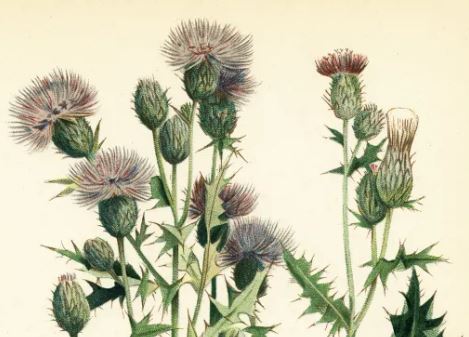
    Cirsium arvense is commonly known as the Canada thistle in USA and Californian thistle in Canada. No one wants to take responsibility for these prickly things. They actually come from Europe where they are called creeping thistles.

    This thistle is a small weedy plant that can be a potential nightmare for New Zealand farmers. According to the NZ Ministry for Primary Industries, (2021), it cost the country $722 million in lost revenue in the year 2020 alone, up from $31 million in 2009.

    Photo by Make It Old (Flickr User)

    Given the disruptive nature of this weed, Wendy Kentjens, a budding weed ecologist with the passion for gardening, along with her supervisors, Seona Casonato and Clive Kaiser, decided to learn more about controlling the Californian thistle population on New Zealand pastures.

    To understand why Californian thistles are so weedy, Wendy decided to study the interesting microscopic world of the endophytes living inside, and how they may help or hinder the plant.

    Sounds straight forward! Well, it was far from that.

    Here is a summary of the challenges Wendy faced while carrying out research on Californian thistles.

    Ah the prickly little devils…’ – Working with the thistles meant cuts and scratches all through the research.

    Miss Unpopular, conducting pot trials at the nursery.’ – Turns out, planting weeds that no one likes is a fast way to make some frenemies.

    The sheep ate my data!’ – Wendy found that the sheep initially didn’t eat thistles on pastures, but when they got infected with a rust fungus (Puccinia punctiformis), it made it very tasty for the sheep. She talks more about using rust fungas as a biocontrol agent in her paper “Californian thistle (Cirsium arvense):endophytes and Puccinia punctiformis” (Kentjens et al., 2024).

    Hard to photograph the entire plant.’ – It can be really hard to see all the features of a plant from a single photo; Wendy’s mum made her a pencil drawing of the weed for her thesis.

    Figure drawn by Marion van Cruchten


    How do you find the microscopic endophytes within the thistle?

    To find all the endophytes present in these thistles, the bottom, the middle, and the top leaf of the plant were all cut into small 5 mm2 pieces and placed in a petri dish over a growing medium. Then, spore by spore, each different looking fungus was isolated into new growing dishes and incubated.

    Voila! Now Wendy had pure cultures of all the fungi she had found and was all ready for the next step.

    DNA from these pure fungal cultures was collected and identified.


    What did they find inside?

    A total of 88 genera of fungi were cultured from the plant tissue, of which 65 were not previously associated with Californian Thistles.

    The diversity found was a significant increase in our understanding of this infamous weed and what lives within its structure that makes it supposedly invincible.

    Fungal biocontrol can be an effective tool against these weeds. However, Endophytes can alter outcomes of a host–pathogen interaction. A recent study published by Manaaki Whenua (Landcare Research), found that 60% of all rust fungus released as biocontrol had a medium effect on the weed host or a variable effect. Around 15% of all rusts released as biocontrols have failed to become established at all.

    There could be a number of reasons for the variable or unsucessful results. In the case of the invasive Japanese knotweed (Fallopia japonica), two of the endophytes accociated with the weed (Alternaria sp. and Phoma sp.) hindered the establishment of fungal biocontrol by suppressing the production of rust pustules (raised masses of coloured spores that rupture epidermal leaf tissue). (Den Breeyen et al., 2022).

    Understanding these organisms living within the thistle will help future studies on the effective use of fungal biocontrol in fighting these “lovely” weeds. Looking at the endophytes and how they are helping these weed propogate so sucessfully will help us get one step ahead of it and hopefully find biocontrol agents that can circumnavigate these endophyte-host relationships.

    Note that the figure drawn by Marion van Cruchten is currently under review by the European Journal of Plant Pathology titled ENDOPHYTIC DIVERSITY AND COMMUNITY COMPOSITION OF CIRSIUM ARVENSE TISSUES OVER A GROWING SEASON. Authors Wendy Kentjens, Seona Casonato, and Clive Kaiser

    This article was prepared by Master of Science student Dee Patel as part of the ECOL608 Research Methods in Ecology course.


    References:

    Den Breeyen, A., Lange, C., & Fowler, S. V. (2022). Plant pathogens as introduced weed biological control agents: Could antagonistic fungi be important factors determining agent success or failure? In Frontiers in Fungal Biology (Vol. 3). Frontiers Media S.A. https://doi.org/10.3389/ffunb.2022.959753

    Kentjens, W., Casonato, S., & Kaiser, C. (2024). Californian thistle (Cirsium arvense): endophytes and Puccinia punctiformis. In Pest Management Science (Vol. 80, Issue 1, pp. 115–121). John Wiley and Sons Ltd. https://doi.org/10.1002/ps.7387

    Kentjens, W., Casonato, S., & Kaiser, C. (2024). Endophytic genera in californian thistle (Cirsium arvense (L.) Scop.). Australasian Plant Pathology, 53(2), 199–210. https://doi.org/10.1007/s13313-024-00972-w

    Ministry for Primary Industries. (2021). Economic costs of pests to New Zealand (Nimmo-Bell & Associates, Ed.; Paper No: 2021/29). Ministry for Primary Industries. https://www.mpi.govt.nz/dmsdocument/48496-Economic-costs-of-pests-to-New-Zealand-Technical-report

    – figure drawn by Marion van Cruchten is currently under review by the European Journal of Plant Pathology titled ENDOPHYTIC DIVERSITY AND COMMUNITY COMPOSITION OF CIRSIUM ARVENSE TISSUES OVER A GROWING SEASON. Authors Wendy Kentjens, Seona Casonato, and Clive Kaiser

  • Echoes of misunderstanding: Invasive species or welcome guests?

    In a new age of ‘fake news’, the exponentially growing ChatGPT, and being talked at by your climate change-denier uncle at the dinner table, how do we know who to trust? Well, the scientists obviously. But what happens when the scientists get it wrong?

    An article released in January of 2024 “Systematic and persistent bias against introduced species” by Patricio Pereyra and colleagues, ruthlessly called out conservation biologists for demonstrating a bias against introduced species. Researchers were accused of shedding a negative light on introduced species no matter their taxonomy, habitat, time of introduction, and regardless of their attributed harm.

    Photo: Amelia Geary / Design: Archi Banal

    Pereyra speculated that the invasion of zebra mussels in North America had a strong impact on the establishment of the bias. Most cases of negative framing in publications were from North America.

    A month later, a counterargument article, led by Dan Simberloff and including Phil Hulme from Lincoln University, was submitted to the same journal. This response tore Pereyra’s article to shreds. For example, there is so much more published material labelling invasive species as harmful simply because most research is driven by funding to deal with harmful species.

    The “guilty until proven innocent” was seen by Pereyra as a bias, whereas Simberloff argued that it was the safest approach. Better to prevent outbreaks first rather than assume innocence and scramble to clean up the mess later.

    The validity of Pereyra’s research methods was also called into question. In their assessment of 300 publications, Pereyra and colleagues based their assessments on only the introduction of each paper, the section where no current research is reported. Pereyra stated that no non-native species have caused any type of extinction, by citing a study that only assessed their impact on native plants. This would be news to those in New Zealand dealing with the impacts of introduced mammalian predators. In addition, all of the assessments made in this article were made by two authors, with a third brought in when those two disagreed.

    Photo: Author

    Pereyra and colleagues continued to selectively use evidence that matched their hypothesis by making continual reference to the ‘tens rule’. This states that only 1% of non-native species will become pests. As more research on more diverse taxa was undertaken, this rule became a misleadingly low estimate. In fact, it is estimated that 50% of invasive vertebrates lead to harm. So while modern conservationists are able to recognise that the tens rule is outdated, the average person reading at home will not.

    This is just a tiny example of a much larger problem science is facing right now; the power of a harmful narrative in science and its implications for the general public. The science world has been struggling for a while now with issues like P-hacking (selecting data analyses that produce results aligning with their hypothesis), fraudulent scientific papers making it to publication (fabricating research that has not taken place to boost career accolades and experience in industry), and like the mentioned article, lack of rigorous scientific procedure.

    False science can turn certain areas of science into a debate to be had by those who are not fully equipped enough to have it. By now I believe just about everyone in the Western World knows about the reports that vaccines cause autism, an idea that originated from two academic physicians in the 1950s.

    Image: outtacontext

    Over 70 years later there is a massive group of people who still believe this to be true, despite countless modern scientists disproving this idea. Not only do scientists have to conduct research to further the field, they now have to spend countless years using countless resources trying to prove to the public that the beliefs they are so desperately holding on to are, in fact, not accurate.

    While the article accusing scientists of holding a bias against non-native species may not have such a wide reach as the vaccine debacle, it does have the ability to change the minds of people. It can change the environmental beliefs they hold, the way they look at conservation, and the future research they conduct, as well as aligning with their personal beliefs outside the world of science. It creates issues that would otherwise not have arisen; spreading misinformation, fostering unwarranted skepticism, and contributing to the polarisation of environmental issues.

    For example, the Pereyra paper could cause shifts in perception, such as questioning established ecological principles, potentially undermining conservation efforts aimed at preserving native biodiversity. This can have a ripple effect, influencing policy decisions, funding allocations, and public support for important conservation initiatives. While openness and debate in the scientific community is important and should be encouraged, you simply have to get your facts right.

    So again I ask, what happens when even the scientists get it wrong? Actually, it happens all the time. Trial and error are the engine of science! Scientific theories are tested to be disproven to ensure we actually have a full understanding of whatever it is we are studying.

    People at home can also look to disprove scientific theories. Pay attention to the transparency of the method and study size, credibility of sources, and citations from reputable journals and research institutions. It may not save your life, but it will save you from a lifetime of ill-informed conversation around the dinner table. You don’t want to be that relative.

    This article was prepared by Master of International Nature Conservation student Alexandra Paish as part of the ECOL608 Research Methods in Ecology course.


  • Thistle do me: a fussy biocontrol beetle

    My mother makes a great liver and bacon. Like many cooks who have spent decades on a sheep farm she is also a dab hand with a great mutton roast, scones, and sponge cakes. She can also preserve fruit at a moments notice. The highest compliment I every received for my own infrequent cooking attempts was from my son when I made some excellent gravy – “Well, he is Nanny’s son” he explained. Family feasts around birthdays and Christmas are common at my mother’s house.

    Edith’s fish pie

    One curious dish that makes an appearance amongst the roast veggies and mint sauce is a dish of fish pie. It’s not a typical part of most peoples’ ‘event dining’ but it is a regular for us in amongst the more high flying hams and legs of lamb. Mum’s humble fish pie is tasty, with lots of eggs and white sauce, and the right amount of rice and corn. More impressively, my sons, my nieces and nephews also love it.

    When someone needs a perk up, they’ve been unwell, or they are passing through on their way to a cold, old student flat, a bowl of Nanny’s fish pie will arrive. When there are lots of different options on a laden table, there is always room on your plate for the fish pie.

    Family gathering, three brothers, empty fish pie dish in centre!

    I can understand how I like it, I’ve been eating it all of my life. I guess it is the same for the grandchildren. It’s a constant and comforting food. I’m sure that every family probably has a similar dish.

    How ingrained are food preferences? Do we build them up over a lifetime of experience or do we arrive with inherited preferences? Perhaps a bit of both? It can make a difference.

    Thistles, from the Cardueae tribe, have been introduced into New Zealand, mostly by mistake as passengers with more useful seeds. Like many other species, thistles have done well here and have established in large numbers and with wide distributions. One of the worst is the Californian thistle (Cirsium arvense), close relative of a nearly as successful invader, and a little more photogenic, Scotch thistle (Cirsium vulgare).

    There have been many attempts to control the spread of these thistles with varying, but generally unsuccessful, outcomes. Ideally, it is great to have a solution that can work without too much effort on our part. A successful biocontrol agent can fit that prescription.

    The green thistle beetle (Cassida rubiginosa) forages and lays eggs for their larvae to grow on species from the Cardueae tribe. This creates problems for health and survival of these plants. Excellent, a solution to our prickly problem!

    Cirsium

    Not so fast. Cardueae is a large group (over 2400 species with many natives in New Zealand). The last thing that we need is a beetle that chomps up lots of the species that we are trying to protect. We also don’t want a beetle that gets distracted by eating other species when it should be eating the target. We’ve been there and done that (see the mustelids brought into NZ to eat the rabbits! Oops). We need to know that this beetle is a little more fussy in its likes.

    A Lincoln-based group, including Jon Sullivan from Pest-management and Conservation, have tested the preferences of the green thistle beetle. They have published in Pest Management Science. They selected 16 different plant species from the Cardueae tribe. Beetles were given the chance to eat each species either with no choice (plonk the beetles on a plant and see what they do) or choice (allow them to select between any pair that is presented to them).

    Crucially, the evolutionary relationships were known between the different plant species. Ideally we want the beetles to only eat thistle species of interest and not just anything vaguely similar (just those that are closely related).

    Green thistle beetle samples in Lincoln University Entomology Research Museum.

    When given no choice the beetles tended to make the best of what was offered. When you are really hungry then that marmalade is edible even if you don’t like it! Give the beetle a choice, however, and they go for the species that is most closely related to the Cirsium species. In fact this was such a strong preference that the researchers were able to conclude that the green thistle beetle is very unlikely to become a problem for anything other than the thistles that we want to control.

    The green thistle beetles are born with preferences for the type of plant that they want to eat and to lay their larvae in. These preferences allow them to adapt and specialise more fully to these plant species. New Zealand does not have any native Cirsium, or other closely related species. So the beetle can go forth and munch to their hearts’ content.

    So, was I born with a hankering for mum’s fish pie? Well it is an old family recipe, so the preference for it probably has passed down through our lineage, probably as something that we re-learn every generation. Now if I get some grandchildren, I will have to make sure that they are exposed to fish pie at an early age!

    Adrian Paterson is a lecturer in Pest-Management and Conservation at Lincoln University. He has a lot of preferences that he would like to explain!

  • A foreign threat: New Zealand’s Invasive insects

    One of the many great fascinations of New Zealand is the absurd number of bugs found here that are found no where else on Earth. What’s a bug, you might ask? They’re the six-legged creepy crawlies you find everywhere. They are a part of your life, from the obnoxious house fly in your room to the big, bold beetle in the garden! Well, technically, I mislead you with the name bug. Bugs are a single group of piercing-sucking insects; the correct term to describe errant creepy crawlies is insects.

    Aside from being a nuisance in the home, what do New Zealand’s insects do? They provide excellent services to our ecosystem, whether churning up dirt, pollinating flowers, or controlling noxious weeds. They also serve as an essential part of the food web and are a key to the survival of many birds and lizards.

    A friendly, Robust grasshopper says hello! This photo I took in the Mackenzie district shows one of our largest grasshoppers. They’re excellent grazers of lichens and mosses. Historically they provided great nutrition for many birds and lizards.

    Despite their abundance, insects are massively understudied both globally and in New Zealand. We must understand how our insects contribute to our ecosystems and what might happen when new insect species arrive in our country. Species not previously found in New Zealand (nonindigenous creatures) have been a massive threat to New Zealand’s native biodiversity over the past 200 years.

    Of the non-indigenous species in New Zealand, much of the focus has been on mammals, like stoats, and plants, like wilding pines. This work is essential because these sorts of species have huge impacts on our environment and our economy. But what effects do the over 2000 introduced insect species have on New Zealand? A study by Brockerhoff (in 2009) featuring Lincoln University’s Dr Cor Vink, attempts to determine the threat of new insects to New Zealand’s ecosystems.

    The threat of introduced insects was recognised soon after European arrival. From what we know few of these species are capable of affecting native ecosystems aside from the well-studied Vespula wasp.

    The currently accepted view is that new insects do not generally hurt our ecosystems. However, as New Zealand’s ecosystems are often so understudied there is little way for us to measure the effects of new insects on the environment. Across most of the world, the arrival of new insects can be a catastrophe with substantial environmental and economic impacts.

    A photo by Will Frost of a typical Mackenzie Basin floodplain grassland. A habitat type threatened by new species of weevils and the expansion of dairy farming.

    So far New Zealand has avoided such a catastrophic invasion. Brockerhoff (2009) suggests that perhaps our intact native ecosystems repel insect invasions well compared to other parts of the world. While our forests have repelled invaders so far, the threat of climate change may alter the balance in the war of plants and insects.

    Brockerhoff (2009) aimed to investigate the effects of insect invaders across a range of New Zealand’s habitats. It was found that over 200 insects capable of damaging forests have been found in New Zealand but have had minimal impact on our native ecosystems. Several generalist moth species and a passion vine hopper have had minor effects without significant damage. In grasslands, several weevil species have been found all over New Zealand, even as high as 2800 metres, but their impact on the surrounding environment so far seems to be minor. These results suggest that all is well for New Zealand’s ecosystems. However, with rising temperatures creating more optimal conditions for invaders there could be an increase in foreign insect invaders.

    When species reach more significant numbers, their effects can start to worsen. Vespula wasps are well documented for their disruptive effects in beech forests. They feed on honey sap and compete with native birds for this resource. Worse still, these wasps predate on many native insects, some requiring a 90% reduction in Vespula wasps to survive.

    The Argentine ant spreading through New Zealand and is also of grave concern. In large numbers this ant has the ability to displace native ants and often eradicate many other native insects in the soil ecosystem.

    A photo by Will Frost showing a honey-dew beech forest from Craigieburn Forest Park which is threatened by Vespula wasps.

    So far many of the more harmful insect species are isolated to human-altered habitats. And insects which make it to intact ecosystems fail to make an impact. As these insect’s populations build over time and more begin to enter the country as temperatures warm the threat of invasion into native forests may increase.

    Many insects are selective of the plants they consume due to plant defences and palatability. This is true even for generalist insects that specialise on many plants. This likely explains why so far our plants have provided protection from so many would-be insect invaders.

    Honey dew being produced by scale insects. A rich food source for wasps. Photo from Adrian Paterson

    Brockerhoff (2009) suggests that for these reasons the greatest risks to our ecosystems now are from generalist insects, especially those which don’t rely upon plants. Generalist predators, like Vespula wasps, threaten the whole ecosystem’s natural processes. Due to their ability to consume the sugar produced by scale insects. These wasps prey on the majority of native fauna in beech forests to provide food for their young. When in huge abundances the composition of insects in the forest and availability of sugar sap is hugely reduced. If more generalist insect species with no natural predators were to arrive within New Zealand the impacts would be even greater.

    To reduce the threats to our ecosystems in future, introduction of more insects for biocontrol should not be taken lightly. We are fortunate that few exotic insects have been established in New Zealand’s native habitats. However, many of the subtle effects caused by invasive insects are not yet known, more study is needed to grasp how these effects are impacting the ecosystem.

    In the future, climate change and habitat disturbance could allow new insects to arrive and threaten our native ecosystems. We know enough now to say our environment is safe from hugely adverse effects; however, the future is uncertain. Developing a greater understanding of how these creepy crawlies subtly affect our ecosystems is paramount.

    This article was prepared by Master of Science postgraduate student Will Frost as part of the ECOL608 Research Methods in Ecology course.

    Brockerhoff, E. G., Barratt, B. I. P., Beggs, J. R., Fagan, L. L., (Nod) Kay, M.,K., Phillips, C. B., & Vink, C. J. (2010). Impacts of exotic invertebrates on new zealand’s indigenous species and ecosystems. New Zealand Journal of Ecology, Suppl.Special Issue: Feathers to Fur, 34(1), 158-174. https://newzealandecology.org/nzje/2916