Category: insect ecology

  • Thistle do me: a fussy biocontrol beetle

    My mother makes a great liver and bacon. Like many cooks who have spent decades on a sheep farm she is also a dab hand with a great mutton roast, scones, and sponge cakes. She can also preserve fruit at a moments notice. The highest compliment I every received for my own infrequent cooking attempts was from my son when I made some excellent gravy – “Well, he is Nanny’s son” he explained. Family feasts around birthdays and Christmas are common at my mother’s house.

    Edith’s fish pie

    One curious dish that makes an appearance amongst the roast veggies and mint sauce is a dish of fish pie. It’s not a typical part of most peoples’ ‘event dining’ but it is a regular for us in amongst the more high flying hams and legs of lamb. Mum’s humble fish pie is tasty, with lots of eggs and white sauce, and the right amount of rice and corn. More impressively, my sons, my nieces and nephews also love it.

    When someone needs a perk up, they’ve been unwell, or they are passing through on their way to a cold, old student flat, a bowl of Nanny’s fish pie will arrive. When there are lots of different options on a laden table, there is always room on your plate for the fish pie.

    Family gathering, three brothers, empty fish pie dish in centre!

    I can understand how I like it, I’ve been eating it all of my life. I guess it is the same for the grandchildren. It’s a constant and comforting food. I’m sure that every family probably has a similar dish.

    How ingrained are food preferences? Do we build them up over a lifetime of experience or do we arrive with inherited preferences? Perhaps a bit of both? It can make a difference.

    Thistles, from the Cardueae tribe, have been introduced into New Zealand, mostly by mistake as passengers with more useful seeds. Like many other species, thistles have done well here and have established in large numbers and with wide distributions. One of the worst is the Californian thistle (Cirsium arvense), close relative of a nearly as successful invader, and a little more photogenic, Scotch thistle (Cirsium vulgare).

    There have been many attempts to control the spread of these thistles with varying, but generally unsuccessful, outcomes. Ideally, it is great to have a solution that can work without too much effort on our part. A successful biocontrol agent can fit that prescription.

    The green thistle beetle (Cassida rubiginosa) forages and lays eggs for their larvae to grow on species from the Cardueae tribe. This creates problems for health and survival of these plants. Excellent, a solution to our prickly problem!

    Cirsium

    Not so fast. Cardueae is a large group (over 2400 species with many natives in New Zealand). The last thing that we need is a beetle that chomps up lots of the species that we are trying to protect. We also don’t want a beetle that gets distracted by eating other species when it should be eating the target. We’ve been there and done that (see the mustelids brought into NZ to eat the rabbits! Oops). We need to know that this beetle is a little more fussy in its likes.

    A Lincoln-based group, including Jon Sullivan from Pest-management and Conservation, have tested the preferences of the green thistle beetle. They have published in Pest Management Science. They selected 16 different plant species from the Cardueae tribe. Beetles were given the chance to eat each species either with no choice (plonk the beetles on a plant and see what they do) or choice (allow them to select between any pair that is presented to them).

    Crucially, the evolutionary relationships were known between the different plant species. Ideally we want the beetles to only eat thistle species of interest and not just anything vaguely similar (just those that are closely related).

    Green thistle beetle samples in Lincoln University Entomology Research Museum.

    When given no choice the beetles tended to make the best of what was offered. When you are really hungry then that marmalade is edible even if you don’t like it! Give the beetle a choice, however, and they go for the species that is most closely related to the Cirsium species. In fact this was such a strong preference that the researchers were able to conclude that the green thistle beetle is very unlikely to become a problem for anything other than the thistles that we want to control.

    The green thistle beetles are born with preferences for the type of plant that they want to eat and to lay their larvae in. These preferences allow them to adapt and specialise more fully to these plant species. New Zealand does not have any native Cirsium, or other closely related species. So the beetle can go forth and munch to their hearts’ content.

    So, was I born with a hankering for mum’s fish pie? Well it is an old family recipe, so the preference for it probably has passed down through our lineage, probably as something that we re-learn every generation. Now if I get some grandchildren, I will have to make sure that they are exposed to fish pie at an early age!

    Adrian Paterson is a lecturer in Pest-Management and Conservation at Lincoln University. He has a lot of preferences that he would like to explain!

  • Defend the buffer!

    “Hold the line! The invasives are coming!”

    “Captain, we’re losing ground! The phosphate is encroaching.”

    “Retreat to higher ground! It’s safer up there.”

    “Send in the spiders and beetles! Earthworms, you stay here.”

    “Defend the Buffer!!!” [insert battle cry]

    If the plants and insects at Bankside Scientific Reserve could talk, they would probably sound something like that. While this 2.6 ha protected area is home to important communities of native species, it is under threat of phosphate intrusion and the breaking-up of the local habitat. Humans have greatly altered the lowland Canterbury Plains of Aotearoa/New Zealand. With the recent switch to irrigated dairy farming, very few patches of undisturbed native dryland vegetation are left in the region. This change in land-use has led to a higher reliance on fertilizers as well as water for irrigation, which has come with its own set of challenges.

    Aggressive introduced weeds, pasture grasses and forbs, have also begun to dramatically alter the functioning of native plant communities. Remnant areas are both vulnerable and essential to maintaining native ecosystems (hence the need to defend the buffer). Mike Bowie and his team investigated one of these remnant areas, looking at soil chemistry, plant distribution, and soil invertebrates along transects at the Bankside Scientific Reserve. Their study identified the current conservation value of the reserve, assessed how persistence of native biodiversity changed along the pasture-reserve gradient, and evaluated the effects of the likely infringement of irrigation water and nutrients from adjacent farmland.

    The vegetation of Bankside Scientific Reserve had been studied previously by Malloy (1970), who provided a detailed catalogue of the flora, listing 66 native vascular plant species. Jenson & Shanks (2005 – unpublished DOC Report) also completed a one-day reassessment of the site, but recorded only 14 native species. Today, the vegetation at the reserve can be described as a patchwork of native woody shrubs, made up mainly of makahikatoa, matagouri, and dry grassland. As Mike and his team point out, the modified soil conditions seem to have made the reserve not as well suited for native species, and better for the invasion by exotic plants. Compared with detailed surveys prior to the dairy conversion, only 31% of the original 65 native vascular plant species were found in the current study, and 27 new exotic species had arrived since the original survey.

    As for the underground conditions, soil nutrient concentrations and pH were lower in the reserve than in the surrounding farmland, with peaks of nitrate and ammonium being recorded at the boundary. Meanwhile, soil phosphate was higher in lower-lying areas within the reserve. Four species of endemic (Megasolecidae) earthworms were found in the reserve, but not in the neighbouring pasture.

    Other cool finds included ground wētā (Hemiandrus sp.) and trap door spider (Cantuaria dendyi). A 2011 survey by Emberson et al. (2011) also found the large rare rove beetle, Hadrotes wakefieldi, and several species of long-horn beetles. As opposed to the earthworms, the diversity and abundance of beetles and spiders in the reserve was similar to that recorded at least 10 m into surrounding farmland.

    Another interesting take-away from this research, is the importance of areas of higher elevation. Although elevational differences between highest and lowest contours were <5 m in the study, the higher areas were very important in avoiding environmental change from agricultural drainage and effluents. They helped to maintain environmental conditions that were closest to the original habitat, providing the best-suited habitat for native plants and animals.

    Image created by Catherine Priemer

    The work of Mike Bowie and his team, along with previous studies, points out the significance of small remnant reserves for the conservation of indigenous invertebrates found in these rare dryland ecosystems. Their findings also suggest that lime and phosphate fertilisers may represent the main threats to dryland nature reserves in irrigated dairy landscapes. Above all, their research underlines the importance of the soil environment in sustaining the variety of plant, animal, and insect life in this unique environment.

    Taking the team’s findings into consideration, the maintenance of a buffer zone – a protected zone established around sensitive or critical areas – could be beneficial in lessening the impacts of human activity and land disturbance around remnants, such as Bankside Scientific Reserve. To do this, native species can be planted between agricultural and conservation areas, to help protect sensitive habitat. The key take-away: Defend the Buffer!

    This article was prepared by Master of International Nature Conservation student Catherine Priemer as part of the ECOL608 Research Methods in Ecology course.

  • Life near the edge: same dung, different day

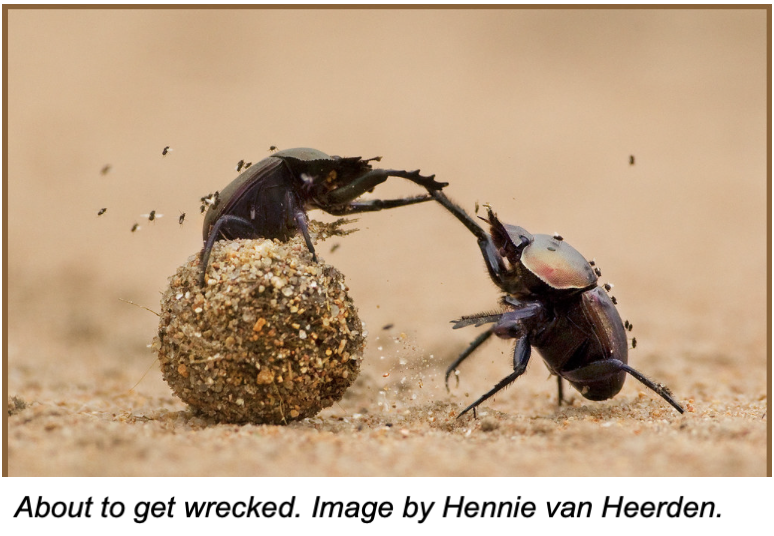
    Although I was vaguely aware of dung beetles and their role in the ecosystem, I finally became interested in them while participating in giraffe research in South Africa. I’ll never forget the time when I was finishing up my giraffe work for the day and I stopped to watch a couple of dung beetles who were squabbling over a single ball of dung (poop). What I had perceived to be a relatively gentle disagreement escalated quickly when I watched one demolish the other with a long-time favourite move from the World Wrestling Foundation, the Brainbuster. You know the one.


    Dung beetles play an essential role in the environment. However, they fly a bit under the radar, which is why they are often called nature’s “unsung heroes.” There are over 100 species of dung beetle, each choosing one of three strategies: rolling, tunneling, or dwelling in dung. Not only do they eat and live in animal dung, but they increase the freak by reproducing in it and burying it. This ensures their offspring have plenty of food for when they hatch. 

    As gross as it is, this burying behavior strongly limits the growth of vertebrate parasites, which is tremendously helpful to the rest of the ecosystem. They help remove animal dung from the surface environment with incredible efficiency and speed. In some places, the beetles can eliminate a pile of dung in less than 10 minutes, where the ground would otherwise be carpeted with it.

    Dung beetles are very widespread, found in many different habitats across all continents except Antarctica. Like many species, dung beetles appear to be harmed by the break-up of natural environments. This fragmentation reduces the size of undisturbed, or core, habitat in the centre and creates isolated habitat patches. The environment along the edge of a habitat is usually quite different from the core. In forests, for example, it’s typically windier and sunnier at the edge of the forest than in the centre. 

    Edges are not only susceptible to environmental challenges, but also to human impacts. They are more vulnerable to fire, as well as illegal harvesting or collecting of plants or animals by humans, simply because they are more easily accessible. Some of these impacts along the edges don’t stay localized, but can radiate into the core habitat as well.

    Edges are in fact an important habitat, because they support species that like transitions between different habitats. However, as humans continue to break up large habitats, with roads or communities for example, the amount of edge habitat increases, while core habitat shrinks. This challenges the animals that rely on core habitat. Additionally, the edges of habitats typically support fewer species than the core. We don’t want to consistently change habitats around the world to ones that support similar and fewer species. 

    Buffer zones are areas around a sensitive, often legally protected, environment that are typically managed to reduce edge impacts on the borders of a sensitive area. Sometimes buffer zones have methods to exclude humans or livestock, such as fences. Sometimes they are simply designated areas without active protection measures. Relatively little is understood about how effective buffer zones actually are for some species.

    Back to dung beetles, we typically see fewer individuals and a less diverse group of dung beetles along habitat edges than in the core, because they are a group that tends to be quite affected by human activities. For example, because they are in constant contact with dung, they are exposed to pesticides that livestock ingest, which has been causing population declines. But how do buffer zones impact dung beetle diversity and density along the edge of protected habitats?

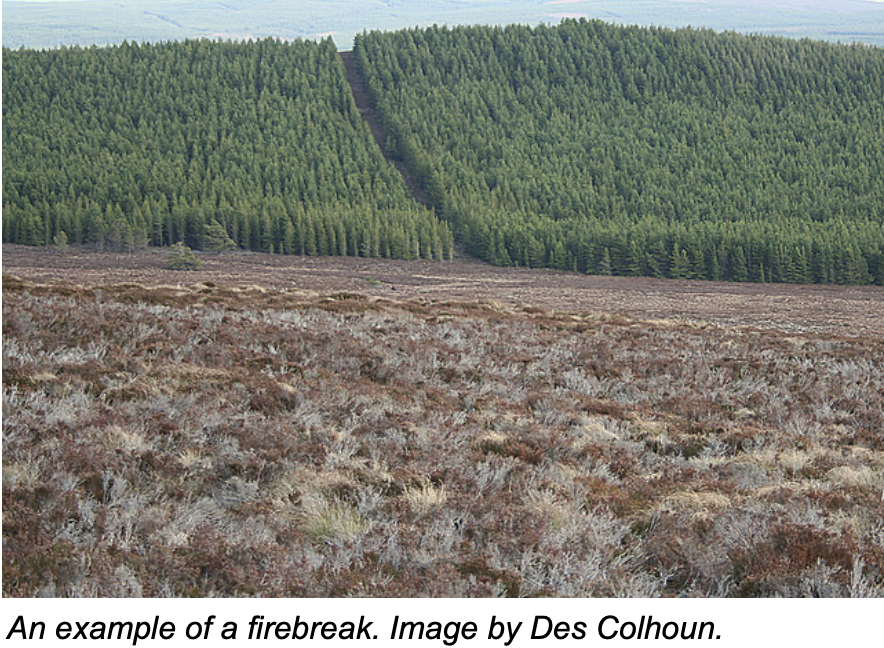
    Andrew Barnes and his colleagues, including the late Rowan Emberson from Lincoln University, decided to find out. The montane rainforests in Sub-Saharan Africa are shrinking rapidly, largely due to deforestation for agriculture and grazing. There is also nearby habitat decline that often comes with agriculture. The Ngel Nyaki forest reserve in Nigeria is a heavily fragmented area. To test how dung beetles would respond to increasing edge effects, the researchers applied experimental habitat restoration treatments to certain areas along the edges. For the restoration, researchers excluded livestock with fencing, created and maintained firebreaks to help block fire, and allowed passive natural regrowth of the floral community. This combined restoration occurred in 200 metre buffer zones over the course of three years.

    The impact of these buffer zones was remarkable. In the forest next to the restoration area, the dung beetle population size increased by over 50% compared to the unrestored areas. Perhaps more important was the difference between dung beetle populations in the edge and habitats. Before the restoration, there were many more species of dung beetles in the habitat core and relatively few in the edge. After the restoration, that difference disappeared, meaning that the buffer zones successfully mitigated the challenges that are typical of edges for dung beetles. The restoration also led to the return of certain species that had previously locally disappeared in the degraded habitat.

    These changes are incredibly pronounced and occurred after only three years and with small levels of restoration. While firebreaks do require active maintenance, it is encouraging that even relatively minor land-use changes around protected areas can make a world of difference for many species. Relatively few studies have been completed about the effectiveness of buffer zones, so this is a single, but vital, drop in a much larger pot of conservation decisions. 

    After all, we want all dung beetle species to survive, no matter how gross or freaky, to tidy up after vertebrates and perhaps to get more inspiration for wrestling moves.

    This article was prepared by Master of International Nature Conservation student Julia Criscuolo as part of the ECOL608 Research Methods in Ecology course.

    Barnes, A.D., Emberson, R.M., Chapman, H.M., Krell, F-T., & Didham, R.K. (2014). Matrix habitat restoration alters dung beetle species responses across tropical forest edges. Biological Conservation, 170: 28-37. DOI: http://dx.doi.org/10.1016/j.biocon.2013.12.006

  • Fantastic mantids and where to find them 

    This past year I have been reading a lot of papers about mantids because I will be doing my Masters thesis on the New Zealand mantis. They are very interesting animals that fill the niche of a top predator in many habitats.

    New Zealand only has one native species of mantid which is called te whē/rō in te reo Māori. Te whē/rō is a name shared with the stick insect. This relates to a tradition that Māori have where, depending on which of these insect species lands on you, this will indicate which gender your child will be. Maybe New Zealanders could bring it back for some niche (and traditional) gender reveals?

    Image from Ken Vernon

    The New Zealand mantis isn’t the only mantid species in New Zealand though. Since the 1970s we have had a second species in our country. Spreading from Auckland and across the North Island, the South African mantis quickly established itself in New Zealand. This South African invader is also well established in Nelson on the South Island.

    These invasive mantids have caused the decline of our native mantis on the North Island. This impact is likely driven by the female South African mantis that eat our native mantis males. These males follow their noses to the exotic female only to find out that it is a dinner date, and they are on the menu.  

    NZ ootheca (Jon Sullivan)

    The native mantis is more of a gentle species, where the females are unlikely to try and eat their mate. They don’t live for very long, perhaps six months in the wild. Mantids need a way to survive the winter and ootheca (little mantid egg cartons) protect their eggs while they develop. Both mantid species in NZ have ootheca, though they can easily be told apart. The South African mantis has a puffy white ootheca, which looks like a small meringue, while the New Zealand mantis has a brown ootheca that is smaller and more geometric.

    Mike Bowie, and his son Matthew Bowie, looked at where the New Zealand mantis laid their ootheca. Mike recently retired after over 40 years at Lincoln University, working on many native species, including the habits of New Zealand mantids.  

    The Bowies found that the New Zealand mantis preferred kowhai, native broom, lancewood, and cabbage tree, which together had 78% of the oothecae. Over half of the ootheca were found on smaller branches, predominantly non-shaded. They found that these spots were warmer and brighter than other parts of the trees and this would help with development.

    Oothecae were also centred on true north, which works with most New Zealand houses and fences since most properties are also facing true north. Ootheca are attached to houses and fences that face north, maximising their sunlight. This allows developing mantids to grow quickly. 

    The Bowies also found that there was a size difference between ootheca in Lincoln compared to those in Palmerston North. The Lincoln oothecae were significantly larger than the egg cases up north. There could be a few reasons for this and one of them is that a larger size helps them handle the colder temperatures down here. This size difference also allowed the southern population to fit a few more eggs in their ootheca giving them a bit of an advantage.  

    South African ootheca (Jon Sullivan).

    The study shows that our mantis has various adaptions that allow them to survive the New Zealand winters, especially by using the modified habitat we have created in New Zealand. Despite this, the New Zealand mantis is in decline. The South African mantis lay their ootheca in more sheltered spaces and produce oothecae that are larger than the locals, giving them advantages. They can even lay an ootheca without mating and it will hatch successfully.

    Just like those male mantids, we’ll be praying for a happy ending!

    This article was prepared by Master of Science postgraduate student George Gibbs as part of the ECOL608 Research Methods in Ecology course.

    Bowie, M. K.; Bowie, Michael H. 2003. Where does the New Zealand praying mantis, Orthodera novaezealandiae (Colenso) (Mantodea: Mantidae), deposit its oothecae? New Zealand Entomologist 26(1): 3–5. (https://doi.org/10.1080/00779962.2003.9722103)

    Further reading:

    https://academic.oup.com/beheco/article/27/3/851/2365697

    https://traviswetland.org.nz/about-travis/scientific-papers/praying-mantis-in-new-zealand/