Category: insect

  • The munchy mountain mystery of the lost bark beetle!

    The munchy mountain mystery of the lost bark beetle!

    Have you ever bitten into a slice of bread, only to find out that it’s gone mouldy? Yuck! But what causes mould, and how does it spread? This was a mystery solved by scientists in the 1800s.

    Fungal branches. CC BY-SA 4.0 Rafał Szczerski

    Mould in bread is caused by a fungus (fungi for multiple). Fungi are made of many tiny branches that grow into a huge maze. These branches reach out to find food from the environment around them; the branches spread from a central point to search for food at the edges. As resources run low, the middle of the fungus dies, creating an expanding ring of live branches. There are many types of fungi out there, and mould is one type that we try to avoid when we store our fruit, vegetables, and bread. When scientists discovered fungi, they solved one mystery, but there are new questions to be answered.

    One mystery involves a type of insect that loves to eat fungi: beetles! Specifically, beetles in the group called Brontini. These little guys eat fungi when they are larvae (baby beetles before they’ve become adults). Usually, the these larvae eat fungi under the bark of trees, but recently a special Brontini beetle was found. This beetle, called Protodendrophagus antipodes by scientists, lives up in the mountains of New Zealand, above the treeline in the alpine zone. Protodendrophagus antipodes is a long name, so we’ll call them Anti.

    Anti (Protodendrophagus antipodes) larva. Photo credit: John Marris.

    Anti are special for more than one reason. First, they live way up in the cold alpine area, which is a harsh environment to live in. The freezing temperatures and dry environment even stop trees from growing there! Second, every other species of Brontini beetle feeds on fungi under tree bark. Confusingly, the area where Anti lives doesn’t have these fungi. Since it’s too high up the mountain for trees to grow, there’s no fungi under tree bark for the beetles to munch on. And so, one group of enthusiastic scientists decided to figure out what these little guys eat. Let’s meet our investigators!

    Our team is made up of three skilled diet detectives: John Marris (“The Mastermind”) – the strategic leader who knows the ins and outs of beetles; David Hawke (“The Brains”) – a science whiz with a flair for chemistry; and David Glenny (“The Sidekick”) – your friendly neighbourhood plant expert. Together, the team solved the mini mystery in the mountains: where is the food for Anti?

    Lichen on rock. CC BY 4.0 Caleb Catto

    In 2018, the team went into the Southern Alps on an exciting trip to examine the scene and gather more evidence. They found two very important clues. First, there were lots of lichens in the areas where the beetles live. Second, sometimes the beetles lived where there wasn’t anything else to eat. I bet you can guess what our prime menu suspect is!

    You’ve probably seen lichens around, though you may not have known what they were. Lichens grow on trees and rocks, but they’re not just one species; lichens are an example of a “symbiotic relationship”. This is when two organisms work together to boost each other’s chance of survival. In this case, the organisms work so closely together that the lichen itself is actually made up of both species! The body of the lichen is a strong skeleton built from fungus. Inside that skeleton live algae, plant-like organisms that can use the sun to make food. In this way, the fungus keeps the algae safe, and the algae feed the fungus. Win win! Cha-ching!

    Spores from a fungus. CC BY 4.0 Aurora Storlazzi

    Since lichens are made up of fungi, this seemed like a pretty good place for our detectives to start. Every good private eye needs evidence to make their case. Thankfully, our clever detectives saw a way to test their theory: the stomach contents of the beetles! They collected some Anti as “evidence” and looked at the food in their stomachs. Inside they found spores that came from a lichen fungus.

    “What is a spore?” you may ask. Remember that maze of branches that make up a fungus? Well, sometimes the branches can’t find enough food for the fungus to eat. If that happens, the fungus has a new strategy to survive: spores! These are little circular pieces of fungus that can spread to new areas and find the fungus a better home.

    CC BY 4.0 Luis Prado

    But their work wasn’t done yet: the detectives found more than just lichen spores in their beetle stomachs. They also found a whole bunch of mystery food which they couldn’t identify. The scientists needed to confirm that lichens really are the only food eaten by Anti. So, the scientists put their thinking hats on and decided to find a new way to solve this puzzle. They chose to use an approach called the “stable isotope test”.

    An isotope is a special form of elements, such as nitrogen and carbon, and organisms at the bottom of the food chain absorb them from the environment. If an animal eats something, then the isotopes of the animal should be pretty similar to its food.To solve this mystery, the scientists tested the isotopes of Anti and all of the potential foods in the area. A good detective looks at all the possible solutions, so they tested the soil, the mosses, the lichens, the tiny mountain plants, and even a type of spider.

    At last, the detective work was done. Their test showed just what we’re all thinking: the Anti beetle really does eat lichen. The link was so clear that David Hawke called it a “textbook example” of the test in action. The scientists were very excited because lichen-eating is pretty rare for beetles.

    After all their investigation, the detectives could finally declare: “case closed!” Now we have a new mystery: how do these beetles survive in the extreme cold of the alpine zone?

    This article was prepared by Master of Science student Heidi Allan as part of the ECOL608 Research Methods in Ecology course.
  • A Knobbly Future?

    A Knobbly Future?

    The Story of the Canterbury Knobbled Weevil

    In 2011, scientists found a mere 26 individuals of Hadramphus tuberculatus, an endemic weevil species, nestled within a small reserve in the tawny high country of Canterbury, New Zealand. This was down from 49 individuals found in 2009. Why was the Canterbury knobbled weevil on the brink of extinction, and where does the population stand now – 14 years down the track?

    Burkes Pass is like a portal – a steep hill that suddenly transforms from the Canterbury Plains of green pastures, forestry blocks and hedgerows into the vast glacial basins, dry riverbeds, tussocks and jewel-like lakes of the Mackenzie Country. The Mackenzie of South Canterbury is beautiful, but also brutal – the sweltering heat of summer paired with the freezing frosts of winter means few people live here.

    On the saddle of Burkes Pass, it was discovered that a long-lost species of weevil did indeed live in this brutal landscape. Called the Canterbury knobbled weevil or Hadramphus tuberculatus, it was scientifically named in 1887, and was found in reasonable numbers, on the then-uncultivated Canterbury Plains. Since then, it has been seldom encountered, particularly after the clearing of its favourite host plant, the Aciphylla – commonly known as the Speargrass plant.

    The weevil was considered extinct, until 2004, when a University of Canterbury student – Laura Young – stumbled across one of these knobbly weevils in a Burkes Pass reserve, rediscovering the species. However, a following study conducted in 2013 found that the species was in decline in Burkes Pass. So, how did they monitor it? How does this weevil survive and what is its future?

    Illustration of Hadramphus tuberculatus, by Des Helmore.
    Illustration of Hadramphus tuberculatus, by Desmond W. Helmore (CC BY 4.0).

    Like the birds of New Zealand, the insects here have evolved without most mammalian predators – with the New Zealand bats being an exception. Many species exhibit traits, such as flightlessness, gigantism, and an inability to self-defend from mammalian predators. The weevil genus Hadramphus is endemic to New Zealand and is a good example of these traits.

    Hadramphus contains four species: H. spinipennis, H. stilbocarpae, H. pittospori and of course the Canterbury knobbled weevil, H. tuberculatus. A common feature amongst all Hadramphus species is their larger size relative to other New Zealand weevils, their flightlessness, and their unfortunate vulnerability to recently introduced mammalian predators.

    The relatives of H. tuberculatus survive in far-flung parts of New Zealand, such as offshore islands and the remotest parts of Fiordland. H. tuberculatus lives in the tussock grasslands of Canterbury, where introduced mammalian predators are much more common. This probably explains the scarcity of the species. The Canterbury knobbled weevil also relies on speargrasses – which are terribly spiky plants but grows impressive flower bunches called inflorescences. Speargrasses were once more common on the lowlands of Canterbury, but have disappeared, due to changes in land use.

    Interestingly, the Canterbury knobbled weevil is one of the few invertebrate species in New Zealand with a legally protected status – under the Wildlife Act. Most invertebrates in New Zealand are considered unprotected.

    A Canterbury Knobbled Weevil adult in hand by Warren Chinn via iNaturalist (CC BY-NC 4.0).

    Because of the apparent threats, entomologists (insect scientists) decided to conduct a survey-based study on the Canterbury knobbled weevil population at Burkes Pass. Through the summers of 2009-2011, pitfall traps were placed out in order to catch these weevils in a small section of a Department of Conservation reserve near Burkes Pass and in adjacent private farmland. This area has large amounts of the golden speargrass (Aciphylla aurea).

    Empty pitfall traps are a type of non-deadly trap to catch insects. They are usually cups placed discreetly in the ground, that unsuspecting terrestrial critters fall into to. The researchers checked these pitfall traps weekly, and a little piece of speargrass was kept in the pitfall trap to feed trapped weevils. Weevils found in a pitfall trap were recorded, measured, and even marked with a unique identification number – in case it was recaptured.

    Unfortunately, the study showed a worrying trend. In 2009, 49 weevils were captured in the pitfall traps, then 41 weevils in 2010 – and then in a drastic drop, 26 weevils were captured in 2011.

    In the 2009 season, a small number of the weevils caught were in the farmland pitfall traps – meaning that they existed beyond the confines of the reserve. But, by 2011, this number of weevils caught in farmland became zero. This might have meant that the reserve was a better place for the weevils, but ultimately they were declining all the same. Many weevils in the reserve were recaptured again and could be re-identified with unique numbers written on their wings! Although the weevils can’t fly, some had been recaptured up to 190 metres away within the reserve – that’s a lot of walking for a flightless insect!

    So, why were the weevils declining? The researchers make no specific discussion on this point, however introduced predators may be the main culprit – particularly rodents. A more recent 2024 study on large-bodied alpine invertebrates in southern New Zealand found that sites with mice had less wētā (a group of cricket-like insects) and these wētā were slightly larger on average when compared with sites without mice. Although wētā have a different ecology to weevils, there could be a similar story going on in the Canterbury high country.

    Since this study, the outlook for the Canterbury knobbled weevil has been grim. Although a ton of work has gone into the Burkes Pass site – including pest-resistant fencing, weed control, and continued searching, there hasn’t been any recent re-discoveries of the weevil here, although bugs have a special talent of hiding in plain sight. Most people are not looking out for funny-looking weevils that live on one of the most hostile plants in New Zealand.

    In a similar circumstance to the 2004 re-discovery, John Evans happened to come across a large weevil on a speargrass near Lake Heron – in the high country of Ashburton Lakes – in 2024. Uploading the observation to iNaturalist, it was quickly confirmed as a Canterbury knobbled weevil by entomologists – revealing a new population of the species. Later searches discovered even more weevils, creating new hope that the species could live on. Despite this amazing discovery, the same conservation issues remain – how can this species be effectively protected for long-term conservation? Perhaps new initiatives for pest control need to be developed – particularly for mice – but this has yet to be established.

    Lake Heron, in the Ashburton high country basin. A new population of Hadramphus tuberculatus was recently discovered nearby. Photo by the author.

    Unlike other species of Hadramphus, the Canterbury knobbled weevil cannot rely on remote offshore islands for survival – as the Canterbury speargrass ecosystems are important for its survival. Mammalian predator control and the protection of the weevil’s host plant should be the priorities.

    Translocation of the species is another option that could be considered, especially given that the weevil did survive in captivity. The Canterbury knobbled weevil could be considered a flagship species for these unique dryland ecosystems in eastern New Zealand, which are often overlooked as important part of New Zealand biodiversity.

    The critical status of this species is a reminder of the enormous loss of biodiversity that has occurred in the Canterbury region. Imagine if knobbled weevils were commonplace on speargrass plants again, living alongside various other native flora and fauna that is facing a similar fate? Losing this species to extinction would be a further loss of what makes this region unique.

    This article was prepared by Master of Science student Noah Fenwick as part of the ECOL608 Research Methods in Ecology course in the Department of Pest-Management and Conservation.

    Links/References

    Bertoia A., Murray T. J., Robertson B. C., Monks J. M. (2024). Introduced mice influence the large-bodied alpine invertebrate community. Biological Invasions 26:3281-3297. https://doi.org/10.1007/s10530-024-03370-x

    Fountain E. D., Wiseman B. H., Cruickshank R. H., & Paterson A. M. (2013). The ecology and conservation of Hadramphus tuberculatus (Pascoe 1877) (Coleoptera: Curculionidae: Molytinae). Journal of Insect Conservation 17:737-745. https://doi.org/10.1007/s10841-013-9557-9

    Department of Conservation (New Zealand) Website (20 December 2024). “New population of critically endangered beetle found”. https://www.doc.govt.nz/news/media-releases/2024-media-releases/new-population-of-critically-endangered-beetle-found/

    New Zealand Legislation. Wildlife Act 1953 (6 May 2022). “Schedule 7: Terrestrial and freshwater invertebrates declared to be animals.https://www.legislation.govt.nz/act/public/1953/0031/latest/whole.html#DLM278595

    Pawson S. M. (2005). Weevil Upheaval. New Zealand Geographic, Issue 72. https://www.nzgeo.com/stories/weevil-upheaval/

    Young L. M., Marris J. W. M., & Pawson S. M. (2008). Back from extinction: rediscovery of the Canterbury knobbled weevil Hadramphus tuberculatus (Pascoe 1877) (Coleoptera: Curculionidae), with a review of its historical distribution. New Zealand Journal of Zoology 35:323-330.

  • Thistle do me: a fussy biocontrol beetle

    My mother makes a great liver and bacon. Like many cooks who have spent decades on a sheep farm she is also a dab hand with a great mutton roast, scones, and sponge cakes. She can also preserve fruit at a moments notice. The highest compliment I every received for my own infrequent cooking attempts was from my son when I made some excellent gravy – “Well, he is Nanny’s son” he explained. Family feasts around birthdays and Christmas are common at my mother’s house.

    Edith’s fish pie

    One curious dish that makes an appearance amongst the roast veggies and mint sauce is a dish of fish pie. It’s not a typical part of most peoples’ ‘event dining’ but it is a regular for us in amongst the more high flying hams and legs of lamb. Mum’s humble fish pie is tasty, with lots of eggs and white sauce, and the right amount of rice and corn. More impressively, my sons, my nieces and nephews also love it.

    When someone needs a perk up, they’ve been unwell, or they are passing through on their way to a cold, old student flat, a bowl of Nanny’s fish pie will arrive. When there are lots of different options on a laden table, there is always room on your plate for the fish pie.

    Family gathering, three brothers, empty fish pie dish in centre!

    I can understand how I like it, I’ve been eating it all of my life. I guess it is the same for the grandchildren. It’s a constant and comforting food. I’m sure that every family probably has a similar dish.

    How ingrained are food preferences? Do we build them up over a lifetime of experience or do we arrive with inherited preferences? Perhaps a bit of both? It can make a difference.

    Thistles, from the Cardueae tribe, have been introduced into New Zealand, mostly by mistake as passengers with more useful seeds. Like many other species, thistles have done well here and have established in large numbers and with wide distributions. One of the worst is the Californian thistle (Cirsium arvense), close relative of a nearly as successful invader, and a little more photogenic, Scotch thistle (Cirsium vulgare).

    There have been many attempts to control the spread of these thistles with varying, but generally unsuccessful, outcomes. Ideally, it is great to have a solution that can work without too much effort on our part. A successful biocontrol agent can fit that prescription.

    The green thistle beetle (Cassida rubiginosa) forages and lays eggs for their larvae to grow on species from the Cardueae tribe. This creates problems for health and survival of these plants. Excellent, a solution to our prickly problem!

    Cirsium

    Not so fast. Cardueae is a large group (over 2400 species with many natives in New Zealand). The last thing that we need is a beetle that chomps up lots of the species that we are trying to protect. We also don’t want a beetle that gets distracted by eating other species when it should be eating the target. We’ve been there and done that (see the mustelids brought into NZ to eat the rabbits! Oops). We need to know that this beetle is a little more fussy in its likes.

    A Lincoln-based group, including Jon Sullivan from Pest-management and Conservation, have tested the preferences of the green thistle beetle. They have published in Pest Management Science. They selected 16 different plant species from the Cardueae tribe. Beetles were given the chance to eat each species either with no choice (plonk the beetles on a plant and see what they do) or choice (allow them to select between any pair that is presented to them).

    Crucially, the evolutionary relationships were known between the different plant species. Ideally we want the beetles to only eat thistle species of interest and not just anything vaguely similar (just those that are closely related).

    Green thistle beetle samples in Lincoln University Entomology Research Museum.

    When given no choice the beetles tended to make the best of what was offered. When you are really hungry then that marmalade is edible even if you don’t like it! Give the beetle a choice, however, and they go for the species that is most closely related to the Cirsium species. In fact this was such a strong preference that the researchers were able to conclude that the green thistle beetle is very unlikely to become a problem for anything other than the thistles that we want to control.

    The green thistle beetles are born with preferences for the type of plant that they want to eat and to lay their larvae in. These preferences allow them to adapt and specialise more fully to these plant species. New Zealand does not have any native Cirsium, or other closely related species. So the beetle can go forth and munch to their hearts’ content.

    So, was I born with a hankering for mum’s fish pie? Well it is an old family recipe, so the preference for it probably has passed down through our lineage, probably as something that we re-learn every generation. Now if I get some grandchildren, I will have to make sure that they are exposed to fish pie at an early age!

    Adrian Paterson is a lecturer in Pest-Management and Conservation at Lincoln University. He has a lot of preferences that he would like to explain!

  • Life near the edge: same dung, different day

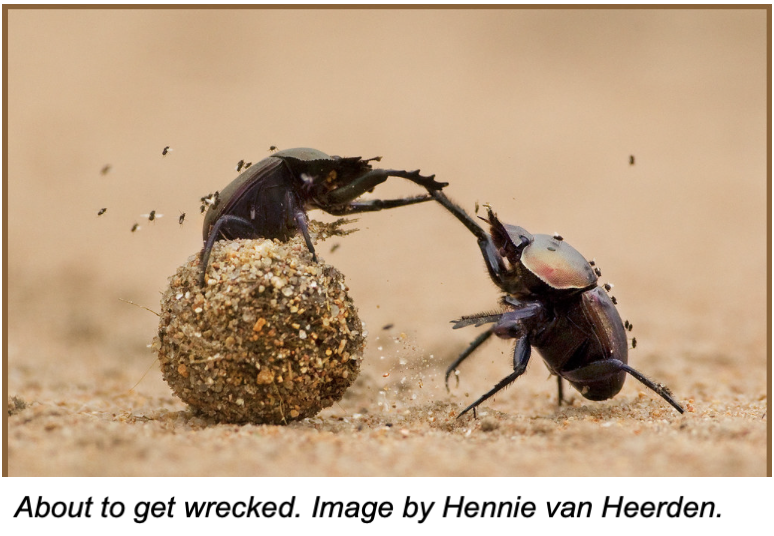
    Although I was vaguely aware of dung beetles and their role in the ecosystem, I finally became interested in them while participating in giraffe research in South Africa. I’ll never forget the time when I was finishing up my giraffe work for the day and I stopped to watch a couple of dung beetles who were squabbling over a single ball of dung (poop). What I had perceived to be a relatively gentle disagreement escalated quickly when I watched one demolish the other with a long-time favourite move from the World Wrestling Foundation, the Brainbuster. You know the one.


    Dung beetles play an essential role in the environment. However, they fly a bit under the radar, which is why they are often called nature’s “unsung heroes.” There are over 100 species of dung beetle, each choosing one of three strategies: rolling, tunneling, or dwelling in dung. Not only do they eat and live in animal dung, but they increase the freak by reproducing in it and burying it. This ensures their offspring have plenty of food for when they hatch. 

    As gross as it is, this burying behavior strongly limits the growth of vertebrate parasites, which is tremendously helpful to the rest of the ecosystem. They help remove animal dung from the surface environment with incredible efficiency and speed. In some places, the beetles can eliminate a pile of dung in less than 10 minutes, where the ground would otherwise be carpeted with it.

    Dung beetles are very widespread, found in many different habitats across all continents except Antarctica. Like many species, dung beetles appear to be harmed by the break-up of natural environments. This fragmentation reduces the size of undisturbed, or core, habitat in the centre and creates isolated habitat patches. The environment along the edge of a habitat is usually quite different from the core. In forests, for example, it’s typically windier and sunnier at the edge of the forest than in the centre. 

    Edges are not only susceptible to environmental challenges, but also to human impacts. They are more vulnerable to fire, as well as illegal harvesting or collecting of plants or animals by humans, simply because they are more easily accessible. Some of these impacts along the edges don’t stay localized, but can radiate into the core habitat as well.

    Edges are in fact an important habitat, because they support species that like transitions between different habitats. However, as humans continue to break up large habitats, with roads or communities for example, the amount of edge habitat increases, while core habitat shrinks. This challenges the animals that rely on core habitat. Additionally, the edges of habitats typically support fewer species than the core. We don’t want to consistently change habitats around the world to ones that support similar and fewer species. 

    Buffer zones are areas around a sensitive, often legally protected, environment that are typically managed to reduce edge impacts on the borders of a sensitive area. Sometimes buffer zones have methods to exclude humans or livestock, such as fences. Sometimes they are simply designated areas without active protection measures. Relatively little is understood about how effective buffer zones actually are for some species.

    Back to dung beetles, we typically see fewer individuals and a less diverse group of dung beetles along habitat edges than in the core, because they are a group that tends to be quite affected by human activities. For example, because they are in constant contact with dung, they are exposed to pesticides that livestock ingest, which has been causing population declines. But how do buffer zones impact dung beetle diversity and density along the edge of protected habitats?

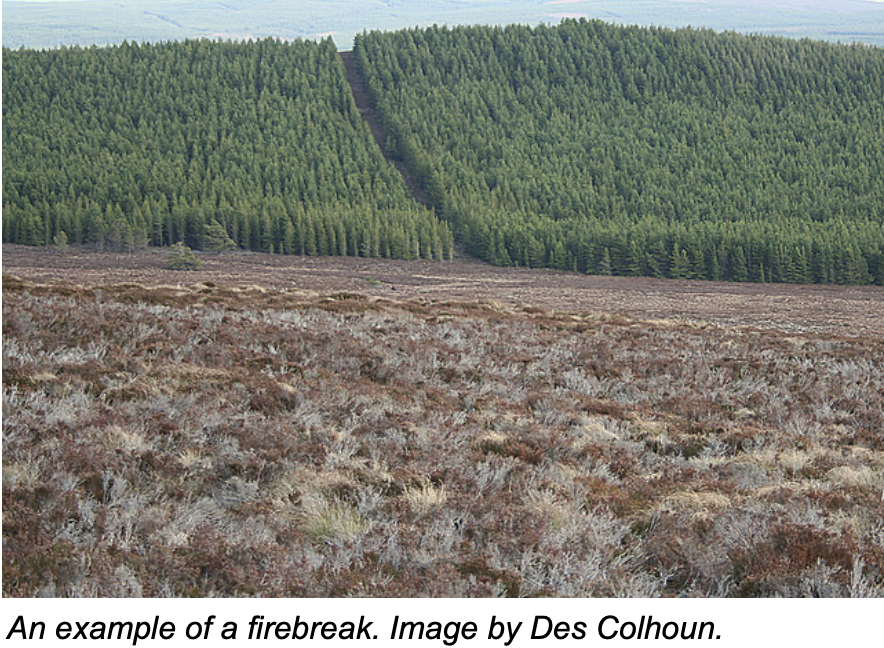
    Andrew Barnes and his colleagues, including the late Rowan Emberson from Lincoln University, decided to find out. The montane rainforests in Sub-Saharan Africa are shrinking rapidly, largely due to deforestation for agriculture and grazing. There is also nearby habitat decline that often comes with agriculture. The Ngel Nyaki forest reserve in Nigeria is a heavily fragmented area. To test how dung beetles would respond to increasing edge effects, the researchers applied experimental habitat restoration treatments to certain areas along the edges. For the restoration, researchers excluded livestock with fencing, created and maintained firebreaks to help block fire, and allowed passive natural regrowth of the floral community. This combined restoration occurred in 200 metre buffer zones over the course of three years.

    The impact of these buffer zones was remarkable. In the forest next to the restoration area, the dung beetle population size increased by over 50% compared to the unrestored areas. Perhaps more important was the difference between dung beetle populations in the edge and habitats. Before the restoration, there were many more species of dung beetles in the habitat core and relatively few in the edge. After the restoration, that difference disappeared, meaning that the buffer zones successfully mitigated the challenges that are typical of edges for dung beetles. The restoration also led to the return of certain species that had previously locally disappeared in the degraded habitat.

    These changes are incredibly pronounced and occurred after only three years and with small levels of restoration. While firebreaks do require active maintenance, it is encouraging that even relatively minor land-use changes around protected areas can make a world of difference for many species. Relatively few studies have been completed about the effectiveness of buffer zones, so this is a single, but vital, drop in a much larger pot of conservation decisions. 

    After all, we want all dung beetle species to survive, no matter how gross or freaky, to tidy up after vertebrates and perhaps to get more inspiration for wrestling moves.

    This article was prepared by Master of International Nature Conservation student Julia Criscuolo as part of the ECOL608 Research Methods in Ecology course.

    Barnes, A.D., Emberson, R.M., Chapman, H.M., Krell, F-T., & Didham, R.K. (2014). Matrix habitat restoration alters dung beetle species responses across tropical forest edges. Biological Conservation, 170: 28-37. DOI: http://dx.doi.org/10.1016/j.biocon.2013.12.006

  • A foreign threat: New Zealand’s Invasive insects

    One of the many great fascinations of New Zealand is the absurd number of bugs found here that are found no where else on Earth. What’s a bug, you might ask? They’re the six-legged creepy crawlies you find everywhere. They are a part of your life, from the obnoxious house fly in your room to the big, bold beetle in the garden! Well, technically, I mislead you with the name bug. Bugs are a single group of piercing-sucking insects; the correct term to describe errant creepy crawlies is insects.

    Aside from being a nuisance in the home, what do New Zealand’s insects do? They provide excellent services to our ecosystem, whether churning up dirt, pollinating flowers, or controlling noxious weeds. They also serve as an essential part of the food web and are a key to the survival of many birds and lizards.

    A friendly, Robust grasshopper says hello! This photo I took in the Mackenzie district shows one of our largest grasshoppers. They’re excellent grazers of lichens and mosses. Historically they provided great nutrition for many birds and lizards.

    Despite their abundance, insects are massively understudied both globally and in New Zealand. We must understand how our insects contribute to our ecosystems and what might happen when new insect species arrive in our country. Species not previously found in New Zealand (nonindigenous creatures) have been a massive threat to New Zealand’s native biodiversity over the past 200 years.

    Of the non-indigenous species in New Zealand, much of the focus has been on mammals, like stoats, and plants, like wilding pines. This work is essential because these sorts of species have huge impacts on our environment and our economy. But what effects do the over 2000 introduced insect species have on New Zealand? A study by Brockerhoff (in 2009) featuring Lincoln University’s Dr Cor Vink, attempts to determine the threat of new insects to New Zealand’s ecosystems.

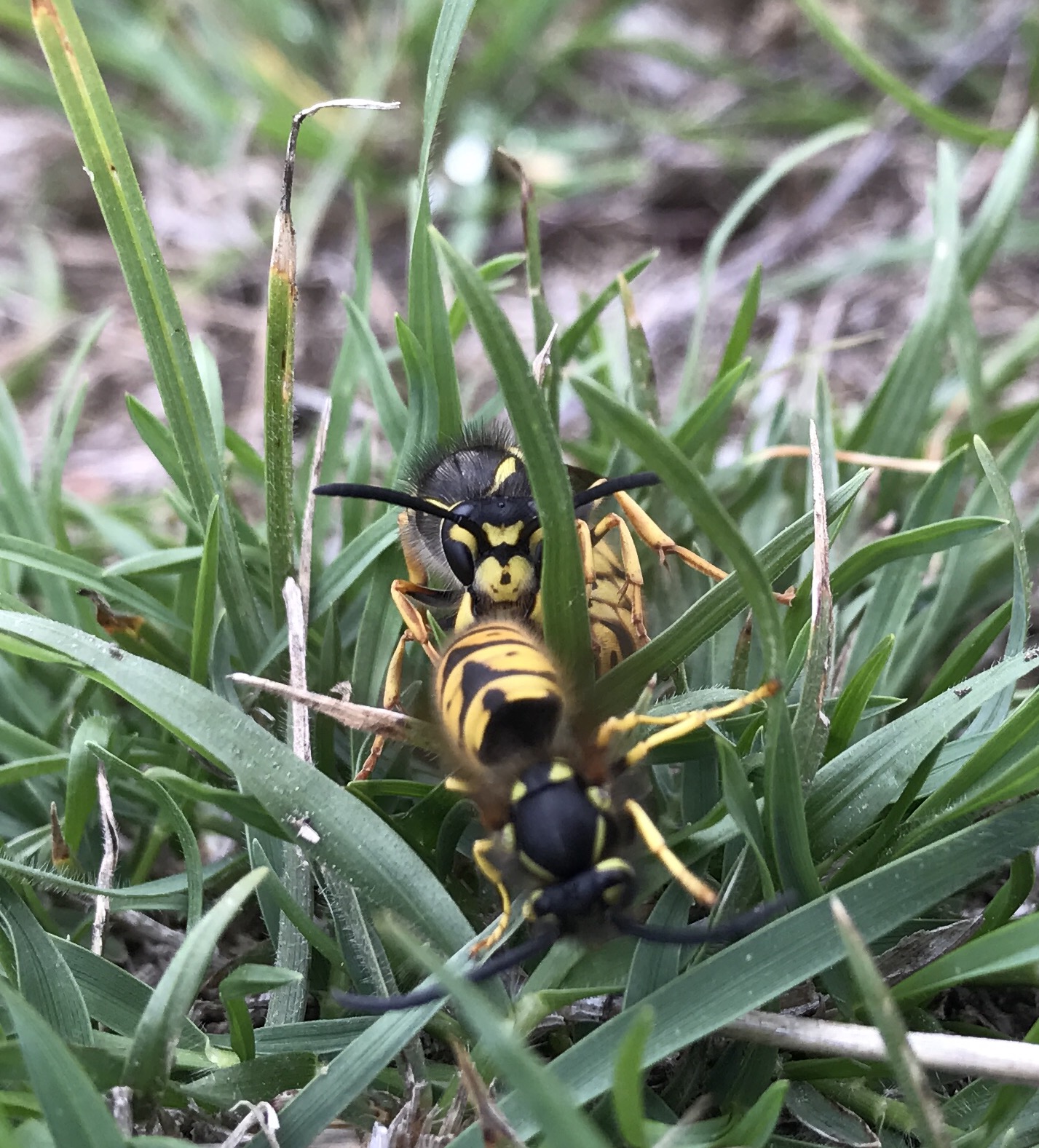
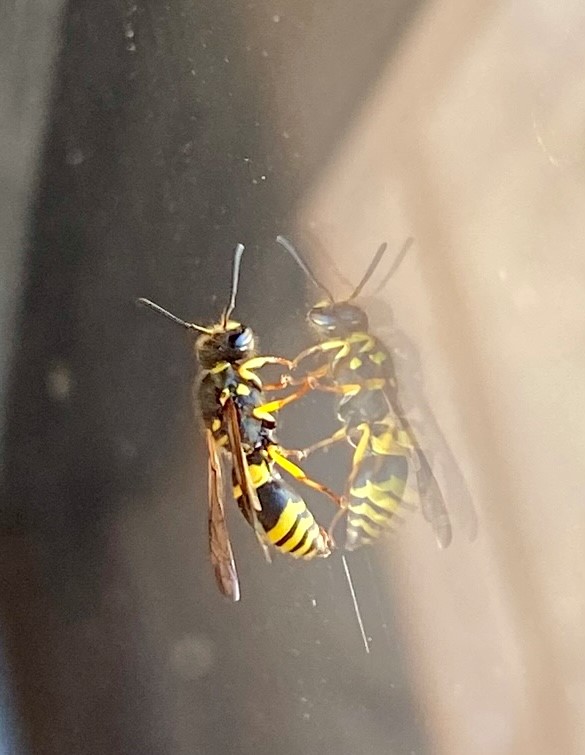
    The threat of introduced insects was recognised soon after European arrival. From what we know few of these species are capable of affecting native ecosystems aside from the well-studied Vespula wasp.

    The currently accepted view is that new insects do not generally hurt our ecosystems. However, as New Zealand’s ecosystems are often so understudied there is little way for us to measure the effects of new insects on the environment. Across most of the world, the arrival of new insects can be a catastrophe with substantial environmental and economic impacts.

    A photo by Will Frost of a typical Mackenzie Basin floodplain grassland. A habitat type threatened by new species of weevils and the expansion of dairy farming.

    So far New Zealand has avoided such a catastrophic invasion. Brockerhoff (2009) suggests that perhaps our intact native ecosystems repel insect invasions well compared to other parts of the world. While our forests have repelled invaders so far, the threat of climate change may alter the balance in the war of plants and insects.

    Brockerhoff (2009) aimed to investigate the effects of insect invaders across a range of New Zealand’s habitats. It was found that over 200 insects capable of damaging forests have been found in New Zealand but have had minimal impact on our native ecosystems. Several generalist moth species and a passion vine hopper have had minor effects without significant damage. In grasslands, several weevil species have been found all over New Zealand, even as high as 2800 metres, but their impact on the surrounding environment so far seems to be minor. These results suggest that all is well for New Zealand’s ecosystems. However, with rising temperatures creating more optimal conditions for invaders there could be an increase in foreign insect invaders.

    When species reach more significant numbers, their effects can start to worsen. Vespula wasps are well documented for their disruptive effects in beech forests. They feed on honey sap and compete with native birds for this resource. Worse still, these wasps predate on many native insects, some requiring a 90% reduction in Vespula wasps to survive.

    The Argentine ant spreading through New Zealand and is also of grave concern. In large numbers this ant has the ability to displace native ants and often eradicate many other native insects in the soil ecosystem.

    A photo by Will Frost showing a honey-dew beech forest from Craigieburn Forest Park which is threatened by Vespula wasps.

    So far many of the more harmful insect species are isolated to human-altered habitats. And insects which make it to intact ecosystems fail to make an impact. As these insect’s populations build over time and more begin to enter the country as temperatures warm the threat of invasion into native forests may increase.

    Many insects are selective of the plants they consume due to plant defences and palatability. This is true even for generalist insects that specialise on many plants. This likely explains why so far our plants have provided protection from so many would-be insect invaders.

    Honey dew being produced by scale insects. A rich food source for wasps. Photo from Adrian Paterson

    Brockerhoff (2009) suggests that for these reasons the greatest risks to our ecosystems now are from generalist insects, especially those which don’t rely upon plants. Generalist predators, like Vespula wasps, threaten the whole ecosystem’s natural processes. Due to their ability to consume the sugar produced by scale insects. These wasps prey on the majority of native fauna in beech forests to provide food for their young. When in huge abundances the composition of insects in the forest and availability of sugar sap is hugely reduced. If more generalist insect species with no natural predators were to arrive within New Zealand the impacts would be even greater.

    To reduce the threats to our ecosystems in future, introduction of more insects for biocontrol should not be taken lightly. We are fortunate that few exotic insects have been established in New Zealand’s native habitats. However, many of the subtle effects caused by invasive insects are not yet known, more study is needed to grasp how these effects are impacting the ecosystem.

    In the future, climate change and habitat disturbance could allow new insects to arrive and threaten our native ecosystems. We know enough now to say our environment is safe from hugely adverse effects; however, the future is uncertain. Developing a greater understanding of how these creepy crawlies subtly affect our ecosystems is paramount.

    This article was prepared by Master of Science postgraduate student Will Frost as part of the ECOL608 Research Methods in Ecology course.

    Brockerhoff, E. G., Barratt, B. I. P., Beggs, J. R., Fagan, L. L., (Nod) Kay, M.,K., Phillips, C. B., & Vink, C. J. (2010). Impacts of exotic invertebrates on new zealand’s indigenous species and ecosystems. New Zealand Journal of Ecology, Suppl.Special Issue: Feathers to Fur, 34(1), 158-174. https://newzealandecology.org/nzje/2916

  • Fantastic mantids and where to find them 

    This past year I have been reading a lot of papers about mantids because I will be doing my Masters thesis on the New Zealand mantis. They are very interesting animals that fill the niche of a top predator in many habitats.

    New Zealand only has one native species of mantid which is called te whē/rō in te reo Māori. Te whē/rō is a name shared with the stick insect. This relates to a tradition that Māori have where, depending on which of these insect species lands on you, this will indicate which gender your child will be. Maybe New Zealanders could bring it back for some niche (and traditional) gender reveals?

    Image from Ken Vernon

    The New Zealand mantis isn’t the only mantid species in New Zealand though. Since the 1970s we have had a second species in our country. Spreading from Auckland and across the North Island, the South African mantis quickly established itself in New Zealand. This South African invader is also well established in Nelson on the South Island.

    These invasive mantids have caused the decline of our native mantis on the North Island. This impact is likely driven by the female South African mantis that eat our native mantis males. These males follow their noses to the exotic female only to find out that it is a dinner date, and they are on the menu.  

    NZ ootheca (Jon Sullivan)

    The native mantis is more of a gentle species, where the females are unlikely to try and eat their mate. They don’t live for very long, perhaps six months in the wild. Mantids need a way to survive the winter and ootheca (little mantid egg cartons) protect their eggs while they develop. Both mantid species in NZ have ootheca, though they can easily be told apart. The South African mantis has a puffy white ootheca, which looks like a small meringue, while the New Zealand mantis has a brown ootheca that is smaller and more geometric.

    Mike Bowie, and his son Matthew Bowie, looked at where the New Zealand mantis laid their ootheca. Mike recently retired after over 40 years at Lincoln University, working on many native species, including the habits of New Zealand mantids.  

    The Bowies found that the New Zealand mantis preferred kowhai, native broom, lancewood, and cabbage tree, which together had 78% of the oothecae. Over half of the ootheca were found on smaller branches, predominantly non-shaded. They found that these spots were warmer and brighter than other parts of the trees and this would help with development.

    Oothecae were also centred on true north, which works with most New Zealand houses and fences since most properties are also facing true north. Ootheca are attached to houses and fences that face north, maximising their sunlight. This allows developing mantids to grow quickly. 

    The Bowies also found that there was a size difference between ootheca in Lincoln compared to those in Palmerston North. The Lincoln oothecae were significantly larger than the egg cases up north. There could be a few reasons for this and one of them is that a larger size helps them handle the colder temperatures down here. This size difference also allowed the southern population to fit a few more eggs in their ootheca giving them a bit of an advantage.  

    South African ootheca (Jon Sullivan).

    The study shows that our mantis has various adaptions that allow them to survive the New Zealand winters, especially by using the modified habitat we have created in New Zealand. Despite this, the New Zealand mantis is in decline. The South African mantis lay their ootheca in more sheltered spaces and produce oothecae that are larger than the locals, giving them advantages. They can even lay an ootheca without mating and it will hatch successfully.

    Just like those male mantids, we’ll be praying for a happy ending!

    This article was prepared by Master of Science postgraduate student George Gibbs as part of the ECOL608 Research Methods in Ecology course.

    Bowie, M. K.; Bowie, Michael H. 2003. Where does the New Zealand praying mantis, Orthodera novaezealandiae (Colenso) (Mantodea: Mantidae), deposit its oothecae? New Zealand Entomologist 26(1): 3–5. (https://doi.org/10.1080/00779962.2003.9722103)

    Further reading:

    https://academic.oup.com/beheco/article/27/3/851/2365697

    https://traviswetland.org.nz/about-travis/scientific-papers/praying-mantis-in-new-zealand/