Category: plant pathology

  • Amaizing distribution: nematode infestations of NZ corn

    Amaizing distribution: nematode infestations of NZ corn

    Are your maize plants growing well in the field? If not,we can often blame plant parasitic nematodes.

    There are around 4100 known species of nematodes and they cause a considerable loss of agricultural produce, with estimated global crop damage of $US 358 billion every year.

    The life cycle of these plant parasitic nematodes have four stages, and the second-stage juvenile (J2) is the destructive phase. Most nematodes are sedentary inside the host and others survive in the soil.

    Written by Sambath in behavior, conservation, front page profile, invasive species, student blog, Uncategorized, zoology, pest management

    In the 2021/22 NZ growing season, about 196,000 tonnes of grain and 1,200,00 tonnes of silage were harvested, making maize one of the most cultivable crops in New Zealand. Around 58% of the harvest was grown for livestock feed demand, and the remaining 42% was for food and industrial processors.

    Plant parasitic nematodes are common in New Zealand and many horticulture industries have experienced a substantial loss of profits from these destructive plant pests. While maize is one of the most crucial crops in this country reported to be damaged by various species of nematodes, few studies have been conducted here compared to other countries.

    So, Nagarathanam Thiruchchelvan, a PhD student at Lincoln University, and his team conducted research to identify and quantify plant parasitic nematode infestations of maize production across New Zealand. Their purpose was to investigate the prevalence and diversity of several genera of plant parasitic nematodes.

    Plant parasitic nematode feeding types. Image from Paulo Vieira & Cynthia Gleason

    The researchers collected a total of 384 composite soil samples from 25 maize fields located in the North and South Islands, focusing on: Canterbury, Waikato, and Manawatu-Whanganui. Data collection was carried out at various maize growing stages and seasons during 2022.

    It was not good news!

    The researchers found that at least one genus of plant parasitic nematode was detected in 378 (98%) of the maize samples. Pratylenchus was the most prevalent and widespread genus (91%) followed by Helicotylenchus (38%).

    Plant parasitic nematode. Image from Scot Nelson

    The plant parasitic nematode population and diversity were higher in Canterbury than in Waikato and Manawatu-Whanganui. Thiru and his team believed that the inconsistent distribution was caused by different climate and geography conditions between the two regions. For example, the South Island is more diverse in soil physiochemical proportions than the North Island.

    Thiru also observed that soil orders, a soil classification system, affected the proliferation of plant parasitic nematode populations, with brown and pallic soil types promoting nematode reproduction, especially for Pratylenchus. Pallic soils refer to a soil type having pale, fragile topsoil and compacted subsurface. For the brown soil, its topsoil is dark grey-brown, and the subsoil is tan or yellowish-brown.

    The lowest number of plant parasitic nematodes was detected in organic soil. Organic-rich soils favor a wide range of beneficial fungi, bacteria, and nematode survival. These microorganisms can suppress the proliferation of plant parasitic nematodes by either feeding on eggs or predating invasive nematodes.

    The study further indicated that the population and diversity of plant parasitic nematodes increased alongside distinguishing developmental stages of maize. Most nematodes were reported from the harvesting stage, while the least were from the seedling stage.

    Root-knot nematode (Meloidogyne enterolobii). Image from Jeffrey W

    Thiru and his team noticed that rotating maize with other crops played a significant role in reducing the incidence and prevalence of plant parasitic nematodes in the field. These other crops included ryegrass, pasture, wheat, white clover, potato, peas, and winter crops. One maize field located in Canterbury was detected with a high significant intensity of 3000 nematode root lesions per kg of roots as a result of non-rotation practice.

    Thiru concluded that there was a requirement for a deeper understanding of dispersal, feeding characters, and life cycle of plant parasitic nematodes, in particular, root-lesion nematode (Pratylenchus) in maize fields across New Zealand. Specific pest management approaches are needed to control the prevalence and abundance of targeted nematodes impairing maize production in both islands.

    These article was prepared by Sambath Seng, a Master of Science student in the Department of Pest Management and Conservation at Lincoln University.

    Thiruchchelvan, N., Kularathna, M., Moukarzel, R., Casonato, S., & Condron, L. M. (2024). Prevalence and abundance of plant-parasitic nematodes in New Zealand maize fields: effects of territory, soil orders, crop stage, and sampling time. New Zealand Journal of Zoology, 1-22. https://doi.org/10.1080/03014223.2024.2424900
  • New Zealand’s most stubborn weed

    New Zealand’s most stubborn weed

    Cirsium arvense is commonly known as the Canada thistle in USA and Californian thistle in Canada. No one wants to take responsibility for these prickly things. They actually come from Europe where they are called creeping thistles.

    This thistle is a small weedy plant that can be a potential nightmare for New Zealand farmers. According to the NZ Ministry for Primary Industries, (2021), it cost the country $722 million in lost revenue in the year 2020 alone, up from $31 million in 2009.

    Photo by Make It Old (Flickr User)

    Given the disruptive nature of this weed, Wendy Kentjens, a budding weed ecologist with the passion for gardening, along with her supervisors, Seona Casonato and Clive Kaiser, decided to learn more about controlling the Californian thistle population on New Zealand pastures.

    To understand why Californian thistles are so weedy, Wendy decided to study the interesting microscopic world of the endophytes living inside, and how they may help or hinder the plant.

    Sounds straight forward! Well, it was far from that.

    Here is a summary of the challenges Wendy faced while carrying out research on Californian thistles.

    Ah the prickly little devils…’ – Working with the thistles meant cuts and scratches all through the research.

    Miss Unpopular, conducting pot trials at the nursery.’ – Turns out, planting weeds that no one likes is a fast way to make some frenemies.

    The sheep ate my data!’ – Wendy found that the sheep initially didn’t eat thistles on pastures, but when they got infected with a rust fungus (Puccinia punctiformis), it made it very tasty for the sheep. She talks more about using rust fungas as a biocontrol agent in her paper “Californian thistle (Cirsium arvense):endophytes and Puccinia punctiformis” (Kentjens et al., 2024).

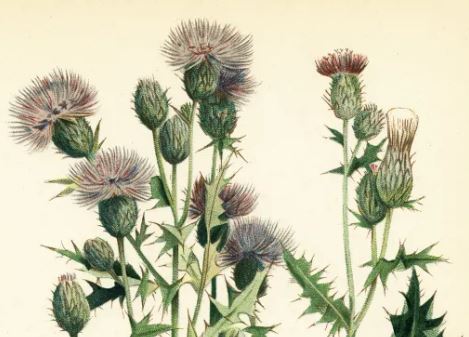
    Hard to photograph the entire plant.’ – It can be really hard to see all the features of a plant from a single photo; Wendy’s mum made her a pencil drawing of the weed for her thesis.

    Figure drawn by Marion van Cruchten


    How do you find the microscopic endophytes within the thistle?

    To find all the endophytes present in these thistles, the bottom, the middle, and the top leaf of the plant were all cut into small 5 mm2 pieces and placed in a petri dish over a growing medium. Then, spore by spore, each different looking fungus was isolated into new growing dishes and incubated.

    Voila! Now Wendy had pure cultures of all the fungi she had found and was all ready for the next step.

    DNA from these pure fungal cultures was collected and identified.


    What did they find inside?

    A total of 88 genera of fungi were cultured from the plant tissue, of which 65 were not previously associated with Californian Thistles.

    The diversity found was a significant increase in our understanding of this infamous weed and what lives within its structure that makes it supposedly invincible.

    Fungal biocontrol can be an effective tool against these weeds. However, Endophytes can alter outcomes of a host–pathogen interaction. A recent study published by Manaaki Whenua (Landcare Research), found that 60% of all rust fungus released as biocontrol had a medium effect on the weed host or a variable effect. Around 15% of all rusts released as biocontrols have failed to become established at all.

    There could be a number of reasons for the variable or unsucessful results. In the case of the invasive Japanese knotweed (Fallopia japonica), two of the endophytes accociated with the weed (Alternaria sp. and Phoma sp.) hindered the establishment of fungal biocontrol by suppressing the production of rust pustules (raised masses of coloured spores that rupture epidermal leaf tissue). (Den Breeyen et al., 2022).

    Understanding these organisms living within the thistle will help future studies on the effective use of fungal biocontrol in fighting these “lovely” weeds. Looking at the endophytes and how they are helping these weed propogate so sucessfully will help us get one step ahead of it and hopefully find biocontrol agents that can circumnavigate these endophyte-host relationships.

    Note that the figure drawn by Marion van Cruchten is currently under review by the European Journal of Plant Pathology titled ENDOPHYTIC DIVERSITY AND COMMUNITY COMPOSITION OF CIRSIUM ARVENSE TISSUES OVER A GROWING SEASON. Authors Wendy Kentjens, Seona Casonato, and Clive Kaiser

    This article was prepared by Master of Science student Dee Patel as part of the ECOL608 Research Methods in Ecology course.


    References:

    Den Breeyen, A., Lange, C., & Fowler, S. V. (2022). Plant pathogens as introduced weed biological control agents: Could antagonistic fungi be important factors determining agent success or failure? In Frontiers in Fungal Biology (Vol. 3). Frontiers Media S.A. https://doi.org/10.3389/ffunb.2022.959753

    Kentjens, W., Casonato, S., & Kaiser, C. (2024). Californian thistle (Cirsium arvense): endophytes and Puccinia punctiformis. In Pest Management Science (Vol. 80, Issue 1, pp. 115–121). John Wiley and Sons Ltd. https://doi.org/10.1002/ps.7387

    Kentjens, W., Casonato, S., & Kaiser, C. (2024). Endophytic genera in californian thistle (Cirsium arvense (L.) Scop.). Australasian Plant Pathology, 53(2), 199–210. https://doi.org/10.1007/s13313-024-00972-w

    Ministry for Primary Industries. (2021). Economic costs of pests to New Zealand (Nimmo-Bell & Associates, Ed.; Paper No: 2021/29). Ministry for Primary Industries. https://www.mpi.govt.nz/dmsdocument/48496-Economic-costs-of-pests-to-New-Zealand-Technical-report

    – figure drawn by Marion van Cruchten is currently under review by the European Journal of Plant Pathology titled ENDOPHYTIC DIVERSITY AND COMMUNITY COMPOSITION OF CIRSIUM ARVENSE TISSUES OVER A GROWING SEASON. Authors Wendy Kentjens, Seona Casonato, and Clive Kaiser

  • The Magical World of Grass and Clover

    The Magical World of Grass and Clover

    *Disclaimer: This article contains Harry Potter references

    After four years of living and studying together, you would think you know someone pretty well. Alas, last week it turned out one of my flat mates had never seen (or read) Harry Potter… shocked, heartbroken, and outraged – the only way to solve this flat feud was to start from the beginning and watch Harry Potter and the Philosopher’s Stone.

    The next day, it was back to study. However, I couldn’t get the wizarding world out of my mind, especially knowing that the second movie, the Chamber of Secrets, was scheduled for that night. It got me thinking. Every hero has a sidekick. Batman and Robin, Frodo and Sam, Harry and Ron. But what if these iconic heroes don’t only exist in the worlds of Gotham City, Middle-earth, or Hogwarts. What if the heroes on this earth have sidekicks too?

    Legumes (like clovers) are heroes. Destined for greatness and capable of incredible things, they can capture nitrogen (N) from the atmosphere and convert it into ammonia, a biological form of nitrogen that fuels the ecosystem. Farmers often incorporate clovers into their pastures to provide nitrogen into the system. Because of their magic-like nitrogen capturing abilities, clovers boost the growth of neighbouring grasses and create an increase in food quality and quantity for grazing animals.

    White Clover (Trifolium repens). CC BY 2.0. Harry Rose

    It is generally understood that this is a one-way relationship, meaning clovers are humble heroes that provide N to the grasses and plants surrounding them. However, through my muggle research, I came across a recent study titled “Grasses procure key soil nutrients for clovers” by PhD student Zhang Wei.

    Could it be? A sidekick to our green three-leaf (sometimes four if you’re lucky) hero?

    Wei and his team questioned whether we properly understand the relationship between clovers and grasses. For the purpose of this article, let’s think of clovers and grasses as characters to understand better their relationship and how they work together.

    Perennial Ryegrass (Lolium perenne). CC BY-SA 4.0. Michel Langeveld

    Different plant species have various magic-like abilities to acquire nutrients. Grasses, for example, are potion makers and can release chemical substances into the soil to make elements such as iron (Fe), zinc (Zn), copper (Cu), and manganese(Mn) more available in the soil. Other plants call on the Room of Requirement and collaborate with fungi to increase access to nutrients through the fungal networks. Like how the Room of Requirement appears for those who need it most, fungi create symbiotic relationships with plants, enabling more nutrients to ‘appear’ and become more accessible in the soil. And clovers, as you now know, use their spellwork to fix atmospheric nitrogen (N).

    However, just like the spell “Wing-gar-dium Levi-o-sa” requires a certain pronunciation, N fixation requires a certain nutrient – phosphorus. Phosphorus is a nutrient constantly in high demand for clovers due to N fixation being such a taxing process.

    Zhang Wei and his research team carried out experiments to better understand how grasses influence the nutrient availability for clovers. Clovers and grasses were grown separately in individual pots, much like Harry living alone in the cupboard under the stairs. They were also grown together in shared pots, similar to Harry and Ron bunking together at Hogwarts. Measurements were then taken from the soil and leaves in all the pots to understand how the clovers and grasses influence each other’s growth.

    The researchers found that grasses promoted the growth of clovers when grown together. This was evident when higher amounts of nutrients such as nitrogen (N), phosphorus (P), potassium (K), and sulphur (S) were found in clover leaves growing with grasses compared to clovers that grew alone. Grasses give clovers a boost in accessing essential nutrients, much like how Ron supports Harry, offering the strength and loyalty he needs to face He-Who-Must-Not-Be-Named.

    Mixed sward of White Clover (Trifolium repens) and pasture grasses growing together. Nicole Parnell. 2025.

    Additionally, more biomass was achieved when both clovers and grasses were grown together compared to when they were grown apart. How would Harry have gotten through his years at Hogwarts without his friends by his side? They achieve more when they work together. By sharing their resources, the plants could increase their biomass, which boosts livestock feed while lowering fertiliser demand.

    The muggle authors acknowledge that more research is needed to fully understand the complexities of how nutrients move through the soil in plant communities like this, especially under field conditions. In 2023, Zhang Wei and his supervisors took the study into the field and, once again, saw enhanced legume growth when grown alongside a diverse range of pasture grass species. Think of Harry’s resilience and leadership, Ron’s loyalty and humour, and Hermione’s intelligence and discipline, all of which work together to create a strong, unbeatable partnership. Similarly, there is an enhancement of nutrient uptake in diverse pastures with legumes (including native legumes) and grasses. This suggests a possible reduction in fertiliser requirements in pastures with increased plant diversity.

    A study that referenced Zhang Wei’s work similarly found that plant mixtures with various legume and grass species reduced intraspecific competition, a term that explains competition between individuals of the same species (think Gryffindor vs Slytherin). This means that the growth and productivity of both legumes and grasses were further enhanced when grown together.

    Zhang Wei’s PhD study provided further insights into the flow of nutrients within plant communities, demonstrating that grasses also play a vital role in nutrient availability and enhancement. This study builds on the argument that pasture diversity can reduce reliance on artificial fertilisers and promote sustainable farming methods. These methods can increase the ecosystem’s stability, making it more resilient to disturbances such as droughts and/or floods. Like any partnership, growing together makes them stronger.

    That’s where the magic happens.

    This article was prepared by Master of Science student Nicole Parnell as part of the ECOL608 Research Methods in Ecology course.

  • Enemies with benefits

    Enemies with benefits

    The idea of ‘friends with benefits’ is reasonably widespread and understood. Having good interactions with others will often lead to even more productive outcomes. But what about ‘enemies with benefits’? Are there times where your enemy can give you some positive benefits?

    Invasive species cause ecological harm worldwide, threatening biodiversity, disrupting nutrient cycling and displacing native species. Pacific islands, with their characteristically high rates of endemism, experience out-sized effects from plant invasions (Bellard et al. 2014). In biodiversity hotspots, such as New Zealand, exotic invasive plant species now outnumber native species in area and in number.

    But, how do they do it?

    New Zealand habitats are prone to invasion by exotic plant species. Why is this?

    A study by Lauren Waller and other Lincoln University and University of Canterbury colleagues, published in Journal of Ecology attempts to find some answers. Lauren shows that exotic plants may gain their competitive edge by accumulating enemies in the soil and sharing them with neighbouring native plants, a phenomenon that plant ecologists call pathogen spillover.

    Lauren set up a large mesocosm (self-contained area) experiment. These were areas where new species could be added to a known group of native species in a very manageable process. The health and growth of all plants could be measured and microorganisms both present at the start and brought in on the introduced plants could be identified.

    Lauren expected exotic plants to experience improved growth due to escape from pathogens (leaving the burden of enemies behind when they come to NZ). This assumption comes in large part from two well-known hypotheses, the Enemy Release Hypothesis and the Evolution of Increased Competitive Ability (EICA) Hypothesis. Enemy Release states that exotic plants can gain incredible success when they move to a new location lacking the enemy pressure they experienced in their home range, particularly co-evolved specialist enemies. EICA goes a step further to suggest that if exotic plants can escape enemy pressure in their new range, those plants will have more resources to allocate to growth over defence.

    Somewhat supporting Enemy Release, exotic plants did not appear to suffer much from specialist fungal pathogens. However, exotic plants did associate with generalist pathogens. Also, in support of Enemy Release, exotic plants did not appear to allocate resources to defence. Instead, exotic plants appeared to tolerate generalist pathogen pressure without reducing their growth.

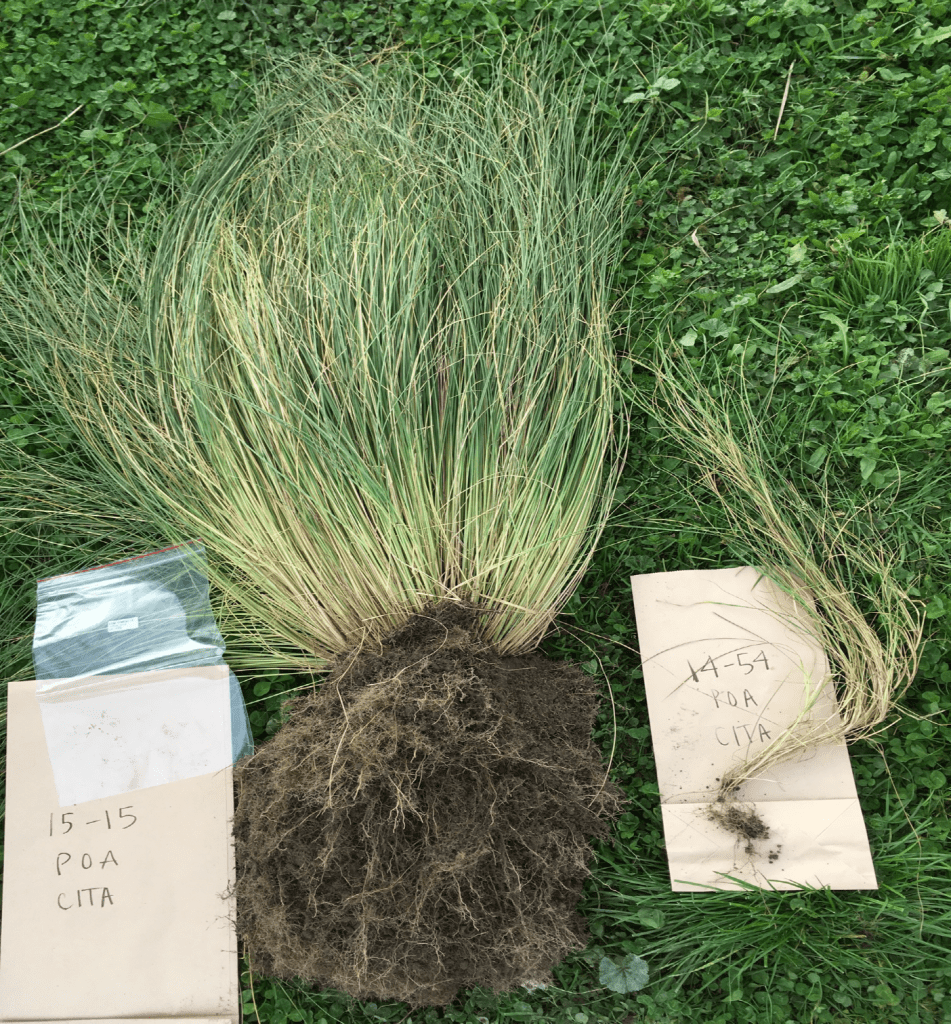
    Native Poa grown in a native versus exotic dominated plot.

    Lauren did not expect to see big impacts by exotic plants on native plants, and boy, did they! Native plants just wasted away when grown with exotic plants. It was very sad to watch. This photo shows an example of a native bunch-grass, grown with all native neighbours (left) or in communities dominated by exotic plants (right).

    What explained the out-sized effect of exotic plants on native plant growth? Our network analysis showed that exotics not only accumulated and tolerated generalist pathogens, but they shared their pathogens with native plants. Native plants did not appear to have the same tolerance for this enemy pressure like the exotic plants did. 

    We started by asking ‘are there times where your enemy can give you some positive benefits?’. It turns out that yes there are times when your enemies can help you a lot. In this case if species cause you problems it will be OK for you if they cause competing species even more problems! With invasive species, your microbial enemies can do you a good turn but taking out the opposition.

    Now that’s a real enemy with benefits!

    Lauren Waller and Adrian Paterson wrote this together (and not as enemies!). They are lecturers in the Department of Pest-management and Conservation.

    Bellard, C., Leclerc, C., Leroy, B., Bakkenes, M., Veloz, S., Thuiller, W., & Courchamp, F. (2014). Vulnerability of biodiversity hotspots to global change. Global Ecology and Biogeography23(12), 1376-1386

  • Dirty little secrets or tiny heroes of the soil world?

    Dirt was one of my first friends. My earliest days were spent collecting worms from the backyard and trying to convince my parents I hadn’t done any dirt taste testing that day (I probably had, but for purely scientific reasons). I was fascinated by what seemed like an entirely different world in the soil of my parent’s garden. I could find all kinds of goodies from insects to plant roots.

    At university I was introduced to the truly magical world in soil: microbes. Although not visible to the naked eye, the tiny worlds inhabited by fungi, bacteria, viruses, and other unbelievably small things, should not be overlooked. These tiny worlds are called the microbial community and they have important roles in New Zealand forests.

    Photo of soil microbes under a microscope. Photo by Pacific Northwest National Laboratory (CC-BY-NC-SA 2.0)

    A good place to start thinking about microbial communities is our own bodies. Most people have heard of their gut microbiome. The microbes in our digestive system are important for our health from immune function to digestion (especially for dirt tasters). However, some microbes, such as the COVID-19 virus, can make us sick. Soil microbes in forests are not so different.

    Forests are dependent on microbes that cycle nutrients, decompose waster, and aid plants in nutrient uptake. Like humans and the common cold, some soil microbes hurt their associated plants. An example of this is kauri dieback disease, a disease spread by a spore in the soil that attacks tree roots and trunks. This disease hinders the tree’s ability to uptake and transport nutrients, essentially starving and killing the tree. Kauri dieback is incurable and fatal for kauri.

    Tāne Mahuta, the largest surviving kauri. Photo by Jodie Wiltse (Author)

    Kauri dieback is named after the tree it infects, New Zealand’s mighty kauri tree. The Department of Conservation explains that kauri can grow up to 16 m in circumference and live over 2000 years. The legendary status of kauri is clear in the language used to describe them. The largest surviving kauri is called Tāne Mahuta, which means ‘lord of the forest’. If you were to visit Tāne Mahuta today, you would find boot cleaning stations, warning signs, and only be able to view the great tree from a platform. Moreso, entire trails have been shutdown to stop people from spreading soil around kauri. Why?

    A soil microbe, Phytophthora agathidicida, travels under the name of kauri dieback. This microbe cannot be seen with the naked eye but has the power to kill tremendously large kauri trees. In humans, the heroic microbes of our immune system save us when nasty microbes make us sick. Are there unseen heroes hiding in the soil that can help kauri?

    During a PhD project at Lincoln University, Dr. Alexa Byers studied soil microbial communities under kauri to find out. The goal was to identify microbes that suppress kauri dieback and can aid in kauri conservation.

    The first step was to understand how microbial communities under kauri react to kauri dieback disease. Alexa infected kauri seedlings with kauri dieback and looked for changes in the soil microbial community. When humans are attacked by illness causing microbes, our immune system amps up to protect us. When soils were infected, Alexa found bacteria that were involved in disease suppression. This was a promising result suggesting that heroic soil microbes could build up their numbers to fight off kauri dieback.

    Kauri tree bleeding resin, a common symptom of kauri dieback disease. Photo by Onco p53 (CC BY-SA 4.0).

    Next, Alexa looked into how specific strains of bacteria from kauri soil impacted the development of kauri dieback. She identified Paraburkholderia and Penicillium microbes that inhibited the growth of kauri dieback in soils. Paraburkholderia are known to enhance plant growth and fix nitrogen. Penicillium are fungi that can kill or stop growth of other bacteria. We officially have some heroic contenders!

    The battles between heroic microbes and kauri dieback in the soil could determine the fate of the kauri above them. Hopefully, researchers can find a way to rig microbial battles in favour of these unseen heroes. More research is needed to determine their true potential, but these soil microbes could be called to action in the near future.

    The world under kauri is just one example of fascinating soil microbes. Soil microbes have been found to be key for carbon storage, impact the taste of tea, and reduce nitrogen runoff from agriculture, among many other amazing things. This is your reminder to appreciate the little things, even the things so little you cannot see them. Next time you play in a garden or walk through a forest, I hope you take a moment to think about all the tiny microbes working away in the soil to help (or hinder) plants and make the natural world work.

    This article was prepared by Master of International Nature Conservation student Jodie Wiltse as part of the ECOL608 Research Methods in Ecology course.

    Research Paper: Byers, A.K. (2021). The soil microbiota associated with New Zealand’s kauri (Agathis australis) forests under threat from dieback disease: A thesis submitted in partial fulfilment of the requirements for the Degree of Doctor of Philosophy at Lincoln University. Lincoln University. https://hdl.handle.net/10182/13887

  • Induced resistance, Sting, and the blades of Westernesse

    It’s a big, bad world out there and it is nice to find something that adds to our protection.This can range from vaccines against viruses, to seatbelts in cars, to laws against causing physical harm. As a naked ape we are not especially intimidating on our own and we often seek out tools to make us safer.

    “With both hands he held the elven-blade point upwards …; and so Shelob, with the driving force of her own cruel will, with strength greater than any warrior’s hand, thrust herself upon a bitter spike. Deep, deep it pricked, as Sam was crushed slowly to the ground.
    No such anguish had Shelob ever known, or dreamed of knowing, in all her long world of wickedness. Not the doughtiest soldier of old Gondor, nor the most savage Orc entrapped, had ever thus endured her, or set blade to her beloved flesh.” Lord of the Rings, JRR Tolkien (Image by Tony Galuidi; main image by Alan Lee)

    One of the key points of “The Lord of the Rings” (and all of Tolkien’s writing) is that small, seemingly ineffectual, individuals can make a real difference in the world. It’s not by chance that hobbits are smaller than humans, weaker than dwarves, less knowledgeable than elves. Tolkien emphasised their ‘normality’.

    Hobbits do have their strengths though, especially in resilience. They are able to withstand the corruption of the ring far longer than other races. Boromir, a doughty man, only has to see the ring once before plotting to ‘borrow it’ for helping with his people. Both Bilbo and Sam, ordinary hobbits, are both able to wear the ring and give it up freely, which no others have done.

    Still, even Tolkien realised that the hobbits needed a little bit of an assist, something that would help to bring out their resilient traits. Tolkien chose to give each hobbit a long dagger with an ancient pedigree. Sting was found by Bilbo. It was a blade that shone with a faint light when evil was near. Sting was made long ago in the first age by elves of Gondolin. Tom Bombadil rescues the hobbits from a barrow wight and gives them each a dagger of Westernesse. These were made a couple of thousand years before in the early Third Age by men of the Dunedain Northern kingdom.

    Each of these blades become crucial to the hobbits achieving beyond their expectations. Pippin stabs a troll chief, who are largely immune to most weapons, and makes a difference at the Battle of the Moranon. Merry cuts the Witch King’s sinews allowing Eowyn to destroy the head Nazgûl in the Battle of the Pelennor Fields, when no one else can touch him. Sam uses Sting to wound Shelob and scare her off, when nothing else would work.

    Importantly, the blades were built with different foes in mind. The blades of Westernesse were built to fight the Witch King and his minions but are useless against giant spiders. Sting was built at a time when Ungoliant’s spider brood were numerous and roaming the world, and so it is effective against Shelob and her webs.

    Merry stabs the Witch King and breaks the spell allowing Eowyn to destroy him.
    No other blade, not though mightier hands had wielded it, would have dealt that foe a wound so bitter, cleaving the undead flesh, breaking the spell that knit his unseen sinews to his will.” – Lord of the Rings, JRR Tolkien

    So, the hobbits left the Shire with their natural hardiness and common sense, but were primed with blades to make themselves more resilient to the difficult situations that they were to face.

    There is a similar concept when it comes to immune systems. Most plants and animals have evolved sophisticated immune systems that respond to pathogens in the surrounding environment. Having a complex immune response is especially important in dense populations where disease and parasites can quickly spread. One such situation is with crop species.

    Crops, where individuals from one species are packed tightly together, are targets for various pest species that can infect an individual and easily move to the next. For the last 100 years or so we have had the luxury of applying chemicals to help keep the plants healthy by reducing pathogens. This is no longer an an attractive option as it once was as pathogens have become resistant and people have become less tolerant of nasty chemicals in their landscapes and food sources.

    One solution is to create induced resistance through biological and chemical inducers. These inducers can artificially trigger immune defences and enhance their responses. For example, grape crops can suffer from downy mildew. Chitosan, a sugar obtained from the shell of crabs, can be sprayed on vines, triggering immune responses that can reduce downy mildew by 90%, compared to what would happen if grapes responded ‘normally’!

    “His little sword was something new in the way of stings for them. How it darted to and fro! It shone with delight as he stabbed at them.” The Hobbit, JRR Tolkien (Image by J. Catlin)

    Just like the blades of Westernesse helped the hobbits, these inducers allow the individuals to respond faster, more intensely, and achieve more than they would otherwise be able to do. Some inducers are useful for a variety of pathogens in many crops, such as Acibenzolar-S-methyl (ASM), and some are very specific, such as Saccharomyces yeast extract.

    Helen Rees, Lincoln University, and colleagues from Plant and Food, University of Auckland, and Scotland’s Rural College have put together a review in the journal Phytopathology about where the field of induced resistance in crop species stands. They look at what has worked on particular crops and the future roles and opportunities for inducers. They conclude that it is an exciting time for this field and that future crop protection may revolve around the next generation of inducers, playing a pivotal role in moving to a reduced pesticide future.

    While inducers may not have the glamour of a Bilbo using Sting to free dwarves from giant spider webs in Mirkwood, they have world-wide contributions to make to feeding a hungry planet by countering the ravening hordes of crop pathogens. Cutting edge indeed!

    Adrian Paterson is a lecturer in Pest-Management and Conservation at Lincoln University. He likes Sting (both in the Lord of the Rings and in The Police).

  • Tricks of the underground trade: networking below the vines

    Life in the soil can be a tricky business for plants and microbes. Nutrients are a limited commodity for some, and competitors may swindle and cheat to gain the upper hand. Strategic partnerships are highly sought after enabling exchange of one commodity for another within elaborate networks.

    In a tough economy, well-connected networks promote resilience, sharing of ideas and opportunity to those participating in mutual exchange. However, an efficient network should be an intentional one. Making simple connections is one thing, but choosing the right friends and trade partners is another.

    Although it may not appear that obvious on the surface, most land plants are proficient networkers. Below ground, plants form selective partnerships with microorganisms in the soil to access nutrients, water, and protection from pathogens. Those with strong networks are favoured in times of scarcity and change.

    Fungal mycelium consisting of thread-like hyphae. Photo by Lex vB at Dutch Wikipedia, (CC0 1.0)

    Within soil communities, fungi known as mycorrhizae play a major role in the growth and survival of plants. It is estimated that more than 80% of vascular plants form partnerships with mycorrhizae, an ancient evolutionary network approximately 450 million years old.

    Mycorrhizae are of particular importance in the viticultural industry as grapevines are highly reliant on these partnerships for growth and nutrient uptake influencing grape composition, vine health and occurrence of disease. In fact, grapevines form associations with entire communities of mycorrhizae known as arbuscular mycorrhizal fungi (AMF).

    AMF form close associations within the root tissue of plant hosts through specialized tree-like structures called arbuscules. These allow exchange of mineral nutrients from the soil for carbon fixed by the plant host which is transferred through the extensive hyphal network in the soil. These hyphae form interconnected “superhighways” within the soil, linking neighbouring vines and nearby crops transferring nutrients, such as nitrogen, from one host to another.

    Arbuscule of Rhizophagus irregularis colonising a plant root. Photo by Hector Montero, Flickr (CC BY-SA 2.0)

    AMF are highly diverse and have different effects on nutrient uptake and growth on grapevines. Depending on the situation, AMF can have positive, neutral, or negative effects on plant growth and stress resistance. However, under field conditions, plants are selective in the networks they build. These communities perform a diverse range of functions which collectively contribute to plant health and characteristics. Therefore, investing in the right trade partners is crucial.

    Until recently, the effects of whole AMF communities on grapevines had been largely unexplored. A research project at Lincoln University lead by Dr. Romy Moukarzel sought to understand how AMF different communities influence nutrient uptake and growth of different grapevine rootstocks. 

    In other words, who are the trade partners behind the vines and what is the return from these communities?

    To answer these questions, AMF communities were recovered from the roots of three different grapevine rootstocks across three different vineyards. Each rootstock was inoculated with its own (“home”) community or communities from other rootstocks (“away”) within three different vineyards. Vine growth, nutrient uptake, and chlorophyll levels were measured to find out if different communities had positive or negative effects on the different rootstocks.

    Consistent with previous work, different vineyards and rootstocks had their own unique communities. Growth and nutrient uptake differed depending on the composition of the community and rootstocks responded differently to the same communities. While some species in these communities improved nutrient uptake, others improved growth. In particular, a diverse community with a large representation of AMF of the Glomeraceae family resulted in the greatest increase in grapevine growth.

    In one vineyard, home advantage was also evident with “home” communities having greater increase in vine growth compared to “away” communities. Interestingly, when the amount of each AMF inoculum was equalised, home advantage was no longer observed.

    By changing the community composition, the positive effects on plant growth were reduced.

    New Zealand vineyard. Photo by Jorge Royan (CC BY-SA 3.0)

    Moukarzel and colleagues suggested that altering the composition may have resulted in competition between AMF leading to reduced positive effects on the host. AMF are known to compete for host resources, soil nutrients and colonisation sites. As a result, cooperation, and rivalry between AMF within different communities may have major implications for vine productivity.

    So, what can grapevines teach us about networking?

    Basically, choose your trade partners wisely. Identify friends and adversaries within the network and invest in those relationships with the greatest return.

    As proposed by marketing expert, Porter Gale: the so-called ‘new model’ of networking should focus less on ‘handing out as many business cards as possible’ and more on making connections based on how you want to grow. In other words, efficient networking should focus on investing in specific needs and interests. A well connected network with diverse partners offers wide opportunity and stability if components are co-operative.

    Overall, the findings generated from the study will be an invaluable insight towards leveraging AMF communities to target specific growth and nutrient requirements of grapevines. This is of particular importance to the viticultural industry as the composition of these communities play an important role in determining vine health, yield, nutrition, grape composition, and wine characteristics.

    Featured image: vineyard inter-row by rawpixel.com (CC0 1.0)

    While this study has provided a step towards understanding the communities below the vines, soil is a complex system with a wide range of players and there is much to learn about the orchestration of these networks. There are likely many more tricks of the underground trade to uncover.

    Moukarzel, R., Ridgway, H. J., Waller, L., Guerin-Laguette, A., Cripps-Guazzone, N., & Jones, E. E. (2022). Soil Arbuscular Mycorrhizal Fungal Communities Differentially Affect Growth and Nutrient Uptake by Grapevine Rootstocks. Microbial Ecologyhttps://doi.org/10.1007/s00248-022-02160-z

    This article was prepared by a Master of Science postgraduate student Malina Hargreaves as part of the ECOL608 Research Methods in Ecology course.

  • Make boysenberries juicy again: the fight against downy mildew

    Yes, why not!! Hi! I am Boysenberry. I will tell you the whole story, how I fight this destructive fungus. Before delving into the subject, I just want to tell you a little bit more about me.”

    Boysenberries Photo by simplyAutumn 2009 from Flickr

    I am a rich source of micronutrients and have great health benefits. My origin was in California, USA and I was introduced to New Zealand in the early 1940s. New Zealand has become a major producer and exporter of my fruits. The fruits are produced on the second-year canes ‘floricanes‘, whereas the first-year canes that only possess leaves known as ‘primocanes’. Those that grow quickly are known as ‘hurricanes’. Hah – an old joke amongst us boysenberries.

    Propagation of my plants is done either by cutting or tissue culture. Sadly, there is a fungus, Peronospora sparsa, who is my enemy and develops a disease, known as Downy mildew, systemically in tissue cultured plants. It causes huge damage and is will often cause losses of 50%, when I am grown with conventional management methods, to 100 %, when grown organically. It produces symptoms of mycelial growth of fungus, on my leaves in early spring and then later then premature reddening, shriveling, and hardening of my fruits and ultimately, the leaves become dull. That’s why it is sometimes called “Dry berry“.

    Downy Mildew of Boysenberry by Jones and other researchers

    Unfortunately! I was struggling with this disease when some traditional methods, like removal of leaf litter, rooted ends of primocanes, and root suckers besides the fungicide sprays, that were being used to fight against it, but those were unfortunately not enough to beat it. I know, you are thinking, then how do I overcome this disease?”

    Some scientists from Lincoln University; Anusara Herath Mudiyanselage, Hayley Ridgway, Monika Walter, Marlene Jaspers, and Eirian Jones, came up with some solutions and experimented on me. They thought that heat and fungicides could help treat and stop the growth of the disease.

    To test if these ideas could work, fifteen symptomatic plants (2-year-old) were selected, repotted and cold stored at freezing temperature for 6 weeks to induce dormancy in them. Dormancy is a state where my plants hang tough and save their energy without undergoing their active growth. Dormancy allows my plants survive on their reserved food as they are cut off from the supply of food. The plants were transferred to a greenhouse until 2-3 primocanes developed. Thereafter, the plants were divided into three groups with five plants in each and given three different treatments to each group.

    The first group remained in the greenhouse for a month and was then given a heat treatment by being placed in a growth chamber at 34°C for 4 more weeks. The second group was sprayed twice with phosphoric acid and mancozeb (fungicide), the first spray was given two weeks afterward in greenhouse and second was given two weeks after the first spray. Plus, this group was also heat treated for a month. But the last group was left untreated and remained in the greenhouse for two months.

    Well! The main reason for giving the heat treatment with or without fungicide spray was to check the ability of my propagation material to limit the systemic infection of fungus prior to tissue culture to produce fungus free plants with verification done by PCR.

    Tissue Culture grown plants. Photo by EcoFert Inc. 2010 from Flickr

    After each of the treatments were complete, the plants were ready for the next step: propagation.

    Do you remember how I am propagated? Yes, the tissue culture.
    The single-bud stem cuttings from each plant were washed in antimicrobial soap, followed by surface sterilisation and washing in distilled water. These steps were followed in order to make my cuttings free from any contamination and washed with water to remove excessive chemicals/disinfectants. The cuttings were then placed in a liquid medium that made it possible for them to grow and multiply in a sterile condition.

    “You know what!” 125 plants survived in total and were potted after this. The largest group of survivors were from the heat treatment group.

    Cuttings/plants with roots were placed in the greenhouse for a couple of weeks where they were misted to maintain moisture. Afterwards they were shifted to the shade house and were kept for about five months under conditions that favor systemic symptoms. As the cool and wet conditions induce the growth of fungus, these conditions were provided to check the ability of my plants to resist it after given treatments.

    Are you curious, to know what happened next, then?

    Polymerase chain reaction machine Photo by USAID Laos 2020 from Flickr

    Twenty-two weeks after potting, all the untreated plants become sick with the disease. However, the other two treatments gave phenomenal results. Only 13 % and 17 % of plants showed visible symptoms, treated with heat only and fungicide + heat, respectively. The seventy-six plants (of 125) from both treatments (Heat and Fungicide + Heat) survived well without any symptoms several weeks after potting.

    Because some plants could have the fungus but not show any signs of infection, the researchers used the modern molecular technique (PCR) to confirm that there were no asymptomatic plants. This test was carried out regularly at certain interval for about a year and all of the tests gave a negative result. Fortunately, only a few plants with heat and fungicide + heat treatments got infected as compared to 100 % infection in untreated ones.

    Well! this was my story, and now I can say that I can fight against this destructive disease, if I am given heat treatment with or without fungicide. I think you are also curious to know how the heat treatment affect the fungus.

    The answer is the high temperature. The higher temperature destroys the essential chemical activities and inactivates micro-organisms like viruses. Similarly, this fungus has the nature of only being rely upon the living matter to eat and survive like the viruses. Therefore, the high temperature restricts the growth of fungus into the shoot tips and stops the infection.

    This is the first time that researchers have found a solution to a key challenge in managing dry berry disease. This opens the door to disease free propagation of my plants in nurseries with the uptake of heat treatment and without fear of fungicide resistance to fungi.

    “So now we can all be happicanes!”

    This article was prepared by Master of Science postgraduate student Manjot Kaur as part of the ECOL608 Research Methods in Ecology course.

    Reference: Herath Mudiyanselage AM, Ridgway HJ, Walter M, Jaspers MV, Jones E. 2019. Heat and fungicide treatments reduce Peronospora sparsa systemic infection in boysenberry tissue culture. European Journal of Plant Pathology. 153: 651–656.

  • Seed coating: fungi protect maize from disease

    Did you know that seeds can wear coats, just like people? Different kinds of coats can be added to seeds to protect them for improved cultivation. How do seed-coatings work and what are the benefits for seeds wearing coats? There are several distinct strengths of seed coating. You will know a lot more about seed-coating, and a recent discovery that could be applied in maize seeds, after reading throughout this page.

    Recently, Federico Rivas-Franco, with colleages at Lincoln University and researchers around the world, discovered the benefits of coating maize seed with a kind of entomopathogenic fungi (Metarhizium species). Entomopathogenic is a technical word meaning insect killing, so this is a fungus that infects and kills insects. By adding a Metarhizium coating to maize seed, Federico found that maize plants grow taller than the untreated plants, when those plants are in the presence of the plant pathogenic fungus, Fusarium graminearum. That was a useful surprise!

    What’s more, the Metarhizium hyphae (the growing threads of the fungus) were observed growing on and in root tissues in all the Metarhizium treated maize with the coating. This showed that Metarhizium can live together with maize roots and had a consistent effect on defending maize plants from underground pests and plant pathogens (like Fusarium graminearum).

    Fusarium ear rot on maize
    Fusarium ear rot on maize.
    Image CC BY-NC-SA 2.0 by Thomas Lumpkin

    Many of you may be asking, what is Fusarium graminearum? It is a causative agent of several serious plant diseases. Fusarium graminearum can cause a devastating disaster on maize and lead to huge yield losses.

    Maize seeds, roots, stems and ears can all be easily infected by this fungal pathogen, which means maize plants are susceptible to Fusarium infections throughout the cultivation period. More terribly, not only maize, but also wheat, barley and rice can be infested by Fusarium. It is quite annoying, right? It can be expensive for farmers. What if people and stock eat the contaminated crops? The answer is they will get ill, and the symptoms including vomiting, stomach ache and so on. Fusarium infected maize can not be sold as food, so farmers need a solution to protect their crop from this nasty fungus.

    Metarhizium species are a kind of fungus that is generally used to biocontrol insect pests. However, the biocontrol ability of Metarhizium not only works for insects but also against plant pathogens like Fusarium. That’s quite the superpower!

    In 1870s, Metarhizium was first extracted and identified by a Russia scientist Élie Metchnikoff (Илья Ильич Мечников in Russian). He found that there were hypha growing from dead beetles. Initially, the hypha was white, then turned green, and then a darker green. After molecular techniques were introduced at the end of 20th century, new species of Metarhizium species have continued to be identified.

    How does Metarhizium combine with seed coats? In fact, it is microsclerotia, which is a resistant structure grown by the fungus, that is added into seed coats. Over the past decade, it has been discovered that entomopathogenic fungi are able to produce high concentrations of microsclerotia when grown in liquid media.

    Microsclerotia are desiccation tolerant and have excellent storage stability. More importantly, they are capable of producing high quantities of infective conidia (asexual spores) after rehydration. All these attributes make microsclerotia an excellent agent to be used in seed coating.

    Besides preventing plant diseases and pests, different seed coatings can also make seeds grow healthier and improve cold resistance (drought & moisture resistance as well). That’s because commercial seed coatings are composite products made up of combinations of insecticides, fungicides, compound fertilizers, trace elements, plant growth regulators or more other chemical or physical components. What’s more, same size and shape of coated seeds make it much easier for mechanical sowing.

    After using seed coatings, farmers don’t need to use as many insecticides and fungicides to protect the emerging young plants. This reduces the pollution in the environment and the insecticide (or fungicide) resistance of the plant.

    This research demonstrated the excellent potential for adding Metarhizium to commercial seed coatings for maize. We have seen the good outcomes in the experimental field. Let’s wait and see the next step for figuring out how best to do this in commercial production.

    This article was prepared by Master of Science postgraduate student Xiaohan Wang as part of the ECOL608 Research Methods in Ecology course.