Category: possums

  • Our plants are not being poisoned by 1080 possum baits

    Our plants are not being poisoned by 1080 possum baits

    I’ll admit, before taking the 16 hour flight from Arizona to Christchurch, I didn’t know much about New Zealand besides ‘What We Do in the Shadows’, Karl Urban, and affordable yarn. I was especially excited to get my hands on possum yarn.  

    Possum yarn is coveted by the knitting community for its lightweightedness and warmth, only surpassed by the fur of arctic foxes and polar bears. And let me say that I absolutely think that the possum yarn was worth every dollar. With just 400 meters (one skein/ball) I was able to knit up a cabled hat, mittens, and still have some left over for some ankle length socks!  

    The feeling of possum yarn is incredibly soft and the natural brown color of the possum fur mixed with merino sheep wool makes for a more muted (in a good way) color palette. However, I recognise that the brushtail possum is a prevalent pest in New Zealand; so much so that drastic measures like Compound 1080 poison baits have been used since the mid-1950’s to control this introduced species. 

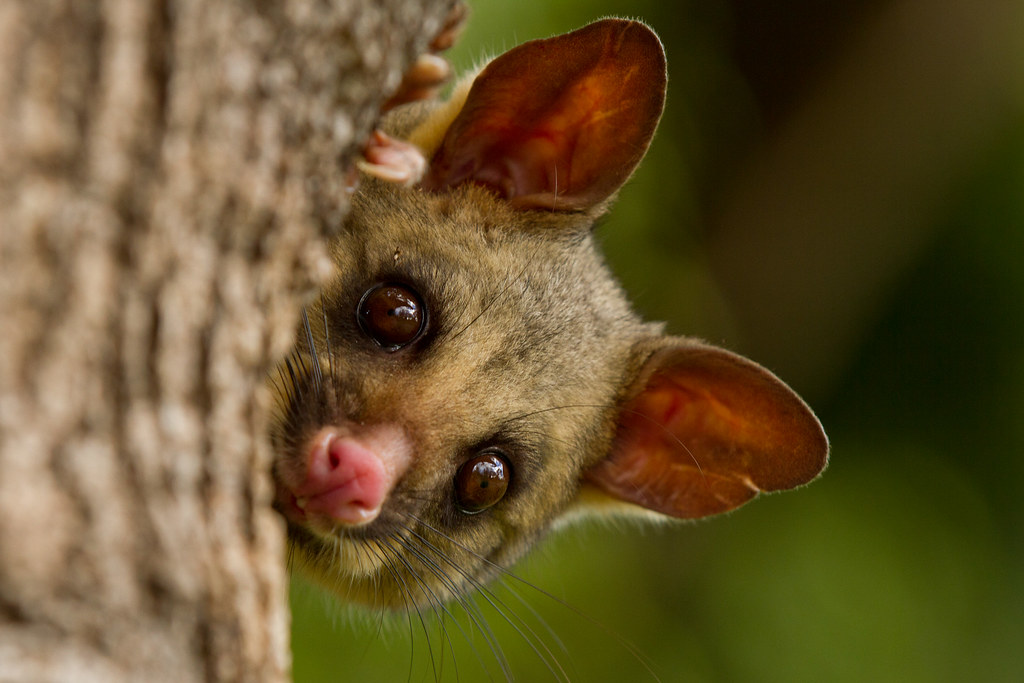
    Common Brushtail Possum by Catching The Eye, 2014 (CC BY-NC) 

    Compound 1080 for pest control in New Zealand 

    To put it simply, sodium fluoroacetate (AKA Compound 1080) is a vertebrate pesticide used to control introduced mammal species, such as rats, mice, feral cats, and possums. Without Compound 1080, these species decimate the population of endemic plants and animals only found in New Zealand. The compound is dispersed by aircraft(i.e. helicopters or fixed-wing planes) in either a carrot or cereal bait.  

    According to my professors, everyone has an opinion on the use of 1080. While Compound 1080 is great when it works, there are concerns from both the general public and Māori communities. From a public perspective, 1080 does have the real danger of killing people’s cats and dogs if accidentally ingested. As a pet owner myself, this is especially scary because my cat and dog would likely eat the bait before I’d have a chance to recognise what it was. Additionally, the Māori community has concerns about Compound 1080 leaching into the soil and then poisoning plants used for food or medicinal purposes.  

    Back in September 2003, a cooperative effort was made in New Zealand by the Ecology Department at Lincoln University, Landscape Research, Lake Waikaremoana Hapu Restoration Trust, and the Tūhoe Tuawhenua Trust to determine if Compound 1080 negatively impacts plant species used by the Ngāi Tūhoe Māori and if not, how to get this information spread among the iwi. To achieve this, a study was conducted on wild-growing pikopiko (AKA hen and chicken fern) and Karamuramu plants in State Forest Block 100, just south of Lake Waikaremoana. 

    Hen and Chickens FernAsplenium bulbiferum by John B, 2016 (CC BY-NC) 

    Ten individuals of each plant species were chosen and placed underneath wire mesh as protection against herbivory. Of the twenty plants, 3 of each species were exposed to a single Whanganui No. 7 cereal 1080 bait. Samples were taken from the plants throughout the study (days 0, 3, 7, 14, 28, and 56) as well as bait samples at the very beginning and end, to test for potential shift in potency over time.  

    More than 99% of the 1080 had disappeared from the baits by day 56 and all but one plant sample had no remaining amounts of 1080 within their systems. Of the twenty plants sampled, only one Karamuramu plant retained the toxin; and that was at most 5 parts per billion (ppb) and was completely gone by day 28.  

    Foodweb database 

    Karamuramu plantCoprosma robusta by eyemac23, 2025 (CC BY-NC) 

    I don’t know about you, but I’ve never been a huge fan of reading scientific articles. They’re always confusing, too long, and to be honest, a bit dry. Sometimes I wish I could, instead, just scroll through a presentation with all the information presented short and sweetly.  

    Oh wait, this article did just that and made up not only a comprehensive food web on the interactions of the forest environment with 1080, but also added hyperlinks to it that opens a PowerPoint!(Note: the article did not include the link to the original PowerPoint, only an image of one of the slides.) Each PowerPoint slide focuses on a single plant or animal species impacted by 1080, the intensity of 1080 impact, and additional reference sources. It’s easy to digest and leaves room for more research if one wanted to do so.  

    Concerns from the Māori community 

    In conclusion, I get why using Compound 1080 is necessary against invasive species, like the brushtail possum and it will likely never impact me on a personal level unless it somehow leaches into a batch of yarn or something. However, I also can understand why the Ngāi Tūhoe Māori tribe are still hesitant as 1080 is still a toxin and we may not know the full impacts. While the decision to use Compound 1080 in the Te Urewera area is complicated, in 2016 those from the Ngāi Tūhoe tribe largely oppose aerial drops since it cannot be controlled.  

    Final thoughts 

    I think it’s important to note that for a 70 kg person to actually die from consuming 1080 that has remained in a Karamuramu plant, (and even in this example the probability of death is only 50%), they would have to eat 28 tons (28,000 kg) of the stuff. And that’s also if the plant is eaten raw, normally it’s boiled in water as a tea and diluted even more. Personally, after reading this I wouldn’t be too worried about Compound 1080 in my plants but I will still leave the risk assessment up to those in the Māori community on an individual level. 

    For now, I will continue to enjoy knitting with the luxurious possum yarn until the pests are eradicated from New Zealand once and for all.  

    This article was prepared by Master of International Nature Conservation student Marie Frackiewicz as part of the ECOL608 Research Methods in Ecology course.

    OGILVIE, S.C., ATARIA, J.M., WAIWAI, J., DOHERTY, J., MILLER, A., ROSS, J.G. and EASON, C.T. (2010), Vertebrate pesticide risk assessment by indigenous communities in New Zealand. Integrative Zoology, 5: 37-43. https://doi.org/10.1111/j.1749-4877.2010.00190.x  

  • To bait, or not to bait…: wētā foraging and brodifacoum

    To bait, or not to bait…: wētā foraging and brodifacoum

    I am lucky that my parents live right down the road from the Brook Waimārama Sanctuary. This 690 hectare fenced sanctuary is home to many native species and is about to be home to 40 spotted kiwis (Exciting!!!!). Within this Sanctuary there are “wētā hotels” that offers a haven for wētā, although I have also seen a giant leopard slug in there as well. I often visit the Sanctuary, it has a lot of history and diversity. Sanctuaries offer a safe space for vulnerable native species away from large predators. The surrounding predator-proof fence keeps the bad things out and the good things in. Unfortunately, the rest of New Zealand isn’t exactly pest free, with a lot of our native species being hunted down every day by introduced pests.

    Predator Free 2050 is an exciting goal that is only 25 years away. With our unique flora and fauna, why wouldn’t we want our beautiful country to be predator free? Predator Free 2050 has a focus on removing several pest species (rats, mustelids and possums). Pest Free Banks Peninsula (PFBP) is a local project focused on protecting our beautiful coast, islands and land within Banks Peninsula. PFBP has several methods and tools to eradicate and monitor pests. A common toxin used by PFBP is brodifacoum.

    File:Female tree weta on tree fern.jpg
    A Tree Weta (Image from Avenue , 2010, CC BY S.A 3.0)

    There are concerns about whether toxins, specifically brodifacoum, is killing our native species. These tasty but deadly treats are targeted at mammalian pests, but native invertebrates have also been munching away at the cereal baits that contain the toxin when they come across it. Brodifacoum-laced baits became a popular pest control toxin in the 1990s.

    Quail Island is an island found near Lyttelton. The original vegetation was believed to be a broadleaf-podocarp forest, a rare forest type seen only in small areas around New Zealand. Since 1998 volunteers have been working at restoring the native ecology of the island by regularly planting native trees and targeting pests with toxins. Evidence of native birds breeding would be a good indication that restoration efforts are working and that pest control can make Quail Island a place where native species can flourish.

    Two tree wētā spotted in a wētā hotel at the Brook Waimārama Sanctuary (Photo taken by Author: Kayla Valentine)

    Brodifacoum bait has been used on Quail Island. It is highly effective at reducing mammalian pests. Its purpose on Quail Island was to stop reintroduction of rodents. Due to Quail Island being close to the mainland, mammalian pest are able to cross over at low tide. This slow invasion prevents Quail Island from being completely predator free.

    On Quail Island the brodifacoum baits were found to have been nibbled by wētā and other invertebrates! This discovery flustered scientists. How many other native invertebrates have yet to be identified for consuming the bait?

    This discovery led to increasing concern for our wētā species, many endangered or threatened. How many have died due to our toxic baits?

    A monitoring tool showing possible wētā trails within the Brook Waimārama Sanctuary (Photo taken by Author: Kayla Valentine)

    Studies focused on invertebrate consumption of baits have primarily used baits containing 1080. The studies that involve brodifacoum have also only focused on short-term effects (14-21 days) and one-off consumption of the bait. These hungry invertebrates are likely going for more than one course of their bait snack.

    Mike Bowie and James Ross wanted to determine whether wētā were regularly consuming these forbidden snacks and whether they would survive when they did. They tested in the field and did a laboratory experiment too. The laboratory experiment consisted of wētā being fed either baits with or without brodifacoum and then monitored for 60 days for insect mortality. The field test involved monitoring traps around Quail Island for invertebrate activity.

    Unfortunately, the wētā were hungry. For the field test they found that wētā and invertebrates would line up and wait their turn to eat! The wētā had distinct bite patterns when eating the bait, compared to pests such as mice. Wētā bite marks were easy to identify. In the laboratory test there was no significant difference in mortality of wētā (50% survived that were fed bait, 71% survived that were fed the control ). Mike and James determined more research was needed to be done in order for results to be more conclusive.

    Quail Island from the Peninsula at low tide. (Image from Greg Hewgill, 2006, CC BY 2.0, Flickr)

    So, what does that tell us exactly? The baiting methods we use to get rid of the bad things are also attracting the good things! Our native species are eating the toxins we are using to remove the pests that are eating our native species! We need to find a compromise, a less risky option for our often overlooked native invertebrates.

    Brodifacoum is also a risk to birds’ species! If a bird eats an invertebrate that has eaten brodifacoum, they will be affected by the poison as well. Joanne Hoare and Kelly Hare agree with this and suggest using non-toxic or less toxic methods for pests to protect native species. There seems to be a common theme with studies done on brodifacoum… its toxic for every species! There are several concerns, not just about birds and wētā consuming the bait but many other invertebrates and species consuming it as well.

    So, to bait or not to bait? Mike Bowie and James Ross showed that although there were no significant differences in mortality through the laboratory test, the wētā were eating the bait in the field test and laboratory test. I believe that in order to protect our native species, a less toxic baiting method should be considered. This will reduce long-term harm to species such as wētā. All though brodifacoum is highly successful at getting rid of pests, it can also harm other species. If there are other methods that reduce that risk, we should start with those methods then move to toxic baits as a last resort option on ecologically sensitive areas, such as Quail Island.

    The author, Kayla Valentine, is a postgraduate student in the Postgraduate Diploma of Science at Te Whare Wānaka o Aoraki Lincoln University. This article was written as an assessment for ECOL 608 Research Methods in Ecology.

  • Under Cover of Darkness: Moon Brightness and Mammalian Predator Activity

    Under Cover of Darkness: Moon Brightness and Mammalian Predator Activity

    Written by Kate McDowell

    Last June, I found myself several hours into what would end up being a sixteen-hour run, in the middle of the night, on the coldest weekend of the year. As the ground visibly started to freeze in front of me, I realised that my head torch was struggling in the negative temperatures. Its battery couldn’t cope with the cold exposure. But you know what, I had a trick up my sleeve; it was a full moon.

    I was guided by the incredible illumination of the moon on a clear winter night, and by how few animals I saw apart from the sheep and cattle of Lake Taylor station. As I left the station and entered Lake Sumner Forest Park, my headtorch flickered in the biting sub-zero temps of mid-winter New Zealand near the Southern Alps. I had barely heard a sound since nightfall, apart from my own crunching footfalls on freshly frozen tussock.

    There were no pest animals dancing in the moonlight that chilly midwinter run, and I found myself wondering if our mammalian pests changed their activity based on how bright that big ball of cheese in the sky was. In 2016, Shannon Gilmore did a neat study on the effects of moon phase and illumination on activity of five introduced NZ mammals (cats, rats, mustelids, possums, hedgehogs) for her thesis at Lincoln University. 

    A trail runner foolishly runs 16 hours over an alpine pass, whilst being watched by introduced predators who may or may not be contemplating consuming the body of said runner. [Source: Chat GPT AI, Kate McDowell]

    I seemed to be one of the few introduced mammals blatantly puffing my way up the North Branch Hurunui riverbed. I have this strong memory of looking down and watching myself be followed by my own moon shadow. It made me question – how many eyes were following me in the dark canopy of the nearby beech forest?

    Gilmore found that increased vegetation cover and rain were contributing factors to pest detection. Sites with dense canopies had higher detection rates, potentially because they provide better shelter and reduced exposure from threats like light. While rainfall was not a statistically significant factor, pest activity generally decreased with rainfall. Gilmore suggested this may be because it is cold or the rain might be disrupting the animal’s sense of smell.

    So maybe my paranoia about forest animals staring me down wasn’t so crazy after all. It was certainly interesting to think back on the run and how many introduced predators there could have been in the nearby beech forests. The conservation implications for understanding where predators are and why they might change their activities also gave me some things to mull over the next day.

    Detecting these introduced predators is essential for informing control efforts; we need to know where predators are and how many of them are in a given area. Environmental conditions may be obscuring the predator’s true activity levels. Gilmore added to previous studies of moon phase effects on mammals by accounting for interaction effects of weather and vegetation. Whether these effects were caused by the lower light levels or by something else not explored in this study is yet to be answered.

    Many studies have looked at the role of moon phase and animal activity, but in 2016 few studies had investigated the additional factor of the moon’s brightness. Gilmore was the first to measure hourly light levels through the night and looked at how it affected the activity level of the nocturnal pest species. A highly sensitive light meter (Sky Quality Meter, or SQM) to measure illumination levels between moon phases in the Blue Mountains (Otago), Banks Peninsula (Canterbury) and Hawkes Bay.

    Gilmore found that while moon phase could not explain pest activity, moon illumination did. As the dark side of the moon grew larger, pests seemed to thrive under cover of darkness and became far more active. When the moon hits a mammal’s eyes, Gilmore theorised that they may be spurred to hide. Most introduced mammals in NZ are prey in their native countries and it is hard to say whether a single century of living without their native predators has changed their behaviour.

    SQM successfully managed to detect differences in illumination between moon phases and under different canopy cover levels. Canopy cover was found to have a larger impact on illumination than moon phase. SQM findings on Banks Peninsula suggested that on darker nights a pest is more likely to be active.

    Building on earlier research, Farnworth, Innes and Waas (2016) released a paper looking at the effect of light on mouse foraging behaviour. This study agreed with Gilmore’s results, finding that mice displayed strong preferences for foraging in unlit areas. Farnworth et al. further built on Gilmore’s conclusions by contemplating that artificial light could provide protection from predators in ecologically sensitive areas – for instance, in areas where predator proof fences have been breached by a tree limb dropping on it.

    Predator proof fence study by ZIP scientists showing a rat trying to escape. [Source: ZIP (Zero Invasive Predators Ltd), used with permission]

    The innovative organisation Zero Invasive Predators (ZIP) completed an interesting follow up study in 2018, focusing on whether or not light could deter rats from entering an area. They found that although light did not limit rats passing through, they were less likely to linger in lit zones. Their conclusion: illumination could be used in a layered deterrent system, where light is used to slow down pests.

    Conservation in NZ is generally hamstrung by lack of funding. Efficiency is key to making the most of the meagre dollars on offer, so studies like Gilmore’s can help optimise monitoring and control operations. So when that bad moon comes a-rising, you can bet that pest control and monitoring will be less effective, and it would be more useful to focus efforts during darker nights.

    I definitely felt exposed running through a riverbed under a full moon, so I can appreciate how light can serve as a useful predator deterrent. It’s another tool we should add to the belt as we work toward a predator-free country.

    We’ve reached the end of our illuminating lunar article, but the real question now is how many song references did you pick up on? 😉

    This article was prepared by Master of Science student Kate Morrison as part of the ECOL608 Research Methods in Ecology course.

    Paper: Gilmore, S. (2016). The influence of illumination and moon phase on activity levels of nocturnal mammalian pests in New Zealand (Master’s thesis, Lincoln University).

  • PredatorFreeNZ 2050: fantasy into reality

    High in the treetops of a lush forest, a group of native birds gathered together, their vibrant feathers glinting in the dappled sunlight. Excited chirps and melodic trills filled the air as they engaged in a lively conversation. Their voices carried the hopes and dreams of a restored ecosystem.

    Koru, a charismatic Tūī with iridescent feathers, fluttered his wings and cleared his throat. “Have you all heard the latest? The Humans are determined to make New Zealand predator-free by 2050!”

    The cheeky Kākāriki, a lively parakeet, interjected. “Can we truly reclaim our forests from the claws and jaws of those invaders?” A wise and observant Morepork owl, Ruru blinked his large, round eyes. “Is that so? Quite a lofty goal, but can they really do it?”

    Photo credit: CC BY-NC-ND 2.0 Simeon W Flickr
    Red-crowned Kakariki, Photo credit: CC BY-NC-ND 2.0 Simeon W, Flickr

    With its unique biodiversity, New Zealand is home to a huge array of species found nowhere else on Earth. However, many of these treasures face an existential threat from invasive predatory mammals, such as rats, stoats, and possums, introduced by human settlers centuries ago. These voracious predators ravage the native bird populations. Many species are now extinct, and more are now on the brink of extinction.

    Predator-Free New Zealand 2050 (PFNZ2050) was initiated in 2016 with an audacious aim of eradicating the most destructive trio of predators: possums, stoats, and rats; from New Zealand. This call for action echoed through the mountains and valleys, inspiring conservationists to make New Zealand, once again, a land of breathtaking beauty and thriving unique biodiversity. The ambitious aim of Predator Free 2050 is not without precedent. To date, New Zealand has successfully eradicated invasive mammals from 105 (admittedly much smaller) islands.

    In 2020, a journal article was published that assesses the feasibility and steps needed to achieve Predator Free 2050. it was written by James Ross, from the Centre for Wildlife Management and Conservation (CWMC) at Lincoln University, Grant Ryan from The Cacophony Project, Merel Jansen from the Department of Applied Biology, HAS University of Applied Sciences, Hertogenbosch, The Netherlands, and Tim Sjoberg, from the Taranaki Mounga Project. Together, these researchers have decades of experience controlling and monitoring pest mammals in New Zealand.

    The first step, removing predators with aerial 1080 poisoning and ground-based resetting traps, will help remove the majority of predators. A modified aerial 1080 approach, developed by Zero Invasive Predators (ZIP), can result in localised eradication. This was first tried in a 400-ha area at Mt. Taranaki in 2016, then at a 2,300-ha site in South Westland, using ground-based resetting traps. Regular servicing of resetting traps also gives better ground-based control results.

    Once pests have been eradicated from an area, the next big challenge is to defend the area from invasion. ZIP demonstrated how to defend predators from re-invasion in two sites using a “virtual barrier” of traps. A 2 km wide barrier of traps protected a 400-ha peninsula at Bottle Rock in the Marlborough Sounds. Using this virtual barrier of traps, ZIP prevented predators from re-invading at two sites, in the short term.

    Australian brushtail possums, initially introduced into New Zealand for the fur trade, and now one of the major pest mammals in New Zealand.
    Photo credit: CC BY-SA 2.0, Gnu Chris, Flickr

    Detecting the survivors is the next crucial phase for eradication, as any survivors can build a new population. The CWMC and Cacophony Project found that thermal cameras are 3.6 times more sensitive than trial cameras in detecting possums. Whilst trail cameras appear to improve detection rates, they do not always trigger when a small, fast-moving animal moves in front of them. These cameras also use infrared illumination at night, which may deter some animals.

    Thermal cameras are a new advanced technology that shows high sensitivity in detecting both small and large pest mammals. Because the motion detection is done using software, the sensitivity can easily be adjusted. Unlike trail cameras, thermal cameras do not require infrared illumination to operate at night.

    Videos collected by the thermal cameras are classified using AI technology (machine learning) trained on a library with more than 50,000 tagged videos. The AI can identify the animal species and only keep recordings for the target pests, which can be stored on-board the device or sent out using the cellular network.

    To achieve the PFNZ 2050 goal, detecting the last few individual pest mammals is complex and expensive. As a technical improvement in detection, ZIP has made an AI network of over 500 cameras across the Predator-free South Westland project area. The AI cameras use LoRa (low-powered radio technology) to send the information to solar-powered mini-satellites. The information is transferred to a web server that checks the information the next day. The AI cameras only need to be serviced twice a year to change the batteries. The AI cameras have reduced the time to detect one predator from around six weeks to just one day and have reduced the cost significantly.

    PFNZ2050 will require more innovative strategies, control tools, and wider public support to be successful in its ambitious challenge. Future control work will increasingly take place in and around urban areas. As such, the next most important advancement needs to be construct control tools that community groups can use. There should be a bottom-up-driven approach to community engagement in conservation so that as new technologies become available, the number and size of invasive mammal-free publicly and privately managed reserves can increase. In a recent study, people showed high support for species-specific toxins, but there is a shortage of funding for registration of these toxins.

    NZ has a 60-year history of eradicating pest mammals, from tiny 1-ha Maria Island to more than 11,000 ha Campbell Island, with suitable techniques and public support. This is an example of how the impossible becomes possible when passion, science, and community unite.

    With a final chorus of their harmonious calls, the native birds took flight, their wings carrying their hopes and aspirations to the corners of the land. From forests to cities, their songs echoed, touching the hearts of all who listened.


    This article was prepared by postgraduate student Mohamed Safeer as part of the ECOL 608 Research Methods in Ecology course for his Master of Pest Management degree.

  • 1080 reasons for optimism

    Photo overlooking Mount Summers (Jan 2022). Image by Chida Chapagain.

    It’s good to be optimistic. I have always been hopeful about the future. I lived the first 11 years of my life in a refugee camp. Times were tough, but I knew things could only get better. Even as a child, I knew there was more to this world than what I had experienced.

    Fast forwards a couple of years, and my family and I are living in New Zealand, happier than ever. The first 11 years in Nepal, compared to my last 11 years here in New Zealand, have been extremely different. My life changed for the better.

    Sometimes I wonder what would have happened if my family had moved to America or Australia instead of New Zealand. I often catch myself saying, “maybe my life would have been even better?” Optimism combined with curiosity can be a powerful motivator, leading us to explore the unknown. But we must be realistic with our expectations. Just because we are optimistic about the unknown doesn’t mean it must be true. There will always be challenges and limitations. Nothing is, or will ever be, perfect. 

    The same applies to alternative pest control methods being developed in New Zealand. The pest control toxin 1080 has its concerns, as do alternative methods that have been or are being developed. 1080 is a fully developed method that has been repeatedly shown to control introduced pest mammal populations on a large scale.

    The common brushtail possum (Sept 2010). Photo by Daniela Parra from Flickr.

    While it may not be perfect, it is widely recognised among scientists and conservationists that 1080 is currently the best tool we have for pest control. The use of 1080 is essential in protecting our native flora and fauna. However, we should always be looking to make improvements, but until such progress is made, the use of 1080 must continue. Perhaps you’ve read other things about 1080 and don’t agree. Allow me to explain.

    Bruce Warburton, Penny Fisher, Brian Hopkins, Graham Nugent, and Phil E. Cowan of Manakai Whenua Lanacare Reserach, along with James Ross of Lincoln University, outline the major areas of concern raised by 1080 and summarise the changes that have been made to the use of 1080 to address these concerns.

    The main four concerns related to the use of 1080 have been:

    1. the potential environmental and human health risks,
    2. the limited control over where the bait lands when applied aerially,
    3. the lack of species selectivity, and
    4. the animal welfare impact on target and non-target species.

    They explore the impacts of 1080 use for conservation and bovine tuberculosis (TB) control. They then summarise alternative toxicants and methods for mammal pest control being investigated in New Zealand. Then they address to what extent these alternative methods might be able to address the concerns raised by 1080 opponents. This article may alter your views on 1080.

    1080 is the current best tool we have for our unique fauna!

    Sodium fluoroacetate (1080) has been a recognised pesticide since the early 1940s. 1080 is most frequently mixed into cereal baits for possum and ship rat control. New Zealand is the world’s largest user of 1080. The extensive use of 1080 in New Zealand is made possible by our unique fauna, where we have 35 introduced mammal species and only two native terrestrial mammals (both bats).

    Introduced mammals, such as rats, possums, and stoats, are widespread and have significant impacts on native biodiversity and/or agricultural production. They continue to damage and threaten native and endemic species at unacceptably high rates.

    Māori believe ‘failure to act falls short of our responsibilities to our ancestors, and future generations’. Fortunately, 1080 is a very efficient method for pest control. Monitoring by the Department of Conservation (DOC) before and after aerial 1080 operations targeting possums, rodents, and stoats has repeatedly shown consistent benefits for nesting success in kiwi, kea, kaka, whio, pīwauwau, mohua, and tītitipounamu. O’Donnell and Hoare in 2012 found native bird populations to have doubled after more than 20 years of sustained predator control. 

    North Island Saddleback (Oct 2021). Photo by Geoff Mckay from Flickr.

    Are the ‘concerns’ about 1080 fact or evidence-based?

    There are concerns and opposition to the use of 1080. Some are evidence-based. 1080 does kill non-target species. According to Dave Hansford, about 12% of radio-tagged kea died after aerial 1080 operations. In 1970, there was a ministerial review of the properties, effectiveness, and regulatory control of 1080. The review supported the use of 1080 but also recommended areas for improvement. Most of these recommendations were implemented, but opposition to its use remained.

    In 2006, there was another formal assessment of 1080. Once again, the use of 1080 was permitted. 1080 opponents were still outraged. This triggered another investigation by the Parliamentary Commissioner for the Environment (PCE), who is tasked with providing independent advice to the government. The PCE concluded that “not only should the use of 1080 continue, but that we should use more of it.” Justified concerns about 1080 have been thoroughly reviewed many times, and these reviews have refined the ways in which 1080 is used safely to benefit the NZ environment. The remaining strong opposition to 1080 use by some New Zealanders has required that a lot of time and money being spent on developing, testing, and registering alternatives to 1080. 

    What are these alternative pest control methods?

    There are many alternative methods for pest control. However, many of these are not feasible for our unique situation. For example, shooting is not a viable method for small mammals like mice and rats, and it is too expensive to apply on a large scale. Trapping, similarly is not cost-effective for large-scale operations, especially in the more remote, mountainous parts of New Zealand. Although these methods can complement 1080, they cannot achieve the levels required for effective large-scale conservation. New toxins, including zinc phosphide, sodium nitrate, coumatetrayl, and diphacinone, have also been registered for use. However, none have been developed for aerial use.

    Genetic methods have the potential to drastically reduce the population of mammalian pests. There is a lot of attention on “gene drives”, which are engineered using the CRISPR/Cas9 genome editing technology. The gene drive DNA sequence, typically for reduced fertility, is then interwoven into the genome of an individual organism of the pest species, and every offspring of that individual inherits this modified DNA. One individual with this deleterious gene could potentially lead to complete eradication. This is the most promising alternative to 1080 in terms of cost and efficacy. There is, however, be significant scientific and public scrutiny to be done on this method.

    In the meantime, our birds are continuing to be eaten by pest mammals.

    My final thoughts

    Having lived in both Nepal and New Zealand, I have been able to witness many beautiful birds. Nepal is home to the Himalayan Monal, which is my favourite. I vividly remember chasing this colourful bird around as a child. New Zealand is also home to many beautiful birds. We cherish these birds; they are part of us. However, today, many of them face the risk of extinction.

    I am not an expert in pest control, but, I understand that without pest control, conservation programmes would fail. Reviews after reviews have shown that 1080 is the best current pest control method we have for introduced predatory mammals (possums, mice, rats, stoats, weasels) in New Zealand. Until we have better options, we need to continue using the best tools because our endangered endemic species cannot wait. We are lucky to have a pest control method that has proven to be so effective. It’s good to be optimistic.

    The author Chida Chapagain is a postgraduate student in the Postgraduate Diploma in Applied Science taught at Lincoln University. This article was written as an assessment for ECOL 608 Research Methods in Ecology.

  • The spitfire: a sure-fire way to eradicate stoats?

    Stoat! Look out, the RAF (Really Awesome Field-research) is coming! Photo CC BY-NC 2.0 Stuart Smith, Flickr

    Stoats, weasels and ferrets: the terrifying trio. If New Zealand’s native birds could speak, I’m sure that’s how they would refer to them as they swap stories of escape and near misses. Widespread, wily and lethal, the stoat is considered the greatest threat to the survival of many endangered and threatened native birds on the mainland, such as the takahe, orange-fronted parakeet, and Leonardo DiCaprio’s favourite, the kakī (black stilt).

    Here are the cold, hard facts. Humans introduced stoats from Europe to control rabbits in the 1880’s, against the advice of ecologists at the time. They have since run rampant over our native bird species, throwing many populations into a drastic decline. Like clever little kleptomaniacs, they sleep on beds of feathers stolen from our most treasured and rare birds.

    We must eradicate stoats from areas of New Zealand if we are to have an extant bird as our national icon. The prevailing question is, how?

    Photo CC BY-NC-ND 2.0 Shellie Evans, Flickr

    Never fear, the Spitfire is here! Unless you are a stoat then, yes, be afraid. The Spitfire is a re-setting toxin delivery device which was trialled in the Blue Mountains of Otago in 2013. 65 Spitfire devices were set up for approximately six weeks. Each device was capable of delivering 100 lethal doses of the stoat killing toxin PAPP (para-aminopropiophenone).

    The stoat population was monitored in the area during this time using trail cameras and tracking tunnels in order to measure the Spitfire’s effects.

    The project was carried out by Elaine Murphy, Tim Sjoberg and James Ross from Lincoln University, along with researchers from Wildlands, the Department of Conservation and Connovation. They found that the Spitfire knocked down 62% of the stoat population in the trial area.

    The Spitfire is a very picky individual, only delivering the lethal dose of poison to a suitor of the right body size and shape. The device is able to do this due to its dual sensors. Cameras trained on the Spitfire devices during the trial in Otago recorded no instances of non-target species, such as rifleman, receiving any of the poison. PAPP has been registered for use in stoat control since 2011, but is mostly available for use in fresh meat lures, which are labour intensive to produce and expire quickly.

    The 2013 trial was a success for the Spitfire and PAPP, but it was not without it’s issues. It was a trial after all! Many of the devices malfunctioned before the end of the six week trial due to design faults in weather proofing and circuitry. The conclusion was that the Spitfire showed promise, but lacked in stamina and sturdiness.

    Kereru in Kawakawa, Photo CC BY 2.0 Geoff McKay, Flickr

    All was not lost! In 2016 the New Zealand Government announced its goal to become predator (rats, mustelids and possums) free by 2050, which led to a funding initiative called ‘Products to Purchase‘ from PF2050 Ltd. Five products were selected, based on their expected contribution to the cause, to receive funding to fast track their development to a marketable level.

    In 2019, the first five successful applicants were named, and who should be among them but our voracious Spitfire. A Tauranga based start-up called Envico Technologies Ltd (ECT) went back to the drawing board with the device. They re-engineered and re-invigorated the design and produced a prototype they could now commercialise, all with the help of the funding from PF2050 Ltd.

    The Spitfire was back in the game, with the new design finalised in 2020. The latest model promises a longer lifespan of one year, during which no maintenance or refills are required. It’s widely known that the main cost in stoat control is in the field hours with bait station and trap operations, so this hands-free option is looking like an economical as well as an effective choice.

    Also on the toolbelt of the new Spitfire model is a bluetooth data logger, which records the date and time of trigger events. ECT envisions this feature being highly beneficial for monitoring pest populations and assisting with re-invasion events in eradicated areas. Because of it’s long field life, the Spitfire becomes an attractive option for use in more remote areas where previously the only viable option has been aerial 1080 drops. If you have a ‘Ban 1080’ bumper sticker, this product may be for you.

    Brushtail possum and her joey at Tārerekautuku Yarrs Lagoon, Photo Katherine Turton.

    Just when you think it can’t get any better, a distinct advantage of the Spitfire is that there are few issues with alternative food sources or bait shyness. Stoats don’t have to bite, pull, stand on a treadle, or count backwards from 100 to receive a lethal dose. They are simply drawn in by an automatic lure dispenser that keeps a delicious mayonnaise paste coming all year-round.

    The Spitfire is an intellectual. It has smart capacitive sensors that can detect and measure anything that is conductive. It can tell the difference between the long sausage body of a stoat and a little compact rifleman, preventing our inquisitive native species from receiving the toxin. When the Spitfire senses a stoat it launches a lethal splurge of toxin onto the abdomen, after which the animals are instinctually driven to groom off the mess.

    ECT joined forces with the Department of Conservation and Boffa Miskell to conduct field trials from 2020-2022. Alongside the stoat design, a model specifically for our Australian foes, the brushtail possum, was also trialled using a Diphacinone and Cholicalciferol toxin instead of PAPP.

    Field trials are about to conclude for the Spitfire and ECT are expecting to roll out the finished product at $200 a piece. There is also talk that a rat specific Spitfire is now in the works! This innovative technology is paving the way for more effective pest control not just here in New Zealand but worldwide. Conservation groups get your wallets ready and watch this space!

    For more information, see the article on the Sptifire trial in Otago and follow ECT to keep up with their latest technological solutions for conservation!

    This article was prepared by postgraduate student Katherine Turton as part of the ECOL 608 Research Methods in Ecology course in her Master of Pest Management degree.