‘Coming soon in 3D!’ Periodically throughout my life movie-makers have dabbled with making films that we can watch in three dimensions. You would get your special glasses before the movie session and then sit there wondering when to put them on until the action got going.
To be honest I don’t remember many of the movies that I saw like this. The Avatar movies have always had the option and I watched at least the second movie this way. Spears and monsters would lunge out of the screen at you.
Other than that I am drawing a blank. This is not to say that every 3D movie is bad but just that 3D on its own doesn’t make a film more memorable.
Avatar Adrian! Look out for the arrow!
I don’t even dislike the experience despite having to wear the 3D glasses over my own glasses. There is something immersive about dodging things ‘coming out of the screen’. However, I seldom choose this option if 2D is available. It all seems a bit too much like work perhaps?
Adding a third dimension can help with appreciating scale and movement though. It can also help with identifying who’s who in the screen – there’s just a bit more information that your brain can use.
Identifying individuals is a big deal in biology, especially conservation. When you have a small population you are interested in individuals. How are they doing? Are they breeding? Who do they hang out with?
Of course, for many species there are not a lot of features to differentiate between individuals. They are similar in height, uniform in coloration, and have similar behaviours.
To make them more distinctive we could always band our target with bright colours or paint an obvious mark on them but this involves capturing and interacting with the individual. This causes a great deal of stress and catching individuals is not always simple.
Ideally we could use cameras to take pictures that we could measure features in that are unique to an individual. Two dimensional pictures require an individual to be in an exact place with an exact orientation for this to work. So this is not a reliable method.
Bit wait! … Coming soon in 3D!
It turns out that if you take pictures with different devices from slightly different angles at the same moment then you can much more accurately calculate measurements on individuals. At least in theory.
Jane Tansell with her trusty kiwi dog. Picture from Jane Tansell.
Jane Tansell, a recently completed PhD student at Lincoln University, and her supervisors, Adrian Paterson and James Ross, set out to see if we could use this idea to identify kiwi. Kiwi populations and individuals are difficult to measure. They are nocturnal, usually found in scrubby terrain, are reasonably featureless, and spend a lot of time in burrows. We can use trained dogs to find them but this is quite stressful for kiwi. We can listen to their calls during the night but this is difficult to split into different individuals and certain parts of the population don’t call anyway.
Trail cameras have been used to successfully locate kiwi. Jane wondered if she could pair cameras 12-25 cm apart, taking images that could be used to essentially create a 3D image of features on each bird. Jane knew that kiwi bills vary between individuals and can be used as an ID.
Jane worked with the more technically literate Maurice Kasprowsky and Tom Gray to cobble together the cameras and get them to work together.
Jane, as reported in NZ Journal of Zoology, first tried the setup on a taxidermied kiwi in good light conditions. She found that the cameras could be used to measure the bills to within 1.5% of their actual length. This was a great achievement and would certainly be able to determine individuals.
In theory we should be able to photograph kiwi and recognise them by measuring their bills. Image from Adrian Paterson.
Jane then set up field trials with live kiwi. In the real world, with low light and moving birds the cameras were less efficient. At worst they were terrible but often they were within 3-4% of the actual bill length. This is not good enough to replace current field identification methods but it was still quite impressive given the relatively jury-rigged setup.
Improvements in cameras, especially 3D cameras, are happening quite quickly. With some more trial and error Jane should be able to start reducing the error enough for this to be a viable noninvasive method for following kiwi in the field.
While this is not as exciting as an arrow flying at you from an Avatar movie, this use of 3D does have real world uses that will help with understanding a national icon!
The author, Adrian Paterson, is a lecturer in the Department of Pest-management and Conservation at Te Whare Wānaka o Aoraki Lincoln University. Adrian is a kiwi but unfortunately has no bill to measure.
My time at Lincoln University has taught me that when it comes to bird monitoring, the most common practice is the 5 minute bird count (5MBC). This method is a simple and effective way of counting birds within a specific area by recording sightings and calls. Much of the time, using 5BMC, it is likely that you will not see the bird you are hearing, which is why being able to identify New Zealand birds just by sound is a very good skill.
Lincoln University legend Jon Sullivan did a study on different bird data collection methods that could also mahi together to build a more accurate picture of birds in an area. The study focused on wider Christchurch, beginning in 2003, and recorded patterns in bird species within the area.
One method that was used was the stationary method , which is pretty much the same as the 5MBC but is extended to 20 minutes. The other method used was the ‘mobile method’, also known as the ‘line-transect method’, where you collect data while moving at a fast pace, perhaps by bike, car, or running.
The grey warbler (Gerygone igata, riroriro) are found throughout New Zealand. They are small, grey/brown with a more pale shade of grey for the face to throat. They weigh approximately 6.5 g (lighter than a mouse) and their diet consists of insects and spiders.
Fantails are one of my many favourite bird species, as they love to follow humans around when you are on bush walks. Fantails are able to adapt to environments that have been changed by humans, which is not very common for New Zealand native birds. Fantails (Rhipidura fuliginosa, piwakawaka) are often found in open native bush, exotic plantation forests, orchards and gardens. Their diet consists of insects, especially small species. Fantails are a small bird about the size of a house sparrow, but what makes them so distinctive? Well the answer is in their name…. Yes their tails, like their name suggests they have a long tail that fans out like a well a fan.
Fantail. Photo CC By Chris S, Flickr
Bellbird/ Korimako
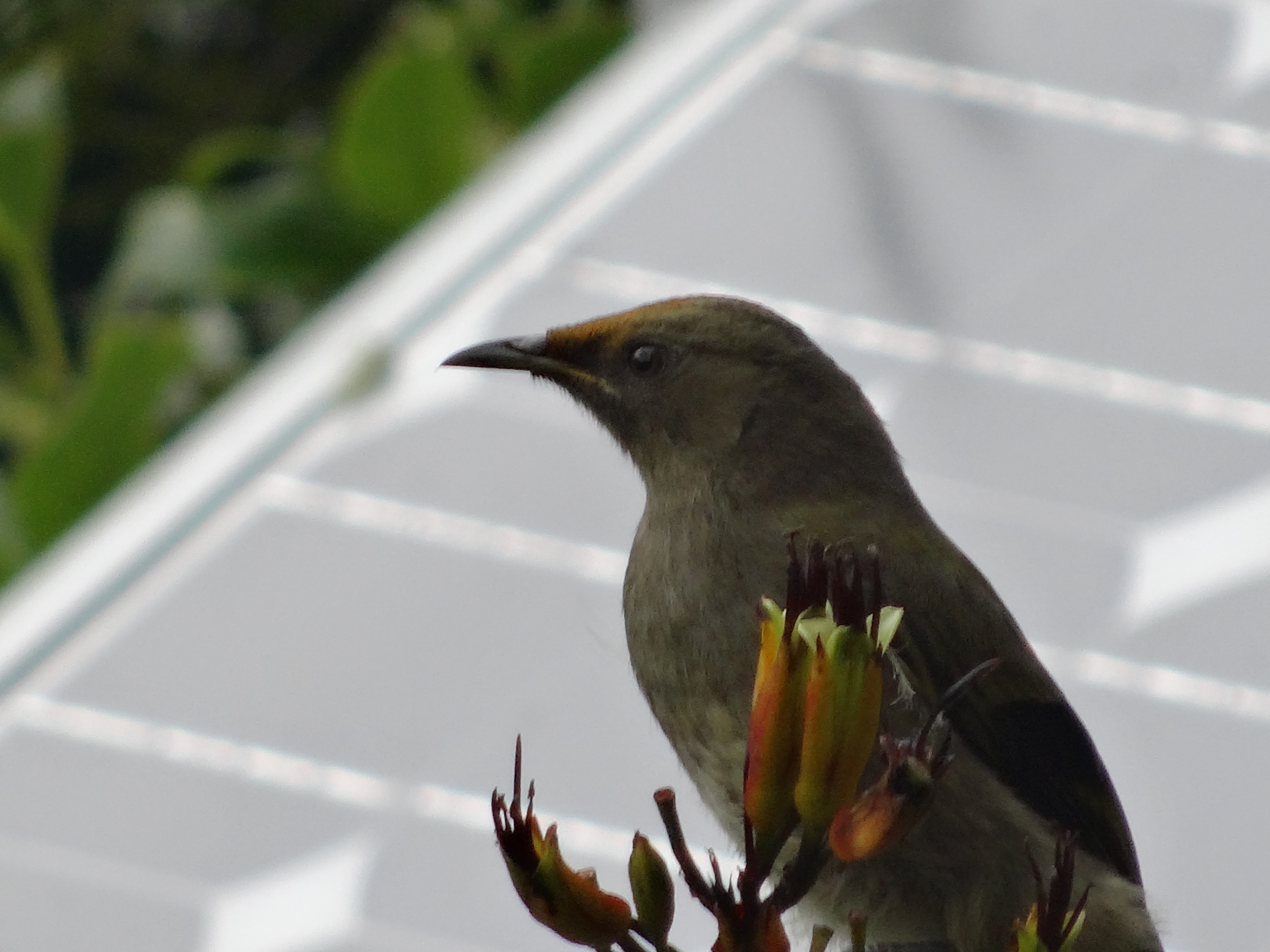
Bellbirds(Anthornis melanura, koromiko)are commonly found in the South Island. These birds have a short, curved beak and are green with a slightly forked tail. Bellbirds, similar to Tūī’, have a distinctive song, it is like a high ringing that’s also kind of smooth, and the repeat the same tune. Bellbirds reside throughout native and exotic forest, scrubs and shelter belts of New Zealand. Their diet is nectar from native and exotic plants, although they do consume fruit in late summer and autumn. Also their diet consists of honeydew that’s found on beech trees.
Bellbird. Photo CC By Glenda Rees, Flickr
Back to the study
Jon Sullivan wanted to understand how nature responds to a forever changing world. He collected distribution and abundance information for many species with these three species being the focus. This is where the methods came into play as a standardised method and a repeatable one is needed to accurately tell us if a species is present or not. The methods talked about above were to work alongside each other.
Around 100,000 bird counts were collected. The approach used helped to summarise data that was from one location, a certain time each week, and one daily route. The results showed that this approach was effective and just as effective as the 5 minute bird count. Counting birds while riding your bike along a road was just as effective at estimating and following trends as more traditional methods.
Fantails, grey warblers, and bellbirds (but not to the same extent as the other 2) are majorly restricted to their forest biotopes and native plantings, particularly in spring.
Like any good study, more data are needed to get a better and clearer understanding. This could create a good opportunity at Lincoln University to teach students doing ecology to learn how to use different techniques besides just the 5MBC methods. Then we too can collect decades long information on our favourite birds.
This article was prepared by postgraduate student Caitlan Christmas, Masters of Science in Ecology and Conservation, for an assignment in ECOL608 Research Methods in Ecology.
Are your maize plants growing well in the field? If not,we can often blame plant parasitic nematodes.
There are around 4100 known species of nematodes and they cause a considerable loss of agricultural produce, with estimated global crop damage of $US 358 billion every year.
The life cycle of these plant parasitic nematodes have four stages, and the second-stage juvenile (J2) is the destructive phase. Most nematodes are sedentary inside the host and others survive in the soil.
Written by Sambath in behavior, conservation, front page profile, invasive species, student blog, Uncategorized, zoology, pest management
In the 2021/22 NZ growing season, about 196,000 tonnes of grain and 1,200,00 tonnes of silage were harvested, making maize one of the most cultivable crops in New Zealand. Around 58% of the harvest was grown for livestock feed demand, and the remaining 42% was for food and industrial processors.
Plant parasitic nematodes are common in New Zealand and many horticulture industries have experienced a substantial loss of profits from these destructive plant pests. While maize is one of the most crucial crops in this country reported to be damaged by various species of nematodes, few studies have been conducted here compared to other countries.
So, Nagarathanam Thiruchchelvan, a PhD student at Lincoln University, and his team conducted research to identify and quantify plant parasitic nematode infestations of maize production across New Zealand. Their purpose was to investigate the prevalence and diversity of several genera of plant parasitic nematodes.
The researchers collected a total of 384 composite soil samples from 25 maize fields located in the North and South Islands, focusing on: Canterbury, Waikato, and Manawatu-Whanganui. Data collection was carried out at various maize growing stages and seasons during 2022.
It was not good news!
The researchers found that at least one genus of plant parasitic nematode was detected in 378 (98%) of the maize samples. Pratylenchus was the most prevalent and widespread genus (91%) followed by Helicotylenchus (38%).
The plant parasitic nematode population and diversity were higher in Canterbury than in Waikato and Manawatu-Whanganui. Thiru and his team believed that the inconsistent distribution was caused by different climate and geography conditions between the two regions. For example, the South Island is more diverse in soil physiochemical proportions than the North Island.
Thiru also observed that soil orders, a soil classification system, affected the proliferation of plant parasitic nematode populations, with brown and pallic soil types promoting nematode reproduction, especially for Pratylenchus. Pallic soils refer to a soil type having pale, fragile topsoil and compacted subsurface. For the brown soil, its topsoil is dark grey-brown, and the subsoil is tan or yellowish-brown.
The lowest number of plant parasitic nematodes was detected in organic soil. Organic-rich soils favor a wide range of beneficial fungi, bacteria, and nematode survival. These microorganisms can suppress the proliferation of plant parasitic nematodes by either feeding on eggs or predating invasive nematodes.
The study further indicated that the population and diversity of plant parasitic nematodes increased alongside distinguishing developmental stages of maize. Most nematodes were reported from the harvesting stage, while the least were from the seedling stage.
Root-knot nematode (Meloidogyne enterolobii). Image from Jeffrey W
Thiru and his team noticed that rotating maize with other crops played a significant role in reducing the incidence and prevalence of plant parasitic nematodes in the field. These other crops included ryegrass, pasture, wheat, white clover, potato, peas, and winter crops. One maize field located in Canterbury was detected with a high significant intensity of 3000 nematode root lesions per kg of roots as a result of non-rotation practice.
Thiru concluded that there was a requirement for a deeper understanding of dispersal, feeding characters, and life cycle of plant parasitic nematodes, in particular, root-lesion nematode (Pratylenchus) in maize fields across New Zealand. Specific pest management approaches are needed to control the prevalence and abundance of targeted nematodes impairing maize production in both islands.
Thiruchchelvan, N., Kularathna, M., Moukarzel, R., Casonato, S., & Condron, L. M. (2024). Prevalence and abundance of plant-parasitic nematodes in New Zealand maize fields: effects of territory, soil orders, crop stage, and sampling time. New Zealand Journal of Zoology, 1-22. https://doi.org/10.1080/03014223.2024.2424900
Have you ever bitten into a slice of bread, only to find out that it’s gone mouldy? Yuck! But what causes mould, and how does it spread? This was a mystery solved by scientists in the 1800s.
Mould in bread is caused by a fungus (fungifor multiple). Fungi are made of many tiny branches that grow into a huge maze. These branches reach out to find food from the environment around them; the branches spread from a central point to search for food at the edges. As resources run low, the middle of the fungus dies, creating an expanding ring of live branches. There are many types of fungi out there, and mould is one type that we try to avoid when we store our fruit, vegetables, and bread. When scientists discovered fungi, they solved one mystery, but there are new questions to be answered.
One mystery involves atype of insect that loves to eat fungi: beetles! Specifically, beetles in the group called Brontini. These little guys eat fungi when they are larvae (baby beetles before they’ve become adults).Usually, the these larvae eat fungi under the bark of trees, but recently a special Brontini beetle was found. This beetle, called Protodendrophagus antipodes by scientists, lives up in the mountains of New Zealand, above the treeline in the alpine zone. Protodendrophagus antipodes is a long name, so we’ll call them Anti.
Anti (Protodendrophagus antipodes) larva. Photo credit: John Marris.
Anti are special for more than one reason. First, they live way up in the cold alpine area, which is a harsh environment to live in. The freezing temperatures and dry environment even stop trees from growing there! Second, every other species of Brontini beetle feeds on fungi under tree bark. Confusingly, the area where Anti lives doesn’t have these fungi. Since it’s too high up the mountain for trees to grow, there’s no fungi under tree bark for the beetles to munch on. And so, one group of enthusiastic scientists decided to figure out what these little guys eat. Let’s meet our investigators!
Our team is made up of three skilled diet detectives: John Marris (“The Mastermind”) – the strategic leader who knows the ins and outs of beetles; David Hawke (“The Brains”) – a science whiz with a flair for chemistry; and David Glenny (“The Sidekick”) – your friendly neighbourhood plant expert. Together, the team solved the mini mystery in the mountains: where is the food for Anti?
In 2018, the team went into the Southern Alps on an exciting trip to examine the scene and gather more evidence. They found two very important clues. First, there were lots of lichens in the areas where the beetles live. Second, sometimes the beetles lived where there wasn’t anything else to eat. I bet you can guess what our prime menu suspect is!
You’ve probably seen lichens around, though you may not have known what they were. Lichens grow on trees and rocks, but they’re not just one species; lichens are an example of a “symbiotic relationship”. This is when two organisms work together to boost each other’s chance of survival. In this case, the organisms work so closely together that the lichen itself is actually made up of both species! The body of the lichen is a strong skeleton built from fungus. Inside that skeleton live algae, plant-like organisms that can use the sun to make food. In this way, the fungus keeps the algae safe, and the algae feed the fungus. Win win! Cha-ching!
Since lichens are made up of fungi, this seemed like a pretty good place for our detectives to start. Every good private eye needs evidence to make their case. Thankfully, our clever detectives saw a way to test their theory: the stomach contents of the beetles! They collected some Anti as “evidence” and looked at the food in their stomachs. Inside they found spores that came from a lichen fungus.
“What is a spore?” you may ask. Remember that maze of branches that make up a fungus? Well, sometimes the branches can’t find enough food for the fungus to eat. If that happens, the fungus has a new strategy to survive: spores! These are little circular pieces of fungus that can spread to new areas and find the fungus a better home.
But their work wasn’t done yet: the detectives found more than just lichen spores in their beetle stomachs. They also found a whole bunch of mystery food which they couldn’t identify. The scientists needed to confirm that lichens really are the only food eaten by Anti. So, the scientists put their thinking hats on and decided to find a new way to solve this puzzle. They chose to use an approach called the “stable isotope test”.
An isotope is a special form of elements, such as nitrogen and carbon, and organisms at the bottom of the food chain absorb them from the environment. If an animal eats something, then the isotopes of the animal should be pretty similar to its food.To solve this mystery, the scientists tested the isotopes of Anti and all of the potential foods in the area. A good detective looks at all the possible solutions, so they tested the soil, the mosses, the lichens, the tiny mountain plants, and even a type of spider.
At last, the detective work was done. Their test showed just what we’re all thinking: the Anti beetle really does eat lichen. The link was so clear that David Hawke called it a “textbook example” of the test in action. The scientists were very excited because lichen-eating is pretty rare for beetles.
After all their investigation, the detectives could finally declare: “case closed!” Now we have a new mystery: how do these beetles survive in the extreme cold of the alpine zone?
This article was prepared by Master of Science student Heidi Allan as part of the ECOL608 Research Methods in Ecology course.
How would you feel if an animal deeply respected and protected in your homeland was treated as a trophy animal and hunted in another country for being invasive? I was heartbroken to discover the fate of Himalayan tahrs when I first arrived here in New Zealand.
Being from a native Sherpa community in the Khumbu region (popularly known to the world as The Everest region), I grew up roaming around the high alpine environment of the Himalayas. The region lies in the Sagarmatha National Park and Buffer Zone (SNPBZ) and is home to majestic mountains including the highest peak in the world, Khangri Chhomolungma (Mt. Everest in English), as well as stunning rugged terrains, glaciers, lakes and diverse flora and fauna.
The Khumbu region is habitat to many endangered wild animals including snow leopards, musk deer and red pandas. Due to its rugged environment and mountain slopes, the region is also a suitable native habitat of the Himalayan tahr (Hamitragus jemlahicus). We call them “Ri Rau” in Sherpa language meaning “Wild Goat”.
I was around 6-7 years old when I first saw a herd of the Himalayan tahrs grazing on the hills near my hometown Lukla while walking with my father. I remember watching and admiring them for hours hiding behind a rock. I was immediately mesmerized by their presence. The male stood out with their glossy thick brown coat of straight hair as if they came straight out of a salon, with strong dark horns surrounded by the females and their young ones. I was especially stunned by their ability to move confidently and swiftly across the rocky slopes. That moment still relives fresh in my memory. Since then, whenever I saw them, I always paused for a moment to admire their elegance and capturing the moments for memories.
The Himalayan tahr is currently listed as Near threatened on the IUCN Red list. In their native habitat they are mostly predated by common leopards and snow leopards. Due to anthropogenic activities such as habitat loss and illegal poaching, their population have been declining, and they are now protected in their native Himalayan environments.
When I first arrived in New Zealand, I discovered that the Himalayan tahrs are considered as invasive species, and they are hunted for recreational purpose in the country. I was really surprised by this as they are protected in the region that I come from. After doing some digging, I found out that the Himalayan tahrs were introduced in New Zealand in the early days of European settlements for sport, gifted by Duke of Bedford to help with recreational hunting option for emigrating Englishmen and released near the Hermitage at Mt Cook in 1909. As New Zealand doesn’t have any natural predators of Himalayan Tahrs, their population escalated rapidly reaching a population size of tens of thousands over the Southern Alps.
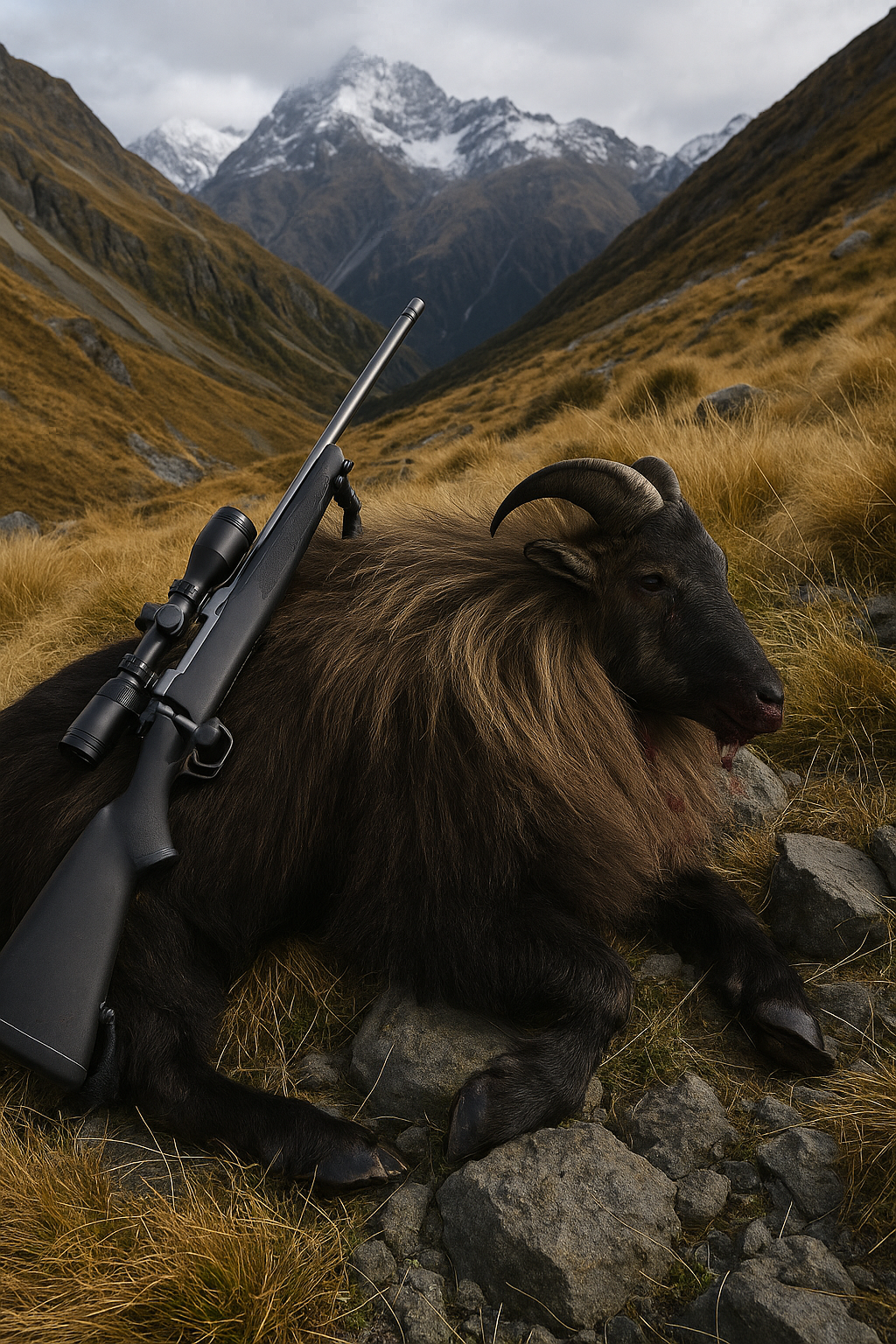
A Trophy Hunted Tahr Photo: Image generated by ChatGPT (DALL-e) by OpenAI
The Department of Conservation of New Zealand (DOC) has been working on Himalayan Tahr population control since 1993 under the Himalayan Tahr Control Plan (DOC, 1993: HTCP) which allows limited population of around 10,000 tahrs within the seven defined management units. However, the tahr population has grown beyond the limitation of management plan in recent years, making it difficult to control them. The HTCP also includes a defined feral range to contain their population and permits farming or holding in game estates for commercial hunting only within the designated range.
A report from Lincoln University, conducted in 2020 by Geoff Kerr, Garry Ottmann and Fraser Cunningham studied the potential for containing tahrs in game estates outside their feral range to reduce demand on the wild tahr resource as recommended by the Game Animal Council (GAC, 2014). Three GPS tracked male tahrs were released in the High Peak Game Estate on 19th December 2018 to monitor their behavior and movement pattern inside the enclosure over a twelve-month period. While one tahr died of unknown causes, the remaining two were kept there until 24th December 2019. The study was done on the hypothesis that tahr containment within a game estate outside of their feral range would be successful.
The trial was successful showing that Himalayan thar can be effectively contained in game estates outside their feral range. GPS data showed minimal fence interaction, and the tahrs quickly adapted to their new territory. Most boundary activity occurred during the breeding season. The study also suggested potential for larger scale commercial operations due to their herding behaviour.
Despite extensive research and ongoing control efforts, Himalayan tahr continues to threaten New Zealand’s native biodiversity by heavily grazing on tussocks, alpine herbs, and shrubs, plants that have no evolutionary history of mammalian herbivory, thereby disrupting the natural ecological balance.
This problem also raises a serious question of human intervention with nature. More than wondering how to manage tahr populations, I find myself asking: What are they even doing here in the first place? Himalayan tahr has become invasive in New Zealand because people introduced them here without realizing its future consequences and it has backfired us, leaving us to manage the aftermath of our own decisions.
Witnessing the realities of a Himalayan tahr changing from a revered mountain dweller in my homeland to trophy hunted invasive species in New Zealand, has been an emotional and eye-opening experience for me. Looking at the conservation dilemma of tahrs between two different countries has challenged my perception and shown how the value of wildlife depends on the context. The Himalayan tahr’s journey, much like my own, has crossed oceans and adapted well into the new environment but the only difference is that the tahrs didn’t choose to come here. The Himalayan tahr’s story is a very powerful reminder of how human actions can disrupt the natural ecosystem. As someone who grew up admiring their beauty in the Himalayas, I hope their fate improves in the future.
Paper Reference: Kerr, G. N. ., Ottmann, Garry., & Cunningham, Fraser. (2020). Himalayan tahr on game estates outside the tahr feral range. Centre for Land, Environment & People, Lincoln University. https://digitalnz.org/records/44715317
Curiosity often starts with a sense of wonder and a desire to understand the world around us. If you are a parent, I hope you have noticed and observed this in your children. Their endless questions and fascination with the world are a beautiful reminder of the joy and excitement that comes with learning and discovery.
I have four lovely daughters, among them four-year-old Arshifa Gul is a bundle of curiosity and always gives me a tough time replying to all her unexpected questions. She also loves watching animated movies, stories and travelling. Back in 2023, I took her to the Pakistan Museum of Natural History for the first time. She was shocked by seeing the animal models and skeleton structures, especially the huge dinosaurs and their roaring, Asiatic lions and their growling, and the realistic models of sharks and dolphins. At first, she was quiet, observing closely, making sure they couldn’t attack. Then, her surprising questions began. “Why is the dolphin here? Who made the dinosaur roar? How did they get so big? When did they live?”
As a wildlife biologist, I’ve worked with animals for years, but her questions confused me! It was the first time that I struggled to explain my own field. Her curiosity pushed me to think deeper and find ways to explain complex concepts in simple terms. Our trip ended but Arshifa Gul’s questions did not. Her curiosity shifted to linking the roars and growls to the human voice of the animals she heard in the animated movies
AI-generated image (Grok) of Arshifa Gul standing in awe before a towering dinosaur skeleton in a museum, her eyes wide with wonder, surrounded by animal models like lions and dolphins.
The next morning at breakfast, Arshifa Gul excitedly shared her thoughts about the characters from her favourite animated movie, “Allahyar and the Legend of Markhor”, set in Pakistan. She talked about the boy Allahyar and his animal friends, then asked where these animals lived, how big they were in real life, what their calls sounded like, and if we could visit them. I said yes we could, but explained that Khunjerab National Park, home to the markhor and snow leopard, was seven hours away.
Her curiosity turned our breakfast into an adventure planning session. I gathered information on the park’s history, species like snow leopards, ibex, and Marco Polo sheep, and conservation efforts, including a trophy hunting program initiated by IUCN and WWF. 80% of the total benefits from this hunting initiative goes to the local communities while the remaining 20% is invested in habitat protection and improvement.
We visited the site, and she enjoyed the trip thoroughly and I answered most of her questions and her confusion cleared regarding voices and the original habitat of different species. Answering her is always tough, but it makes me see the world through her bright, wondering eyes, full of love for animals. She makes me realise how important it is to nurture this curiosity, not just in her, but in all children.
Curiosity is a powerful force that drives us to explore, learn, and grow. Arshifa Gul’s curiosity inspired me to write about the introduction of European hedgehogs into New Zealand. The European hedgehog, also known as the West European hedgehog, is a charming little creature native to Europe.
Hedgehogs can live in a variety of terrestrial habitats and are mostly active at night. They have a slow, hesitant way of walking and often stop to sniff the air. Unlike other hedgehog species that
Hedgehogs have fascinated people for centuries. Their spiky charm has made them popular in history, from ancient amulets to modern pop culture icons, like Sonic the Hedgehog. Did you know that New Zealand is the only country outside Europe where European hedgehogs have successfully been established in the wild? This fascinating story of how these spiky little creatures made their way to both the North and South Islands of New Zealand is filled with twists and turns.
Back in the 1869, acclimatisation societies in New Zealand introduced European hedgehogs to control pests. For a long time, it was believed that hedgehogs were first introduced to the South Island and later spread to the North Island. However, a molecular study in 2013 challenged this view and suggested that hedgehogs were independently introduced to both the islands directly from Europe. This means that the North Island had its own separate introduction of hedgehogs, rather than receiving them from the South Island.
To uncover the truth, researchers from various universities, including Lincoln University, turned to historical records, especially old newspaper articles. They discovered that there were at least four independent shipments of hedgehogs into the North Island before 1900 (which were not documented in the first publication back in 1975). These findings confirmed that the North Island’s hedgehog population did not originate from the South Island. This study highlights the importance of combining observational data, molecular studies, and historical records to understand the introduction pathways of species.
The European hedgehog population thrived well in NZ, too well, as it has now become problematic for native wildlife. For example, they prey on ground-nesting birds and compete with native species for food. Leading conservationists have classified them as a pest, and the Department of Conservation New Zealand has launched a campaign to protect native species from hedgehogs.
Arshifa Gul’s questions and the hedgehog share a common thread. Curiosity drives us to explore and learn. Whether it’s a child marvelling at a museum exhibit or scientists unravelling ecological puzzles, curiosity bridges wonder and action. It reminds us that conservation isn’t just about saving species—it’s about nurturing the spark that makes us care. As parents, educators, or stewards of the planet, or a teacher we can foster curiosity by encouraging, sharing stories, and exploring nature together by using interactive technologies.
Reference: Pipek, P., Pysek, P., Bacher, S., Cerna Bolfikova, B., & Hulme, P. E. (2020). Independent introductions of hedgehogs to the North and South Island of New Zealand. New Zealand Journal of Ecology, 44(1), 3396. https://doi.org/10.20417/nzjecol.44.7
In 2011, scientists found a mere 26 individuals of Hadramphus tuberculatus, an endemic weevil species, nestled within a small reserve in the tawny high country of Canterbury, New Zealand. This was down from 49 individuals found in 2009. Why was the Canterbury knobbled weevil on the brink of extinction, and where does the population stand now – 14 years down the track?
Burkes Pass is like a portal – a steep hill that suddenly transforms from the Canterbury Plains of green pastures, forestry blocks and hedgerows into the vast glacial basins, dry riverbeds, tussocks and jewel-like lakes of the Mackenzie Country. The Mackenzie of South Canterbury is beautiful, but also brutal – the sweltering heat of summer paired with the freezing frosts of winter means few people live here.
The weevil was considered extinct, until 2004, when a University of Canterbury student – Laura Young – stumbled across one of these knobbly weevils in a Burkes Pass reserve, rediscovering the species. However, a following study conducted in 2013 found that the species was in decline in Burkes Pass. So, how did they monitor it? How does this weevil survive and what is its future?
Like the birds of New Zealand, the insects here have evolved without most mammalian predators – with the New Zealand bats being an exception. Many species exhibit traits, such as flightlessness, gigantism, and an inability to self-defend from mammalian predators. The weevil genus Hadramphus is endemic to New Zealand and is a good example of these traits.
Hadramphus contains four species: H. spinipennis, H. stilbocarpae, H. pittosporiand of course the Canterbury knobbled weevil, H. tuberculatus. A common feature amongst all Hadramphus species is their larger size relative to other New Zealand weevils, their flightlessness, and their unfortunate vulnerability to recently introduced mammalian predators.
The relatives of H. tuberculatus survive in far-flung parts of New Zealand, such as offshore islands and the remotest parts of Fiordland. H. tuberculatus lives in the tussock grasslands of Canterbury, where introduced mammalian predators are much more common. This probably explains the scarcity of the species. The Canterbury knobbled weevil also relies on speargrasses – which are terribly spiky plants but grows impressive flower bunches called inflorescences. Speargrasses were once more common on the lowlands of Canterbury, but have disappeared, due to changes in land use.
Interestingly, the Canterbury knobbled weevil is one of the few invertebrate species in New Zealand with a legally protected status – under the Wildlife Act. Most invertebrates in New Zealand are considered unprotected.
Empty pitfall traps are a type of non-deadly trap to catch insects. They are usually cups placed discreetly in the ground, that unsuspecting terrestrial critters fall into to. The researchers checked these pitfall traps weekly, and a little piece of speargrass was kept in the pitfall trap to feed trapped weevils. Weevils found in a pitfall trap were recorded, measured, and even marked with a unique identification number – in case it was recaptured.
Unfortunately, the study showed a worrying trend. In 2009, 49 weevils were captured in the pitfall traps, then 41 weevils in 2010 – and then in a drastic drop, 26 weevils were captured in 2011.
In the 2009 season, a small number of the weevils caught were in the farmland pitfall traps – meaning that they existed beyond the confines of the reserve. But, by 2011, this number of weevils caught in farmland became zero. This might have meant that the reserve was a better place for the weevils, but ultimately they were declining all the same. Many weevils in the reserve were recaptured again and could be re-identified with unique numbers written on their wings! Although the weevils can’t fly, some had been recaptured up to 190 metres away within the reserve – that’s a lot of walking for a flightless insect!
So, why were the weevils declining? The researchers make no specific discussion on this point, however introduced predators may be the main culprit – particularly rodents. A more recent 2024 study on large-bodied alpine invertebrates in southern New Zealand found that sites with mice had less wētā (a group of cricket-like insects) and these wētā were slightly larger on average when compared with sites without mice. Although wētā have a different ecology to weevils, there could be a similar story going on in the Canterbury high country.
Since this study, the outlook for the Canterbury knobbled weevil has been grim. Although a ton of work has gone into the Burkes Pass site – including pest-resistant fencing, weed control, and continued searching, there hasn’t been any recent re-discoveries of the weevil here, although bugs have a special talent of hiding in plain sight. Most people are not looking out for funny-looking weevils that live on one of the most hostile plants in New Zealand.
In a similar circumstance to the 2004 re-discovery, John Evans happened to come across a large weevil on a speargrass near Lake Heron – in the high country of Ashburton Lakes – in 2024. Uploading the observation to iNaturalist, it was quickly confirmed as a Canterbury knobbled weevil by entomologists – revealing a new population of the species. Later searches discovered even more weevils, creating new hope that the species could live on. Despite this amazing discovery, the same conservation issues remain – how can this species be effectively protected for long-term conservation? Perhaps new initiatives for pest control need to be developed – particularly for mice – but this has yet to be established.
Lake Heron, in the Ashburton high country basin. A new population of Hadramphus tuberculatus was recently discovered nearby. Photo by the author.
Unlike other species of Hadramphus, the Canterbury knobbled weevil cannot rely on remote offshore islands for survival – as the Canterbury speargrass ecosystems are important for its survival. Mammalian predator control and the protection of the weevil’s host plant should be the priorities.
Translocation of the species is another option that could be considered, especially given that the weevil did survive in captivity. The Canterbury knobbled weevil could be considered a flagship species for these unique dryland ecosystems in eastern New Zealand, which are often overlooked as important part of New Zealand biodiversity.
The critical status of this species is a reminder of the enormous loss of biodiversity that has occurred in the Canterbury region. Imagine if knobbled weevils were commonplace on speargrass plants again, living alongside various other native flora and fauna that is facing a similar fate? Losing this species to extinction would be a further loss of what makes this region unique.
Bertoia A., Murray T. J., Robertson B. C., Monks J. M. (2024). Introduced mice influence the large-bodied alpine invertebrate community. Biological Invasions 26:3281-3297. https://doi.org/10.1007/s10530-024-03370-x
Fountain E. D., Wiseman B. H., Cruickshank R. H., & Paterson A. M. (2013). The ecology and conservation of Hadramphus tuberculatus (Pascoe 1877) (Coleoptera: Curculionidae: Molytinae). Journal of Insect Conservation17:737-745. https://doi.org/10.1007/s10841-013-9557-9
Young L. M., Marris J. W. M., & Pawson S. M. (2008). Back from extinction: rediscovery of the Canterbury knobbled weevil Hadramphus tuberculatus (Pascoe 1877) (Coleoptera: Curculionidae), with a review of its historical distribution. New Zealand Journal of Zoology35:323-330.
I’ve been a fan of Star Wars since I was a nine year old being driven to Dunedin to see this new SF film that was supposed to be quite good. There in the Octagon Theatre my young mind was blown by what I saw. We’d never seen anything quite like it. I still can vividly recall the final attack run down the canyon on the Death Star. It was like you were in the cockpit of Luke’s X-Wing.
Over the last 47 years I have seen most of the Star Wars movies and series. I even didn’t mind the prequel movies. One of my favourite characters was Boba Fett, the bounty hunter. He seemed cool and I liked that he didn’t take off his helmet (I was also about to become a 2000AD Judge Dredd fan, probably for similar reasons). The Mandalorian, featuring more on the galaxy bounty hunters, is one of my favourite Star Wars series.
Who doesn’t love Grogu? Image by Adrian Paterson
I’m not sure why I enjoy the SW IP, the stories are reasonably predictable, the names are awkward and clunky, but I guess it is fun, looks good and has some interesting diversity (it’s definitely not all filmed in an abandoned British quarry like most other SF at the time). I particularly liked the islands on Ahch-To where the elderly Luke Skywalker was living as a recluse. Their ruggedness, isolation and ‘bird’ fauna seemed like our NZ Subantarctic islands.
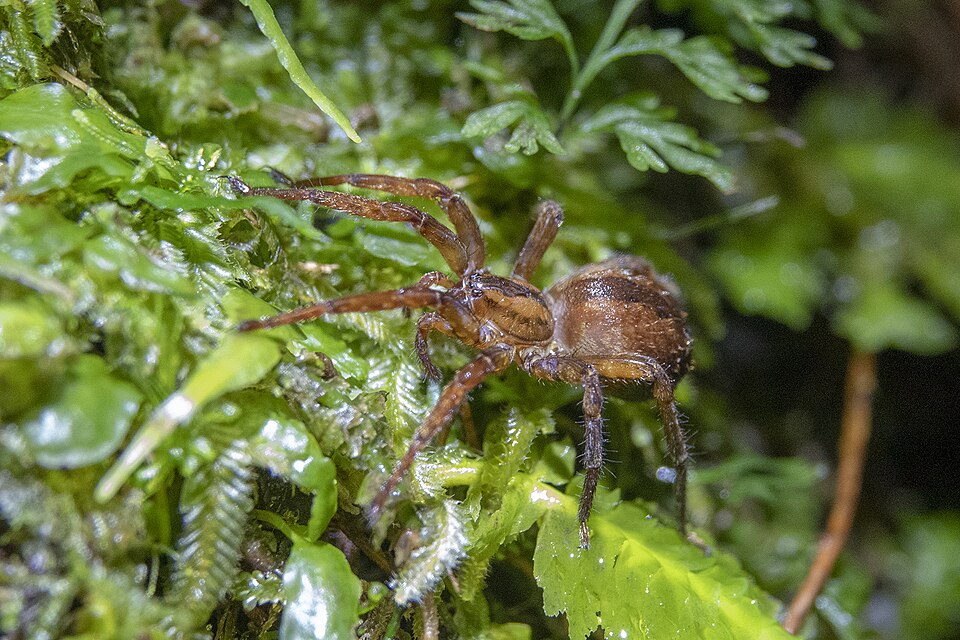
In the Subantarctic we have our own bounty hunter with the strangely Star Wars-like name of Pacificana cockayni. This spider species, like a Jedi hermit, is only found on the Bounty Islands (a wind-swept collection of small islets) that are very seldom visited by humans. It spends its time hunting among a sparse five other species of spiders and 22 insect species. There are a bunch of seabird species that use the islands for breeding. It’s a harsh place to live and has a precarious food web.
Pacificana cockayni was first collected by the great botanist, Leonard Cockayne, in 1903. There were a handful of future visits where female adults and juveniles were collected and finally a male was found. When describing a species it is useful to have adults of both sexes (and in spiders differences are exaggerated and easier to find in males). In more recent times molecular approaches, sequencing DNA, allows for a more precise understanding of who your species might be related to.
Pacificana cockayni. Image by Thomas Mattern.
Cockayne sent the original samples to a leading British arachnologist of the time with a decidedly non-Star Wars name, but suitably impressive nonetheless, Henry Roughton Hogg (OK maybe a little Star Warsy… I can see an Imperial Star destroyer being commanded by Admiral Roughton Hogg). Hogg decided that Pacificana cockayni was different enough from other spiders to be in its own genus. He then guessed at the family. (“These aren’t the spiders you are looking for.”)
Over the years other travellers collected a handful of specimens when their journeys brought them to the Bountys. These include the great spider specialist Ray Forster. (“May the Forster be with you‘), one of my first PhD students, Frances Schmechel, and recent masters student, Robin Long.
Time moves on and we are not in that galaxy far far away now. Many of the spider species lumped together as a big group by Hogg have been moved to more accurate placements by spider specialists over the last century. Cor Vink (Lincoln University), Phil Sirvid (Museum of NZ) and Nadine Duperre (Liebniz Institute) decided to sort out the status of Pacificana cockayni. They could see that things were a mess (“Hogg, you have failed me for the last time“).
They looked carefully at the various structures of Pacificana cockayni and compared these to the various options for relatives (“Hmmm aren’t you kinda short to be a Miturgidae?”). For example, they found that the stridulatory field on prolateral face of male coxa of leg 1 was different to other closely related species (which to most sounds about as meaningful to the uninitiated as midiclorians).
Bounty Islands – birds, rocks and a few spiders…. Image by Tui de Roy.
Vink and colleagues were also able to get DNA from these species as well (or use DNA data that had already been collected). In a recent NZ Journal of Zoology paper they were not able to definitively sort out who the closest relatives of Pacificana cockayni were, but they could show that they had been evolutionary distinct for a long time. Given this distinctiveness and the limited range of this species to the small Bounty Islands archipelago, Pacificana cockayni faces some big problems. “I have a bad feeling about this.“
The maximum height of the Bountys is 73 m, creating a problem with sea level rise taking away land. Climate change is altering prey patterns for the seabird species that bring guano and carrion back to the islands, and which drives the simple invertebrate food webs. Bird populations are also declining through climate influences and from fisheries. Fewer birds means less food for everyone else that’s stuck on these islands (“It’s a trap!“). And, despite the isolation, there is always the risk of a rodent invasion from a visiting boat. Rodents love munching on large invertebrates.
Like a rare Jedi knight on the fringes of the galaxy, Pacificana cockayni have faced and triumphed over tough times. Vink and colleagues have allowed us to know just how special this species is and why we should work hard to protect it to give it a fair chance to survive into the future.
This is the way.
This article was written by Adrian Paterson (Pest-management and Conservation at Lincoln University). With writing EcoLincNZ articles, do or do not, there is no try.
Our adventure begins in the breathtaking north of Pakistan, where the majestic peaks of the Himalayas, and their foothills, stand as one of the last sanctuaries, a place where the sky meets the earth. Here, clouds drift over rough mountains and lush valleys, into dense forests. Glistening lakes and spectacular waterfalls shape this natural paradise.
In this wilderness, the air echoes to the calls of rhesus monkeys, while wild boars wander through the underbrush. The Himalayan red fox prowls the mountains, on the hunt for colourful pheasants, a tale as old as time.
But the fox is not the only hungry predator in these forests. A top predator, larger and stronger, with a powerful bite and covered in unique dots, reigns in the mountainous range. The majestic leopard (Panthera pardus), a mysterious and shy creature, expert at camouflage, is prowling these forests.
Leopards are amongst the most iconic big cats. Just like other big cats, leopards are endangered. Human activity and landscape alteration pose significant threats to their survival. When leopards and humans cross paths, conflicts arise, turning this top predator from hunter to hunted.
Panthera pardus fusca is described as larger subspecies, with brighter coloration and smaller rosettes (Bellani, 2019).
Photo Credit: CC BY 2.0 DEED, taken by Rupal Vaidya in October 2016
Leopards are generally cryptic and shy, much remains unknown about these ferocious hunters.
Muhammad Asad, a PhD student at Lincoln University, started his dangerous journey to this wild region in the north of Pakistan. The dangers of the landscape were not limited to wildlife; humans also posed a significant risk in this troubled region. Undeterred, Asad was ready for the challenge that lay ahead.
Leopards are amongst the world’s most widespread carnivores, ranging from Africa to Asia. Prowling over such a vast distribution has led to the recognition of several subspecies, most of which are endangered. The forests in the north of Pakistan are known to be home to leopards, but their subspecies status has not been assessed.
Contrary to the legend of water-shy cats, leopards are excellent swimmers. Still, the mighty Indus River was believed to act as a barrier between populations, maybe even keeping subspecies apart.
To unravel this mystery, Asad and his team collected and analysed tissue samples from leopards. Modern techniques have created a genetic tool as powerful as its name: mitochondrial DNA (mtDNA). Mitochondria, the powerhouses of our cells, have long been known for their role in providing power for our cells. These powerhouses also carry their own DNA, passed down maternally, making mtDNA incredible useful for studying population dynamics and subspecies differentiation.
A key protein encoded on the mtDNA, NADH 5, is essential for energy production and is highly variable among big cats, making it an excellent candidate gene for subspecies identification.
Through their research, Asad and his team found two distinct subspecies of leopard in the north of Pakistan, P. p. saxicolorandP. p. fusca, both belonging to the Asian group of leopards.
Panthera pardus saxicolor is commonly a bigger subspecies and is often more pale coloration, with bigger rosettes (Kiabi et al., 2002).
Photo Credit: CC BY 2.0 DEED, taken by Guido Konrad in July 2021
These findings mark the first subspecies identification in this region and hold significant implications for conservation efforts. The coexistence of both subspecies in the same region suggests an interesting natural corridor that connects leopard habitats, offering hope for their conservation in the face of habitat fragmentation.
At the same time, discovering two subspecies living in the same area opens up the possibility of them interbreeding. This can create some challenges for conservation. We might wonder: could one or both of these subspecies disappear over time? Or will they blend together and create a new subspecies? Hybridisation is very unpredictable, which is why it’s important to work on conserving both subspecies. They each have unique evolutionary histories, which are the product of thousands of years of adaptation and survival, and could potentially be lost due to this phenomenon called hybridisation.
These findings not only help leopard conservation in the paradise of the Himalayan belt in the north of Pakistan, but also contribute to global conservation efforts to protect this amazing species. By identifying subspecies and unveiling their genetic patterns, we can better protect them. It is important to protect both subspecies, which helps protect the overall species Panthera pardus.
Asad M, Martoni F, Ross JG, Waseem M, Abbas F, Paterson AM. 2019. Assessing subspecies status of leopards (Panthera pardus) of northern Pakistan using mitochondrial DNA. PeerJ 7:e7243 https://doi.org/10.7717/peerj.7243
Invasive plants can have a devastating impact on our natural environment.
What are invasive plants? Put simply, they are non-native plants that spread rapidly within New Zealand and pose a significant threat to ecosystems, agricultural production, or human health. It sounds awful.It is even worse than it sounds.
Lodgepole pine (Pinus contorta) CC BY by Chris Schnepf, University of Idaho, Bugwood.org
Invasive plants pose a threat to natural ecosystems as they are often highly competitive compared to native plants. Invasive species also spread rapidly to take over the living space of native plants, alter ecosystem structures, and reduce biodiversity.
Many exotic plants are invasive, such as lodgepole pine (Pinus contorta) and Scotch thistle (Cirsium vulgare). Invasive plants change the composition of plant communities and affect food webs and ecosystem balance. For example, the introduction of eucalyptus alters soil chemistry and moisture content, affecting the survival of other plants and animals (Mengistu, 2022).
Invasive plants also impact agriculture and grazing and can cause massive economic damage. Scotch thistle (Cirsium vulgare) can quickly spread and take over farmland, reducing crop yields. Unpalatable invasive plants can compete with pasture grasses, reducing the area of grassland available for grazing and affecting livestock husbandry (Massey Universy).
Some exotic plants are harmful to human healthy, like Giant Hogweed (Heracleum mantegazzianum), which can cause third-degree burns and even blindness by simply touching it!
Knowing how invasive plants spread can help us to control them effectively. A study conducted at Lincoln University in 2013 focused on whether creek habitats are a source of spread for these invasive plants.
Researchers from Lincoln University (Alice Miller and colleagues) studied Hieracium lepidulum (Asteraceae), an invasive herbaceous plant that has proliferated in the South Island in recent decades. It now occurs in a wide range of upland habitats, from improved short tussock grasslands, to intact beech forests, to alpine herbaceous fields. Hieracium is a more shade-tolerant relative of the widespread pasture hawkeed.
Historical data suggests that Hieracium is common in naturally disturbed habitats, such as stream edges and forest canopy gaps. Alice selected creek catchments in the area with the longest known history of H. lepidulum invasion in New Zealand: Craigieburn Forest Park on the eastern side of the Southern Alps, Canterbury, New Zealand. She surveyed 1,144 spots along 17 creek catchments.
Giant Hogweed (Heracleum mantegazzianum). CBS News
Alice and colleagues found that creek habitats (e.g., stream edges and disturbed areas) play an important source role in the dispersal of H. lepidulum. These areas tend to be subject to more natural and human-caused disturbances, which provide a suitable growing environment for H. lepidulum, and contribute to its rapid reproduction and accumulation in these areas.
The high resource availability and frequency of disturbance at stream edges allow H. lepidulum to colonise and spread rapidly. Disturbed areas, such as forest clearings and trail edges, provide similarly favourable conditions. Stream habitats provide connected linear dispersal paths that allow H. lepidulum to spread rapidly along streams and from there into neighbouring areas.
The dispersal patterns of H. lepidulum in forests and subalpine areas were found to differ. In forests, the dense canopy and ground vegetation form a natural barrier to the spread of this plant. As a result, the density of H. lepidulum in forests decreases rapidly with increasing distance from creeks, except in areas with higher light availability, such as tree-fall gaps.
Forested areas near creek edges remain vulnerable to invasion. In contrast, in subalpine habitats, H. lepidulum density declined more gently with increasing distance from creeks. This suggests that these areas are less restricted to seed dispersal corridors and more susceptible to invasion.
Location of study area with the 17 surveyed creeks in bold and indicated by an asterisk.From Google Map
The study also found that multiple environmental variables had an effect on H. lepidulum abundance, with dense canopy cover reducing light and inhibiting its growth. Areas closer to stream mouths were usually more frequently disturbed and H. lepidulum abundance was relatively higher. Higher elevation areas pose a challenge to H. lepidulum growth due to harsher climatic conditions, but the invasion is still significant in subalpine areas. Disturbances, such as human activities, increase the chances of reproduction and dispersal of H. lepidulum.
Alice provided several recommendations for managing and conserving areas affected by H. lepidulum. First, she suggested prioritising efforts to limit the spread of this invasive plant by reducing disturbances in the environment and using biological control methods. Second, she recommended setting up monitoring systems in vulnerable subalpine habitats to detect and control H. lepidulum early and prevent it from forming large populations. Finally, while disturbances are natural in these ecosystems, it is important for managers to consider the additional impact of human activities, such as building roads and trails, which can exacerbate the invasion, especially in subalpine areas where the barriers to invasion are lower.
Hieracium lepidulum Stenstr. (Asteraceae).CC BY by John Barkla
Through this study, we have gained valuable insights into the dispersal patterns and environmental impacts of the invasive plant H. lepidulum. This hardy invader tends to thrive along creek margins and in disturbed areas, making these locations hotspots for its spread. It is our responsibility to protect these pristine landscapes from invasive species.
If you’re hiking in New Zealand’s stunning mountains, keep an eye out for those little H. lepidulum spreading on the sly. Let’s be the guardians of nature and protect this pristine land from these “little invaders” that are taking over our ecosystem.We can help preserve the natural beauty and biodiversity of New Zealand’s ecosystems, ensuring that these “little invaders” do not take over and disrupt the delicate balance of our environment.
This article was prepared by Master of Pest Management postgraduate student Hao Zhang as part of the ECOL608 Research Methods in Ecology course.
Miller, A. L., Wiser, S. K., Sullivan, J. J., & Duncan, R. P. (2015). Creek habitats as sources for the spread of an invasive herb in a New Zealand mountain landscape. New Zealand Journal of Ecology, 39(1), 71-78. https://www.jstor.org/stable/26198696