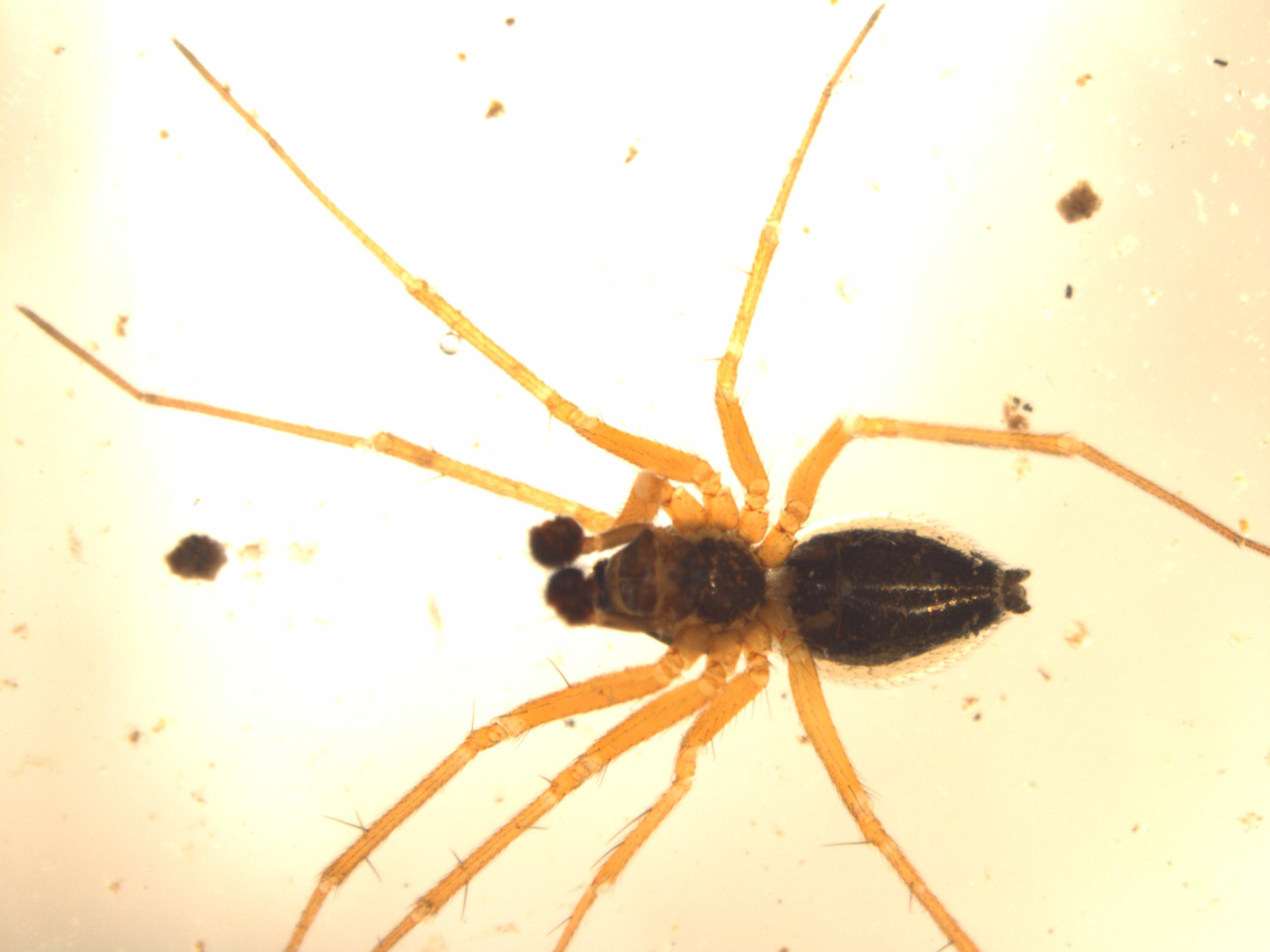
Category: spiders

  • A bounty hunter in the Subantarctic

    A bounty hunter in the Subantarctic

    I’ve been a fan of Star Wars since I was a nine year old being driven to Dunedin to see this new SF film that was supposed to be quite good. There in the Octagon Theatre my young mind was blown by what I saw. We’d never seen anything quite like it. I still can vividly recall the final attack run down the canyon on the Death Star. It was like you were in the cockpit of Luke’s X-Wing.

    Over the last 47 years I have seen most of the Star Wars movies and series. I even didn’t mind the prequel movies. One of my favourite characters was Boba Fett, the bounty hunter. He seemed cool and I liked that he didn’t take off his helmet (I was also about to become a 2000AD Judge Dredd fan, probably for similar reasons). The Mandalorian, featuring more on the galaxy bounty hunters, is one of my favourite Star Wars series.

    Who doesn’t love Grogu? Image by Adrian Paterson

    I’m not sure why I enjoy the SW IP, the stories are reasonably predictable, the names are awkward and clunky, but I guess it is fun, looks good and has some interesting diversity (it’s definitely not all filmed in an abandoned British quarry like most other SF at the time). I particularly liked the islands on Ahch-To where the elderly Luke Skywalker was living as a recluse. Their ruggedness, isolation and ‘bird’ fauna seemed like our NZ Subantarctic islands.

    In the Subantarctic we have our own bounty hunter with the strangely Star Wars-like name of Pacificana cockayni. This spider species, like a Jedi hermit, is only found on the Bounty Islands (a wind-swept collection of small islets) that are very seldom visited by humans. It spends its time hunting among a sparse five other species of spiders and 22 insect species. There are a bunch of seabird species that use the islands for breeding. It’s a harsh place to live and has a precarious food web.

    Pacificana cockayni was first collected by the great botanist, Leonard Cockayne, in 1903. There were a handful of future visits where female adults and juveniles were collected and finally a male was found. When describing a species it is useful to have adults of both sexes (and in spiders differences are exaggerated and easier to find in males). In more recent times molecular approaches, sequencing DNA, allows for a more precise understanding of who your species might be related to.

    Pacificana cockayni. Image by Thomas Mattern.

    Cockayne sent the original samples to a leading British arachnologist of the time with a decidedly non-Star Wars name, but suitably impressive nonetheless, Henry Roughton Hogg (OK maybe a little Star Warsy… I can see an Imperial Star destroyer being commanded by Admiral Roughton Hogg). Hogg decided that Pacificana cockayni was different enough from other spiders to be in its own genus. He then guessed at the family. (“These aren’t the spiders you are looking for.”)

    Over the years other travellers collected a handful of specimens when their journeys brought them to the Bountys. These include the great spider specialist Ray Forster. (“May the Forster be with you‘), one of my first PhD students, Frances Schmechel, and recent masters student, Robin Long.

    Time moves on and we are not in that galaxy far far away now. Many of the spider species lumped together as a big group by Hogg have been moved to more accurate placements by spider specialists over the last century. Cor Vink (Lincoln University), Phil Sirvid (Museum of NZ) and Nadine Duperre (Liebniz Institute) decided to sort out the status of Pacificana cockayni. They could see that things were a mess (“Hogg, you have failed me for the last time“).

    They looked carefully at the various structures of Pacificana cockayni and compared these to the various options for relatives (“Hmmm aren’t you kinda short to be a Miturgidae?”). For example, they found that the stridulatory field on prolateral face of male coxa of leg 1 was different to other closely related species (which to most sounds about as meaningful to the uninitiated as midiclorians).

    Bounty Islands – birds, rocks and a few spiders…. Image by Tui de Roy.

    Vink and colleagues were also able to get DNA from these species as well (or use DNA data that had already been collected). In a recent NZ Journal of Zoology paper they were not able to definitively sort out who the closest relatives of Pacificana cockayni were, but they could show that they had been evolutionary distinct for a long time. Given this distinctiveness and the limited range of this species to the small Bounty Islands archipelago, Pacificana cockayni faces some big problems. “I have a bad feeling about this.

    The maximum height of the Bountys is 73 m, creating a problem with sea level rise taking away land. Climate change is altering prey patterns for the seabird species that bring guano and carrion back to the islands, and which drives the simple invertebrate food webs. Bird populations are also declining through climate influences and from fisheries. Fewer birds means less food for everyone else that’s stuck on these islands (“It’s a trap!“). And, despite the isolation, there is always the risk of a rodent invasion from a visiting boat. Rodents love munching on large invertebrates.

    Like a rare Jedi knight on the fringes of the galaxy, Pacificana cockayni have faced and triumphed over tough times. Vink and colleagues have allowed us to know just how special this species is and why we should work hard to protect it to give it a fair chance to survive into the future.

    This is the way.

    This article was written by Adrian Paterson (Pest-management and Conservation at Lincoln University). With writing EcoLincNZ articles, do or do not, there is no try.

  • Jumping to the top of the world: new salticid spider species in the Southern Alps

    Spiders.

    Your reaction to that word might determine whether or not you finish reading this post, but try to bear with me — at least for a little while. While I can accept that most people aren’t nearly as fond of spiders as I am, I think all but the truly arachnophobic (it’s okay; I understand that you can’t help it) can agree that the jumping spiders are among the “cutest” and most acceptable spider groups. These active little hunters can often be found in or around the house, and their big binocular eyes and expressive “face” make them a lot more relatable than your average creepy-crawly. Well, most of them!

    A newly-described female Ourea petroides from the Ōtira River valley, Arthur’s Pass. © own work, 2022. CC-BY-NC.

    Jumping spiders, in the family Salticidae, are among the most well-researched spiders in the world, with over 6,500 species described. Meanwhile, the jumping spiders found in Aotearoa New Zealand – apart from the most commonly-encountered species – are very poorly known to science. There are thought to be around 200 species in NZ, with about 50 known well enough to be named. However, we can only reliably identify fewer than a dozen of them. Compare this with Australia, where hundreds of species are known already, and work to describe the rest is well under way.

    Not to be outdone by the Aussies, Lincoln University’s Robin Long, along with her supervisor Dr Cor Vink, decided to do something about that. For her Master’s project, Robin set out to catalogue and describe the jumping spiders found in some of NZ’s most remote and extreme environments: the rocky heights of the South Island’s alpine zone.

    Robin visited 21 different sites all over the Southern Alps, from Paparoa to Fiordland, collecting 170 jumping spider specimens (all by hand!) from up to 1,800 m above sea level — and logging some impressive hiking mileage in the process!

    Looking across the Ōtira River at a scree slope where Ourea petroides can be found, Arthur’s Pass. © own work, 2022. CC-BY-NC.

    Through DNA analysis and careful examination of microscopic features on each spider, Robin separated those 170 specimens into 12 new species, and determined that the group was so unlike others known to science that it represented a brand new genus (a group of closely-related species with a common ancestor). She named this genus Ourea because, like the ancient Greek mountain gods, many of the species were found to be associated with a specific mountain range.

    Many of NZ’s indigenous species are only found across quite small areas, often because of the (relatively) recent and rapid growth of our mountains — which even today continue to grow taller by around 7 mm per year. Formerly widespread species were split into separate populations by the tectonic uplift, and over the last few million years these now-isolated populations have diverged into new species. Robin’s jumping spiders, much like many other NZ alpine species, took advantage of the ample prey and new habitats created by the growth of these mountain ranges. Over time these spiders even developed cryptic colours and patterns that help to camouflage them against the particular rock types they live amongst.

    Magnificent moustache: a female(!) Ourea saffroclypeus from the Remarkables Range. © Robin Long, 2022. CC-BY-NC.

    Not content with merely describing a whole genus and a dozen new species, Robin also set about studying and describing the spiders’ behaviours when interacting with other members of the same species. Jumping spiders have exceptional eyesight, and are known for communicating with each other through visual displays that range from the bronze hopper’s simple leg-waving, all the way to the flamboyant, colourful dances (which often incorporate vibration as well) performed by the aptly-named peacock spiders.

    The four Ourea species that Robin observed in the lab each exhibited a unique set of behaviours when they met another spider, and these behaviours differed depending upon whether they met a member of the same or the opposite sex. Males postured fiercely at each other, squaring up in a face-to-face grappling contest with legs and fangs outstretched.

    When attempting to impress a female, males gestured with their legs and “zigzag-danced” their way closer, before attempting to reach out and gently stroke the female’s head. Perhaps unsurprisingly, this final move had quite mixed success! Females meeting each other were a bit more sensible, and usually made a few simple (though probably quite impolite) leg gestures at each other, before one or both turned away and went in the opposite direction.

    Despite the enormous amount of work that went into researching these spiders, Robin acknowledges that her almost 150-page thesis has only scratched the surface of the topic. Little is known of the spiders’ life histories or the individual species’ spatial distributions, and it’s “very likely” that there are additional species in the genus waiting to be discovered on other mountain ranges.

    Exquisite camouflage: Ourea petroides, Ōtira River valley, Arthur’s Pass. © own work, 2022. CC-BY-NC.

    Robin also suggests a similar study would likely uncover another distantly-related group of undescribed jumping spiders living quietly in the Southern Alps. This is a common problem with New Zealand’s invertebrate fauna: while we have a good general understanding of what’s around us, there are still huge gaps in our knowledge — and usually the studies that attempt to address this just end up revealing more unanswered questions!

    We have a rich history of brilliant people, like Robin, studying, documenting, and describing New Zealand’s unique invertebrate biodiversity, and there are still many new discoveries to be made in every corner of our little country. But, despite huge technological advances, research has dwindled in recent decades due to funding redirections and the restructuring of government services.

    Under the looming threats of climate change and habitat loss, we need to pay closer attention to the smallest and most enigmatic (if not always particularly cute) creatures that live alongside us, lest they disappear before we even have a chance to study them. Australia is well ahead of NZ in this regard, with funding and support for taxonomic studies provided through their world-leading ABRS scheme. I’m not much of a sports enjoyer, but beating the Aussies at this game is one trans-Tasman rivalry I could definitely get behind.

    This article was prepared by Bachelor of Science (Honours) student Dustin la Mont as part of the ECOL608 Research Methods in Ecology course.

  • Along came a spider, that swam down beside her…

    Christmas is just around the corner and for many this means that it is time to head to the sea. Beach holidays have long been a tradition for kiwi summers. I was no different while growing up and through my adult life. We spent a lot of time at the little beach village of Kaka Point, at the far northern end of the Catlins, in South Otago.

    Not a lot deterred us from hitting the waves. The weather could be a little iffy and the water a little cool but that didn’t matter. You might have a to share the surf with a few other hardy swimmers and the occasional seal but it was bliss. But now I find that I may have been sharing my waves with something slightly more sinister!

    What lies beneath these waves…

    One thing that we know about spiders is that they don’t love water. However, it turns out that there are spiders who do spend time in the sea. This is not just in the inter-tidal zone where we might see them dodging between waves. Marlene Leggett, Cor Vink and Ximena Nelson have a new paper coming out that looks at marine-associated spiders and their adaptations for survival.

    Spiders!

    Marlene terrorises us by showing that these spiders are all over the world. No beach is safe! She does reassure us that these water arachnids only make up 0.3% of all spiders (although that still seems too many). She reviews the work that has been done to show how spiders, usually very terrestrial, can survive in such a damp environment.

    Some have hairs that trap air bubbles around themselves, other can use webs to close off empty shells to keep the air in. Some can go into a coma where they reduce the amount of oxygen required. Inter-tidal species can run away from incoming tides. These traits allow spiders to exploit a habitat that would otherwise be forbidden for them.

    The aquatic Dolomedes.

    It’s all very fascinating. Spiders have had to change the way they eat, avoid predators, reproduce, move, accommodate extreme temperatures, and cope with water pressure. Marlene summarises the adaptations. It’s a great read.

    However, spiders in the sea is not really what you want to think about when you are rushing into the waves, boggie-board in hand. It’s almost a Gollum moment (as the Nazgul fly over him he shouts in horror “Wraiths! Wraiths on wings!”)

    “Spiders! Spiders under water!”

    Have a great Christmas holiday at the beach!

    Adrian Paterson is a lecturer in Pest-Management and Conservation at Lincoln University. He generally likes spiders, but only when he can see them!

  • The big, bold, redbacks of Buckland

    No, Mr Baggins has gone away. Went this morning, and my Sam went with him: anyway, all his stuff went. Yes, sold out and gone, I teller. Why? Why’s none of my business, or yours. Where to? That ain’t no secret. He’s moved to Bucklebury or some such place, way done yonder. Yes it is – a tidy way. I’ve never been so far myself; they’re queer folks in Buckland. No, I can’t give no message. Good night to you!” JRR Tolkien – The Fellowship of the Ring

    One of the greatest illustrations of Tolkien’s work, IMHO, The Gaffer and the Black Rider by Stephen Hickman.

    I’ve always liked this passage where old Gaffer Gamgee is talking, unbeknown, to a nazghul. It is an important story point but delivered in the type of conversation that you could hear all over the world. ‘Those people that live 20 – 30 km away are just so different and weird!‘ Are the people of Buckland really so different to the good, honest folk of the Shire? If so, how did this happen by simply crossing a river?

    There is a question around invasive species whether the individuals that arrive in a new area are just a random selection of the individuals (and their traits) that live in their home area or whether they represent a group of individuals with consistent and particular traits that make them more likely to have successfully invaded the new area.

    For example, all humans in Aotearoa/New Zealand have arrived from outside these shores over the last 1000 years. Were the people that made their way here more bold and explorative than the rest who stayed behind? Or were they no different than their neighbours who stayed at home? Maybe they just simply had the opportunity to go?

    These ideas are important in thinking about why invasive species are successful at establishing or not. If any old random subset of the population can turn up then they are less often going to successful at establishing (they may not be fit-for-purpose!) compared to if they arrive with skills that allow them to survive better in a new environment (or even to survive the journey).

    Being large might help give invasive individuals an advantage over native species. Likewise, producing more offspring, growing faster, being bold, exploring more, dispersing sooner, having a broader diet, could all help with invading and establishing.

    What about our Bucklanders?

    Long ago Gorhendad Oldbuck, head of the Oldbuck family, one of the oldest in the Marish or indeed in the Shire [has had high evolutionary fitness over many generations], had crossed the river [successfully able to disperse relative to other hobbits and to explore more], which was the original boundary of the land eastwards. He built (and excavated) Brandy Hall, changed his name to Brandybuck, and settled down to become master of what was virtually a small independent country. His family grew and grew [high fecundity in offspring production], and after his days, continued to grow, until Brandy Hall occupied the whole of the low hill, and had three large front-doors, many side-doors, and about a hundred windows. The Brandybucks and their numerous dependants then began to burrow, and later to build, all round about … The people in the Marish were friendly with the Bucklanders … But most of the folk of the old Shire regarded the Bucklanders as peculiar, half foreigners as it were [suggests a slightly different distribution of traits compared to the parent population].Though, as a matter of fact, they were not very different from the other hobbits of the Four Farthings. Except in one point: they were fond of boats, and some of them could swim [bold and innovative behaviours].” JRR Tolkien- The Fellowship of the Ring

    Captive redback with web. Image by Adrian Paterson.

    We are also told elsewhere that the Brandybucks and Tooks (another bold lineage of hobbits) are generally taller than average Shire hobbits. Tolkien, as I have said in many other places (taxonomy of orcs and hobbits, evolutionary biology ideas, burrow architecture, mammal pest management, fire and ecosystems), was rather accurate when it came to integrating biology into his writing. Did he get it right here?

    To test this invasion idea you need a species that is well-studied in it’s native range as well as in its colonising range. You also need to be able to measure all of those traits. Spiders fit the bill nicely. They’re small and have short generations, are easy to fit into small experimental set ups, and some are venomous and, therefore, well studied. Enter the redback spider (Latrodectus hasselti), invasive in Japan and New Zealand and well studied in its Australian homeland.

    Cor Vink, New Zealand’s leading arachnologist, joined a group based in Toronto, Canada headed by Monica Mowery, to look at individuals from these three areas. They measured the size of individuals (bigger is usually better in interactions with competitors), their egg sac production (producing more young may give you more opportunities for at least some surviving), and length of generation times in captive populations (shorter allows for faster replacement, longer allows for larger more long-lived individuals).

    A redback – amazing photo from the talented Bryce McQuillan

    They measured the behaviour of the redbacks, such as frequency of cannibalism (you never know when a snack might come in handy!). Also, individual spiders were placed in a new environment and the speeds at which they started spinning webs (exploration) or moving after being exposed to a puff of wind (boldness) were measured. Spiders were also placed into a warm arena with a small simulated breeze to see whether they would balloon (effectively float away in the wind) or rappel (climb using their web silk) away from the start point (dispersal).

    The outcomes from this work were published in Biological Invasions. Redbacks from the invasive populations showed more dispersal behaviour than the home populations. They also tended to be larger in size, more cannibalistic, and produced more offspring. Interestingly, the redbacks in Japan and New Zealand did not seem to be more bold or explorative than in Aussie. Overall though, the invasive populations looked and acted differently to the source population.

    It appears that populations that successfully disperse and establish in new areas might do so because they are settled by individuals with useful traits that differ a little from the source population. This may help us to figure out which species potentially pose the most invasive threats.

    What about those strange Bucklanders? The Gaffer was mostly right. They are a bit different. Bucklanders are a population that managed to successfully disperse to an isolated area. Bucklanders are larger and more fecund. Tolkien does not record whether the Bucklanders tended to be more cannibalistic than hobbits in the Shire, but that would be a prediction!

    We can certainly sympathise with the Gaffer’s concerns about his Sam going to live among them.