Tag: student blog

  • The pines are invading! Planting non-native species increases re-invasion

    The pines are invading! Planting non-native species increases re-invasion

    Soil is life

    I’m not sure if you’re aware, as I was not aware of this before coming to Lincoln University, but soil is very much alive. There are millions of organisms in a single handful of soil. These critters perform the majority of the ecosystem services provided by soils.

    In New Zealand, these organisms range from burrowing animals, to soil-dwelling invertebrates, to fungi, to microscopic bacteria and much more. So next time you walk on soil, think about how much life is beneath your feet.

    For plants, a major component of successful growth and survivability is the soil microbiota, such as bacteria, fungi, viruses, nematodes (tiny worms), and many more. I have much love for fungi in the soil microbiota, especially mycorrhizal fungi that are essential for plant growth.

    Mycorrhizal fungi form mutualistic relationships (beneficial for both organisms) with plant roots. The fungi extend their network to increase the nutrient intake in exchange for carbohydrates that the fungi cannot produce itself.

    There are two major types of mycorrhizal fungi, ectomycorrhizal fungi, which infect the outside of plant roots, and arbuscular mycorrhizal fungi (AMF or endomycorrhizal), which infect the inside of plant roots.

    I did a project on ectomycorrhizal fungi abundance on red beech tree roots for SCIE393 where I took this photo of an ectomycorrhizal fungal fruiting body (mushroom) under the microscope (which I thought was very cool). This is really where my love for mycorrhizal fungi started to blossom.

    Ectomycorrhizal fruiting body under the microscope – Photo by Lucas Watkin (CC-BY-NC)

    Exotic plants are strong invaders

    That’s enough about me for now, time to talk about invasions from non-native plants. As I’m sure everyone who lives in New Zealand is aware, we live in an invaded country, full of exotic predators, pests, and weeds.

    While everyone tends to think of the worst invaders are pests like possums and mustelids, the worst invaders are actually the weeds. Approximately half of all the vascular plants in the wild in New Zealand are non-native. There are around 25,000 exotic plant species that have been introduced to New Zealand, with around 2,700 of these becoming wild. Compared to around 2,500 native plants, this is an insane numbers of exotic plants and so to conserve our native species, we must do something about all of these exotic species.

    From grassland to pineland: The rapid invasion of black pine into well grazed high country pasture – Photo by Jon Sullivan (CC BY-NC 2.0)

    One of the worst exotic plant species are wilding pines, such as lodgepole pine and radiata pine. Lodgepole pine was introduced into New Zealand in 1880 to combat erosion. Burning of forests, overgrazing, and introduced browsers, such as deer, goats and rabbits, were clearing the hillsides of our native plants, leading to more slips. The New Zealand government decided to plant exotic plants, specifically Douglas-fir and lodgepole pine to cover the hillsides and reduce erosion.

    These pines did stop the erosion, however, what was not anticipated was the enormous dispersal ability of these wilding pines. Seeds of wilding pines can survive for a decade in their cones, grow roughly anywhere, and can travel kilometers from their parent. There is now roughly 800,000 hectares of wilding exotics in the South Island alone, two thirds of which is lodgepole pine!

    Wilding pines of Flock Hill Station: The very many wilding pines coming out from the experimental forestry plots in adjacent Craigieburn Forest Park – Photo by Jon Sullivan (CC BY-NC 2.0)

    Be careful what you plant!

    This paper headed by Joanna Green has contributions from my lovely thesis supervisor Lauren Waller. In it they describe the effects of planting non-native plants on the soil microbiota, and how that can impact what grows there afterwards. They were specifically looking at how well lodgepole pines grow in soils that have been used and conditioned by exotic plant species.

    Joanna and Lauren started by using soils that had already been conditioned by 19 native and 20 exotic plant species from another two experiments by Warwick Allen and Lauren Waller. The soil microbiota, the nutrients in the soil, and other factors, like the pH of the soil, had been changed to best suit the plant that had been grown in that soil.

    An example of part of the soil microbiota that was conditioned were the ectomycorrhizal fungi. These fungi are required for successful growth by some of our native species, such as our beech, mānuka, and kānuka species. However, exotic species use different species of ectomycorrhizal fungi than our native species. Therefore, when exotic species are grown in soil they will grow well with their species of ectomycorrhiza.

    Basically, think of it like this. If you owned a garden and really liked roses, you would grow a lot of roses. You might grow some other plants but the focus of the garden would be on roses. Now, if someone else came in and took over the garden for themselves, they might not like roses as much but might really like petunias. They will then plant petunias in place of where the roses used to be, altering the state of that garden.

    In terms of ectomycorrhiza, they require associations to survive, so the native ectomycorrhiza species that were in the soil will die after their native plant partners are gone. Exotic ectomycorrhiza species associated with exotic plant species will then survive. Due to this, it will become a lot more difficult for our native species to grow back in that soil due to a lack of ectomycorrhiza that they can grow with. Conversely, it will be a lot easier for exotic plant species to grow in partnership with a large number of exotic ectomycorrhiza.

    Anyway, back to the paper. The researchers found that lodgepole pine grew better in soils that had been conditioned by exotic species, such as black alder, cocks-foot, spear thistle, gorse, and many more. And this was regardless of whether pines had been planted there or not! Lodgepole pine will have a much easier time establishing and invading into areas that have previously had exotic species growing there.

    Lodgepole pine tree near Lake Benmore – Photo by abcdefgewing (CC-BY-NC)

    So why does this matter?

    To conserve our native plants, sometimes we must plant them in areas that have previously grown exotic species. Joanna and Lauren’s research shows that the soil will be conditioned to favour growth of exotic species, and so growing native plants will be more difficult. It will also be a lot easier for exotic species, such as lodgepole pine, to re-invade and take over the conservation site. Therefore, conservation managers must be aware of this soil legacy and decisions must be made in order to manage this re-invasion potential.

    So, next time you want to plant an exotic plant, think about the soil, and whether you would rather plant a native instead.

    This article was prepared by postgraduate student Lucas Watkin, Master of Science in Conservation and Ecology, for an assignment in ECOL608 Research Methods in Ecology.

    Green, J. L., Waller, L. P., Allen, W. J., Orwin, K. H., Pelser, P. B., Smaill, S., & Dickie, I. A. (2025). Plant-soil feedback from non-native communities increases pine invasion and re-invasion potential. Plant Soil, 514(2), 2461-2474. https://doi.org/10.1007/s11104-025-07528-x

    Featured image: Did somebody order pines? The rapid invasion of black pine into well grazed high country pasture – Photo by Jon Sullivan (CC BY-NC 2.0)
  • If friend-shaped, why not friend?

    If friend-shaped, why not friend?

    It’s a fair question.

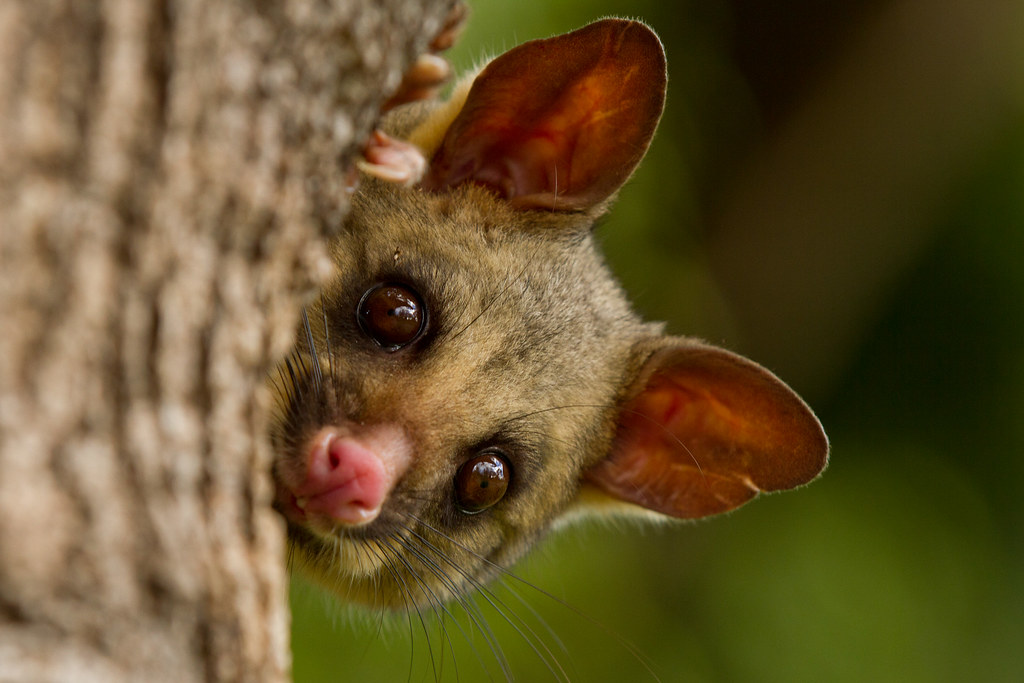
    If an animal looks soft, furry, and, let’s be honest, kind of adorable… why wouldn’t we treat it like a friend? Picture a common brush-tailed possum, fluffy and wide-eyed, or a spiky little hedgehog snuffling through the undergrowth, both undeniably friend-shaped. They don’t exactly look like villains. In fact, they look like animals we might want to protect.

    But here’s the uncomfortable truth: in Aotearoa/New Zealand, these “friend-shaped” animals are responsible for some of the most devastating environmental damage across the country.

    A curious little hedgehog (Erinaceus europaeus). It doesn’t look dangerous, but they are surprisingly harmful predators.
    Copyright CC BY-SA 3.0, by Tony Willis, from Wikimedia Commons

    Early in my veterinary career, I realised just how complicated it can be to care about the environment. I’d signed up to help animals, not to think about how their populations should be controlled. But here in Aotearoa, even the cutest animals can be a big environmental problem.

    The scale of the problem means pest management is essential. Conservationists must find a balance between the effectiveness of pest control techniques and animal welfare. This article explores how emerging technologies may help meet this challenge.

    Cute… but catastrophic

    Aotearoa’s wildlife is unique because it evolved for millions of years without land mammals. The only land mammals native to Aotearoa are, in fact, two species of bats. This isolation means many native birds nest on the ground, can’t fly well, and have limited natural defences against mammalian predators.

    When humans arrived, they brought mammals, like hedgehogs, rats, stoats, and possums, with them. This is when everything changed. A stoat might seem sweet and harmless, but it will kill more than it needs. Possums, while wide-eyed and cuddly, can change the types of trees in native forests.

    The stoat (Mustela erminea) is an adorable but efficient killer.
    Copyright CC BY-SA, 2.0 by Soumyajit Nandy, from Wikimedia Commons

    Introduced mammals have had a significant impact, contributing to widespread loss of biodiversity (variety of animals and plants) across Aotearoa. They have had a hand to play in the extinction of many native bird species and continue to threaten many more.

    So, while these mammals might look adorable and harmless, their impact is anything but. It’s not that these animals are bad, they’re just in the wrong place.

    Why we can’t just leave them alone

    It’s tempting to think, “can’t we just let nature take its course?” The problem is, this isn’t how nature originally worked here. These species were suddenly introduced by humans, and native birds didn’t have time to adjust. So the decline in bird species isn’t natural, it’s our fault, and without intervention, many more native species will be lost.

    The huia (Heteralocha acutirostris). A bird now extinct, lost in part to predation by introduced mammal predators.
    Copyright public domain (CC0-style, no known copyright restrictions in place), by Johannes Keulemans, from Wikimedia Commons

    This is why pest control is necessary. It’s not because we don’t like these animals, but rather we are trying to protect something even more vulnerable and important to Aotearoa’s history.

    The challenges of traditional methods

    Traditionally, pest control has relied on traps and toxins. While these methods are effective, they are not without their downsides. They can be costly, need regular checking and resetting, and pests often return quickly once control efforts stop.

    These methods have been under scrutiny for several reasons. One concern is how humane these methods are. Animal welfare remains an important consideration even when trying to reduce or eliminate pest populations. There are also concerns about their environmental impact, including whether the toxins are retained in the soil and waterways. In addition, is the risk of harm to non-target animals, including native birds and other wildlife not intended to be affected.

    Traditional DOC 200 trap. Using traditional traps requires substantial staff time, meaning that ongoing funding is needed to maintain them.
    Copyright CC BY-SA 4.0, by Kimberley Collins, from Wikimedia Commons

    Looking for better solutions

    The good news is that things are changing in some really exciting ways! A 2014 study by Dr Helen Blackie and her team reviewed a range of emerging technologies and research for long-term mammalian pest management, several of which are discussed below. The team brought together scientists, university researchers, commercial pest management organisations and iwi (indigenous Māori tribal groups) who worked collaboratively to design new tools that are more humane, better targeted to specific pest species, and more effective over long timeframes.

    Helen and her team develop new toxins to minimise animal distress. Some are even based on natural toxins derived from native plants, blending science with mātauranga Māori (traditional knowledge).

    Highly poisonous Tutu plant (Coriaria arborea) has been investigated as a potential source of new toxins.
    Copyright CC BY-SA 3.0 by Rudolph89, from Wikimedia Commons

    Another innovation presented in the study is “set and forget” traps. While these devices have existed for some time. Newer versions use artificial intelligence (AI) to ensure only target pest species activate them. Once installed, these traps can remain in place for long periods without the need for frequent checks or bait replacement, a big advantage over traditional traps.

    Smart trap that uses AI to target pest species while avoiding non-target species.
    Photograph by Dr Helen Blackie, used with permission.

    In the study, the group also helped develop traps that utilise new toxins in a clever way. When the specific pest interacts with the trap, a small dose of toxin is placed onto its coat. The animal then ingests it through grooming, reducing the risk of environmental contamination.

    In addition, the group is learning more about pest behaviour, specifically how animals move, feed, and interact at different population numbers. This helps determine the best places for traps, increasing the likelihood that pests will interact with them.

    People power in action

    As this study has shown, pest control isn’t just about technology. It’s about how people work together to protect the environment. In Aotearoa, pest control programmes rely on collaboration between iwi, conservation groups, and scientists. Each group brings different expertise to the work, from scientific knowledge to local and cultural understanding.

    When I discussed the new innovations with Dr Helen Blackie, she highlighted that some of the most successful pest control initiatives come from community-led groups. She emphasised that even though these groups may have fewer resources than larger programmes, they are still often highly effective. They work closely together with a strong commitment, enabling them to share ideas and adapt their approaches as needed. At the end of the day, pest control only works if people are willing to take part!

    So…why not friend?

    It’s okay to think these introduced mammals are cute, and the instinct to care about all animals is a good one. But, in Aotearoa, protecting native birds and plants requires managing introduced mammals. Not because they’re bad, not because they don’t deserve compassion, but because the balance has already been tipped, and without action, the consequences could be irreversible.

    With better tools, smarter strategies, and more collaboration, we’re moving toward a future where pest control is more effective, more humane, and more sustainable.

    And maybe that’s the real answer to the question, “if friend-shaped, why not friend?” Because sometimes, protecting one part of nature means making hard choices about another.

    Tough decisions need to be made in order to protect tiny native birds like the titipounamu (Acanthisitta chloris).
    Copyright CC BY-SA 4.0  by Melissa Boardman, from Wikimedia Commons

    How can you help?

    Looking after our environment is a shared effort, the more each of us does, the bigger the impact we can make. If you’re keen to take it further, organisations like Predator Free 2050, Department of Conservation, and Forest & Bird offer opportunities to get involved right across the country. Tools like Trap.NZ can also help you protect your own backyard and track your impact. Karawhiua!

    Written by veterinarian and animal lover, Kim Telford, a student at Te Whare Wānaka o Aoraki/Lincoln University. Inspired by a curiosity for how humans and animals intersect, as part of the ECOL 608 Research Methods in Ecology course.

    Explore the science: Blackie H, M., MacKay J.W., Allen W.J., Smith D.H., Barrett B., Whyte B.I., Murphy E.C., Ross J., Shapiro L., Ogilvie S., Sam S., MacMorran D., Inder S., Eason C.T. (2014) Innovative developments for long-term mammalian pest control. Pest Management Science, 70(3), 345-51. doi: 10.1002/ps.3627.