Category: agroecology

  • From stinky van adventures to restoration projects – the unseen potential of wastewater

    Picture this: you’re on a camping trip, enjoying the breathtaking view of one of the most beautiful lakes of Aotearoa New Zealand surrounded by snow-capped mountains, watching the incredible red colours of the sunrise, when suddenly a ghastly smell permeates the air. You quickly discover the source – a full wastewater tank in your camping van that urgently needs to be emptied.

    My friend Julia as she is emptying out the wastewater tanks of her van. Photo by Flora Brumen

    For those who have not experienced the dreadful smell of such a full wastewater tank, know that this is not easily forgotten. Standing in line at a dumping station, waiting to take your turn to get rid of your own disgusting fluids while someone is emptying their toilet container right in front of you, is a situation that brings shared discomfort to campers.

    Now, I may be exaggerating a little now, but you understand my point. Toilet tanks include so many chemicals, that it actually smells better than the tanks that collect just the wastewater from doing the dishes. However, it’s an experience that highlights the less glamorous side of camping but still unites people in their shared discomfort. It reminds us that wastewater is an unavoidable reality that affects us all, every day, not just while camping.

    The impact of wastewater goes beyond our noses. Uncontrolled discharge of wastewater poses a threat to human health, native freshwater species and ecosystems. In New Zealand, treated wastewater is often released into waterways or the ocean. Unfortunately, this can contaminate recreational surface waters with harmful bacteria and viruses.

    The consequences of this pollution are significant. Many popular swimming spots in Canterbury have been ranked unsuitable for swimming due to high levels of bacteria from human sewage found in the water. Last summer, heavy rainfall events worsened the situation, leading to increased runoff of faecal pathogens. Besides creating severe threats to human health and creating unsuitable recreational areas, the pollution also harms freshwater species and degrades aquatic ecosystems. In fact, a devastating 76% of the indigenous freshwater fish species are endangered or threatened, 46% of all lakes have poor water quality and 45% of New Zealand’s rivers are not suitable for swimming activities.

    What if we could turn the tables and use wastewater to actually help save our ecosystems? That’s exactly what a recent study under the direction of Alexandra Meister, a bio-waste scientist from ESR and the University of Canterbury, in collaboration with the Christchurch City Council and Lincoln University, suggests.

    The researchers carried out an experiment on Banks Peninsula, where they irrigated a site with native plant species with treated wastewater from the local treatment plant for three years. The research team made an exciting discovery: the native plants experienced significant growth with this wastewater regime. In fact, their plant height increased by an impressive 10% compared to plants not irrigated with treated wastewater.

    Site of the field experiment on Banks Peninsula, that was irrigated with treated wastewater. Photo by Meister, Gutierrez-Gines, Robinson (Kiwiscience)

    It doesn’t stop there. The soil at the experimental site showed no signs of an increase of potentially harmful elements – beyond what is normal in the soil – that could endanger humans or the environment. There may be exciting possibilities for combining restoration projects with wastewater application to land. By doing so, we could decrease the discharge of wastewater into our water bodies, but also promote the growth of native vegetation, leading to a potential recovery of native biodiversity.

    Of course, establishing native plants in these environments can be challenging if the species are not adapted to highly fertile soil conditions that are created by treated wastewater irrigation. One particular native plant, Mānuka (Leptospermum scoparium), was an obvious candidate for this experiment. This species has the ability to eliminate harmful soil pathogens and reduce the amount of nitrate leaking into water. Even though mānuka is not adapted to such nutrient-rich conditions, typically growing in low-fertility soils instead, the species responded well to irrigation and increased their growth.

    The success and safety of applying treated municipal wastewater to the land depend on two key factors: the quality of the wastewater and the characteristics of the local environment. Due to these unique considerations, it is crucial that each system is designed to specifically address these factors.

    Going forward, the researchers will continue their investigation by exploring various plants and soil types. They will continue to explore different plants and soil types, expanding our understanding of where and how wastewater irrigation can be utilised effectively.

    It’s time to shift our perception of wastewater. Instead of viewing it as something unseemly to get rid of, we need to recognize it as a valuable resource that can be multi-purposes. By finding innovative applications for treated wastewater, we can decrease its careless discharge and contribute to saving our environment and ecosystems.

    The success of using treated municipal wastewater as a valuable resource shows us how even the unpleasant smelling wastewater from our camper van adventures something associated with an unpleasant smell can turn into the sweet scent of environmental protection and restoration efforts.

    This article was prepared by Master of International Nature Conservation student Flora Bumen as part of the ECOL608 Research Methods in Ecology course.

    Meister, A., Li, F., Gutierrez-Gines, M. J., Dickinson, N., Gaw, S., Bourke, M., & Robinson, B. (2022). Interactions of treated municipal wastewater with native plant species. Ecological Engineering, 183, 106741. https://doi.org/10.1016/j.ecoleng.2022.106741

  • Life near the edge: same dung, different day

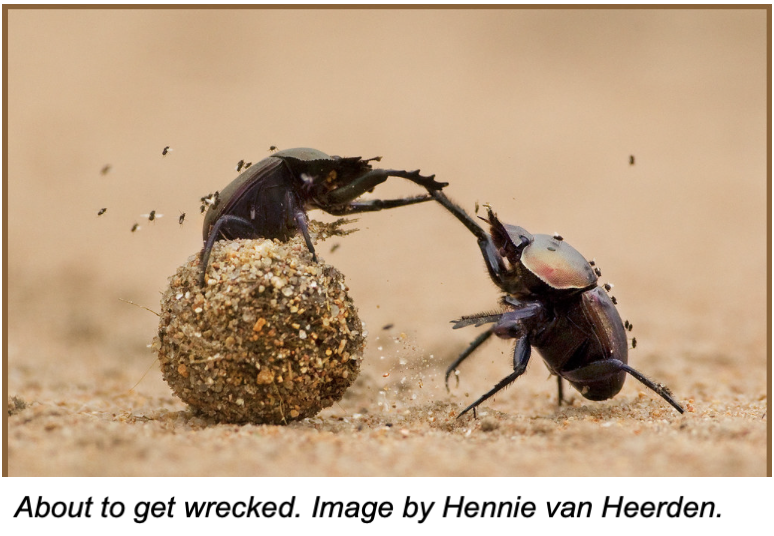
    Although I was vaguely aware of dung beetles and their role in the ecosystem, I finally became interested in them while participating in giraffe research in South Africa. I’ll never forget the time when I was finishing up my giraffe work for the day and I stopped to watch a couple of dung beetles who were squabbling over a single ball of dung (poop). What I had perceived to be a relatively gentle disagreement escalated quickly when I watched one demolish the other with a long-time favourite move from the World Wrestling Foundation, the Brainbuster. You know the one.


    Dung beetles play an essential role in the environment. However, they fly a bit under the radar, which is why they are often called nature’s “unsung heroes.” There are over 100 species of dung beetle, each choosing one of three strategies: rolling, tunneling, or dwelling in dung. Not only do they eat and live in animal dung, but they increase the freak by reproducing in it and burying it. This ensures their offspring have plenty of food for when they hatch. 

    As gross as it is, this burying behavior strongly limits the growth of vertebrate parasites, which is tremendously helpful to the rest of the ecosystem. They help remove animal dung from the surface environment with incredible efficiency and speed. In some places, the beetles can eliminate a pile of dung in less than 10 minutes, where the ground would otherwise be carpeted with it.

    Dung beetles are very widespread, found in many different habitats across all continents except Antarctica. Like many species, dung beetles appear to be harmed by the break-up of natural environments. This fragmentation reduces the size of undisturbed, or core, habitat in the centre and creates isolated habitat patches. The environment along the edge of a habitat is usually quite different from the core. In forests, for example, it’s typically windier and sunnier at the edge of the forest than in the centre. 

    Edges are not only susceptible to environmental challenges, but also to human impacts. They are more vulnerable to fire, as well as illegal harvesting or collecting of plants or animals by humans, simply because they are more easily accessible. Some of these impacts along the edges don’t stay localized, but can radiate into the core habitat as well.

    Edges are in fact an important habitat, because they support species that like transitions between different habitats. However, as humans continue to break up large habitats, with roads or communities for example, the amount of edge habitat increases, while core habitat shrinks. This challenges the animals that rely on core habitat. Additionally, the edges of habitats typically support fewer species than the core. We don’t want to consistently change habitats around the world to ones that support similar and fewer species. 

    Buffer zones are areas around a sensitive, often legally protected, environment that are typically managed to reduce edge impacts on the borders of a sensitive area. Sometimes buffer zones have methods to exclude humans or livestock, such as fences. Sometimes they are simply designated areas without active protection measures. Relatively little is understood about how effective buffer zones actually are for some species.

    Back to dung beetles, we typically see fewer individuals and a less diverse group of dung beetles along habitat edges than in the core, because they are a group that tends to be quite affected by human activities. For example, because they are in constant contact with dung, they are exposed to pesticides that livestock ingest, which has been causing population declines. But how do buffer zones impact dung beetle diversity and density along the edge of protected habitats?

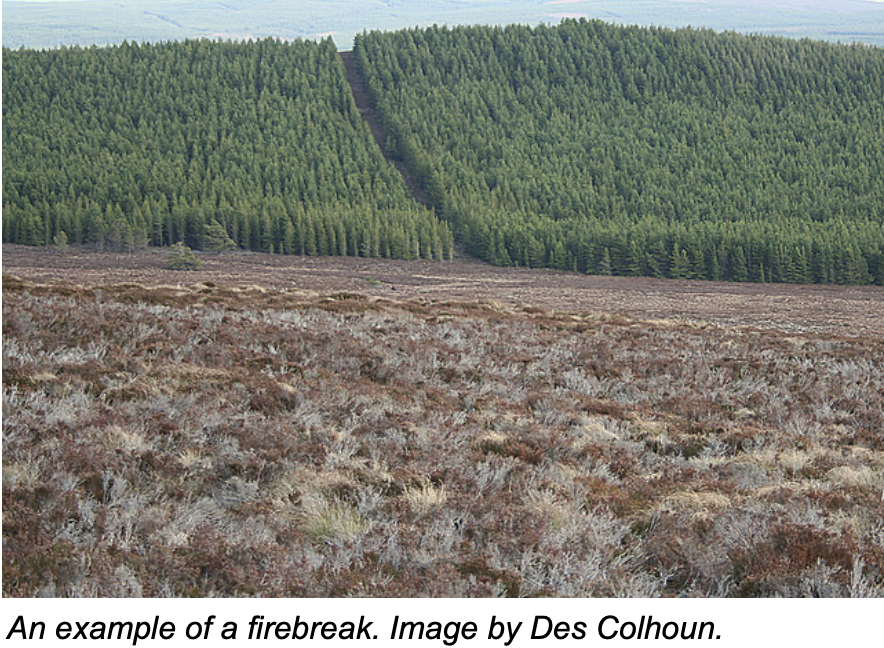
    Andrew Barnes and his colleagues, including the late Rowan Emberson from Lincoln University, decided to find out. The montane rainforests in Sub-Saharan Africa are shrinking rapidly, largely due to deforestation for agriculture and grazing. There is also nearby habitat decline that often comes with agriculture. The Ngel Nyaki forest reserve in Nigeria is a heavily fragmented area. To test how dung beetles would respond to increasing edge effects, the researchers applied experimental habitat restoration treatments to certain areas along the edges. For the restoration, researchers excluded livestock with fencing, created and maintained firebreaks to help block fire, and allowed passive natural regrowth of the floral community. This combined restoration occurred in 200 metre buffer zones over the course of three years.

    The impact of these buffer zones was remarkable. In the forest next to the restoration area, the dung beetle population size increased by over 50% compared to the unrestored areas. Perhaps more important was the difference between dung beetle populations in the edge and habitats. Before the restoration, there were many more species of dung beetles in the habitat core and relatively few in the edge. After the restoration, that difference disappeared, meaning that the buffer zones successfully mitigated the challenges that are typical of edges for dung beetles. The restoration also led to the return of certain species that had previously locally disappeared in the degraded habitat.

    These changes are incredibly pronounced and occurred after only three years and with small levels of restoration. While firebreaks do require active maintenance, it is encouraging that even relatively minor land-use changes around protected areas can make a world of difference for many species. Relatively few studies have been completed about the effectiveness of buffer zones, so this is a single, but vital, drop in a much larger pot of conservation decisions. 

    After all, we want all dung beetle species to survive, no matter how gross or freaky, to tidy up after vertebrates and perhaps to get more inspiration for wrestling moves.

    This article was prepared by Master of International Nature Conservation student Julia Criscuolo as part of the ECOL608 Research Methods in Ecology course.

    Barnes, A.D., Emberson, R.M., Chapman, H.M., Krell, F-T., & Didham, R.K. (2014). Matrix habitat restoration alters dung beetle species responses across tropical forest edges. Biological Conservation, 170: 28-37. DOI: http://dx.doi.org/10.1016/j.biocon.2013.12.006

  • Making a splash: Protecting the manu with Mānuka and Kānuka

    The art and joy of bombing off a bridge. Photo: Gen Toop. Dec, 2022

    “Do a manu” “Do a bomb”. On a hot summers day these are the chants that ring out across Aotearoa as packs of kids and adults line up on bridges or climb atop rocks and get ready to jump into a lake or a river. A ‘bomb’ or a ‘manu’ is a very precise manoeuvre that involves jumping from somewhere high, curling into a ball and making the biggest splash you can when you hit the water. Some would argue that a manu involves more technical aerial acrobatics than a simple bomb. Either way, the bomb or the manu is a rite of passage for many New Zealand kids.

    But increasingly this treasured national pastime is under threat. The Ministry for the Environment painted a grim picture of waterway health in its recent Our Freshwater report. Nearly half of New Zealand’s lakes are in poor or very poor health. Only two in every hundred lakes are in good or very good health. Many rivers have become so polluted that they are now unsafe for swimming at times. And it is not only humans who can no longer safely swim in some of the country’s rivers. Native freshwater fish are struggling to survive. More than three-quarters of them are threatened with extinction.

    The native freshwater birds that depend on rivers, lakes and estuaries, are also in peril. More than two thirds of them are threatened with extinction or at risk of becoming threatened. Introduced predators, like trout and stoats, are one of the main culprits behind the decline in native freshwater fish and bird populations. The degradation of freshwater habitat by pollution is another driver that is pushing these precious species closer to extinction. Cleaning up waterways is important not only for protecting the long-held tradition of doing a ‘manu’, it’s also critical to the protection ngā manu (the birds) of Aotearoa.

    Algal Bloom in the Waikirikiri, Selwyn River. Photo Credit: Gen Toop. Jan 2021

    Nitrogen pollution is one of the leading causes of the degradation of New Zealand’s freshwater ecosystems. When excess nitrogen on the land seeps down through the soil past the rootzone of plants it can get into the groundwater. From there it can move into the aquifers that many communities and cities get their drinking water from, or it can re-emerge in springs and get into lakes and rivers. Once in those lakes and rivers nitrogen can cause algal blooms, which can suck oxygen out of the water making it difficult for freshwater fish to survive. These algal blooms also make rivers a lot less appealing for jumping into on a hot summers day. Some algae are even toxic and can cause human health issues as well as kill sensitive animals like dogs.

    There are lots of different forms of nitrogen, but one of the main forms that leaches in this way is nitrate. The vast bulk of nitrate pollution getting into New Zealand’s freshwater comes from agriculture. That’s mainly because New Zealand’s pastures are loaded up with synthetic nitrogen fertiliser and the urine of the livestock feeding on these pastures has huge amounts of nitrogen in it. When livestock, particularly dairy cows, urinate the plants can’t always use all the nitrogen for their growth and so the excess nitrate can leach into waterways.

    Mānuka (Leptospernum scoparium) flowers. Photo Credit: Vil Sandi, Flickr, licensed under CC-BY-ND 2.0

    A promising new solution to this nitrate leaching problem has been explored by researchers from Lincoln University, Canterbury University and Plant and Food Research. In 2017, the scientists simulated a dairy cow urinating (not something many of us do in our day jobs) and compared the nitrate leaching rates under three tree species that could be planted into dairy pastures; radiata pine (an exotic species), mānuka (native) and kānuka (native). They found that mānuka and kānuka leached far lower amounts of nitrogen (2 kg/ha) than pine (53 kg/ha).

    Speaking about the project Dr Juergen Esperschuetz, the lead researcher from Lincoln university said, “These results show mānuka and kānuka could be even more effective at protecting water systems than anyone expected.”

    Intentionally planting trees into pasture where animals continue to graze is a farming system called silvopasture. Silvo is derived from the latin word for forest and pasture, well we all know what that is. Silvopasture is not just about shelterbelts, windbreaks, and riparian buffers, systems which relegate trees to the margins of a farm. Instead, silvopasture systems often plant trees into the paddock itself. It has been said that silvopasture, and other agroforestry systems like it, represent a shift away from monocultural production and towards an agricultural system that more closely mimics natural forest ecosystems. Mānuka and kānuka are native trees to Aotearoa so incorporating them into dairy pastures also provides a way to bring more native biodiversity back into farming landscapes.

    The researchers also found that soils under the mānuka and kānuka emit far less nitrous oxide, with the mānuka soils emitting the least of the three. Nitrous oxide is an extremely potent greenhouse gas, it is long lived and in Aotearoa, the vast bulk of nitrous oxide emissions come from livestock farming. So planting mānuka and kānuka into dairy pastures could also help in the fight against climate change. On top of that, both trees produce high-value products in the form of oils and honey and that could be used to supplement farm income.

    Cows grazing in a silvopasture. Photo Credit: Gayle Weaver,pixabay.com, licensed under CCO

    Since the publication of this study, other researchers have gone on to use parts of its methodology and draw on its findings in their research. In the Wairarapa, a study done in the field found much lower nitrate levels under manuka than under pasture, corroborating the findings from this glasshouse study done by Dr Esperchuetz and his team. In Spain, researchers also drew on the study when they investigated nitrate leaching risk under walnut silvopasture.

    This study has added to the toolkit of options available to help reduce the environmental impact of pastoral farming in Aotearoa. Incorporating mānuka and kānuka trees into pastures will not only bring biodiversity into farming landscapes. Thanks to this research, we now know it will likely help clean up our lakes and rivers too, protecting both ngā manu and the manu now and into the future.

    This article was prepared by Master of Science postgraduate student Genevieve Toop as part of the ECOL608 Research Methods in Ecology course.

    You can read the full article here: Esperschuetz, J., Balaine, N., Clough, T., Bulman, S., Dickinson, N. M., Horswell, J., & Robinson, B. H. (2017). The potential of L. scoparium, K. robusta and P. radiata to mitigate N-losses in silvopastural systems. Environmental pollution225, 12-19.

  • Can mushrooms save our planet from burping cows?

    Ever since I was a small child, I have listened to people talk about global warming and climate change. Back then I had no idea what it meant. Was our planet going to catch on fire? Were we all going to die? And why did no one seem to agree if it was fact or fiction?

    I come from a family of old school sheep and beef farmers that believed it to be a myth, or at least an over-exaggerations by scientists. As I grew up, I became increasingly more inquisitive, always asking how could something as large as our planet be warming? And what could be the cause?

    Burning earth globe west hemisphere. By Boris Ryaposov. © Adobe Stock #45170848, used with license

    Many of my questions were left unanswered until I started high school and discovered science. Straight away I fell in love with its explanations for how everything functioned. Everything from the stars in the sky right down to the soil beneath our feet (and even further down to the centre of the earth).

    Global warming quickly became a topic that piqued my interest. The more I learnt, the more obvious it became that it was a very real, very serious problem. What exactly is global warming? Thankfully, the planet isn’t going to literally catch on fire like I once thought (although fires will be more likely). The temperature of our planet is slowly increasing each year due to ‘dirty industries‘ pumping pollutants, called greenhouse gases (GHGs), into the atmosphere.

    These gasses end up trapping heat from the sun, rather than it being reflected back into space. This heat warms the atmosphere, resulting in extreme weather events becoming more frequent . This means more forest fires, droughts, floods and heatwaves, which combined have disastrous effects on the environment and negatively affect many peoples’ lives.

    Methane emissions! 牛のゲップ、メタンガス排出のイラスト. By MAYUK0. © Adobe Stock #488498751, used with license.

    Studying environmental science at university has taught me all of the main contributors to this problem. A major issue for New Zealand (NZ) is the gas methane. Methane makes up the majority of NZ’s agricultural GHG emissions, and it often comes from farm animals, such as sheep and cows. These animals produce methane during their digestive process and release it into the air by burping! Scientists have estimated that 40% of the total warming effect generated by human activities is due to methane.

    Under the Climate Change Act, NZ must reduce methane emissions from agriculture by 10% by 2030, and within the range of 24-47% reduction by 2050 (NIWA). Hence finding methods to reduce the amount of methane produced by animals is particularly important.

    The paper by K.T. Rangubhet and colleagues in the Journal Animal Feed Science and Technology found that by adding spent mushroom substrate (SMS) to cow food, that their methane emissions were significantly reduced.

    Mushroom substrate refers to the waste generated from mushroom production and is usually found in abundance after a mushroom harvesting period. The chemical composition of the mushrooms affects an animal’s fermentation and ecology. A useful byproduct of this is reduced amounts of methane burped into the atmosphere. Applying SMS to the feed of dairy cows could reduce the amount of emissions that animals contribute to greenhouse gases.

    Fungi – an image by Adrian Paterson

    Adding spent mushroom substrate uses diet and nutrition as a method to reduce GHG emissions throughout NZ. It is an approach that could allow our country to achieve the reduction goal set by the climate change act. Since this is in the next 8 years, SMS may be able to help NZ achieve these goals, especially as it is cost-effective and easy to apply. Other approaches are herd management, where animal breeds are selected that can utilise food more efficiently, and emit less methane. The strategy also includes reducing the number of unproductive animals in a herd to improve profitability.

    If these methods continue to show promise by substantially reducing methane emissions from dairy cows, this could be applied to farms throughout NZ. SMS could make a real difference to this country’s effort to prevent climate change due to GHG. This could then be part of a global solution to help to mitigate climate change and slow down our planet’s increasing temperature.

    The author Polly Cavanagh is a postgraduate student in the Master of Science -Environmental Science taught at Lincoln University. This article was written as an assessment for ECOL 608 Research Methods in Ecology.