Category: Threatened species

  • The three bird-iteers: all for monitoring and monitoring for all!

    The three bird-iteers: all for monitoring and monitoring for all!

    My time at Lincoln University has taught me that when it comes to bird monitoring, the most common practice is the 5 minute bird count (5MBC). This method is a simple and effective way of counting birds within a specific area by recording sightings and calls. Much of the time, using 5BMC, it is likely that you will not see the bird you are hearing, which is why being able to identify New Zealand birds just by sound is a very good skill.

    Lincoln University legend Jon Sullivan did a study on different bird data collection methods that could also mahi together to build a more accurate picture of birds in an area. The study focused on wider Christchurch, beginning in 2003, and recorded patterns in bird species within the area.

    One method that was used was the stationary method , which is pretty much the same as the 5MBC but is extended to 20 minutes. The other method used was the ‘mobile method’, also known as the ‘line-transect method’, where you collect data while moving at a fast pace, perhaps by bike, car, or running.

    Now to the fun stuff – birds!!

    In Jon’s study there was a focus on three bird species, which I call the three bird-iteers (with apologies to Alexandre Dumas). These are the grey warbler, fantail and the bellbird. These endemic birds are very adaptable to recent changes for forest bird species.

    Grey Warbler

    The grey warbler (Gerygone igata, riroriro) are found throughout New Zealand. They are small, grey/brown with a more pale shade of grey for the face to throat. They weigh approximately 6.5 g (lighter than a mouse) and their diet consists of insects and spiders.

    Grey Warbler (Gerygone igata)

    Grey Warbler. Photo CC BY Mikullashbee, Flickr

    Fantail/pīwakawaka

    Fantails are one of my many favourite bird species, as they love to follow humans around when you are on bush walks. Fantails are able to adapt to environments that have been changed by humans, which is not very common for New Zealand native birds. Fantails (Rhipidura fuliginosa, piwakawaka) are often found in open native bush, exotic plantation forests, orchards and gardens. Their diet consists of insects, especially small species. Fantails are a small bird about the size of a house sparrow, but what makes them so distinctive? Well the answer is in their name…. Yes their tails, like their name suggests they have a long tail that fans out like a well a fan.

    Fantail

    Fantail. Photo CC By Chris S, Flickr

    Bellbird/ Korimako

    Bellbirds(Anthornis melanura, koromiko)are commonly found in the South Island. These birds have a short, curved beak and are green with a slightly forked tail. Bellbirds, similar to Tūī’, have a distinctive song, it is like a high ringing that’s also kind of smooth, and the repeat the same tune. Bellbirds reside throughout native and exotic forest, scrubs and shelter belts of New Zealand. Their diet is nectar from native and exotic plants, although they do consume fruit in late summer and autumn. Also their diet consists of honeydew that’s found on beech trees.

    Bellbird

    Bellbird. Photo CC By Glenda Rees, Flickr

    Back to the study

    Jon Sullivan wanted to understand how nature responds to a forever changing world. He collected distribution and abundance information for many species with these three species being the focus. This is where the methods came into play as a standardised method and a repeatable one is needed to accurately tell us if a species is present or not. The methods talked about above were to work alongside each other.

    Around 100,000 bird counts were collected. The approach used helped to summarise data that was from one location, a certain time each week, and one daily route. The results showed that this approach was effective and just as effective as the 5 minute bird count. Counting birds while riding your bike along a road was just as effective at estimating and following trends as more traditional methods.

    Fantails, grey warblers, and bellbirds (but not to the same extent as the other 2) are majorly restricted to their forest biotopes and native plantings, particularly in spring.

    Like any good study, more data are needed to get a better and clearer understanding. This could create a good opportunity at Lincoln University to teach students doing ecology to learn how to use different techniques besides just the 5MBC methods. Then we too can collect decades long information on our favourite birds.

    This article was prepared by postgraduate student Caitlan Christmas, Masters of Science in Ecology and Conservation, for an assignment in ECOL608 Research Methods in Ecology.

    Sullivan,JJ(2012). Recording birds in real time: a convenient method for frequent bird recording https://researcharchive.lincoln.ac.nz/server/api/core/bitstreams/04dc8df3-2e34-4fe9-96a6-ea8a505ad0cc/content

  • Wings of change: Protecting parrots where they belong

    Wings of change: Protecting parrots where they belong

    I had always wanted a parrot as a kid.

    My obsession was inspired by Meena, a Bangladeshi animated TV series created by UNICEF, where the protagonist, Meena, had a clever parrot named Mithu who could speak and even help with homework from school. In the very first episode, Meena wishes to go to school, but her parents don’t think it is worth educating a female, a sad reality in many Asian countries, even now.

    Determined to learn, Meena finds a creative solution: Mithu goes to class for her, memorising the lessons and teaching her later. Having grown up with this story and often seeing parrots caged in people’s houses, I had subconsciously believed that parrots were meant to be pets, friends to humans rather than untamed animals.

    That belief was shattered the first time I saw a flock of parrots flying freely in the jungle. As I saw them calling to one another, I came to see that they were more than simply colourful birds living in cages; they had families, friendships, and a world of their own.

    And then another surprising revelation struck me: Mithu wasn’t even a parrot; he was a parakeet! I discovered the distinction during my first birdwatching trip as an undergraduate. In that moment, I realised how early influences, particularly those from television, can shape, and sometimes mislead our views of the natural world.

    Indian Rose-Ringed Parakeet
    A caged rose-ringed parakeet © Geoff McKay / Flickr

    This memory came flooding back as I read about kea (Nestor notabilis), a playful and highly intelligent alpine parrot of New Zealand. Unlike the caged parakeets of Nepal, kea are renowned for their curious nature, a trait that has both fascinated and frustrated humans. Kea are unique among parrots. Their sharp intelligence and flexibility have allowed them to survive in the harsh alpine conditions of the South Island of New Zealand.

    Using observations in a plantation-native forest matrix, a team of researchers led by Aitken in 2023 conducted a study in the Whakatipu Kā Tuka (Dart-Rees Watershed) area and discovered that kea were commonly seen in plantation forests. These birds, although strongly associated with alpine and native forest habitats, spent a surprising amount of time in exotic plantation woods, probably because these managed landscapes offered new foraging options.

    Aitken also tracked individual kea and mapped their home range and habitat use using VHF (Very High Frequency) radio transmitters that were attached to three individuals as lightweight backpacks. This method confirmed the keas’ active usage of plantation forests, not only for foraging but also as part of their usual range, and helped to better understand how they navigate various settings over time.

    This kind of fine-scale tracking is relatively new for kea and adds an important layer to our understanding of their behaviour in human-modified landscapes. However, it is worth noting that catching wild kea for such work is not a small feat – thanks to their sharp beaks and mischievous personalities!

    Kea
    A kea in its natural habitat CC BY-NC-SA 2.0 fremat/Flickr

    Kea are opportunistic omnivores that consume a wide variety of foods, ranging from seeds, native fruits, nectar, to even meat from dead animals. Jodanne Aitken, a PhD student at Lincoln University, found that although kea frequently fed on seeds from Pinus radiata trees in plantation forests, their poop told a fuller story. The faeces was full of insects and other invertebrates, showing just how flexible and opportunistic their diet really is. In plantation forests, they take advantage of exotic tree species and the insects that come with them.

    In contrast to many birds that avoid human-dominated landscapes, kea seem to do OK in them; curious and always eager to explore.The study also found that kea were more active in the morning and that their behavior changes with seasons, possibly linked to food availability or breeding. What’s truly fascinating is how their sharp intelligence allows them to survive not just in harsh alpine conditions, but also learn how to make the most out of new environments, like the pine plantations.

    Jodanne in action detecting kea. Image by Adrian Paterson

    Just like Mithu, the parakeet from my childhood who memorized lessons for Meena, kea are constantly learning from their surroundings. It is this intelligence, combined with their bold and exploratory nature that makes them such incredible survivors.

    While plantation forests provide new foraging grounds, they may also expose kea to new threats. This raises a vital question: are we simply giving kea new places to forage, or are we asking them to survive in habitats that may not fully meet their needs? Human-modified landscapes, while rich in opportunity, also bring risks such as increased exposure to toxins like lead or conflict with people. These findings offer hope for kea resilience in human-altered habitats, while also informing future forest management practices.

    On the other hand, the parakeets of Nepal, such as the Alexandrine and Rose-ringed parakeets, are often kept as pets, and their social skills and intellect are used for human entertainment rather than for their survival. The thought of birds with such intricate habits and close social ties being denied their natural life saddens me.

    Wild parakeets form large flocks, communicating and interacting in their own ways across wide-ranging Himalayan landscapes. Unfortunately, they face growing threats from habitat loss due to urban expansion, deforestation and especially the illegal pet trade. In fact, both Alexandrine and Rose-ringed parakeets are among the most commonly trapped and sold birds in south Asia. Without stronger awareness and conservation action, their role as seed dispersers and forest connectors may be lost.

    While it is heartbreaking to see parakeets in cages, it is crucial to remember that simply releasing pet birds into the wild isn’t the solution. Doing so can introduce diseases to native bird populations or create invasive species that disrupt ecosystems, as has happened in parts of the world where feral parrot colonies now compete with native wildlife. The real solution is prevention: parrots should never be taken from the wild in the first place. Instead, our focus should be on protecting their habitats and fostering respect for their role in nature.

    What if we saw Nepal’s parakeets not as possessions but as individuals with a right to freedom? Kea, despite facing habitat loss and human-wildlife conflicts, still roam wild, adapting to changing landscapes. Their ability to explore, learn, and interact with their environment is a reminder of what many of Nepal’s parakeets have lost.

    An AI generated image of Nepal’s parakeet and New Zealand’s kea in their natural habitat © OpenAI

    Kea’s willingness to venture into plantation forests for sustenance demonstrates their adaptability, but they are not immune to human pressures. Habitat changes, exposure to toxins, and climate change are pushing their predators higher into alpine zones, creating new challenges for their survival.

    Meanwhile parakeets in Nepal often face shrinking natural habitats with fewer options for survival. While kea find new ways to navigate a changing world, Nepal’s parakeets are being held back by cages or by degraded ecosystems. If we could foster the same appreciation for the natural behaviors of our own native birds, perhaps we could shift away from the practice of caging them and towards efforts that protect their wild populations.

    Kea are naughty, sometimes destructive, but ultimately, they are wild; free to roam and explore. Nepal’s parakeets deserve the same fate. Instead of keeping them as pets, we should prioritize protecting their habitats, enabling them to play and be curious in the Himalayan forests of Nepal. The lesson is clear: birds, whether in Nepal or New Zealand, belong in the sky, not behind bars.

    This article was prepared by Master of Science student Naresh Shrestha as part of the ECOL608 Research Methods in Ecology course.

    Read full research article here:
    Aitken, J., Paterson, A., Ross, J., Orr-Walker, T., & Young, L. (2023). A preliminary study of kea (Nestor notabilis) habitat use and diet in plantation forests of Nelson, New Zealand. New Zealand Journal of Zoology. https://doi.org/10.1080/03014223.2023.2251904

  • Keeping up with the Kiwis: Translocations and their forever holiday homes

    Keeping up with the Kiwis: Translocations and their forever holiday homes

    New Zealanders, also known as the ‘kiwis’, are known for tramping up great mountains, and travelling around the globe. For the actual kiwi bird, their adventures are limited to islands and protected environments. Even our New Zealand mascot, Goldie the kiwi, manages to ‘fly’ all around the world, which I’m sure would make the national birds jealous.

    That’s not to say that actual kiwi don’t get around. Our national icon is the most translocated bird in New Zealand. We have been translocating kiwi since not long after the Treaty of Waitangi (1840) due to predation and habitat loss, often with limited success. When we try our hardest to save populations through transfers, most or all birds die. So, we created protected (fenced) sanctuaries that allow a safe environment for kiwi and other native species to thrive. But after decades of conservation work and relocating kiwis out of their homes to a safer habitat, are they truly happy in their new homes?

    Fenced Sanctuary – Zealandia. Image by Russellstreet

    Methods for successful translocations have been developed. Methods, including the introduction of Operation Nest Egg (ONE), allows the hatching chicks to become mature before releasing into the wild. These methods has required the involvement of community groups, iwi and hapū. However… there are no resources that include information from past kiwi translocations, so we don’t know the past outcomes, whether they were effective, or how to improve them — which is wild!

    Researchers at Lincoln University, Peter Jahn and James Ross, and other colleagues reviewed 102 kiwi translocation projects (mainly from the last four decades — older information having been lost or ‘poorly documented’), and they examined the mitigation translocations and rehabilitation releases. But how do you define a ‘successful’ translocation?

    We can’t assume that if we release birds into a new environment that everything will magically lead to success. We must investigate if the kiwi population can settle in, grow in numbers and maintain a healthy balance on their own for it to succeed long-term. The primary goal of translocations is to “establish or restore a population with a high probability of persistence”. Unfortunately, kiwi behaviours have made it hard to grow a population, as they are irregular breeders and take several years to reach sexual maturity.

    To address this, objectives were set for releases:

    • To grow all kiwi populations by at least 2% per year.
    • To sustain genetic diversity, each translocation will have at least 40 unrelated individuals released (a ‘founder population’).
    • A minimum timeframe of 15 years is required for the population to grow (and adapt to its new environment).

    By collecting data and analysing the translocation trends over the decades, we can better understand how different projects affect the survival of kiwi taxa.

    Stewart Island Brown Kiwi (Tokoeka). Image by Jake Osborne

    Since 1863, there have been 102 translocations, with an impressive 76 kiwi translocations just in the last 20 years. Translocated kiwi species included: Rowi, Great Spotted Kiwi, Little Spotted Kiwi, Tokoeka, and Brown Kiwi. Most of the release sites (63% since the 1860s) were in the North Island or on offshore islands (sorry Lincoln — too much farmland). However, 20 of these projects’ reports do not exist or are unavailable. But here’s what is fascinating… just over half of the translocations (58%) introduced kiwi taxa where they were not seen before (a giant leap of ‘kiwi-kind’)!

    In the past, effects to reduce harm for the kiwi were deemed as an ‘emergency’ to secure populations. Recent translocations cited ecological restoration and supporting kiwi taxa across different areas as a priority (which supports natural differences, and resilience – perfect for long-term conservation outcomes)!

    Unfortunately, not all kiwi species have received the same level of attention. Those with more attention are spoilt with support (more management) and obtain an improvement in their conservation status. Other kiwi species are not as lucky, such as the Great Spotted Kiwi, Fiordland Tokoeka and Rakiura Tokoeka, as their conservation status has worsened. So even though translocation effort aims for an improvement in kiwi populations, other factors, such as population sizes and lack of predator control, make this already difficult job… even more challenging.

    If you look at past scientific literature on initial survival of released birds, these translocations will be reported as ‘successful’, which seems good, right? But are they ‘self-sustaining populations’? Only one project (Zealandia) has been considered as ‘successful’ due to having an increased population. Even worse…. there is little information on the genetic make-up of the new population (which defeats the purpose of becoming a long-term project).

    Little Spotted kiwi at Zealandia. Image by Kimberley Collins

    For future translocations, the number of releases should be adjusted (by changing the total number kiwi released in a specific area) depending on the situation — for example, when there is a low founder population, or a high mortality rate. If a population is not looked after, this can result in reduced fitness and genetic variability. Having a database that holds the records of all the kiwi translocations would make it easier to analyse the factors that could influence kiwi populations.

    So, what does the future hold for kiwi translocations? The main recovery goal, which was “restoring former distributions of all kiwi taxa”, has shown an increase in populations through translocations. Translocations have created new populations on islands, which can “fill in the gaps” in nature, which is a huge win! Guidelines suggest releasing 40 kiwi into a new population and that they are not related to the ‘founder population’ (this number can vary depending on specific factors to maintain high diversity).

    As translocations start from newly established populations, it’s only through time that we will see if kiwi populations can further grow and maintain sufficient genetic diversity.

    This article was prepared by Master of Science student Jessica Przychodzko as part of the ECOL608 Research Methods in Ecology course.

    Jahn, P., Fernando Cagua E., Molles, L. E., Ross, J. G., & Germano, J .M. (2022). Kiwi translocation review: are we releasing enough birds and to the right places? New Zealand Journal of Ecology, 46(1): 3454. https://dx.doi.org/10.20417/nzjecol.46.1

  • How to help lizards in your back yard/paddock

    How to help lizards in your back yard/paddock

    Has your cat ever brought in a nice present only for you to find it’s a lizard? Have you seen a lizard scutling away on a nice sunny summer’s day while walking around the garden? Well, you may have lizards residing in your back yard!

    In New Zealand we have over 125 different lizard species, 76 are skinks and 48 are geckos, all but one one skink species is native. Of these 126 species, 49 (~36%) are Threatened and a further 67 (~50%) are At Risk (Hitchmough et al., 2021). Therefore 86% of our lizard species are threatened by various factors, such as predation, urbanisation, habitat fragmentation, and agricultural intensification.

    We all need to play our part to ensure that lizards do not continue to decline.

    There are simple tools we can use that can help the lizards in our back yard. Skinks love to hide under rocks and in small gaps when startled. Geckos love to live in tight crevices, like spaces in wood, stone and even in various human-made structures (e.g. power boxes and garages).

    We can create structures called Artificial Retreats (ARs) that mimic these natural retreats that lizards love so much. Artificial Retreats are a tool that we can easily implement that can support vulnerable lizards.

    Currently, artificial retreats have been designed for scientific monitoring and are commonly constructed from roof-cladding Onduline sheets, which isn’t an easily accessible or cheap material. My thesis investigated two other alternative designs that are constructed in a manner that is easily accessible to landowners and public members keen to do their part in lizard conservation.

    One AR type was constructed from a stack of three bricks (Figure 1) that have a 10 mm wooden dowel stuck between each layer so that the lizards can easily move between them.

    The second was constructed from two plywood sheets (Figure 2), bolted together, with the 10mm dowel in between the sheets.

    The third was the common Onduline design (Figure 3). I tested these ARs across Canterbury farms located at Cleardale Station in the Rakaia Gorge, as well as Flea Bay and Goughs Bay on Banks Peninsula.

    I captured 26 lizards to test in the three AR designs and there was no preference among the three. However, the geckos at Cleardale Station preferred some designs more than the Flea Bay lizards. At Flea Bay, the lizards were more commonly found in the brick (46%  of all geckos) whereas at Cleardale they didn’t use the brick ARs. At Cleardale Station, a equal number (17%) were found in both Onduline and wooden ARs. At Flea Bay, 17% lizards were captured and only 4% of lizards were found in the Onduline design at Flea Bay.

    Depending on the location of the property and the species of lizards present, there will be differences in which AR they prefer. Having an option of several different AR designs is preferable. 

    During the field trials I found that the ARs did not withstand heavy stock (cattle)interactions and were frequently interfered with. However, I did not have any problems with ARs placed in sheep paddocks.

    Landholders can implement any or all three of the designs into their property and all have a chance of lizard occupation. A variety of designs means that landholders can choose which AR design to use based on what available materials they have.

    Having a choice of AR designs make it accessible to whomever wants to conserve lizard species on their properties without having to spend large amounts of money or spending valuable time having to source the materials to construct the AR.

    Key design components and considerations when planning and building lizard ARs.

    • The ARs need to have at least one gap that has a 10mm gap.
    • Placed in an area where lizards or their poo have been seen.
    • Recommended not to be placed in a paddock in cattle.

    Acknowledgements: A massive thank you to the financial support for this project from The Brian Mason Trust and the North Canterbury Forest and Bird Trust.

    Reference

    Hitchmough, R., Barr, B., Knox, C., Lettink, M., Monks, J., Patterson, G., Reardon, J., van Winkel, D., Rolfe, J., & Michel, P. (2021). Conservation status of New Zealand reptiles, 2021.  

    Written by Sam Fitzgerald, a MSc student in the Department of Pest-management and Conservation at Lincoln University.

  • A bounty hunter in the Subantarctic

    A bounty hunter in the Subantarctic

    I’ve been a fan of Star Wars since I was a nine year old being driven to Dunedin to see this new SF film that was supposed to be quite good. There in the Octagon Theatre my young mind was blown by what I saw. We’d never seen anything quite like it. I still can vividly recall the final attack run down the canyon on the Death Star. It was like you were in the cockpit of Luke’s X-Wing.

    Over the last 47 years I have seen most of the Star Wars movies and series. I even didn’t mind the prequel movies. One of my favourite characters was Boba Fett, the bounty hunter. He seemed cool and I liked that he didn’t take off his helmet (I was also about to become a 2000AD Judge Dredd fan, probably for similar reasons). The Mandalorian, featuring more on the galaxy bounty hunters, is one of my favourite Star Wars series.

    Who doesn’t love Grogu? Image by Adrian Paterson

    I’m not sure why I enjoy the SW IP, the stories are reasonably predictable, the names are awkward and clunky, but I guess it is fun, looks good and has some interesting diversity (it’s definitely not all filmed in an abandoned British quarry like most other SF at the time). I particularly liked the islands on Ahch-To where the elderly Luke Skywalker was living as a recluse. Their ruggedness, isolation and ‘bird’ fauna seemed like our NZ Subantarctic islands.

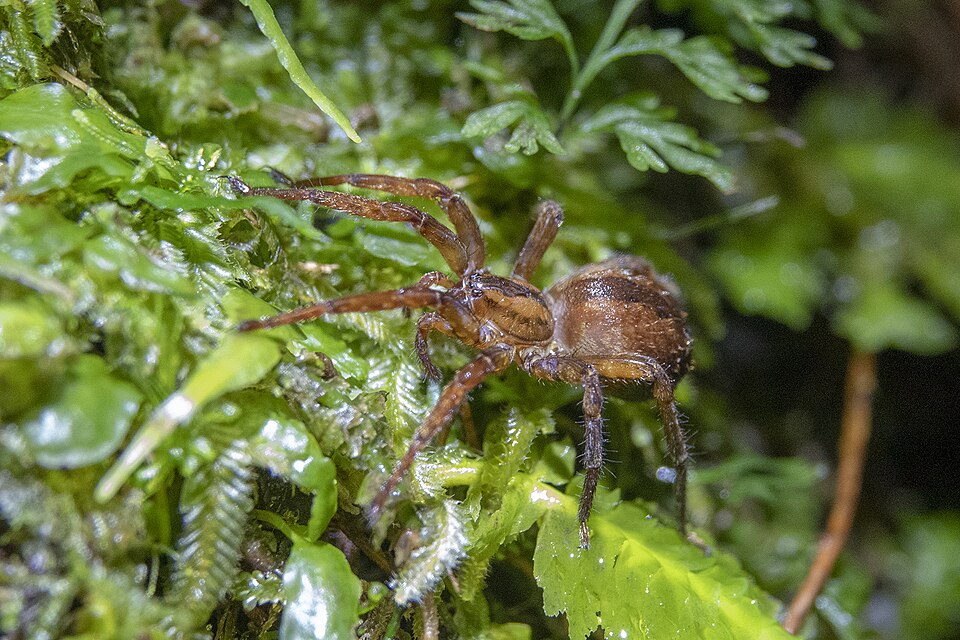
    In the Subantarctic we have our own bounty hunter with the strangely Star Wars-like name of Pacificana cockayni. This spider species, like a Jedi hermit, is only found on the Bounty Islands (a wind-swept collection of small islets) that are very seldom visited by humans. It spends its time hunting among a sparse five other species of spiders and 22 insect species. There are a bunch of seabird species that use the islands for breeding. It’s a harsh place to live and has a precarious food web.

    Pacificana cockayni was first collected by the great botanist, Leonard Cockayne, in 1903. There were a handful of future visits where female adults and juveniles were collected and finally a male was found. When describing a species it is useful to have adults of both sexes (and in spiders differences are exaggerated and easier to find in males). In more recent times molecular approaches, sequencing DNA, allows for a more precise understanding of who your species might be related to.

    Pacificana cockayni. Image by Thomas Mattern.

    Cockayne sent the original samples to a leading British arachnologist of the time with a decidedly non-Star Wars name, but suitably impressive nonetheless, Henry Roughton Hogg (OK maybe a little Star Warsy… I can see an Imperial Star destroyer being commanded by Admiral Roughton Hogg). Hogg decided that Pacificana cockayni was different enough from other spiders to be in its own genus. He then guessed at the family. (“These aren’t the spiders you are looking for.”)

    Over the years other travellers collected a handful of specimens when their journeys brought them to the Bountys. These include the great spider specialist Ray Forster. (“May the Forster be with you‘), one of my first PhD students, Frances Schmechel, and recent masters student, Robin Long.

    Time moves on and we are not in that galaxy far far away now. Many of the spider species lumped together as a big group by Hogg have been moved to more accurate placements by spider specialists over the last century. Cor Vink (Lincoln University), Phil Sirvid (Museum of NZ) and Nadine Duperre (Liebniz Institute) decided to sort out the status of Pacificana cockayni. They could see that things were a mess (“Hogg, you have failed me for the last time“).

    They looked carefully at the various structures of Pacificana cockayni and compared these to the various options for relatives (“Hmmm aren’t you kinda short to be a Miturgidae?”). For example, they found that the stridulatory field on prolateral face of male coxa of leg 1 was different to other closely related species (which to most sounds about as meaningful to the uninitiated as midiclorians).

    Bounty Islands – birds, rocks and a few spiders…. Image by Tui de Roy.

    Vink and colleagues were also able to get DNA from these species as well (or use DNA data that had already been collected). In a recent NZ Journal of Zoology paper they were not able to definitively sort out who the closest relatives of Pacificana cockayni were, but they could show that they had been evolutionary distinct for a long time. Given this distinctiveness and the limited range of this species to the small Bounty Islands archipelago, Pacificana cockayni faces some big problems. “I have a bad feeling about this.

    The maximum height of the Bountys is 73 m, creating a problem with sea level rise taking away land. Climate change is altering prey patterns for the seabird species that bring guano and carrion back to the islands, and which drives the simple invertebrate food webs. Bird populations are also declining through climate influences and from fisheries. Fewer birds means less food for everyone else that’s stuck on these islands (“It’s a trap!“). And, despite the isolation, there is always the risk of a rodent invasion from a visiting boat. Rodents love munching on large invertebrates.

    Like a rare Jedi knight on the fringes of the galaxy, Pacificana cockayni have faced and triumphed over tough times. Vink and colleagues have allowed us to know just how special this species is and why we should work hard to protect it to give it a fair chance to survive into the future.

    This is the way.

    This article was written by Adrian Paterson (Pest-management and Conservation at Lincoln University). With writing EcoLincNZ articles, do or do not, there is no try.

  • Collecting mammals: camera traps in eastern Nepal

    Collecting mammals: camera traps in eastern Nepal

    Collecting things seems to have deep roots in the human brain. There are few things more satisfying than finding something unexpected that you really need for your collection. The shock (woah!), the excitement (at last!), the surprise (how did this get here?), the urgency (I better grab this before someone else does), even though anyone standing close to you probably won’t care about this!

    My youngest son had a few years of thrifting where he would scour second-hand stores for ‘cool clothes’ that he could buy and then sell on for a reasonable profit to people who wanted that retro look but didn’t want to spend time searching. Edgar trained me up to spot certain brands, labels, styles and so on. For about five or six years I spent a lot of time browsing ‘dead peoples’ clothes’ as my middle son Arthur called them. I still remember a great trip with Edgar as I took him to a university semester in Dunedin. We struck gold in Waimate (a little off the beaten track) and found 30+ items!

    A small selection of Tanith Lee.Active from the 1970s till the 2010s – prolific and great for collecting! The Winter Players and Companions on the Road are two of my favourite (short) books ever. Image from Adrian.

    What do I collect? I guess there is a distinction between hobbies and collecting? I have a lot of small plastic figures that I love painting but I am not searching for some elusive or rare halfling commando. I buy a lot of boardgames and there are some older games that I might keep an eye out for, but I would count these as hobbies not collecting.

    Books, I have a lot of books…. Some of that is hobby – reading the latest books by Tad Williams or Lindsey Davis, for example. But I definitely collect some authors (Tanith Lee, Robert Howard) and spend time in second hand book shops with a list…. I still remember the day that I found the original D&D colouring book in absolutely mint, uncoloured condition! So rare! So elusive! All mine! (Sadly it has somehow gone missing from my collection in recent years!).

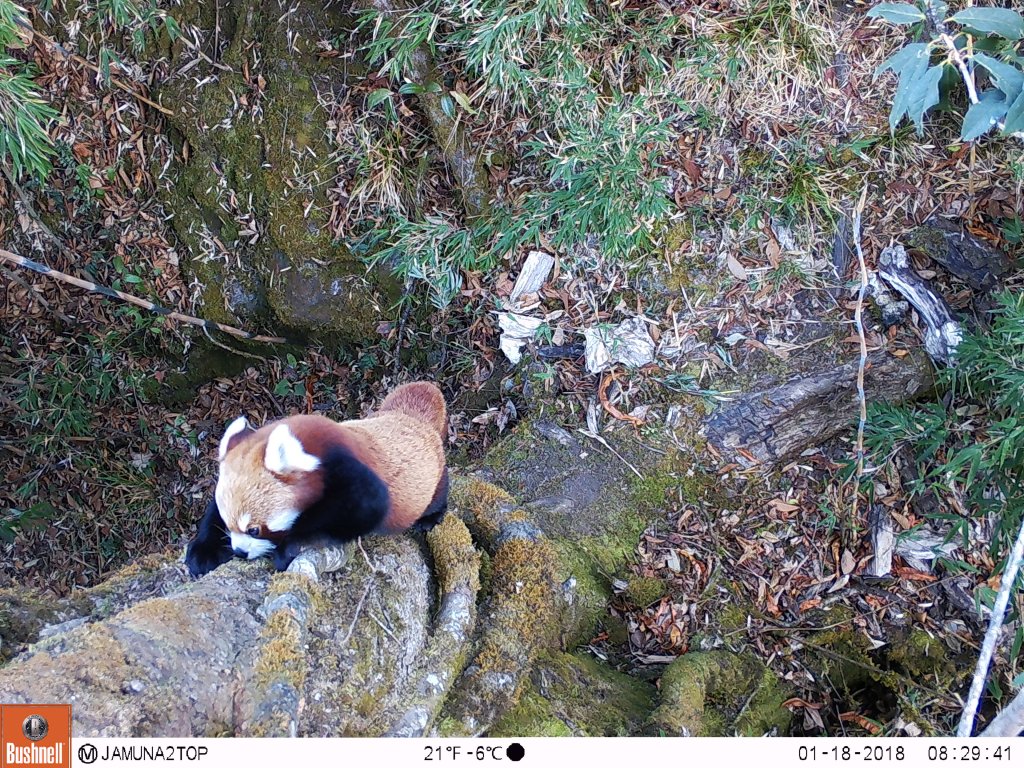
    Collected on camera – a red panda. Image by Sonam Lama

    As a zoologist interested in natural history, you are also dealing with collecting. Typically you want to collect the types of species found in an area. This tells us a lot about species diversity and richness, conservation, ecological interactions, evolutionary adaptations and so much more! This collection could be physical (like the hundreds of thousands of insect specimens found in our LU Entomology Research Museum) or it could be observational, where spotting an individual from a species can be logged (like with iNaturalist). But it certainly scratches the collecting itch.

    Observations can be direct (e.g. I saw that animal) or indirect (e.g. I found a footprint of that animal). Either way these are data that tell us that a species is found in the area. We are increasingly relying on indirect methods to collect observations – in fact much of our wildlife research here in Pest-management and Conservation is around developing better ways to monitor our mammal pests.

    Sonam Lama was a Master of International Nature Conservation student at Lincoln University. He had spent a lot of time working for the Red Panda Network back in Nepal. As part of his research, with Adrian Paterson and James Ross, he was interested in being better able to monitor red panda in the wild (but that will be another story!). Sonam was also keen to find what other species share the red panda habitat in far eastern Nepal. Were there many predators? Were there many competitors?

    Sonam in the forest of eastern Nepal. Image by Sonam Lama

    Sonam worked within the high altitude (between 2-4000 m abs) forests of Ilam, Panchthar and Taplejung, which provide a corridor between the rest of Nepal and India. Over this large area Sonam identified sites where he could put his 60 cameras. Typically the cameras were attached to the base of a tree. Observations from these camera traps were made through winter and spring. Results have now been published in the European Journal of Wildlife Research.

    So what did Sonam collect? Over 3000 camera trap days about 90000 images were recorded. Two thirds were false triggers (vegetation moving in the wind, sudden changes in temperature with sunrise and sunset) – such is the bane of the camera approach. About 11000 were of local people moving through the forest. Amongst all of this were over 5000 images of mammals, including 23 different species, and 3600 images of birds, including 37 species.

    Seventeen of these mammals were medium to large and could be identified. Red panda were observed. The commonly seen species were a deer – northern red muntjac, wild boar and leopard cats. The rarest were other cats: marbled cat (first record in Nepal), Asiatic golden cat and common leopard. The spotted lingsang was also collected for the first time, as was the first melanic (black) leopard.

    Collecting images and video also allows us to look at behaviour. We can get a sense of when species are active. We can see which species move around in groups. Wild boar foraged for tubers in front of the camera, red panda marked their territory, two porcupines mated! Red panda and macaques were active during the day, red foxes and porcupines were nocturnal.

    Collected on camera, a melanic form of leopard. A first for the region. Image by Sonam Lama.

    All of these collected images and videos provide little snapshots of natural history for these species, many of which are difficult to find any other way. Our understanding of potential threats for red panda has also increased. They definitely share their habitat with several potential predator species (and we found a few that were not even known from Nepal). Perhaps more importantly we were able to show that people are common in these habitats and that they are often accompanied by dogs. Good to know from a conservation point of view!

    Collecting images of different species using trail cameras is an increasingly common tool around the globe. It is becoming an essential tool for monitoring species. It doesn’t hurt that there is that thrill of the collector when you find an image of something surprising in amongst all of those misfires.

    This article was written by Adrian Paterson (Pest-management and Conservation at Lincoln University). Yes he is a collector ( I guess you could argue that he collects EcoLincNZ articles!).

  • Wild hunters: Unveiling the hidden leopards of northern Pakistan’s borderlands 

    Our adventure begins in the breathtaking north of Pakistan, where the majestic peaks of the Himalayas, and their foothills, stand as one of the last sanctuaries, a place where the sky meets the earth. Here, clouds drift over rough mountains and lush valleys, into dense forests. Glistening lakes and spectacular waterfalls shape this natural paradise.

    In this wilderness, the air echoes to the calls of rhesus monkeys, while wild boars wander through the underbrush. The Himalayan red fox prowls the mountains, on the hunt for colourful pheasants, a tale as old as time. 

    But the fox is not the only hungry predator in these forests. A top predator, larger and stronger, with a powerful bite and covered in unique dots, reigns in the mountainous range. The majestic leopard (Panthera pardus), a mysterious and shy creature, expert at camouflage, is prowling these forests.

    Leopards are amongst the most iconic big cats. Just like other big cats, leopards are endangered. Human activity and landscape alteration pose significant threats to their survival. When leopards and humans cross paths, conflicts arise, turning this top predator from hunter to hunted

    Panthera pardus fusca is described as larger subspecies, with brighter
    coloration and smaller rosettes (Bellani, 2019).

    Photo Credit: CC BY 2.0 DEED, taken by Rupal Vaidya in October 2016

    Leopards are generally cryptic and shy, much remains unknown about these ferocious hunters. 

    Muhammad Asad, a PhD student at Lincoln University, started his dangerous journey to this wild region in the north of Pakistan. The dangers of the landscape were not limited to wildlife; humans also posed a significant risk in this troubled region. Undeterred, Asad was ready for the challenge that lay ahead. 

    Leopards are amongst the world’s most widespread carnivores, ranging from Africa to Asia. Prowling over such a vast distribution has led to the recognition of several subspecies, most of which are endangered. The forests in the north of Pakistan are known to be home to leopards, but their subspecies status has not been assessed.  

    Contrary to the legend of water-shy cats, leopards are excellent swimmers. Still, the mighty Indus River was believed to act as a barrier between populations, maybe even keeping subspecies apart.

    To unravel this mystery, Asad and his team collected and analysed tissue samples from leopards. Modern techniques have created a genetic tool as powerful as its name: mitochondrial DNA (mtDNA). Mitochondria, the powerhouses of our cells, have long been known for their role in providing power for our cells. These powerhouses also carry their own DNA, passed down maternally, making mtDNA incredible useful for studying population dynamics and subspecies differentiation.

    A key protein encoded on the mtDNA, NADH 5, is essential for energy production and is highly variable among big cats, making it an excellent candidate gene for subspecies identification.

    Through their research, Asad and his team found two distinct subspecies of leopard in the north of Pakistan, P. p. saxicolor and P. p. fusca, both belonging to the Asian group of leopards.   

    Panthera pardus saxicolor is commonly a bigger subspecies and is often
    more pale coloration, with bigger rosettes (Kiabi et al., 2002).

    Photo Credit: CC BY 2.0 DEED, taken by Guido Konrad in July 2021

    These findings mark the first subspecies identification in this region and hold significant implications for conservation efforts. The coexistence of both subspecies in the same region suggests an interesting natural corridor that connects leopard habitats, offering hope for their conservation in the face of habitat fragmentation.

    At the same time, discovering two subspecies living in the same area opens up the possibility of them interbreeding. This can create some challenges for conservation. We might wonder: could one or both of these subspecies disappear over time? Or will they blend together and create a new subspecies? Hybridisation is very unpredictable, which is why it’s important to work on conserving both subspecies. They each have unique evolutionary histories, which are the product of thousands of years of adaptation and survival, and could potentially be lost due to this phenomenon called hybridisation.

    These findings not only help leopard conservation in the paradise of the Himalayan belt in the north of Pakistan, but also contribute to global conservation efforts to protect this amazing species. By identifying subspecies and unveiling their genetic patterns, we can better protect them. It is important to protect both subspecies, which helps protect the overall species Panthera pardus.

    This article was prepared by Master of International Nature Conservation student Eric Tscherbatko as part of the ECOL608 Research Methods in Ecology course.

    Thank you to all scientist who contributed to these amazing results, namely Muhammad Asad, Francesco Martoni, James G. Ross, Muhammad Waseem, Fakhar I- Abbas and Adrian M. Paterson for your important work!

    Asad M, Martoni F, Ross JG, Waseem M, Abbas F, Paterson AM. 2019. Assessing subspecies status of leopards (Panthera pardus) of northern Pakistan using mitochondrial DNA. PeerJ 7:e7243 https://doi.org/10.7717/peerj.7243

  • Invasive predators may alter the personalities of New Zealand’s native birds

    • A recent study published in the New Zealand Journal of Zoology suggests that introduced invasive mammalian predators are changing the personalities of native birds.
    • Researchers compared two populations of kakaruai/South Island robins in similar forest habitats, one from the predator free island of Motuara and one from the main island, where introduced predators are present.
    • In the experiment, robins from the main island were more shy and less bold when they could pick up presented food items close to the researchers.
    • This suggests that a selection pressure from introduced predators favours individuals that are less bold and more cautious, potentially shifting personality traits of individuals in populations under predation pressure in the long term.
    Petroica australis. (C) Copyright Maximilian Hanschmann - all rights reserved.
    Petroica australis in the Hawdon Valley (Arthur’s Pass). (C) Copyright Maximilian Hanschmann – all rights reserved.

    New Zealand’s robins are well known for their curiosity driven behaviour, but they are at risk and the populations are declining.

    The small birds only weigh 35g and can survive up to 17 years – given that they are safe from invasive predators.

    While still occurring on the main islands and doing better than many other species endemic to New Zealand, that evolved in the absence of any mammalian predators, the robins struggle to survive since several predatory mammal species have been introduced to New Zealand by humans.

    During their evolutionary history in New Zealand, the birds never needed to coexist with these predators and as such act in a naive way towards them, making them an easy prey for ship rats, possums, stoats, weasels and feral cats.

    Introduced predators are a big problem for robins, even if populations survived until now, they are struggling where predators are present, a fate they share with almost all remaining native bird species. Predators will prey on eggs, nestlings, fledglings and adult females in the nest, leading to skewed sex ratios, where there are many more males than females in the population. The risk of nest predation is seven times higher where mammalian predators are present, and the life expectancy of adult birds is reduced by roughly 75% compared with areas free of predatory mammals.

    Petroica australis on the West Coast of South Island. (C) Copyright Maximilian Hanschmann – all rights reserved.

    In a recent study published in the New Zealand Journal of Zoology, researchers looked at different populations of the kakaruai/South Island robin (Petroica australis) to assess the impact of mammalian predators on their behaviour.

    Individuals in two different populations, living in a similar native (kanuka Kunzea ericoides dominated) forest habitat but with a different exposure to introduced mammalian predators, were studied. One population lives on the predator free island sanctuary of Motuara and originates from a population that was never under the influence of mammalian predators, except for rats. The other population lives in two connected patches on mainland New Zealand, close to Kaikoura and is exposed to mammalian predators present at the site, including feral cats, stoats, ferrets, weasels, rats, mice and possums.

    The aim was to assess the boldness of the robins or the willingness to take risks, which can vary among individuals within a species and can be influenced by environmental factors.

    A robin in Nina Valley. Image from Adrian Paterson

    To assess the propensity to take risks (known as the ‘shyness-boldness’ continuum) of the birds, mealworms were presented as food items at different distances to the researchers (proximity as a risk). It was then noted how long a bird took to pick the first item up (approach time) and how long a bird took to pick up all the food items (handling time). The quicker the bird approached and the more time it spent close to humans, the bolder it was considered.

    The results showed that robins not under influence of predators had a significantly bolder personality. They were much more likely to quickly come as close as 30cm to the researchers and spent more time handling the food as robins that live on the mainland, under the predation pressure of various introduced mammals.

    These findings suggest an evolutionary selection pressure against bold individuals in the robin populations that are exposed to introduced predators. The predation risk has the potential to select for certain personality traits that correlate with reduced predation risk, favouring shyer birds.

    The findings highlight the big impact of introduced predators, influencing the behaviour and possibly evolutionary outcomes. Individuals that are more cautious around predators are less likely to get killed and have a greater chance to have more offspring, promoting their personality traits in the next generations. These effects are likely not limited to robins, but likely also apply to other struggling native bird species that survived until now.

    The researchers also point out the importance of considering behaviour in conservation actions, as shy individuals should be chosen for reintroduction or supplementation programs in areas where predators are present, to increase the chance of survival.

    Robin and trail camera in Nina Valley. Image from Adrian Paterson.

    What you can do:

    • Spread the word! Talk with other people about biodiversity issues and how to solve them.
    • Value the unique native ecosystem of New Zealand and its vulnerable species.
    • Promote no-go areas where birds breed and in core areas of vulnerable ecosystems.
    • Lobby for better regulations and environmental standards.
    • Use your vote in elections to support the effort to safe New Zealand’s unique, but highly endangered biodiversity.
    • Control predators on your property. Help others controlling predators.
    • Plant native plants from your region. Remove non-native plants, even if they are “pretty”.
    • Participate in citizen science (e.g. iNaturalist) and help to detect various species.
    • Be a responsible cat owner: cats should be microchipped, registered and unable to reproduce uncontrolled. Consider walking your cat on a leash or ensure it can’t leave your property. New Zealand’s native species are exceptionally vulnerable to predation! Feral populations are not only a huge issue for non-adapted, vulnerable species, but also an animal welfare problem for the feral cats.
    • Be a responsible dog owner: dogs should be microchipped, registered and unable to reproduce uncontrolled. Walking your dog on a leash reduces the negative impact on wildlife. Dogs are among the gravest threats for adult kiwi, as they can kill a kiwi by just giving it a playful push (kiwis don’t have a sternum and are incredibly vulnerable). Ensure the dog can’t leave your presence.

    This article was prepared by Master of International Nature Conservation student Maximilian Hanschmann as part of the ECOL608 Research Methods in Ecology course.

    Read the full study here:
    White, R., Rossignaud, L., & Briskie, J. V. (2023). The bold bird gets the worm? Behavioural differences of South Island robins (Petroica australis) in relation to differing predation risk. New Zealand Journal of Zoology, 51(2), 334–349. https://doi.org/10.1080/03014223.2023.2255165

  • Climate change and biodiversity: predicting impacts of the sixth mass extinction

    It is widely known that some 66 million years ago an asteroid hit the Earth, contributing to mass destruction and extinctions, most popularly of the dinosaurs. But did you also know that a very common animal class, birds, are direct relatives to avian dinosaurs? They are literally the only dinosaur descendants. The American Museum of Natural History sheds a light on this, and also names some non-dinosaur animals that persisted through the asteroid impact.

    While tough, thick-skinned crocodiles and alligators surviving may not come as a surprise; frogs, lizards, and some mammals living through the Chicxulub asteroid (with a diameter of 10 to 15 km) impacting with the Earth surely is impressive! If they hadn’t made it through who knows if we would be here today? Those survivors are the origin of our current biodiversity.

    Sadly, this biodiversity is now threatened by one of its own. Many species are going extinct because of us humans. We overuse finite resources, pollute and destroy natural environments to build cities, malls and farms, import invasive species that out compete native ones, … The list goes on.

    There is one really important factor to add here: climate change. By burning fossil fuels, such as coal, gas, and oil, we release gigantic amounts of CO2 into the atmosphere: 37.55 billion metric tons in 2023 alone. The CO2 and other greenhouse gases produced block the escape of heat from the Earth, and our atmosphere becomes warmer. Not only does it become warmer globally, but extreme weather events, such as floods, droughts and storms, become more common, and sea levels rise due to expanding oceans, as well as glacial and polar ice melting.

    Climate change already has a major impact on our planet’s biodiversity. It affects 1,688 threatened or near-threatened species listed in the IUCN red list, a categorisation of the threat status of species, and has been ranked the 7th most important “biodiversity killer“.

    Concepts central to climate change causes and consequences. CC BY-SA, author: typographyimages (pixabay.com)

    Steps are being taken to slow climate change on an international scale, though they haven’t been too successful so far. Governments issue restrictions on emissions produced by industries, promote the use of public transport, and invest in renewable energy production. In 2015, 196 countries signed the Paris Agreement. This created an international plan of action to limit global warming to 1.5°C above the average global temperature in pre-industrial times.

    Even though these measures are being taken, it is likely that climate change will continue to increase in importance for the biodiversity crisis. Measures to limit greenhouse gas emissions will have a delayed impact on the global climate. Thus, the effect of our current emissions will only become visible in 10-20 years‘ time, and in the coming decades, climate change will intensify as a result of past emissions.

    As this is the case, we need to think about what it means for the Earth’s biodiversity. One of the most famous examples of the impacts of climate change on species are polar bears (Ursus maritimus). They only live in the Arctic, which is warming twice as fast as any other region of the world. There, polar bears live and hunt for seals on the ice shelves. Due to higher temperatures, the ice melts and the bears quite literally lose their home and their hunting territory, easily becoming undernourished and sick. To add insult to injury, Arctic warming makes the huge oil and gas fields under the ice more accessible, so that some countries and companies have started exploiting the Arctic. As Greta Thunberg would say, “How dare you?“.

    Polar bears are just one example to illustrate how a species is affected by climate change. Of course, its impacts vary between ecosystems and species, and a polar bear has different challenges to an alpine plant or desert mammal.

    Polar Bear. Creative Commons, author: Andrea Weith.
    Polar Bear eating a seal. CC BY-SA, author: Andrea Weith.

    It has become common for biologists to make predictions on how a species will react to climate change. Historically, only the current climatic conditions of a species’ home range were used to simulate how that range could shift with climate change. Those predictions are then used to inform conservation decisions, which is why it is important that they are as accurate as possible.

    Unfortunately, those conservative models lack a lot of information. If we think back to the polar bears, losing its habitat and hunting range hugely impacts the species, but other associated factors also will influence how they fare in the future. For example, it is predicted that the higher energetic costs of hunting due to climate change will impact female reproduction, and reduce the number and size of healthy litters. Modelling a population with its current demography (its reproductive, survival, and mortality rates), can lead to unrealistic projections, because it doesn’t account for possible future changes to it.

    A study by Urban and multiple colleagues, including Lincoln University’s William Godsoe, looked at ways to improve the accuracy of biodiversity predictions in the face of climate change. They found that including just six biological factors would drastically improve the accuracy of models. Data on the demography of the species, its interaction with other species, its evolution and responses to environmental changes can strongly affect modelling results. So can information on how good it is at dispersing (spreading) as well as its physiology (bodily functions). However, though it may sound easy to include those factors, we lack this data for most species. It is always a challenge trying to make predictions more accurate but lacking data to do so.

    A few strategies can be used to make up for this lack of data. For example, one could focus on modelling the future of keystone species, those that have a more important impact on their environment than others do. Or, researchers could focus on species that are supposedly more sensitive to climate change than others, because if we protect those, others likely also would benefit.

    Unfortunately, with our current knowledge, it is mostly a guessing game to know which species will survive the burden of climate change that we put on the Earth. Though progress has been made, and more integrative predictive models suggested, we still have many questions to answer. Which will be the modern equivalent of birds to the dinosaurs? Or of the crocodiles, reptiles and few mammals that survived the Chicxulub?

    Though predictions always have uncertainty, trying to make the models better by including more information is really important to help us better protect our rich biodiversity!

    This article was prepared by Master of International Nature Conservation student Leonie Kock as part of the ECOL608 Research Methods in Ecology course.

    M. C. Urban et al. (2016) Improving the forecast for biodiversity under climate change. Science Vol. 353, Issue 6304, aad8466. DOI:10.1126/science.aad8466

  • Finding a needle in a haystack: locating the short-tailed bat

    Most of us have been in the position where we’ve struggled to find something, be it your car keys, phone, or favourite pair of sunglasses. No matter how hard or long you search it just seems to elude you. One minute it’s there and the next it’s gone. You know it’s there, but where!! It’s an extremely frustrating feeling.

    This feeling is all too familiar to those scientists trying to monitor one of New Zealand’s bat species, the lesser short-tailed bat. These scientists would probably argue that finding small bats in a large forest has a few more challenges than searching for your car keys at home.

    Lesser short-tailed bat, Photo credit: CC-BY-4.0 Department of Conservation (NZ), via Wikimedia Commons

    To make monitoring the lesser short-tailed bat a bit easier it would be useful to know which parts of the forest they prefer to visit. Jessica Scrimgeour, Laura Molles, and Joseph Was looked into which forest structure lesser short-tailed bats are most likely to be found in. The scientists pondered over whether these elusive bats are in the forest they’re monitoring but they just can’t find them, or are they not in the forest at all.

    Most lesser short-tailed bat monitoring in New Zealand has occurred at ground level. However, scientists were aware that these bats can and do fly in all levels of the forest, from way down low to way up high. Bats may be hard to find when you are repeatedly looking in the same spot in the forest.

    Hard beech forest (Fuscospora truncata) in Ecclesfield Reserve, Upper Hutt, New Zealand, Photo credit: Rudolph89, Public domain, via Wikimedia Commons

    Back in 2013 Scrimgeour (Department of Conservation), Molles (Lincoln University), and Was (University of Waikato) used automatic bat monitors (ABMs) in the North Island to investigate this. ABMs are sound activated recorders that collect bat echolocation calls. ABMs can be set at different heights in beech and podocarp forests. Generally speaking podocarp forests are made up of trees of varying heights with a thick understorey. Beech forests on the other hand are made up of different beech tree species of a similar height, with a more open understorey.

    Lesser short-tailed bats prefer to fly through forests that have minimal clutter, or are the most open. ‘Clutter’ refers to, among other things, the amount of branches, leaves, and tree trunks that hinder the bats flight and echolocation.

    Echolocation is the bats way of navigating. It works by bats sending out sound waves that hit surrounding objects and then bounce back to the bat allowing the bat to orientate itself. In a cluttered forest the objects are very close together, which means that the bats are still sending out sound waves at the same time sound waves are bouncing back. Returning sound waves become challenging to interpret and can interfere with tasks such as orientating and finding food.

    Initially the group thought that a more cluttered forest would attract more bats, as clutter might mean an increase in biodiversity, with better quality food available. Even if the cluttered forest had the most food, which for bats is insects, they preferred to take the path of least resistance. Navigating through dense forest is just hard yakka, requiring too much energy. No surprises there, who doesn’t take the path of least resistance?

    Podocarp forest west of MacKay hut on the Heaphy Track, South Island, New Zealand, Photo credit: Pierre Lavaura, Public domain, via Wikimedia Commons

    Lesser short-tailed bats are very committed to taking the path of least resistance and even change the height they fly at depending on the type of forest they’re in. In the beech forest, bats spent the most time flying in the bottom tier of the forest, as this part was the least cluttered. In podocarp forest, bats spent most of their time flying in the least cluttered middle tier of the forest.

    As New Zealander’s we like to think that we are different to the Aussies across the ditch, but our bat species don’t quite think the same. The trans-Tasman bats are actually very similar to each other. Other research on bats in Tasmania found that bat flying activity is greater when the forest is more open. So I suppose you could say that the Tasmanian bats are a bit lazy like our bats, or they behave optimally!

    The results from this 2013 study have also been backed up in subsequent research in New Zealand. This research found that in urban and rural settings long-tailed bat activity was also effected by vertical airspace and horizontal microhabitats.

    For those on the lookout for bats this study has helped with deciding where to place monitoring devices for more robust monitoring programmes. Finding that needle in the haystack has just a little bit easier.

    Lesser short-tailed bat, Photo credit: CC-BY-4.0 Department of Conservation (NZ), via Wikimedia Commons

    What’s been happening with monitoring programmes for bats since 2013? Well, it turns out quite a lot. Acoustic monitors are now used instead of ABM’s. These monitors are basically microphones that record bat echolocation calls as they fly past the monitors. More research has gone into where bat activity is likely to be the highest to further help in the placement of acoustic monitors.

    This new knowledge has definitely paid off with the exciting recent discovery of a population of the lesser short-tailed bats in the lower North Island. It was thought that the lesser short-tailed bat was extinct from the Pākuratahi forest, Upper Hutt, because bats had not been detected there for a very long time. It just goes to show that just because you haven’t detected something doesn’t mean it’s not there. Sometimes you just need to look a bit harder or, at least, a bit smarter.

    Scrimgeour, J. Molles, L., & Waas, J. R. (2013). Vertical variation in flight activity of the lesser short-tailed bat in podocarp and beech forest, Central North Island, New Zealand. https://researchcommons.waikato.ac.nz/server/api/core/bitstreams/fe6c95f0-a86d-408b-a6b4-cbc112a24865/content

    This article was prepared by Postgraduate Diploma in Applied Science student Anna Gardiner as part of the ECOL608 Research Methods in Ecology course.