Category: Uncategorized

  • It’s only forever, not long at all

    It’s only forever, not long at all

    Time has very much been on my mind lately.

    To be exact, it is probably the comprehension of time that has been at the forefront.

    I just went to the 40th anniversary of the movie ‘Labyrinth’, a quirky movie by Jim Henson of muppets fame, written by Monty Python Terry Jones, and starring David Bowie as the Goblin King (and who also wrote the songs) and Jennifer Connolly in her first role. Essentially a teen babysitting her baby half-brother wishes the goblins would take him when he cries to much. They do and many dream-like twists and turns occur in the goblin labyrinth as Sarah finally outwits the Goblin King to get the baby back.

    I was 19 when I went to the cinemas to see this movie. It’s a little intimidating to think that 40 years have passed since that that fresh-faced Adrian was starting his honours year at Otago. In some ways it seems like yesterday, in others a lifetime has passed by. I mean I’ve done a PhD, got married, became a lecturer, raised three sons to independence, supervised 78 postgraduates to completion, travelled, read a lot of Tolkien, listened to a lot of Kate Bush, played a lot of games, coached a lot of cricket and so on.

    Adrian in 1989 – starting his research career with behavioural work on native bees. Image by Adrian.

    (By the way the movie holds up well, the practical effects are still amazing, the songs catchy, Bowie’s pants are still alarmingly tight, although there are parts that have not aged well, especially the early computer effects – I’d like to think of that as a metaphor for something!)

    At a smaller scale, my granddaughter is about to turn one. (Note even the idea of being a grandfather makes me contemplate time a lot!) As an evolutionary biologist I have always said to my classes that, from an evolutionary fitness point of view, becoming a grandparent is the goal – you have reproduced and your children have reproduced. There’s not much more that you can do.

    I’ve also found that being a grandfather is a wonderful job in its own right! It feels like the most important thing that I could be doing. So yah for evolution!

    The last year has whizzed by and granddaughter has changed from an organic lump into a moving, noise-making, interactive Individual. Biology is amazing. But where did that year go?

    The perception of time is a funny old thing. With regards to my granddaughter the last year has sped by. On the other hand, I got a bad concussion last January (I zigged when I should have zagged) and the recovery from that, still ongoing, seems to have taken a decade. Same period of time but contrasting experiences!

    Adrian in 2026 with granddaughter. Image by Julie Paterson.

    Our poor human perception of passing time can really get in the way of understanding science, especially the sciences that take place over long periods, such as evolution, geology, astronomy. A particular issues is getting our minds to comprehend just how much time there has been.

    In my teaching I have used several analogies to try and get across the sheer scope of time. You want to take something familiar and use that as a metaphor. I’ve walked around the classroom where every step is 50 million years, I’ve used a rugby game where every minute is 25 million years. Usually, I am trying to emphasise that the dramatic stuff that we are most interested in happened recently and a looooooong time from the beginning.

    So here I go again trying to give a sense of the time available for the history of the Earth! This time let’s think about ‘The Lord of the Rings‘. Most people know the basic story: Bilbo gives Frodo a magic ring which turns out to be the source of the Big Bad of the world’s power that must be destroyed in the volcano where it was made. Shenanigans ensue.

    So, lets say we start with Chapter one and finish when the hobbits destroy the ring at Mount Doom (I know there is a prologue and there are several chapters after this but let’s stick with this basic journey of Shire to Mordor). In my copy of the ‘The Lord of the Rings‘ (LotR)this part of the story takes 916 pages. If the Earth forms with the first sentence of Chapter 1 “When Mr Bilbo Baggins of Bag End announced…” we are at 4.5 billion years ago.

    Each subsequent page is then the equivalent of 5 million years (still a period of time that is unimaginably long!).

    First evidence of life on Earth appears around page 54/916. In our read through of LotR this is in the The Fellowship of the Ring – Three is Company where Sam and Frodo meet Gildor and the elves within the Shire​ as they camp after leaving Bag End.

    Before long the elves came down the lane towards the valley” ​

    Prokaryote fossils (bacteria) appear in the fossil record​ around page 114/916 where Tom Bombadil rescues the hobbits from the clutches of a barrow wight. (The Fellowship of the Ring – Fog on the Barrow Downs)

    “At these words there was a cry and part of the inner end of the chamber fell in with a crash.”

    We finally see complex cells (eukaryotes) – the kind that would lead to you, me and the trees over half way through on page 503/916. Gandalf and Aragorn are talking to a defeated Saruman in the wreck of Isengard (​The Two Towers – The Voice of Saruman).

    “They came now to the foot of Orthanc.”

    Note that we have missed the hobbits fleeing the Nazgul and the Shire, Rivendell, the Mines of Moria, Lothlorien, Boromir’s death, the breaking of the Fellowship, Gollum, Ents, Rohan and Helms Deep!

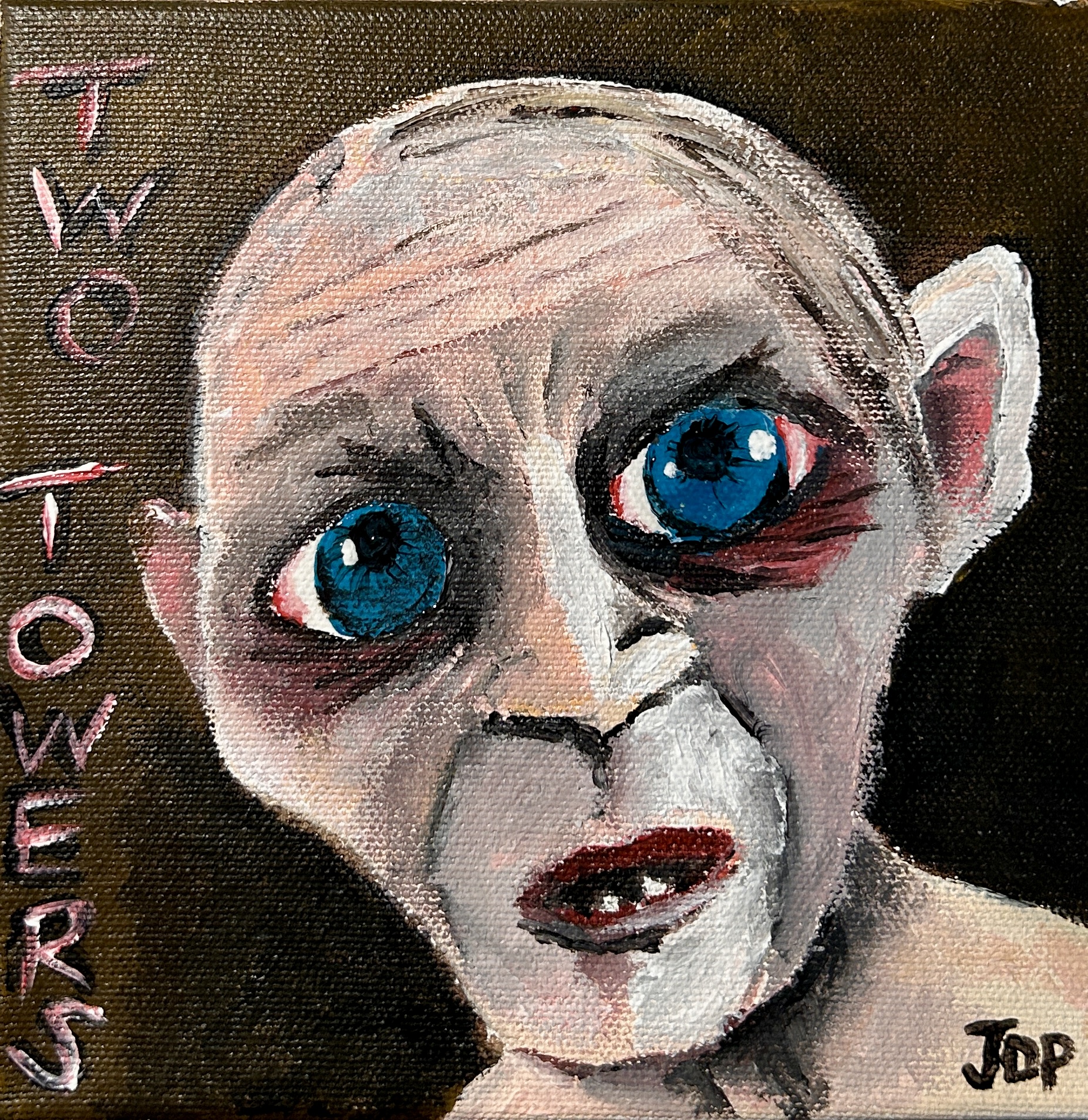
    Gollum by Julie Paterson

    Multicellularity, sticking more than one cell together to form more complex organisms occurs on page 709/916. Pippin and Gandalf have ridden to Gondor and are meeting with Lord Denethor​ (The Return of the King – The Siege of Gondor).

    “Before long he was walking with Gandalf once more down the long cold corridor to the door of the Tower Hall.”

    The Cambrian Explosion, a point in time where we see fossils suddenly appear for almost all modern groups happens on page 803/916. We have sped past the journeys with Gollum, the encounter with Faramir and the Oliphaunt, and Gollum’s betrayal of the hobbits to Shelob and arrive at Sam rescuing Frodo from orcs after he has been poisoned by the spider (The Return of the King – The Tower of Cirith Ungol)

    “At that rage blazed in Sam’s heart to a sudden fury.”

    Land is colonised by plants and animals on page 833/916.The siege of Gondor is in full swing and Denethor perishes in a bonfire meant for the wounded Faramir (The Return of the King – The Pyre of Denethor).

    “Gandalf in grief and horror turned his face away and closed the door.”

    Reptiles, particularly lineages leading to dinosaurs become dominant by page 847/916 (The Return of the King – The Houses of Healing). Aragorn, Gandalf, Pippin and the wounded Merry reunite after the Battle of the Pellenor Fields​ where the Mordor forces have been beaten back and the Witch King destroyed.

    “And get the pipe out of my pack, if it is unbroken.”

    The extinction of the dinosaurs and many other things occurs on page 893/916 where Frodo and Sam are lost in the mountain border of Mordor (The Return of the King –The Land of Shadow).

    “The tops of the Morgai were grassless, bare, jagged, barren as a slate.” ​

    The Primate lineage that becomes the Hominids, our ancestors, evolves​ on page 906/916. Frodo and Sam, starving and thirsty, approach Mount Doom through the surrounding wasteland (The Return of the King – Mount Doom).​

    “Then let me carry it a bit for you.”

    Finally, on page 916 we come to the last 5 million year. Frodo and Sam are slumped on the slope of an erupting Mount Doom after destroying the ring (The Return of the King –Mount Doom). All of human history​ fits into the last sentence

    “Here at the end of all things, Sam.”

    So is this effective? I guess one needs to know the story to get the full effect but even just looking at the page numbers will give you the right idea. Most of the interesting stuff happens in the last few pages. Almost nothing much happens in the first two thirds. Life, itself, arrives surprisingly early.

    I feel like it helps me with to work with the notion of lots of time.

    It’s only forever, not long at all

    sings David Bowie in the song Underground in the Movie Labyrinth. The more I think about it, the more I think that this is a very perceptive line.

    Still, I am out of time for now. I’m off to celebrate my granddaughter’s birthday.

     The author, Adrian Paterson, is a lecturer in the Department of Pest-management and Conservation at Te Whare Wānaka o Aoraki Lincoln University. He has experienced a lot of time.

  • Kiwi: now in 3D

    Kiwi: now in 3D

    ‘Coming soon in 3D!’ Periodically throughout my life movie-makers have dabbled with making films that we can watch in three dimensions. You would get your special glasses before the movie session and then sit there wondering when to put them on until the action got going.

    To be honest I don’t remember many of the movies that I saw like this. The Avatar movies have always had the option and I watched at least the second movie this way. Spears and monsters would lunge out of the screen at you.

    Other than that I am drawing a blank. This is not to say that every 3D movie is bad but just that 3D on its own doesn’t make a film more memorable.

    Avatar Adrian! Look out for the arrow!

    I don’t even dislike the experience despite having to wear the 3D glasses over my own glasses. There is something immersive about dodging things ‘coming out of the screen’. However, I seldom choose this option if 2D is available. It all seems a bit too much like work perhaps?

    Adding a third dimension can help with appreciating scale and movement though. It can also help with identifying who’s who in the screen – there’s just a bit more information that your brain can use.

    Identifying individuals is a big deal in biology, especially conservation. When you have a small population you are interested in individuals. How are they doing? Are they breeding? Who do they hang out with?

    Of course, for many species there are not a lot of features to differentiate between individuals. They are similar in height, uniform in coloration, and have similar behaviours.

    To make them more distinctive we could always band our target with bright colours or paint an obvious mark on them but this involves capturing and interacting with the individual. This causes a great deal of stress and catching individuals is not always simple.

    Ideally we could use cameras to take pictures that we could measure features in that are unique to an individual. Two dimensional pictures require an individual to be in an exact place with an exact orientation for this to work. So this is not a reliable method.

    Bit wait! … Coming soon in 3D!

    It turns out that if you take pictures with different devices from slightly different angles at the same moment then you can much more accurately calculate measurements on individuals. At least in theory.

    Jane Tansell with her trusty kiwi dog. Picture from Jane Tansell.

    Jane Tansell, a recently completed PhD student at Lincoln University, and her supervisors, Adrian Paterson and James Ross, set out to see if we could use this idea to identify kiwi. Kiwi populations and individuals are difficult to measure. They are nocturnal, usually found in scrubby terrain, are reasonably featureless, and spend a lot of time in burrows. We can use trained dogs to find them but this is quite stressful for kiwi. We can listen to their calls during the night but this is difficult to split into different individuals and certain parts of the population don’t call anyway.

    Trail cameras have been used to successfully locate kiwi. Jane wondered if she could pair cameras 12-25 cm apart, taking images that could be used to essentially create a 3D image of features on each bird. Jane knew that kiwi bills vary between individuals and can be used as an ID.

    Jane worked with the more technically literate Maurice Kasprowsky and Tom Gray to cobble together the cameras and get them to work together.

    Jane, as reported in NZ Journal of Zoology, first tried the setup on a taxidermied kiwi in good light conditions. She found that the cameras could be used to measure the bills to within 1.5% of their actual length. This was a great achievement and would certainly be able to determine individuals.

    In theory we should be able to photograph kiwi and recognise them by measuring their bills. Image from Adrian Paterson.

    Jane then set up field trials with live kiwi. In the real world, with low light and moving birds the cameras were less efficient. At worst they were terrible but often they were within 3-4% of the actual bill length. This is not good enough to replace current field identification methods but it was still quite impressive given the relatively jury-rigged setup.

    Improvements in cameras, especially 3D cameras, are happening quite quickly. With some more trial and error Jane should be able to start reducing the error enough for this to be a viable noninvasive method for following kiwi in the field.

    While this is not as exciting as an arrow flying at you from an Avatar movie, this use of 3D does have real world uses that will help with understanding a national icon!

    The author, Adrian Paterson, is a lecturer in the Department of Pest-management and Conservation at Te Whare Wānaka o Aoraki Lincoln University. Adrian is a kiwi but unfortunately has no bill to measure.

  • Tackling feral cats in Aotearoa New Zealand

    Tackling feral cats in Aotearoa New Zealand

    Feral cats (Felis catus) are among the most proficient and effective hunters in the world. In Aotearoa New Zealand (NZ), their skills are lethal to native species that have evolved without mammalian predators. Feral cats have been linked to significant biodiversity declines across the country. Cats are opportunistic predators that hunt ground-breeding species, like birds, bats, reptiles and even some insects- many of which are endemic.

    Fig 1: It looks like siblings fighting over a small bird, a moment that captures the competitive behavior of feral cats (Image by- Gilbert Mercier, Flicker User

    The extinctions of six endemic birds are linked to feral cats. Well-known cases include a single cat, Tibble, that caused the extinction of NZ’s only flightless song bird: Lyall’s Wren on Stephens Island. A single cat killed 120 endangered native short-tailed bats in one week on Mt. Ruapehu. Dotterel populations on Stewart Island, Grand and Otago skink populations in southern ANZ are at risk due to feral cats. The list of species pushed to the verge of extinction by cats is long and growing.

    Yet despite their impact, feral cats are not currently included in NZ’s Predator Free 2050 campaign. This raises a major question: how is NZ tackling the feral cat problem? 

    With growing concern for native wildlife,  the government has implemented several methods to eradicate or control cats: lethal baiting, trapping, shooting, and fencing. While putting these methods into action is necessary, it’s equally important to ask their effectiveness: Are they actually working? And how can we tell?

    Fig 2: Feral cat awareness at Arthur’s Pass Wildlife Trust (Photo credit: Muhammad Waseem (used with permission)).

    These were the very questions a group of researchers from Lincoln University set out to explore. Using camera traps, they conducted a study on Hawke’s Bay farmland to test whether trapping and shooting could effectively control feral cat population, and whether the area will be re-invaded over time, to measure the effectiveness of the method.

    Forty motion-sensitive cameras stood beside the traps like sentinels, monitoring everything. Cats walked into the view, lured by rabbit meat and ferret scent. The cameras recorded activities before, during, and six months after the control operation. Before the operation 20 cats were detected. 17 feral cats were then removed (shot). The result? An 84% drop in both cat numbers and camera detections.

    Aware of the risk of reinvasion, the researchers monitored the site again six months later- and detected only three new cats. The outcome was encouraging and demonstrated how proper methods combined with well-monitored action can make real difference. With the help of camera traps, the research could measure the effectiveness of the control operation and can suggest similar methods in areas facing feral cat issues.

    Today, thanks to advanced technology like camera traps, monitoring has become much more efficient and convenient. This allows conservationists to evaluate their methodologies, observe activities remotely, and respond effectively.

    How did cats become a serious ecological problem in NZ?

    In my home country of Nepal, cats are seen as beloved pet and, traditionally, the guardians of grain stores, not as an ecological threat. As someone new to NZ conservation practice, I initially found the conservation method used in this study confronting. But the more I learned, the more curious I became: how did a country with no native mammalian predators come to see cats as such a serious problem?

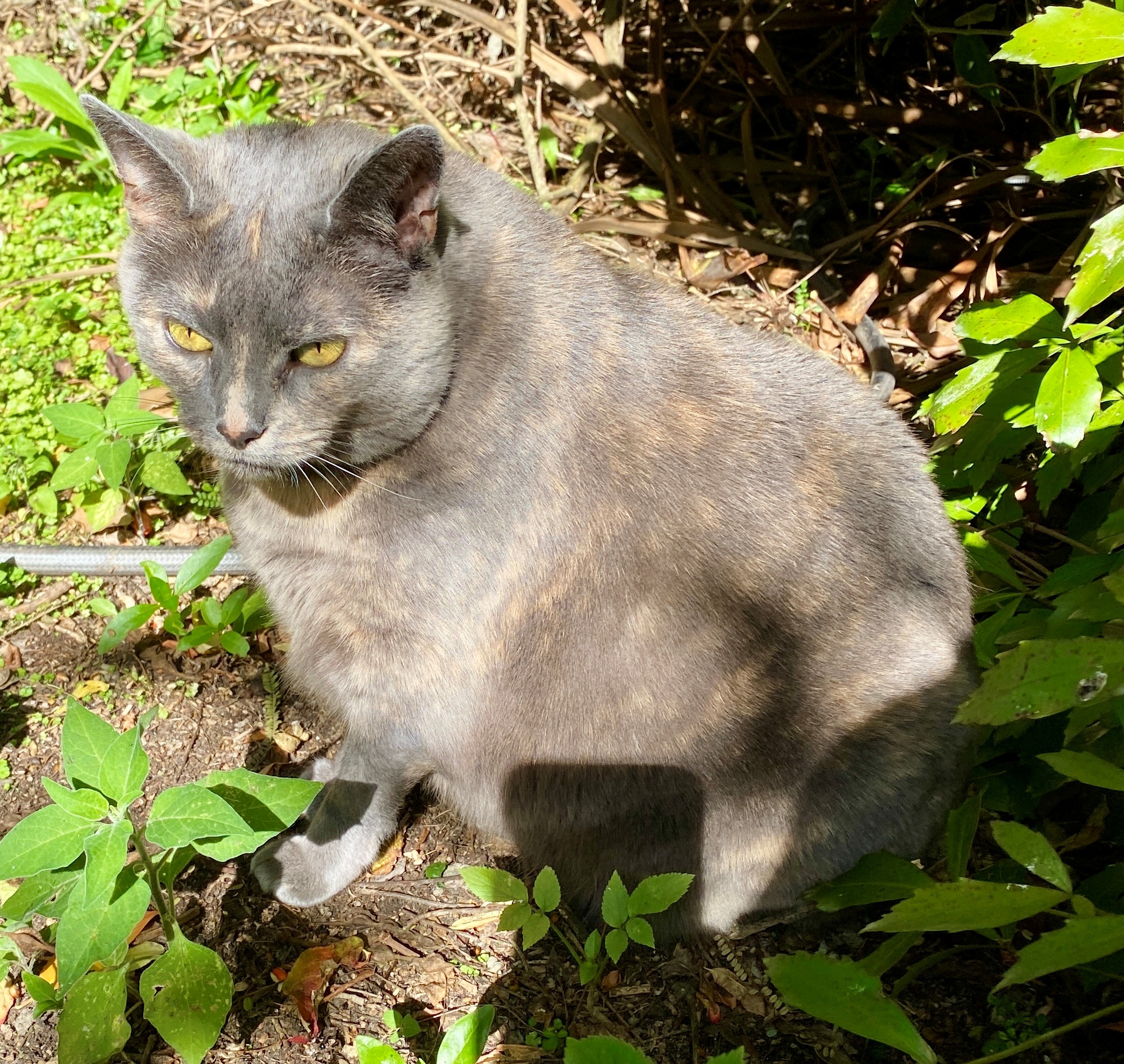
    Fig 3: Stray cat basking sun on Fairmaid Street, Lincoln (Photo: Author 04/01/2025)

    Cats didn’t arrive in NZ until the mid-1800s. Earlier cats had visited along with Captain James Cook. His ship, plagued by rodents, carried cats as a solution to control pests and protect food supplies.

    European settlers brought cats as companions. Some escaped or were abandoned, eventually forming a wild population. Ironically, many animals (and even people) arriving by ships ended up becoming invasive. Over time, their arrival became strongly linked with biodiversity loss.

    Today the feral cats are  officially recognised as invasive predators. They not only kill native wildlife but also spread disease. It is no coincidence that many native birds began to disappear after cats were introduced. In the NZ conservation story, it’s not unusual to say: “To solve one problem often means creating another!”.

    Although some early impacts were noticed, such as the extinction of the Stephen Island wren, surprising these events were simply viewed with the mindset  as nature improving, where invasive species were seen as improvement rather than threats.

    Cats, whether brought to control rodents or to ease the settler’s solitude, may have served a short-term purpose, but over time introducing them proved to be a double-edged sword, causing severe harm to NZ’s native wildlife.

    Learning this made me realize that today’s conservation challenges are deeply connected to historical choices!

    Moving ahead

    While we cannot re-write history, we can certainly learn from it!

    Fig 4: Who decided which story to tell? The Great Hall stained-glass window at University of Canterbury made from 4,000 pieces of glass, showing Captain James Cook at number 19 (Photo: author 02/05/2025).

    The journey of cats in NZ is a classic reminder of how small actions can have a large ecological impact. The feral cat issue isn’t just about one species nor is it the only invasive challenge NZ faces, it’s about how we approach conservation in a complex and ever-changing environment.

    Looking back, we don’t know how much damage to NZ’s biodiversity could have been prevented or reduced if the scale of damage was understood earlier. As the country continues its battle against introduced species to conserve biodiversity through Predator Free 2050 campaign, integrating reliable monitoring tools like camera traps will be crucial in making informed and effective conservation decisions.

    The author, Pareena Khadka, is a postgraduate student in the Master of Applied Science at Te Whare Wānaka o Aoraki Lincoln University. This article was written as an assessment for ECOL 608 Research Methods in Ecology.

    Paper reference: Nichols, M., Glen, A. S., Ross, J., Gormley, A. M., & Garvey, P. M. (2023). Evaluating the effectiveness of a feral cat control operation using camera trapsNew Zealand Journal of Ecology, 47(1), Article 3501. https://dx.doi.org/10.20417/nzjecol.47.3501

  • Our plants are not being poisoned by 1080 possum baits

    Our plants are not being poisoned by 1080 possum baits

    I’ll admit, before taking the 16 hour flight from Arizona to Christchurch, I didn’t know much about New Zealand besides ‘What We Do in the Shadows’, Karl Urban, and affordable yarn. I was especially excited to get my hands on possum yarn.  

    Possum yarn is coveted by the knitting community for its lightweightedness and warmth, only surpassed by the fur of arctic foxes and polar bears. And let me say that I absolutely think that the possum yarn was worth every dollar. With just 400 meters (one skein/ball) I was able to knit up a cabled hat, mittens, and still have some left over for some ankle length socks!  

    The feeling of possum yarn is incredibly soft and the natural brown color of the possum fur mixed with merino sheep wool makes for a more muted (in a good way) color palette. However, I recognise that the brushtail possum is a prevalent pest in New Zealand; so much so that drastic measures like Compound 1080 poison baits have been used since the mid-1950’s to control this introduced species. 

    Common Brushtail Possum by Catching The Eye, 2014 (CC BY-NC) 

    Compound 1080 for pest control in New Zealand 

    To put it simply, sodium fluoroacetate (AKA Compound 1080) is a vertebrate pesticide used to control introduced mammal species, such as rats, mice, feral cats, and possums. Without Compound 1080, these species decimate the population of endemic plants and animals only found in New Zealand. The compound is dispersed by aircraft(i.e. helicopters or fixed-wing planes) in either a carrot or cereal bait.  

    According to my professors, everyone has an opinion on the use of 1080. While Compound 1080 is great when it works, there are concerns from both the general public and Māori communities. From a public perspective, 1080 does have the real danger of killing people’s cats and dogs if accidentally ingested. As a pet owner myself, this is especially scary because my cat and dog would likely eat the bait before I’d have a chance to recognise what it was. Additionally, the Māori community has concerns about Compound 1080 leaching into the soil and then poisoning plants used for food or medicinal purposes.  

    Back in September 2003, a cooperative effort was made in New Zealand by the Ecology Department at Lincoln University, Landscape Research, Lake Waikaremoana Hapu Restoration Trust, and the Tūhoe Tuawhenua Trust to determine if Compound 1080 negatively impacts plant species used by the Ngāi Tūhoe Māori and if not, how to get this information spread among the iwi. To achieve this, a study was conducted on wild-growing pikopiko (AKA hen and chicken fern) and Karamuramu plants in State Forest Block 100, just south of Lake Waikaremoana. 

    Hen and Chickens FernAsplenium bulbiferum by John B, 2016 (CC BY-NC) 

    Ten individuals of each plant species were chosen and placed underneath wire mesh as protection against herbivory. Of the twenty plants, 3 of each species were exposed to a single Whanganui No. 7 cereal 1080 bait. Samples were taken from the plants throughout the study (days 0, 3, 7, 14, 28, and 56) as well as bait samples at the very beginning and end, to test for potential shift in potency over time.  
    More than 99% of the 1080 had disappeared from the baits by day 56 and all but one plant sample had no remaining amounts of 1080 within their systems. Of the twenty plants sampled, only one Karamuramu plant retained the toxin; and that was at most 5 parts per billion (ppb) and was completely gone by day 28.  

    Foodweb database 

    Karamuramu plantCoprosma robusta by eyemac23, 2025 (CC BY-NC) 

    I don’t know about you, but I’ve never been a huge fan of reading scientific articles. They’re always confusing, too long, and to be honest, a bit dry. Sometimes I wish I could, instead, just scroll through a presentation with all the information presented short and sweetly.  

    Oh wait, this article did just that and made up not only a comprehensive food web on the interactions of the forest environment with 1080, but also added hyperlinks to it that opens a PowerPoint!(Note: the article did not include the link to the original PowerPoint, only an image of one of the slides.) Each PowerPoint slide focuses on a single plant or animal species impacted by 1080, the intensity of 1080 impact, and additional reference sources. It’s easy to digest and leaves room for more research if one wanted to do so.  

    Concerns from the Māori community 

    In conclusion, I get why using Compound 1080 is necessary against invasive species, like the brushtail possum and it will likely never impact me on a personal level unless it somehow leaches into a batch of yarn or something. However, I also can understand why the Ngāi Tūhoe Māori tribe are still hesitant as 1080 is still a toxin and we may not know the full impacts. While the decision to use Compound 1080 in the Te Urewera area is complicated, in 2016 those from the Ngāi Tūhoe tribe largely oppose aerial drops since it cannot be controlled.  

    Final thoughts 

    I think it’s important to note that for a 70 kg person to actually die from consuming 1080 that has remained in a Karamuramu plant, (and even in this example the probability of death is only 50%), they would have to eat 28 tons (28,000 kg) of the stuff. And that’s also if the plant is eaten raw, normally it’s boiled in water as a tea and diluted even more. Personally, after reading this I wouldn’t be too worried about Compound 1080 in my plants but I will still leave the risk assessment up to those in the Māori community on an individual level. 

    For now, I will continue to enjoy knitting with the luxurious possum yarn until the pests are eradicated from New Zealand once and for all.  

    This article was prepared by Master of International Nature Conservation student Marie Frackiewicz as part of the ECOL608 Research Methods in Ecology course.

    OGILVIE, S.C., ATARIA, J.M., WAIWAI, J., DOHERTY, J., MILLER, A., ROSS, J.G. and EASON, C.T. (2010), Vertebrate pesticide risk assessment by indigenous communities in New Zealand. Integrative Zoology, 5: 37-43. https://doi.org/10.1111/j.1749-4877.2010.00190.x  

  • The three bird-iteers: all for monitoring and monitoring for all!

    The three bird-iteers: all for monitoring and monitoring for all!

    My time at Lincoln University has taught me that when it comes to bird monitoring, the most common practice is the 5 minute bird count (5MBC). This method is a simple and effective way of counting birds within a specific area by recording sightings and calls. Much of the time, using 5BMC, it is likely that you will not see the bird you are hearing, which is why being able to identify New Zealand birds just by sound is a very good skill.

    Lincoln University legend Jon Sullivan did a study on different bird data collection methods that could also mahi together to build a more accurate picture of birds in an area. The study focused on wider Christchurch, beginning in 2003, and recorded patterns in bird species within the area.

    One method that was used was the stationary method , which is pretty much the same as the 5MBC but is extended to 20 minutes. The other method used was the ‘mobile method’, also known as the ‘line-transect method’, where you collect data while moving at a fast pace, perhaps by bike, car, or running.

    Now to the fun stuff – birds!!

    In Jon’s study there was a focus on three bird species, which I call the three bird-iteers (with apologies to Alexandre Dumas). These are the grey warbler, fantail and the bellbird. These endemic birds are very adaptable to recent changes for forest bird species.

    Grey Warbler

    The grey warbler (Gerygone igata, riroriro) are found throughout New Zealand. They are small, grey/brown with a more pale shade of grey for the face to throat. They weigh approximately 6.5 g (lighter than a mouse) and their diet consists of insects and spiders.

    Grey Warbler (Gerygone igata)

    Grey Warbler. Photo CC BY Mikullashbee, Flickr

    Fantail/pīwakawaka

    Fantails are one of my many favourite bird species, as they love to follow humans around when you are on bush walks. Fantails are able to adapt to environments that have been changed by humans, which is not very common for New Zealand native birds. Fantails (Rhipidura fuliginosa, piwakawaka) are often found in open native bush, exotic plantation forests, orchards and gardens. Their diet consists of insects, especially small species. Fantails are a small bird about the size of a house sparrow, but what makes them so distinctive? Well the answer is in their name…. Yes their tails, like their name suggests they have a long tail that fans out like a well a fan.

    Fantail

    Fantail. Photo CC By Chris S, Flickr

    Bellbird/ Korimako

    Bellbirds(Anthornis melanura, koromiko)are commonly found in the South Island. These birds have a short, curved beak and are green with a slightly forked tail. Bellbirds, similar to Tūī’, have a distinctive song, it is like a high ringing that’s also kind of smooth, and the repeat the same tune. Bellbirds reside throughout native and exotic forest, scrubs and shelter belts of New Zealand. Their diet is nectar from native and exotic plants, although they do consume fruit in late summer and autumn. Also their diet consists of honeydew that’s found on beech trees.

    Bellbird

    Bellbird. Photo CC By Glenda Rees, Flickr

    Back to the study

    Jon Sullivan wanted to understand how nature responds to a forever changing world. He collected distribution and abundance information for many species with these three species being the focus. This is where the methods came into play as a standardised method and a repeatable one is needed to accurately tell us if a species is present or not. The methods talked about above were to work alongside each other.

    Around 100,000 bird counts were collected. The approach used helped to summarise data that was from one location, a certain time each week, and one daily route. The results showed that this approach was effective and just as effective as the 5 minute bird count. Counting birds while riding your bike along a road was just as effective at estimating and following trends as more traditional methods.

    Fantails, grey warblers, and bellbirds (but not to the same extent as the other 2) are majorly restricted to their forest biotopes and native plantings, particularly in spring.

    Like any good study, more data are needed to get a better and clearer understanding. This could create a good opportunity at Lincoln University to teach students doing ecology to learn how to use different techniques besides just the 5MBC methods. Then we too can collect decades long information on our favourite birds.

    This article was prepared by postgraduate student Caitlan Christmas, Masters of Science in Ecology and Conservation, for an assignment in ECOL608 Research Methods in Ecology.

    Sullivan,JJ(2012). Recording birds in real time: a convenient method for frequent bird recording https://researcharchive.lincoln.ac.nz/server/api/core/bitstreams/04dc8df3-2e34-4fe9-96a6-ea8a505ad0cc/content

  • Amaizing distribution: nematode infestations of NZ corn

    Amaizing distribution: nematode infestations of NZ corn

    Are your maize plants growing well in the field? If not,we can often blame plant parasitic nematodes.

    There are around 4100 known species of nematodes and they cause a considerable loss of agricultural produce, with estimated global crop damage of $US 358 billion every year.

    The life cycle of these plant parasitic nematodes have four stages, and the second-stage juvenile (J2) is the destructive phase. Most nematodes are sedentary inside the host and others survive in the soil.

    Written by Sambath in behavior, conservation, front page profile, invasive species, student blog, Uncategorized, zoology, pest management

    In the 2021/22 NZ growing season, about 196,000 tonnes of grain and 1,200,00 tonnes of silage were harvested, making maize one of the most cultivable crops in New Zealand. Around 58% of the harvest was grown for livestock feed demand, and the remaining 42% was for food and industrial processors.

    Plant parasitic nematodes are common in New Zealand and many horticulture industries have experienced a substantial loss of profits from these destructive plant pests. While maize is one of the most crucial crops in this country reported to be damaged by various species of nematodes, few studies have been conducted here compared to other countries.

    So, Nagarathanam Thiruchchelvan, a PhD student at Lincoln University, and his team conducted research to identify and quantify plant parasitic nematode infestations of maize production across New Zealand. Their purpose was to investigate the prevalence and diversity of several genera of plant parasitic nematodes.

    Plant parasitic nematode feeding types. Image from Paulo Vieira & Cynthia Gleason

    The researchers collected a total of 384 composite soil samples from 25 maize fields located in the North and South Islands, focusing on: Canterbury, Waikato, and Manawatu-Whanganui. Data collection was carried out at various maize growing stages and seasons during 2022.

    It was not good news!

    The researchers found that at least one genus of plant parasitic nematode was detected in 378 (98%) of the maize samples. Pratylenchus was the most prevalent and widespread genus (91%) followed by Helicotylenchus (38%).

    Plant parasitic nematode. Image from Scot Nelson

    The plant parasitic nematode population and diversity were higher in Canterbury than in Waikato and Manawatu-Whanganui. Thiru and his team believed that the inconsistent distribution was caused by different climate and geography conditions between the two regions. For example, the South Island is more diverse in soil physiochemical proportions than the North Island.

    Thiru also observed that soil orders, a soil classification system, affected the proliferation of plant parasitic nematode populations, with brown and pallic soil types promoting nematode reproduction, especially for Pratylenchus. Pallic soils refer to a soil type having pale, fragile topsoil and compacted subsurface. For the brown soil, its topsoil is dark grey-brown, and the subsoil is tan or yellowish-brown.

    The lowest number of plant parasitic nematodes was detected in organic soil. Organic-rich soils favor a wide range of beneficial fungi, bacteria, and nematode survival. These microorganisms can suppress the proliferation of plant parasitic nematodes by either feeding on eggs or predating invasive nematodes.

    The study further indicated that the population and diversity of plant parasitic nematodes increased alongside distinguishing developmental stages of maize. Most nematodes were reported from the harvesting stage, while the least were from the seedling stage.

    Root-knot nematode (Meloidogyne enterolobii). Image from Jeffrey W

    Thiru and his team noticed that rotating maize with other crops played a significant role in reducing the incidence and prevalence of plant parasitic nematodes in the field. These other crops included ryegrass, pasture, wheat, white clover, potato, peas, and winter crops. One maize field located in Canterbury was detected with a high significant intensity of 3000 nematode root lesions per kg of roots as a result of non-rotation practice.

    Thiru concluded that there was a requirement for a deeper understanding of dispersal, feeding characters, and life cycle of plant parasitic nematodes, in particular, root-lesion nematode (Pratylenchus) in maize fields across New Zealand. Specific pest management approaches are needed to control the prevalence and abundance of targeted nematodes impairing maize production in both islands.

    These article was prepared by Sambath Seng, a Master of Science student in the Department of Pest Management and Conservation at Lincoln University.

    Thiruchchelvan, N., Kularathna, M., Moukarzel, R., Casonato, S., & Condron, L. M. (2024). Prevalence and abundance of plant-parasitic nematodes in New Zealand maize fields: effects of territory, soil orders, crop stage, and sampling time. New Zealand Journal of Zoology, 1-22. https://doi.org/10.1080/03014223.2024.2424900

  • Silent hunters on the wetland edge: urban cats and nature conservation

    Silent hunters on the wetland edge: urban cats and nature conservation

    The dark side of the cat

    A cat carrying a bird in its mouth while another cat observes nearby, set in a garden with stone pathways and decorative animal statues.
    Cats doing what cats do.
    Photo by Robert | Visual Diary | Berlin on Unsplash

    In the autumn evening, a cat lies on the fence, with focused eyes and slightly wagging tail, this patient hunter is quietly locking onto a target and preparing to attack.

    Cats are the standard feature in almost neighbourhoods in New Zealand. They are elegant, lazy, affectionate, and sometimes unpredictable. Some of them are pretty welcomed , moving freely around neighbourhoods everyday, accepting feeding and petting.

    Behind these soft furs and friendlypurring, there is an ancient, untamed instinct hidden – hunting. Hunting is not just about hunger. Most cats were are well-fed—some are even fed multiple times a day. Yet, the urge to stalk, chase, and kill remains.

    Travis Wetland: A natural island in the city

    Wetlands, green spaces, and bushes are the last shelter for local plants and animals. These “ecological islands” are often located right next to the communities where we live.

    Travis Wetland is a freshwater ecological oasis, located on the edge of Christchurch. Surrounded by residential areas, roads, and commercial development, it remains a vital refuge for more than 53 species of birds and many native invertebrates.

    Living around this wetland, there are hundreds of free-moving domestic cats living. They can walk through the grass without permission, quietly enter the ecological core area, and become hunters of these small lives.

    A sleek black cat crouches on a wooden fence, focused with its golden eyes, poised as if ready to pounce, surrounded by lush green foliage.
    A Patient Hunter
    Photo by Kristin O Karlsen on Unsplash

    Silent pressure & hidden trail

    It is easy for people to imagine a cat lazily lying in the sun by a windowsill, but what about the other side of their life when they step out the door?

    Over the course of a year, 21 pet cats living near Travis Wetland were installed with GPS collars as part of a study by Lincoln University and the Christchurch City Council. The research, led in part by Shelley Morgan and Adrian Paterson, revealed some surprising results.

    Researchers did not capture many cats with prey in their mouths (although more than a few did bring their prey back to their home). But there were other situations: cats were often visiting the edge of the ecological core of the wetland, where native birds, lizards and insects breed.

    A close-up of a small bird with dark brown feathers and a distinctive long tail, perched on a log in a green and grassy environment.
    Fantail(Rhipidura fuliginosa)
    Photo by Callum Hill on Unsplash

    The cat threat does not necessarily come from killing, sometimes, just “attending” is enough. Birds may abandon their nests if they sense a nearby predator. Lizards may interrupt their mating if they feel targeted. In nature, energy is precious, and fear itself is also consumes energy.

    More than half of the monitored cats entered Travis wetland at least once. Some of them went more than 200 metres into the wetland while their owners sleeping, crossing habitats and breeding areas for rare native lizards, insects and ground-nesting birds.

    More than half of the monitored cats entered Travis Wetland at least once. Some of them went more than 200 metres into the wetland while their owners sleeping, crossing habitats and breeding areas for rare native lizards, insects and ground-nesting birds.

    But not every cat causes the same amount of harm.The study found that younger cats—those under six years old—were more active and risky. They travelled further, spent longer inside the wetland, and brought home more prey. Some even swam across water to reach nesting islands. In contrast, older cats tended to stay near home and moved less.

    A small number of energetic cats were doing most of the damage. Researchers called them “super-predators”. This suggests that cat behaviour and age both matter. While most cats seem harmless, a few individuals can quietly cause serious impacts to local wildlife.

    This means the cat you see curled up by the fireplace in the afternoon may be walking the narrow line between urban life and ecological harm at night. It’s not the cat’s fault, and it’s not your fault, but it’s keep happening.

    A cat with black and white fur is sitting behind a window screen, looking outside. The window frame is made of weathered wood, giving a rustic feel to the scene.
    Cat by the Window
    Photo by Aleksandar Popovski on Unsplash

    Night walkers & tiny bells

    Cats are typical “crepuscular” animals, that is, they are most active in the dawn and dusk. This explains why you see cats running around the living room at 10 pm or staring at the wall at 5 am. They don’t listen to a clock, they listen to the call of instinct.

    Sunset and just after is also the time when many cats go out for their “night patrols”. According to the data from the study’s cat GPS tracking, cats move more frequently and walk farther at night. Some cats hardly go out during the day, only sneaking through the garden and visiting the fields after dark.

    So, what can we do to reduce the impact of out furry friends? Some owners hang small bells on their cats’ collars, hoping that the sound will alert potential prey and give them time to escape. This method seems simple and effective, but the effect actually varies from species to species.

    There is a study by University of Otago have shown that bells have a certain deterrent effect on birds and the study by Geiger shown that have little effect on lizards or insects because they are not sensitive to sound. Also some smart cats can even learn to “walk silently” – so that the bell doesn’t ring at all.

    A black cat peeking from behind a concrete structure, with one green eye visible and a blurred background showing hints of light.
    Nightwalker Cat
    Photo by amir esfahanian on Unsplash

    So, while bells may help a little, they are not a panacea. As with everything in this story, the answers are never simple.

    Draw a ceasefire zone

    Some solutions are simple, and others need some creativity.

    In some parts of New Zealand, there is talk of creating a cat-isolation buffer zones — areas around nature reserves where cats are either required to be kept indoors full-time, or where cats are banned or a curfew(Wellington City Council. 2024) is imposed on cats near reserves (although curfews seem not work for protecting birds or lizards)

    This idea is not to punish cat owners but to protect the most vulnerable parts of the ecosystem. Because may be the problem is that house cats may be found curled up in warm blankets, purring softly, eyes half-closed, and when just hours earlier, those paws may have landed a fatal blow on a small bird, or pinned a native skink to the ground.

    Free-roaming cats in New Zealand are subject to different local management depending on their relationship with humans (such as companion cats, stray cats, and wild cats), but there is currently a lack of unified national laws(Sumner, C. L. 2022).

    Threatened-Nationally Critical Skink: Alborn Skinks(Oligosoma albornense)
    Photo by James Reardon

    Some newly built areas even state in the purchase agreement that cats are not allowed to roam freely, and sometimes even completely prohibit cats(Preston, N. 2023).

    To some people, such regulations may sounds really extreme. But to naturalists, it is a way of respecting boundaries, a quiet commitment to leave even a small area and keep distance for the creatures that have lived here long before we came here.
    We would much rather have this scenario: ‘In the autumn evening, a cat looks out of a window at a fence, with focused eyes and slightly wagging tail, this patient hunter is quietly locking onto a target that it would love to attack. Frustrated, it curls up and goes back to sleep.’

    This article was prepared by Master of Pest Management  postgraduate student Linfeng Yu as part of the ECOL608 Research Methods in Ecology course.

    Research paper: Morgan, S. A., Hansen, C. M., Ross, J. G., Hickling, G. J., Ogilvie, S. C., & Paterson, A. M. (2009). Urban cat (Felis catus) movement and predation activity associated with a wetland reserve in New Zealand. Wildlife Research, 36(7), 574–580. https://doi.org/10.1071/WR09023

    References

    Geiger, M., Kistler, C., Mattmann, P., Jenni, L., Hegglin, D., & Bontadina, F. (2022). Colorful Collar-Covers and Bells Reduce Wildlife Predation by Domestic Cats in a Continental European Setting. Frontiers in Ecology and Evolution, 10. https://doi.org/10.3389/fevo.2022.850442

    Housing development near Auckland imposes cat ban to protect wildlife. (n.d.). 1News. Retrieved 5 May 2025, from https://www.1news.co.nz/2021/08/11/housing-development-near-auckland-imposes-cat-ban-to-protect-wildlife/

    Preston, N. (2023, July 1). No cats allowed: Growing number of new neighbourhoods banning pets. Oneroof. https://www.oneroof.co.nz/news/no-cats-allowed-growing-number-of-new-neighbourhoods-banning-pets-43855


    Responsible cat ownership. (2024, October 17). Wellington City Council. https://wellington.govt.nz/dogs-and-other-animals/cats/responsible-cat-ownership


    Sumner, C. L., Walker, J. K., & Dale, A. R. (2022). The Implications of Policies on the Welfare of Free-Roaming Cats in New Zealand. Animals, 12(3), Article 3. https://doi.org/10.3390/ani12030237

  • Burning branches — flammability and shoot architecture

    Burning branches — flammability and shoot architecture

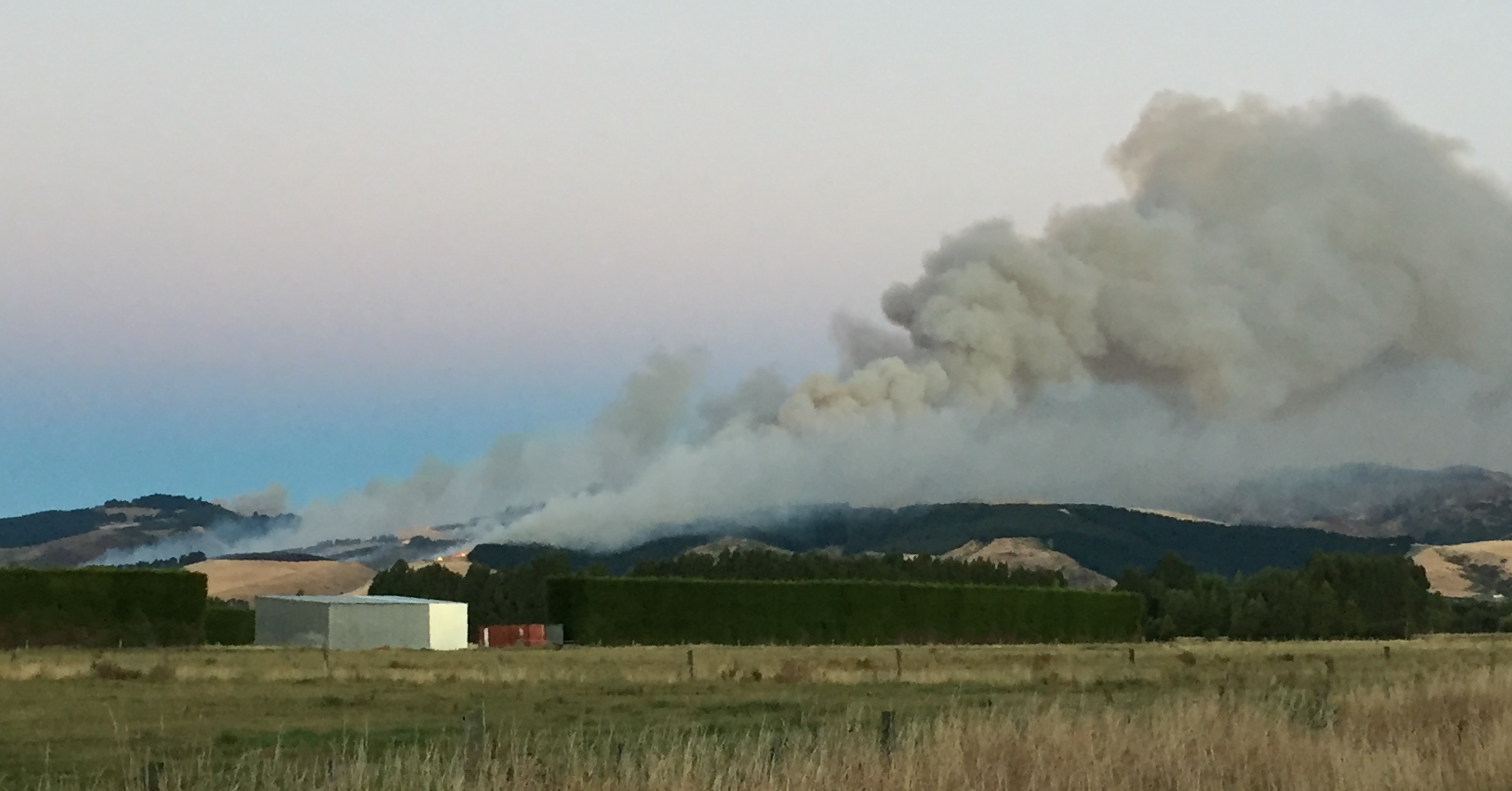
    In mid-February 2017, at about ten at night, I walked out to the street outside my south-Christchurch home and took a photo of the hills to the south-east. A large vegetation fire was stretched across the hills, which were lit black and orange, with strips of flames and glowing smoke. The blaze was at least 4 km away, but the blackness flattened the scene, and the fire and smoke seemed above me almost, and growing. You could almost believe the hills themselves would burn down.

    The Port Hills fire approaches the city. Image by Joe Potter Butler.

    I took that photo on the fourth day of the 2017 Port Hills fire. It took more than 60 further days for the fire to be fully extinguished. A life was lost, 1600 ha of land was burned, and nine houses were destroyed. Like many people in Christchurch, I was left wondering, why did it burn so fiercely and for so long? Why did this ridge burn, but not that gully? Why did some trees recover, and send out new shoots, while others perished?

    Along with floods, earthquakes, and other things, fires like the 2017 Port Hills fire are described as “natural disasters”, but how natural was this fire really? Prior to human settlement — which began around 800 years ago — fire in Aotearoa was rare. NZ was mostly covered in relatively moist, old growth forest. Because of this history, few New Zealand plants are fire-adapted. However, in Aotearoa and globally, wildfires are becoming more damaging and more frequent, threatening life, property, and ecosystems.

    Understanding what plant species burn, how they burn, and why, is crucial to understanding and managing fire risk across the modern Aotearoa landscape. A recent paper sought to investigate these questions and was led by Azhar Alam, with Sarah V. Wyse, Hannah L. Buckley, George L. W. Perry, Xinglei Cui, Jon J. Sullivan, Dylan W. Schwilk, and Timothy J. Curran.

    Most studies have assessed flammability (how easily they burn) of plant species by looking at leaf flammability in isolation. Azhar felt that there were limitations to this approach; that on its own leaf flammability didn’t fully capture how a fire really behaves when burning a plant in the real world.

    The authors preferred to assess shoot flammability. “Shoot” here means the young branch and branchlets of a plant, and all the leaves that are attached. The authors felt that — compared to just leaves — shoot flammability would better describe how a plant ignites and burns, and, in particular, better captures canopy flammability.

    This is important. Canopy flammability strongly influences how easily a fire moves from tree to tree or shrub to shrub. If we want to understand — and even predict! — how a fire might move through a stand of pines, gorse or kānuka, compared to a stand of old growth native forest.

    Aftermath on the Port Hills. Image from Adrian Paterson.

    Rather than just burning the shoots of a bunch of plants and recording the relative flammability of the species, the authors were interested in recording the effect of shoot architecture on flammability. “Architecture” here means how many branches and how tightly branched the twigs and leaves of a shoot are. For example, Kapuka has a few, large leaves with little branching, whereas korokio has many, small leaves and lots of thin, interlacing branchlets.

    The authors collected six shoots each from 65 plant species that you commonly find in  Aotearoa forests and gardens, including 35 indigenous species. 

    For each shoot, a number of leaf and shoot architecture traits were recorded. It was these traits that the authors predicted would show a strong relationship to flammability. The leaf traits recorded were:

    size of the leaves (total area),

    thickness of the leaves,

    leaf surface for each gram of leaf mass,

    dryness of the leaves.

    The shoot architecture traits recorded were:

    branchiness of the shoots (measured both as how many main branches each shoot has, and also how many branches the shoot has when you count all the branches the main branches have, all the branches those branches have, and all the branches those branches have and so on,

    twiggyness of the shoots (measured by twig mass per given volume of shoot),

    proportion of flammable mass (fuel) there is in a given volume of shoot,

    The shoots were all burned on a “plant barbecue” and their flammability was recorded.

    But what exactly is flammability? And how do you measure it?  There are four key factors that determine flammability of plant shoots:

    How quickly do shoots ignite? Ignitability.

    How much heat do they release once alight? Combustibility.

    How long do they burn for? Sustainability.

    How much of each shoot is consumed by the fire? Consumability.

    The results of these burning tests were clear. All shoot architecture traits and leaf traits were strongly related to shoot flammability.

    Among the shoot architecture traits, greater “branchiness” was shown to increase a shoot’s ignitability, consumability, and maximum temperature, while a greater amount of flammable mass (fuel) for a given volume of shoot was shown to increase a shoot’s fire sustainability and consumability.

    Fire glow on the Port Hills. Image by Adrian Paterson.

    Of the leaf traits, leaf dryness was key. In fact, leaf dryness increased all aspects of flammability more than any shoot architecture or leaf trait. Leaf thickness decreased flammability across the board.

    While leaf architecture traits were not as significant as leaf dryness in affecting shoot flammability, they were still significant. Demonstrating their importance is crucial for improving the management of fires and fire risk. Plant traits are already used in fire behaviour models to predict what fires will do.

    Including shoot architecture traits in these models has the potential to improve their power and precision. Understanding what a fire is likely to do gives us the power to change what it will do by planting low-flammability tree species to create fire breaks,  or buffering properties with lawn or pavement. This knowledge will save property, ecosystems, and even lives.

    If you drove through Arthur’s Pass, in the South Island this summer gone (2024-25), you probably drove past the charred and blackened beech trees and snow tussocks near Castle Hill; evidence of a fire that burned through 1,000 hectares of scrub, grassland and forest last December. This is a scene we can expect to see more and more in Aotearoa in the coming decades. Improving our ability to anticipate and manage fires and fire behaviour will only grow in importance as we move further into our new climate future.

    This article was prepared by Master of Science student Joe Potter-Butler as part of the ECOL608 Research Methods in Ecology course.


  • Cat conundrum: Conservation, cameras, and capricious companions

    Cat conundrum: Conservation, cameras, and capricious companions

    You are probably well aware of the feral cat issues here in Aotearoa New Zealand and the detrimental impact that cats are causing in our unique whenua (land). However, if you are new here, let me get you up to speed. The popularity of these adorable companions –1,134,000 companion cats and 196,000 strays, to be accurate – has come with a tremendous cost to native wildlife in Aotearoa New Zealand.

    With over a decade of experience in the veterinary industry, I’ve witnessed animal welfare concerns from both perspectives. I’ve seen the devastating impact cats can have on native wildlife, as well as the suffering of unwell, neglected feral cats. This dual perspective made becoming a cat owner myself all the more meaningful, thanks to a foster failure named Professor (pictured below), who quickly stole my heart. After adopting him, it was an easy decision to create a comfortable indoor life for him. Knowing the toll that cats can take on wildlife populations and thinking about his health and safety, it was an obvious decision for me to keep him as an indoor cat. But unfortunately, 196,000 cats in Aotearoa New Zealand do not have the cushy indoor lifestyle that Professor has become accustomed to.

    Learn about what the experts have to say on cat management here: https://predatorfreenz.org/stories/animal-welfare-agencies-views-on-cat-management/

    Professor the foster failure. Original image by Chloe Mc Menamin.

    Now what does the science say about monitoring cats that don’t have a cushy indoor lifestyle? In 2019 a team of scientists at Lincoln University carried out a study to better understand just that. They deployed a camera detection system across two pastoral sites in the Hawke’s Bay region. One system was placed systematically (on a grid) and the other strategically (placement where the researchers believed cat activity would be the highest). Their goal was to compare which camera trap placements would be the most effective method for monitoring feral cat populations. While feral cats are notoriously difficult to detect due to their low densities and cryptic behaviours, these researchers did get some interesting results!

    During a telephone interview, with primary author Dr. Margaret Nichols (Maggie), Maggie cheerfully shared how she began to question the use of her time after processing countless images of hedgehogs enjoying the smell and feel of the ferret pheromones used to lure in the cats. Then things took a surreal turn when she found herself pondering reality itself—prompted by turkeys performing what looked suspiciously like synchronised dances.

    But, dear reader, that wasn’t the only captivating creature caught on camera. No! The top-featured animal was… you guessed it… a sheep! Yes, you read that correctly. A single sheep nearly drove Maggie to madness after it camped out in front of one of her cameras for four entire days, triggering over 500,000 images. Poor Maggie! I’d be pulling the wool from my jumper too if I had to process that many sheep shots. Surprisingly, cats turned out to be the least detected animals of all—truly showcasing their cryptic behaviour and highlighting just how important this research was to carry out.

    Against all odds Maggie and her colleagues persevered – through the thousands of sheep, hedgehogs and dancing turkey’s images to reveal a striking discovery. Camera traps placed at the forest margins detected more cats compared to those in mixed scrub or open farmland. Specifically, at forest margin an average of 3 cats were detected per night at Site 1 (Toronui Station made up of a mixture of open farmland and native forest) and 1.7 cats at Site 2 (Cape to City ecological restoration area). This compelling pattern suggests that strategic placement of cameras in these areas is likely to maximise cat detection. Hats off to Maggie and the team, what a cool discovery.

    Hedgehog self-anointing after contact with the pheromone. Image source Research Gate (Garvey., nd)

    Well, there you have it reader – strategic camera placement at forest margins in the Hawke’s Bay area is the most effective way to monitor feral cats, but this is just the beginning of cat monitoring research in Aotearoa New Zealand. If you are like me and feeling inspired by Maggie and her colleagues’ findings, you might also be wondering where to even start tackling the feral cat population in your local area.

    While science and data are fascinating, the telephone interview with Maggie wisely reminded me that the best part of her research experience were the organisations and the people involved along the way, particularly the Hawke’s Bay Regional Council , Predator Free South Westland, and Lincoln University. She reported that working with various stakeholders made the project not only successful but also deeply rewarding. She also noted that all research projects take more time than you think and to never underestimate the possibility of processing 500,000 sheep photos when doing camera monitoring!

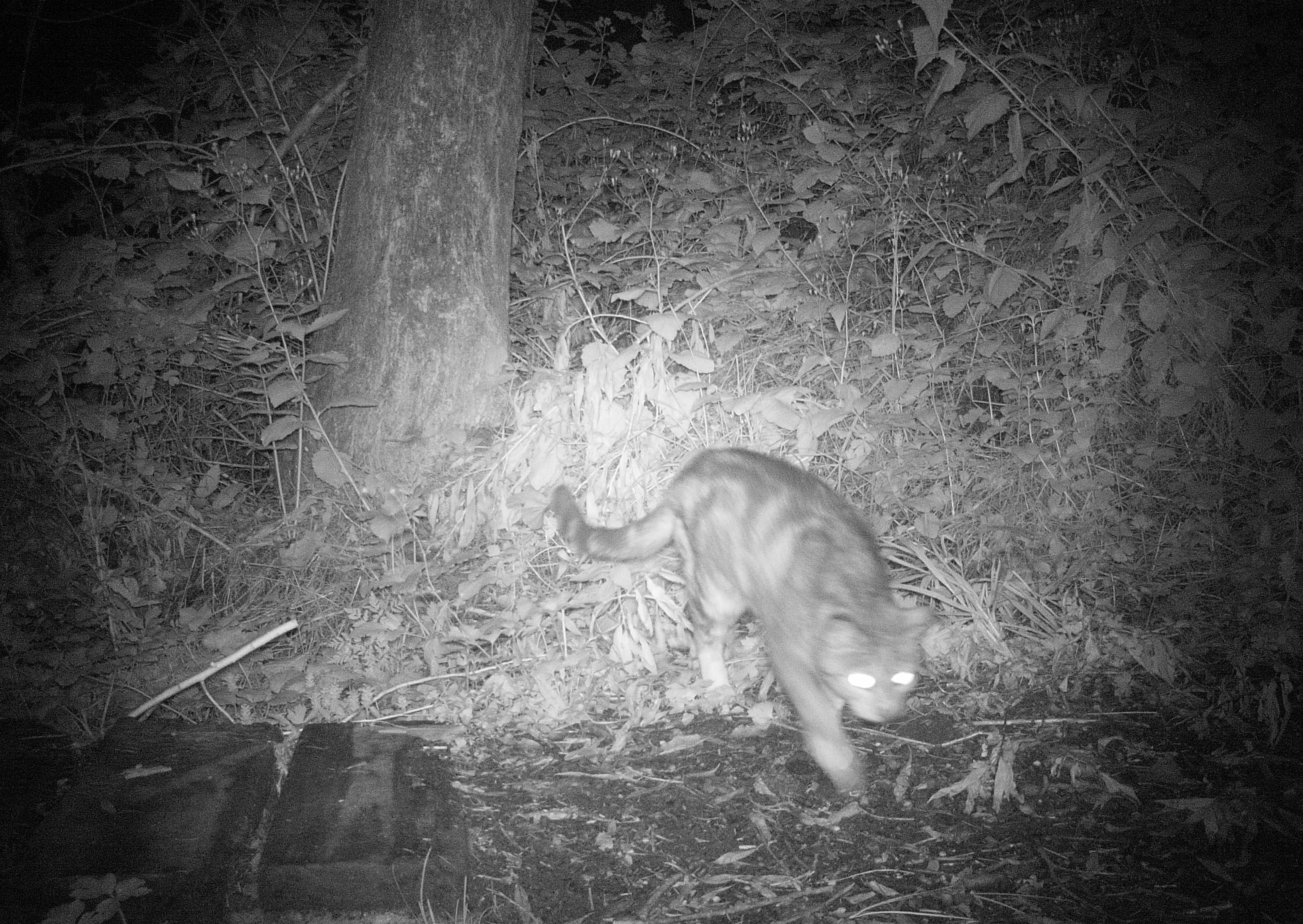
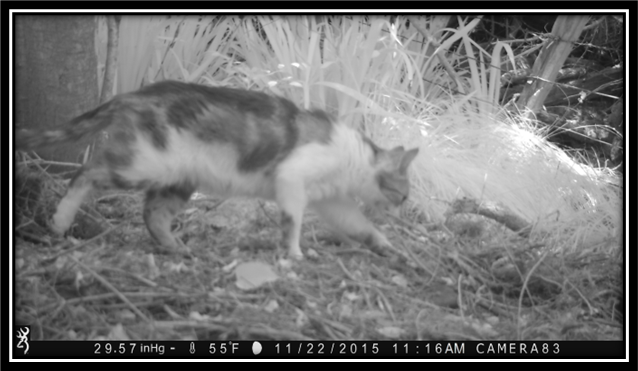
    Image of feral cat caught on camera during study. Orginal image provided by Dr. Margaret Nichols

    What a great reminder that in life it’s not just about success or how long things take; it’s about the experiences and friendships you make along the way. Thank you, Maggie, for sharing that wisdom.

    This article was prepared by Postgraduate Diploma in Applied Science student Chloe McMenamin as part of the ECOL608 Research Methods in Ecology course.

    Now reader it is over to you, want to learn more about how you can help? Check out the The National Cat Management Strategy Group, or if you want to learn more about feral cats here in Aotearoa New Zealand check out what the Department of Conservation has to say.

    Read full study here:
    Nichols, M., Ross, J., Glen, A. S., & Paterson, A. M. (2019). An evaluation of systematic versus strategically-placed camera traps for monitoring feral cats in New Zealand. Animals, 9(9), 687. https://doi.org/10.3390/ani9090687

    Image refernce:

    Garvey, P,M. (nd). FigS3: Hedgehog self-anointing after contact with the pheromone/kairomone vial [Supplemental material]. ResearchGate. https://www.researchgate.net/publication/311713979_FigS3_Hedgehog_self-anointing_after_contact_with_the_pheromone_kairomone_vial

  • The munchy mountain mystery of the lost bark beetle!

    The munchy mountain mystery of the lost bark beetle!

    Have you ever bitten into a slice of bread, only to find out that it’s gone mouldy? Yuck! But what causes mould, and how does it spread? This was a mystery solved by scientists in the 1800s.

    Fungal branches. CC BY-SA 4.0 Rafał Szczerski

    Mould in bread is caused by a fungus (fungi for multiple). Fungi are made of many tiny branches that grow into a huge maze. These branches reach out to find food from the environment around them; the branches spread from a central point to search for food at the edges. As resources run low, the middle of the fungus dies, creating an expanding ring of live branches. There are many types of fungi out there, and mould is one type that we try to avoid when we store our fruit, vegetables, and bread. When scientists discovered fungi, they solved one mystery, but there are new questions to be answered.

    One mystery involves a type of insect that loves to eat fungi: beetles! Specifically, beetles in the group called Brontini. These little guys eat fungi when they are larvae (baby beetles before they’ve become adults). Usually, the these larvae eat fungi under the bark of trees, but recently a special Brontini beetle was found. This beetle, called Protodendrophagus antipodes by scientists, lives up in the mountains of New Zealand, above the treeline in the alpine zone. Protodendrophagus antipodes is a long name, so we’ll call them Anti.

    Anti (Protodendrophagus antipodes) larva. Photo credit: John Marris.

    Anti are special for more than one reason. First, they live way up in the cold alpine area, which is a harsh environment to live in. The freezing temperatures and dry environment even stop trees from growing there! Second, every other species of Brontini beetle feeds on fungi under tree bark. Confusingly, the area where Anti lives doesn’t have these fungi. Since it’s too high up the mountain for trees to grow, there’s no fungi under tree bark for the beetles to munch on. And so, one group of enthusiastic scientists decided to figure out what these little guys eat. Let’s meet our investigators!

    Our team is made up of three skilled diet detectives: John Marris (“The Mastermind”) – the strategic leader who knows the ins and outs of beetles; David Hawke (“The Brains”) – a science whiz with a flair for chemistry; and David Glenny (“The Sidekick”) – your friendly neighbourhood plant expert. Together, the team solved the mini mystery in the mountains: where is the food for Anti?

    Lichen on rock. CC BY 4.0 Caleb Catto

    In 2018, the team went into the Southern Alps on an exciting trip to examine the scene and gather more evidence. They found two very important clues. First, there were lots of lichens in the areas where the beetles live. Second, sometimes the beetles lived where there wasn’t anything else to eat. I bet you can guess what our prime menu suspect is!

    You’ve probably seen lichens around, though you may not have known what they were. Lichens grow on trees and rocks, but they’re not just one species; lichens are an example of a “symbiotic relationship”. This is when two organisms work together to boost each other’s chance of survival. In this case, the organisms work so closely together that the lichen itself is actually made up of both species! The body of the lichen is a strong skeleton built from fungus. Inside that skeleton live algae, plant-like organisms that can use the sun to make food. In this way, the fungus keeps the algae safe, and the algae feed the fungus. Win win! Cha-ching!

    Spores from a fungus. CC BY 4.0 Aurora Storlazzi

    Since lichens are made up of fungi, this seemed like a pretty good place for our detectives to start. Every good private eye needs evidence to make their case. Thankfully, our clever detectives saw a way to test their theory: the stomach contents of the beetles! They collected some Anti as “evidence” and looked at the food in their stomachs. Inside they found spores that came from a lichen fungus.

    “What is a spore?” you may ask. Remember that maze of branches that make up a fungus? Well, sometimes the branches can’t find enough food for the fungus to eat. If that happens, the fungus has a new strategy to survive: spores! These are little circular pieces of fungus that can spread to new areas and find the fungus a better home.

    CC BY 4.0 Luis Prado

    But their work wasn’t done yet: the detectives found more than just lichen spores in their beetle stomachs. They also found a whole bunch of mystery food which they couldn’t identify. The scientists needed to confirm that lichens really are the only food eaten by Anti. So, the scientists put their thinking hats on and decided to find a new way to solve this puzzle. They chose to use an approach called the “stable isotope test”.

    An isotope is a special form of elements, such as nitrogen and carbon, and organisms at the bottom of the food chain absorb them from the environment. If an animal eats something, then the isotopes of the animal should be pretty similar to its food.To solve this mystery, the scientists tested the isotopes of Anti and all of the potential foods in the area. A good detective looks at all the possible solutions, so they tested the soil, the mosses, the lichens, the tiny mountain plants, and even a type of spider.

    At last, the detective work was done. Their test showed just what we’re all thinking: the Anti beetle really does eat lichen. The link was so clear that David Hawke called it a “textbook example” of the test in action. The scientists were very excited because lichen-eating is pretty rare for beetles.

    After all their investigation, the detectives could finally declare: “case closed!” Now we have a new mystery: how do these beetles survive in the extreme cold of the alpine zone?

    This article was prepared by Master of Science student Heidi Allan as part of the ECOL608 Research Methods in Ecology course.