Tag: stoats

  • If friend-shaped, why not friend?

    If friend-shaped, why not friend?

    It’s a fair question.

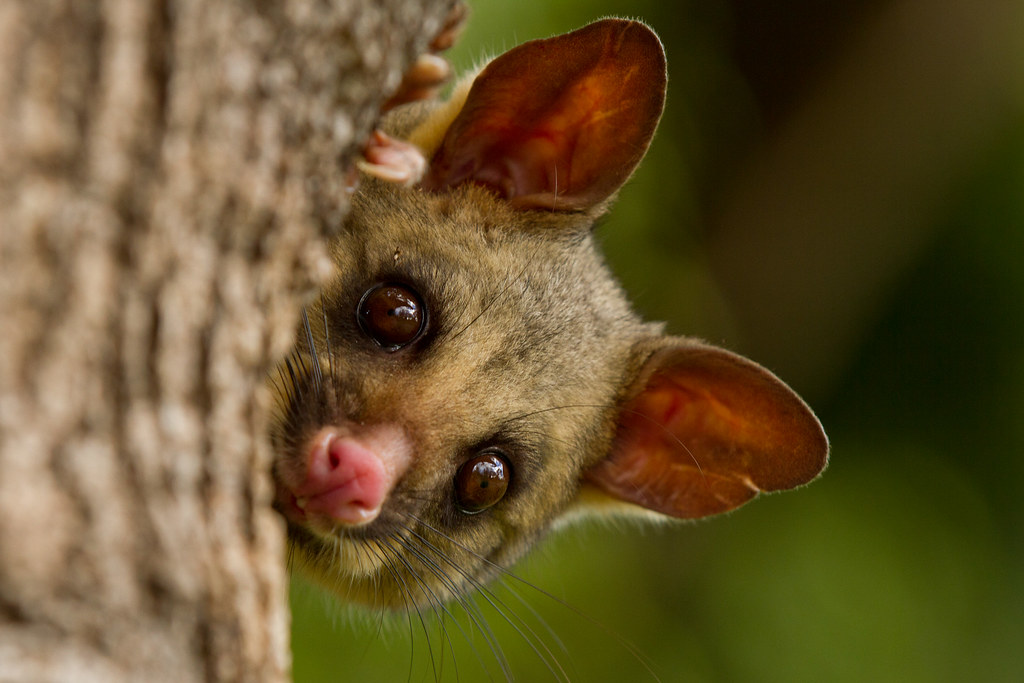
    If an animal looks soft, furry, and, let’s be honest, kind of adorable… why wouldn’t we treat it like a friend? Picture a common brush-tailed possum, fluffy and wide-eyed, or a spiky little hedgehog snuffling through the undergrowth, both undeniably friend-shaped. They don’t exactly look like villains. In fact, they look like animals we might want to protect.

    But here’s the uncomfortable truth: in Aotearoa/New Zealand, these “friend-shaped” animals are responsible for some of the most devastating environmental damage across the country.

    A curious little hedgehog (Erinaceus europaeus). It doesn’t look dangerous, but they are surprisingly harmful predators.
    Copyright CC BY-SA 3.0, by Tony Willis, from Wikimedia Commons

    Early in my veterinary career, I realised just how complicated it can be to care about the environment. I’d signed up to help animals, not to think about how their populations should be controlled. But here in Aotearoa, even the cutest animals can be a big environmental problem.

    The scale of the problem means pest management is essential. Conservationists must find a balance between the effectiveness of pest control techniques and animal welfare. This article explores how emerging technologies may help meet this challenge.

    Cute… but catastrophic

    Aotearoa’s wildlife is unique because it evolved for millions of years without land mammals. The only land mammals native to Aotearoa are, in fact, two species of bats. This isolation means many native birds nest on the ground, can’t fly well, and have limited natural defences against mammalian predators.

    When humans arrived, they brought mammals, like hedgehogs, rats, stoats, and possums, with them. This is when everything changed. A stoat might seem sweet and harmless, but it will kill more than it needs. Possums, while wide-eyed and cuddly, can change the types of trees in native forests.

    The stoat (Mustela erminea) is an adorable but efficient killer.
    Copyright CC BY-SA, 2.0 by Soumyajit Nandy, from Wikimedia Commons

    Introduced mammals have had a significant impact, contributing to widespread loss of biodiversity (variety of animals and plants) across Aotearoa. They have had a hand to play in the extinction of many native bird species and continue to threaten many more.

    So, while these mammals might look adorable and harmless, their impact is anything but. It’s not that these animals are bad, they’re just in the wrong place.

    Why we can’t just leave them alone

    It’s tempting to think, “can’t we just let nature take its course?” The problem is, this isn’t how nature originally worked here. These species were suddenly introduced by humans, and native birds didn’t have time to adjust. So the decline in bird species isn’t natural, it’s our fault, and without intervention, many more native species will be lost.

    The huia (Heteralocha acutirostris). A bird now extinct, lost in part to predation by introduced mammal predators.
    Copyright public domain (CC0-style, no known copyright restrictions in place), by Johannes Keulemans, from Wikimedia Commons

    This is why pest control is necessary. It’s not because we don’t like these animals, but rather we are trying to protect something even more vulnerable and important to Aotearoa’s history.

    The challenges of traditional methods

    Traditionally, pest control has relied on traps and toxins. While these methods are effective, they are not without their downsides. They can be costly, need regular checking and resetting, and pests often return quickly once control efforts stop.

    These methods have been under scrutiny for several reasons. One concern is how humane these methods are. Animal welfare remains an important consideration even when trying to reduce or eliminate pest populations. There are also concerns about their environmental impact, including whether the toxins are retained in the soil and waterways. In addition, is the risk of harm to non-target animals, including native birds and other wildlife not intended to be affected.

    Traditional DOC 200 trap. Using traditional traps requires substantial staff time, meaning that ongoing funding is needed to maintain them.
    Copyright CC BY-SA 4.0, by Kimberley Collins, from Wikimedia Commons

    Looking for better solutions

    The good news is that things are changing in some really exciting ways! A 2014 study by Dr Helen Blackie and her team reviewed a range of emerging technologies and research for long-term mammalian pest management, several of which are discussed below. The team brought together scientists, university researchers, commercial pest management organisations and iwi (indigenous Māori tribal groups) who worked collaboratively to design new tools that are more humane, better targeted to specific pest species, and more effective over long timeframes.

    Helen and her team develop new toxins to minimise animal distress. Some are even based on natural toxins derived from native plants, blending science with mātauranga Māori (traditional knowledge).

    Highly poisonous Tutu plant (Coriaria arborea) has been investigated as a potential source of new toxins.
    Copyright CC BY-SA 3.0 by Rudolph89, from Wikimedia Commons

    Another innovation presented in the study is “set and forget” traps. While these devices have existed for some time. Newer versions use artificial intelligence (AI) to ensure only target pest species activate them. Once installed, these traps can remain in place for long periods without the need for frequent checks or bait replacement, a big advantage over traditional traps.

    Smart trap that uses AI to target pest species while avoiding non-target species.
    Photograph by Dr Helen Blackie, used with permission.

    In the study, the group also helped develop traps that utilise new toxins in a clever way. When the specific pest interacts with the trap, a small dose of toxin is placed onto its coat. The animal then ingests it through grooming, reducing the risk of environmental contamination.

    In addition, the group is learning more about pest behaviour, specifically how animals move, feed, and interact at different population numbers. This helps determine the best places for traps, increasing the likelihood that pests will interact with them.

    People power in action

    As this study has shown, pest control isn’t just about technology. It’s about how people work together to protect the environment. In Aotearoa, pest control programmes rely on collaboration between iwi, conservation groups, and scientists. Each group brings different expertise to the work, from scientific knowledge to local and cultural understanding.

    When I discussed the new innovations with Dr Helen Blackie, she highlighted that some of the most successful pest control initiatives come from community-led groups. She emphasised that even though these groups may have fewer resources than larger programmes, they are still often highly effective. They work closely together with a strong commitment, enabling them to share ideas and adapt their approaches as needed. At the end of the day, pest control only works if people are willing to take part!

    So…why not friend?

    It’s okay to think these introduced mammals are cute, and the instinct to care about all animals is a good one. But, in Aotearoa, protecting native birds and plants requires managing introduced mammals. Not because they’re bad, not because they don’t deserve compassion, but because the balance has already been tipped, and without action, the consequences could be irreversible.

    With better tools, smarter strategies, and more collaboration, we’re moving toward a future where pest control is more effective, more humane, and more sustainable.

    And maybe that’s the real answer to the question, “if friend-shaped, why not friend?” Because sometimes, protecting one part of nature means making hard choices about another.

    Tough decisions need to be made in order to protect tiny native birds like the titipounamu (Acanthisitta chloris).
    Copyright CC BY-SA 4.0  by Melissa Boardman, from Wikimedia Commons

    How can you help?

    Looking after our environment is a shared effort, the more each of us does, the bigger the impact we can make. If you’re keen to take it further, organisations like Predator Free 2050, Department of Conservation, and Forest & Bird offer opportunities to get involved right across the country. Tools like Trap.NZ can also help you protect your own backyard and track your impact. Karawhiua!

    Written by veterinarian and animal lover, Kim Telford, a student at Te Whare Wānaka o Aoraki/Lincoln University. Inspired by a curiosity for how humans and animals intersect, as part of the ECOL 608 Research Methods in Ecology course.

    Explore the science: Blackie H, M., MacKay J.W., Allen W.J., Smith D.H., Barrett B., Whyte B.I., Murphy E.C., Ross J., Shapiro L., Ogilvie S., Sam S., MacMorran D., Inder S., Eason C.T. (2014) Innovative developments for long-term mammalian pest control. Pest Management Science, 70(3), 345-51. doi: 10.1002/ps.3627.

  • Remove one NZ invasive mammal predator and another steps into its place

    Invasive species are a major concern for ecosystems worldwide, causing significant disruptions to native flora and fauna. Some mammals can have particularly devastating effects on local ecosystems due to their predatory nature. In the Hawke’s Bay, New Zealand, a recent study titled “Niche Partitioning in a Guild of Invasive Mammalian Predators” sheds light on the dynamics of invasive mammalian predators and their impact on the region’s native biodiversity.

    I’ll walk you through the key discoveries and explain why they hold immense importance in our understanding of niche partitioning and its implications for ecosystem management.

    Niche partitioning refers to the process by which species with similar ecological requirements coexist within an ecosystem by utilizing different resources or occupying different ecological niches. Niche partitioning reduces direct competition, promoting the coexistence of species that would otherwise struggle to survive in the same habitat.

    In Hawke’s Bay, a guild of invasive mammalian predators has established, comprising three key species: stoats(Mustela erminea), ferrets (Mustela furo), and feral cats (Felis catus). 

    These predators were introduced to New Zealand and have since wreaked havoc on many native bird populations. Recent studies have revealed an intriguing pattern of niche partitioning among these invaders, suggesting a potential balance within the guild.

    Camera traps were deployed in three seasons. Credit by Albert Salemgareyev/ACBK

    Researchers have observed distinct differences in the dietary preferences and hunting strategies among these invasive predators in Hawke’s Bay. These variations have allowed the species to exploit food, reducing direct competition and encouraging the peaceful coexistence of individuals.

    Stoats, being the smallest and most agile of the three predators, specialize in hunting rats, mice, and birds. Their slender bodies and keen sense of hearing enable them to pursue their prey with stealth and precision. Ferrets, on the other hand, are larger and more versatile, adapting to different types of prey or using various hunting techniques. Ferrets tend to target larger prey, such as rabbits and small hares, which they capture using their strength and speed. Feral cats, similar to stoats and ferrets, are solitary hunters, exhibiting a broader dietary range, preying on both small and medium-sized mammals, birds, and reptiles.

    While the predators may occasionally target overlapping prey species, they generally exhibit distinct foraging preferences and occupy different microhabitats. Stoats predominantly inhabit forested areas, where their excellent climbing abilities give them an advantage in pursuing prey in trees.  Ferrets, with their larger size and ground-based hunting strategies, are often found in open grasslands and shrublands. Feral cats, being highly adaptable, can exploit a range of habitats, from dense forests to human settlements.

    The phenomenon of niche partitioning among invasive predators in Hawke’s Bay has important implications for native species conservation. By occupying different ecological niches, these predators help reduce the burden on specific native animals in an indirect manner, allowing them to persist despite the presence of invaders.

    Bird species, in particular, have been heavily impacted by the invasion of mammalian predators. Native birds, such as kiwi, weka, and tui, have experienced population declines due to predation. However, the niche partitioning observed among invasive predators offers a glimmer of hope for the survival of some native bird species. For example, stoats target ground-dwelling birds, while ferrets focus on larger prey, like rabbits. This division of labour reduces the overall predation pressure on specific bird species and allows them to maintain a foothold in their respective habitats.

    Stoats are tricky to study. They are hard to find in the field and difficult to keep in captivity. Image from Adrian Paterson.

    Understanding the dynamics of niche partitioning among invasive mammalian predators can inform targeted conservation strategies. By recognizing the specific resources and habitats favored by each predator species, conservationists can create plans for managing natural areas that utilize the division of habitats to safeguard endangered native animals.
    Implementing effective trapping and removal programs, focused on the specific predators posing the greatest threat to certain bird species, can help alleviate their population declines.

    Habitat restoration initiatives aimed at enhancing native bird habitats, while creating barriers for invasive predators, can further support the survival and recovery of endangered species. For instance, Wellington, Zealandia is a 225-hectare fenced sanctuary dedicated to protecting and restoring native wildlife. The sanctuary is predator-free and provides a safe haven for endangered bird species like the tīeke (saddleback), kākā, and hihi (stitchbird). Zealandia also conducts active predator control outside the sanctuary to create a buffer zone for native birds.

    The study on niche partitioning among invasive mammalian predators in Hawke’s Bay offers valuable insights into the complex interactions within ecosystems and the potential consequences of invasive species on native biodiversity. These findings provide a foundation for conservation efforts and ecosystem management strategies aimed at mitigating the negative impacts of invasive predators on native flora and fauna. By understanding the dynamics of invasive species, we can work towards restoring and preserving the delicate balance of ecosystems, ultimately fostering a more sustainable future for our planet.

    Removing cats and ferrets from an ecosystem often has unforeseen consequences, as evidenced by the subsequent increase in site use by stoats. Stoats, cunning predators known for their ability to adapt to changing circumstances, have exploited the absence of cats and ferrets to their advantage. In the absence of these competitors, stoats have become more active during the day, closely following diurnal bird activity. This behavioral shift has raised concerns among conservationists, as it highlights the need for predator control measures to account for the specific hunting patterns and preferences of different predators.

    Failing to address this issue adequately could lead to a worse outcome for daylight birds, whose vulnerability to stoat predation may increase if their activities are not considered in predator control strategies. Therefore, it is crucial for ongoing conservation efforts to not only focus on removing invasive predators but also to consider the complex interactions among species and the potential cascading effects that may arise.

    This article was prepared by Master of International Nature Conservation student Albert Salemgareyev as part of the ECOL608 Research Methods in Ecology course. Albert won a prestigious Whitley Award for Conservation in 2023.

    Garvey, Patrick M., Alistair S. Glen, Mick N. Clout, Margaret Nichols, and Roger P. Pech. 2022. “Niche Partitioning in a Guild of Invasive Mammalian Predators.” Ecological Applications 32(4): e2566. https://doi.org/10.1002/eap.2566