Category: conservation

  • Kiwi: now in 3D

    Kiwi: now in 3D

    ‘Coming soon in 3D!’ Periodically throughout my life movie-makers have dabbled with making films that we can watch in three dimensions. You would get your special glasses before the movie session and then sit there wondering when to put them on until the action got going.

    To be honest I don’t remember many of the movies that I saw like this. The Avatar movies have always had the option and I watched at least the second movie this way. Spears and monsters would lunge out of the screen at you.

    Other than that I am drawing a blank. This is not to say that every 3D movie is bad but just that 3D on its own doesn’t make a film more memorable.

    Avatar Adrian! Look out for the arrow!

    I don’t even dislike the experience despite having to wear the 3D glasses over my own glasses. There is something immersive about dodging things ‘coming out of the screen’. However, I seldom choose this option if 2D is available. It all seems a bit too much like work perhaps?

    Adding a third dimension can help with appreciating scale and movement though. It can also help with identifying who’s who in the screen – there’s just a bit more information that your brain can use.

    Identifying individuals is a big deal in biology, especially conservation. When you have a small population you are interested in individuals. How are they doing? Are they breeding? Who do they hang out with?

    Of course, for many species there are not a lot of features to differentiate between individuals. They are similar in height, uniform in coloration, and have similar behaviours.

    To make them more distinctive we could always band our target with bright colours or paint an obvious mark on them but this involves capturing and interacting with the individual. This causes a great deal of stress and catching individuals is not always simple.

    Ideally we could use cameras to take pictures that we could measure features in that are unique to an individual. Two dimensional pictures require an individual to be in an exact place with an exact orientation for this to work. So this is not a reliable method.

    Bit wait! … Coming soon in 3D!

    It turns out that if you take pictures with different devices from slightly different angles at the same moment then you can much more accurately calculate measurements on individuals. At least in theory.

    Jane Tansell with her trusty kiwi dog. Picture from Jane Tansell.

    Jane Tansell, a recently completed PhD student at Lincoln University, and her supervisors, Adrian Paterson and James Ross, set out to see if we could use this idea to identify kiwi. Kiwi populations and individuals are difficult to measure. They are nocturnal, usually found in scrubby terrain, are reasonably featureless, and spend a lot of time in burrows. We can use trained dogs to find them but this is quite stressful for kiwi. We can listen to their calls during the night but this is difficult to split into different individuals and certain parts of the population don’t call anyway.

    Trail cameras have been used to successfully locate kiwi. Jane wondered if she could pair cameras 12-25 cm apart, taking images that could be used to essentially create a 3D image of features on each bird. Jane knew that kiwi bills vary between individuals and can be used as an ID.

    Jane worked with the more technically literate Maurice Kasprowsky and Tom Gray to cobble together the cameras and get them to work together.

    Jane, as reported in NZ Journal of Zoology, first tried the setup on a taxidermied kiwi in good light conditions. She found that the cameras could be used to measure the bills to within 1.5% of their actual length. This was a great achievement and would certainly be able to determine individuals.

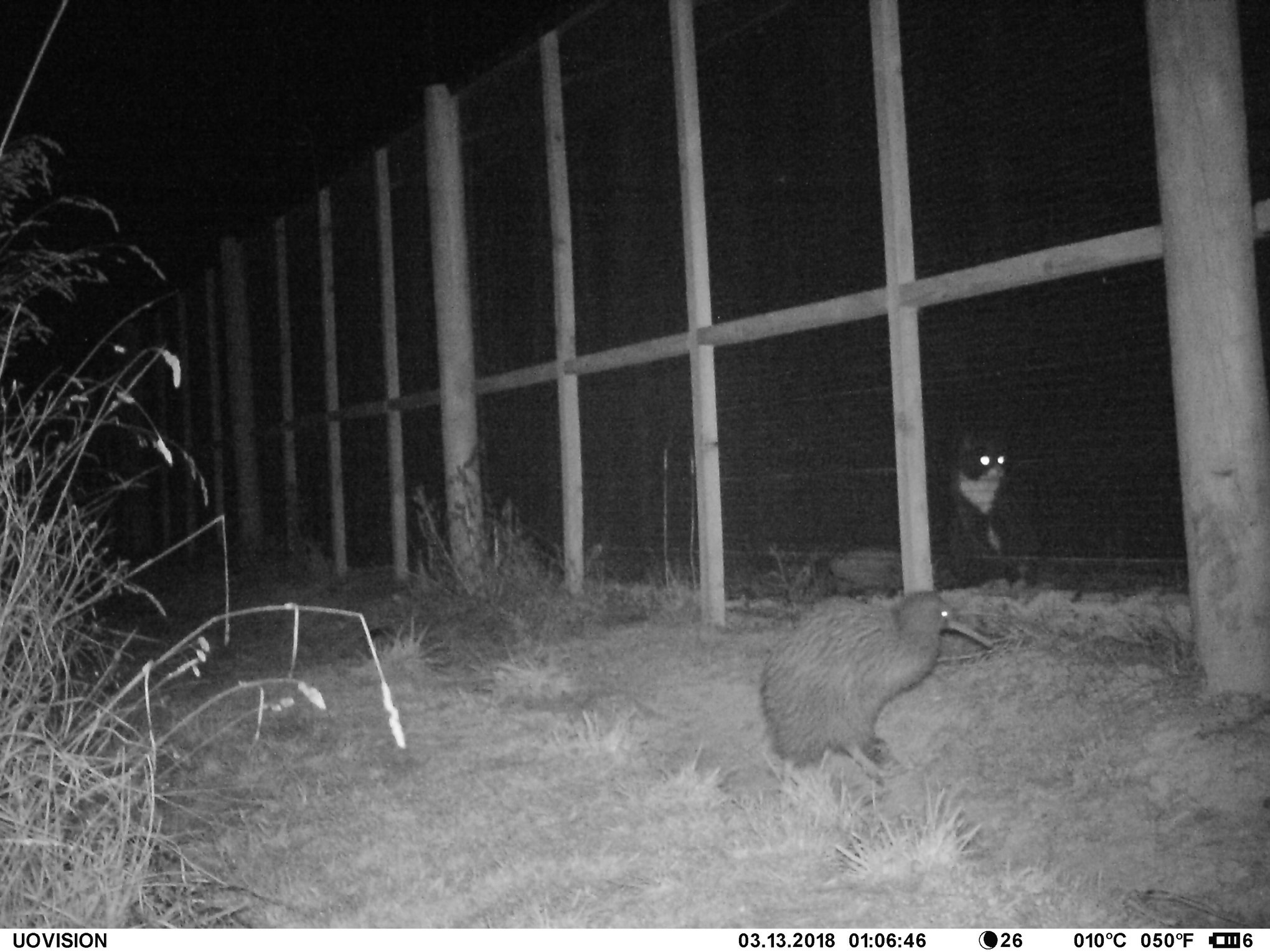
    In theory we should be able to photograph kiwi and recognise them by measuring their bills. Image from Adrian Paterson.

    Jane then set up field trials with live kiwi. In the real world, with low light and moving birds the cameras were less efficient. At worst they were terrible but often they were within 3-4% of the actual bill length. This is not good enough to replace current field identification methods but it was still quite impressive given the relatively jury-rigged setup.

    Improvements in cameras, especially 3D cameras, are happening quite quickly. With some more trial and error Jane should be able to start reducing the error enough for this to be a viable noninvasive method for following kiwi in the field.

    While this is not as exciting as an arrow flying at you from an Avatar movie, this use of 3D does have real world uses that will help with understanding a national icon!

    The author, Adrian Paterson, is a lecturer in the Department of Pest-management and Conservation at Te Whare Wānaka o Aoraki Lincoln University. Adrian is a kiwi but unfortunately has no bill to measure.
  • Silent hunters on the wetland edge: urban cats and nature conservation

    Silent hunters on the wetland edge: urban cats and nature conservation

    The dark side of the cat

    A cat carrying a bird in its mouth while another cat observes nearby, set in a garden with stone pathways and decorative animal statues.
    Cats doing what cats do.
    Photo by Robert | Visual Diary | Berlin on Unsplash

    In the autumn evening, a cat lies on the fence, with focused eyes and slightly wagging tail, this patient hunter is quietly locking onto a target and preparing to attack.

    Cats are the standard feature in almost neighbourhoods in New Zealand. They are elegant, lazy, affectionate, and sometimes unpredictable. Some of them are pretty welcomed , moving freely around neighbourhoods everyday, accepting feeding and petting.

    Behind these soft furs and friendlypurring, there is an ancient, untamed instinct hidden – hunting. Hunting is not just about hunger. Most cats were are well-fed—some are even fed multiple times a day. Yet, the urge to stalk, chase, and kill remains.

    Travis Wetland: A natural island in the city

    Wetlands, green spaces, and bushes are the last shelter for local plants and animals. These “ecological islands” are often located right next to the communities where we live.

    Travis Wetland is a freshwater ecological oasis, located on the edge of Christchurch. Surrounded by residential areas, roads, and commercial development, it remains a vital refuge for more than 53 species of birds and many native invertebrates.

    Living around this wetland, there are hundreds of free-moving domestic cats living. They can walk through the grass without permission, quietly enter the ecological core area, and become hunters of these small lives.

    A sleek black cat crouches on a wooden fence, focused with its golden eyes, poised as if ready to pounce, surrounded by lush green foliage.
    A Patient Hunter
    Photo by Kristin O Karlsen on Unsplash

    Silent pressure & hidden trail

    It is easy for people to imagine a cat lazily lying in the sun by a windowsill, but what about the other side of their life when they step out the door?

    Over the course of a year, 21 pet cats living near Travis Wetland were installed with GPS collars as part of a study by Lincoln University and the Christchurch City Council. The research, led in part by Shelley Morgan and Adrian Paterson, revealed some surprising results.

    Researchers did not capture many cats with prey in their mouths (although more than a few did bring their prey back to their home). But there were other situations: cats were often visiting the edge of the ecological core of the wetland, where native birds, lizards and insects breed.

    A close-up of a small bird with dark brown feathers and a distinctive long tail, perched on a log in a green and grassy environment.
    Fantail(Rhipidura fuliginosa)
    Photo by Callum Hill on Unsplash

    The cat threat does not necessarily come from killing, sometimes, just “attending” is enough. Birds may abandon their nests if they sense a nearby predator. Lizards may interrupt their mating if they feel targeted. In nature, energy is precious, and fear itself is also consumes energy.

    More than half of the monitored cats entered Travis wetland at least once. Some of them went more than 200 metres into the wetland while their owners sleeping, crossing habitats and breeding areas for rare native lizards, insects and ground-nesting birds.

    More than half of the monitored cats entered Travis Wetland at least once. Some of them went more than 200 metres into the wetland while their owners sleeping, crossing habitats and breeding areas for rare native lizards, insects and ground-nesting birds.

    But not every cat causes the same amount of harm.The study found that younger cats—those under six years old—were more active and risky. They travelled further, spent longer inside the wetland, and brought home more prey. Some even swam across water to reach nesting islands. In contrast, older cats tended to stay near home and moved less.

    A small number of energetic cats were doing most of the damage. Researchers called them “super-predators”. This suggests that cat behaviour and age both matter. While most cats seem harmless, a few individuals can quietly cause serious impacts to local wildlife.

    This means the cat you see curled up by the fireplace in the afternoon may be walking the narrow line between urban life and ecological harm at night. It’s not the cat’s fault, and it’s not your fault, but it’s keep happening.

    A cat with black and white fur is sitting behind a window screen, looking outside. The window frame is made of weathered wood, giving a rustic feel to the scene.
    Cat by the Window
    Photo by Aleksandar Popovski on Unsplash

    Night walkers & tiny bells

    Cats are typical “crepuscular” animals, that is, they are most active in the dawn and dusk. This explains why you see cats running around the living room at 10 pm or staring at the wall at 5 am. They don’t listen to a clock, they listen to the call of instinct.

    Sunset and just after is also the time when many cats go out for their “night patrols”. According to the data from the study’s cat GPS tracking, cats move more frequently and walk farther at night. Some cats hardly go out during the day, only sneaking through the garden and visiting the fields after dark.

    So, what can we do to reduce the impact of out furry friends? Some owners hang small bells on their cats’ collars, hoping that the sound will alert potential prey and give them time to escape. This method seems simple and effective, but the effect actually varies from species to species.

    There is a study by University of Otago have shown that bells have a certain deterrent effect on birds and the study by Geiger shown that have little effect on lizards or insects because they are not sensitive to sound. Also some smart cats can even learn to “walk silently” – so that the bell doesn’t ring at all.

    A black cat peeking from behind a concrete structure, with one green eye visible and a blurred background showing hints of light.
    Nightwalker Cat
    Photo by amir esfahanian on Unsplash

    So, while bells may help a little, they are not a panacea. As with everything in this story, the answers are never simple.

    Draw a ceasefire zone

    Some solutions are simple, and others need some creativity.

    In some parts of New Zealand, there is talk of creating a cat-isolation buffer zones — areas around nature reserves where cats are either required to be kept indoors full-time, or where cats are banned or a curfew(Wellington City Council. 2024) is imposed on cats near reserves (although curfews seem not work for protecting birds or lizards)

    This idea is not to punish cat owners but to protect the most vulnerable parts of the ecosystem. Because may be the problem is that house cats may be found curled up in warm blankets, purring softly, eyes half-closed, and when just hours earlier, those paws may have landed a fatal blow on a small bird, or pinned a native skink to the ground.

    Free-roaming cats in New Zealand are subject to different local management depending on their relationship with humans (such as companion cats, stray cats, and wild cats), but there is currently a lack of unified national laws(Sumner, C. L. 2022).

    Threatened-Nationally Critical Skink: Alborn Skinks(Oligosoma albornense)
    Photo by James Reardon

    Some newly built areas even state in the purchase agreement that cats are not allowed to roam freely, and sometimes even completely prohibit cats(Preston, N. 2023).

    To some people, such regulations may sounds really extreme. But to naturalists, it is a way of respecting boundaries, a quiet commitment to leave even a small area and keep distance for the creatures that have lived here long before we came here.

    We would much rather have this scenario: ‘In the autumn evening, a cat looks out of a window at a fence, with focused eyes and slightly wagging tail, this patient hunter is quietly locking onto a target that it would love to attack. Frustrated, it curls up and goes back to sleep.’

    This article was prepared by Master of Pest Management  postgraduate student Linfeng Yu as part of the ECOL608 Research Methods in Ecology course.

    Research paper: Morgan, S. A., Hansen, C. M., Ross, J. G., Hickling, G. J., Ogilvie, S. C., & Paterson, A. M. (2009). Urban cat (Felis catus) movement and predation activity associated with a wetland reserve in New Zealand. Wildlife Research, 36(7), 574–580. https://doi.org/10.1071/WR09023

    References

    Geiger, M., Kistler, C., Mattmann, P., Jenni, L., Hegglin, D., & Bontadina, F. (2022). Colorful Collar-Covers and Bells Reduce Wildlife Predation by Domestic Cats in a Continental European Setting. Frontiers in Ecology and Evolution, 10. https://doi.org/10.3389/fevo.2022.850442

    Housing development near Auckland imposes cat ban to protect wildlife. (n.d.). 1News. Retrieved 5 May 2025, from https://www.1news.co.nz/2021/08/11/housing-development-near-auckland-imposes-cat-ban-to-protect-wildlife/

    Preston, N. (2023, July 1). No cats allowed: Growing number of new neighbourhoods banning pets. Oneroof. https://www.oneroof.co.nz/news/no-cats-allowed-growing-number-of-new-neighbourhoods-banning-pets-43855


    Responsible cat ownership. (2024, October 17). Wellington City Council. https://wellington.govt.nz/dogs-and-other-animals/cats/responsible-cat-ownership


    Sumner, C. L., Walker, J. K., & Dale, A. R. (2022). The Implications of Policies on the Welfare of Free-Roaming Cats in New Zealand. Animals, 12(3), Article 3. https://doi.org/10.3390/ani12030237

  • Cat conundrum: Conservation, cameras, and capricious companions

    Cat conundrum: Conservation, cameras, and capricious companions

    You are probably well aware of the feral cat issues here in Aotearoa New Zealand and the detrimental impact that cats are causing in our unique whenua (land). However, if you are new here, let me get you up to speed. The popularity of these adorable companions –1,134,000 companion cats and 196,000 strays, to be accurate – has come with a tremendous cost to native wildlife in Aotearoa New Zealand.

    With over a decade of experience in the veterinary industry, I’ve witnessed animal welfare concerns from both perspectives. I’ve seen the devastating impact cats can have on native wildlife, as well as the suffering of unwell, neglected feral cats. This dual perspective made becoming a cat owner myself all the more meaningful, thanks to a foster failure named Professor (pictured below), who quickly stole my heart. After adopting him, it was an easy decision to create a comfortable indoor life for him. Knowing the toll that cats can take on wildlife populations and thinking about his health and safety, it was an obvious decision for me to keep him as an indoor cat. But unfortunately, 196,000 cats in Aotearoa New Zealand do not have the cushy indoor lifestyle that Professor has become accustomed to.

    Learn about what the experts have to say on cat management here: https://predatorfreenz.org/stories/animal-welfare-agencies-views-on-cat-management/

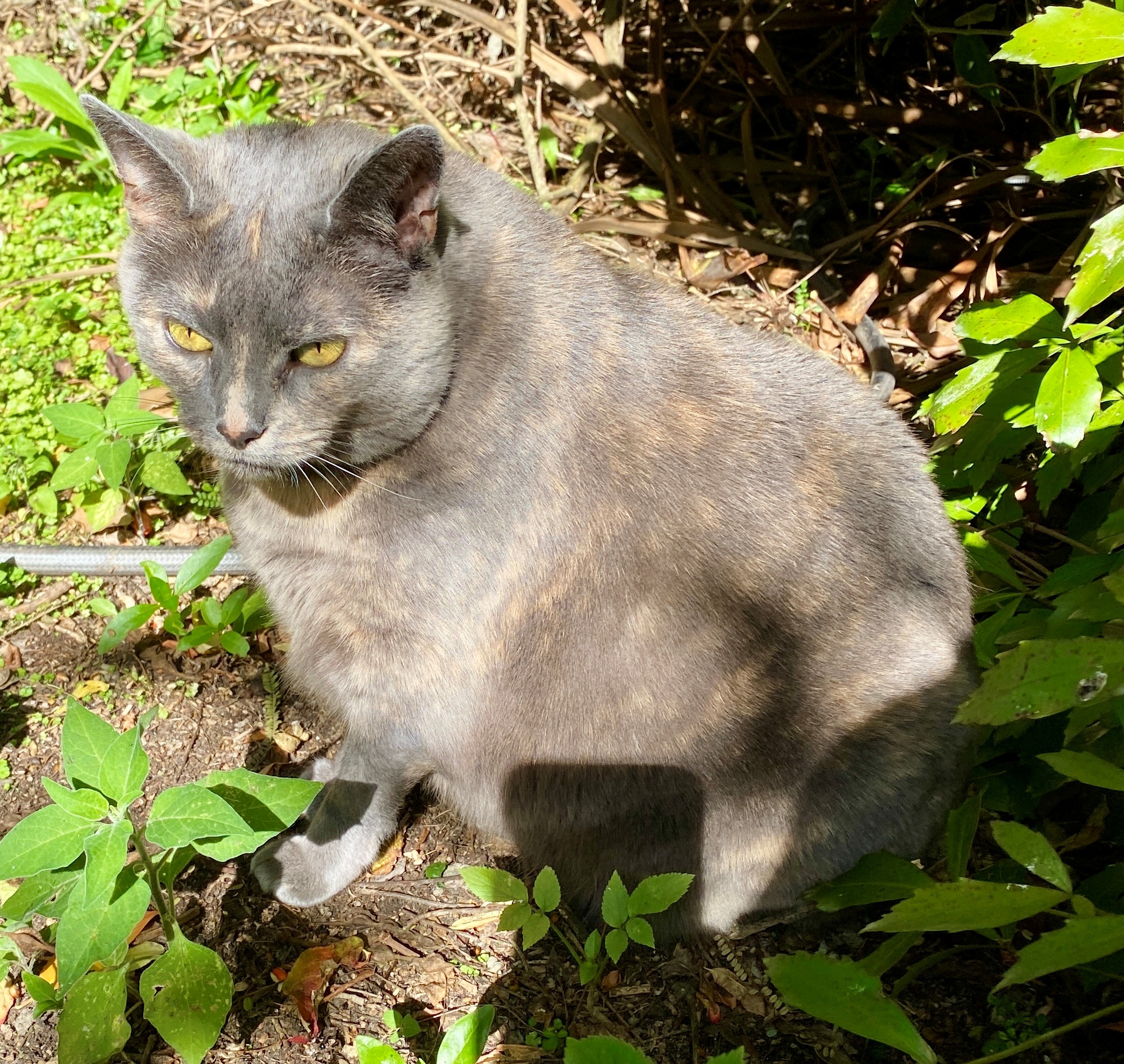
    Professor the foster failure. Original image by Chloe Mc Menamin.

    Now what does the science say about monitoring cats that don’t have a cushy indoor lifestyle? In 2019 a team of scientists at Lincoln University carried out a study to better understand just that. They deployed a camera detection system across two pastoral sites in the Hawke’s Bay region. One system was placed systematically (on a grid) and the other strategically (placement where the researchers believed cat activity would be the highest). Their goal was to compare which camera trap placements would be the most effective method for monitoring feral cat populations. While feral cats are notoriously difficult to detect due to their low densities and cryptic behaviours, these researchers did get some interesting results!

    During a telephone interview, with primary author Dr. Margaret Nichols (Maggie), Maggie cheerfully shared how she began to question the use of her time after processing countless images of hedgehogs enjoying the smell and feel of the ferret pheromones used to lure in the cats. Then things took a surreal turn when she found herself pondering reality itself—prompted by turkeys performing what looked suspiciously like synchronised dances.

    But, dear reader, that wasn’t the only captivating creature caught on camera. No! The top-featured animal was… you guessed it… a sheep! Yes, you read that correctly. A single sheep nearly drove Maggie to madness after it camped out in front of one of her cameras for four entire days, triggering over 500,000 images. Poor Maggie! I’d be pulling the wool from my jumper too if I had to process that many sheep shots. Surprisingly, cats turned out to be the least detected animals of all—truly showcasing their cryptic behaviour and highlighting just how important this research was to carry out.

    Against all odds Maggie and her colleagues persevered – through the thousands of sheep, hedgehogs and dancing turkey’s images to reveal a striking discovery. Camera traps placed at the forest margins detected more cats compared to those in mixed scrub or open farmland. Specifically, at forest margin an average of 3 cats were detected per night at Site 1 (Toronui Station made up of a mixture of open farmland and native forest) and 1.7 cats at Site 2 (Cape to City ecological restoration area). This compelling pattern suggests that strategic placement of cameras in these areas is likely to maximise cat detection. Hats off to Maggie and the team, what a cool discovery.

    Hedgehog self-anointing after contact with the pheromone. Image source Research Gate (Garvey., nd)

    Well, there you have it reader – strategic camera placement at forest margins in the Hawke’s Bay area is the most effective way to monitor feral cats, but this is just the beginning of cat monitoring research in Aotearoa New Zealand. If you are like me and feeling inspired by Maggie and her colleagues’ findings, you might also be wondering where to even start tackling the feral cat population in your local area.

    While science and data are fascinating, the telephone interview with Maggie wisely reminded me that the best part of her research experience were the organisations and the people involved along the way, particularly the Hawke’s Bay Regional Council , Predator Free South Westland, and Lincoln University. She reported that working with various stakeholders made the project not only successful but also deeply rewarding. She also noted that all research projects take more time than you think and to never underestimate the possibility of processing 500,000 sheep photos when doing camera monitoring!

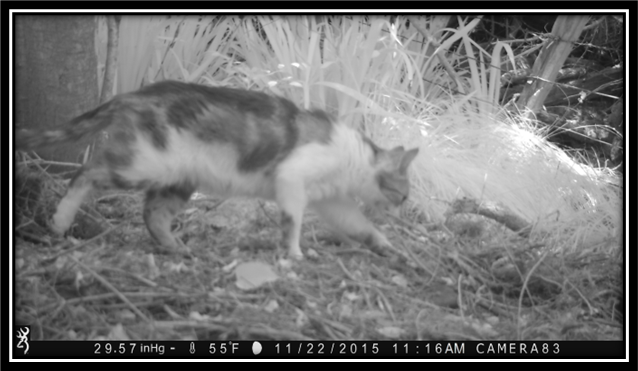
    Image of feral cat caught on camera during study. Orginal image provided by Dr. Margaret Nichols

    What a great reminder that in life it’s not just about success or how long things take; it’s about the experiences and friendships you make along the way. Thank you, Maggie, for sharing that wisdom.

    This article was prepared by Postgraduate Diploma in Applied Science student Chloe McMenamin as part of the ECOL608 Research Methods in Ecology course.

    Now reader it is over to you, want to learn more about how you can help? Check out the The National Cat Management Strategy Group, or if you want to learn more about feral cats here in Aotearoa New Zealand check out what the Department of Conservation has to say.

    Read full study here:
    Nichols, M., Ross, J., Glen, A. S., & Paterson, A. M. (2019). An evaluation of systematic versus strategically-placed camera traps for monitoring feral cats in New Zealand. Animals, 9(9), 687. https://doi.org/10.3390/ani9090687

    Image refernce:

    Garvey, P,M. (nd). FigS3: Hedgehog self-anointing after contact with the pheromone/kairomone vial [Supplemental material]. ResearchGate. https://www.researchgate.net/publication/311713979_FigS3_Hedgehog_self-anointing_after_contact_with_the_pheromone_kairomone_vial

  • To bait, or not to bait…: wētā foraging and brodifacoum

    To bait, or not to bait…: wētā foraging and brodifacoum

    I am lucky that my parents live right down the road from the Brook Waimārama Sanctuary. This 690 hectare fenced sanctuary is home to many native species and is about to be home to 40 spotted kiwis (Exciting!!!!). Within this Sanctuary there are “wētā hotels” that offers a haven for wētā, although I have also seen a giant leopard slug in there as well. I often visit the Sanctuary, it has a lot of history and diversity. Sanctuaries offer a safe space for vulnerable native species away from large predators. The surrounding predator-proof fence keeps the bad things out and the good things in. Unfortunately, the rest of New Zealand isn’t exactly pest free, with a lot of our native species being hunted down every day by introduced pests.

    Predator Free 2050 is an exciting goal that is only 25 years away. With our unique flora and fauna, why wouldn’t we want our beautiful country to be predator free? Predator Free 2050 has a focus on removing several pest species (rats, mustelids and possums). Pest Free Banks Peninsula (PFBP) is a local project focused on protecting our beautiful coast, islands and land within Banks Peninsula. PFBP has several methods and tools to eradicate and monitor pests. A common toxin used by PFBP is brodifacoum.

    File:Female tree weta on tree fern.jpg
    A Tree Weta (Image from Avenue , 2010, CC BY S.A 3.0)

    There are concerns about whether toxins, specifically brodifacoum, is killing our native species. These tasty but deadly treats are targeted at mammalian pests, but native invertebrates have also been munching away at the cereal baits that contain the toxin when they come across it. Brodifacoum-laced baits became a popular pest control toxin in the 1990s.

    Quail Island is an island found near Lyttelton. The original vegetation was believed to be a broadleaf-podocarp forest, a rare forest type seen only in small areas around New Zealand. Since 1998 volunteers have been working at restoring the native ecology of the island by regularly planting native trees and targeting pests with toxins. Evidence of native birds breeding would be a good indication that restoration efforts are working and that pest control can make Quail Island a place where native species can flourish.

    Two tree wētā spotted in a wētā hotel at the Brook Waimārama Sanctuary (Photo taken by Author: Kayla Valentine)

    Brodifacoum bait has been used on Quail Island. It is highly effective at reducing mammalian pests. Its purpose on Quail Island was to stop reintroduction of rodents. Due to Quail Island being close to the mainland, mammalian pest are able to cross over at low tide. This slow invasion prevents Quail Island from being completely predator free.

    On Quail Island the brodifacoum baits were found to have been nibbled by wētā and other invertebrates! This discovery flustered scientists. How many other native invertebrates have yet to be identified for consuming the bait?

    This discovery led to increasing concern for our wētā species, many endangered or threatened. How many have died due to our toxic baits?

    A monitoring tool showing possible wētā trails within the Brook Waimārama Sanctuary (Photo taken by Author: Kayla Valentine)

    Studies focused on invertebrate consumption of baits have primarily used baits containing 1080. The studies that involve brodifacoum have also only focused on short-term effects (14-21 days) and one-off consumption of the bait. These hungry invertebrates are likely going for more than one course of their bait snack.

    Mike Bowie and James Ross wanted to determine whether wētā were regularly consuming these forbidden snacks and whether they would survive when they did. They tested in the field and did a laboratory experiment too. The laboratory experiment consisted of wētā being fed either baits with or without brodifacoum and then monitored for 60 days for insect mortality. The field test involved monitoring traps around Quail Island for invertebrate activity.

    Unfortunately, the wētā were hungry. For the field test they found that wētā and invertebrates would line up and wait their turn to eat! The wētā had distinct bite patterns when eating the bait, compared to pests such as mice. Wētā bite marks were easy to identify. In the laboratory test there was no significant difference in mortality of wētā (50% survived that were fed bait, 71% survived that were fed the control ). Mike and James determined more research was needed to be done in order for results to be more conclusive.

    Quail Island from the Peninsula at low tide. (Image from Greg Hewgill, 2006, CC BY 2.0, Flickr)

    So, what does that tell us exactly? The baiting methods we use to get rid of the bad things are also attracting the good things! Our native species are eating the toxins we are using to remove the pests that are eating our native species! We need to find a compromise, a less risky option for our often overlooked native invertebrates.

    Brodifacoum is also a risk to birds’ species! If a bird eats an invertebrate that has eaten brodifacoum, they will be affected by the poison as well. Joanne Hoare and Kelly Hare agree with this and suggest using non-toxic or less toxic methods for pests to protect native species. There seems to be a common theme with studies done on brodifacoum… its toxic for every species! There are several concerns, not just about birds and wētā consuming the bait but many other invertebrates and species consuming it as well.

    So, to bait or not to bait? Mike Bowie and James Ross showed that although there were no significant differences in mortality through the laboratory test, the wētā were eating the bait in the field test and laboratory test. I believe that in order to protect our native species, a less toxic baiting method should be considered. This will reduce long-term harm to species such as wētā. All though brodifacoum is highly successful at getting rid of pests, it can also harm other species. If there are other methods that reduce that risk, we should start with those methods then move to toxic baits as a last resort option on ecologically sensitive areas, such as Quail Island.

    The author, Kayla Valentine, is a postgraduate student in the Postgraduate Diploma of Science at Te Whare Wānaka o Aoraki Lincoln University. This article was written as an assessment for ECOL 608 Research Methods in Ecology.

  • Wings of change: Protecting parrots where they belong

    Wings of change: Protecting parrots where they belong

    I had always wanted a parrot as a kid.

    My obsession was inspired by Meena, a Bangladeshi animated TV series created by UNICEF, where the protagonist, Meena, had a clever parrot named Mithu who could speak and even help with homework from school. In the very first episode, Meena wishes to go to school, but her parents don’t think it is worth educating a female, a sad reality in many Asian countries, even now.

    Determined to learn, Meena finds a creative solution: Mithu goes to class for her, memorising the lessons and teaching her later. Having grown up with this story and often seeing parrots caged in people’s houses, I had subconsciously believed that parrots were meant to be pets, friends to humans rather than untamed animals.

    That belief was shattered the first time I saw a flock of parrots flying freely in the jungle. As I saw them calling to one another, I came to see that they were more than simply colourful birds living in cages; they had families, friendships, and a world of their own.

    And then another surprising revelation struck me: Mithu wasn’t even a parrot; he was a parakeet! I discovered the distinction during my first birdwatching trip as an undergraduate. In that moment, I realised how early influences, particularly those from television, can shape, and sometimes mislead our views of the natural world.

    Indian Rose-Ringed Parakeet
    A caged rose-ringed parakeet © Geoff McKay / Flickr

    This memory came flooding back as I read about kea (Nestor notabilis), a playful and highly intelligent alpine parrot of New Zealand. Unlike the caged parakeets of Nepal, kea are renowned for their curious nature, a trait that has both fascinated and frustrated humans. Kea are unique among parrots. Their sharp intelligence and flexibility have allowed them to survive in the harsh alpine conditions of the South Island of New Zealand.

    Using observations in a plantation-native forest matrix, a team of researchers led by Aitken in 2023 conducted a study in the Whakatipu Kā Tuka (Dart-Rees Watershed) area and discovered that kea were commonly seen in plantation forests. These birds, although strongly associated with alpine and native forest habitats, spent a surprising amount of time in exotic plantation woods, probably because these managed landscapes offered new foraging options.

    Aitken also tracked individual kea and mapped their home range and habitat use using VHF (Very High Frequency) radio transmitters that were attached to three individuals as lightweight backpacks. This method confirmed the keas’ active usage of plantation forests, not only for foraging but also as part of their usual range, and helped to better understand how they navigate various settings over time.

    This kind of fine-scale tracking is relatively new for kea and adds an important layer to our understanding of their behaviour in human-modified landscapes. However, it is worth noting that catching wild kea for such work is not a small feat – thanks to their sharp beaks and mischievous personalities!

    Kea
    A kea in its natural habitat CC BY-NC-SA 2.0 fremat/Flickr

    Kea are opportunistic omnivores that consume a wide variety of foods, ranging from seeds, native fruits, nectar, to even meat from dead animals. Jodanne Aitken, a PhD student at Lincoln University, found that although kea frequently fed on seeds from Pinus radiata trees in plantation forests, their poop told a fuller story. The faeces was full of insects and other invertebrates, showing just how flexible and opportunistic their diet really is. In plantation forests, they take advantage of exotic tree species and the insects that come with them.

    In contrast to many birds that avoid human-dominated landscapes, kea seem to do OK in them; curious and always eager to explore.The study also found that kea were more active in the morning and that their behavior changes with seasons, possibly linked to food availability or breeding. What’s truly fascinating is how their sharp intelligence allows them to survive not just in harsh alpine conditions, but also learn how to make the most out of new environments, like the pine plantations.

    Jodanne in action detecting kea. Image by Adrian Paterson

    Just like Mithu, the parakeet from my childhood who memorized lessons for Meena, kea are constantly learning from their surroundings. It is this intelligence, combined with their bold and exploratory nature that makes them such incredible survivors.

    While plantation forests provide new foraging grounds, they may also expose kea to new threats. This raises a vital question: are we simply giving kea new places to forage, or are we asking them to survive in habitats that may not fully meet their needs? Human-modified landscapes, while rich in opportunity, also bring risks such as increased exposure to toxins like lead or conflict with people. These findings offer hope for kea resilience in human-altered habitats, while also informing future forest management practices.

    On the other hand, the parakeets of Nepal, such as the Alexandrine and Rose-ringed parakeets, are often kept as pets, and their social skills and intellect are used for human entertainment rather than for their survival. The thought of birds with such intricate habits and close social ties being denied their natural life saddens me.

    Wild parakeets form large flocks, communicating and interacting in their own ways across wide-ranging Himalayan landscapes. Unfortunately, they face growing threats from habitat loss due to urban expansion, deforestation and especially the illegal pet trade. In fact, both Alexandrine and Rose-ringed parakeets are among the most commonly trapped and sold birds in south Asia. Without stronger awareness and conservation action, their role as seed dispersers and forest connectors may be lost.

    While it is heartbreaking to see parakeets in cages, it is crucial to remember that simply releasing pet birds into the wild isn’t the solution. Doing so can introduce diseases to native bird populations or create invasive species that disrupt ecosystems, as has happened in parts of the world where feral parrot colonies now compete with native wildlife. The real solution is prevention: parrots should never be taken from the wild in the first place. Instead, our focus should be on protecting their habitats and fostering respect for their role in nature.

    What if we saw Nepal’s parakeets not as possessions but as individuals with a right to freedom? Kea, despite facing habitat loss and human-wildlife conflicts, still roam wild, adapting to changing landscapes. Their ability to explore, learn, and interact with their environment is a reminder of what many of Nepal’s parakeets have lost.

    An AI generated image of Nepal’s parakeet and New Zealand’s kea in their natural habitat © OpenAI

    Kea’s willingness to venture into plantation forests for sustenance demonstrates their adaptability, but they are not immune to human pressures. Habitat changes, exposure to toxins, and climate change are pushing their predators higher into alpine zones, creating new challenges for their survival.

    Meanwhile parakeets in Nepal often face shrinking natural habitats with fewer options for survival. While kea find new ways to navigate a changing world, Nepal’s parakeets are being held back by cages or by degraded ecosystems. If we could foster the same appreciation for the natural behaviors of our own native birds, perhaps we could shift away from the practice of caging them and towards efforts that protect their wild populations.

    Kea are naughty, sometimes destructive, but ultimately, they are wild; free to roam and explore. Nepal’s parakeets deserve the same fate. Instead of keeping them as pets, we should prioritize protecting their habitats, enabling them to play and be curious in the Himalayan forests of Nepal. The lesson is clear: birds, whether in Nepal or New Zealand, belong in the sky, not behind bars.

    This article was prepared by Master of Science student Naresh Shrestha as part of the ECOL608 Research Methods in Ecology course.

    Read full research article here:
    Aitken, J., Paterson, A., Ross, J., Orr-Walker, T., & Young, L. (2023). A preliminary study of kea (Nestor notabilis) habitat use and diet in plantation forests of Nelson, New Zealand. New Zealand Journal of Zoology. https://doi.org/10.1080/03014223.2023.2251904

  • Keeping up with the Kiwis: Translocations and their forever holiday homes

    Keeping up with the Kiwis: Translocations and their forever holiday homes

    New Zealanders, also known as the ‘kiwis’, are known for tramping up great mountains, and travelling around the globe. For the actual kiwi bird, their adventures are limited to islands and protected environments. Even our New Zealand mascot, Goldie the kiwi, manages to ‘fly’ all around the world, which I’m sure would make the national birds jealous.

    That’s not to say that actual kiwi don’t get around. Our national icon is the most translocated bird in New Zealand. We have been translocating kiwi since not long after the Treaty of Waitangi (1840) due to predation and habitat loss, often with limited success. When we try our hardest to save populations through transfers, most or all birds die. So, we created protected (fenced) sanctuaries that allow a safe environment for kiwi and other native species to thrive. But after decades of conservation work and relocating kiwis out of their homes to a safer habitat, are they truly happy in their new homes?

    Fenced Sanctuary – Zealandia. Image by Russellstreet

    Methods for successful translocations have been developed. Methods, including the introduction of Operation Nest Egg (ONE), allows the hatching chicks to become mature before releasing into the wild. These methods has required the involvement of community groups, iwi and hapū. However… there are no resources that include information from past kiwi translocations, so we don’t know the past outcomes, whether they were effective, or how to improve them — which is wild!

    Researchers at Lincoln University, Peter Jahn and James Ross, and other colleagues reviewed 102 kiwi translocation projects (mainly from the last four decades — older information having been lost or ‘poorly documented’), and they examined the mitigation translocations and rehabilitation releases. But how do you define a ‘successful’ translocation?

    We can’t assume that if we release birds into a new environment that everything will magically lead to success. We must investigate if the kiwi population can settle in, grow in numbers and maintain a healthy balance on their own for it to succeed long-term. The primary goal of translocations is to “establish or restore a population with a high probability of persistence”. Unfortunately, kiwi behaviours have made it hard to grow a population, as they are irregular breeders and take several years to reach sexual maturity.

    To address this, objectives were set for releases:

    • To grow all kiwi populations by at least 2% per year.
    • To sustain genetic diversity, each translocation will have at least 40 unrelated individuals released (a ‘founder population’).
    • A minimum timeframe of 15 years is required for the population to grow (and adapt to its new environment).

    By collecting data and analysing the translocation trends over the decades, we can better understand how different projects affect the survival of kiwi taxa.

    Stewart Island Brown Kiwi (Tokoeka). Image by Jake Osborne

    Since 1863, there have been 102 translocations, with an impressive 76 kiwi translocations just in the last 20 years. Translocated kiwi species included: Rowi, Great Spotted Kiwi, Little Spotted Kiwi, Tokoeka, and Brown Kiwi. Most of the release sites (63% since the 1860s) were in the North Island or on offshore islands (sorry Lincoln — too much farmland). However, 20 of these projects’ reports do not exist or are unavailable. But here’s what is fascinating… just over half of the translocations (58%) introduced kiwi taxa where they were not seen before (a giant leap of ‘kiwi-kind’)!

    In the past, effects to reduce harm for the kiwi were deemed as an ‘emergency’ to secure populations. Recent translocations cited ecological restoration and supporting kiwi taxa across different areas as a priority (which supports natural differences, and resilience – perfect for long-term conservation outcomes)!

    Unfortunately, not all kiwi species have received the same level of attention. Those with more attention are spoilt with support (more management) and obtain an improvement in their conservation status. Other kiwi species are not as lucky, such as the Great Spotted Kiwi, Fiordland Tokoeka and Rakiura Tokoeka, as their conservation status has worsened. So even though translocation effort aims for an improvement in kiwi populations, other factors, such as population sizes and lack of predator control, make this already difficult job… even more challenging.

    If you look at past scientific literature on initial survival of released birds, these translocations will be reported as ‘successful’, which seems good, right? But are they ‘self-sustaining populations’? Only one project (Zealandia) has been considered as ‘successful’ due to having an increased population. Even worse…. there is little information on the genetic make-up of the new population (which defeats the purpose of becoming a long-term project).

    Little Spotted kiwi at Zealandia. Image by Kimberley Collins

    For future translocations, the number of releases should be adjusted (by changing the total number kiwi released in a specific area) depending on the situation — for example, when there is a low founder population, or a high mortality rate. If a population is not looked after, this can result in reduced fitness and genetic variability. Having a database that holds the records of all the kiwi translocations would make it easier to analyse the factors that could influence kiwi populations.

    So, what does the future hold for kiwi translocations? The main recovery goal, which was “restoring former distributions of all kiwi taxa”, has shown an increase in populations through translocations. Translocations have created new populations on islands, which can “fill in the gaps” in nature, which is a huge win! Guidelines suggest releasing 40 kiwi into a new population and that they are not related to the ‘founder population’ (this number can vary depending on specific factors to maintain high diversity).

    As translocations start from newly established populations, it’s only through time that we will see if kiwi populations can further grow and maintain sufficient genetic diversity.

    This article was prepared by Master of Science student Jessica Przychodzko as part of the ECOL608 Research Methods in Ecology course.

    Jahn, P., Fernando Cagua E., Molles, L. E., Ross, J. G., & Germano, J .M. (2022). Kiwi translocation review: are we releasing enough birds and to the right places? New Zealand Journal of Ecology, 46(1): 3454. https://dx.doi.org/10.20417/nzjecol.46.1

  • Forests from grass: natural regeneration of woody vegetation on hill farms

    Forests from grass: natural regeneration of woody vegetation on hill farms

    If you’ve spent any amount of time travelling around Aotearoa New Zealand, you will have noticed the abysmal amount of forest trees in much of our country. Pre-human New Zealand was almost entirely covered in indigenous forest. You may have heard that statement before, but let’s just appreciate it for a second. 96% of the North Island and 72% of the South used to be lush with native podocarps, hardwoods, broadleaves, and beech trees. 

    Over the course of our relatively short history, we eventually destroyed a massive 14 million hectares of indigenous forest to make way for housing, industry, and farms. We were particularly keen on clearing drier and more arable regions like Canterbury and Central Otago, which have lost nearly 90% of their original vegetation

    By 2002, only a quarter of that indigenous vegetation remained. Don’t get me wrong, I like living here, that people can make money here, and I like eating fresh food. But, damn, I also like breathing oxygen…

    In all seriousness, native trees play much more important roles than that. Native forests can protect us from wildfires, help us avoid droughts, increase soil, water, and air quality, reduce erosion, and provide habitat for unique native species that do their part in making all of these ecosystem services available to us. As well as that, the land itself, the rugged forests, and activities like hiking through native trees forms part of our cultural identity, not to mention a reasonable chunk of our tourism industry.

    What’s more, our native forests store an incredible amount of carbon – an estimated 1.7 billion tonnes.

    In order for New Zealand to transition to a low-emissions economy and reach its climate change targets by 2050, we need to plant a lot more trees …up to 2.8 million hectares’ worth. The Productivity Commission suggested that most of this land could come from marginal farmland. As it turns out, there is an estimated 2.8 million hectares’ worth of suitable hill country that could be converted to forest. Hill country is essentially steep slopes at higher altitudes. It’s referred to as ‘marginal’ farmland because the economic gains are quite low compared to other landscapes. Steeper gradients are prone to erosion, and high-altitude climates don’t always lend themselves to agricultural productivity.

    Steep slopes at high altitudes are key characteristics of New Zealand’s hill country (own photo).

    So, how do we go about converting hill country farmland into a thriving native forest? Pedley, McWilliam, and Doscher discuss the factors that we must take into account.

    Hill country revegetation projects are tough for the same reasons as hill country farming is tough, there are costs associated with buying nursery-raised seedlings and then planting on difficult terrain. As Pedley and colleagues suggest, the cheaper alternative is to simply let nature do its thing. Allowing forests to regenerate naturally is a form of passive or minimal interference management (MIM). Landowners, especially farmers, are among the most well-placed in the country to protect and expand our country’s native forest cover, and MIM is an attractive solution to the costs.

    When it comes to revegetating farmland, Pedley and colleagues point out two major considerations.

    One difficulty is that pasture grasses often suppress native seeds from establishing, so it’s important to help the seeds get a head start. The easiest way to do this is with nurse crops, which shade out the grass, shelter the natives, and protect them from browsers (particularly possums and ungulates, like deer and goats). Nurse crops can be exotic or indigenous shrubs and trees, and even existing weeds, like gorse, can be made useful. This is because NZ natives generally prefer to start out in the shade, eventually growing tall enough to overgrow the nurse crops.

    Next is the issue of livestock that can be detrimental to natural regeneration. It does depend on which livestock species you have and which tree species are regenerating. Cattle can be extremely destructive to new plants, paddocks, and pre-existing vegetation. Sheep, on the other hand, don’t really seem to make a difference, though they tend to snack on broadleaved species that are a necessity for a healthy forest ecosystem.

    Cattle should be reduced or excluded entirely from a revegetating area. Sheep can be reduced or excluded until there are a good amount of established seedlings, which usually aren’t as palatable to them. Just don’t forget to also keep out those pesky possums and unwelcome ungulates.

    Cattle can be destructive to pastures and newly planted vegetation (“Cow Path to the Forest” by Tristan SchmurrCC BY 2.0)

    The most important part of natural regeneration is that the seeds have to come from somewhere. This means that the existing native vegetation on your property is one of your most important assets. This is the ‘passive’ part of the process and the money-saver, because you won’t need to buy seeds or establish nurse crops – the trees have got it covered. The native trees will shade out the grass in the space directly adjacent, enabling the seeds to gain a foothold and gradually expand the forest. Fencing off this area, or the paddock the trees are in, is enough to start the process.

    A fair warning though: promoting natural regeneration with MIM can be slow, particularly through grazed pasture. Pedley and colleagues detected an annual regeneration rate of 0.2% from 2003 to 2019 at a southern Banks Peninsula station. At a time when New Zealand desperately needs to plant more trees, MIM is one of the ways landowners with limited resources can contribute, though more active management strategies will speed up the process. For example, consider pest management to exclude browsers (e.g. trapping, hunting, or fencing) and supplementary planting, especially if your remnant vegetation is limited to a few individual trees or species.

    Policy and the barriers to getting involved

    Finally, especially for those of us in the political and conservation sectors, I think it is our responsibility to encourage native tree planting among landowners, while understanding their barriers to doing so.

    The most obvious barrier in converting farmland to forestry is the loss of income, however minor it is. Landowners meeting certain land and forest requirements may be eligible to participate in the New Zealand Emissions Trading Scheme (NZ ETS). With one hectare of ten-year-old forest, you might earn anything from 8-24 NZU per year, depending on the tree species. If sold at $58 per NZU, that’s an annual income of $464-$1392 per year – for essentially leaving the land alone. These figures grow as the forest matures, and with better policy, these figures could grow even more.

    Our policies currently favour exotics over natives, and plantations over constantly-regenerating forest. Not all models consider the amount of carbon stored in the forest understory, which is much denser and richer in a native forest compared to a pine forest. New evidence shows that native ecosystems store much more carbon than previously thought, and over a much greater period of time than pine species.

    Another barrier to entry is our individualistic culture around climate change action. Many sheep and beef farmers report that pro-biodiversity action is not necessarily about a lack of resources, but the belief that their actions don’t benefit their own farms, or that they aren’t helpful in the bigger picture. It’s important that we change this mindset, because 89% of New Zealand’s emissions are created by our primary industries.

    MIM cuts costs, but adding more trees to your property and protecting them not only benefits the landowner and the immediate environment, but also the rest of the country. It benefits the natural resources on which we all rely, stabilises the landscape, and protects us from fires and droughts. Natural regeneration of natives results in improved biodiversity outcomes, with higher richness and abundance of plants, birds and invertebrates, which not only make all of this possible, but also make the system sustainable. This means that landowners can cut costs in the long run by working with nature, using its natural characteristics and processes to their advantage.

    In any case, growing a forest on a farm is not an overnight process

    It requires a lot of patience, but those who are able to encourage native regrowth are safeguarding the country’s biodiversity and resources for all of us, and contributing to our sustainability. Native forests hold a much more strategic long-term position in the bid to plant more trees, and hill country farmers are the most well-placed to allow their regeneration.

    Perhaps one day we will have the privilege of living and working alongside the lush and bustling forests that once supported us, as we learn to support them.

    Mature beech forest (own photo).

    This article was prepared by Master of Science student Sarah Gabites as part of the ECOL608 Research Methods in Ecology course.

    Based on the article by Pedley, D., McWilliam, W. and Doscher, C. (2023). Forests from the grass: natural regeneration of woody vegetation in temperate marginal hill farmland under minimum interference management. Restoration Ecology 31:3. https://doi.org/10.1111/rec.13852

  • Kiwi Hedgehogs : A Journey of Curiosity and Connection

    Kiwi Hedgehogs : A Journey of Curiosity and Connection

    Curiosity often starts with a sense of wonder and a desire to understand the world around us. If you are a parent, I hope you have noticed and observed this in your children. Their endless questions and fascination with the world are a beautiful reminder of the joy and excitement that comes with learning and discovery.

    I have four lovely daughters, among them four-year-old Arshifa Gul is a bundle of curiosity and always gives me a tough time replying to all her unexpected questions. She also loves watching animated movies, stories and travelling. Back in 2023, I took her to the Pakistan Museum of Natural History for the first time. She was shocked by seeing the animal models and skeleton structures, especially the huge dinosaurs and their roaring, Asiatic lions and their growling, and the realistic models of sharks and dolphins. At first, she was quiet, observing closely, making sure they couldn’t attack. Then, her surprising questions began. “Why is the dolphin here? Who made the dinosaur roar? How did they get so big? When did they live?”

    As a wildlife biologist, I’ve worked with animals for years, but her questions confused me! It was the first time that I struggled to explain my own field. Her curiosity pushed me to think deeper and find ways to explain complex concepts in simple terms. Our trip ended but Arshifa Gul’s questions did not. Her curiosity shifted to linking the roars and growls to the human voice of the animals she heard in the animated movies


    AI-generated image (Grok) of Arshifa Gul standing in awe before a towering dinosaur skeleton in a museum, her eyes wide with wonder, surrounded by animal models like lions and dolphins.

    The next morning at breakfast, Arshifa Gul excitedly shared her thoughts about the characters from her favourite animated movie, “Allahyar and the Legend of Markhor”, set in Pakistan. She talked about the boy Allahyar and his animal friends, then asked where these animals lived, how big they were in real life, what their calls sounded like, and if we could visit them. I said yes we could, but explained that Khunjerab National Park, home to the markhor and snow leopard, was seven hours away.


    Landscape of Khunjrab National Park, Pakistan © Nisar Ahmed

    Her curiosity turned our breakfast into an adventure planning session. I gathered information on the park’s history, species like snow leopards, ibex, and Marco Polo sheep, and conservation efforts, including a trophy hunting program initiated by IUCN and WWF. 80% of the total benefits from this hunting initiative goes to the local communities while the remaining 20% is invested in habitat protection and improvement.

    We visited the site, and she enjoyed the trip thoroughly and I answered most of her questions and her confusion cleared regarding voices and the original habitat of different species. Answering her is always tough, but it makes me see the world through her bright, wondering eyes, full of love for animals. She makes me realise how important it is to nurture this curiosity, not just in her, but in all children.

    Curiosity is a powerful force that drives us to explore, learn, and grow. Arshifa Gul’s curiosity inspired me to write about the introduction of European hedgehogs into New Zealand. The European hedgehog, also known as the West European hedgehog, is a charming little creature native to Europe.

    Hedgehogs can live in a variety of terrestrial habitats and are mostly active at night. They have a slow, hesitant way of walking and often stop to sniff the air. Unlike other hedgehog species that 

    Hedgehogs have fascinated people for centuries. Their spiky charm has made them popular in history, from ancient amulets to modern pop culture icons, like Sonic the Hedgehog. Did you know that New Zealand is the only country outside Europe where European hedgehogs have successfully been established in the wild? This fascinating story of how these spiky little creatures made their way to both the North and South Islands of New Zealand is filled with twists and turns.

    Back in the 1869, acclimatisation societies in New Zealand introduced European hedgehogs to control pests. For a long time, it was believed that hedgehogs were first introduced to the South Island and later spread to the North Island. However, a molecular study in 2013 challenged this view and suggested that hedgehogs were independently introduced to both the islands directly from Europe. This means that the North Island had its own separate introduction of hedgehogs, rather than receiving them from the South Island.

    To uncover the truth, researchers from various universities, including Lincoln University, turned to historical records, especially old newspaper articles. They discovered that there were at least four independent shipments of hedgehogs into the North Island before 1900 (which were not documented in the first publication back in 1975). These findings confirmed that the North Island’s hedgehog population did not originate from the South Island. This study highlights the importance of combining observational data, molecular studies, and historical records to understand the introduction pathways of species.


    Hedgehog searching for food © Author

    The European hedgehog population thrived well in NZ, too well, as it has now become problematic for native wildlife. For example, they prey on ground-nesting birds and compete with native species for food. Leading conservationists have classified them as a pest, and the Department of Conservation New Zealand has launched a campaign to protect native species from hedgehogs.


    Arshifa Gul’s questions and the hedgehog share a common thread. Curiosity drives us to explore and learn. Whether it’s a child marvelling at a museum exhibit or scientists unravelling ecological puzzles, curiosity bridges wonder and action. It reminds us that conservation isn’t just about saving species—it’s about nurturing the spark that makes us care. As parents, educators, or stewards of the planet, or a teacher we can foster curiosity by encouraging, sharing stories, and exploring nature together by using interactive technologies.

    The author, Muhammad Waseem, is a postgraduate student in the Master of Science at Te Whare Wānaka o Aoraki Lincoln University. This article was written as an assessment for ECOL 608 Research Methods in Ecology.

    Reference: Pipek, P., Pysek, P., Bacher, S., Cerna Bolfikova, B., & Hulme, P. E. (2020). Independent introductions of hedgehogs to the North and South Island of New Zealand. New Zealand Journal of Ecology, 44(1), 3396. https://doi.org/10.20417/nzjecol.44.7

  • Never ask a lizard its age (Calculate it using science!)

    Never ask a lizard its age (Calculate it using science!)

    Where were you during the 1969 moon landing? What about at the turn of the century when the world was bracing for the Y2K Apocalypse? Or during the 2020 Covid-19 pandemic?

    What if I told you that there are world record-breaking geckos in Canterbury that were here through it all? That two geckos in particular, ‘Antoinette’ and ‘Brucie-Baby’, recently celebrated their 60th and 64th birthdays? That might seem unimpressive compared to a human lifespan, but most geckos are lucky to live 10-15 years elsewhere in the world.

    So, what’s their secret? And how do we know this? It’s not like you can just ask a gecko its age (that would be rude! as well as difficult…). If you’ve worked with geckos or other lizards like I have, you’d also know that they’re elusive at the best of times and all look the same to an untrained eye. Well, like all great scientific breakthroughs, this story involves good record keeping, a bit of fancy maths, and, of course, Lincoln ecologists!

    Antoinette and Brucie-Baby, the world’s oldest Waitaha geckos (Woodworthia brunnea). Image: Allanah Purdie | Department of Conservation 2025 (CC BY 4.0)

    The Beginning

    Let me take you back to the summer of ‘67. Staff from the Department of Scientific and Industrial Research (DSIR) are tramping across Motunau Island, which lies 64 km north of Ōtautahi Christchurch and 1 km off the Canterbury coast. Weeds, fire, and rabbits had drastically changed the island’s vegetation since the 1850s, but rabbits were eradicated in 1962 and Motunau had otherwise never seen an introduced mammal. That absence makes the island a decent refuge for native lizards and seabirds.

    Under the leadership of ecologist, Tony Whitaker, a team of DSIR staff surveyed lizards there every summer until 1975. As part of this, they caught Waitaha Geckos (Woodworthia brunnea) along a 20 x 20 m grid using pitfall traps, which are essentially baited holes in the ground that lizards fall into trying to get a sweet treat (don’t worry , this doesn’t harm them!).

    Motunau Island in Canterbury, New Zealand. Image: Wikimedia Maps n.d. (CC BY-SA 4.0)

    Back then, Whitaker’s surveys had two main goals. The first was to test what kind of bait the lizards liked the most and the second was to figure out how to find nocturnal geckos in the dark. In case you were wondering, they found that lizards LOVE canned pear and that you can find geckos at night by spotlighting because their eyes reflect light like cats. For this story, though, the basic measurements taken from individual geckos over the years turned out to be far more interesting…

    An Exciting Realisation

    Fast forward several decades to the late 1990s and enter our Lincoln ecologists: Masters student Carol Bannock and Senior Lecturer Graham Hickling! Together with Tony Whitaker himself, they were going through Whitaker’s notes and realised that because geckos caught in the 1967-75 DSIR surveys were permanently marked by a unique combination of toes being clipped, they may be able to identify some of the same individuals 30 years later*. They also realised that because each individual had its snout-vent length (SVL) recorded, they could use growth rates to figure out how old each gecko was when first captured.

    * Side note: I know toe clipping sounds brutal. We’ll unpack that later… For now, understand that although this method of identifying individuals is not used anymore, it was the best method for ecologists at the time because lizards shed their skin and therefore can’t be permanently marked by things like paint or dye.

    Measuring the SVL of a Waitaha Gecko (Woodworthia brunnea) in Akaroa, Canterbury. Image: Alice McCormick 2024 (used with permission)

    With no time to lose, the trio raced back to Motunau! With some searching, they found the original lizard grid from old survey pegs (who needs modern GPS?) and diligently caught and measured geckos between December 1996 and February 1997. Overall, they found 61 new geckos and recaptured 16 of the 133 toe-clipped between 1967-1975 (~12%).  

    To determine the growth rates of Motunau’s Waitaha Geckos, Bannock, Whitaker, and Hickling used the average SVL of one-year-old geckos caught in 1996-97 (identified by their small size) and the differences in SVL length for geckos caught 12 months apart in 1967-75 to create a growth curve. They then used that curve to estimate how old each gecko was when first caught in 1967-1975 (large geckos were categorised as 6+ years because Waitaha Geckos tend to stop growing after this). Next, they calculated the age of the 16 geckos recaptured in 1996-97 by adding their estimated ages to the number of years since first capture. The modelling for this is a little tricky, but it’s thoroughly explained in this paper by Ebert (1980), if you are interested. What you really need to know is that 10 of those 16 geckos turned out to be at least 36 years old!! The remaining 6 were between 29 and 34.

    2025 and Beyond

    In 1999 when Bannock, Whitaker, and Hickling published their paper, finding 30+ year-old geckos was huge news. It proved that Waitaha Geckos on predator-free Motunau could live equally as long in the wild as they do in captivity and added at least 15 years to the previously estimated maximum age for the species (or any gecko species in the world for that matter!).

    The discovery was so exciting that it also prompted the Department of Conservation to immediately take charge of regular surveys on Motunau. In fact, it was in their most recent 2024-25 survey that ‘Antoinette’ and ‘Brucie-Baby’ were rediscovered (named in honour of Tony Whitaker and his co-worker, Bruce Thomas, in 1967 and 1969).

    Iris pattern of a Waitaha Gecko (Woodworthia brunnea), annotated in I3S Pattern. The three reference points (blue) and outlined identification area (green) were manually selected to allow I3S to generate and compare key points (red) with other annotated photos. Image: © Samantha Dryden 2025.

    That is not the end of Lincoln’s gecko searching though! Since 2021, our very own Dr Jennifer Gillette has been testing photography as a technique to identify individuals and to, hopefully, replace toe clipping in long-term studies. Together with her summer students, she has taken 1000s of photos of Waitaha Gecko iris and dorsal patterns around Akaroa Harbour and tested the ability of a pattern-recognition software called I3S to correctly match new photos with existing individuals in her database.

    Dorsal pattern of a Waitaha Gecko (Woodworthia brunnea), annotated in I3S Pattern. The three reference points (blue) and outlined identification area (green) were manually selected to allow I3S to generate and compare key points (red) with other annotated photos. Image: © Samantha Dryden 2025.

    According to Jennifer, the research on Motunau’s geckos has significantly impacted the way we understand and manage gecko populations in Aotearoa today. Because they live so long, Waitaha Geckos have evolved to be K-selected species, which means they mature slowly and have very few offspring. This strategy worked well before humans arrived, but today, most gecko populations in Aotearoa don’t have the luxury of living on predator-free islands like Motunau. This means that many geckos may be eaten before they are old enough to have babies, and their populations may take decades to recover from predation.

    That is why being able to identify individuals like Antoinette and Brucie-Baby is so important! It’s also why no pest species can be overlooked in conservation and environmental management efforts!!

    Lincoln University senior tutor, Jennifer Gillette (second from the right) and her students monitoring Waitaha Geckos (Woodworthia brunnea) around Akaroa Harbour, Canterbury. Image: © Samantha Dryden 2024.

    The author, Sam Dryden, is a postgraduate student in the Master of Science at Te Whare Wānaka o Aoraki Lincoln University. This article was written as an assessment for ECOL 608 Research Methods in Ecology.

    Article reference: Bannock, C. A., Whitaker, A. H., & Hickling, G. J. (1999). Extreme longevity of the common gecko (Hoplodactylus maculatus) on Motunau Island, Canterbury, New Zealand. New Zealand Journal of Ecology, 23(1), 101-103.

  • A Knobbly Future?

    A Knobbly Future?

    The Story of the Canterbury Knobbled Weevil

    In 2011, scientists found a mere 26 individuals of Hadramphus tuberculatus, an endemic weevil species, nestled within a small reserve in the tawny high country of Canterbury, New Zealand. This was down from 49 individuals found in 2009. Why was the Canterbury knobbled weevil on the brink of extinction, and where does the population stand now – 14 years down the track?

    Burkes Pass is like a portal – a steep hill that suddenly transforms from the Canterbury Plains of green pastures, forestry blocks and hedgerows into the vast glacial basins, dry riverbeds, tussocks and jewel-like lakes of the Mackenzie Country. The Mackenzie of South Canterbury is beautiful, but also brutal – the sweltering heat of summer paired with the freezing frosts of winter means few people live here.

    On the saddle of Burkes Pass, it was discovered that a long-lost species of weevil did indeed live in this brutal landscape. Called the Canterbury knobbled weevil or Hadramphus tuberculatus, it was scientifically named in 1887, and was found in reasonable numbers, on the then-uncultivated Canterbury Plains. Since then, it has been seldom encountered, particularly after the clearing of its favourite host plant, the Aciphylla – commonly known as the Speargrass plant.

    The weevil was considered extinct, until 2004, when a University of Canterbury student – Laura Young – stumbled across one of these knobbly weevils in a Burkes Pass reserve, rediscovering the species. However, a following study conducted in 2013 found that the species was in decline in Burkes Pass. So, how did they monitor it? How does this weevil survive and what is its future?

    Illustration of Hadramphus tuberculatus, by Des Helmore.
    Illustration of Hadramphus tuberculatus, by Desmond W. Helmore (CC BY 4.0).

    Like the birds of New Zealand, the insects here have evolved without most mammalian predators – with the New Zealand bats being an exception. Many species exhibit traits, such as flightlessness, gigantism, and an inability to self-defend from mammalian predators. The weevil genus Hadramphus is endemic to New Zealand and is a good example of these traits.

    Hadramphus contains four species: H. spinipennis, H. stilbocarpae, H. pittospori and of course the Canterbury knobbled weevil, H. tuberculatus. A common feature amongst all Hadramphus species is their larger size relative to other New Zealand weevils, their flightlessness, and their unfortunate vulnerability to recently introduced mammalian predators.

    The relatives of H. tuberculatus survive in far-flung parts of New Zealand, such as offshore islands and the remotest parts of Fiordland. H. tuberculatus lives in the tussock grasslands of Canterbury, where introduced mammalian predators are much more common. This probably explains the scarcity of the species. The Canterbury knobbled weevil also relies on speargrasses – which are terribly spiky plants but grows impressive flower bunches called inflorescences. Speargrasses were once more common on the lowlands of Canterbury, but have disappeared, due to changes in land use.

    Interestingly, the Canterbury knobbled weevil is one of the few invertebrate species in New Zealand with a legally protected status – under the Wildlife Act. Most invertebrates in New Zealand are considered unprotected.

    A Canterbury Knobbled Weevil adult in hand by Warren Chinn via iNaturalist (CC BY-NC 4.0).

    Because of the apparent threats, entomologists (insect scientists) decided to conduct a survey-based study on the Canterbury knobbled weevil population at Burkes Pass. Through the summers of 2009-2011, pitfall traps were placed out in order to catch these weevils in a small section of a Department of Conservation reserve near Burkes Pass and in adjacent private farmland. This area has large amounts of the golden speargrass (Aciphylla aurea).

    Empty pitfall traps are a type of non-deadly trap to catch insects. They are usually cups placed discreetly in the ground, that unsuspecting terrestrial critters fall into to. The researchers checked these pitfall traps weekly, and a little piece of speargrass was kept in the pitfall trap to feed trapped weevils. Weevils found in a pitfall trap were recorded, measured, and even marked with a unique identification number – in case it was recaptured.

    Unfortunately, the study showed a worrying trend. In 2009, 49 weevils were captured in the pitfall traps, then 41 weevils in 2010 – and then in a drastic drop, 26 weevils were captured in 2011.

    In the 2009 season, a small number of the weevils caught were in the farmland pitfall traps – meaning that they existed beyond the confines of the reserve. But, by 2011, this number of weevils caught in farmland became zero. This might have meant that the reserve was a better place for the weevils, but ultimately they were declining all the same. Many weevils in the reserve were recaptured again and could be re-identified with unique numbers written on their wings! Although the weevils can’t fly, some had been recaptured up to 190 metres away within the reserve – that’s a lot of walking for a flightless insect!

    So, why were the weevils declining? The researchers make no specific discussion on this point, however introduced predators may be the main culprit – particularly rodents. A more recent 2024 study on large-bodied alpine invertebrates in southern New Zealand found that sites with mice had less wētā (a group of cricket-like insects) and these wētā were slightly larger on average when compared with sites without mice. Although wētā have a different ecology to weevils, there could be a similar story going on in the Canterbury high country.

    Since this study, the outlook for the Canterbury knobbled weevil has been grim. Although a ton of work has gone into the Burkes Pass site – including pest-resistant fencing, weed control, and continued searching, there hasn’t been any recent re-discoveries of the weevil here, although bugs have a special talent of hiding in plain sight. Most people are not looking out for funny-looking weevils that live on one of the most hostile plants in New Zealand.

    In a similar circumstance to the 2004 re-discovery, John Evans happened to come across a large weevil on a speargrass near Lake Heron – in the high country of Ashburton Lakes – in 2024. Uploading the observation to iNaturalist, it was quickly confirmed as a Canterbury knobbled weevil by entomologists – revealing a new population of the species. Later searches discovered even more weevils, creating new hope that the species could live on. Despite this amazing discovery, the same conservation issues remain – how can this species be effectively protected for long-term conservation? Perhaps new initiatives for pest control need to be developed – particularly for mice – but this has yet to be established.

    Lake Heron, in the Ashburton high country basin. A new population of Hadramphus tuberculatus was recently discovered nearby. Photo by the author.

    Unlike other species of Hadramphus, the Canterbury knobbled weevil cannot rely on remote offshore islands for survival – as the Canterbury speargrass ecosystems are important for its survival. Mammalian predator control and the protection of the weevil’s host plant should be the priorities.

    Translocation of the species is another option that could be considered, especially given that the weevil did survive in captivity. The Canterbury knobbled weevil could be considered a flagship species for these unique dryland ecosystems in eastern New Zealand, which are often overlooked as important part of New Zealand biodiversity.

    The critical status of this species is a reminder of the enormous loss of biodiversity that has occurred in the Canterbury region. Imagine if knobbled weevils were commonplace on speargrass plants again, living alongside various other native flora and fauna that is facing a similar fate? Losing this species to extinction would be a further loss of what makes this region unique.

    This article was prepared by Master of Science student Noah Fenwick as part of the ECOL608 Research Methods in Ecology course in the Department of Pest-Management and Conservation.

    Links/References

    Bertoia A., Murray T. J., Robertson B. C., Monks J. M. (2024). Introduced mice influence the large-bodied alpine invertebrate community. Biological Invasions 26:3281-3297. https://doi.org/10.1007/s10530-024-03370-x

    Fountain E. D., Wiseman B. H., Cruickshank R. H., & Paterson A. M. (2013). The ecology and conservation of Hadramphus tuberculatus (Pascoe 1877) (Coleoptera: Curculionidae: Molytinae). Journal of Insect Conservation 17:737-745. https://doi.org/10.1007/s10841-013-9557-9

    Department of Conservation (New Zealand) Website (20 December 2024). “New population of critically endangered beetle found”. https://www.doc.govt.nz/news/media-releases/2024-media-releases/new-population-of-critically-endangered-beetle-found/

    New Zealand Legislation. Wildlife Act 1953 (6 May 2022). “Schedule 7: Terrestrial and freshwater invertebrates declared to be animals.https://www.legislation.govt.nz/act/public/1953/0031/latest/whole.html#DLM278595

    Pawson S. M. (2005). Weevil Upheaval. New Zealand Geographic, Issue 72. https://www.nzgeo.com/stories/weevil-upheaval/

    Young L. M., Marris J. W. M., & Pawson S. M. (2008). Back from extinction: rediscovery of the Canterbury knobbled weevil Hadramphus tuberculatus (Pascoe 1877) (Coleoptera: Curculionidae), with a review of its historical distribution. New Zealand Journal of Zoology 35:323-330.