Category: front page profile

  • Sonic science to eradicate the hedgehog

    Helpful gardeners or destructive beasts? Hedgehogs could be the last thing standing in the way of restoring native wildlife.

    Most New Zealanders are aware of the current predator problem, with possums, rats and stoats taking the cake for the biggest pains, but what about cute little hedgehogs? Are they really as innocent as they look or are they discretely unravelling the very fabric of our treasured native wilderness? Some scientists went on a hedgehog hunt to find out.

    Now imagine the magnificent Ōtamahua: an 80 hectare island smack in the middle of the flooded volcanic crater of Lyttleton Harbour, completely uninhabited by people, but instead populated by some weird mini chickens with fancy hairdos. Back in the day, European explorers hadn’t decimated local wildlife populations yet, and the island was teeming with now extinct koreke New Zealand quails, inspiring them to call this place Quail Island.

    Quail Island is a recreation reserve run by the Department of Conservation (DOC) and is being restored to a natural landscape after being formerly farmed. In this programme, the Quail Island Trust and DOC teamed up with a plan to eradicate all exotic pest mammals from the island. Scientists were ready to restore the island to its original splendour by bringing back native insects, lizards and birds, but one thing could be standing in the way of this; the island is dominated by European hedgehogs, and they’re not going down without a fight.

    Photo by Flickr user nutmeg66 CC BY-NC-ND 2.0

    So what’s the deal with hedgehogs? Everyone seems on board with killing every invasive pest mammal out there like it’s a glorified action movie. Oddly, people tend to feel very differently about these freaky little spike balls. Unlike other mammals that were introduced in New Zealand, people love them. This is because they can be seen helping around the garden, happily munching on slugs and snails, which are considered pests. But it’s difficult to understand exactly how these slug-munchers are impacting native wildlife, all we know is that we have gravely underestimated them.

    What else is on the dinner menu for these hedgehogs? Aside from the snails and slugs in your garden, they enjoy eating native beetles of all sizes, with a side of millipedes, and then moth larvae and earthworms for dessert. Some have even developed a taste for weta. Hedgehogs also snack on lizards and the eggs and chicks of ground-nesting birds. The hedgehogs are hungry and this is a bad situation for these vulnerable species.

    In the distant future, the year 2000, researchers from Lincoln University decided to go to war with the hedgehogs. They did so using their most powerful weapon of all: science and the pursuit of knowledge. They tested their techniques on local hedgehogs before heading into battle on Ōtamahua Quail island. The scientists discovered that they could entice the hedgehogs with a feast of their favourite foods. They tested baits like “kitekat chunky fish cat food” and quail eggs.

    (It is worth noting that while the original quail island quails went extinct, they were replaced by introduced California quails, which is convenient because the island didn’t have to renamed.)

    Once the scientists got to Quail Island and came face to face with these adorable monsters, they realized that unlike other invasive mammals, hedgehogs were pretty chilled out. They didn’t mind being caught and released again, which meant that it would be possible to remove them from the island without bloodshed. At this point, the animal rights activists may be cheering and the conservationists may be booing. Not killing them means putting them somewhere else. Instead of removing the problem, we are just relocating it.

    Photo of Ōtamahua Quail Island by Jon Sullivan CC BY-NC 2.0

    So the Lincoln researchers got to work running around the island, setting up 53 hedgehog traps. Since there was actually no such thing as a hedgehog trap at this point, they used their smart brains and decided to use traps for other pests which were known to catch hedgehogs by accident. The systematic trials led the scientists to the conclusion that one of the most effective baits for catching hedgehogs was something called “Chunks of Tasti Dinner Dog Roll”. You just can’t make this stuff up. Cat food and peanut butter were similarly popular among hedgehog audiences but surprisingly, quail eggs were not!

    Here’s the bad news: hedgehogs had made themselves at home across every kind of habitat on the island. Also, the number of hedgehogs being caught each night didn’t decrease over the course of the 11-day study, leading the scientists to conclude that there were far more hedgehogs on the island than they had previously thought.

    The baited traps were placed across all habitat types on the islands, but had much less success around pine and macrocarpa forests. The traps had the most success in catching hedgehogs in grassy and scrubby areas. Could this be the hedgehog headquarters?

    This research provided some important insights into the possibilities of eradicating hedgehogs. They figured out which food is preferred and which types of cages work best. They found that the hedgehogs didn’t hang out in pine and macrocarpa forests as much because there weren’t as many insect snacks for them in there.

    Quail Island in the centre. Image from Adrian Paterson.

    This study found that live trapping hedgehogs is possible but it is inefficient. The project took 75 hours of work and only managed to remove 24 hedgehogs, that’s 3 hours per hedgehog! The scientists suggested switching to lethal traps because these Houdinis are clever masterminds and they could be escaping from the live traps.

    Are there other options? Some have suggested recruiting the help of our best friends, dogs. On another island, dogs were used to find and kill possums. Hedgehogs are smelly and hunting dogs can find them easily without even being trained. The only caveat is that dogs do have to be trained to ignore other species, especially native birds like the precious little white-flippered penguin, another resident of Quail Island.

    On the mainland of Aotearoa New Zealand, hedgehogs were found in densities of 5 hedgehogs per 1 hectare of land (which is the size of 2 rugby fields). This is probably not the case on Quail Island because it is so dry, but nonetheless it will take a lot of effort to remove these destructive little creatures.

    This is one case study for the eradication of hedgehogs. While the current focus is on eradicating other predator species, may this serve as a warning that we can’t forget about the humble hedgehog when we talk about predator control.

    This article was prepared by Master of International Nature Conservation student Lindsay Wood as part of the ECOL608 Research Methods in Ecology course.

    Research Article Source: Kavermann, M., Bowie, Michael H., Paterson, Adrian M. (2003) The eradication of mammalian predators from Quail Island, Banks Peninsula, Canterbury, New Zealand. Lincoln University Wildlife Management Report series. https://hdl.handle.net/10182/683

  • Wine is changing with the times

    For thousands of years, humans have been indulging in the pleasures of alcohol. It is one of the few pastimes that run throughout the history of civilisation. But what did wine taste like without the modern technologies we have today? In the modern day world, wine may be described as somewhat spicy, smelling of roasted walnuts, apples, toasted bread, and curry, with a very dry and sappy mouth feeling.

    Figure 1. A glass of NZ red wine (Photo by Evan Wood)

    Romans would often add herbs, spices, honey, or saltwater before drinking the wine, to experiment with flavour and medicinal properties. As humans became more advanced in the production, storage, and fermentation of grapes, we created more delicate wines with sophisticated flavour profiles, aromas, and textures.

    In the modern world of wine, terroir reigns supreme. This French term encapsulates the unique combination of soil, climate, and topography that imparts distinct characteristics to wine. These terroir factors affect many viticultural practices, such as fruit ripeness, maturation, and harvest dates, which have a direct impact on the quality of wine.

    While much attention is given to the climate and grapes themselves, an equally critical yet often overlooked aspect of winemaking, is the role of microbial communities. Fermentation is at the heart of winemaking, where grape juice transforms into wine through the action of yeasts and lactic acid bacteria. These microorganisms are present within the grape must, the natural, freshly pressed grape juice.

    Figure 2. Landscape of a vineyard located in Marlborough, New Zealand (Photo by Bernard Spragg)

    The yeasts break down sugars to ethanol (alcoholic fermentation), which encourages lactic acid bacteria growth. These bacteria then begin the malolactic fermentation process, where they convert malic acid to lactic acid. Not only do these microorganisms liberate the aromas and flavour profile of the grapes, but they are the tiny soldiers that help give you a little, or large, buzz. So next time you drink a glass of wine or alcoholic beverage, give a toast to these yeasts and bacteria.

    Many winemakers choose to select conventional, commercial strains of microbes for fermentation to ensure gold-standard wine, rather than risk the potential of rotten grape juice. Others opt for spontaneous fermentation, which relies on naturally occurring microorganisms on the skin of grapes or in the environment (air or soil). In such vineyards that use spontaneous fermentation, the diversity, abundance, and role of these microbes are crucial in the development and quality of the wine.

    Figure 3. A barrel of grape must + microbes (Photo by benmacaskill)

    As climate change reshapes our environment, its impact on these microscopic winemakers becomes a fascinating field of study. Dr Aghogho Ohwofasa’s work explores the variation of microbial populations between different vintage years on the same block of a vineyard that consistently uses an organic approach.

    Between vintage years and geographical regions, the climate, such as average temperature, relative humidity, and rainfall that a vineyard receives varies. Climatic variation influences the vintage effect, which is used to describe the variation in yield, quality, and typicality of both grapes and wine from year to year.

    The purpose of Aghogho’s study was to figure out which climatic factors varied between the 2018 vintage and 2021 vintage and how that variation influenced the bacterial and fungal communities present. The first step was to select two areas of the vineyard for each vintage that had the same shared location and would experience the same weather.

    Figure 4. Vineyard near Waipara, North Canterbury (Photo by Vjpaul)

    Next, the microbial communities were compared between each vintage year. Samples were taken from the grape juice at four important fermentation time points. These were the start of fermentation, two times during the process of fermentation, and the end of fermentation. The detection of the yeasts and bacteria in the samples was achieved through metabarcoding, which is able to detect and sequence the DNA of all the organisms present in the sample.

    The results from Aghogho’s study indicated that the diversity and abundance of bacterial and fungal communities varied between the 2018 and 2021 vintage years. The bacterial community and composition of the 2018 vintage had 56 genera (groups of species) that were uniquely present in that particular year and showcased much greater diversity when compared to the 2021 vintage, with only 17 genera.

    In spontaneous wine fermentation, Saccharomyces yeast species typically predominate due to their specific adaptive traits, which give them competitive advantages over other yeast species. The graph below in Figure 6 shows that Saccharomyces yeasts made up 53% and 46% of the yeast species in 2018 and 2021 respectively.

    Figure 5. Relative abundance of bacterial communities between 2018 and 2021 vintage (Data from Aghogho Ohwofasa)

    Other dominant yeast species included Auerobasidium, Hanseniaspora, Stramerella, and Metschnikowia. Despite the dominance of Saccharomyces within the 2018 and 2020 vintage, there was variation between other yeast species, namely Stramerella (2018 vintage) and Metschnikowia (2021 vintage).

    Inevitably each year, a batch of grapes will have a unique profile of microorganisms that influence the development of the wine. But since different yeasts unlock different aromas, what risks may vineyards be facing due to these changing populations?

    The dominant lactic acid bacteria involved in winemaking include the Lactobacillus, Pediococcus, Leuconostoc, and Oenococcus genera. The activity of these bacteria can modify the wines appearance, flavour, aroma, and texture, as well as reduce its acidity.

    Figure 6. Relative abundance of yeast communities between 2018 and 2021 vintage (Data from Aghogho Ohwofasa)

    Most of the bacteria present in Aghogho’s study are common and expected throughout the wine regions of the world. They have also been extensively studied, and their contribution to the winemaking process well-known.

    The Tatumella genera, which was overly abundant (61%) within the 2021 vintage but had less than 2% abundance in the 2018 vintage, is much less studied. So how might this organism be affecting the quality of wine between these two seasons? This is a question that we simply don’t know the answer to.

    Dr Aghogho Ohwofasa and colleagues’ work highlights that climatic variables, such as temperature, rainfall, and relative humidity, influence the bacterial differences that occurred between the 2018 and 2021 vintage. Rainfall and humidity were key variables driving the populations of bacterial and fungal communities within the 2018 vintage, whilst maximum temperature had a large influence in the 2021 vintage.

    Different species and strains of yeasts and bacteria can contribute to the sensory characteristics of wine, which may be beneficial or detrimental to the quality of wine. So, what does this mean for wine making worldwide?

    We don’t fully understand the extent to which these ‘wild’ microbes play a role in affecting the flavour profiles and aromas within our wines. Will climate change disturb the composition and abundance of these microscopic winemakers that will ultimately impact the taste of our wines? If so, how do we protect our wine from changing with the times?

    This article was prepared by Bachelor of Agricultural Science with Honours student Charlotte Tinsley as part of the ECOL608 Research Methods in Ecology course.

    Reference:

    Ohwofasa A, Dhami M, Zhang J, Tian B, Winefield C, et al. (2024) Influence of climatic variation on microbial communities during organic Pinot noir wine production. PLOS ONE 19(2): e0296859. https://doi.org/10.1371/journal.pone.0296859

  • Creeks spread invasive herbs in New Zealand

    Invasive plants can have a devastating impact on our natural environment.

    What are invasive plants? Put simply, they are non-native plants that spread rapidly within New Zealand and pose a significant threat to ecosystems, agricultural production, or human health. It sounds awful.It is even worse than it sounds.

    Lodgepole pine (Pinus contorta) CC BY by Chris Schnepf, University of Idaho, Bugwood.org

    Invasive plants pose a threat to natural ecosystems as they are often highly competitive compared to native plants. Invasive species also spread rapidly to take over the living space of native plants, alter ecosystem structures, and reduce biodiversity.

    Many exotic plants are invasive, such as lodgepole pine (Pinus contorta) and Scotch thistle (Cirsium vulgare). Invasive plants change the composition of plant communities and affect food webs and ecosystem balance. For example, the introduction of eucalyptus alters soil chemistry and moisture content, affecting the survival of other plants and animals (Mengistu, 2022).

    Invasive plants also impact agriculture and grazing and can cause massive economic damage. Scotch thistle (Cirsium vulgare) can quickly spread and take over farmland, reducing crop yields. Unpalatable invasive plants can compete with pasture grasses, reducing the area of grassland available for grazing and affecting livestock husbandry (Massey Universy).

    Scotch thistle (Cirsium vulgare) CC BY by John Barkla,  

    Some exotic plants are harmful to human healthy, like Giant Hogweed (Heracleum mantegazzianum),  which can cause third-degree burns and even blindness by simply touching it!

    Knowing how invasive plants spread can help us to control them effectively. A study conducted at Lincoln University in 2013 focused on whether creek habitats are a source of spread for these invasive plants.

    Researchers from Lincoln University (Alice Miller and colleagues) studied Hieracium lepidulum (Asteraceae), an invasive herbaceous plant that has proliferated in the South Island in recent decades. It now occurs in a wide range of upland habitats, from improved short tussock grasslands, to intact beech forests, to alpine herbaceous fields. Hieracium is a more shade-tolerant relative of the widespread pasture hawkeed.

    Historical data suggests that Hieracium is common in naturally disturbed habitats, such as stream edges and forest canopy gaps. Alice selected creek catchments in the area with the longest known history of  H. lepidulum invasion in New Zealand:  Craigieburn Forest Park on the eastern side of the Southern Alps, Canterbury, New Zealand. She surveyed 1,144 spots along 17 creek catchments.

    Giant Hogweed (Heracleum mantegazzianum). CBS News

    Alice and colleagues found that creek habitats (e.g., stream edges and disturbed areas) play an important source role in the dispersal of H. lepidulum. These areas tend to be subject to more natural and human-caused disturbances, which provide a suitable growing environment for  H. lepidulum, and contribute to its rapid reproduction and accumulation in these areas.

    The high resource availability and frequency of disturbance at stream edges allow H. lepidulum to colonise and spread rapidly. Disturbed areas, such as forest clearings and trail edges, provide similarly favourable conditions. Stream habitats provide connected linear dispersal paths that allow H. lepidulum to spread rapidly along streams and from there into neighbouring areas.

    The dispersal patterns of H. lepidulum in forests and subalpine areas were found to differ. In forests, the dense canopy and ground vegetation form a natural barrier to the spread of this plant. As a result, the density of H. lepidulum in forests decreases rapidly with increasing distance from creeks, except in areas with higher light availability, such as tree-fall gaps.

    Forested areas near creek edges remain vulnerable to invasion. In contrast, in subalpine habitats, H. lepidulum density declined more gently with increasing distance from creeks. This suggests that these areas are less restricted to seed dispersal corridors and more susceptible to invasion.

    Location of study area with the 17 surveyed creeks in bold and indicated by an asterisk. From Google Map

    The study also found that multiple environmental variables had an effect on H. lepidulum abundance, with dense canopy cover reducing light and inhibiting its growth. Areas closer to stream mouths were usually more frequently disturbed and H. lepidulum abundance was relatively higher. Higher elevation areas pose a challenge to H. lepidulum growth due to harsher climatic conditions, but the invasion is still significant in subalpine areas. Disturbances, such as human activities, increase the chances of reproduction and dispersal of H. lepidulum.

    Alice provided several recommendations for managing and conserving areas affected by H. lepidulum. First, she suggested prioritising efforts to limit the spread of this invasive plant by reducing disturbances in the environment and using biological control methods. Second, she recommended setting up monitoring systems in vulnerable subalpine habitats to detect and control H. lepidulum early and prevent it from forming large populations. Finally, while disturbances are natural in these ecosystems, it is important for managers to consider the additional impact of human activities, such as building roads and trails, which can exacerbate the invasion, especially in subalpine areas where the barriers to invasion are lower.

    Hieracium lepidulum Stenstr. (Asteraceae).CC BY by John Barkla

    Through this study, we have gained valuable insights into the dispersal patterns and environmental impacts of the invasive plant H. lepidulum. This hardy invader tends to thrive along creek margins and in disturbed areas, making these locations hotspots for its spread. It is our responsibility to protect these pristine landscapes from invasive species.

    If you’re hiking in New Zealand’s stunning mountains, keep an eye out for those little H. lepidulum spreading on the sly. Let’s be the guardians of nature and protect this pristine land from these “little invaders” that are taking over our ecosystem.We can help preserve the natural beauty and biodiversity of New Zealand’s ecosystems, ensuring that these “little invaders” do not take over and disrupt the delicate balance of our environment.

    This article was prepared by Master of Pest Management postgraduate student Hao Zhang as part of the ECOL608 Research Methods in Ecology course.

    References:

    Mengistu, B., Amayu, F., Bekele, W., & Dibaba, Z. (2022). Effects of Eucalyptus species plantations and crop land on selected soil properties. Geology, Ecology, and Landscapes, 6(4), 277-285. https://www.tandfonline.com/doi/full/10.1080/24749508.2020.1833627

    Miller, A. L., Wiser, S. K., Sullivan, J. J., & Duncan, R. P. (2015). Creek habitats as sources for the spread of an invasive herb in a New Zealand mountain landscape. New Zealand Journal of Ecology39(1), 71-78. https://www.jstor.org/stable/26198696

    massey.ac.nz/about/colleges-schools-and-institutes/college-of-sciences/our-research/themes-and-research-strengths/plant-science-research/new-zealand-weeds-database/scotch-thistle/

    https://www.cbsnews.com/news/giant-hogweed-plant-causes-blindness-third-degree-burns-discovered-in-virginia-other-states/

  • 500 not out!

    Recently, we ticked past the 500th article posted to EcoLincNZ. In many ways it is just a number, but it is sufficiently round to make me think about what we have achieved.

    Jon Sullivan and I put the original site together in 2008. Blogging was the new thing and we thought that it might be a great way of getting information out about the cool research being done at Lincoln University by the ecologists (and ecology adjacent researchers). Our aim was to provide biology school teachers with examples of cool ecology done here in New Zealand, as well as to build a resource to show to prospective postgrads about what types of research they could do.

    Sixteen years later, after a several of re-designs and shifts of providers, a couple of big earthquakes, and life in general, we have quietly and steadily kept accumulating articles. I quickly realised that Jon was going to handle the technical side and I would have to write the bulk of the articles. Currently, I have done about 220.

    A world cloud of the first 500 articles in EcoLincNZ. ‘New’ ‘Zealand’ ‘species’, not surprisingly, are ahead of the rest!

    The first article was on 29th July 2008. I posted on the different meanings of Gondwanan. I still like this one. It showcases a paper and makes a good point. Later that day (and probably for the only time) I posted a second article about how fairy penguins and little penguins are genetically distinct.

    The following year Jon and I had the idea that we would incorporate this writing into our Research Methods course and have the each postgraduate student produce an article about research done at Lincoln and uploading it to EcoLincNZ. The first article was by Phil Cochrane on May 15th, 2009 about hatching failures in native bird populations that suffer from inbreeding. We now have 183 of these postgrad projects.

    I think that this has been a good learning experience (not only do the students write their blogs in a series of drafts but they also provide feedback on each others’ articles). It also means that we have a wider variety of topics for EcoLincNZ as many of the students are not ecologists and will pick papers of more interest to them.

    In addition to the usual articles I started a Sandwalk series in 2010 where I have a cartoon of Darwin pacing his favourite walk and a reason why he may have taken so long to publish ‘The Origin of Species’ (well actually why he would have taken so long if he lived today). I have put out one or two a year since.

    This is what 16 years of blogging does to you!

    Another common theme is my interest in all things Tolkien. In 2014 I decided to write an article on how Tolkien had made me an evolutionary biologist. I drew some analogies and examples from Tolkien’s work to explain some points. That was fun and so I have continued with these types of articles till today.

    Some newer topics have started to build nicely: agroecology (30), community conservation (39), plant pathology and wine (40), soil (19), fire ecology (14) and threatened species (43).

    There are many common themes that we have talked about in our articles. As this is a blog written by the former Department of Ecology and now Department of Pest-management and Conservation there should be no surprise that Biodiversity is a theme of 117 (23%) of the articles, Conservation is a theme of 97 (19%), and Wildlife Management has 82 (16%).

    In terms of taxa, plant ecology has done well (65 articles) compared to bird ecology (29) and invertebrate ecology (40). My own areas have been well catered for: behaviour (67), species distributions (44), monitoring (48) and biogeography (17).

    After so many articles do I have any that I particularly like? I did like the two that I wrote about the value of our insect collection, especially as it was at a time when it was under threat of being closed (On the value of collections: pinning down the answer; On the value of bespoke collections: regional natural history collections are important too!).

    I enjoyed writing my Tolkien-flavoured articles. I also had fun with the article about Ursula le Guin’s Earthsea (A weevil of Earthsea: Finding the true name for the fourth beetle) as names are so important in this work and Earthsea is a bit New Zealand-like. My favourite title was The beetle that joined the stones about a beetle group that moved from living under bark into living in crevices on high mountains. Or maybe it was ‘Kate Bush and the smelly stoats‘ where I combine my love of the songs of the great singer with some recent mammal research?

    Where to from here?

    We haven’t really done this for the internet traffic. With a few changes in provider it makes it difficult to look at popular articles over the 16 years. Certainly traffic was higher in the early teens than it is now but we still get a steady stream of visits every day and articles from all eras are still read.

    The five most read over the last year or so are ‘Sitting on the Fence: Are Predator-Proof Fences a Solution to New Zealand’s Biodiversity Challenges?‘ (Dafna Gilnad, 2017), ‘Kawakawa, the ‘holey’ herb of Aotearoa‘ (Wendy Fox, 2021), ‘Why wasps and bees hover over cabbage plants’ (Wesis Pus, 2015), ‘I see you: Sauron and the panda‘ (Adrian Paterson, 2023), ‘Measuring the burn‘ (Adrian Paterson, 2016).

    Blogging declined worldwide in the 2020s as podcasting became more popular, but there seems to have been a mild blogging resurgence in 2024. So I think that we will keep on doing what we are doing. We tried a few podcasts in 2017/18 and this could be something to look at a little more. The online world continues to change. With AI around the corner it is not obvious what the value of these short articles will be in 5 years, perhaps worthless, perhaps really valuable.

    I guess as long as I enjoy writing the articles and we think that there is value in postgraduates writing this way, we will continue on. I wasn’t expecting to be doing this 16 years on. 500 has a nice ring to it. 1000 sounds even better!

    Adrian Paterson is a lecturer at Lincoln University and the Head of the Department of Pest-management and Conservation. He has interests in molecular biodiversity, conservation animal behaviour and biogeography. He quite likes writing these short articles about cool ecological science and his experiences.

  • Fire-resisting superpowers in plants

    I don’t know what you like to eat at barbecues, but I like some nice roasted veggies! What I don’t fancy are burned broccoli or charred cauliflower. Who would want to eat that, right? Do you have an idea what causes huge amounts of burnt veggies each year? It’s wildfires!

    Seasoned vegetables,
    by polaristest (Flickr)

    With 8-11% of wildfires globally occurring on agricultural land you can imagine that these cause a lot of unenjoyable vegetables. Agricultural wildfires mostly derive from accidental ignition from machinery use or through the escape of fires initially deliberately lit for management purposes. Because 38% of land worldwide is used for grazing and cropping, there is a lot of potential for fire, which highlights the importance of reducing the fire risk to secure our major food sources.

    We don’t have to go far to realise the significance of this topic, as Canterbury accounts for around 20% of New Zealand’s total farmland, roughly 2,600,000 hectares of land. That is about the size of 3,700,000 rugby fields! Canterbury has a climate characterised by low precipitation and dry winds, good ingredients for an easily flammable outdoor barbecue.

    Local wildfires take away many people’s chance to roast their veggies themselves as well as causing a huge amount of economic and ecological loss. But what if we could use farmland for fire prevention? What if some crops actually had the superpower to fight against wildfires, or at least survive them?

    Canterbury NZ, by Simon (Flickr)

    There is a lot of information on how to plant mindfully, using low-flammability plants to create buffer zones that allow us to keep wildfires under control and stop them from spreading. Those ‘green fire breaks’ were tactically planted after the Port Hill fires in 2017 to prevent history from repeating itself. As green fire breaks can only help reduce the impact of wildfires to some extent, planting smart on farmland might add to the best practice, especially in fire-prone areas like Canterbury.

    That is exactly what was tested in a study by Lincoln University in 2023. Masters student Tanmayi Pagadala, with colleagues Azhar Alam, Tom Maxwell, and Tim Curran, tested 47 different agricultural plants for their flammability superpowers, following a simple recipe.

    Ingredients:
    – 47 different shoots and plants of the following groups: cereal crops, forage crops, fruit trees, grazing forbs, pasture grasses, weeds, pasture legumes, vegetables, and wine grapes.

    Utensils:
    – Infrared laser thermometer
    – Lighter
    – Plant barbecue (“a 44 gallon drum cut in half with a grill on top”

    Plant barbecue
    (Image by Hanna Hoeffner)

    Instructions:
    – Heat the grill by turning on the burner (125-199 °C)
    – Place your sample on the grill in a horizontal position and leave for 2 minutes
    – Turn on the blowtorch for 10 seconds to ignite the sample
    – Wait until the plant stops burning

    Following this recipe, one can evaluate the ignition time, the maximum temperature reached, the burning time, and how much of the sample was burned.

    After many days of barbecues, Tanmayi’s team was able to tell which plants have the superpower to resist fires better than others. Fruits and cereal crops had significantly higher flammability compared to vegetables, weeds, winegrapes, forage crops, grazing herbs, pasture grasses and legumes. Or, to make it more understandable, easily flammable crops dry faster, are generally dryer, and retain more dead material. Veggie superheroes were bell peppers, spring onions, and potatoes.

    Tanmayi’s team created “A fire-wise mixed cropping farm system” as a guideline for purposeful planting on farmland. The idea of fire-wise cropping is similar to green fire breaks. Using low-flammability native tree, grass and legume species as boundaries around higher flammable crops. 

    Broccoloid, by CaptainEdawardTeague (deviantart)

    Higher flammability species are then protected from wildfires that start outside of the farmland and also prevent fires started on the farm from spreading to neighbouring properties. While you must consider other factors, like local environmental conditions, economics, and goals like enhancing biodiversity, this approach can add to existing green fire breaks. By redesigning farms, we can utilise the fire-resistant superpowers of some species to safely plant non-super-powered plants and minimise increasing the wildfire risk.

    Even though this research was conducted in New Zealand, many of the species tested are common crops worldwide. Therefore, their superpowers could come in handy in many places with continuously increasing fire risks, putting veggies at the forefront of the fight against wildfires!

    This article was prepared by Master of International Nature Conservation student Hanna Hoeffner as part of the ECOL608 Research Methods in Ecology course.


    Pagadala, T., Alam, M. A., Maxwell, T. M., & Curran, T. J. (2024). Measuring flammability of crops, pastures, fruit trees, and weeds: A novel tool to fight wildfires in agricultural landscapes. Science of the Total Environment906, 167489. https://doi.org/10.1016/j.scitotenv.2023.167489

  • Invasive predators may alter the personalities of New Zealand’s native birds

    • A recent study published in the New Zealand Journal of Zoology suggests that introduced invasive mammalian predators are changing the personalities of native birds.
    • Researchers compared two populations of kakaruai/South Island robins in similar forest habitats, one from the predator free island of Motuara and one from the main island, where introduced predators are present.
    • In the experiment, robins from the main island were more shy and less bold when they could pick up presented food items close to the researchers.
    • This suggests that a selection pressure from introduced predators favours individuals that are less bold and more cautious, potentially shifting personality traits of individuals in populations under predation pressure in the long term.
    Petroica australis. (C) Copyright Maximilian Hanschmann - all rights reserved.
    Petroica australis in the Hawdon Valley (Arthur’s Pass). (C) Copyright Maximilian Hanschmann – all rights reserved.

    New Zealand’s robins are well known for their curiosity driven behaviour, but they are at risk and the populations are declining.

    The small birds only weigh 35g and can survive up to 17 years – given that they are safe from invasive predators.

    While still occurring on the main islands and doing better than many other species endemic to New Zealand, that evolved in the absence of any mammalian predators, the robins struggle to survive since several predatory mammal species have been introduced to New Zealand by humans.

    During their evolutionary history in New Zealand, the birds never needed to coexist with these predators and as such act in a naive way towards them, making them an easy prey for ship rats, possums, stoats, weasels and feral cats.

    Introduced predators are a big problem for robins, even if populations survived until now, they are struggling where predators are present, a fate they share with almost all remaining native bird species. Predators will prey on eggs, nestlings, fledglings and adult females in the nest, leading to skewed sex ratios, where there are many more males than females in the population. The risk of nest predation is seven times higher where mammalian predators are present, and the life expectancy of adult birds is reduced by roughly 75% compared with areas free of predatory mammals.

    Petroica australis on the West Coast of South Island. (C) Copyright Maximilian Hanschmann – all rights reserved.

    In a recent study published in the New Zealand Journal of Zoology, researchers looked at different populations of the kakaruai/South Island robin (Petroica australis) to assess the impact of mammalian predators on their behaviour.

    Individuals in two different populations, living in a similar native (kanuka Kunzea ericoides dominated) forest habitat but with a different exposure to introduced mammalian predators, were studied. One population lives on the predator free island sanctuary of Motuara and originates from a population that was never under the influence of mammalian predators, except for rats. The other population lives in two connected patches on mainland New Zealand, close to Kaikoura and is exposed to mammalian predators present at the site, including feral cats, stoats, ferrets, weasels, rats, mice and possums.

    The aim was to assess the boldness of the robins or the willingness to take risks, which can vary among individuals within a species and can be influenced by environmental factors.

    A robin in Nina Valley. Image from Adrian Paterson

    To assess the propensity to take risks (known as the ‘shyness-boldness’ continuum) of the birds, mealworms were presented as food items at different distances to the researchers (proximity as a risk). It was then noted how long a bird took to pick the first item up (approach time) and how long a bird took to pick up all the food items (handling time). The quicker the bird approached and the more time it spent close to humans, the bolder it was considered.

    The results showed that robins not under influence of predators had a significantly bolder personality. They were much more likely to quickly come as close as 30cm to the researchers and spent more time handling the food as robins that live on the mainland, under the predation pressure of various introduced mammals.

    These findings suggest an evolutionary selection pressure against bold individuals in the robin populations that are exposed to introduced predators. The predation risk has the potential to select for certain personality traits that correlate with reduced predation risk, favouring shyer birds.

    The findings highlight the big impact of introduced predators, influencing the behaviour and possibly evolutionary outcomes. Individuals that are more cautious around predators are less likely to get killed and have a greater chance to have more offspring, promoting their personality traits in the next generations. These effects are likely not limited to robins, but likely also apply to other struggling native bird species that survived until now.

    The researchers also point out the importance of considering behaviour in conservation actions, as shy individuals should be chosen for reintroduction or supplementation programs in areas where predators are present, to increase the chance of survival.

    Robin and trail camera in Nina Valley. Image from Adrian Paterson.

    What you can do:

    • Spread the word! Talk with other people about biodiversity issues and how to solve them.
    • Value the unique native ecosystem of New Zealand and its vulnerable species.
    • Promote no-go areas where birds breed and in core areas of vulnerable ecosystems.
    • Lobby for better regulations and environmental standards.
    • Use your vote in elections to support the effort to safe New Zealand’s unique, but highly endangered biodiversity.
    • Control predators on your property. Help others controlling predators.
    • Plant native plants from your region. Remove non-native plants, even if they are “pretty”.
    • Participate in citizen science (e.g. iNaturalist) and help to detect various species.
    • Be a responsible cat owner: cats should be microchipped, registered and unable to reproduce uncontrolled. Consider walking your cat on a leash or ensure it can’t leave your property. New Zealand’s native species are exceptionally vulnerable to predation! Feral populations are not only a huge issue for non-adapted, vulnerable species, but also an animal welfare problem for the feral cats.
    • Be a responsible dog owner: dogs should be microchipped, registered and unable to reproduce uncontrolled. Walking your dog on a leash reduces the negative impact on wildlife. Dogs are among the gravest threats for adult kiwi, as they can kill a kiwi by just giving it a playful push (kiwis don’t have a sternum and are incredibly vulnerable). Ensure the dog can’t leave your presence.

    This article was prepared by Master of International Nature Conservation student Maximilian Hanschmann as part of the ECOL608 Research Methods in Ecology course.

    Read the full study here:
    White, R., Rossignaud, L., & Briskie, J. V. (2023). The bold bird gets the worm? Behavioural differences of South Island robins (Petroica australis) in relation to differing predation risk. New Zealand Journal of Zoology, 51(2), 334–349. https://doi.org/10.1080/03014223.2023.2255165

  • Fighting fire with farming: flammability of pastures and crops

    The Port Hills are a highly valued geographical feature of Chirstchurch. Located southeast of the city, they are home to a wide range of activities, including rock climbing and mountain biking, as well as being popular among walkers and joggers. Vegetation throughout the Port Hills is varied, containing a range of tussockland, pine forestry blocks, native scrub, farmed grassland, gorse and broom scrub and small pockets of remnant forest.

    On the 14th of February 2024, over 700 hectares of land was ravaged by wildfire in the Port Hills of Christchurch, New Zealand. Over 80 residents were evacuated, and around 130 firefighters with 12 helicopters were involved. Drought conditions and vegetation structure contributed to this event, but could the damage caused by the blaze have been reduced? Could grazing these hills with livestock have reduced the amount of tall dry grass present which fuelled the fire, or could different pasture or shrub species have helped to reduce the flammability of the Port Hills.

    A recent paper from Lincoln University’s own Tanmayi Pagadala, Azharul Alam, Tim Curran and Tom Maxwell has highlighted the differences in flammability between different pasture, crop, weed and shrub species found commonly on farms throughout Canterbury.

    Marley’s Hill on fire. February 15 2024. (Image CC BY-NC by Jon Sullivan)

    A good range of scientific work is available which has investigated the flammability of various plant species in New Zealand, but this has been mainly focused on species in natural areas (both native and exotic), rather than in agricultural environments. Gorse, eucalypts, pines and long grass are well known to be extremely flammable, so why is it that certain areas of the port hills were allowed to return to their same fuel rich state following the 2017 blaze which destroyed over 1600 hectares? It must be acknowledged that efforts were made to replant some of the previously burnt areas in green firebreaks and others in less flammable native species, which were shown to survive the previous blaze in well-established areas.

    Species that regrow following a fire are often also very flammable (eg. gorse and pine). Unfortunately, a significant proportion of the burned land was in pines for forestry, which has since been replanted and will likely create another significant fire risk for the foreseeable future. Continuing the efforts of plant firebreaks of less flammable tree species throughout the Port Hills, as well as within pine forestry blocks, should not be underestimated.

    Individually these breaks may not appear significant, but a thorough network of them throughout the Port Hills could be exactly what is needed to slow the spread of the next blaze and allow firefighters to gain control sooner. Minimising the presence of long, rank grass could also help to slow the spread of the burn.

    Could additional efforts be made in to reducing the presence of long rank grass through the addition of cattle to grazed areas which would trample and eat this dry plant material? Or perhaps planting more drought tolerant, water-efficient forages which can be grazed down during dry periods to minimise the fuel loading of grasslands could be beneficial.

    Dry, rank grass fuelling the blaze on Christchurch’s Port Hills. (Image CC BY Francis Vallance)

    There is a huge range of flammability in different crop and pasture species common to Canterbury farming systems. Assessments carried out on Lincoln University’s trusty ‘plant BBQ’ tested 47 different plant species and varieties common throughout Canterbury farms (see table below), including cereals, forage crops, fruit crops, forage herbs, forage grasses, forage legumes, vegetable crops, weeds and a range of wine grape varieties.

    Unsurprisingly, the majority of forage and pasture species showed very low flammability, as did some vegetable crops and wine grapes. Cereal crops behaved as expected, showing high flammability as they matured and dried off. Surprisingly, apple trees, pears and raspberries showed a high degree of flammability.

    Table of plant species and their relative flammability assessed by Pagadala and colleagues

    The slope of the Port Hills, and an average annual rainfall of 700 mm, means that using low flammability crops like potatoes or peas is not practical. There are, however, a range of pastoral species that show the potential to be beneficial in reducing the flammability of farmland. Forage crops, herbs, legumes and grasses all showed very low flammability scores, which is due to their high moisture content and quality traits meaning they carry very little dead material (the ideal fuel for fires).

    Knowing these flammability scores in addition to the the drought tolerant traits of species, such as lucerne, cocksfoot, red clover, plantain and chicory, raises the question: why are these species currently not implemented throughout the fire prone Port Hills as a method of reducing fire risk? Yes, these forages will become flammable if they are allowed to turn to a reproductive state. However, their drought tolerance and palatability will allow them to be well grazed during dry periods and not contribute to the fuel loading of hills anywhere near the amount that browntop and other native grasses will.

    Chicory next to native pasture in Taranaki. (© Blake Gunn – used with permission)

    The photos above paint a picture of a potential solution to the Port Hills fire woes. At the very least, an effort should be made to ensure that flammable biomass throughout the Port Hills is minimal. Minimising the presence of flammable species, such as gorse and pines, through manual removal or switching to planting less-flammable alternatives, such as native shrubs, are some potential solutions.

    Preventing the planting of pine plantations near the city and other populated areas seems like another fairly logical solution to reducing the fire risk in populated areas, as does surrounding these potential high-risk areas with low flammability and native shrub species. Another area of focus could be to focus more on the management of cattle and/or sheep to intensively graze the hillsides and ensure that a bank of highly flammable fuel does not build up over time. Intensive grazing will not only prevent grass banks from building up, but the ‘hoof and tooth’ activity from grazing may also prevent other flammable species, such as gorse and broom, from re-establishing.

    Lucerne transforming a Central Otago farm system (© Allister Moorhead – used with permission)

    Functional firebreaks could also be of huge benefit to these hillsides. In areas where tractor access is possible, consideration should be given to the establishment of drought-tolerant, low-flammability species, such as red clover, chicory, or lucerne. These will create ‘green zones’ throughout the hillsides that could slow the spread of the next inevitable fire, especially compared to the current vegetation which is prone to turning to a dry, reproductive state over summer.

    To wrap up, logic suggests that previous fires in 2017 and 2024 on the Port Hills, in combination with the presence of flammable vegetation, make another blaze in the future almost inevitable. The findings from recent research on the flammability of pasture and crop species commonly found on Canterbury farms, combined with modern grazing regimes present a real opportunity to significantly reduce the fire risk on the Port Hills. The use of firebreaks planted with native, low flammability species around high risk areas such as pine forestry blocks, along with the protection of existing pockets of native scrub/forest should also help to reduce the fire risk on the Port Hills.

    This article was prepared by Master of Science postgraduate student Kaylee Spain as part of the ECOL608 Research Methods in Ecology course.

    Reference article:
    Pagadala, T., Alam, M. A., Maxwell, T., & Curran, T. (2023). Measuring flammability of crops, pastures, fruit trees, and weeds: A novel tool to fight wildfires in agricultural landscapes. Science of the total environment, 906(1). https://doi.org/10.1016/j.scitotenv.2023.167489

  • Sounds idyllic

    As a kid I explored the waters of the Marlborough Sounds. I caught my first fish there at seven years old and, one New Year’s day, my biggest snapper weighing about 25 pounds. I have been awed by watching fish and bird feeding frenzies- the food chain in practice. I learnt to dive off boats in emerald waters and spent many evenings watching the sunset and roasting s’mores at an isolated and tranquil DOC campsite. A place we call our “bach”.

    But I have never seen a Southern Right Whale, nor an Elephant Seal, or a Waitaha Penguin, in the Marlborough Sounds. Prior to my childhood it was a different Marlborough Sounds. Stephen Urlich and Sean Handley delve into the historical changes of this beautiful location, exploring how food webs have been disrupted since human settlement. The aim of the study was to address knowledge gaps by taking an integrated approach to examining how land use has impacted on coastal ecosystems.

    Stephen and Sean focused on keystone species. They traced the history of whaling in Port Underwood, within the Sounds. When John Guard’s first whaling ship entered the harbour in 1828, whales were abundant. Sadly, by 1836, there were 18 vessels sending out 70 whaling boats to chase these majestic creatures. Whaling led to a significant transformation of the Sounds’ ecosystem.

    Image by Author- Out in the Sounds

    Keystone species, like the Southern Right Whale, play a crucial role in transferring energy within the coastal food web. Their role as ecosystem engineers, essential for habitat formation, was lost by human greed. Sadly, as the authors remind us, the Southern Right Whale was not the first animal hunted by humans in the Sounds. During Maori colonisation, the Elephant Seal, New Zealand Fur Seal, New Zealand Sea Lion, and Waitaha Penguin were all harvested. Hunting led to the decline of the Fur Seal population and the local extinction of the Sea Lion, Elephant Seal, and the Waitaha Penguin.

    What is happening to our waterways? Who is responsible for the ongoing transformation of precious natural environments? Us. Once the habitats of the Marlborough Sounds flourished. The study highlights that in the past, there were various subtidal habitats formed by species such as giant kelp forests, as well as communities of hydroids and sponges. As early as 1863 there was dredging for oysters in the Tory Channel and trawling began in 1904. Both of these disturbed the habitat and permanently changed the landscape. Since the 1970s, commercial enterprises of dredging for subtidal green-lipped mussels has been destroying these habitats.

    The destruction has continued into my lifetime. For example, in the dramatic 2021 floods , my friends bach slid down a hill. A shocking destruction of a home filled with memories. But the hidden impact of mud slides is far more devastating. Mudslides cause excessive amounts of brown sediment to be displaced from the land, settling in the Sounds and leading to extensive physical disturbance to vulnerable habitats.

    Image by Author- Commercial Mussels Farms

    But why so brown? Once Europeans arrived the Sounds continued to change. By the 1970s pine plantations had become widespread and clear felling had begun. Harvested and existing forest makes up about 18% of the land surface in the Marlborough Sounds but contributes to around 65% of landslides in 2021 and 2022 (Hart, 2023). Over the last 50 years sediment accumulation rates skyrocketed and continue to remain elevated. This is seen clearly in the Havelock estuary, which increased soft mud habitat by 34 ha from 2001 to 2014. Steep indigenous forested areas also receive this rainfall but are unrepresented in the slip data.

    The idea of ecosystem-based management (EBM) is also promoted by Urlich and Handley as a way of improving the catchment management. The suggested aim for Marlborough Sounds would be to restore ecological functions so that biodiversity can be maintained. Marine protection is an important part of EBM in New Zealand. It helps to protect remaining high quality habitat and can help with the recovery of more diverse habitats. With proper management maybe one day we will be able to see the return of more mussel beds and marine mammals.

    Is New Zealand really ‘Clean and Green’? Maybe on the surface. But what is happening to habitats in places like the tranquil depths of the Marlborough Sounds? The factors impacting marine habitats are often not well understood. Urlich and Handley suggest that the Marlborough Sounds could rather be referred to ‘brown and down’. This is partially due to the fragmented nature of marine management, where various institutions operate at different scales under diverse legislation.

    Image by Author – My campsite “bach”

    Urlich and Handley highlight that the current marine protection of the Sounds is inadequate as there is only one fully protected reserve. The management of habitats outside this reserve has become an ongoing legal issue. Since the 1880s, calls for additional marine protection within the Sounds has been disregarded. Conservation effort in the Marlborough Sounds is extremely challenging. This study highlights the urgent need for transformative changes in the Marlborough Sounds. It is suggested that the EBM needs to focus on managing seabed disturbance, reducing sedimentation and including Matauranga Maori ecosystem-based management. The EBM has the opportunity to change the narrative back to clean and green from ‘brown and down’ by providing innovative management (Urlich & Handley, 2020).

    Now, when I go out in the Marlborough Sounds, where I was once catching multiple snapper, I am now spending days catching absolutely nothing. With hindsight I need to ask myself: was I part of the problem? Recreational overfishing has contributed to a decline in species.

    Additionally, where once I was surrounded by deep blue sea, now it is often a murky mix. It is time for Marlburians, and New Zealanders as a whole, to take responsibility. We don’t want a collapsing, deteriorating ecosystem. We want an ecosystem that thrives. We want to restore ecological resilience. We want generations to come and sit on remote beaches in the Sounds, benefiting from a thriving ecosystem.

    This article was prepared by Applied Science Postgraduate Diploma student Hannah Smit as part of the ECOL608 Research Methods Class. 

    Urlich. S.C., Handley. S.J. (2020). From ‘Clean and Green’ to ‘Brown and Down’: A synthesis of historical changes to biodiversity and marine ecosystems in the Marlborough Sounds New Zealand. Ocean and Coastal Management. https://www.sciencedirect.com/science/article/pii/S0964569120302593 

    Hart, M. (2023). Human activity a ‘dominant factor’ in Marlborough Sounds Slips. https://www.rnz.co.nz/news/ldr/494507/human-activity-a-dominant-factor-in-marlborough-sounds-slips 

  • Climate change and biodiversity: predicting impacts of the sixth mass extinction

    It is widely known that some 66 million years ago an asteroid hit the Earth, contributing to mass destruction and extinctions, most popularly of the dinosaurs. But did you also know that a very common animal class, birds, are direct relatives to avian dinosaurs? They are literally the only dinosaur descendants. The American Museum of Natural History sheds a light on this, and also names some non-dinosaur animals that persisted through the asteroid impact.

    While tough, thick-skinned crocodiles and alligators surviving may not come as a surprise; frogs, lizards, and some mammals living through the Chicxulub asteroid (with a diameter of 10 to 15 km) impacting with the Earth surely is impressive! If they hadn’t made it through who knows if we would be here today? Those survivors are the origin of our current biodiversity.

    Sadly, this biodiversity is now threatened by one of its own. Many species are going extinct because of us humans. We overuse finite resources, pollute and destroy natural environments to build cities, malls and farms, import invasive species that out compete native ones, … The list goes on.

    There is one really important factor to add here: climate change. By burning fossil fuels, such as coal, gas, and oil, we release gigantic amounts of CO2 into the atmosphere: 37.55 billion metric tons in 2023 alone. The CO2 and other greenhouse gases produced block the escape of heat from the Earth, and our atmosphere becomes warmer. Not only does it become warmer globally, but extreme weather events, such as floods, droughts and storms, become more common, and sea levels rise due to expanding oceans, as well as glacial and polar ice melting.

    Climate change already has a major impact on our planet’s biodiversity. It affects 1,688 threatened or near-threatened species listed in the IUCN red list, a categorisation of the threat status of species, and has been ranked the 7th most important “biodiversity killer“.

    Concepts central to climate change causes and consequences. CC BY-SA, author: typographyimages (pixabay.com)

    Steps are being taken to slow climate change on an international scale, though they haven’t been too successful so far. Governments issue restrictions on emissions produced by industries, promote the use of public transport, and invest in renewable energy production. In 2015, 196 countries signed the Paris Agreement. This created an international plan of action to limit global warming to 1.5°C above the average global temperature in pre-industrial times.

    Even though these measures are being taken, it is likely that climate change will continue to increase in importance for the biodiversity crisis. Measures to limit greenhouse gas emissions will have a delayed impact on the global climate. Thus, the effect of our current emissions will only become visible in 10-20 years‘ time, and in the coming decades, climate change will intensify as a result of past emissions.

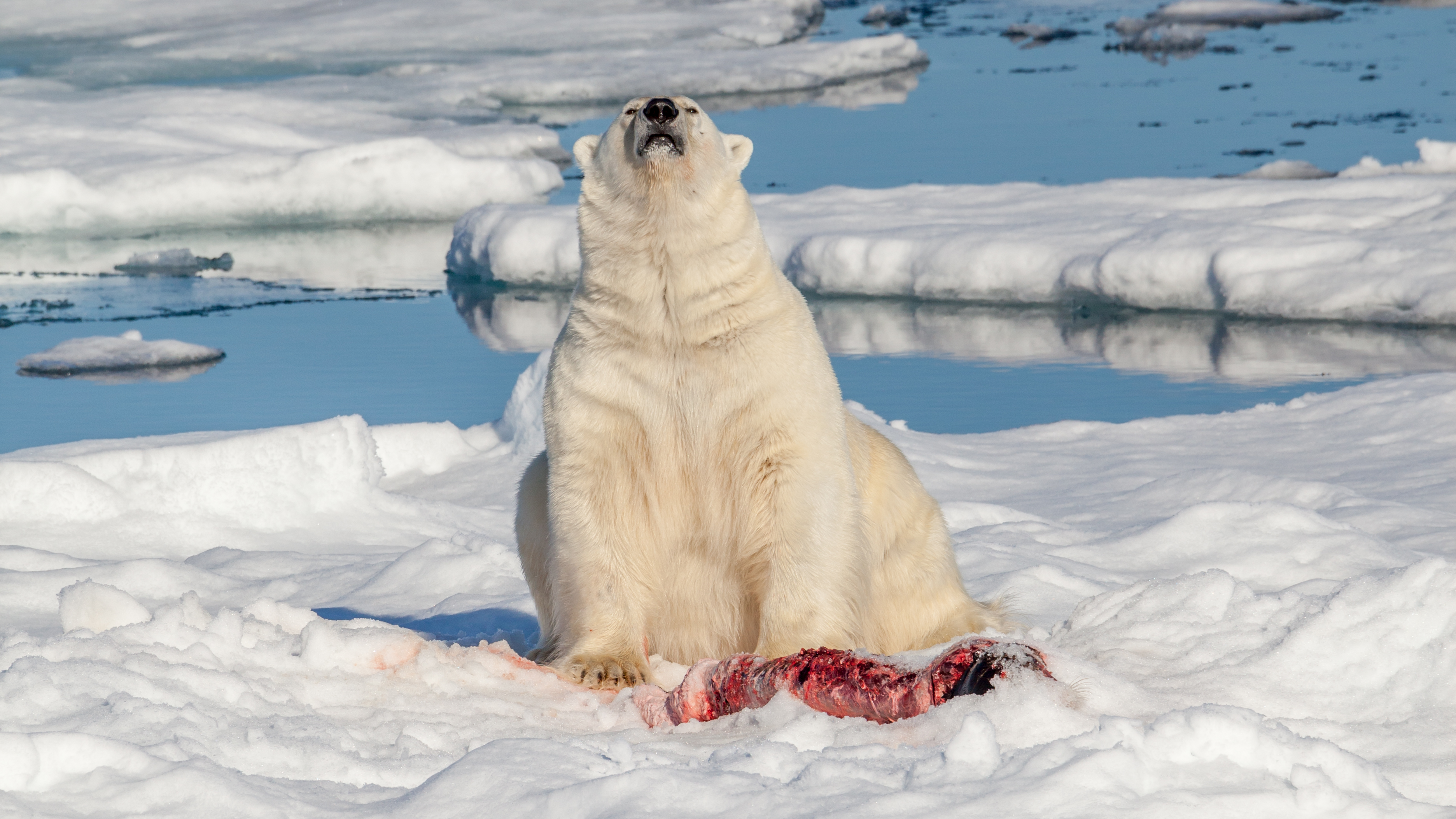
    As this is the case, we need to think about what it means for the Earth’s biodiversity. One of the most famous examples of the impacts of climate change on species are polar bears (Ursus maritimus). They only live in the Arctic, which is warming twice as fast as any other region of the world. There, polar bears live and hunt for seals on the ice shelves. Due to higher temperatures, the ice melts and the bears quite literally lose their home and their hunting territory, easily becoming undernourished and sick. To add insult to injury, Arctic warming makes the huge oil and gas fields under the ice more accessible, so that some countries and companies have started exploiting the Arctic. As Greta Thunberg would say, “How dare you?“.

    Polar bears are just one example to illustrate how a species is affected by climate change. Of course, its impacts vary between ecosystems and species, and a polar bear has different challenges to an alpine plant or desert mammal.

    Polar Bear. Creative Commons, author: Andrea Weith.
    Polar Bear eating a seal. CC BY-SA, author: Andrea Weith.

    It has become common for biologists to make predictions on how a species will react to climate change. Historically, only the current climatic conditions of a species’ home range were used to simulate how that range could shift with climate change. Those predictions are then used to inform conservation decisions, which is why it is important that they are as accurate as possible.

    Unfortunately, those conservative models lack a lot of information. If we think back to the polar bears, losing its habitat and hunting range hugely impacts the species, but other associated factors also will influence how they fare in the future. For example, it is predicted that the higher energetic costs of hunting due to climate change will impact female reproduction, and reduce the number and size of healthy litters. Modelling a population with its current demography (its reproductive, survival, and mortality rates), can lead to unrealistic projections, because it doesn’t account for possible future changes to it.

    A study by Urban and multiple colleagues, including Lincoln University’s William Godsoe, looked at ways to improve the accuracy of biodiversity predictions in the face of climate change. They found that including just six biological factors would drastically improve the accuracy of models. Data on the demography of the species, its interaction with other species, its evolution and responses to environmental changes can strongly affect modelling results. So can information on how good it is at dispersing (spreading) as well as its physiology (bodily functions). However, though it may sound easy to include those factors, we lack this data for most species. It is always a challenge trying to make predictions more accurate but lacking data to do so.

    A few strategies can be used to make up for this lack of data. For example, one could focus on modelling the future of keystone species, those that have a more important impact on their environment than others do. Or, researchers could focus on species that are supposedly more sensitive to climate change than others, because if we protect those, others likely also would benefit.

    Unfortunately, with our current knowledge, it is mostly a guessing game to know which species will survive the burden of climate change that we put on the Earth. Though progress has been made, and more integrative predictive models suggested, we still have many questions to answer. Which will be the modern equivalent of birds to the dinosaurs? Or of the crocodiles, reptiles and few mammals that survived the Chicxulub?

    Though predictions always have uncertainty, trying to make the models better by including more information is really important to help us better protect our rich biodiversity!

    This article was prepared by Master of International Nature Conservation student Leonie Kock as part of the ECOL608 Research Methods in Ecology course.

    M. C. Urban et al. (2016) Improving the forecast for biodiversity under climate change. Science Vol. 353, Issue 6304, aad8466. DOI:10.1126/science.aad8466

  • Finding a needle in a haystack: locating the short-tailed bat

    Most of us have been in the position where we’ve struggled to find something, be it your car keys, phone, or favourite pair of sunglasses. No matter how hard or long you search it just seems to elude you. One minute it’s there and the next it’s gone. You know it’s there, but where!! It’s an extremely frustrating feeling.

    This feeling is all too familiar to those scientists trying to monitor one of New Zealand’s bat species, the lesser short-tailed bat. These scientists would probably argue that finding small bats in a large forest has a few more challenges than searching for your car keys at home.

    Lesser short-tailed bat, Photo credit: CC-BY-4.0 Department of Conservation (NZ), via Wikimedia Commons

    To make monitoring the lesser short-tailed bat a bit easier it would be useful to know which parts of the forest they prefer to visit. Jessica Scrimgeour, Laura Molles, and Joseph Was looked into which forest structure lesser short-tailed bats are most likely to be found in. The scientists pondered over whether these elusive bats are in the forest they’re monitoring but they just can’t find them, or are they not in the forest at all.

    Most lesser short-tailed bat monitoring in New Zealand has occurred at ground level. However, scientists were aware that these bats can and do fly in all levels of the forest, from way down low to way up high. Bats may be hard to find when you are repeatedly looking in the same spot in the forest.

    Hard beech forest (Fuscospora truncata) in Ecclesfield Reserve, Upper Hutt, New Zealand, Photo credit: Rudolph89, Public domain, via Wikimedia Commons

    Back in 2013 Scrimgeour (Department of Conservation), Molles (Lincoln University), and Was (University of Waikato) used automatic bat monitors (ABMs) in the North Island to investigate this. ABMs are sound activated recorders that collect bat echolocation calls. ABMs can be set at different heights in beech and podocarp forests. Generally speaking podocarp forests are made up of trees of varying heights with a thick understorey. Beech forests on the other hand are made up of different beech tree species of a similar height, with a more open understorey.

    Lesser short-tailed bats prefer to fly through forests that have minimal clutter, or are the most open. ‘Clutter’ refers to, among other things, the amount of branches, leaves, and tree trunks that hinder the bats flight and echolocation.

    Echolocation is the bats way of navigating. It works by bats sending out sound waves that hit surrounding objects and then bounce back to the bat allowing the bat to orientate itself. In a cluttered forest the objects are very close together, which means that the bats are still sending out sound waves at the same time sound waves are bouncing back. Returning sound waves become challenging to interpret and can interfere with tasks such as orientating and finding food.

    Initially the group thought that a more cluttered forest would attract more bats, as clutter might mean an increase in biodiversity, with better quality food available. Even if the cluttered forest had the most food, which for bats is insects, they preferred to take the path of least resistance. Navigating through dense forest is just hard yakka, requiring too much energy. No surprises there, who doesn’t take the path of least resistance?

    Podocarp forest west of MacKay hut on the Heaphy Track, South Island, New Zealand, Photo credit: Pierre Lavaura, Public domain, via Wikimedia Commons

    Lesser short-tailed bats are very committed to taking the path of least resistance and even change the height they fly at depending on the type of forest they’re in. In the beech forest, bats spent the most time flying in the bottom tier of the forest, as this part was the least cluttered. In podocarp forest, bats spent most of their time flying in the least cluttered middle tier of the forest.

    As New Zealander’s we like to think that we are different to the Aussies across the ditch, but our bat species don’t quite think the same. The trans-Tasman bats are actually very similar to each other. Other research on bats in Tasmania found that bat flying activity is greater when the forest is more open. So I suppose you could say that the Tasmanian bats are a bit lazy like our bats, or they behave optimally!

    The results from this 2013 study have also been backed up in subsequent research in New Zealand. This research found that in urban and rural settings long-tailed bat activity was also effected by vertical airspace and horizontal microhabitats.

    For those on the lookout for bats this study has helped with deciding where to place monitoring devices for more robust monitoring programmes. Finding that needle in the haystack has just a little bit easier.

    Lesser short-tailed bat, Photo credit: CC-BY-4.0 Department of Conservation (NZ), via Wikimedia Commons

    What’s been happening with monitoring programmes for bats since 2013? Well, it turns out quite a lot. Acoustic monitors are now used instead of ABM’s. These monitors are basically microphones that record bat echolocation calls as they fly past the monitors. More research has gone into where bat activity is likely to be the highest to further help in the placement of acoustic monitors.

    This new knowledge has definitely paid off with the exciting recent discovery of a population of the lesser short-tailed bats in the lower North Island. It was thought that the lesser short-tailed bat was extinct from the Pākuratahi forest, Upper Hutt, because bats had not been detected there for a very long time. It just goes to show that just because you haven’t detected something doesn’t mean it’s not there. Sometimes you just need to look a bit harder or, at least, a bit smarter.

    Scrimgeour, J. Molles, L., & Waas, J. R. (2013). Vertical variation in flight activity of the lesser short-tailed bat in podocarp and beech forest, Central North Island, New Zealand. https://researchcommons.waikato.ac.nz/server/api/core/bitstreams/fe6c95f0-a86d-408b-a6b4-cbc112a24865/content

    This article was prepared by Postgraduate Diploma in Applied Science student Anna Gardiner as part of the ECOL608 Research Methods in Ecology course.