Category: invasive species

  • The genetic mystery behind “clonal” plants

    The genetic mystery behind “clonal” plants

    Hey plant lovers! Let me share something incredible with you about the plant world. Some clever plants have discovered a super cool way to multiply without needing seeds or pollen from other plants. It is called apomixis. Think of it as nature’s way of letting plants create mini-me versions of themselves. These amazing plants can thrive and spread their families far and wide, even when life throws them some challenges.

    Want to meet one of these botanical wonders? Say hello to Pilosella, which includes the common hawkweed. These remarkable plants are not just special because of their unique family-growing style, they also teach us lessons about how plants adapt and stay strong when their world changes around them.

    Apomixis: Nature’s Reproductive Shortcut

    In Pilosella, scientists found that this cloning trick is actually controlled by three special gene regions, kind of like switches on a circuit board:
    Switch 1: LOA – avoids meiosis, the normal gene-splitting step,
    Switch 2: LOP – avoids fertilisation, so eggs grow into plants without needing pollen,
    Switch 3: AutE – lets the plant build the food-filled tissue (endosperm) that supports the developing seed.
    Together, these three “super switches” turn regular sexual reproduction into a smooth, pollen-free process.

    The LOP locus: the key to clonal reproduction

    Let’s zoom in on one of those switches: the LOSS OF PARTHENOGENESIS locus, or LOP. It’s the part of the genome that tells the plant, “Hey, go ahead and make a seed, even without any pollen.” That means the egg cell doesn’t need fertilisation to start developing into a full plant.

    Using some clever genetic detective work, Ross Bicknell (former Plant and Food scientist), Chris Winefield (Lincoln University), and five other researchers mapped this LOP region to a small section of the genome, 654 thousand base pairs long (which is small, considering plant genomes can be billions of bases in total length). They did this using a special technique involving polyhaploids — basically, plants that carry only a single set of chromosomes, which helps make genetic signals easier to read.

    The role of the PAR gene and jumping DNA

    One especially interesting gene in the LOP region is called PARTHENOGENESIS, or PAR for short. This gene is a key player in apomixis, and it shows up in other plants like dandelions, too.

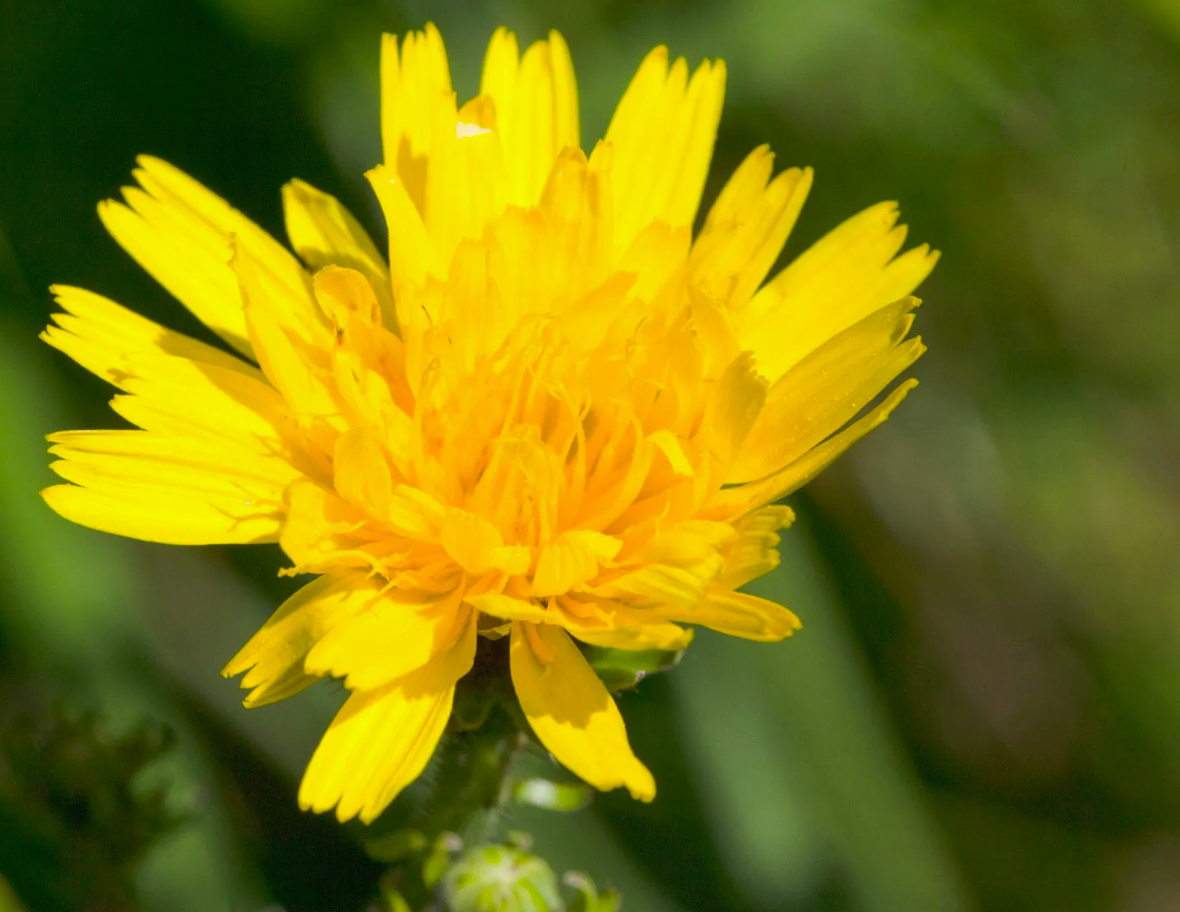
    Dandelion flower (left) and a seed head (right). From learn.colincanhelp.com/know-your-weeds-dandelions/

    Here’s where it gets wild: scientists found that the active version of PAR (the one that triggers cloning) carries a little hitchhiker — a transposable element, or “jumping gene”, stuck in its promoter region (the bit that controls when the gene turns on). This jumping gene acts like a sneaky switch that flicks PAR into high gear, telling the plant: “Start cloning!”

    Even cooler? This transposable element-based activation seems to have happened independently in different plant groups — dandelions, hawkweeds, and their cousin Hieracium all show this trick, but with slightly different transposable elements in different spots. It’s like nature reinvented the same superpower in different ways, a phenomenon known as convergent evolution.

    So, are these plants just cloning machines?

    Not quite! For a while, scientists thought apomixis might be an evolutionary dead-end — after all, if you keep making copies of yourself, you might miss out on helpful mutations or adaptability and you steadily pick up flaws that you can’t get rid of. But Pilosella proves that’s not always the case. These plants can reproduce both ways: by cloning or by mixing genes with other plants. That means they can pass on their tried-and-true genetic blueprints or shuffle the deck when times get tough.

    In nature, this flexibility is a huge bonus. It lets them survive droughts, colonise poor soils, and hang in there when pollinators are scarce, and still adapt to new environments when needed. It’s the best of both worlds.

    Why this matters for the environment

    These clever plants are like nature’s survivalists. Their ability to reproduce without pollination means that they can spread quickly, especially in harsh places like dry grasslands or alpine meadows.

    But here’s the twist: sometimes they’re too good at it. In places like New Zealand, hawkweeds can become aggressive invaders, crowding out native plants. My own mother, for example, considers them total pests in her lawn!

    Scientists want to understand the genetic switches behind apomixis (like the LOP locus) to figure out how to manage or even control these fast-spreading plants, or perhaps one day harness apomixis for crop breeding.

    What this means for the future of plants and food

    Building on our exploration of the Pilosella plant and its unique LOP locus, let us dive into how plant genetics deepens our understanding of the natural world. As scientists examine these complex genetic blueprints, they uncovered valuable insights about:

    • How our green friends cleverly adapt to our changing climate
    • The super-smart ways that plants figure out how to survive and flourish in tough spots
    • Cool possibilities for helping crops grow better, even when the weather gets tricky

    But wait, there is more! This exciting research is not just about one plant, it is opening doors to better farming methods, helping protect our precious plant species, and finding clever ways to help plants weather the storms ahead.

    Let’s wrap this up

    Our exploration of Pilosella and its powerful LOP locus shows that even a so-called “weed” can teach us big lessons about evolution, resilience, and the future of farming.

    So next time you’re out for a walk and spot a humble hawkweed or dandelion, take a second look — you’re staring at a tiny miracle of plant reproduction, a living clue in one of nature’s greatest puzzles.

    This article was prepared by Bachelor of Science with Honours student Sienna Zeng as part of the ECOL608 Research Methods in Ecology course.


    References

  • Kiwi Hedgehogs : A Journey of Curiosity and Connection

    Kiwi Hedgehogs : A Journey of Curiosity and Connection

    Curiosity often starts with a sense of wonder and a desire to understand the world around us. If you are a parent, I hope you have noticed and observed this in your children. Their endless questions and fascination with the world are a beautiful reminder of the joy and excitement that comes with learning and discovery.

    I have four lovely daughters, among them four-year-old Arshifa Gul is a bundle of curiosity and always gives me a tough time replying to all her unexpected questions. She also loves watching animated movies, stories and travelling. Back in 2023, I took her to the Pakistan Museum of Natural History for the first time. She was shocked by seeing the animal models and skeleton structures, especially the huge dinosaurs and their roaring, Asiatic lions and their growling, and the realistic models of sharks and dolphins. At first, she was quiet, observing closely, making sure they couldn’t attack. Then, her surprising questions began. “Why is the dolphin here? Who made the dinosaur roar? How did they get so big? When did they live?”

    As a wildlife biologist, I’ve worked with animals for years, but her questions confused me! It was the first time that I struggled to explain my own field. Her curiosity pushed me to think deeper and find ways to explain complex concepts in simple terms. Our trip ended but Arshifa Gul’s questions did not. Her curiosity shifted to linking the roars and growls to the human voice of the animals she heard in the animated movies


    AI-generated image (Grok) of Arshifa Gul standing in awe before a towering dinosaur skeleton in a museum, her eyes wide with wonder, surrounded by animal models like lions and dolphins.

    The next morning at breakfast, Arshifa Gul excitedly shared her thoughts about the characters from her favourite animated movie, “Allahyar and the Legend of Markhor”, set in Pakistan. She talked about the boy Allahyar and his animal friends, then asked where these animals lived, how big they were in real life, what their calls sounded like, and if we could visit them. I said yes we could, but explained that Khunjerab National Park, home to the markhor and snow leopard, was seven hours away.


    Landscape of Khunjrab National Park, Pakistan © Nisar Ahmed

    Her curiosity turned our breakfast into an adventure planning session. I gathered information on the park’s history, species like snow leopards, ibex, and Marco Polo sheep, and conservation efforts, including a trophy hunting program initiated by IUCN and WWF. 80% of the total benefits from this hunting initiative goes to the local communities while the remaining 20% is invested in habitat protection and improvement.

    We visited the site, and she enjoyed the trip thoroughly and I answered most of her questions and her confusion cleared regarding voices and the original habitat of different species. Answering her is always tough, but it makes me see the world through her bright, wondering eyes, full of love for animals. She makes me realise how important it is to nurture this curiosity, not just in her, but in all children.

    Curiosity is a powerful force that drives us to explore, learn, and grow. Arshifa Gul’s curiosity inspired me to write about the introduction of European hedgehogs into New Zealand. The European hedgehog, also known as the West European hedgehog, is a charming little creature native to Europe.

    Hedgehogs can live in a variety of terrestrial habitats and are mostly active at night. They have a slow, hesitant way of walking and often stop to sniff the air. Unlike other hedgehog species that 

    Hedgehogs have fascinated people for centuries. Their spiky charm has made them popular in history, from ancient amulets to modern pop culture icons, like Sonic the Hedgehog. Did you know that New Zealand is the only country outside Europe where European hedgehogs have successfully been established in the wild? This fascinating story of how these spiky little creatures made their way to both the North and South Islands of New Zealand is filled with twists and turns.

    Back in the 1869, acclimatisation societies in New Zealand introduced European hedgehogs to control pests. For a long time, it was believed that hedgehogs were first introduced to the South Island and later spread to the North Island. However, a molecular study in 2013 challenged this view and suggested that hedgehogs were independently introduced to both the islands directly from Europe. This means that the North Island had its own separate introduction of hedgehogs, rather than receiving them from the South Island.

    To uncover the truth, researchers from various universities, including Lincoln University, turned to historical records, especially old newspaper articles. They discovered that there were at least four independent shipments of hedgehogs into the North Island before 1900 (which were not documented in the first publication back in 1975). These findings confirmed that the North Island’s hedgehog population did not originate from the South Island. This study highlights the importance of combining observational data, molecular studies, and historical records to understand the introduction pathways of species.


    Hedgehog searching for food © Author

    The European hedgehog population thrived well in NZ, too well, as it has now become problematic for native wildlife. For example, they prey on ground-nesting birds and compete with native species for food. Leading conservationists have classified them as a pest, and the Department of Conservation New Zealand has launched a campaign to protect native species from hedgehogs.


    Arshifa Gul’s questions and the hedgehog share a common thread. Curiosity drives us to explore and learn. Whether it’s a child marvelling at a museum exhibit or scientists unravelling ecological puzzles, curiosity bridges wonder and action. It reminds us that conservation isn’t just about saving species—it’s about nurturing the spark that makes us care. As parents, educators, or stewards of the planet, or a teacher we can foster curiosity by encouraging, sharing stories, and exploring nature together by using interactive technologies.

    The author, Muhammad Waseem, is a postgraduate student in the Master of Science at Te Whare Wānaka o Aoraki Lincoln University. This article was written as an assessment for ECOL 608 Research Methods in Ecology.

    Reference: Pipek, P., Pysek, P., Bacher, S., Cerna Bolfikova, B., & Hulme, P. E. (2020). Independent introductions of hedgehogs to the North and South Island of New Zealand. New Zealand Journal of Ecology, 44(1), 3396. https://doi.org/10.20417/nzjecol.44.7

  • Pesty plastics: Removing a problem from wildlife management

    Pesty plastics: Removing a problem from wildlife management

    We often put up with bad situations because they stop something worse happening. This can be as big as having nuclear weapons to stop major wars occurring. Paying taxes is a burden but it keeps a society healthy and connected. Not eating so much chocolate seems wrong but will give you better long-term health.

    And then we have plastic. Plastic must rank as one of the most successful of human inventions. It can be used in myriads of applications, keeps foods hygienic for longer, and allows more people to have the luxuries of the modern world. Plastic also causes incredible waste and we are still learning about the ongoing and long-lasting impacts that occur from the breakdown of plastics into smaller and smaller molecules.

    One of the biggest shifts in day to day life over the last decade or so is the movement away from plastic where possible. Many countries have banned (or are banning) single use plastics. I would doubt that there is anyone unaware of plastics as an issue for our sustainable future.

    Plastic figures from Cthulhu: Death May Die! A great game with great plastic figures (but some guilt comes with it!). Image from Adrian Paterson.

    One of my hobbies is in collecting and playing board games. Historically there has been a lot of plastic in games. Lately, there has been a real effort by gaming companies to make as much as possible from cardboard and wood and to remove stuff like shrink-wrap. (Although I do love me some great detailed plastic miniatures some of the time. I try to add use by painting them. Unfortunately, there is still nothing quite as good for sculpting as plastic. Hopefully that will change (see this approach using mostly wood shavings as a building matrix called re-wood).)

    As we have mentioned many times on EcoLincNZ, we do a lot of research on vertebrate pest management, especially in monitoring and detecting mammals, like stoats, deer, possums, hedgehogs (even elephants and leopards). Controlling these pests is vital for conserving New Zealand’s endemic biodiversity. We are very good at doing this and improving all of the time. Unfortunately, we use a lot of plastic.

    Our tracking tunnels, chew cards and wax tags all have significant plastic components. Some of these are single use, some can be used a few times, but there are always some that get left in the environment. Also, many of the places that we are interested in monitoring are, by definition, in areas that have low human impacts and very little exposure to plastic. And here we are bringing the plastic there.

    Tracking tunnels are made of plastic. Typically they can be used multiple times but many are left in the monitoring areas. Image from Adrian Paterson.

    Now, you could argue that a few negatives of using a relatively small amount of plastic is far outweighed by the good that using these devices does. And you would be correct. But what if we could have our cake and eat it too?

    Katie Pitt is a PhD student at Lincoln University. She and her supervisors, James Ross and Adrian Paterson, have just published a paper in New Zealand Journal of Zoology where they question the use of plastic in wildlife management and ask whether we can do better.

    Katie looked at how much plastic is munched up by species, like rats and mice, when they interact with chew cards placed in various habitats. These bits of plastic remain in the rats and then the environment even if the cards are retrieved. The plastic fragments are also much reduced in size by the nibbling and can move around much easier, through wind, rain and rodent stomachs. The removed chew card will also end up in landfills.

    Katie found that chew cards in Canterbury and Taranaki typically left 15% of their volume behind in the environment as nibbled bits. Given the scale of monitoring throughout New Zealand this can quickly add up to a lot of plastic in areas that typically have no plastics.

    A well nibbled chew-card. All that missing plastic is now on the forest floor or in the faeces of rodents. Image from Katie Pitt.

    There may be an alternative. Katie tested some new chew cards made from wood pulp, and so fully biodegradable. Of course we don’t want to use a product that is inferior to what we already use, especially for something as important as protecting our biodiversity. Katie tested the use of wood pulp chew cards alongside plastic models. She consistently found that they performed just as well in a range of conditions (including with a lot of rain!). Katie also found that prices per chew card were similar with scope for the wood pulp cards to eventually become cheaper.

    Is this a problem that people want to solve? Katie asked individuals from 30 organisations that work in pest monitoring and found that 97% were keen to move away from single-use plastics, as long as there was no major reduction in functionality and cost.

    So we have a problem, people want to solve this problem, we have an alternative, and this alternative seems to work as well as what we already have. Eat that cake and have it as well!

    There is still a bit of work to do to scale this up to the levels that we need if this is to replace the status quo. Katie is also looking at how we would replace tracking tunnels. But the future is looking bright. And plastic-free.

    Adrian Paterson is a lecturer in the Department of Pest-management and Conservation at Lincoln University. As a Twin Peaks fan from way back, he really wanted to use “She’s dead, wrapped in plastic” in this article.

  • Enemies with benefits

    Enemies with benefits

    The idea of ‘friends with benefits’ is reasonably widespread and understood. Having good interactions with others will often lead to even more productive outcomes. But what about ‘enemies with benefits’? Are there times where your enemy can give you some positive benefits?

    Invasive species cause ecological harm worldwide, threatening biodiversity, disrupting nutrient cycling and displacing native species. Pacific islands, with their characteristically high rates of endemism, experience out-sized effects from plant invasions (Bellard et al. 2014). In biodiversity hotspots, such as New Zealand, exotic invasive plant species now outnumber native species in area and in number.

    But, how do they do it?

    New Zealand habitats are prone to invasion by exotic plant species. Why is this?

    A study by Lauren Waller and other Lincoln University and University of Canterbury colleagues, published in Journal of Ecology attempts to find some answers. Lauren shows that exotic plants may gain their competitive edge by accumulating enemies in the soil and sharing them with neighbouring native plants, a phenomenon that plant ecologists call pathogen spillover.

    Lauren set up a large mesocosm (self-contained area) experiment. These were areas where new species could be added to a known group of native species in a very manageable process. The health and growth of all plants could be measured and microorganisms both present at the start and brought in on the introduced plants could be identified.

    Lauren expected exotic plants to experience improved growth due to escape from pathogens (leaving the burden of enemies behind when they come to NZ). This assumption comes in large part from two well-known hypotheses, the Enemy Release Hypothesis and the Evolution of Increased Competitive Ability (EICA) Hypothesis. Enemy Release states that exotic plants can gain incredible success when they move to a new location lacking the enemy pressure they experienced in their home range, particularly co-evolved specialist enemies. EICA goes a step further to suggest that if exotic plants can escape enemy pressure in their new range, those plants will have more resources to allocate to growth over defence.

    Somewhat supporting Enemy Release, exotic plants did not appear to suffer much from specialist fungal pathogens. However, exotic plants did associate with generalist pathogens. Also, in support of Enemy Release, exotic plants did not appear to allocate resources to defence. Instead, exotic plants appeared to tolerate generalist pathogen pressure without reducing their growth.

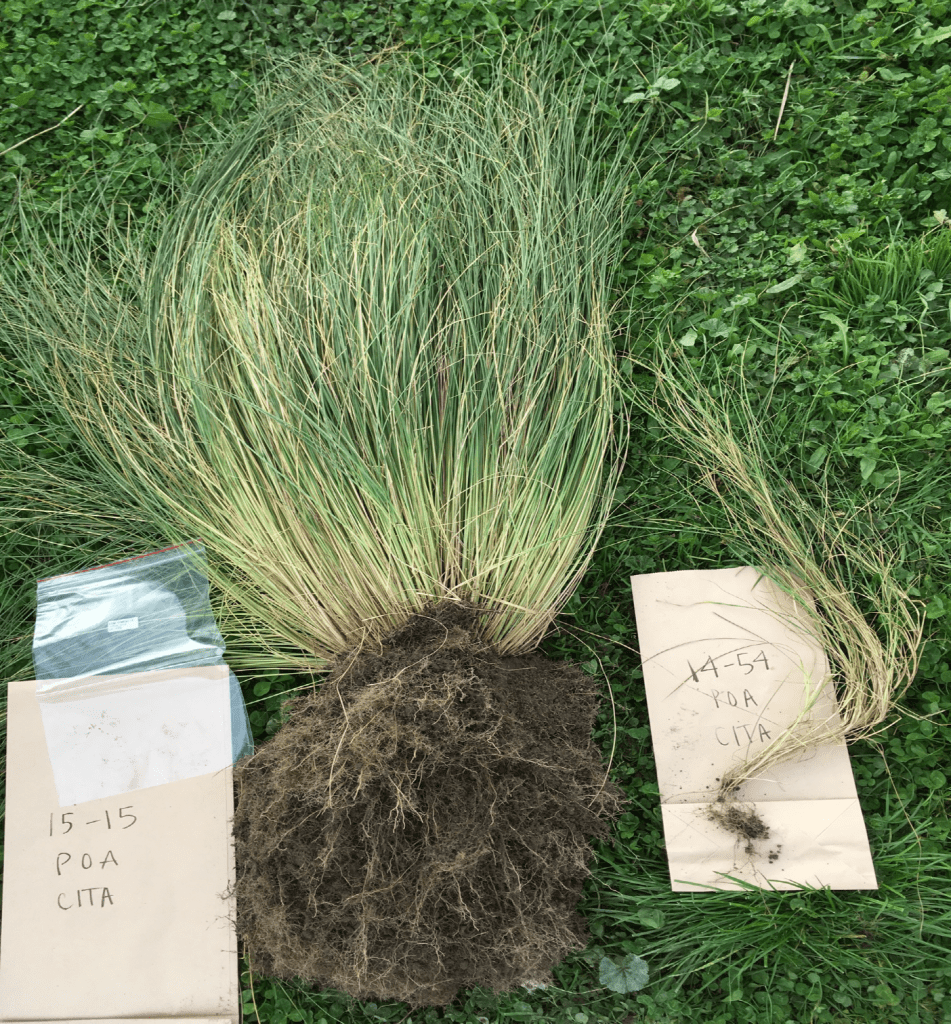
    Native Poa grown in a native versus exotic dominated plot.

    Lauren did not expect to see big impacts by exotic plants on native plants, and boy, did they! Native plants just wasted away when grown with exotic plants. It was very sad to watch. This photo shows an example of a native bunch-grass, grown with all native neighbours (left) or in communities dominated by exotic plants (right).

    What explained the out-sized effect of exotic plants on native plant growth? Our network analysis showed that exotics not only accumulated and tolerated generalist pathogens, but they shared their pathogens with native plants. Native plants did not appear to have the same tolerance for this enemy pressure like the exotic plants did. 

    We started by asking ‘are there times where your enemy can give you some positive benefits?’. It turns out that yes there are times when your enemies can help you a lot. In this case if species cause you problems it will be OK for you if they cause competing species even more problems! With invasive species, your microbial enemies can do you a good turn but taking out the opposition.

    Now that’s a real enemy with benefits!

    Lauren Waller and Adrian Paterson wrote this together (and not as enemies!). They are lecturers in the Department of Pest-management and Conservation.

    Bellard, C., Leclerc, C., Leroy, B., Bakkenes, M., Veloz, S., Thuiller, W., & Courchamp, F. (2014). Vulnerability of biodiversity hotspots to global change. Global Ecology and Biogeography23(12), 1376-1386

  • Echoes of misunderstanding: Invasive species or welcome guests?

    In a new age of ‘fake news’, the exponentially growing ChatGPT, and being talked at by your climate change-denier uncle at the dinner table, how do we know who to trust? Well, the scientists obviously. But what happens when the scientists get it wrong?

    An article released in January of 2024 “Systematic and persistent bias against introduced species” by Patricio Pereyra and colleagues, ruthlessly called out conservation biologists for demonstrating a bias against introduced species. Researchers were accused of shedding a negative light on introduced species no matter their taxonomy, habitat, time of introduction, and regardless of their attributed harm.

    Photo: Amelia Geary / Design: Archi Banal

    Pereyra speculated that the invasion of zebra mussels in North America had a strong impact on the establishment of the bias. Most cases of negative framing in publications were from North America.

    A month later, a counterargument article, led by Dan Simberloff and including Phil Hulme from Lincoln University, was submitted to the same journal. This response tore Pereyra’s article to shreds. For example, there is so much more published material labelling invasive species as harmful simply because most research is driven by funding to deal with harmful species.

    The “guilty until proven innocent” was seen by Pereyra as a bias, whereas Simberloff argued that it was the safest approach. Better to prevent outbreaks first rather than assume innocence and scramble to clean up the mess later.

    The validity of Pereyra’s research methods was also called into question. In their assessment of 300 publications, Pereyra and colleagues based their assessments on only the introduction of each paper, the section where no current research is reported. Pereyra stated that no non-native species have caused any type of extinction, by citing a study that only assessed their impact on native plants. This would be news to those in New Zealand dealing with the impacts of introduced mammalian predators. In addition, all of the assessments made in this article were made by two authors, with a third brought in when those two disagreed.

    Photo: Author

    Pereyra and colleagues continued to selectively use evidence that matched their hypothesis by making continual reference to the ‘tens rule’. This states that only 1% of non-native species will become pests. As more research on more diverse taxa was undertaken, this rule became a misleadingly low estimate. In fact, it is estimated that 50% of invasive vertebrates lead to harm. So while modern conservationists are able to recognise that the tens rule is outdated, the average person reading at home will not.

    This is just a tiny example of a much larger problem science is facing right now; the power of a harmful narrative in science and its implications for the general public. The science world has been struggling for a while now with issues like P-hacking (selecting data analyses that produce results aligning with their hypothesis), fraudulent scientific papers making it to publication (fabricating research that has not taken place to boost career accolades and experience in industry), and like the mentioned article, lack of rigorous scientific procedure.

    False science can turn certain areas of science into a debate to be had by those who are not fully equipped enough to have it. By now I believe just about everyone in the Western World knows about the reports that vaccines cause autism, an idea that originated from two academic physicians in the 1950s.

    Image: outtacontext

    Over 70 years later there is a massive group of people who still believe this to be true, despite countless modern scientists disproving this idea. Not only do scientists have to conduct research to further the field, they now have to spend countless years using countless resources trying to prove to the public that the beliefs they are so desperately holding on to are, in fact, not accurate.

    While the article accusing scientists of holding a bias against non-native species may not have such a wide reach as the vaccine debacle, it does have the ability to change the minds of people. It can change the environmental beliefs they hold, the way they look at conservation, and the future research they conduct, as well as aligning with their personal beliefs outside the world of science. It creates issues that would otherwise not have arisen; spreading misinformation, fostering unwarranted skepticism, and contributing to the polarisation of environmental issues.

    For example, the Pereyra paper could cause shifts in perception, such as questioning established ecological principles, potentially undermining conservation efforts aimed at preserving native biodiversity. This can have a ripple effect, influencing policy decisions, funding allocations, and public support for important conservation initiatives. While openness and debate in the scientific community is important and should be encouraged, you simply have to get your facts right.

    So again I ask, what happens when even the scientists get it wrong? Actually, it happens all the time. Trial and error are the engine of science! Scientific theories are tested to be disproven to ensure we actually have a full understanding of whatever it is we are studying.

    People at home can also look to disprove scientific theories. Pay attention to the transparency of the method and study size, credibility of sources, and citations from reputable journals and research institutions. It may not save your life, but it will save you from a lifetime of ill-informed conversation around the dinner table. You don’t want to be that relative.

    This article was prepared by Master of International Nature Conservation student Alexandra Paish as part of the ECOL608 Research Methods in Ecology course.


  • Sonic science to eradicate the hedgehog

    Helpful gardeners or destructive beasts? Hedgehogs could be the last thing standing in the way of restoring native wildlife.

    Most New Zealanders are aware of the current predator problem, with possums, rats and stoats taking the cake for the biggest pains, but what about cute little hedgehogs? Are they really as innocent as they look or are they discretely unravelling the very fabric of our treasured native wilderness? Some scientists went on a hedgehog hunt to find out.

    Now imagine the magnificent Ōtamahua: an 80 hectare island smack in the middle of the flooded volcanic crater of Lyttleton Harbour, completely uninhabited by people, but instead populated by some weird mini chickens with fancy hairdos. Back in the day, European explorers hadn’t decimated local wildlife populations yet, and the island was teeming with now extinct koreke New Zealand quails, inspiring them to call this place Quail Island.

    Quail Island is a recreation reserve run by the Department of Conservation (DOC) and is being restored to a natural landscape after being formerly farmed. In this programme, the Quail Island Trust and DOC teamed up with a plan to eradicate all exotic pest mammals from the island. Scientists were ready to restore the island to its original splendour by bringing back native insects, lizards and birds, but one thing could be standing in the way of this; the island is dominated by European hedgehogs, and they’re not going down without a fight.

    Photo by Flickr user nutmeg66 CC BY-NC-ND 2.0

    So what’s the deal with hedgehogs? Everyone seems on board with killing every invasive pest mammal out there like it’s a glorified action movie. Oddly, people tend to feel very differently about these freaky little spike balls. Unlike other mammals that were introduced in New Zealand, people love them. This is because they can be seen helping around the garden, happily munching on slugs and snails, which are considered pests. But it’s difficult to understand exactly how these slug-munchers are impacting native wildlife, all we know is that we have gravely underestimated them.

    What else is on the dinner menu for these hedgehogs? Aside from the snails and slugs in your garden, they enjoy eating native beetles of all sizes, with a side of millipedes, and then moth larvae and earthworms for dessert. Some have even developed a taste for weta. Hedgehogs also snack on lizards and the eggs and chicks of ground-nesting birds. The hedgehogs are hungry and this is a bad situation for these vulnerable species.

    In the distant future, the year 2000, researchers from Lincoln University decided to go to war with the hedgehogs. They did so using their most powerful weapon of all: science and the pursuit of knowledge. They tested their techniques on local hedgehogs before heading into battle on Ōtamahua Quail island. The scientists discovered that they could entice the hedgehogs with a feast of their favourite foods. They tested baits like “kitekat chunky fish cat food” and quail eggs.

    (It is worth noting that while the original quail island quails went extinct, they were replaced by introduced California quails, which is convenient because the island didn’t have to renamed.)

    Once the scientists got to Quail Island and came face to face with these adorable monsters, they realized that unlike other invasive mammals, hedgehogs were pretty chilled out. They didn’t mind being caught and released again, which meant that it would be possible to remove them from the island without bloodshed. At this point, the animal rights activists may be cheering and the conservationists may be booing. Not killing them means putting them somewhere else. Instead of removing the problem, we are just relocating it.

    Photo of Ōtamahua Quail Island by Jon Sullivan CC BY-NC 2.0

    So the Lincoln researchers got to work running around the island, setting up 53 hedgehog traps. Since there was actually no such thing as a hedgehog trap at this point, they used their smart brains and decided to use traps for other pests which were known to catch hedgehogs by accident. The systematic trials led the scientists to the conclusion that one of the most effective baits for catching hedgehogs was something called “Chunks of Tasti Dinner Dog Roll”. You just can’t make this stuff up. Cat food and peanut butter were similarly popular among hedgehog audiences but surprisingly, quail eggs were not!

    Here’s the bad news: hedgehogs had made themselves at home across every kind of habitat on the island. Also, the number of hedgehogs being caught each night didn’t decrease over the course of the 11-day study, leading the scientists to conclude that there were far more hedgehogs on the island than they had previously thought.

    The baited traps were placed across all habitat types on the islands, but had much less success around pine and macrocarpa forests. The traps had the most success in catching hedgehogs in grassy and scrubby areas. Could this be the hedgehog headquarters?

    This research provided some important insights into the possibilities of eradicating hedgehogs. They figured out which food is preferred and which types of cages work best. They found that the hedgehogs didn’t hang out in pine and macrocarpa forests as much because there weren’t as many insect snacks for them in there.

    Quail Island in the centre. Image from Adrian Paterson.

    This study found that live trapping hedgehogs is possible but it is inefficient. The project took 75 hours of work and only managed to remove 24 hedgehogs, that’s 3 hours per hedgehog! The scientists suggested switching to lethal traps because these Houdinis are clever masterminds and they could be escaping from the live traps.

    Are there other options? Some have suggested recruiting the help of our best friends, dogs. On another island, dogs were used to find and kill possums. Hedgehogs are smelly and hunting dogs can find them easily without even being trained. The only caveat is that dogs do have to be trained to ignore other species, especially native birds like the precious little white-flippered penguin, another resident of Quail Island.

    On the mainland of Aotearoa New Zealand, hedgehogs were found in densities of 5 hedgehogs per 1 hectare of land (which is the size of 2 rugby fields). This is probably not the case on Quail Island because it is so dry, but nonetheless it will take a lot of effort to remove these destructive little creatures.

    This is one case study for the eradication of hedgehogs. While the current focus is on eradicating other predator species, may this serve as a warning that we can’t forget about the humble hedgehog when we talk about predator control.

    This article was prepared by Master of International Nature Conservation student Lindsay Wood as part of the ECOL608 Research Methods in Ecology course.

    Research Article Source: Kavermann, M., Bowie, Michael H., Paterson, Adrian M. (2003) The eradication of mammalian predators from Quail Island, Banks Peninsula, Canterbury, New Zealand. Lincoln University Wildlife Management Report series. https://hdl.handle.net/10182/683

  • Creeks spread invasive herbs in New Zealand

    Invasive plants can have a devastating impact on our natural environment.

    What are invasive plants? Put simply, they are non-native plants that spread rapidly within New Zealand and pose a significant threat to ecosystems, agricultural production, or human health. It sounds awful.It is even worse than it sounds.

    Lodgepole pine (Pinus contorta) CC BY by Chris Schnepf, University of Idaho, Bugwood.org

    Invasive plants pose a threat to natural ecosystems as they are often highly competitive compared to native plants. Invasive species also spread rapidly to take over the living space of native plants, alter ecosystem structures, and reduce biodiversity.

    Many exotic plants are invasive, such as lodgepole pine (Pinus contorta) and Scotch thistle (Cirsium vulgare). Invasive plants change the composition of plant communities and affect food webs and ecosystem balance. For example, the introduction of eucalyptus alters soil chemistry and moisture content, affecting the survival of other plants and animals (Mengistu, 2022).

    Invasive plants also impact agriculture and grazing and can cause massive economic damage. Scotch thistle (Cirsium vulgare) can quickly spread and take over farmland, reducing crop yields. Unpalatable invasive plants can compete with pasture grasses, reducing the area of grassland available for grazing and affecting livestock husbandry (Massey Universy).

    Scotch thistle (Cirsium vulgare) CC BY by John Barkla,  

    Some exotic plants are harmful to human healthy, like Giant Hogweed (Heracleum mantegazzianum),  which can cause third-degree burns and even blindness by simply touching it!

    Knowing how invasive plants spread can help us to control them effectively. A study conducted at Lincoln University in 2013 focused on whether creek habitats are a source of spread for these invasive plants.

    Researchers from Lincoln University (Alice Miller and colleagues) studied Hieracium lepidulum (Asteraceae), an invasive herbaceous plant that has proliferated in the South Island in recent decades. It now occurs in a wide range of upland habitats, from improved short tussock grasslands, to intact beech forests, to alpine herbaceous fields. Hieracium is a more shade-tolerant relative of the widespread pasture hawkeed.

    Historical data suggests that Hieracium is common in naturally disturbed habitats, such as stream edges and forest canopy gaps. Alice selected creek catchments in the area with the longest known history of  H. lepidulum invasion in New Zealand:  Craigieburn Forest Park on the eastern side of the Southern Alps, Canterbury, New Zealand. She surveyed 1,144 spots along 17 creek catchments.

    Giant Hogweed (Heracleum mantegazzianum). CBS News

    Alice and colleagues found that creek habitats (e.g., stream edges and disturbed areas) play an important source role in the dispersal of H. lepidulum. These areas tend to be subject to more natural and human-caused disturbances, which provide a suitable growing environment for  H. lepidulum, and contribute to its rapid reproduction and accumulation in these areas.

    The high resource availability and frequency of disturbance at stream edges allow H. lepidulum to colonise and spread rapidly. Disturbed areas, such as forest clearings and trail edges, provide similarly favourable conditions. Stream habitats provide connected linear dispersal paths that allow H. lepidulum to spread rapidly along streams and from there into neighbouring areas.

    The dispersal patterns of H. lepidulum in forests and subalpine areas were found to differ. In forests, the dense canopy and ground vegetation form a natural barrier to the spread of this plant. As a result, the density of H. lepidulum in forests decreases rapidly with increasing distance from creeks, except in areas with higher light availability, such as tree-fall gaps.

    Forested areas near creek edges remain vulnerable to invasion. In contrast, in subalpine habitats, H. lepidulum density declined more gently with increasing distance from creeks. This suggests that these areas are less restricted to seed dispersal corridors and more susceptible to invasion.

    Location of study area with the 17 surveyed creeks in bold and indicated by an asterisk. From Google Map

    The study also found that multiple environmental variables had an effect on H. lepidulum abundance, with dense canopy cover reducing light and inhibiting its growth. Areas closer to stream mouths were usually more frequently disturbed and H. lepidulum abundance was relatively higher. Higher elevation areas pose a challenge to H. lepidulum growth due to harsher climatic conditions, but the invasion is still significant in subalpine areas. Disturbances, such as human activities, increase the chances of reproduction and dispersal of H. lepidulum.

    Alice provided several recommendations for managing and conserving areas affected by H. lepidulum. First, she suggested prioritising efforts to limit the spread of this invasive plant by reducing disturbances in the environment and using biological control methods. Second, she recommended setting up monitoring systems in vulnerable subalpine habitats to detect and control H. lepidulum early and prevent it from forming large populations. Finally, while disturbances are natural in these ecosystems, it is important for managers to consider the additional impact of human activities, such as building roads and trails, which can exacerbate the invasion, especially in subalpine areas where the barriers to invasion are lower.

    Hieracium lepidulum Stenstr. (Asteraceae).CC BY by John Barkla

    Through this study, we have gained valuable insights into the dispersal patterns and environmental impacts of the invasive plant H. lepidulum. This hardy invader tends to thrive along creek margins and in disturbed areas, making these locations hotspots for its spread. It is our responsibility to protect these pristine landscapes from invasive species.

    If you’re hiking in New Zealand’s stunning mountains, keep an eye out for those little H. lepidulum spreading on the sly. Let’s be the guardians of nature and protect this pristine land from these “little invaders” that are taking over our ecosystem.We can help preserve the natural beauty and biodiversity of New Zealand’s ecosystems, ensuring that these “little invaders” do not take over and disrupt the delicate balance of our environment.

    This article was prepared by Master of Pest Management postgraduate student Hao Zhang as part of the ECOL608 Research Methods in Ecology course.

    References:

    Mengistu, B., Amayu, F., Bekele, W., & Dibaba, Z. (2022). Effects of Eucalyptus species plantations and crop land on selected soil properties. Geology, Ecology, and Landscapes, 6(4), 277-285. https://www.tandfonline.com/doi/full/10.1080/24749508.2020.1833627

    Miller, A. L., Wiser, S. K., Sullivan, J. J., & Duncan, R. P. (2015). Creek habitats as sources for the spread of an invasive herb in a New Zealand mountain landscape. New Zealand Journal of Ecology39(1), 71-78. https://www.jstor.org/stable/26198696

    massey.ac.nz/about/colleges-schools-and-institutes/college-of-sciences/our-research/themes-and-research-strengths/plant-science-research/new-zealand-weeds-database/scotch-thistle/

    https://www.cbsnews.com/news/giant-hogweed-plant-causes-blindness-third-degree-burns-discovered-in-virginia-other-states/

  • Invasive predators may alter the personalities of New Zealand’s native birds

    • A recent study published in the New Zealand Journal of Zoology suggests that introduced invasive mammalian predators are changing the personalities of native birds.
    • Researchers compared two populations of kakaruai/South Island robins in similar forest habitats, one from the predator free island of Motuara and one from the main island, where introduced predators are present.
    • In the experiment, robins from the main island were more shy and less bold when they could pick up presented food items close to the researchers.
    • This suggests that a selection pressure from introduced predators favours individuals that are less bold and more cautious, potentially shifting personality traits of individuals in populations under predation pressure in the long term.
    Petroica australis. (C) Copyright Maximilian Hanschmann - all rights reserved.
    Petroica australis in the Hawdon Valley (Arthur’s Pass). (C) Copyright Maximilian Hanschmann – all rights reserved.

    New Zealand’s robins are well known for their curiosity driven behaviour, but they are at risk and the populations are declining.

    The small birds only weigh 35g and can survive up to 17 years – given that they are safe from invasive predators.

    While still occurring on the main islands and doing better than many other species endemic to New Zealand, that evolved in the absence of any mammalian predators, the robins struggle to survive since several predatory mammal species have been introduced to New Zealand by humans.

    During their evolutionary history in New Zealand, the birds never needed to coexist with these predators and as such act in a naive way towards them, making them an easy prey for ship rats, possums, stoats, weasels and feral cats.

    Introduced predators are a big problem for robins, even if populations survived until now, they are struggling where predators are present, a fate they share with almost all remaining native bird species. Predators will prey on eggs, nestlings, fledglings and adult females in the nest, leading to skewed sex ratios, where there are many more males than females in the population. The risk of nest predation is seven times higher where mammalian predators are present, and the life expectancy of adult birds is reduced by roughly 75% compared with areas free of predatory mammals.

    Petroica australis on the West Coast of South Island. (C) Copyright Maximilian Hanschmann – all rights reserved.

    In a recent study published in the New Zealand Journal of Zoology, researchers looked at different populations of the kakaruai/South Island robin (Petroica australis) to assess the impact of mammalian predators on their behaviour.

    Individuals in two different populations, living in a similar native (kanuka Kunzea ericoides dominated) forest habitat but with a different exposure to introduced mammalian predators, were studied. One population lives on the predator free island sanctuary of Motuara and originates from a population that was never under the influence of mammalian predators, except for rats. The other population lives in two connected patches on mainland New Zealand, close to Kaikoura and is exposed to mammalian predators present at the site, including feral cats, stoats, ferrets, weasels, rats, mice and possums.

    The aim was to assess the boldness of the robins or the willingness to take risks, which can vary among individuals within a species and can be influenced by environmental factors.

    A robin in Nina Valley. Image from Adrian Paterson

    To assess the propensity to take risks (known as the ‘shyness-boldness’ continuum) of the birds, mealworms were presented as food items at different distances to the researchers (proximity as a risk). It was then noted how long a bird took to pick the first item up (approach time) and how long a bird took to pick up all the food items (handling time). The quicker the bird approached and the more time it spent close to humans, the bolder it was considered.

    The results showed that robins not under influence of predators had a significantly bolder personality. They were much more likely to quickly come as close as 30cm to the researchers and spent more time handling the food as robins that live on the mainland, under the predation pressure of various introduced mammals.

    These findings suggest an evolutionary selection pressure against bold individuals in the robin populations that are exposed to introduced predators. The predation risk has the potential to select for certain personality traits that correlate with reduced predation risk, favouring shyer birds.

    The findings highlight the big impact of introduced predators, influencing the behaviour and possibly evolutionary outcomes. Individuals that are more cautious around predators are less likely to get killed and have a greater chance to have more offspring, promoting their personality traits in the next generations. These effects are likely not limited to robins, but likely also apply to other struggling native bird species that survived until now.

    The researchers also point out the importance of considering behaviour in conservation actions, as shy individuals should be chosen for reintroduction or supplementation programs in areas where predators are present, to increase the chance of survival.

    Robin and trail camera in Nina Valley. Image from Adrian Paterson.

    What you can do:

    • Spread the word! Talk with other people about biodiversity issues and how to solve them.
    • Value the unique native ecosystem of New Zealand and its vulnerable species.
    • Promote no-go areas where birds breed and in core areas of vulnerable ecosystems.
    • Lobby for better regulations and environmental standards.
    • Use your vote in elections to support the effort to safe New Zealand’s unique, but highly endangered biodiversity.
    • Control predators on your property. Help others controlling predators.
    • Plant native plants from your region. Remove non-native plants, even if they are “pretty”.
    • Participate in citizen science (e.g. iNaturalist) and help to detect various species.
    • Be a responsible cat owner: cats should be microchipped, registered and unable to reproduce uncontrolled. Consider walking your cat on a leash or ensure it can’t leave your property. New Zealand’s native species are exceptionally vulnerable to predation! Feral populations are not only a huge issue for non-adapted, vulnerable species, but also an animal welfare problem for the feral cats.
    • Be a responsible dog owner: dogs should be microchipped, registered and unable to reproduce uncontrolled. Walking your dog on a leash reduces the negative impact on wildlife. Dogs are among the gravest threats for adult kiwi, as they can kill a kiwi by just giving it a playful push (kiwis don’t have a sternum and are incredibly vulnerable). Ensure the dog can’t leave your presence.

    This article was prepared by Master of International Nature Conservation student Maximilian Hanschmann as part of the ECOL608 Research Methods in Ecology course.

    Read the full study here:
    White, R., Rossignaud, L., & Briskie, J. V. (2023). The bold bird gets the worm? Behavioural differences of South Island robins (Petroica australis) in relation to differing predation risk. New Zealand Journal of Zoology, 51(2), 334–349. https://doi.org/10.1080/03014223.2023.2255165

  • Repelling New Zealand’s deer: keeping the target on predators

    Imagine walking through the lush forests of New Zealand, where native birds sing and the ecosystem thrives. For many, the thrill of hunting deer adds to the adventure, as these animals are both prized game and an integral part of the environment. However, lurking within this paradise are predators, like possums and rats, which threaten the very fabric of this delicate ecosystem.

    To combat these problem predators, New Zealand has employed a controversial yet effective method: aerial 1080 poison drops. These toxins are effective against pests but can inadvertently harm other wildlife, including the beloved white-tailed deer (Odocoileus virginianus).

    White Tailed Buck.
    Brad Smith. July 3rd 2006

    White-tailed deer are not native to New Zealand; they were introduced for hunting in the early 20th century. Despite being an introduced species, they have established a stable population and have become an important part of New Zealand’s hunting culture, especially the population on Stewart Island. Protecting them is crucial not only for maintaining biodiversity but also for supporting the recreational and economic benefits associated with deer hunting.

    Recent studies have shed light on how we can minimise this collateral damage by using deer repellents. Let’s dive into the findings and their implications for both wildlife management and conservation.

    New Zealand’s unique biodiversity is under constant threat from invasive species. Possums, rats, and stoats prey on native birds, insects, and plants, disrupting natural ecosystems. To protect these vulnerable species, aerial drops of sodium fluoroacetate, commonly known as 1080, are used. This toxin is highly effective at reducing predator populations, but it’s not without its drawbacks. One significant concern is the unintended by-kill of non-target species, such as the white-tailed deer.

    Intensive ground-based searches for white-tailed deer carcasses were conducted in the Dart Valley/Routeburn catchments following the aerial application of 1080 cereal pellets as part of the ‘Battle for the Birds’/Tiakina Ngā Manu predator control program in August 2014. Lincoln University PhD student Kaylyn Pinney, with her supervisors James Ross and Adrian Paterson, organised this search. Four areas, each 100 hectares in size, were searched over four days. The results were published in NZ Journal of Zoology.

    To estimate the effectiveness of their search, simulated deer carcasses were used. The success rate for finding these simulated carcasses was 78%. All actual white-tailed deer carcasses found contained traces of 1080 in their muscle tissue (ranging from 0.41 to 1.06 mg/kg). Based on these findings, researchers estimated that approximately 3.85 deer per 400 hectares died from 1080 poisoning. This translates to a potential mortality of about 146 white-tailed deer across the entire 15,215-hectare predator control area. These results suggest that recurrent predator control operations could impact the sustainability of white-tailed deer hunting. (For more on this see ‘Is it fair, for orcs and deer?’)

    Repellents are substances designed to deter animals from consuming certain items without causing them harm. In the context of predator control, deer repellents can be coated on 1080 baits to reduce the likelihood of deer ingesting the poison.

    Kaylyn Pinney then tested a deer repellent-coated 1080 bait to see if it could reduce the mortality of white-tailed deer during predator control operations. She tested two types of repellents: Epro Deer Repellent (EDR) and Pestex-DR. The study was divided into two parts: trials in a captive herd on the West Coast and monitoring of wild deer fitted with GPS collars in the Dart/Routeburn Valley in Otago, New Zealand.

    Routeburn Valley.
    yiwenjiang26, Routeburn vally closer up. March 10 2007.

    In the captive trials, five deer were presented with three types of cereal baits: non-repellent (NR), EDR-coated, and Pestex-DR-coated. The baits were placed in a controlled environment where deer could freely choose among them. The results were promising. The deer showed a clear aversion to the repellent-coated baits, with significantly less consumption compared to the non-repellent baits. The repellents appeared to be effective, though not infallible. One older buck did consume a single EDR-coated bait initially but avoided it afterward.

    The second part of the study involved monitoring ten wild deer equipped with GPS collars during a 1080 drop. To fit the deer with GPS collars, Kaylyn and crew captured the animals by tranquilising them and then attached the devices. Kaylyn could now track their movements and monitor their survival. The results were mixed. One deer, the youngest in the study, died from 1080 poisoning, suggesting that body size may play a role in susceptibility to the poison. Importantly, the study confirmed, however, that using EDR significantly reduced deer mortality compared to previous operations without repellents.

    While the study shows that repellents can reduce by-kill, there are challenges. Ensuring that every bait is adequately coated with repellent is crucial. Additionally, different deer may react differently to repellents, as observed with the older buck in the captive trial. Kaylyn suggests that using a lower concentration of 1080, such as 0.08%, could further reduce deer mortality, especially for smaller deer.

    The study also highlights the importance of understanding deer habitat use. The GPS collars allowed researchers to identify how much time the deer spent in different types of habitats. The varied exposure of the collared deer to the 1080 baits was influenced by their movement patterns and habitat preferences. Future studies should consider these factors to optimise bait distribution and minimize non-target impacts.

    1080 Warning Sign.
    Shaddon Waldie, 1080. July 30th 2009.

    These findings have significant implications for wildlife management and conservation in New Zealand. By using deer repellents like EDR and Pestex-DR, we can make predator control operations more targeted and reduce the unintended consequences for non-target species. This approach not only helps protect the native ecosystem but also addresses public concerns about the humane treatment of wildlife.

    The study underscores the need for continuous innovation and adaptation in conservation strategies. As we gain more insights into the behaviour and ecology of both target and non-target species, we can develop more effective and sustainable methods to preserve New Zealand’s unique biodiversity.

    The journey to protect New Zealand’s native species is complex and challenging. This study offers a glimmer of hope by demonstrating that deer repellents can significantly reduce the by-kill of white-tailed deer during aerial 1080 operations. While not perfect, these findings pave the way for more refined and humane conservation practices. As we continue to balance the needs of predator control with the protection of non-target wildlife, studies like this guide us toward a more sustainable and harmonious coexistence with nature.

    Imagine once again walking through those lush forests, now knowing that both the native birds and the majestic deer can thrive in a balanced ecosystem.

    This article was prepared by Master of Science postgraduate student Ella Gordon as part of the ECOL608 Research Methods in Ecology course.

    Link to the main article

    Pinney, K. A., Ross, J. G., & Paterson, A. M. (2022). Assessing EDR and a novel deer repellent for reducing by-kill of white-tailed deer (Odocoileus virginianus), during aerial 1080 operations. New Zealand Journal of Zoology, 49(3), 199–214. https://doi.org/10.1080/03014223.2021.1978510

    Additional Links and Further Reading

    New Zealand Department of Conservation

    The New Zealand Department of Conservation (DOC) website provides comprehensive information about New Zealand’s natural heritage, conservation efforts, and recreational opportunities. Key sections include:

    Parks & Recreation: Information on places to visit, activities, camping, and hiking.
    Nature: Details on native plants and animals, pest management, and habitats.
    Get Involved: Volunteering, funding opportunities, and educational resources.
    Our Work: Conservation projects, research, and monitoring programs.

    Manaaki Whenua – Landcare Research

    The Manaaki Whenua – Landcare Research website provides a wide range of information on New Zealand’s land environment and biodiversity. It covers research areas such as soil health, water management, biodiversity conservation, and climate change. Additionally, it offers resources for educators, data and mapping tools, and information on various conservation projects. The site also features sections for news, events, and opportunities for public involvement in environmental efforts.

    1080: An Overview

    The “1080: An Overview” page on the Predator Free NZ Trust website provides comprehensive information about the use of 1080 (sodium fluoroacetate) in New Zealand for predator control. It details what 1080 is, why it is used, its application methods, and its effectiveness. The page also covers the benefits and risks associated with 1080, including its impact on native species, non-target species, and the environment. Additionally, it includes examples of successful 1080 applications and addresses common concerns such as its impact on drinking water.

    Nugent, G., & Yockney, I. (2004). “Feral deer in New Zealand: current status and potential management.” New Zealand Journal of Zoology.
    This article discusses the status and management of feral deer populations in New Zealand.

    Morriss, G. (2007). “Epro Deer Repellent reduces by-kill of deer during aerial 1080 operations.” Landcare Research Report.
    This report provides detailed findings on the effectiveness of EDR in reducing non-target by-kill.

    Frampton, C. M., et al. (1999). “Efficacy of 1080 carrot baits in controlling possums.” New Zealand Journal of Ecology.
    This study examines the effectiveness of 1080 in controlling possum populations.

    Spalinger, D. E., et al. (1997). “Influence of learning and experience on foraging behavior of white-tailed deer.” Journal of Wildlife Management.
    This research explores how learning and experience affect deer foraging behavior.

    Bowen, L. H., et al. (1995). “Leaching rates of 1080 from RS5 cereal baits under simulated rainfall.” New Zealand Journal of Ecology.
    This paper discusses how environmental conditions affect the concentration of 1080 in baits.

    Pinney, M., et al. (2020). “Effectiveness of deer repellents in reducing non-target by-kill during predator control operations.” Journal of Wildlife Management.
    This study delves into the specific effects of deer repellents on non-target species during 1080 operations.

  • Thistle do me: a fussy biocontrol beetle

    My mother makes a great liver and bacon. Like many cooks who have spent decades on a sheep farm she is also a dab hand with a great mutton roast, scones, and sponge cakes. She can also preserve fruit at a moments notice. The highest compliment I every received for my own infrequent cooking attempts was from my son when I made some excellent gravy – “Well, he is Nanny’s son” he explained. Family feasts around birthdays and Christmas are common at my mother’s house.

    Edith’s fish pie

    One curious dish that makes an appearance amongst the roast veggies and mint sauce is a dish of fish pie. It’s not a typical part of most peoples’ ‘event dining’ but it is a regular for us in amongst the more high flying hams and legs of lamb. Mum’s humble fish pie is tasty, with lots of eggs and white sauce, and the right amount of rice and corn. More impressively, my sons, my nieces and nephews also love it.

    When someone needs a perk up, they’ve been unwell, or they are passing through on their way to a cold, old student flat, a bowl of Nanny’s fish pie will arrive. When there are lots of different options on a laden table, there is always room on your plate for the fish pie.

    Family gathering, three brothers, empty fish pie dish in centre!

    I can understand how I like it, I’ve been eating it all of my life. I guess it is the same for the grandchildren. It’s a constant and comforting food. I’m sure that every family probably has a similar dish.

    How ingrained are food preferences? Do we build them up over a lifetime of experience or do we arrive with inherited preferences? Perhaps a bit of both? It can make a difference.

    Thistles, from the Cardueae tribe, have been introduced into New Zealand, mostly by mistake as passengers with more useful seeds. Like many other species, thistles have done well here and have established in large numbers and with wide distributions. One of the worst is the Californian thistle (Cirsium arvense), close relative of a nearly as successful invader, and a little more photogenic, Scotch thistle (Cirsium vulgare).

    There have been many attempts to control the spread of these thistles with varying, but generally unsuccessful, outcomes. Ideally, it is great to have a solution that can work without too much effort on our part. A successful biocontrol agent can fit that prescription.

    The green thistle beetle (Cassida rubiginosa) forages and lays eggs for their larvae to grow on species from the Cardueae tribe. This creates problems for health and survival of these plants. Excellent, a solution to our prickly problem!

    Cirsium

    Not so fast. Cardueae is a large group (over 2400 species with many natives in New Zealand). The last thing that we need is a beetle that chomps up lots of the species that we are trying to protect. We also don’t want a beetle that gets distracted by eating other species when it should be eating the target. We’ve been there and done that (see the mustelids brought into NZ to eat the rabbits! Oops). We need to know that this beetle is a little more fussy in its likes.

    A Lincoln-based group, including Jon Sullivan from Pest-management and Conservation, have tested the preferences of the green thistle beetle. They have published in Pest Management Science. They selected 16 different plant species from the Cardueae tribe. Beetles were given the chance to eat each species either with no choice (plonk the beetles on a plant and see what they do) or choice (allow them to select between any pair that is presented to them).

    Crucially, the evolutionary relationships were known between the different plant species. Ideally we want the beetles to only eat thistle species of interest and not just anything vaguely similar (just those that are closely related).

    Green thistle beetle samples in Lincoln University Entomology Research Museum.

    When given no choice the beetles tended to make the best of what was offered. When you are really hungry then that marmalade is edible even if you don’t like it! Give the beetle a choice, however, and they go for the species that is most closely related to the Cirsium species. In fact this was such a strong preference that the researchers were able to conclude that the green thistle beetle is very unlikely to become a problem for anything other than the thistles that we want to control.

    The green thistle beetles are born with preferences for the type of plant that they want to eat and to lay their larvae in. These preferences allow them to adapt and specialise more fully to these plant species. New Zealand does not have any native Cirsium, or other closely related species. So the beetle can go forth and munch to their hearts’ content.

    So, was I born with a hankering for mum’s fish pie? Well it is an old family recipe, so the preference for it probably has passed down through our lineage, probably as something that we re-learn every generation. Now if I get some grandchildren, I will have to make sure that they are exposed to fish pie at an early age!

    Adrian Paterson is a lecturer in Pest-Management and Conservation at Lincoln University. He has a lot of preferences that he would like to explain!