Category: monitoring

  • Kiwi: now in 3D

    Kiwi: now in 3D

    ‘Coming soon in 3D!’ Periodically throughout my life movie-makers have dabbled with making films that we can watch in three dimensions. You would get your special glasses before the movie session and then sit there wondering when to put them on until the action got going.

    To be honest I don’t remember many of the movies that I saw like this. The Avatar movies have always had the option and I watched at least the second movie this way. Spears and monsters would lunge out of the screen at you.

    Other than that I am drawing a blank. This is not to say that every 3D movie is bad but just that 3D on its own doesn’t make a film more memorable.

    Avatar Adrian! Look out for the arrow!

    I don’t even dislike the experience despite having to wear the 3D glasses over my own glasses. There is something immersive about dodging things ‘coming out of the screen’. However, I seldom choose this option if 2D is available. It all seems a bit too much like work perhaps?

    Adding a third dimension can help with appreciating scale and movement though. It can also help with identifying who’s who in the screen – there’s just a bit more information that your brain can use.

    Identifying individuals is a big deal in biology, especially conservation. When you have a small population you are interested in individuals. How are they doing? Are they breeding? Who do they hang out with?

    Of course, for many species there are not a lot of features to differentiate between individuals. They are similar in height, uniform in coloration, and have similar behaviours.

    To make them more distinctive we could always band our target with bright colours or paint an obvious mark on them but this involves capturing and interacting with the individual. This causes a great deal of stress and catching individuals is not always simple.

    Ideally we could use cameras to take pictures that we could measure features in that are unique to an individual. Two dimensional pictures require an individual to be in an exact place with an exact orientation for this to work. So this is not a reliable method.

    Bit wait! … Coming soon in 3D!

    It turns out that if you take pictures with different devices from slightly different angles at the same moment then you can much more accurately calculate measurements on individuals. At least in theory.

    Jane Tansell with her trusty kiwi dog. Picture from Jane Tansell.

    Jane Tansell, a recently completed PhD student at Lincoln University, and her supervisors, Adrian Paterson and James Ross, set out to see if we could use this idea to identify kiwi. Kiwi populations and individuals are difficult to measure. They are nocturnal, usually found in scrubby terrain, are reasonably featureless, and spend a lot of time in burrows. We can use trained dogs to find them but this is quite stressful for kiwi. We can listen to their calls during the night but this is difficult to split into different individuals and certain parts of the population don’t call anyway.

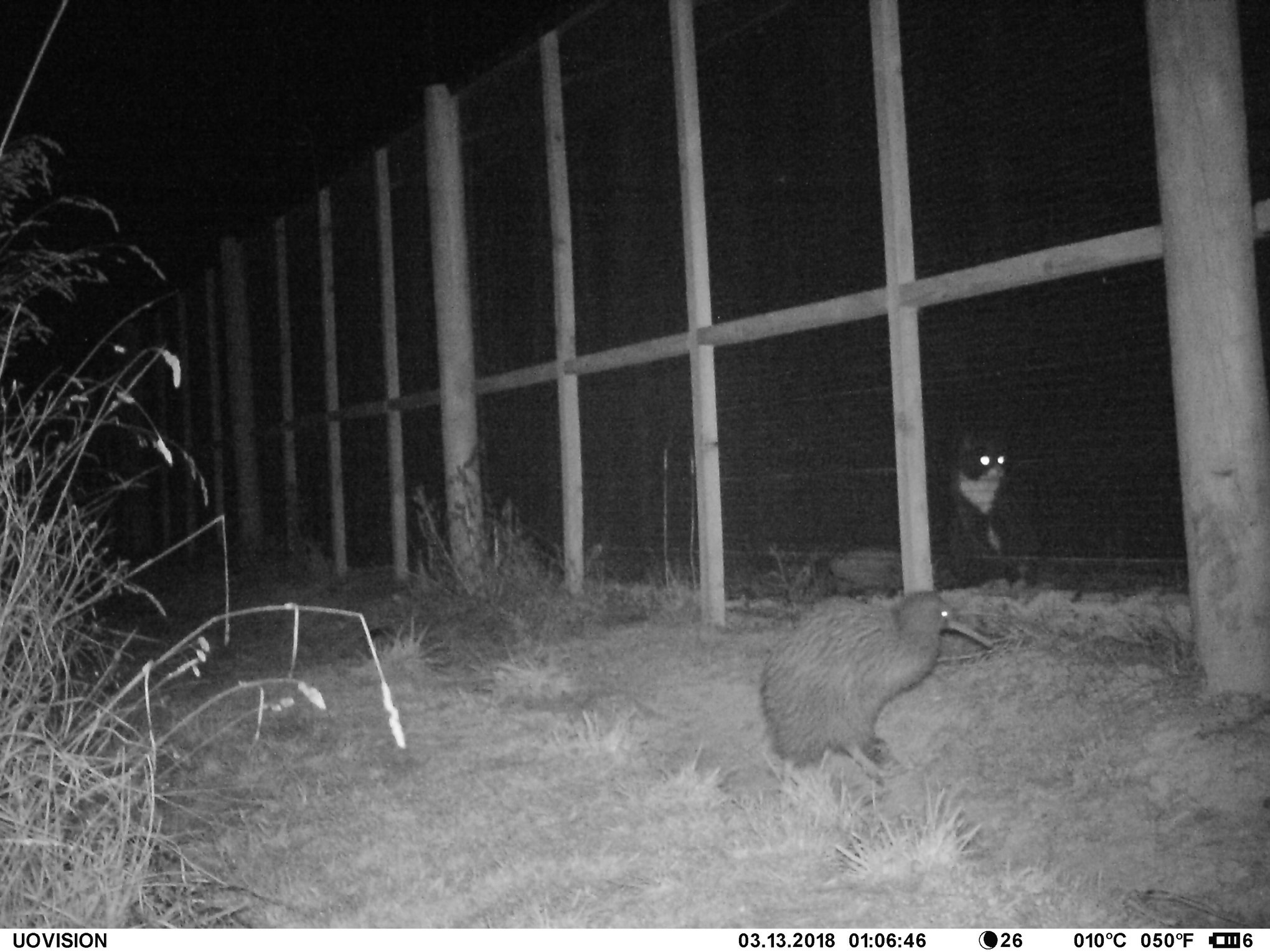
    Trail cameras have been used to successfully locate kiwi. Jane wondered if she could pair cameras 12-25 cm apart, taking images that could be used to essentially create a 3D image of features on each bird. Jane knew that kiwi bills vary between individuals and can be used as an ID.

    Jane worked with the more technically literate Maurice Kasprowsky and Tom Gray to cobble together the cameras and get them to work together.

    Jane, as reported in NZ Journal of Zoology, first tried the setup on a taxidermied kiwi in good light conditions. She found that the cameras could be used to measure the bills to within 1.5% of their actual length. This was a great achievement and would certainly be able to determine individuals.

    In theory we should be able to photograph kiwi and recognise them by measuring their bills. Image from Adrian Paterson.

    Jane then set up field trials with live kiwi. In the real world, with low light and moving birds the cameras were less efficient. At worst they were terrible but often they were within 3-4% of the actual bill length. This is not good enough to replace current field identification methods but it was still quite impressive given the relatively jury-rigged setup.

    Improvements in cameras, especially 3D cameras, are happening quite quickly. With some more trial and error Jane should be able to start reducing the error enough for this to be a viable noninvasive method for following kiwi in the field.

    While this is not as exciting as an arrow flying at you from an Avatar movie, this use of 3D does have real world uses that will help with understanding a national icon!

    The author, Adrian Paterson, is a lecturer in the Department of Pest-management and Conservation at Te Whare Wānaka o Aoraki Lincoln University. Adrian is a kiwi but unfortunately has no bill to measure.

  • Tackling feral cats in Aotearoa New Zealand

    Tackling feral cats in Aotearoa New Zealand

    Feral cats (Felis catus) are among the most proficient and effective hunters in the world. In Aotearoa New Zealand (NZ), their skills are lethal to native species that have evolved without mammalian predators. Feral cats have been linked to significant biodiversity declines across the country. Cats are opportunistic predators that hunt ground-breeding species, like birds, bats, reptiles and even some insects- many of which are endemic.

    Fig 1: It looks like siblings fighting over a small bird, a moment that captures the competitive behavior of feral cats (Image by- Gilbert Mercier, Flicker User

    The extinctions of six endemic birds are linked to feral cats. Well-known cases include a single cat, Tibble, that caused the extinction of NZ’s only flightless song bird: Lyall’s Wren on Stephens Island. A single cat killed 120 endangered native short-tailed bats in one week on Mt. Ruapehu. Dotterel populations on Stewart Island, Grand and Otago skink populations in southern ANZ are at risk due to feral cats. The list of species pushed to the verge of extinction by cats is long and growing.

    Yet despite their impact, feral cats are not currently included in NZ’s Predator Free 2050 campaign. This raises a major question: how is NZ tackling the feral cat problem? 

    With growing concern for native wildlife,  the government has implemented several methods to eradicate or control cats: lethal baiting, trapping, shooting, and fencing. While putting these methods into action is necessary, it’s equally important to ask their effectiveness: Are they actually working? And how can we tell?

    Fig 2: Feral cat awareness at Arthur’s Pass Wildlife Trust (Photo credit: Muhammad Waseem (used with permission)).

    These were the very questions a group of researchers from Lincoln University set out to explore. Using camera traps, they conducted a study on Hawke’s Bay farmland to test whether trapping and shooting could effectively control feral cat population, and whether the area will be re-invaded over time, to measure the effectiveness of the method.

    Forty motion-sensitive cameras stood beside the traps like sentinels, monitoring everything. Cats walked into the view, lured by rabbit meat and ferret scent. The cameras recorded activities before, during, and six months after the control operation. Before the operation 20 cats were detected. 17 feral cats were then removed (shot). The result? An 84% drop in both cat numbers and camera detections.

    Aware of the risk of reinvasion, the researchers monitored the site again six months later- and detected only three new cats. The outcome was encouraging and demonstrated how proper methods combined with well-monitored action can make real difference. With the help of camera traps, the research could measure the effectiveness of the control operation and can suggest similar methods in areas facing feral cat issues.

    Today, thanks to advanced technology like camera traps, monitoring has become much more efficient and convenient. This allows conservationists to evaluate their methodologies, observe activities remotely, and respond effectively.

    How did cats become a serious ecological problem in NZ?

    In my home country of Nepal, cats are seen as beloved pet and, traditionally, the guardians of grain stores, not as an ecological threat. As someone new to NZ conservation practice, I initially found the conservation method used in this study confronting. But the more I learned, the more curious I became: how did a country with no native mammalian predators come to see cats as such a serious problem?

    Fig 3: Stray cat basking sun on Fairmaid Street, Lincoln (Photo: Author 04/01/2025)

    Cats didn’t arrive in NZ until the mid-1800s. Earlier cats had visited along with Captain James Cook. His ship, plagued by rodents, carried cats as a solution to control pests and protect food supplies.

    European settlers brought cats as companions. Some escaped or were abandoned, eventually forming a wild population. Ironically, many animals (and even people) arriving by ships ended up becoming invasive. Over time, their arrival became strongly linked with biodiversity loss.

    Today the feral cats are  officially recognised as invasive predators. They not only kill native wildlife but also spread disease. It is no coincidence that many native birds began to disappear after cats were introduced. In the NZ conservation story, it’s not unusual to say: “To solve one problem often means creating another!”.

    Although some early impacts were noticed, such as the extinction of the Stephen Island wren, surprising these events were simply viewed with the mindset  as nature improving, where invasive species were seen as improvement rather than threats.

    Cats, whether brought to control rodents or to ease the settler’s solitude, may have served a short-term purpose, but over time introducing them proved to be a double-edged sword, causing severe harm to NZ’s native wildlife.

    Learning this made me realize that today’s conservation challenges are deeply connected to historical choices!

    Moving ahead

    While we cannot re-write history, we can certainly learn from it!

    Fig 4: Who decided which story to tell? The Great Hall stained-glass window at University of Canterbury made from 4,000 pieces of glass, showing Captain James Cook at number 19 (Photo: author 02/05/2025).

    The journey of cats in NZ is a classic reminder of how small actions can have a large ecological impact. The feral cat issue isn’t just about one species nor is it the only invasive challenge NZ faces, it’s about how we approach conservation in a complex and ever-changing environment.

    Looking back, we don’t know how much damage to NZ’s biodiversity could have been prevented or reduced if the scale of damage was understood earlier. As the country continues its battle against introduced species to conserve biodiversity through Predator Free 2050 campaign, integrating reliable monitoring tools like camera traps will be crucial in making informed and effective conservation decisions.

    The author, Pareena Khadka, is a postgraduate student in the Master of Applied Science at Te Whare Wānaka o Aoraki Lincoln University. This article was written as an assessment for ECOL 608 Research Methods in Ecology.

    Paper reference: Nichols, M., Glen, A. S., Ross, J., Gormley, A. M., & Garvey, P. M. (2023). Evaluating the effectiveness of a feral cat control operation using camera trapsNew Zealand Journal of Ecology, 47(1), Article 3501. https://dx.doi.org/10.20417/nzjecol.47.3501

  • The three bird-iteers: all for monitoring and monitoring for all!

    The three bird-iteers: all for monitoring and monitoring for all!

    My time at Lincoln University has taught me that when it comes to bird monitoring, the most common practice is the 5 minute bird count (5MBC). This method is a simple and effective way of counting birds within a specific area by recording sightings and calls. Much of the time, using 5BMC, it is likely that you will not see the bird you are hearing, which is why being able to identify New Zealand birds just by sound is a very good skill.

    Lincoln University legend Jon Sullivan did a study on different bird data collection methods that could also mahi together to build a more accurate picture of birds in an area. The study focused on wider Christchurch, beginning in 2003, and recorded patterns in bird species within the area.

    One method that was used was the stationary method , which is pretty much the same as the 5MBC but is extended to 20 minutes. The other method used was the ‘mobile method’, also known as the ‘line-transect method’, where you collect data while moving at a fast pace, perhaps by bike, car, or running.

    Now to the fun stuff – birds!!

    In Jon’s study there was a focus on three bird species, which I call the three bird-iteers (with apologies to Alexandre Dumas). These are the grey warbler, fantail and the bellbird. These endemic birds are very adaptable to recent changes for forest bird species.

    Grey Warbler

    The grey warbler (Gerygone igata, riroriro) are found throughout New Zealand. They are small, grey/brown with a more pale shade of grey for the face to throat. They weigh approximately 6.5 g (lighter than a mouse) and their diet consists of insects and spiders.

    Grey Warbler (Gerygone igata)

    Grey Warbler. Photo CC BY Mikullashbee, Flickr

    Fantail/pīwakawaka

    Fantails are one of my many favourite bird species, as they love to follow humans around when you are on bush walks. Fantails are able to adapt to environments that have been changed by humans, which is not very common for New Zealand native birds. Fantails (Rhipidura fuliginosa, piwakawaka) are often found in open native bush, exotic plantation forests, orchards and gardens. Their diet consists of insects, especially small species. Fantails are a small bird about the size of a house sparrow, but what makes them so distinctive? Well the answer is in their name…. Yes their tails, like their name suggests they have a long tail that fans out like a well a fan.

    Fantail

    Fantail. Photo CC By Chris S, Flickr

    Bellbird/ Korimako

    Bellbirds(Anthornis melanura, koromiko)are commonly found in the South Island. These birds have a short, curved beak and are green with a slightly forked tail. Bellbirds, similar to Tūī’, have a distinctive song, it is like a high ringing that’s also kind of smooth, and the repeat the same tune. Bellbirds reside throughout native and exotic forest, scrubs and shelter belts of New Zealand. Their diet is nectar from native and exotic plants, although they do consume fruit in late summer and autumn. Also their diet consists of honeydew that’s found on beech trees.

    Bellbird

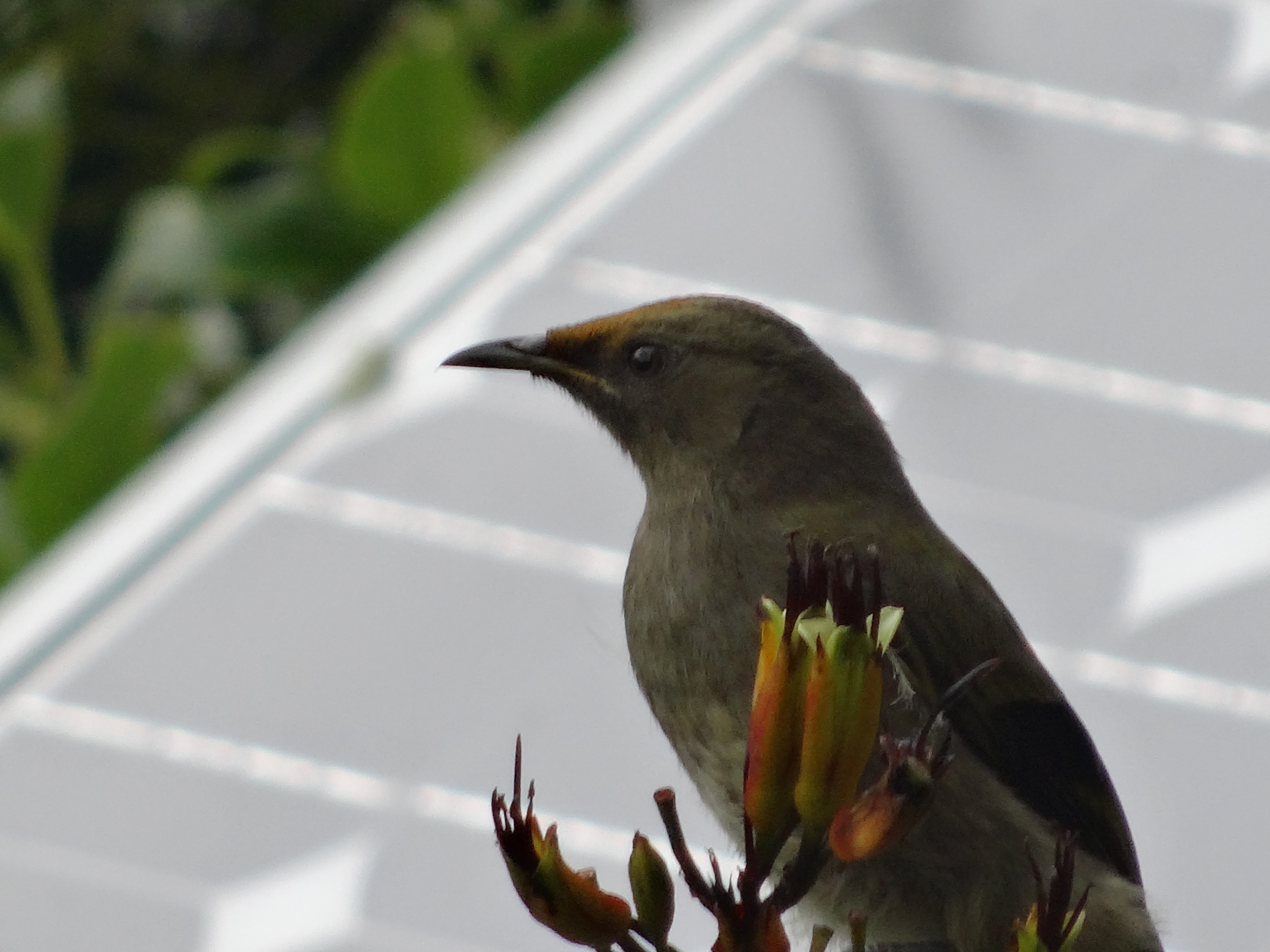
    Bellbird. Photo CC By Glenda Rees, Flickr

    Back to the study

    Jon Sullivan wanted to understand how nature responds to a forever changing world. He collected distribution and abundance information for many species with these three species being the focus. This is where the methods came into play as a standardised method and a repeatable one is needed to accurately tell us if a species is present or not. The methods talked about above were to work alongside each other.

    Around 100,000 bird counts were collected. The approach used helped to summarise data that was from one location, a certain time each week, and one daily route. The results showed that this approach was effective and just as effective as the 5 minute bird count. Counting birds while riding your bike along a road was just as effective at estimating and following trends as more traditional methods.

    Fantails, grey warblers, and bellbirds (but not to the same extent as the other 2) are majorly restricted to their forest biotopes and native plantings, particularly in spring.

    Like any good study, more data are needed to get a better and clearer understanding. This could create a good opportunity at Lincoln University to teach students doing ecology to learn how to use different techniques besides just the 5MBC methods. Then we too can collect decades long information on our favourite birds.

    This article was prepared by postgraduate student Caitlan Christmas, Masters of Science in Ecology and Conservation, for an assignment in ECOL608 Research Methods in Ecology.

    Sullivan,JJ(2012). Recording birds in real time: a convenient method for frequent bird recording https://researcharchive.lincoln.ac.nz/server/api/core/bitstreams/04dc8df3-2e34-4fe9-96a6-ea8a505ad0cc/content

  • Amaizing distribution: nematode infestations of NZ corn

    Amaizing distribution: nematode infestations of NZ corn

    Are your maize plants growing well in the field? If not,we can often blame plant parasitic nematodes.

    There are around 4100 known species of nematodes and they cause a considerable loss of agricultural produce, with estimated global crop damage of $US 358 billion every year.

    The life cycle of these plant parasitic nematodes have four stages, and the second-stage juvenile (J2) is the destructive phase. Most nematodes are sedentary inside the host and others survive in the soil.

    Written by Sambath in behavior, conservation, front page profile, invasive species, student blog, Uncategorized, zoology, pest management

    In the 2021/22 NZ growing season, about 196,000 tonnes of grain and 1,200,00 tonnes of silage were harvested, making maize one of the most cultivable crops in New Zealand. Around 58% of the harvest was grown for livestock feed demand, and the remaining 42% was for food and industrial processors.

    Plant parasitic nematodes are common in New Zealand and many horticulture industries have experienced a substantial loss of profits from these destructive plant pests. While maize is one of the most crucial crops in this country reported to be damaged by various species of nematodes, few studies have been conducted here compared to other countries.

    So, Nagarathanam Thiruchchelvan, a PhD student at Lincoln University, and his team conducted research to identify and quantify plant parasitic nematode infestations of maize production across New Zealand. Their purpose was to investigate the prevalence and diversity of several genera of plant parasitic nematodes.

    Plant parasitic nematode feeding types. Image from Paulo Vieira & Cynthia Gleason

    The researchers collected a total of 384 composite soil samples from 25 maize fields located in the North and South Islands, focusing on: Canterbury, Waikato, and Manawatu-Whanganui. Data collection was carried out at various maize growing stages and seasons during 2022.

    It was not good news!

    The researchers found that at least one genus of plant parasitic nematode was detected in 378 (98%) of the maize samples. Pratylenchus was the most prevalent and widespread genus (91%) followed by Helicotylenchus (38%).

    Plant parasitic nematode. Image from Scot Nelson

    The plant parasitic nematode population and diversity were higher in Canterbury than in Waikato and Manawatu-Whanganui. Thiru and his team believed that the inconsistent distribution was caused by different climate and geography conditions between the two regions. For example, the South Island is more diverse in soil physiochemical proportions than the North Island.

    Thiru also observed that soil orders, a soil classification system, affected the proliferation of plant parasitic nematode populations, with brown and pallic soil types promoting nematode reproduction, especially for Pratylenchus. Pallic soils refer to a soil type having pale, fragile topsoil and compacted subsurface. For the brown soil, its topsoil is dark grey-brown, and the subsoil is tan or yellowish-brown.

    The lowest number of plant parasitic nematodes was detected in organic soil. Organic-rich soils favor a wide range of beneficial fungi, bacteria, and nematode survival. These microorganisms can suppress the proliferation of plant parasitic nematodes by either feeding on eggs or predating invasive nematodes.

    The study further indicated that the population and diversity of plant parasitic nematodes increased alongside distinguishing developmental stages of maize. Most nematodes were reported from the harvesting stage, while the least were from the seedling stage.

    Root-knot nematode (Meloidogyne enterolobii). Image from Jeffrey W

    Thiru and his team noticed that rotating maize with other crops played a significant role in reducing the incidence and prevalence of plant parasitic nematodes in the field. These other crops included ryegrass, pasture, wheat, white clover, potato, peas, and winter crops. One maize field located in Canterbury was detected with a high significant intensity of 3000 nematode root lesions per kg of roots as a result of non-rotation practice.

    Thiru concluded that there was a requirement for a deeper understanding of dispersal, feeding characters, and life cycle of plant parasitic nematodes, in particular, root-lesion nematode (Pratylenchus) in maize fields across New Zealand. Specific pest management approaches are needed to control the prevalence and abundance of targeted nematodes impairing maize production in both islands.

    These article was prepared by Sambath Seng, a Master of Science student in the Department of Pest Management and Conservation at Lincoln University.

    Thiruchchelvan, N., Kularathna, M., Moukarzel, R., Casonato, S., & Condron, L. M. (2024). Prevalence and abundance of plant-parasitic nematodes in New Zealand maize fields: effects of territory, soil orders, crop stage, and sampling time. New Zealand Journal of Zoology, 1-22. https://doi.org/10.1080/03014223.2024.2424900

  • Cat conundrum: Conservation, cameras, and capricious companions

    Cat conundrum: Conservation, cameras, and capricious companions

    You are probably well aware of the feral cat issues here in Aotearoa New Zealand and the detrimental impact that cats are causing in our unique whenua (land). However, if you are new here, let me get you up to speed. The popularity of these adorable companions –1,134,000 companion cats and 196,000 strays, to be accurate – has come with a tremendous cost to native wildlife in Aotearoa New Zealand.

    With over a decade of experience in the veterinary industry, I’ve witnessed animal welfare concerns from both perspectives. I’ve seen the devastating impact cats can have on native wildlife, as well as the suffering of unwell, neglected feral cats. This dual perspective made becoming a cat owner myself all the more meaningful, thanks to a foster failure named Professor (pictured below), who quickly stole my heart. After adopting him, it was an easy decision to create a comfortable indoor life for him. Knowing the toll that cats can take on wildlife populations and thinking about his health and safety, it was an obvious decision for me to keep him as an indoor cat. But unfortunately, 196,000 cats in Aotearoa New Zealand do not have the cushy indoor lifestyle that Professor has become accustomed to.

    Learn about what the experts have to say on cat management here: https://predatorfreenz.org/stories/animal-welfare-agencies-views-on-cat-management/

    Professor the foster failure. Original image by Chloe Mc Menamin.

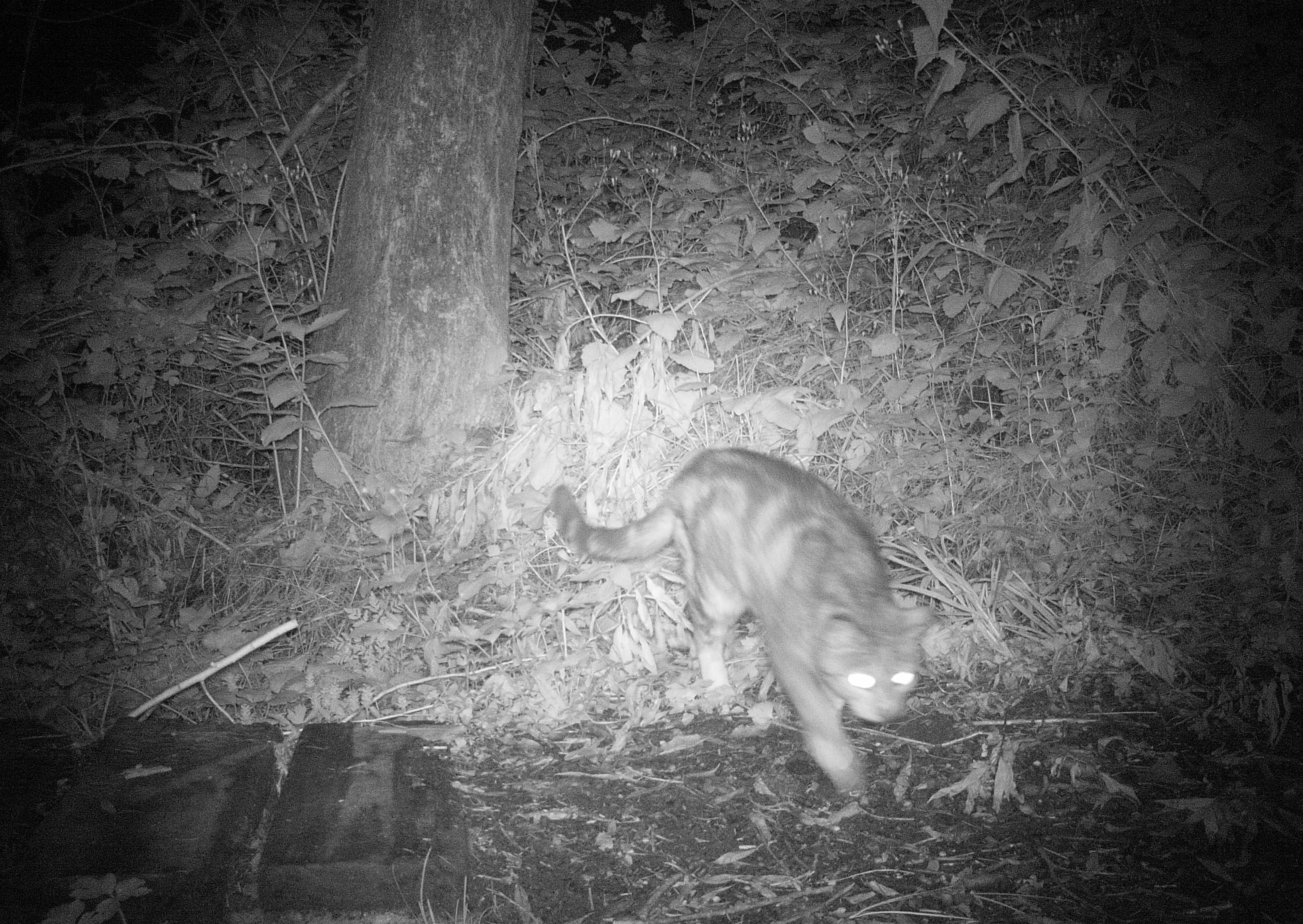
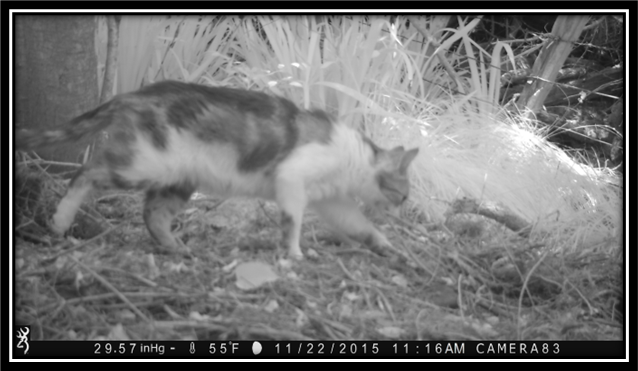
    Now what does the science say about monitoring cats that don’t have a cushy indoor lifestyle? In 2019 a team of scientists at Lincoln University carried out a study to better understand just that. They deployed a camera detection system across two pastoral sites in the Hawke’s Bay region. One system was placed systematically (on a grid) and the other strategically (placement where the researchers believed cat activity would be the highest). Their goal was to compare which camera trap placements would be the most effective method for monitoring feral cat populations. While feral cats are notoriously difficult to detect due to their low densities and cryptic behaviours, these researchers did get some interesting results!

    During a telephone interview, with primary author Dr. Margaret Nichols (Maggie), Maggie cheerfully shared how she began to question the use of her time after processing countless images of hedgehogs enjoying the smell and feel of the ferret pheromones used to lure in the cats. Then things took a surreal turn when she found herself pondering reality itself—prompted by turkeys performing what looked suspiciously like synchronised dances.

    But, dear reader, that wasn’t the only captivating creature caught on camera. No! The top-featured animal was… you guessed it… a sheep! Yes, you read that correctly. A single sheep nearly drove Maggie to madness after it camped out in front of one of her cameras for four entire days, triggering over 500,000 images. Poor Maggie! I’d be pulling the wool from my jumper too if I had to process that many sheep shots. Surprisingly, cats turned out to be the least detected animals of all—truly showcasing their cryptic behaviour and highlighting just how important this research was to carry out.

    Against all odds Maggie and her colleagues persevered – through the thousands of sheep, hedgehogs and dancing turkey’s images to reveal a striking discovery. Camera traps placed at the forest margins detected more cats compared to those in mixed scrub or open farmland. Specifically, at forest margin an average of 3 cats were detected per night at Site 1 (Toronui Station made up of a mixture of open farmland and native forest) and 1.7 cats at Site 2 (Cape to City ecological restoration area). This compelling pattern suggests that strategic placement of cameras in these areas is likely to maximise cat detection. Hats off to Maggie and the team, what a cool discovery.

    Hedgehog self-anointing after contact with the pheromone. Image source Research Gate (Garvey., nd)

    Well, there you have it reader – strategic camera placement at forest margins in the Hawke’s Bay area is the most effective way to monitor feral cats, but this is just the beginning of cat monitoring research in Aotearoa New Zealand. If you are like me and feeling inspired by Maggie and her colleagues’ findings, you might also be wondering where to even start tackling the feral cat population in your local area.

    While science and data are fascinating, the telephone interview with Maggie wisely reminded me that the best part of her research experience were the organisations and the people involved along the way, particularly the Hawke’s Bay Regional Council , Predator Free South Westland, and Lincoln University. She reported that working with various stakeholders made the project not only successful but also deeply rewarding. She also noted that all research projects take more time than you think and to never underestimate the possibility of processing 500,000 sheep photos when doing camera monitoring!

    Image of feral cat caught on camera during study. Orginal image provided by Dr. Margaret Nichols

    What a great reminder that in life it’s not just about success or how long things take; it’s about the experiences and friendships you make along the way. Thank you, Maggie, for sharing that wisdom.

    This article was prepared by Postgraduate Diploma in Applied Science student Chloe McMenamin as part of the ECOL608 Research Methods in Ecology course.

    Now reader it is over to you, want to learn more about how you can help? Check out the The National Cat Management Strategy Group, or if you want to learn more about feral cats here in Aotearoa New Zealand check out what the Department of Conservation has to say.

    Read full study here:
    Nichols, M., Ross, J., Glen, A. S., & Paterson, A. M. (2019). An evaluation of systematic versus strategically-placed camera traps for monitoring feral cats in New Zealand. Animals, 9(9), 687. https://doi.org/10.3390/ani9090687

    Image refernce:

    Garvey, P,M. (nd). FigS3: Hedgehog self-anointing after contact with the pheromone/kairomone vial [Supplemental material]. ResearchGate. https://www.researchgate.net/publication/311713979_FigS3_Hedgehog_self-anointing_after_contact_with_the_pheromone_kairomone_vial

  • Keeping up with the Kiwis: Translocations and their forever holiday homes

    Keeping up with the Kiwis: Translocations and their forever holiday homes

    New Zealanders, also known as the ‘kiwis’, are known for tramping up great mountains, and travelling around the globe. For the actual kiwi bird, their adventures are limited to islands and protected environments. Even our New Zealand mascot, Goldie the kiwi, manages to ‘fly’ all around the world, which I’m sure would make the national birds jealous.

    That’s not to say that actual kiwi don’t get around. Our national icon is the most translocated bird in New Zealand. We have been translocating kiwi since not long after the Treaty of Waitangi (1840) due to predation and habitat loss, often with limited success. When we try our hardest to save populations through transfers, most or all birds die. So, we created protected (fenced) sanctuaries that allow a safe environment for kiwi and other native species to thrive. But after decades of conservation work and relocating kiwis out of their homes to a safer habitat, are they truly happy in their new homes?

    Fenced Sanctuary – Zealandia. Image by Russellstreet

    Methods for successful translocations have been developed. Methods, including the introduction of Operation Nest Egg (ONE), allows the hatching chicks to become mature before releasing into the wild. These methods has required the involvement of community groups, iwi and hapū. However… there are no resources that include information from past kiwi translocations, so we don’t know the past outcomes, whether they were effective, or how to improve them — which is wild!

    Researchers at Lincoln University, Peter Jahn and James Ross, and other colleagues reviewed 102 kiwi translocation projects (mainly from the last four decades — older information having been lost or ‘poorly documented’), and they examined the mitigation translocations and rehabilitation releases. But how do you define a ‘successful’ translocation?

    We can’t assume that if we release birds into a new environment that everything will magically lead to success. We must investigate if the kiwi population can settle in, grow in numbers and maintain a healthy balance on their own for it to succeed long-term. The primary goal of translocations is to “establish or restore a population with a high probability of persistence”. Unfortunately, kiwi behaviours have made it hard to grow a population, as they are irregular breeders and take several years to reach sexual maturity.

    To address this, objectives were set for releases:

    • To grow all kiwi populations by at least 2% per year.
    • To sustain genetic diversity, each translocation will have at least 40 unrelated individuals released (a ‘founder population’).
    • A minimum timeframe of 15 years is required for the population to grow (and adapt to its new environment).

    By collecting data and analysing the translocation trends over the decades, we can better understand how different projects affect the survival of kiwi taxa.

    Stewart Island Brown Kiwi (Tokoeka). Image by Jake Osborne

    Since 1863, there have been 102 translocations, with an impressive 76 kiwi translocations just in the last 20 years. Translocated kiwi species included: Rowi, Great Spotted Kiwi, Little Spotted Kiwi, Tokoeka, and Brown Kiwi. Most of the release sites (63% since the 1860s) were in the North Island or on offshore islands (sorry Lincoln — too much farmland). However, 20 of these projects’ reports do not exist or are unavailable. But here’s what is fascinating… just over half of the translocations (58%) introduced kiwi taxa where they were not seen before (a giant leap of ‘kiwi-kind’)!

    In the past, effects to reduce harm for the kiwi were deemed as an ‘emergency’ to secure populations. Recent translocations cited ecological restoration and supporting kiwi taxa across different areas as a priority (which supports natural differences, and resilience – perfect for long-term conservation outcomes)!

    Unfortunately, not all kiwi species have received the same level of attention. Those with more attention are spoilt with support (more management) and obtain an improvement in their conservation status. Other kiwi species are not as lucky, such as the Great Spotted Kiwi, Fiordland Tokoeka and Rakiura Tokoeka, as their conservation status has worsened. So even though translocation effort aims for an improvement in kiwi populations, other factors, such as population sizes and lack of predator control, make this already difficult job… even more challenging.

    If you look at past scientific literature on initial survival of released birds, these translocations will be reported as ‘successful’, which seems good, right? But are they ‘self-sustaining populations’? Only one project (Zealandia) has been considered as ‘successful’ due to having an increased population. Even worse…. there is little information on the genetic make-up of the new population (which defeats the purpose of becoming a long-term project).

    Little Spotted kiwi at Zealandia. Image by Kimberley Collins

    For future translocations, the number of releases should be adjusted (by changing the total number kiwi released in a specific area) depending on the situation — for example, when there is a low founder population, or a high mortality rate. If a population is not looked after, this can result in reduced fitness and genetic variability. Having a database that holds the records of all the kiwi translocations would make it easier to analyse the factors that could influence kiwi populations.

    So, what does the future hold for kiwi translocations? The main recovery goal, which was “restoring former distributions of all kiwi taxa”, has shown an increase in populations through translocations. Translocations have created new populations on islands, which can “fill in the gaps” in nature, which is a huge win! Guidelines suggest releasing 40 kiwi into a new population and that they are not related to the ‘founder population’ (this number can vary depending on specific factors to maintain high diversity).

    As translocations start from newly established populations, it’s only through time that we will see if kiwi populations can further grow and maintain sufficient genetic diversity.

    This article was prepared by Master of Science student Jessica Przychodzko as part of the ECOL608 Research Methods in Ecology course.

    Jahn, P., Fernando Cagua E., Molles, L. E., Ross, J. G., & Germano, J .M. (2022). Kiwi translocation review: are we releasing enough birds and to the right places? New Zealand Journal of Ecology, 46(1): 3454. https://dx.doi.org/10.20417/nzjecol.46.1

  • What went wrong with Himalayan tahrs in New Zealand?  

    What went wrong with Himalayan tahrs in New Zealand?  

    How would you feel if an animal deeply respected and protected in your homeland was treated as a trophy animal and hunted in another country for being invasive? I was heartbroken to discover the fate of Himalayan tahrs when I first arrived here in New Zealand.

    A proud Sherpa with Chhomolungma (Mt. Everest) in the background (Hey! He looks exactly like the author of this blog!!!) Photo: ©Author

    Being from a native Sherpa community in the Khumbu region (popularly known to the world as The Everest region), I grew up roaming around the high alpine environment of the Himalayas. The region lies in the Sagarmatha National Park and Buffer Zone (SNPBZ) and is home to majestic mountains including the highest peak in the world, Khangri Chhomolungma (Mt. Everest in English), as well as stunning rugged terrains, glaciers, lakes and diverse flora and fauna.

    A photo of male Himalayan Tahr taken on the way to Everest base camp trail Photo: ©Author

    The Khumbu region is habitat to many endangered wild animals including snow leopards, musk deer and red pandas. Due to its rugged environment and mountain slopes, the region is also a suitable native habitat of the Himalayan tahr (Hamitragus jemlahicus). We call them “Ri Rau” in Sherpa language meaning “Wild Goat”.

    A herd of Himalayan Tahr seen on the way to Everest Base Camp Trail Photo: ©Author

    I was around 6-7 years old when I first saw a herd of the Himalayan tahrs grazing on the hills near my hometown Lukla while walking with my father. I remember watching and admiring them for hours hiding behind a rock. I was immediately mesmerized by their presence. The male stood out with their glossy thick brown coat of straight hair as if they came straight out of a salon, with strong dark horns surrounded by the females and their young ones. I was especially stunned by their ability to move confidently and swiftly across the rocky slopes. That moment still relives fresh in my memory. Since then, whenever I saw them, I always paused for a moment to admire their elegance and capturing the moments for memories.

    The Himalayan tahr is currently listed as Near threatened on the IUCN Red list. In their native habitat they are mostly predated by common leopards and snow leopards. Due to anthropogenic activities such as habitat loss and illegal poaching, their population have been declining, and they are now protected in their native Himalayan environments.

    When I first arrived in New Zealand, I discovered that the Himalayan tahrs are considered as invasive species, and they are hunted for recreational purpose in the country. I was really surprised by this as they are protected in the region that I come from. After doing some digging, I found out that the Himalayan tahrs were introduced in New Zealand in the early days of European settlements for sport, gifted by Duke of Bedford to help with recreational hunting option for emigrating Englishmen and released near the Hermitage at Mt Cook in 1909. As New Zealand doesn’t have any natural predators of Himalayan Tahrs, their population escalated rapidly reaching a population size of tens of thousands over the Southern Alps.

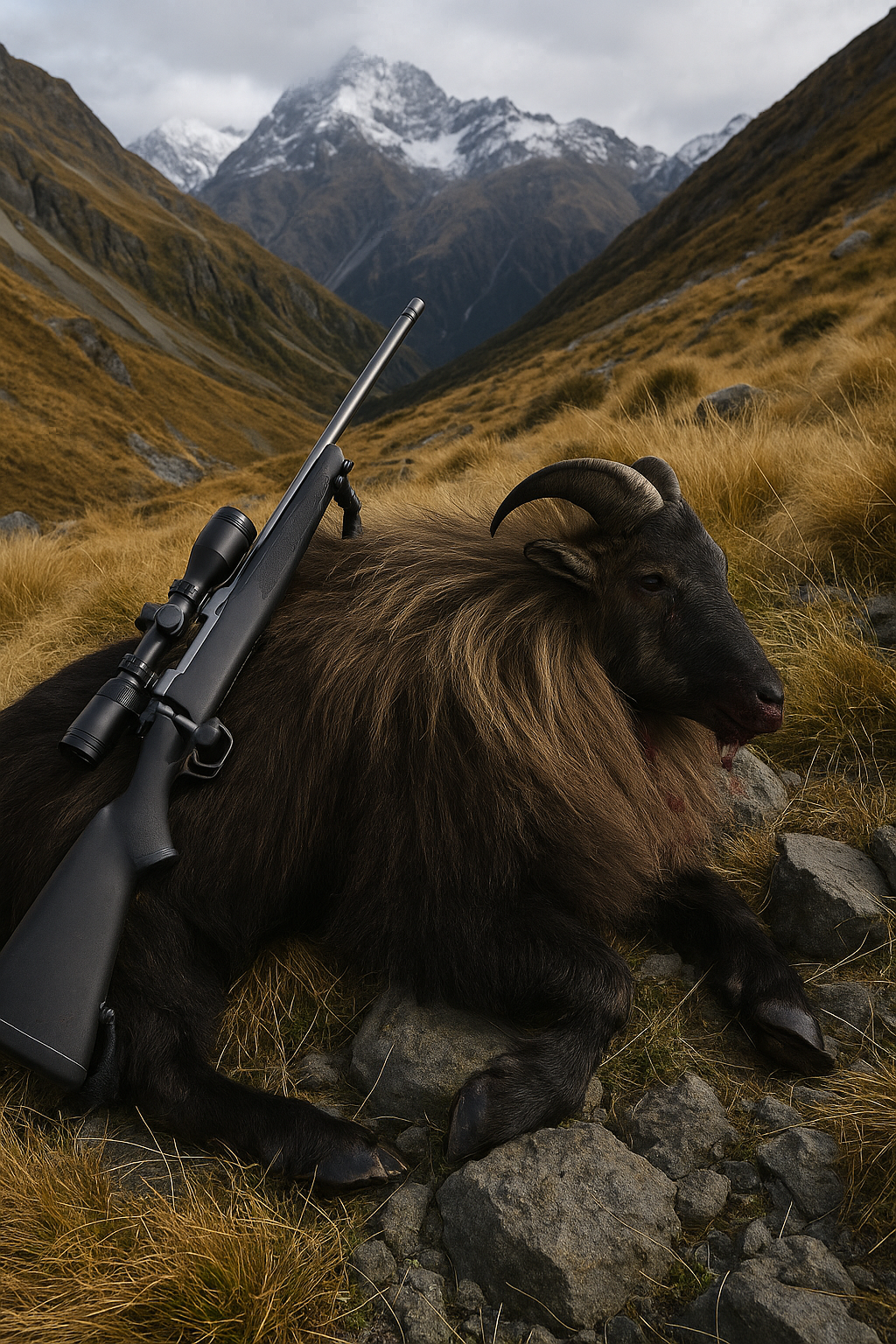
    A Trophy Hunted Tahr
    Photo: Image generated by ChatGPT (DALL-e) by OpenAI

    The Department of Conservation of New Zealand (DOC) has been working on Himalayan Tahr population control since 1993 under the Himalayan Tahr Control Plan (DOC, 1993: HTCP) which allows limited population of around 10,000 tahrs within the seven defined management units. However, the tahr population has grown beyond the limitation of management plan in recent years, making it difficult to control them. The HTCP also includes a defined feral range to contain their population and permits farming or holding in game estates for commercial hunting only within the designated range.

    A report from Lincoln University, conducted in 2020 by Geoff Kerr, Garry Ottmann and Fraser Cunningham studied the potential for containing tahrs in game estates outside their feral range to reduce demand on the wild tahr resource as recommended by the Game Animal Council (GAC, 2014). Three GPS tracked male tahrs were released in the High Peak Game Estate on 19th December 2018 to monitor their behavior and movement pattern inside the enclosure over a twelve-month period. While one tahr died of unknown causes, the remaining two were kept there until 24th December 2019. The study was done on the hypothesis that tahr containment within a game estate outside of their feral range would be successful.

    The trial was successful showing that Himalayan thar can be effectively contained in game estates outside their feral range. GPS data showed minimal fence interaction, and the tahrs quickly adapted to their new territory. Most boundary activity occurred during the breeding season. The study also suggested potential for larger scale commercial operations due to their herding behaviour.

    Despite extensive research and ongoing control efforts, Himalayan tahr continues to threaten New Zealand’s native biodiversity by heavily grazing on tussocks, alpine herbs, and shrubs, plants that have no evolutionary history of mammalian herbivory, thereby disrupting the natural ecological balance.

    This problem also raises a serious question of human intervention with nature. More than wondering how to manage tahr populations, I find myself asking: What are they even doing here in the first place? Himalayan tahr has become invasive in New Zealand because people introduced them here without realizing its future consequences and it has backfired us, leaving us to manage the aftermath of our own decisions.

    Witnessing the realities of a Himalayan tahr changing from a revered mountain dweller in my homeland to trophy hunted invasive species in New Zealand, has been an emotional and eye-opening experience for me. Looking at the conservation dilemma of tahrs between two different countries has challenged my perception and shown how the value of wildlife depends on the context. The Himalayan tahr’s journey, much like my own, has crossed oceans and adapted well into the new environment but the only difference is that the tahrs didn’t choose to come here. The Himalayan tahr’s story is a very powerful reminder of how human actions can disrupt the natural ecosystem. As someone who grew up admiring their beauty in the Himalayas, I hope their fate improves in the future.

    The author, Ngima Chhiri Sherpa, is a postgraduate student in the Master of Applied Science (Environmental Management) at Te Whare Wānaka o Aoraki Lincoln University. This article was written as an assessment for ECOL 608 Research Methods in Ecology.

    Paper Reference: Kerr, G. N. ., Ottmann, Garry., & Cunningham, Fraser. (2020). Himalayan tahr on game estates outside the tahr feral range. Centre for Land, Environment & People, Lincoln University. https://digitalnz.org/records/44715317 

  • Never ask a lizard its age (Calculate it using science!)

    Never ask a lizard its age (Calculate it using science!)

    Where were you during the 1969 moon landing? What about at the turn of the century when the world was bracing for the Y2K Apocalypse? Or during the 2020 Covid-19 pandemic?

    What if I told you that there are world record-breaking geckos in Canterbury that were here through it all? That two geckos in particular, ‘Antoinette’ and ‘Brucie-Baby’, recently celebrated their 60th and 64th birthdays? That might seem unimpressive compared to a human lifespan, but most geckos are lucky to live 10-15 years elsewhere in the world.

    So, what’s their secret? And how do we know this? It’s not like you can just ask a gecko its age (that would be rude! as well as difficult…). If you’ve worked with geckos or other lizards like I have, you’d also know that they’re elusive at the best of times and all look the same to an untrained eye. Well, like all great scientific breakthroughs, this story involves good record keeping, a bit of fancy maths, and, of course, Lincoln ecologists!

    Antoinette and Brucie-Baby, the world’s oldest Waitaha geckos (Woodworthia brunnea). Image: Allanah Purdie | Department of Conservation 2025 (CC BY 4.0)

    The Beginning

    Let me take you back to the summer of ‘67. Staff from the Department of Scientific and Industrial Research (DSIR) are tramping across Motunau Island, which lies 64 km north of Ōtautahi Christchurch and 1 km off the Canterbury coast. Weeds, fire, and rabbits had drastically changed the island’s vegetation since the 1850s, but rabbits were eradicated in 1962 and Motunau had otherwise never seen an introduced mammal. That absence makes the island a decent refuge for native lizards and seabirds.

    Under the leadership of ecologist, Tony Whitaker, a team of DSIR staff surveyed lizards there every summer until 1975. As part of this, they caught Waitaha Geckos (Woodworthia brunnea) along a 20 x 20 m grid using pitfall traps, which are essentially baited holes in the ground that lizards fall into trying to get a sweet treat (don’t worry , this doesn’t harm them!).

    Motunau Island in Canterbury, New Zealand. Image: Wikimedia Maps n.d. (CC BY-SA 4.0)

    Back then, Whitaker’s surveys had two main goals. The first was to test what kind of bait the lizards liked the most and the second was to figure out how to find nocturnal geckos in the dark. In case you were wondering, they found that lizards LOVE canned pear and that you can find geckos at night by spotlighting because their eyes reflect light like cats. For this story, though, the basic measurements taken from individual geckos over the years turned out to be far more interesting…

    An Exciting Realisation

    Fast forward several decades to the late 1990s and enter our Lincoln ecologists: Masters student Carol Bannock and Senior Lecturer Graham Hickling! Together with Tony Whitaker himself, they were going through Whitaker’s notes and realised that because geckos caught in the 1967-75 DSIR surveys were permanently marked by a unique combination of toes being clipped, they may be able to identify some of the same individuals 30 years later*. They also realised that because each individual had its snout-vent length (SVL) recorded, they could use growth rates to figure out how old each gecko was when first captured.

    * Side note: I know toe clipping sounds brutal. We’ll unpack that later… For now, understand that although this method of identifying individuals is not used anymore, it was the best method for ecologists at the time because lizards shed their skin and therefore can’t be permanently marked by things like paint or dye.

    Measuring the SVL of a Waitaha Gecko (Woodworthia brunnea) in Akaroa, Canterbury. Image: Alice McCormick 2024 (used with permission)

    With no time to lose, the trio raced back to Motunau! With some searching, they found the original lizard grid from old survey pegs (who needs modern GPS?) and diligently caught and measured geckos between December 1996 and February 1997. Overall, they found 61 new geckos and recaptured 16 of the 133 toe-clipped between 1967-1975 (~12%).  

    To determine the growth rates of Motunau’s Waitaha Geckos, Bannock, Whitaker, and Hickling used the average SVL of one-year-old geckos caught in 1996-97 (identified by their small size) and the differences in SVL length for geckos caught 12 months apart in 1967-75 to create a growth curve. They then used that curve to estimate how old each gecko was when first caught in 1967-1975 (large geckos were categorised as 6+ years because Waitaha Geckos tend to stop growing after this). Next, they calculated the age of the 16 geckos recaptured in 1996-97 by adding their estimated ages to the number of years since first capture. The modelling for this is a little tricky, but it’s thoroughly explained in this paper by Ebert (1980), if you are interested. What you really need to know is that 10 of those 16 geckos turned out to be at least 36 years old!! The remaining 6 were between 29 and 34.

    2025 and Beyond

    In 1999 when Bannock, Whitaker, and Hickling published their paper, finding 30+ year-old geckos was huge news. It proved that Waitaha Geckos on predator-free Motunau could live equally as long in the wild as they do in captivity and added at least 15 years to the previously estimated maximum age for the species (or any gecko species in the world for that matter!).

    The discovery was so exciting that it also prompted the Department of Conservation to immediately take charge of regular surveys on Motunau. In fact, it was in their most recent 2024-25 survey that ‘Antoinette’ and ‘Brucie-Baby’ were rediscovered (named in honour of Tony Whitaker and his co-worker, Bruce Thomas, in 1967 and 1969).

    Iris pattern of a Waitaha Gecko (Woodworthia brunnea), annotated in I3S Pattern. The three reference points (blue) and outlined identification area (green) were manually selected to allow I3S to generate and compare key points (red) with other annotated photos. Image: © Samantha Dryden 2025.

    That is not the end of Lincoln’s gecko searching though! Since 2021, our very own Dr Jennifer Gillette has been testing photography as a technique to identify individuals and to, hopefully, replace toe clipping in long-term studies. Together with her summer students, she has taken 1000s of photos of Waitaha Gecko iris and dorsal patterns around Akaroa Harbour and tested the ability of a pattern-recognition software called I3S to correctly match new photos with existing individuals in her database.

    Dorsal pattern of a Waitaha Gecko (Woodworthia brunnea), annotated in I3S Pattern. The three reference points (blue) and outlined identification area (green) were manually selected to allow I3S to generate and compare key points (red) with other annotated photos. Image: © Samantha Dryden 2025.

    According to Jennifer, the research on Motunau’s geckos has significantly impacted the way we understand and manage gecko populations in Aotearoa today. Because they live so long, Waitaha Geckos have evolved to be K-selected species, which means they mature slowly and have very few offspring. This strategy worked well before humans arrived, but today, most gecko populations in Aotearoa don’t have the luxury of living on predator-free islands like Motunau. This means that many geckos may be eaten before they are old enough to have babies, and their populations may take decades to recover from predation.

    That is why being able to identify individuals like Antoinette and Brucie-Baby is so important! It’s also why no pest species can be overlooked in conservation and environmental management efforts!!

    Lincoln University senior tutor, Jennifer Gillette (second from the right) and her students monitoring Waitaha Geckos (Woodworthia brunnea) around Akaroa Harbour, Canterbury. Image: © Samantha Dryden 2024.

    The author, Sam Dryden, is a postgraduate student in the Master of Science at Te Whare Wānaka o Aoraki Lincoln University. This article was written as an assessment for ECOL 608 Research Methods in Ecology.

    Article reference: Bannock, C. A., Whitaker, A. H., & Hickling, G. J. (1999). Extreme longevity of the common gecko (Hoplodactylus maculatus) on Motunau Island, Canterbury, New Zealand. New Zealand Journal of Ecology, 23(1), 101-103.

  • Tips for wildlife paparazzi

    Tips for wildlife paparazzi

    How camera angles reveal the secret lives of elusive predators

    On my first visit to New Zealand, I was amused to see fellow backpackers flipping through glossy magazines filled with paparazzi shots of A-listers. I remember thinking, what a strange profession, hiding in the bushes to snap a shot of someone and follow their day-to-day routes.

    Fast forward a couple of decades and here I am, fascinated by research articles on the optimal camera angle to capture elusive creatures. Turns out, the world of conservation has its own paparazzi. Moreover, I feel everyone should know their tricks!

    When it comes to elusive predators, capturing them in their tracks is more than a curiosity, it’s a conservation tool. Camera traps are effective in estimating animal densities, before and after control even in the most adverse habitats, like wetlands.

    CC BY-NC-SA 2.0 Image by Gábor

    The A-listers in this article are elusive foreign predators, feral cats and mustelids (stoats, ferrets and weasels), always on the move and few and far between, like true celebrities. The red carpet is the New Zealand bush – an exclusive venue lined with a crowd of endemic icons watching in fear as the foreign stars steal the spotlight. The photographers? Not screaming paparazzi, but silent, motion-triggered camera traps, stationed like field agents waiting for a predator in sight.

    But here’s the million-dollar question: Does the camera angle make or break the shot?

    Just like in Hollywood, where a low angle shot can flatter or fail, the positioning of a trail camera can dramatically influence what gets captured in the frame. Nichols et al. (2016) asked exactly that: Should camera traps aimed at cryptic predators, like feral cats and mustelids, be set up horizontally or vertically for the best results?

    The red carpet

    Conducted in the pastoral Toronui Station, Hawke’s Bay, the researchers placed 20 pairs of camera traps—each pair with one camera horizontally and the other vertically. A horizontal camera faces forward at animal eye level. A vertical camera looks downward, much like a security camera.

    To increase the chances of a sighting, the cameras were positioned at the ecotones or edges of forest fragments where possible.

    To lure the stars, they used bait: not truffles, caviar or fur coats but rabbit meat and ferret-scented bedding. The cameras were left running for two months, waiting for their moment to shine.

    Setup of horizontal and vertical cameras, Toronui Station, New Zealand, in 2014. Photo Nichols et al. 2016

    The Scoop: Horizontal lands the money shot

    When the footage was reviewed, the results were clear:

    • Horizontal cameras recorded about 1.5 times more images of the target predators than vertical ones.
    • They also captured significantly more independent encounters—meaning more unique visits, not just a burst of shots from one animal loving the spotlight.
    • Total photos (including non-target species) were also higher with horizontal setups.
    • False triggers (empty shots) were similar between both orientations.

    In short, if you’re trying to catch a predator in the act, horizontal cameras are your go-to paparazzi.

    But vertical isn’t out of the picture

    Interestingly, vertical cameras had an unexpected benefit: image clarity. Because they face straight down, they often captured finer detail—like coat patterns on cats. This could be important when trying to identify individual animals, for tracking their movements or population size estimates based on markrecapture.

    CC BY-NC 2.0 Image by Kari Nousiainen

    However, there’s a catch. Cats are big. The narrow vertical field of view meant that 63% of cat photos taken from above only caught part of the animal.

    Tips for conservation’s paparazzi

    This study is more than a technological tweak. It is a lesson in field strategy. For conservationists using camera traps to monitor invasive species, the setup matters:

    • Horizontal orientation is best for maximizing detection rates.
    • Vertical orientation may still be helpful for species or individual identification, if the field of view can be adjusted.

    And crucially, the orientation didn’t affect the rate of false triggers, so there’s no trade-off there.

    Final frame

    Whether you’re tailing Taylor Swift in LA or tracking a mustelid in the New Zealand bush, one thing is clear:

    It’s all about the angle.

    For conservation science, that angle could mean the difference between missing a species or getting the data needed to protect native wildlife. For our most wanted A-listers the red carpet might be made of forest floor, but the flash of a camera still tells a powerful story.

    This article was prepared by Postgraduate Diploma in Applied Science student Ine Schils as part of the ECOL608 Research Methods in Ecology course in the Department of Pest-Management and Conservation.

    Reference

    Nichols, M., Glen, A. S., Garvey, P., & Ross, J. (2017). A comparison of horizontal versus vertical camera placement to detect feral cats and mustelidsNew Zealand Journal of Ecology41(1), 145–150.

  • Under Cover of Darkness: Moon Brightness and Mammalian Predator Activity

    Under Cover of Darkness: Moon Brightness and Mammalian Predator Activity

    Written by Kate McDowell

    Last June, I found myself several hours into what would end up being a sixteen-hour run, in the middle of the night, on the coldest weekend of the year. As the ground visibly started to freeze in front of me, I realised that my head torch was struggling in the negative temperatures. Its battery couldn’t cope with the cold exposure. But you know what, I had a trick up my sleeve; it was a full moon.

    I was guided by the incredible illumination of the moon on a clear winter night, and by how few animals I saw apart from the sheep and cattle of Lake Taylor station. As I left the station and entered Lake Sumner Forest Park, my headtorch flickered in the biting sub-zero temps of mid-winter New Zealand near the Southern Alps. I had barely heard a sound since nightfall, apart from my own crunching footfalls on freshly frozen tussock.

    There were no pest animals dancing in the moonlight that chilly midwinter run, and I found myself wondering if our mammalian pests changed their activity based on how bright that big ball of cheese in the sky was. In 2016, Shannon Gilmore did a neat study on the effects of moon phase and illumination on activity of five introduced NZ mammals (cats, rats, mustelids, possums, hedgehogs) for her thesis at Lincoln University. 

    A trail runner foolishly runs 16 hours over an alpine pass, whilst being watched by introduced predators who may or may not be contemplating consuming the body of said runner. [Source: Chat GPT AI, Kate McDowell]

    I seemed to be one of the few introduced mammals blatantly puffing my way up the North Branch Hurunui riverbed. I have this strong memory of looking down and watching myself be followed by my own moon shadow. It made me question – how many eyes were following me in the dark canopy of the nearby beech forest?

    Gilmore found that increased vegetation cover and rain were contributing factors to pest detection. Sites with dense canopies had higher detection rates, potentially because they provide better shelter and reduced exposure from threats like light. While rainfall was not a statistically significant factor, pest activity generally decreased with rainfall. Gilmore suggested this may be because it is cold or the rain might be disrupting the animal’s sense of smell.

    So maybe my paranoia about forest animals staring me down wasn’t so crazy after all. It was certainly interesting to think back on the run and how many introduced predators there could have been in the nearby beech forests. The conservation implications for understanding where predators are and why they might change their activities also gave me some things to mull over the next day.

    Detecting these introduced predators is essential for informing control efforts; we need to know where predators are and how many of them are in a given area. Environmental conditions may be obscuring the predator’s true activity levels. Gilmore added to previous studies of moon phase effects on mammals by accounting for interaction effects of weather and vegetation. Whether these effects were caused by the lower light levels or by something else not explored in this study is yet to be answered.

    Many studies have looked at the role of moon phase and animal activity, but in 2016 few studies had investigated the additional factor of the moon’s brightness. Gilmore was the first to measure hourly light levels through the night and looked at how it affected the activity level of the nocturnal pest species. A highly sensitive light meter (Sky Quality Meter, or SQM) to measure illumination levels between moon phases in the Blue Mountains (Otago), Banks Peninsula (Canterbury) and Hawkes Bay.

    Gilmore found that while moon phase could not explain pest activity, moon illumination did. As the dark side of the moon grew larger, pests seemed to thrive under cover of darkness and became far more active. When the moon hits a mammal’s eyes, Gilmore theorised that they may be spurred to hide. Most introduced mammals in NZ are prey in their native countries and it is hard to say whether a single century of living without their native predators has changed their behaviour.

    SQM successfully managed to detect differences in illumination between moon phases and under different canopy cover levels. Canopy cover was found to have a larger impact on illumination than moon phase. SQM findings on Banks Peninsula suggested that on darker nights a pest is more likely to be active.

    Building on earlier research, Farnworth, Innes and Waas (2016) released a paper looking at the effect of light on mouse foraging behaviour. This study agreed with Gilmore’s results, finding that mice displayed strong preferences for foraging in unlit areas. Farnworth et al. further built on Gilmore’s conclusions by contemplating that artificial light could provide protection from predators in ecologically sensitive areas – for instance, in areas where predator proof fences have been breached by a tree limb dropping on it.

    Predator proof fence study by ZIP scientists showing a rat trying to escape. [Source: ZIP (Zero Invasive Predators Ltd), used with permission]

    The innovative organisation Zero Invasive Predators (ZIP) completed an interesting follow up study in 2018, focusing on whether or not light could deter rats from entering an area. They found that although light did not limit rats passing through, they were less likely to linger in lit zones. Their conclusion: illumination could be used in a layered deterrent system, where light is used to slow down pests.

    Conservation in NZ is generally hamstrung by lack of funding. Efficiency is key to making the most of the meagre dollars on offer, so studies like Gilmore’s can help optimise monitoring and control operations. So when that bad moon comes a-rising, you can bet that pest control and monitoring will be less effective, and it would be more useful to focus efforts during darker nights.

    I definitely felt exposed running through a riverbed under a full moon, so I can appreciate how light can serve as a useful predator deterrent. It’s another tool we should add to the belt as we work toward a predator-free country.

    We’ve reached the end of our illuminating lunar article, but the real question now is how many song references did you pick up on? 😉

    This article was prepared by Master of Science student Kate Morrison as part of the ECOL608 Research Methods in Ecology course.

    Paper: Gilmore, S. (2016). The influence of illumination and moon phase on activity levels of nocturnal mammalian pests in New Zealand (Master’s thesis, Lincoln University).