Category: monitoring

  • How to help lizards in your back yard/paddock

    How to help lizards in your back yard/paddock

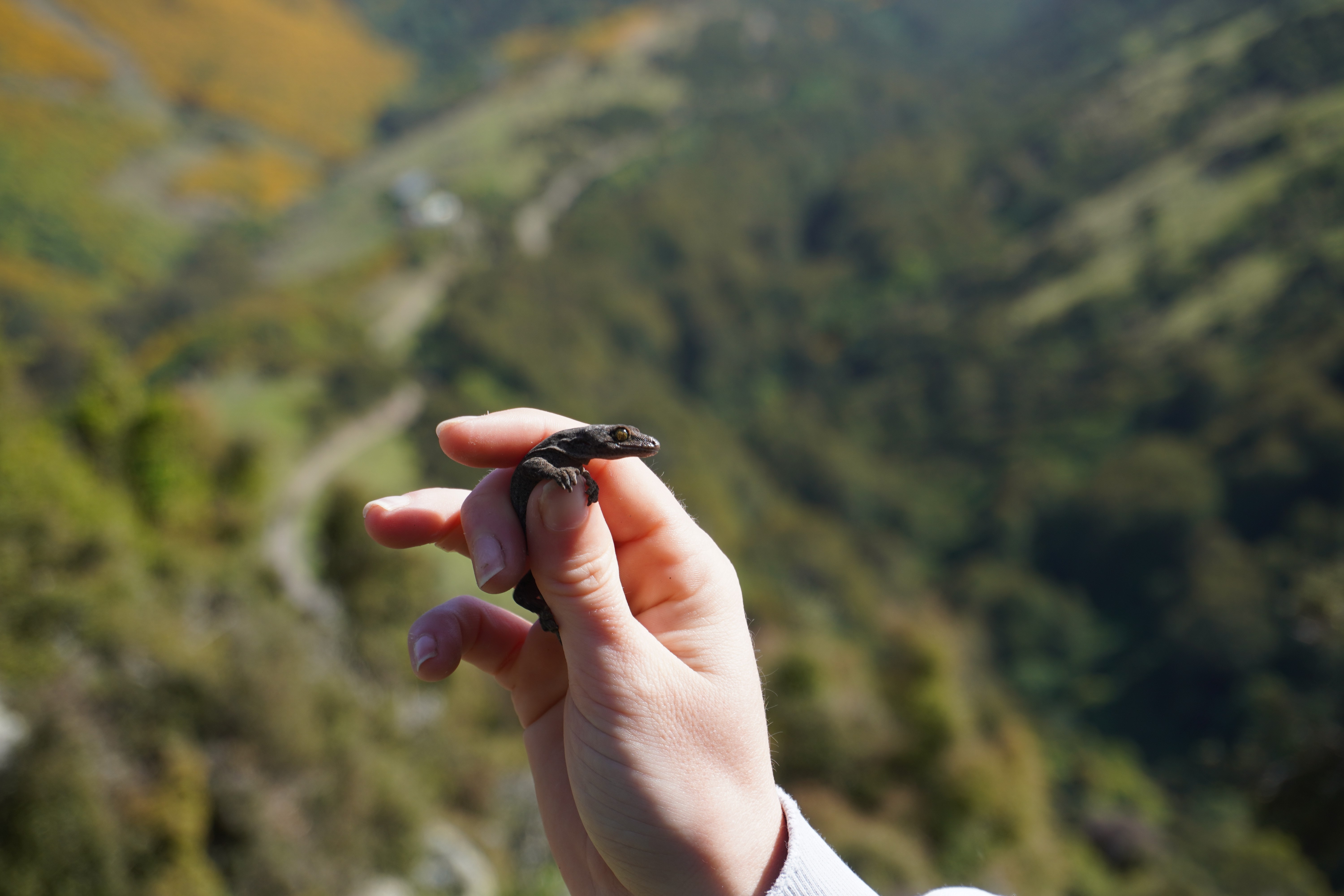
    Has your cat ever brought in a nice present only for you to find it’s a lizard? Have you seen a lizard scutling away on a nice sunny summer’s day while walking around the garden? Well, you may have lizards residing in your back yard!

    In New Zealand we have over 125 different lizard species, 76 are skinks and 48 are geckos, all but one one skink species is native. Of these 126 species, 49 (~36%) are Threatened and a further 67 (~50%) are At Risk (Hitchmough et al., 2021). Therefore 86% of our lizard species are threatened by various factors, such as predation, urbanisation, habitat fragmentation, and agricultural intensification.

    We all need to play our part to ensure that lizards do not continue to decline.

    There are simple tools we can use that can help the lizards in our back yard. Skinks love to hide under rocks and in small gaps when startled. Geckos love to live in tight crevices, like spaces in wood, stone and even in various human-made structures (e.g. power boxes and garages).

    We can create structures called Artificial Retreats (ARs) that mimic these natural retreats that lizards love so much. Artificial Retreats are a tool that we can easily implement that can support vulnerable lizards.

    Currently, artificial retreats have been designed for scientific monitoring and are commonly constructed from roof-cladding Onduline sheets, which isn’t an easily accessible or cheap material. My thesis investigated two other alternative designs that are constructed in a manner that is easily accessible to landowners and public members keen to do their part in lizard conservation.

    One AR type was constructed from a stack of three bricks (Figure 1) that have a 10 mm wooden dowel stuck between each layer so that the lizards can easily move between them.

    The second was constructed from two plywood sheets (Figure 2), bolted together, with the 10mm dowel in between the sheets.

    The third was the common Onduline design (Figure 3). I tested these ARs across Canterbury farms located at Cleardale Station in the Rakaia Gorge, as well as Flea Bay and Goughs Bay on Banks Peninsula.

    I captured 26 lizards to test in the three AR designs and there was no preference among the three. However, the geckos at Cleardale Station preferred some designs more than the Flea Bay lizards. At Flea Bay, the lizards were more commonly found in the brick (46%  of all geckos) whereas at Cleardale they didn’t use the brick ARs. At Cleardale Station, a equal number (17%) were found in both Onduline and wooden ARs. At Flea Bay, 17% lizards were captured and only 4% of lizards were found in the Onduline design at Flea Bay.

    Depending on the location of the property and the species of lizards present, there will be differences in which AR they prefer. Having an option of several different AR designs is preferable. 

    During the field trials I found that the ARs did not withstand heavy stock (cattle)interactions and were frequently interfered with. However, I did not have any problems with ARs placed in sheep paddocks.

    Landholders can implement any or all three of the designs into their property and all have a chance of lizard occupation. A variety of designs means that landholders can choose which AR design to use based on what available materials they have.

    Having a choice of AR designs make it accessible to whomever wants to conserve lizard species on their properties without having to spend large amounts of money or spending valuable time having to source the materials to construct the AR.

    Key design components and considerations when planning and building lizard ARs.

    • The ARs need to have at least one gap that has a 10mm gap.
    • Placed in an area where lizards or their poo have been seen.
    • Recommended not to be placed in a paddock in cattle.

    Acknowledgements: A massive thank you to the financial support for this project from The Brian Mason Trust and the North Canterbury Forest and Bird Trust.

    Reference

    Hitchmough, R., Barr, B., Knox, C., Lettink, M., Monks, J., Patterson, G., Reardon, J., van Winkel, D., Rolfe, J., & Michel, P. (2021). Conservation status of New Zealand reptiles, 2021.  

    Written by Sam Fitzgerald, a MSc student in the Department of Pest-management and Conservation at Lincoln University.

  • Collecting mammals: camera traps in eastern Nepal

    Collecting mammals: camera traps in eastern Nepal

    Collecting things seems to have deep roots in the human brain. There are few things more satisfying than finding something unexpected that you really need for your collection. The shock (woah!), the excitement (at last!), the surprise (how did this get here?), the urgency (I better grab this before someone else does), even though anyone standing close to you probably won’t care about this!

    My youngest son had a few years of thrifting where he would scour second-hand stores for ‘cool clothes’ that he could buy and then sell on for a reasonable profit to people who wanted that retro look but didn’t want to spend time searching. Edgar trained me up to spot certain brands, labels, styles and so on. For about five or six years I spent a lot of time browsing ‘dead peoples’ clothes’ as my middle son Arthur called them. I still remember a great trip with Edgar as I took him to a university semester in Dunedin. We struck gold in Waimate (a little off the beaten track) and found 30+ items!

    A small selection of Tanith Lee.Active from the 1970s till the 2010s – prolific and great for collecting! The Winter Players and Companions on the Road are two of my favourite (short) books ever. Image from Adrian.

    What do I collect? I guess there is a distinction between hobbies and collecting? I have a lot of small plastic figures that I love painting but I am not searching for some elusive or rare halfling commando. I buy a lot of boardgames and there are some older games that I might keep an eye out for, but I would count these as hobbies not collecting.

    Books, I have a lot of books…. Some of that is hobby – reading the latest books by Tad Williams or Lindsey Davis, for example. But I definitely collect some authors (Tanith Lee, Robert Howard) and spend time in second hand book shops with a list…. I still remember the day that I found the original D&D colouring book in absolutely mint, uncoloured condition! So rare! So elusive! All mine! (Sadly it has somehow gone missing from my collection in recent years!).

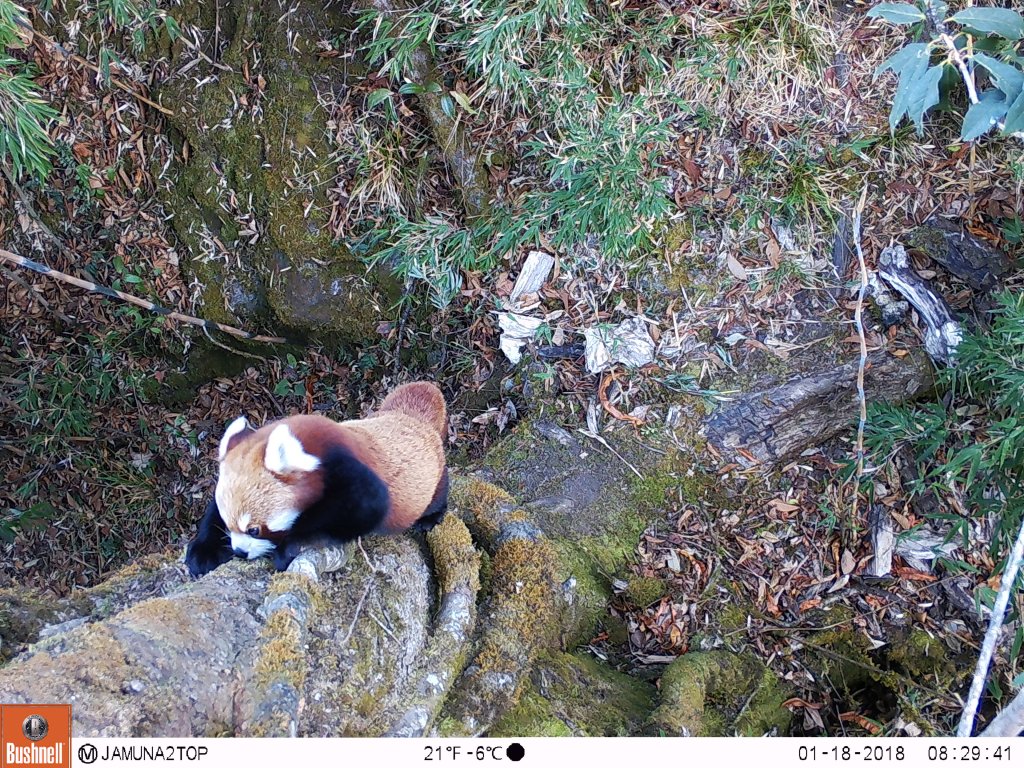
    Collected on camera – a red panda. Image by Sonam Lama

    As a zoologist interested in natural history, you are also dealing with collecting. Typically you want to collect the types of species found in an area. This tells us a lot about species diversity and richness, conservation, ecological interactions, evolutionary adaptations and so much more! This collection could be physical (like the hundreds of thousands of insect specimens found in our LU Entomology Research Museum) or it could be observational, where spotting an individual from a species can be logged (like with iNaturalist). But it certainly scratches the collecting itch.

    Observations can be direct (e.g. I saw that animal) or indirect (e.g. I found a footprint of that animal). Either way these are data that tell us that a species is found in the area. We are increasingly relying on indirect methods to collect observations – in fact much of our wildlife research here in Pest-management and Conservation is around developing better ways to monitor our mammal pests.

    Sonam Lama was a Master of International Nature Conservation student at Lincoln University. He had spent a lot of time working for the Red Panda Network back in Nepal. As part of his research, with Adrian Paterson and James Ross, he was interested in being better able to monitor red panda in the wild (but that will be another story!). Sonam was also keen to find what other species share the red panda habitat in far eastern Nepal. Were there many predators? Were there many competitors?

    Sonam in the forest of eastern Nepal. Image by Sonam Lama

    Sonam worked within the high altitude (between 2-4000 m abs) forests of Ilam, Panchthar and Taplejung, which provide a corridor between the rest of Nepal and India. Over this large area Sonam identified sites where he could put his 60 cameras. Typically the cameras were attached to the base of a tree. Observations from these camera traps were made through winter and spring. Results have now been published in the European Journal of Wildlife Research.

    So what did Sonam collect? Over 3000 camera trap days about 90000 images were recorded. Two thirds were false triggers (vegetation moving in the wind, sudden changes in temperature with sunrise and sunset) – such is the bane of the camera approach. About 11000 were of local people moving through the forest. Amongst all of this were over 5000 images of mammals, including 23 different species, and 3600 images of birds, including 37 species.

    Seventeen of these mammals were medium to large and could be identified. Red panda were observed. The commonly seen species were a deer – northern red muntjac, wild boar and leopard cats. The rarest were other cats: marbled cat (first record in Nepal), Asiatic golden cat and common leopard. The spotted lingsang was also collected for the first time, as was the first melanic (black) leopard.

    Collecting images and video also allows us to look at behaviour. We can get a sense of when species are active. We can see which species move around in groups. Wild boar foraged for tubers in front of the camera, red panda marked their territory, two porcupines mated! Red panda and macaques were active during the day, red foxes and porcupines were nocturnal.

    Collected on camera, a melanic form of leopard. A first for the region. Image by Sonam Lama.

    All of these collected images and videos provide little snapshots of natural history for these species, many of which are difficult to find any other way. Our understanding of potential threats for red panda has also increased. They definitely share their habitat with several potential predator species (and we found a few that were not even known from Nepal). Perhaps more importantly we were able to show that people are common in these habitats and that they are often accompanied by dogs. Good to know from a conservation point of view!

    Collecting images of different species using trail cameras is an increasingly common tool around the globe. It is becoming an essential tool for monitoring species. It doesn’t hurt that there is that thrill of the collector when you find an image of something surprising in amongst all of those misfires.

    This article was written by Adrian Paterson (Pest-management and Conservation at Lincoln University). Yes he is a collector ( I guess you could argue that he collects EcoLincNZ articles!).

  • Pesty plastics: Removing a problem from wildlife management

    Pesty plastics: Removing a problem from wildlife management

    We often put up with bad situations because they stop something worse happening. This can be as big as having nuclear weapons to stop major wars occurring. Paying taxes is a burden but it keeps a society healthy and connected. Not eating so much chocolate seems wrong but will give you better long-term health.

    And then we have plastic. Plastic must rank as one of the most successful of human inventions. It can be used in myriads of applications, keeps foods hygienic for longer, and allows more people to have the luxuries of the modern world. Plastic also causes incredible waste and we are still learning about the ongoing and long-lasting impacts that occur from the breakdown of plastics into smaller and smaller molecules.

    One of the biggest shifts in day to day life over the last decade or so is the movement away from plastic where possible. Many countries have banned (or are banning) single use plastics. I would doubt that there is anyone unaware of plastics as an issue for our sustainable future.

    Plastic figures from Cthulhu: Death May Die! A great game with great plastic figures (but some guilt comes with it!). Image from Adrian Paterson.

    One of my hobbies is in collecting and playing board games. Historically there has been a lot of plastic in games. Lately, there has been a real effort by gaming companies to make as much as possible from cardboard and wood and to remove stuff like shrink-wrap. (Although I do love me some great detailed plastic miniatures some of the time. I try to add use by painting them. Unfortunately, there is still nothing quite as good for sculpting as plastic. Hopefully that will change (see this approach using mostly wood shavings as a building matrix called re-wood).)

    As we have mentioned many times on EcoLincNZ, we do a lot of research on vertebrate pest management, especially in monitoring and detecting mammals, like stoats, deer, possums, hedgehogs (even elephants and leopards). Controlling these pests is vital for conserving New Zealand’s endemic biodiversity. We are very good at doing this and improving all of the time. Unfortunately, we use a lot of plastic.

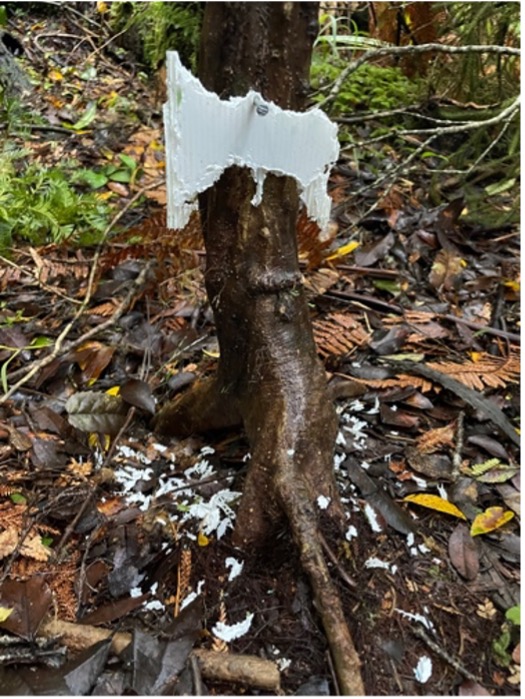
    Our tracking tunnels, chew cards and wax tags all have significant plastic components. Some of these are single use, some can be used a few times, but there are always some that get left in the environment. Also, many of the places that we are interested in monitoring are, by definition, in areas that have low human impacts and very little exposure to plastic. And here we are bringing the plastic there.

    Tracking tunnels are made of plastic. Typically they can be used multiple times but many are left in the monitoring areas. Image from Adrian Paterson.

    Now, you could argue that a few negatives of using a relatively small amount of plastic is far outweighed by the good that using these devices does. And you would be correct. But what if we could have our cake and eat it too?

    Katie Pitt is a PhD student at Lincoln University. She and her supervisors, James Ross and Adrian Paterson, have just published a paper in New Zealand Journal of Zoology where they question the use of plastic in wildlife management and ask whether we can do better.

    Katie looked at how much plastic is munched up by species, like rats and mice, when they interact with chew cards placed in various habitats. These bits of plastic remain in the rats and then the environment even if the cards are retrieved. The plastic fragments are also much reduced in size by the nibbling and can move around much easier, through wind, rain and rodent stomachs. The removed chew card will also end up in landfills.

    Katie found that chew cards in Canterbury and Taranaki typically left 15% of their volume behind in the environment as nibbled bits. Given the scale of monitoring throughout New Zealand this can quickly add up to a lot of plastic in areas that typically have no plastics.

    A well nibbled chew-card. All that missing plastic is now on the forest floor or in the faeces of rodents. Image from Katie Pitt.

    There may be an alternative. Katie tested some new chew cards made from wood pulp, and so fully biodegradable. Of course we don’t want to use a product that is inferior to what we already use, especially for something as important as protecting our biodiversity. Katie tested the use of wood pulp chew cards alongside plastic models. She consistently found that they performed just as well in a range of conditions (including with a lot of rain!). Katie also found that prices per chew card were similar with scope for the wood pulp cards to eventually become cheaper.

    Is this a problem that people want to solve? Katie asked individuals from 30 organisations that work in pest monitoring and found that 97% were keen to move away from single-use plastics, as long as there was no major reduction in functionality and cost.

    So we have a problem, people want to solve this problem, we have an alternative, and this alternative seems to work as well as what we already have. Eat that cake and have it as well!

    There is still a bit of work to do to scale this up to the levels that we need if this is to replace the status quo. Katie is also looking at how we would replace tracking tunnels. But the future is looking bright. And plastic-free.

    Adrian Paterson is a lecturer in the Department of Pest-management and Conservation at Lincoln University. As a Twin Peaks fan from way back, he really wanted to use “She’s dead, wrapped in plastic” in this article.

  • Finding a needle in a haystack: locating the short-tailed bat

    Most of us have been in the position where we’ve struggled to find something, be it your car keys, phone, or favourite pair of sunglasses. No matter how hard or long you search it just seems to elude you. One minute it’s there and the next it’s gone. You know it’s there, but where!! It’s an extremely frustrating feeling.

    This feeling is all too familiar to those scientists trying to monitor one of New Zealand’s bat species, the lesser short-tailed bat. These scientists would probably argue that finding small bats in a large forest has a few more challenges than searching for your car keys at home.

    Lesser short-tailed bat, Photo credit: CC-BY-4.0 Department of Conservation (NZ), via Wikimedia Commons

    To make monitoring the lesser short-tailed bat a bit easier it would be useful to know which parts of the forest they prefer to visit. Jessica Scrimgeour, Laura Molles, and Joseph Was looked into which forest structure lesser short-tailed bats are most likely to be found in. The scientists pondered over whether these elusive bats are in the forest they’re monitoring but they just can’t find them, or are they not in the forest at all.

    Most lesser short-tailed bat monitoring in New Zealand has occurred at ground level. However, scientists were aware that these bats can and do fly in all levels of the forest, from way down low to way up high. Bats may be hard to find when you are repeatedly looking in the same spot in the forest.

    Hard beech forest (Fuscospora truncata) in Ecclesfield Reserve, Upper Hutt, New Zealand, Photo credit: Rudolph89, Public domain, via Wikimedia Commons

    Back in 2013 Scrimgeour (Department of Conservation), Molles (Lincoln University), and Was (University of Waikato) used automatic bat monitors (ABMs) in the North Island to investigate this. ABMs are sound activated recorders that collect bat echolocation calls. ABMs can be set at different heights in beech and podocarp forests. Generally speaking podocarp forests are made up of trees of varying heights with a thick understorey. Beech forests on the other hand are made up of different beech tree species of a similar height, with a more open understorey.

    Lesser short-tailed bats prefer to fly through forests that have minimal clutter, or are the most open. ‘Clutter’ refers to, among other things, the amount of branches, leaves, and tree trunks that hinder the bats flight and echolocation.

    Echolocation is the bats way of navigating. It works by bats sending out sound waves that hit surrounding objects and then bounce back to the bat allowing the bat to orientate itself. In a cluttered forest the objects are very close together, which means that the bats are still sending out sound waves at the same time sound waves are bouncing back. Returning sound waves become challenging to interpret and can interfere with tasks such as orientating and finding food.

    Initially the group thought that a more cluttered forest would attract more bats, as clutter might mean an increase in biodiversity, with better quality food available. Even if the cluttered forest had the most food, which for bats is insects, they preferred to take the path of least resistance. Navigating through dense forest is just hard yakka, requiring too much energy. No surprises there, who doesn’t take the path of least resistance?

    Podocarp forest west of MacKay hut on the Heaphy Track, South Island, New Zealand, Photo credit: Pierre Lavaura, Public domain, via Wikimedia Commons

    Lesser short-tailed bats are very committed to taking the path of least resistance and even change the height they fly at depending on the type of forest they’re in. In the beech forest, bats spent the most time flying in the bottom tier of the forest, as this part was the least cluttered. In podocarp forest, bats spent most of their time flying in the least cluttered middle tier of the forest.

    As New Zealander’s we like to think that we are different to the Aussies across the ditch, but our bat species don’t quite think the same. The trans-Tasman bats are actually very similar to each other. Other research on bats in Tasmania found that bat flying activity is greater when the forest is more open. So I suppose you could say that the Tasmanian bats are a bit lazy like our bats, or they behave optimally!

    The results from this 2013 study have also been backed up in subsequent research in New Zealand. This research found that in urban and rural settings long-tailed bat activity was also effected by vertical airspace and horizontal microhabitats.

    For those on the lookout for bats this study has helped with deciding where to place monitoring devices for more robust monitoring programmes. Finding that needle in the haystack has just a little bit easier.

    Lesser short-tailed bat, Photo credit: CC-BY-4.0 Department of Conservation (NZ), via Wikimedia Commons

    What’s been happening with monitoring programmes for bats since 2013? Well, it turns out quite a lot. Acoustic monitors are now used instead of ABM’s. These monitors are basically microphones that record bat echolocation calls as they fly past the monitors. More research has gone into where bat activity is likely to be the highest to further help in the placement of acoustic monitors.

    This new knowledge has definitely paid off with the exciting recent discovery of a population of the lesser short-tailed bats in the lower North Island. It was thought that the lesser short-tailed bat was extinct from the Pākuratahi forest, Upper Hutt, because bats had not been detected there for a very long time. It just goes to show that just because you haven’t detected something doesn’t mean it’s not there. Sometimes you just need to look a bit harder or, at least, a bit smarter.

    Scrimgeour, J. Molles, L., & Waas, J. R. (2013). Vertical variation in flight activity of the lesser short-tailed bat in podocarp and beech forest, Central North Island, New Zealand. https://researchcommons.waikato.ac.nz/server/api/core/bitstreams/fe6c95f0-a86d-408b-a6b4-cbc112a24865/content

    This article was prepared by Postgraduate Diploma in Applied Science student Anna Gardiner as part of the ECOL608 Research Methods in Ecology course.

  • Dirty little secrets or tiny heroes of the soil world?

    Dirt was one of my first friends. My earliest days were spent collecting worms from the backyard and trying to convince my parents I hadn’t done any dirt taste testing that day (I probably had, but for purely scientific reasons). I was fascinated by what seemed like an entirely different world in the soil of my parent’s garden. I could find all kinds of goodies from insects to plant roots.

    At university I was introduced to the truly magical world in soil: microbes. Although not visible to the naked eye, the tiny worlds inhabited by fungi, bacteria, viruses, and other unbelievably small things, should not be overlooked. These tiny worlds are called the microbial community and they have important roles in New Zealand forests.

    Photo of soil microbes under a microscope. Photo by Pacific Northwest National Laboratory (CC-BY-NC-SA 2.0)

    A good place to start thinking about microbial communities is our own bodies. Most people have heard of their gut microbiome. The microbes in our digestive system are important for our health from immune function to digestion (especially for dirt tasters). However, some microbes, such as the COVID-19 virus, can make us sick. Soil microbes in forests are not so different.

    Forests are dependent on microbes that cycle nutrients, decompose waster, and aid plants in nutrient uptake. Like humans and the common cold, some soil microbes hurt their associated plants. An example of this is kauri dieback disease, a disease spread by a spore in the soil that attacks tree roots and trunks. This disease hinders the tree’s ability to uptake and transport nutrients, essentially starving and killing the tree. Kauri dieback is incurable and fatal for kauri.

    Tāne Mahuta, the largest surviving kauri. Photo by Jodie Wiltse (Author)

    Kauri dieback is named after the tree it infects, New Zealand’s mighty kauri tree. The Department of Conservation explains that kauri can grow up to 16 m in circumference and live over 2000 years. The legendary status of kauri is clear in the language used to describe them. The largest surviving kauri is called Tāne Mahuta, which means ‘lord of the forest’. If you were to visit Tāne Mahuta today, you would find boot cleaning stations, warning signs, and only be able to view the great tree from a platform. Moreso, entire trails have been shutdown to stop people from spreading soil around kauri. Why?

    A soil microbe, Phytophthora agathidicida, travels under the name of kauri dieback. This microbe cannot be seen with the naked eye but has the power to kill tremendously large kauri trees. In humans, the heroic microbes of our immune system save us when nasty microbes make us sick. Are there unseen heroes hiding in the soil that can help kauri?

    During a PhD project at Lincoln University, Dr. Alexa Byers studied soil microbial communities under kauri to find out. The goal was to identify microbes that suppress kauri dieback and can aid in kauri conservation.

    The first step was to understand how microbial communities under kauri react to kauri dieback disease. Alexa infected kauri seedlings with kauri dieback and looked for changes in the soil microbial community. When humans are attacked by illness causing microbes, our immune system amps up to protect us. When soils were infected, Alexa found bacteria that were involved in disease suppression. This was a promising result suggesting that heroic soil microbes could build up their numbers to fight off kauri dieback.

    Kauri tree bleeding resin, a common symptom of kauri dieback disease. Photo by Onco p53 (CC BY-SA 4.0).

    Next, Alexa looked into how specific strains of bacteria from kauri soil impacted the development of kauri dieback. She identified Paraburkholderia and Penicillium microbes that inhibited the growth of kauri dieback in soils. Paraburkholderia are known to enhance plant growth and fix nitrogen. Penicillium are fungi that can kill or stop growth of other bacteria. We officially have some heroic contenders!

    The battles between heroic microbes and kauri dieback in the soil could determine the fate of the kauri above them. Hopefully, researchers can find a way to rig microbial battles in favour of these unseen heroes. More research is needed to determine their true potential, but these soil microbes could be called to action in the near future.

    The world under kauri is just one example of fascinating soil microbes. Soil microbes have been found to be key for carbon storage, impact the taste of tea, and reduce nitrogen runoff from agriculture, among many other amazing things. This is your reminder to appreciate the little things, even the things so little you cannot see them. Next time you play in a garden or walk through a forest, I hope you take a moment to think about all the tiny microbes working away in the soil to help (or hinder) plants and make the natural world work.

    This article was prepared by Master of International Nature Conservation student Jodie Wiltse as part of the ECOL608 Research Methods in Ecology course.

    Research Paper: Byers, A.K. (2021). The soil microbiota associated with New Zealand’s kauri (Agathis australis) forests under threat from dieback disease: A thesis submitted in partial fulfilment of the requirements for the Degree of Doctor of Philosophy at Lincoln University. Lincoln University. https://hdl.handle.net/10182/13887

  • Under the southern moss

    In popular media New Zealand is often portrayed as a ‘Lost World’. From Middle-earth to Narnia, from Skull Island to Mythic Greece, New Zealand has often stood in for a director’s idea of a mysterious place that time forgot. This started in the 1960s with In search of the Castaways, a cheesy Disney live action film. I’ve even done this myself in an article on New Zealand’s biological history and how the Lost World might be a useful theme with which to explore why we see such a special biodiversity here.

    A lost world?

    One way to make a place look ancient in a movie is to drape everything in moss. Moss-covered ruins and trees just look old and mysterious. Walking through the New Zealand bush we usually see a lot of moss, especially in the wetter parts of New Zealand. Moss wrapped around branches and in mounds on the ground gives the vibe that the forest has been unchanging and quiet for a long time.

    How accurate is this?

    Wendy Kentjens (with David Glenny from Landcare Research, and Tim Curran and Jon Sullivan from Lincoln University) wanted to find out what determines where moss (or bryophytes as they are technically called) grows. She has published a paper about it in NZ Journal of Botany.

    Her study site was at the Boyle River near Lewis Pass. At the site there are stretches of beech forest as well as manuka/kanuka areas. And there is a lot of moss, on the branches, on the ground, growing high in trees, even around the streams.

    Wendy collected moss samples to identify which species were present. She also looked at lots of environmental factors to see if they created patterns for mosses. She measured things like tree-trunk diameter, canopy cover, ground cover, species of plants, and habitat pH.

    Wendy busily trekked around 98 plots where she found 30 species of moss. There were a lot of differences between habitat types, with the stream areas having very different moss species to everywhere else. Beech forest communities were reasonably different to manuka communities, even though they were in close proximity. More moss was found on the damper and darker south sides of trees.

    And moss can be comfortable for a nap! Image from Adrian Paterson

    There are a lot of mosses growing in our forests. Are they ancient? Many of the areas at the Boyle, particularly the manuka/kanuka forest, are only a few decades old as they are recovering from being made into pasture. So, mosses are able to colonise and grow in these areas very quickly.

    When we look at a moss clad tree or boulder we shouldn’t automatically assume that it has taken centuries to accumulate. These forests are highly changeable systems and moss are just as opportunistic and quick to grow as the surrounding plants.

    Mosses may give off the old lost world vibe but they are as young and vibrant as the next plant or lichen. However, if production companies want to come here to spend lots of money on their next historical/fantastical/science-fictiony epic then I guess we can put up with it.

    Adrian Paterson is a lecturer in Pest-Management and Conservation at Lincoln University. He generally likes moss, and it does make him think of the Lost World!

  • PredatorFreeNZ 2050: fantasy into reality

    High in the treetops of a lush forest, a group of native birds gathered together, their vibrant feathers glinting in the dappled sunlight. Excited chirps and melodic trills filled the air as they engaged in a lively conversation. Their voices carried the hopes and dreams of a restored ecosystem.

    Koru, a charismatic Tūī with iridescent feathers, fluttered his wings and cleared his throat. “Have you all heard the latest? The Humans are determined to make New Zealand predator-free by 2050!”

    The cheeky Kākāriki, a lively parakeet, interjected. “Can we truly reclaim our forests from the claws and jaws of those invaders?” A wise and observant Morepork owl, Ruru blinked his large, round eyes. “Is that so? Quite a lofty goal, but can they really do it?”

    Photo credit: CC BY-NC-ND 2.0 Simeon W Flickr
    Red-crowned Kakariki, Photo credit: CC BY-NC-ND 2.0 Simeon W, Flickr

    With its unique biodiversity, New Zealand is home to a huge array of species found nowhere else on Earth. However, many of these treasures face an existential threat from invasive predatory mammals, such as rats, stoats, and possums, introduced by human settlers centuries ago. These voracious predators ravage the native bird populations. Many species are now extinct, and more are now on the brink of extinction.

    Predator-Free New Zealand 2050 (PFNZ2050) was initiated in 2016 with an audacious aim of eradicating the most destructive trio of predators: possums, stoats, and rats; from New Zealand. This call for action echoed through the mountains and valleys, inspiring conservationists to make New Zealand, once again, a land of breathtaking beauty and thriving unique biodiversity. The ambitious aim of Predator Free 2050 is not without precedent. To date, New Zealand has successfully eradicated invasive mammals from 105 (admittedly much smaller) islands.

    In 2020, a journal article was published that assesses the feasibility and steps needed to achieve Predator Free 2050. it was written by James Ross, from the Centre for Wildlife Management and Conservation (CWMC) at Lincoln University, Grant Ryan from The Cacophony Project, Merel Jansen from the Department of Applied Biology, HAS University of Applied Sciences, Hertogenbosch, The Netherlands, and Tim Sjoberg, from the Taranaki Mounga Project. Together, these researchers have decades of experience controlling and monitoring pest mammals in New Zealand.

    The first step, removing predators with aerial 1080 poisoning and ground-based resetting traps, will help remove the majority of predators. A modified aerial 1080 approach, developed by Zero Invasive Predators (ZIP), can result in localised eradication. This was first tried in a 400-ha area at Mt. Taranaki in 2016, then at a 2,300-ha site in South Westland, using ground-based resetting traps. Regular servicing of resetting traps also gives better ground-based control results.

    Once pests have been eradicated from an area, the next big challenge is to defend the area from invasion. ZIP demonstrated how to defend predators from re-invasion in two sites using a “virtual barrier” of traps. A 2 km wide barrier of traps protected a 400-ha peninsula at Bottle Rock in the Marlborough Sounds. Using this virtual barrier of traps, ZIP prevented predators from re-invading at two sites, in the short term.

    Australian brushtail possums, initially introduced into New Zealand for the fur trade, and now one of the major pest mammals in New Zealand.
    Photo credit: CC BY-SA 2.0, Gnu Chris, Flickr

    Detecting the survivors is the next crucial phase for eradication, as any survivors can build a new population. The CWMC and Cacophony Project found that thermal cameras are 3.6 times more sensitive than trial cameras in detecting possums. Whilst trail cameras appear to improve detection rates, they do not always trigger when a small, fast-moving animal moves in front of them. These cameras also use infrared illumination at night, which may deter some animals.

    Thermal cameras are a new advanced technology that shows high sensitivity in detecting both small and large pest mammals. Because the motion detection is done using software, the sensitivity can easily be adjusted. Unlike trail cameras, thermal cameras do not require infrared illumination to operate at night.

    Videos collected by the thermal cameras are classified using AI technology (machine learning) trained on a library with more than 50,000 tagged videos. The AI can identify the animal species and only keep recordings for the target pests, which can be stored on-board the device or sent out using the cellular network.

    To achieve the PFNZ 2050 goal, detecting the last few individual pest mammals is complex and expensive. As a technical improvement in detection, ZIP has made an AI network of over 500 cameras across the Predator-free South Westland project area. The AI cameras use LoRa (low-powered radio technology) to send the information to solar-powered mini-satellites. The information is transferred to a web server that checks the information the next day. The AI cameras only need to be serviced twice a year to change the batteries. The AI cameras have reduced the time to detect one predator from around six weeks to just one day and have reduced the cost significantly.

    PFNZ2050 will require more innovative strategies, control tools, and wider public support to be successful in its ambitious challenge. Future control work will increasingly take place in and around urban areas. As such, the next most important advancement needs to be construct control tools that community groups can use. There should be a bottom-up-driven approach to community engagement in conservation so that as new technologies become available, the number and size of invasive mammal-free publicly and privately managed reserves can increase. In a recent study, people showed high support for species-specific toxins, but there is a shortage of funding for registration of these toxins.

    NZ has a 60-year history of eradicating pest mammals, from tiny 1-ha Maria Island to more than 11,000 ha Campbell Island, with suitable techniques and public support. This is an example of how the impossible becomes possible when passion, science, and community unite.

    With a final chorus of their harmonious calls, the native birds took flight, their wings carrying their hopes and aspirations to the corners of the land. From forests to cities, their songs echoed, touching the hearts of all who listened.


    This article was prepared by postgraduate student Mohamed Safeer as part of the ECOL 608 Research Methods in Ecology course for his Master of Pest Management degree.

  • Remove one NZ invasive mammal predator and another steps into its place

    Invasive species are a major concern for ecosystems worldwide, causing significant disruptions to native flora and fauna. Some mammals can have particularly devastating effects on local ecosystems due to their predatory nature. In the Hawke’s Bay, New Zealand, a recent study titled “Niche Partitioning in a Guild of Invasive Mammalian Predators” sheds light on the dynamics of invasive mammalian predators and their impact on the region’s native biodiversity.

    I’ll walk you through the key discoveries and explain why they hold immense importance in our understanding of niche partitioning and its implications for ecosystem management.

    Niche partitioning refers to the process by which species with similar ecological requirements coexist within an ecosystem by utilizing different resources or occupying different ecological niches. Niche partitioning reduces direct competition, promoting the coexistence of species that would otherwise struggle to survive in the same habitat.

    In Hawke’s Bay, a guild of invasive mammalian predators has established, comprising three key species: stoats(Mustela erminea), ferrets (Mustela furo), and feral cats (Felis catus). 

    These predators were introduced to New Zealand and have since wreaked havoc on many native bird populations. Recent studies have revealed an intriguing pattern of niche partitioning among these invaders, suggesting a potential balance within the guild.

    Camera traps were deployed in three seasons. Credit by Albert Salemgareyev/ACBK

    Researchers have observed distinct differences in the dietary preferences and hunting strategies among these invasive predators in Hawke’s Bay. These variations have allowed the species to exploit food, reducing direct competition and encouraging the peaceful coexistence of individuals.

    Stoats, being the smallest and most agile of the three predators, specialize in hunting rats, mice, and birds. Their slender bodies and keen sense of hearing enable them to pursue their prey with stealth and precision. Ferrets, on the other hand, are larger and more versatile, adapting to different types of prey or using various hunting techniques. Ferrets tend to target larger prey, such as rabbits and small hares, which they capture using their strength and speed. Feral cats, similar to stoats and ferrets, are solitary hunters, exhibiting a broader dietary range, preying on both small and medium-sized mammals, birds, and reptiles.

    While the predators may occasionally target overlapping prey species, they generally exhibit distinct foraging preferences and occupy different microhabitats. Stoats predominantly inhabit forested areas, where their excellent climbing abilities give them an advantage in pursuing prey in trees.  Ferrets, with their larger size and ground-based hunting strategies, are often found in open grasslands and shrublands. Feral cats, being highly adaptable, can exploit a range of habitats, from dense forests to human settlements.

    The phenomenon of niche partitioning among invasive predators in Hawke’s Bay has important implications for native species conservation. By occupying different ecological niches, these predators help reduce the burden on specific native animals in an indirect manner, allowing them to persist despite the presence of invaders.

    Bird species, in particular, have been heavily impacted by the invasion of mammalian predators. Native birds, such as kiwi, weka, and tui, have experienced population declines due to predation. However, the niche partitioning observed among invasive predators offers a glimmer of hope for the survival of some native bird species. For example, stoats target ground-dwelling birds, while ferrets focus on larger prey, like rabbits. This division of labour reduces the overall predation pressure on specific bird species and allows them to maintain a foothold in their respective habitats.

    Stoats are tricky to study. They are hard to find in the field and difficult to keep in captivity. Image from Adrian Paterson.

    Understanding the dynamics of niche partitioning among invasive mammalian predators can inform targeted conservation strategies. By recognizing the specific resources and habitats favored by each predator species, conservationists can create plans for managing natural areas that utilize the division of habitats to safeguard endangered native animals.
    Implementing effective trapping and removal programs, focused on the specific predators posing the greatest threat to certain bird species, can help alleviate their population declines.

    Habitat restoration initiatives aimed at enhancing native bird habitats, while creating barriers for invasive predators, can further support the survival and recovery of endangered species. For instance, Wellington, Zealandia is a 225-hectare fenced sanctuary dedicated to protecting and restoring native wildlife. The sanctuary is predator-free and provides a safe haven for endangered bird species like the tīeke (saddleback), kākā, and hihi (stitchbird). Zealandia also conducts active predator control outside the sanctuary to create a buffer zone for native birds.

    The study on niche partitioning among invasive mammalian predators in Hawke’s Bay offers valuable insights into the complex interactions within ecosystems and the potential consequences of invasive species on native biodiversity. These findings provide a foundation for conservation efforts and ecosystem management strategies aimed at mitigating the negative impacts of invasive predators on native flora and fauna. By understanding the dynamics of invasive species, we can work towards restoring and preserving the delicate balance of ecosystems, ultimately fostering a more sustainable future for our planet.

    Removing cats and ferrets from an ecosystem often has unforeseen consequences, as evidenced by the subsequent increase in site use by stoats. Stoats, cunning predators known for their ability to adapt to changing circumstances, have exploited the absence of cats and ferrets to their advantage. In the absence of these competitors, stoats have become more active during the day, closely following diurnal bird activity. This behavioral shift has raised concerns among conservationists, as it highlights the need for predator control measures to account for the specific hunting patterns and preferences of different predators.

    Failing to address this issue adequately could lead to a worse outcome for daylight birds, whose vulnerability to stoat predation may increase if their activities are not considered in predator control strategies. Therefore, it is crucial for ongoing conservation efforts to not only focus on removing invasive predators but also to consider the complex interactions among species and the potential cascading effects that may arise.

    This article was prepared by Master of International Nature Conservation student Albert Salemgareyev as part of the ECOL608 Research Methods in Ecology course. Albert won a prestigious Whitley Award for Conservation in 2023.

    Garvey, Patrick M., Alistair S. Glen, Mick N. Clout, Margaret Nichols, and Roger P. Pech. 2022. “Niche Partitioning in a Guild of Invasive Mammalian Predators.” Ecological Applications 32(4): e2566. https://doi.org/10.1002/eap.2566 

  • Detecting eDNA: everything, everywhere all at once

    Let’s say you want to know what animal species are present in a forest. You could walk along line transects and record the species visually observed. You could set up trail cameras to take pictures of passing animals for as long as there is enough space in the memory card and battery life in the cameras. You can use the acoustic survey method to study bats, birds, frogs, and even some monkey species, as they can be distinguished based on their sounds and calls.

    Depending on the size of your study area, making a list of the animal species present might take a several hours to several months because you will need to carry out various methods to identify them, which may also require species experts.

    These are well-established conventional methods for biodiversity monitoring, but is there no single method to find all the species in a given area at once? A one-size-fits-all t-shirt?

    There is a rapidly developing method that can identify a good portion of species in a given study area, including those living on the ground, in the ground, in the water, and even those flying in the air.

    Every organism contains genetic material called deoxyribonucleic acid (DNA), passed down from parents to children. All organisms from the same species have very similar DNA.

    An illustration of the double-helix of the DNA molecule. Original public domain image from Wikimedia Commons

    This technology takes advantage of the traces that organisms leave of their DNA in their environment, whether feathers, skin, scales, urine, or faeces. These traces, known as environmental DNA (eDNA), can be found in soil, water, and air.

    This shiny new method is called DNA metabarcoding. Simply put, it identifies organisms by matching their DNA with reference DNA from the gene database or library. It is like matching the barcode of products when you check out at the supermarket.

    The process begins with collecting water or soil, or even air, samples from the study area. These samples typically contain genetic material from diverse organisms, including bacteria, plants, and animals.

    Once samples are collected from the field, they are brought to the laboratory. DNA is separated from the samples, amplified, and sequenced to generate vast amounts of genetic data that can be compared with existing DNA databases and reference libraries such as GenBank for species identification.

    Environmental DNA – An emerging tool in conservation for monitoring past and present biodiversity – Scientific Figure on ResearchGate. Available from: https://www.researchgate.net/figure/The-overall-workflow-for-environmental-DNA-eDNA-studies-with-examples-of-organisms-that_fig1_269724781 License: CC BY-NC-ND 4.0

    DNA metabarcoding can detect a broad range of organisms at once, providing a snapshot of the species diversity within the study area. That way, you can avoid performing various sampling methods. How convenient is that!

    Of course, no method is perfect, even DNA metabarcoding. Since it is still developing, there are limitations. The public gene library has the DNA references of many species but this is still a small fraction of all the species on earth, so far. There can be contamination in the samples, which could disrupt the results. Errors can occur not only during sample collection in the field but also in the laboratory.

    Compared to DNA metabarcoding, conventional methods have stronger standardised techniques for sampling and for interpreting the datasets. Besides, in the context of biodiversity monitoring, conventional methods can provide detailed information, such as abundance, age, sex ratios, and individual animals’ special characteristics, such as colours and conditions, which DNA metabarcoding cannot tell us.

    Conventional methods are like pictures with tiny pixels portraying good resolution, but their taxonomic scope is limited, whereas those of DNA metabarcoding cover a broad range of species, but the resolution is coarse.

    Is there the best of both worlds?

    Yes! Robert Holdaway and colleagues, including Ian Dickie working at Lincoln University, suggested that combining DNA metabarcoding with conventional monitoring methods will benefit scientists in many ways.

    Using them together will enable scientists to test and improve the reliability and accuracy of our still-developing DNA metabarcoding method. Moreover, combining them will result in a higher chance of detecting species from the same lineage.

    Robert and colleagues provided three case studies in New Zealand that can benefit from the dynamic duo.

    First, the duo can be of advantage to the nationwide measurements of New Zealand’s biodiversity. They can provide greater taxonomic coverage and more thorough information on the relations among biodiversity, ecosystem functions, and services.

    Second, integrating DNA metabarcoding with Māori biodiversity monitoring approaches will bring more understanding to the Māori worldview of interconnections among living and non-living beings. Metabarcoding can enhance biodiversity inventories, identifying species important and relevant to Māori which are rare or hard to find using conventional methods.

    Third, combining DNA metabarcoding with traditional surveillance in detecting pest species at the early stage will secure native species and landscapes from harmful biosecurity threats, such as harmful pests and diseases.

    In addition, DNA results shared from various surveys using the dynamic duo will be added to the reference libraries making them more resourceful and convenient for future research. Having more reference DNA sequences of species in the reference libraries, like GenBank, will make biodiversity monitoring much easier by identifying species with just a few clicks.

    DNA metabarcoding is a rapidly developing and powerful tool for monitoring biodiversity. Integrating it into conventional methods will lead to a stronger method to get plausible results. Overall, as Robert and colleagues indicated, not only will they add value to New Zealand’s biodiversity and Māori culture, but they will also protect the native natural environment and species through early detection of pests.

    This article was prepared by Master of Science postgraduate student Zin Mar Hein as part of the ECOL608 Research Methods in Ecology course.

    Together, they will indeed make the best of both worlds for conservation.

  • Small animals show us the value of old natural forests

    Hambach. You are in Germany right now, halfway between Cologne and the Belgian border. I’d like to warmly welcome you to the Hambach forest – an ancient forest that is dominated by oak and hornbeam, representing a rare forest type in modern Germany. The Hambach forest is the last remnant of a forest that ranged over wide flat plains since the end of the last ice age around 12,000 years ago. Regrettably, it has become famous for being gradually absorbed by a vast hole!

    Tree house in the Hambach forest.
    CC BY-NC 2.0 by Tim Wagner, Flickr

    The Hambach forest used to range over an area of around 5 500 ha. During the past four decades, around 90 percent has already vanished. What remains today is not a normal forest anymore – idyllic, undisturbed, and peaceful. The forest is not only threatened by further sliding into the hole. In 2018, the Hambach forest also became the stage for one of the largest major police operations, owing to another curiosity about the Hambach forest: it is inhabited by people, living in tree houses. Occupying the forest, they want to protect what is left of it and demonstrate against the further expansion of the hole. However, since the forest is privately owned by the company that sacrifices it for the hole, activists were forced out of the forest with the help of police power – before occupying it again.

    So what is the gigantic hole? It is the result of four decades of open-cast coal mining in the Hambach region. However, its further growth will eventually take an end. For the year 2038, Germany has committed itself to complete the coal phase-out, a critical step for Germany’s energy transition. Until then, coal power stations in Germany can be fuelled by coal – extracted from German coal mines (“holes”), with a spectacularly bad impact on the climate. Still, based on the coal-phase out, the remaining part of the Hambach forest can be saved.

    Hambach open-cast coal mining hole.
    CC BY-SA 2.0 by Traveling Tourist, Flickr

    Growing up close to the Hambach forest, that received international attention in the environmental and climate movement, I’ve been concerned about one question for a very long time: How can we replace an ancient forest that is destroyed for mining purposes?

    “If we are moving several villages, people, and a motorway for the open-cast coal mining, why don’t we also move the forest?” That is how people in my region would have addressed this question in the past. Believe me or not, that’s exactly what has been done. At one end of the gigantic hole, the largest artifical hill worldwide was created and recultivated with trees. It serves the region now as a recreation area, comprising an about 70km network of hiking trails. “Forest is forest. There is no difference”, people say in my region. So why be concerned?

    But is it really that easy? Are humans really able to shape a new forest within a few years as a replacement for a destroyed ancient forest, that has the same value for biodiversity and people? And will the planted trees provide an appropriate habitat for all mammals, birds, insects, spiders, herbs, lichens and other important life forms that used to inhabit the lost forest?

    In many countries around the world, there are nowadays regulations regarding compensation and restoration measures that mining and other companies have to fulfil when their activities destroy land. However, in reality, is it always possible to restore an ecosystem that has undergone complete degradation from a natural forest to a mining site, back to its original state and biodiversity value? Otherwise, it is possible to shape a new ecosystem with the same values at another site – like it was aimed with the planted artifical hill as a compensation for the destruction of the Hambach forest? Fortunately, there are ecologists who have learned the answers to these questions. Closely monitoring the process of ecosystem restoration they can tell how successful undertaken restoration efforts are for biodiversity.

    So, now that we’ve already practiced thinking in great dimensions, let’s undertake a great jump to another mined forest – we’re jumping off Germany, over Italy and the Mediterranean Sea, crossing the Arabian Peninsula and the Indian Ocean, passing Australia and are finally landing in… Auckland! Well done! We’re standing here at the Hunua Quarry site, near Papakura in South Auckland. It is part of the Hunua ranges that consist of over 20 000 ha of native forest, comprising tawa, podocarp, kaurihard beech, and taraire forest as main vegetation types.

    The Hunua Ranges.
    CC BY-NC 2.0 by Neil Hunt, Flickr

    The Hunua Quarry is managed by Winston Aggregates, New Zealand’s largest aggregates provider. As a restoration measure, in six years over 140 000 plants have been planted in this highly modified habitat after quarrying. The aim is to provide a new forest as a replacement of the forest area destroyed. Next to the restoration area, you can still recognize unrestored areas of exotic grassland that have established after quarrying, as well as undisturbed mature native forest.

    Researchers from Lincoln University (Mike Bowie and colleagues) studied the invertebrate communities at Hunua Quarry, including wetas, beetles, cockroaches, crickets, spiders, centipedes, earthworms, ants, flies, mites, moths, slugs and snails, amongst many others. Although rather small animals, invertebrates are essential for the functioning and health of ecosystems, thereby making an important contribution to biodiversity. The objective of their study was to develop a better technique for the assessment of restoration success after mining, using invertebrates as bioindicators. Bioindicators are species that react sensitively to changes in their environment so that they can be used to assess the quality of an ecosystem.

    The researchers collected invertebrates in the undisturbed mature forest, in restored areas, as well as in the unrestored exotic grassland. They compared how many and which invertebrates were living in the respective areas. Interestingly, the undisturbed mature forest, the restored areas, and the unrestored exotic grassland were characterized by very different invertebrate communities. The invertebrates found in the six-year-old restored areas were mostly still very unlike those found in the undisturbed mature forest. For instance, the researchers were able to collect eight times more cave weta in their pitfall traps in the undisturbed mature forest than in the restored areas. In addition to cave wetas, the mature forest also harboured many spiders and beetles. Hence, if the forest restoration process is successful, it is expected that more cave weta, spiders and beetles typical for mature forest will inhabit the restored sites in the next years. At the same time, fewer exotic snails, slugs and earthworms that were found to be characteristic for the unrestored exotic grasslands are expected.

    This beetle,
    Holcaspis mucronata,
    was found most abundant in the mature forest.
    CC BY 4.0 by Birgit E. Rhode, Wikimedia Commons

    The study identified several invertebrate species as bioindicators. These can be used in future studies to assess the success of forest restoration at mine or quarrying sites. The study findings have been recognized in several other invertebrate studies of different parts of the world, for example, in a global synthesis on how good forestry plantations are at providing habitats to native beetles in comparison to natural forests. In that study, restoration sites were considered as forestry plantations, being planted by humans for conservation purposes and therefore different from natural forests. Another study dealt with the effect of removing an invasive plant as a restoration measure on an Mediterranean island. It referred to the study at Hunua Quarry for the use of beetles as bioindicators to observe the effects of restoration.

    All in all, the study showed that invertebrates might tell us more about the quality of a forest than you would easily see yourself. Hence, studying invertebrates as bioindicators has great potential for making better decisions in ecosystem management and for restoration projects. I hope that research about restoration will also raise public awareness for the complexity of biodiversity and the needs for appropriate habitats. Perhaps, I will hear many people around the Hambach forest region in Germany say: “Forest is not like forest. We need to consider old natural forests as valuable habitats and save them from vanishing, not only for the sake of spiders and beetles.”

    This article was prepared by Master of International Nature Conservation student Vivien Michel as part of the ECOL608 Research Methods in Ecology course.

    Link to the research article:

    Bowie M, Stokvis E, Barber K, Marris J, Hodge S. 2018. Identification of potential invertebrate bioindicators of restoration trajectory at a quarry site in Hunua, Auckland, New Zealand. New Zealand Journal of Ecology 43.

    Read more:

    Donahue, Michelle Z. 2018. Is Germany’s Hambach Forest Doomed by Coal? National Geographic, April 13. https://web.archive.org/web/20190914181247/https:/www.nationalgeographic.com/news/2018/04/hambach-forest-germany-logging-coal-conservation-science/

    Coal exit will save Hambach Forest: activists. Deutsche Welle, January 27, 2019. https://www.dw.com/en/german-coal-exit-plan-will-save-hambach-forest-activists-say/a-47251256