Christmas is just around the corner and for many this means that it is time to head to the sea. Beach holidays have long been a tradition for kiwi summers. I was no different while growing up and through my adult life. We spent a lot of time at the little beach village of Kaka Point, at the far northern end of the Catlins, in South Otago.
Not a lot deterred us from hitting the waves. The weather could be a little iffy and the water a little cool but that didn’t matter. You might have a to share the surf with a few other hardy swimmers and the occasional seal but it was bliss. But now I find that I may have been sharing my waves with something slightly more sinister!
Marlene terrorises us by showing that these spiders are all over the world. No beach is safe! She does reassure us that these water arachnids only make up 0.3% of all spiders (although that still seems too many). She reviews the work that has been done to show how spiders, usually very terrestrial, can survive in such a damp environment.
Some have hairs that trap air bubbles around themselves, other can use webs to close off empty shells to keep the air in. Some can go into a coma where they reduce the amount of oxygen required. Inter-tidal species can run away from incoming tides. These traits allow spiders to exploit a habitat that would otherwise be forbidden for them.
The aquatic Dolomedes.
It’s all very fascinating. Spiders have had to change the way they eat, avoid predators, reproduce, move, accommodate extreme temperatures, and cope with water pressure. Marlene summarises the adaptations. It’s a great read.
However, spiders in the sea is not really what you want to think about when you are rushing into the waves, boggie-board in hand. It’s almost a Gollum moment (as the Nazgul fly over him he shouts in horror “Wraiths! Wraiths on wings!”)
“Spiders! Spiders under water!”
Have a great Christmas holiday at the beach!
Adrian Paterson is a lecturer in Pest-Management and Conservation at Lincoln University. He generally likes spiders, but only when he can see them!
High in the treetops of a lush forest, a group of native birds gathered together, their vibrant feathers glinting in the dappled sunlight. Excited chirps and melodic trills filled the air as they engaged in a lively conversation. Their voices carried the hopes and dreams of a restored ecosystem.
Koru, a charismatic Tūī with iridescent feathers, fluttered his wings and cleared his throat. “Have you all heard the latest? The Humans are determined to make New Zealand predator-free by 2050!”
The cheeky Kākāriki, a lively parakeet, interjected. “Can we truly reclaim our forests from the claws and jaws of those invaders?” A wise and observant Morepork owl, Ruru blinked his large, round eyes. “Is that so? Quite a lofty goal, but can they really do it?”
Red-crowned Kakariki, Photo credit: CC BY-NC-ND 2.0 Simeon W, Flickr
With its unique biodiversity, New Zealand is home to a huge array of species found nowhere else on Earth. However, many of these treasures face an existential threat from invasive predatory mammals, such as rats, stoats, and possums, introduced by human settlers centuries ago. These voracious predators ravage the native bird populations. Many species are now extinct, and more are now on the brink of extinction.
Predator-Free New Zealand 2050 (PFNZ2050) was initiated in 2016 with an audacious aim of eradicating the most destructive trio of predators: possums, stoats, and rats; from New Zealand. This call for action echoed through the mountains and valleys, inspiring conservationists to make New Zealand, once again, a land of breathtaking beauty and thriving unique biodiversity. The ambitious aim of Predator Free 2050 is not without precedent. To date, New Zealand has successfully eradicated invasive mammals from 105 (admittedly much smaller) islands.
The first step, removing predators with aerial 1080 poisoning and ground-based resetting traps, will help remove the majority of predators. A modified aerial 1080 approach, developed by Zero Invasive Predators (ZIP), can result in localised eradication. This was first tried in a 400-ha area at Mt. Taranaki in 2016, then at a 2,300-ha site in South Westland, using ground-based resetting traps. Regular servicing of resetting traps also gives better ground-based control results.
Once pests have been eradicated from an area, the next big challenge is to defend the area from invasion. ZIP demonstrated how to defend predators from re-invasion in two sites using a “virtual barrier” of traps. A 2 km wide barrier of traps protected a 400-ha peninsula at Bottle Rock in the Marlborough Sounds. Using this virtual barrier of traps, ZIP prevented predators from re-invading at two sites, in the short term.
Australian brushtail possums, initially introduced into New Zealand for the fur trade, and now one of the major pest mammals in New Zealand. Photo credit: CC BY-SA 2.0, Gnu Chris, Flickr
Detecting the survivors is the next crucial phase for eradication, as any survivors can build a new population. The CWMC and Cacophony Project found that thermal cameras are 3.6 times more sensitive than trial cameras in detecting possums. Whilst trail cameras appear to improve detection rates, they do not always trigger when a small, fast-moving animal moves in front of them. These cameras also use infrared illumination at night, which may deter some animals.
Thermal cameras are a new advanced technology that shows high sensitivity in detecting both small and large pest mammals. Because the motion detection is done using software, the sensitivity can easily be adjusted. Unlike trail cameras, thermal cameras do not require infrared illumination to operate at night.
Videos collected by the thermal cameras are classified using AI technology (machine learning) trained on a library with more than 50,000 tagged videos. The AI can identify the animal species and only keep recordings for the target pests, which can be stored on-board the device or sent out using the cellular network.
To achieve the PFNZ 2050 goal, detecting the last few individual pest mammals is complex and expensive. As a technical improvement in detection, ZIP has made an AI network of over 500 cameras across the Predator-free South Westland project area. The AI cameras use LoRa (low-powered radio technology) to send the information to solar-powered mini-satellites. The information is transferred to a web server that checks the information the next day. The AI cameras only need to be serviced twice a year to change the batteries. The AI cameras have reduced the time to detect one predator from around six weeks to just one day and have reduced the cost significantly.
PFNZ2050 will require more innovative strategies, control tools, and wider public support to be successful in its ambitious challenge. Future control work will increasingly take place in and around urban areas. As such, the next most important advancement needs to be construct control tools that community groups can use. There should be a bottom-up-driven approach to community engagement in conservation so that as new technologies become available, the number and size of invasive mammal-free publicly and privately managed reserves can increase. In a recent study, people showed high support for species-specific toxins, but there is a shortage of funding for registration of these toxins.
NZ has a 60-year history of eradicating pest mammals, from tiny 1-ha Maria Island to more than 11,000 ha Campbell Island, with suitable techniques and public support. This is an example of how the impossible becomes possible when passion, science, and community unite.
With a final chorus of their harmonious calls, the native birds took flight, their wings carrying their hopes and aspirations to the corners of the land. From forests to cities, their songs echoed, touching the hearts of all who listened.
This article was prepared by postgraduate student Mohamed Safeer as part of the ECOL 608 Research Methods in Ecology course for his Master of Pest Management degree.
Invasive species are a major concern for ecosystems worldwide, causing significant disruptions to native flora and fauna. Some mammals can have particularly devastating effects on local ecosystems due to their predatory nature. In the Hawke’s Bay, New Zealand, a recent study titled “Niche Partitioning in a Guild of Invasive Mammalian Predators” sheds light on the dynamics of invasive mammalian predators and their impact on the region’s native biodiversity.
I’ll walk you through the key discoveries and explain why they hold immense importance in our understanding of niche partitioning and its implications for ecosystem management.
Niche partitioning refers to the process by which species with similar ecological requirements coexist within an ecosystem by utilizing different resources or occupying different ecological niches. Niche partitioning reduces direct competition, promoting the coexistence of species that would otherwise struggle to survive in the same habitat.
In Hawke’s Bay, a guild of invasive mammalian predators has established, comprising three key species: stoats(Mustela erminea), ferrets (Mustela furo), and feral cats (Felis catus).
These predators were introduced to New Zealand and have since wreaked havoc on many native bird populations. Recent studies have revealed an intriguing pattern of niche partitioning among these invaders, suggesting a potential balance within the guild.
Camera traps were deployed in three seasons. Credit by Albert Salemgareyev/ACBK
Researchers have observed distinct differences in the dietary preferences and hunting strategies among these invasive predators in Hawke’s Bay. These variations have allowed the species to exploit food, reducing direct competition and encouraging the peaceful coexistence of individuals.
Stoats, being the smallest and most agile of the three predators, specialize in hunting rats, mice, and birds. Their slender bodies and keen sense of hearing enable them to pursue their prey with stealth and precision. Ferrets, on the other hand, are larger and more versatile, adapting to different types of prey or using various hunting techniques. Ferrets tend to target larger prey, such as rabbits and small hares, which they capture using their strength and speed. Feral cats, similar to stoats and ferrets, are solitary hunters, exhibiting a broader dietary range, preying on both small and medium-sized mammals, birds, and reptiles.
While the predators may occasionally target overlapping prey species, they generally exhibit distinct foraging preferences and occupy different microhabitats. Stoats predominantly inhabit forested areas, where their excellent climbing abilities give them an advantage in pursuing prey in trees. Ferrets, with their larger size and ground-based hunting strategies, are often found in open grasslands and shrublands. Feral cats, being highly adaptable, can exploit a range of habitats, from dense forests to human settlements.
The phenomenon of niche partitioning among invasive predators in Hawke’s Bay has important implications for native species conservation. By occupying different ecological niches, these predators help reduce the burden on specific native animals in an indirect manner, allowing them to persist despite the presence of invaders.
Bird species, in particular, have been heavily impacted by the invasion of mammalian predators. Native birds, such as kiwi, weka, and tui, have experienced population declines due to predation. However, the niche partitioning observed among invasive predators offers a glimmer of hope for the survival of some native bird species. For example, stoats target ground-dwelling birds, while ferrets focus on larger prey, like rabbits. This division of labour reduces the overall predation pressure on specific bird species and allows them to maintain a foothold in their respective habitats.
Stoats are tricky to study. They are hard to find in the field and difficult to keep in captivity. Image from Adrian Paterson.
Understanding the dynamics of niche partitioning among invasive mammalian predators can inform targeted conservation strategies. By recognizing the specific resources and habitats favored by each predator species, conservationists can create plans for managing natural areas that utilize the division of habitats to safeguard endangered native animals. Implementing effective trapping and removal programs, focused on the specific predators posing the greatest threat to certain bird species, can help alleviate their population declines.
Habitat restoration initiatives aimed at enhancing native bird habitats, while creating barriers for invasive predators, can further support the survival and recovery of endangered species. For instance, Wellington, Zealandia is a 225-hectare fenced sanctuary dedicated to protecting and restoring native wildlife. The sanctuary is predator-free and provides a safe haven for endangered bird species like the tīeke (saddleback), kākā, and hihi (stitchbird). Zealandia also conducts active predator control outside the sanctuary to create a buffer zone for native birds.
The study on niche partitioning among invasive mammalian predators in Hawke’s Bay offers valuable insights into the complex interactions within ecosystems and the potential consequences of invasive species on native biodiversity. These findings provide a foundation for conservation efforts and ecosystem management strategies aimed at mitigating the negative impacts of invasive predators on native flora and fauna. By understanding the dynamics of invasive species, we can work towards restoring and preserving the delicate balance of ecosystems, ultimately fostering a more sustainable future for our planet.
Removing cats and ferrets from an ecosystem often has unforeseen consequences, as evidenced by the subsequent increase in site use by stoats. Stoats, cunning predators known for their ability to adapt to changing circumstances, have exploited the absence of cats and ferrets to their advantage. In the absence of these competitors, stoats have become more active during the day, closely following diurnal bird activity. This behavioral shift has raised concerns among conservationists, as it highlights the need for predator control measures to account for the specific hunting patterns and preferences of different predators.
Failing to address this issue adequately could lead to a worse outcome for daylight birds, whose vulnerability to stoat predation may increase if their activities are not considered in predator control strategies. Therefore, it is crucial for ongoing conservation efforts to not only focus on removing invasive predators but also to consider the complex interactions among species and the potential cascading effects that may arise.
I’ve never been so pleased to see the braids of a river than when I finally escaped the jaws of the Waimakariri Gorge in my kayak, as part of the Coast to Coast race. A braided river brings not just relief from roaring bluff corners, and the threat of capsizing my kayak, but a peaceful place that unusual birds decide to call home.
Rakaia River, NZ (Geoff Leeming, 2006, CC BY-NC 2.0, via flickr)
One such creature is the Wrybill or Ngutu parore. It’s the only bird in the world with a laterally curved beak (bending to the side)! Sadly, this little bird faces many threats. In 2008 some optimism was found in the research of Duncan, Hughey, Cochrane and Bind (River Modelling to better manage mammalian predator access to islands in braided rivers). The paper explained how particular characteristics of braided rivers could be used to support successful breeding of braided river birds, including our wee friend, the Wrybill.
Braided rivers are made up of multiple threads of flowing water, with islands found between the threads. The researchers knew that these islands provided a safe place for endangered breeding birds, with the water flowing around them providing a partial barrier to a major threat –
Wrybill (57Andrew, 2007, CC BY-NC-ND 2.0, via flickr)
introduced mammalian predators, such as hedgehogs, rats, mice, stoats, weasels, ferrets and cats.
It was already known that water extraction, narrowing and stop-banking of rivers impacted the flow of water in the braids, but little was known about the optimal flow of water or the required characteristics of the islands to support breeding birds. Models were used to determine the number and area of islands needed for successful breeding. The researchers found that certain levels of water flow preserve islands large enough for nesting (larger than 2 hectares) and protect the area from mammalian predators or weed invasion. This information was used to recommend abstraction rates on braided rivers during peak breeding season. They did conclude that using photos in the research would increase understanding of how islands change in different flows.
One of the authors, Ken Hughey, was from Lincoln University and his PhD, back in 1985, looked at factors impacting the breeding of braided river birds in Canterbury. He studied five different birds: Wrybill, Banded dotterel, Black-fronted tern, Pied stilt, and the South Island pied oystercatcher. Among other things, Ken found that higher levels of predation on birds occur where there were lower flows of water and lower numbers of channels or threads in the river. He recommended that minimum flow levels should be higher during the breeding season to protect the nesting birds. The 2008 study builds on this understanding and provides information not just about the flow of water needed, but also the size of the islands required to protect the nesting birds.
This study has been used in subsequent research in New Zealand around maintaining river flows in braided rivers. This is unsurprising given braided rivers are rare around the world and Canterbury is known as New Zealand’s braided river hotspot. The themes within the research were around maintaining river flow levels, predator and weed control, maintaining river islands, and water abstraction. Advances since this work seems to be focussed on weed control and the impacts of hydropower to braided river systems.
It appears that the messages about the importance of minimum flows and island size in braided rivers for breeding birds are getting through. The Regional Council in Canterbury (ECAN) refers to the importance of flows in preserving the ecology of the river for breeding river birds in the Canterbury Water Management Strategy and the Canterbury Land and Water Regional plan. The knowledge that came from the research by Duncan, Hughey, Cochrane and Bind, and subsequent research, has clearly shown how local communities think about braided rivers and informed how they care for them. This is demonstrated by the Ashley Rakahuri River Care Group in 2022, when they made a submission to the ECAN to raise concerns about gravel extraction on the Ashley Rakahuri River and how this will impact the islands needed by birds to breed safely.
This approach also appears to complement work by the Predator Free 2050 campaign regarding pest control within braided river environments. I was intrigued as to how the authors felt the research was received and asked one of them, Ken Hughey, about the impact. He said it ultimately led to high flows being recommended and resourcing for predator control on the islands. Sounds like a great result!
New Zealand Map (mhx, 2010, CC BY-NC-ND 2.0, via Flickr)
Undertaking research consumes your life while you are doing it. It is fascinating to see the journey from conception to the completed work and then how it informs environmental work moving forward.
The Wrybill is still classed as vulnerable and there is work to be done, but this research has added valuable insight into flow regimes for braided rivers. It has highlighted the importance not just preserving islands for breeding birds, but ensuring they are above a certain size. It has prompted further research, and informed councils and charitable groups on how to best support endangered braided river birds, like our wee friend the Wrybill. I’m sure there shall be some grateful kayakers out there too! I shall sign off this blog with an image of the Wrybill making the most of his unique laterally curved beak.
Wrybill/Ngutuparore (Shellie, 2016, CC BY-NC-ND 2.0, via Flickr)
Here is a full citation for the article:
Duncan, M.J., Hughey, K.F.D., Cochrane, C.H., Bind, J. (2008) River modelling to better manage mammalian predator access to islands in braided rivers. Exeter, UK: British Hydrological Society 10th National Hydrology Symposium: Sustainable Hydrology for the 21st Century, 15-17 Sep 2008. 487-492
In my home country, Germany, we have cut down every bit of primeval forest. We hunted aurochs, brown bears, wolves, lynx and even beavers to extinction between the 17th and 19th centuries. After messing it all up like that, we now dare to tell other countries, that still hold on to their forests and wildlife, what to do with their nature.
“Don’t hunt those animals you used to hunt sustainably for centuries; we think they are so charismatic”. Currently, wolves are slowly coming back to Germany, and immediately people (successfully) changed laws to permit their shooting if they prey on sheep because it is “not bearable” to live in close coexistence with wild animals like that. Apparently, wolves don’t belong to Germany anymore because…yeah, because what? Because humans live here?
Now close your eyes and imagine you are a subsistence farmer. Oops, don’t close them, rather, continue reading! You can still imagine, though! Every day you’re working hard taking care of all the veggies and crops you planted to feed your family. One day you look up, and what you see is a massive giant, almost as tall as your house. That giant has destroyed everything you ever planted.
This perception of wild Africa has influenced our approach to mitigating HEI. A common attempt is to build physical barriers, such as fences, to separate humans and elephants, believing they could protect both parties. However, elephants are unbelievably strong and intelligent creatures, and they easily overcome these obstacles, leaving farmers caught in a perpetual battle to safeguard their livelihoods.
I have personally witnessed elephants knocking over trees onto “elephant-proof” electric fences to get to the other side. No fence can hold back a herd of determined elephants. Fences, therefore, cannot be the only solution when both humans and elephants need to get their food from the same land. It doesn’t stop with crop and infrastructure damage, though; Humans and elephants die through HEI. Elephants are killing around 500 humans per year and humans return the favour.
After bothering you with way too much bad news, at least I can tell you that science offers a glimmer of hope! Picture a team of brilliant minds huddled around computer screens, armed with data and determination. With powerful tools with mystical names like Agent-based modelling (ABM) and Geographic Information Systems (GIS), ecologists are unravelling the complexities of HEI to help us understand human-elephant interactions better. With these tools, the researchers can simulate scenarios and explore the factors determining conflict incidents, to develop effective measures to reduce the conflicts and to mitigate poaching. The models are needed because, due to plenty of ethical problems, these kinds of experiments could not be conducted in real life.
In their study from 2021, Abel Mamboleo, Crile Doscher, and Adrian Paterson, from Lincoln University, simulated 18 scenarios, considering things like human population, elephant population, rivers, conservation corridors, and protected areas. They evaluated their impact on different HEI incidents, such as crop damage, human deaths, elephant deaths, and hidden impacts. The term “hidden impacts” refers to indirect consequences of HEI and includes fear restricting movements, missing school, or resulting health issues. For example, their “elephant-effects scenario (ES)” evaluated the effects of varying elephant populations on HEI, the “human-effects scenario (HES)” evaluated the effects of varying human populations on HEI, and the “environment-effects scenario” evaluated the effect of varying environmental parameters (distances to rivers, protected areas and corridors) on HEI.
Using their models, the scientists identified hidden impacts of HEI (e.g. fear and resulting health issues or restricted movements depending on elephants) as the most challenging incidents to mitigate. Interestingly, maintaining a greater distance from rivers seemed to effectively reduce those hidden impacts. Now who would have thought that?
Their model also indicated that most incidents of elephant crop damage occur within 1 km from rivers. Therefore, according to the model, it is possible to lower the risk of your crops being eaten and trampled by a grey giant by planting them further away from rivers (Yeah, good news!). Among the incidents studied, human deaths were found to be the easiest to reduce (more good news!). Fifteen out of the 18 scenarios lead to significantly fewer human deaths.
Distancing human activities from rivers, and creating conservation corridors and protected areas, seem to be an effective mitigation strategy. However, challenges remain. Reducing the deaths of elephants seems to be one of the most difficult tasks, with only six out of the 18 scenarios showing significantly fewer dead elephants. The number of elephant deaths was reduced in some scenarios, such as a so-called “ENS-River-Protect-Corridor”, in which the scientists modelled farms to be 7000 m away from rivers, protected areas and wildlife corridors.
While no single scenario that the scientists played through was able to completely eliminate all incidents, their modelling provided valuable insights and recommendations for potential strategies to reduce HEI. With their models, the researchers showed that HEI is influenced by many different factors beyond the pure numbers of humans and elephants. Geographical and environmental features, such as rivers, protected areas, and corridors, and socioeconomic activities, also play crucial roles. With the approach of creating safe distances between human activities and critical areas, the researchers found practical strategies to minimize the deaths of both humans and elephants.
The study’s findings, therefore, highlight the need to address the spatial relationship between humans and elephants and promote responsible settlement planning. Successful strategies for mitigating HEI require a holistic approach that balances the needs of both humans and elephants and prioritizes a healthy elephant population as well as the well-being of affected human communities.
It is important to emphasize that models are just a tool, implementing solutions still needs to be done by our big, juicy human brains. For example, in all scenarios, the model suggested to just lower the population size of humans and/or elephants to mitigate HEI. Fewer humans, fewer elephants: fewer human-elephant interactions. Of course, both options are far away from an ethical or recommendable solution. If the elephant density is extremely high, relocating them to other areas could be a (very complicated and expensive) option.
Wait a minute! Hey, German politicians, how come you haven’t thought about reducing the population size of humans in areas where the wolves are coming back? I heard many of us would love to live in New Zealand anyway. What about providing a free one-way ticket to New Zealand for every revengeful German sheep farmer who wants to kill wolves as a compensation measure?
Mamboleo, A. A., Doscher, C., & Paterson, A. (2021). A computational modelling approach to human-elephant interactions in the Bunda District, Tanzania. Ecological Modelling, 443, 109449. (https://doi.org/10.1016/j.ecolmodel.2021.109449)
As a Kiwi, when I hear the word ‘pest’ my mind instantly goes to possums, stoats, rats and cats. These are some of the invasive mammals which are killing so many of our native species, most of which cannot be found anywhere else in the world. These lethal pests have turned us into killers as well; we promote and stand by numerous lethal methods for pest management, without batting an eyelid. Whilst some are made uneasy by the thought of trapping, poisoning or hunting these creatures, we still employ these measures as second nature.
When talking about pest management in the past, I never quite understood the shock or disapproval from visitors from overseas. They get a certain look on their faces when they hear what we do to these mammals, many of which they are trying to protect at home. It seems to them that we have become somewhat apathetic to the lives of these creatures and accustomed to having blood on our hands in the name of pest management.
The way that I look at it, along with many other New Zealanders, is that I feel a strong sense of responsibility for protecting our native birds, lizards and plants. I do accept that these pests are simply trying to survive, on an island archipelago that they didn’t choose to live on.
Some parts of the world, have a much larger agricultural pest issue: elephants. Hearing this, helped me to understand what others feel when we talk about pests in New Zealand. How can an elephant, such a majestic creature, be considered a pest?
Of course, an agricultural pest differs in definition to the introduced conservation pests that we have in New Zealand, although reactions to these pests seem to be the same. In retaliation to the damage caused to local livelihoods or personal safety, some people have been reported to purposefully remove native elephant habitats or even employ lethal methods to control the “problem elephants”. I am now the one in shock, although in the grand scheme of things it’s not so dissimilar to our pest control strategies.
Abel Mamboleo, as part of his PhD research at Lincoln University, asked the question, published in the Journal of Biodiversity & Endangered Species, of whether elephants were really the most disastrous agricultural pest animals or are they actually the agents of ecological restoration. He reviewed multiple studies and publications to obtain crucial information about elephants, agricultural pests and ecological restoration. All of this helped guide him towards the answer to this big question: are elephants a pest or an ecological blessing? He also wanted to summarise the existing knowledge to help both conservationists and local people create appropriate plans for sustainable management.
Human-elephant conflicts arise through any interactions between our two species that have negative impacts on social, economic or cultural life, on elephants, or on the environment. The most common feature of these interactions is crop-raiding. As human populations increase, our demand for land, water and food also increases. Consequently, historical elephant habitat is being infiltrated by human activities through agricultural development, limiting elephant habitats to small “ecological islands”. This means their usual dispersal routes are restricted and the competition for resources with humans increases.
So, what happens when the natural habitat and resources of elephants are taken away? They search for food elsewhere, with the most abundant source being crops on surrounding farms. Elephants actually prefer agricultural crops to wild plants because they are more palatable, nutritious and readily available. For this reason, local people have labelled elephants as the most disastrous agricultural pests, because of the damage from elephants that they sustain. But is this a fair statement?
Elephants were compared to the criteria an animal must fit to be considered a pest. These criteria include any animal that feeds on crops, damages buildings or stored food, injures people and kills livestock. When looking at it this way, yes, elephants by definition are pests. They damage stored and field crops, which ultimately affects human food security during drought seasons. However, to be labelled the most disastrous agricultural pest seems a bit extreme. In fact, for this to be the reality they must be causing massive economic damage to crops and property; more than other pests.
While they do cause some local damage, Mamboleo found that they only cause moderate damage when compared to other pests. The damage inflicted by wild pigs actually far outweighs that of elephants and puts them in first place for the most disastrous agricultural pests. Elephants even sit behind rodents, European starlings, red billed quelea and desert locusts when looking at the line-up for the worst pest offenders in these areas. While it is true that elephants can inflict extensive damage, it is still significantly less than other pests. For local people, it is hard to see it this way as they have entire fields of crops decimated by these giants.
People are seeing persistent crop damage and associating this with pest behaviour. Because their farms often closely border protected elephant habitats, it means people are seeing more severe crop-raiding and they’re seeing it more frequently. While on the other hand, the elephants just see more food. Naturally, the elephants are getting the blame and inheriting this new title; from a local perspective it is an obvious response.
On the other hand, elephants are considered as agents of ecological restoration. Much like secret agents, they work inconspicuously to repair and re-establish ecosystem services that may have been damaged by human activities. A successful act of ecological restoration must be effective, efficient and engaging. This is otherwise known as the “triple E” principle, which serves as the guidelines for evaluating environmental restoration processes.
Elephants are effective because their natural and physical abilities provide all sorts of environmental benefits to humans and other wildlife. They also have the ability to restructure their environments, sometimes opening up thick vegetation and helping their herbivore neighbours in the process.
Elephants are also efficient because of their high level of intelligence and behaviours; they are able to perform productive ecosystem rehabilitation activities in a consistent and timely manner. Usually this is without the support of human intervention. Elephants have been branded “ecosystem engineers” or “mega-gardeners” because of their role in dispersing seeds, helping both wildlife and humans. Through ecological restoration, these elephants are replenishing cultural resources and socioeconomic conditions for humans and allowing re-connection with nature. Some would call that engaging. This ecosystem restoration allows humans and other wildlife to reuse otherwise damaged ecosystems.
So what is the answer to whether elephants are the most disastrous agricultural pests or actually the agents of ecological restoration? This needs to be looked at from two separate viewpoints. Yes, they are pests, but they are not the most disastrous. And, yes, they are agents of ecological restoration. But they are both occurring simultaneously, depending on the perspective you view it. Can’t they be both?
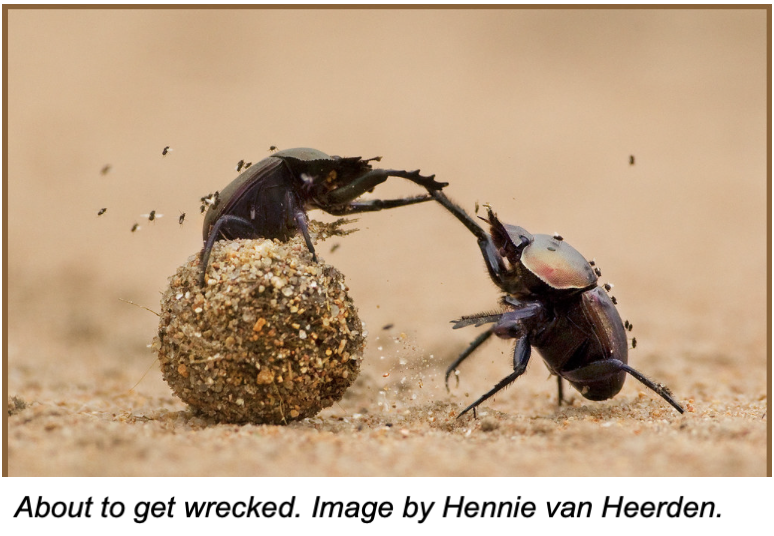
Although I was vaguely aware of dung beetles and their role in the ecosystem, I finally became interested in them while participating in giraffe research in South Africa. I’ll never forget the time when I was finishing up my giraffe work for the day and I stopped to watch a couple of dung beetles who were squabbling over a single ball of dung (poop). What I had perceived to be a relatively gentle disagreement escalated quickly when I watched one demolish the other with a long-time favourite move from the World Wrestling Foundation, the Brainbuster. You know the one.
Dung beetles play an essential role in the environment. However, they fly a bit under the radar, which is why they are often called nature’s “unsung heroes.” There are over 100 species of dung beetle, each choosing one of three strategies: rolling, tunneling, or dwelling in dung. Not only do they eat and live in animal dung, but they increase the freak by reproducing in it and burying it. This ensures their offspring have plenty of food for when they hatch.
As gross as it is, this burying behavior strongly limits the growth of vertebrate parasites, which is tremendously helpful to the rest of the ecosystem. They help remove animal dung from the surface environment with incredible efficiency and speed. In some places, the beetles can eliminate a pile of dung in less than 10 minutes, where the ground would otherwise be carpeted with it.
Dung beetles are very widespread, found in many different habitats across all continents except Antarctica. Like many species, dung beetles appear to be harmed by the break-up of natural environments. This fragmentation reduces the size of undisturbed, or core, habitat in the centre and creates isolated habitat patches. The environment along the edge of a habitat is usually quite different from the core. In forests, for example, it’s typically windier and sunnier at the edge of the forest than in the centre.
Edges are not only susceptible to environmental challenges, but also to human impacts. They are more vulnerable to fire, as well as illegal harvesting or collecting of plants or animals by humans, simply because they are more easily accessible. Some of these impacts along the edges don’t stay localized, but can radiate into the core habitat as well.
Edges are in fact an important habitat, because they support species that like transitions between different habitats. However, as humans continue to break up large habitats, with roads or communities for example, the amount of edge habitat increases, while core habitat shrinks. This challenges the animals that rely on core habitat. Additionally, the edges of habitats typically support fewer species than the core. We don’t want to consistently change habitats around the world to ones that support similar and fewer species.
Buffer zones are areas around a sensitive, often legally protected, environment that are typically managed to reduce edge impacts on the borders of a sensitive area. Sometimes buffer zones have methods to exclude humans or livestock, such as fences. Sometimes they are simply designated areas without active protection measures. Relatively little is understood about how effective buffer zones actually are for some species.
Back to dung beetles, we typically see fewer individuals and a less diverse group of dung beetles along habitat edges than in the core, because they are a group that tends to be quite affected by human activities. For example, because they are in constant contact with dung, they are exposed to pesticides that livestock ingest, which has been causing population declines. But how do buffer zones impact dung beetle diversity and density along the edge of protected habitats?
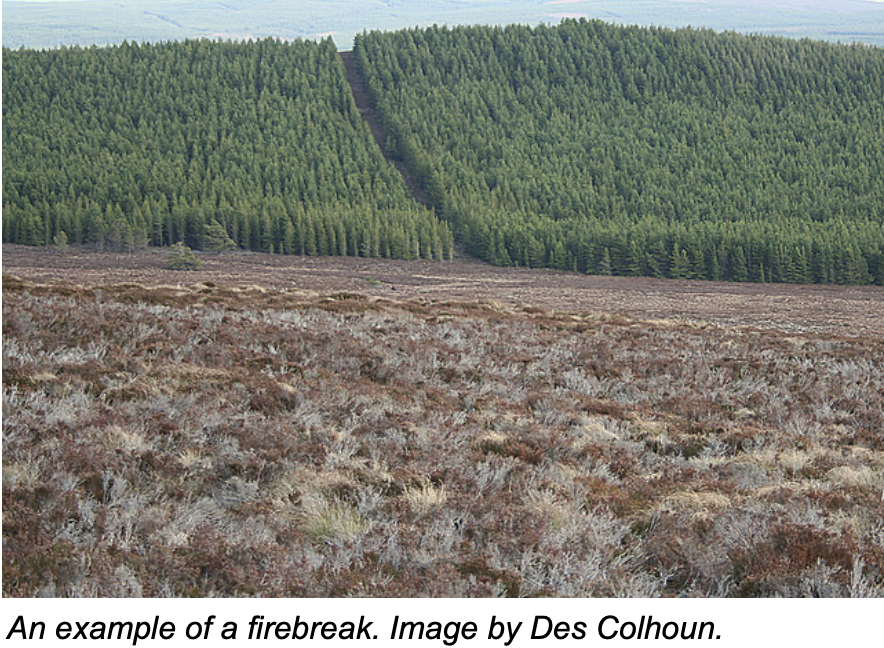
Andrew Barnes and his colleagues, including the late Rowan Emberson from Lincoln University, decided to find out. The montane rainforests in Sub-Saharan Africa are shrinking rapidly, largely due to deforestation for agriculture and grazing. There is also nearby habitat decline that often comes with agriculture. The Ngel Nyaki forest reserve in Nigeria is a heavily fragmented area. To test how dung beetles would respond to increasing edge effects, the researchers applied experimental habitat restoration treatments to certain areas along the edges. For the restoration, researchers excluded livestock with fencing, created and maintained firebreaks to help block fire, and allowed passive natural regrowth of the floral community. This combined restoration occurred in 200 metre buffer zones over the course of three years.
The impact of these buffer zones was remarkable. In the forest next to the restoration area, the dung beetle population size increased by over 50% compared to the unrestored areas. Perhaps more important was the difference between dung beetle populations in the edge and habitats. Before the restoration, there were many more species of dung beetles in the habitat core and relatively few in the edge. After the restoration, that difference disappeared, meaning that the buffer zones successfully mitigated the challenges that are typical of edges for dung beetles. The restoration also led to the return of certain species that had previously locally disappeared in the degraded habitat.
These changes are incredibly pronounced and occurred after only three years and with small levels of restoration. While firebreaks do require active maintenance, it is encouraging that even relatively minor land-use changes around protected areas can make a world of difference for many species. Relatively few studies have been completed about the effectiveness of buffer zones, so this is a single, but vital, drop in a much larger pot of conservation decisions.
After all, we want all dung beetle species to survive, no matter how gross or freaky, to tidy up after vertebrates and perhaps to get more inspiration for wrestling moves.
Mickey Mouse and Scabbers the Rat, are causing biodiversity loss in Aotearoa, New Zealand. They are committing crimes against some of our most endangered wildlife and arriving uninvited to the party. Protecting our taonga falls into the hands of conservationists and wildlife managers. New research plays a vital role in protecting our precious taonga.
Menacing mouse – a little creature creating a big problem. Photo by Nils Fleischeuer (CC BY-NC)
Would you be surprised to read that mice (Mus musculus) have been recorded eating live albatross (300 times their size)? I sure was! How could a little mouse possibly kill a bird known for having the largest wingspan in the world? Sadly, lots of albatross die from mouse predation every year. When mice aren’t eating albatross, they dine on many species of insects, chicks, eggs and lizards.
If mice are so terrible, what about rats? There are three species of rat in Aotearoa, the Norway rat Rattus norvegicus, Black rat Rattus rattus and the Polynesian rat Rattus exulans. They are all bad news – they kill adult birds, chicks, snails and insects. They also compete for food that should be there for our native fauna.
Due to the negative impacts of these rodents, and other introduced predators, many of New Zealand’s most critically endangered fauna are whisked away to predator-free off-shore islands. Some are protected behind expensive predator-resistant fences. PHEW, job completed, right? Not so fast!
Despite eviction notices, Micky and Scabbers can wriggle their way back into our protected areas. Maybe it’s a quick hop along a fallen tree that bridges the now not so “predator-resistant” fence or a long swim to an off-shore island. When they do appear, we need to have proven tools in the toolbox to deal with them. One of the tools to control them is cereal poison bait.
These baits are like your breakfast cereal in that they are made from similar ingredients – apart from the poison! Picture this: you reach for your new box of breakfast cereal in the morning and notice an open, very much neglected, box of cereal sitting at the back of your pantry. It’s been there for so long you can’t remember opening it (or you’ve just been ignoring it for many months). It smells stale and has gone slightly soggy, so you bin it, knowing full well that it will taste nasty.
A good rat is a dead rat! Photo by Jacqui Geux, iNaturalist NZ, (CC-BY)
Bait stations are used to protect the bait from the rain. However, just like you with your open box of stale cereal, mice and rats also have preferences when it comes to eating their cereal. The longer that bait is stored inside bait stations, the less palatable it is to rodents, the less they eat and the longer it continues to sit and weather.
To make things worse, the bait stations are often irregularly serviced, so wildlife managers need a bait that stays palatable to mice and rats for as long as possible. This is an issue on remote predator-free islands and fenced predator-resistant sanctuaries that have difficult access and limited funds. Stale or mouldy bait in particular will not control rodents if they aren’t even going to eat it.
If only there was a way to prevent baits from absorbing moisture and going mouldy – keeping the bait fresh for longer so that mice and rats were more likely to eat it when they come across it …
This is where researchers at Lincoln University (NZ), James Ross and colleagues, had an idea to coat the baits in a material that will do just these things. Also the material will not reduce the palatability of the baits to mice and rats. To test this idea, they created an experiment using two coatings, Polyvinyl butyral (PVB) and Shellac. Shellac is already used as a food glaze and as a coating to mask the bitter taste of Paracetamol/Acetaminophen. Shellac is also fully biodegradable, which makes it environmentally friendly.
The coatings were tested using four combinations of the aforementioned substances. First, they had to ensure the new coatings didn’t reduce the palatability compared to uncoated baits. If mice and rats do not eat the new bait coatings, it would be a waste of time to test them further. If Whitakers coated your favourite chocolate bar in something strange, you might take one bite and decide that the new “sardines & whipped cream” coated chocolate bar was not your vibe.
An easy pill to swallow – A Panadol tablet, commonly coated in Shellac. (CC BY-NC-SA 2.0) Photo by venana, Flickr.
The researchers also had to measure whether coated pellets remained palatable after extended environmental exposure because this is highly likely how mice and rats will find the baits in the real world. In the experiment the coatings were placed on the food the captive rats and mice were fed on. Mice, and more so rats, are neophobic (afraid of new things). So placing new food in their cages might affect the results in such a way that the researchers are measuring the wrong thing. Putting the coatings on their food means their wary responses will be minimised, since they eat rodent pellets every day. After the mice and rats had munched their way through their favourite snacks, the bowls were weighed, and the results were in – Shellac for the win.
There were differences between the bait coating combinations; Shellac was the most palatable, it performed the best for both mice and rats. Shellac out preformed the PVB coating and the mix of PVB/Shellac. This experiment demonstrated that mice and rats are picky eaters and highlights the importance of testing the different coating types. Coatings, although no thicker than 500 micrometers (really thin), will affect how much mice and rats will eat. Ironic given that mice and rats will eat out of a trash can – now we know they are fussily searching for the “best rubbish”.
This research is a step in the right direction for conservation in Aotearoa. I call it a small win for the native fauna. With Shellac showing promising signs, researchers and wildlife managers can test the new bait coatings in the field. Wild Mickey and Scabbers can try out some of the mould free, ‘fresh as can be’ Shellac bait. So next time Mickey and Scabbers arrive uninvited to the party, it may be the last thing they do.
This article was prepared by Master of Pest Management student Nils Fleischeuer as part of the ECOL608 Research Methods in Ecology course.
Would you steal a loaf of bread to feed your hungry family? Fair enough. What about a couple of grapes to save yourself the misery of wasting nine dollars on sour fruit?
“Try ‘em before I buy ‘em,” is my dad’s usual response to that question, as he pops grapes from three different bags one-by-one into his mouth. A red one here, a green one there, maybe even a dark purple if the season is right. In spite of earnest pleadings from embarrassed children and grocery store placards, there would be no purchase of grapes unless a thorough investigation of both quality and taste had been completed.
As weird as it may sound, it turns out my dad is not alone in his grocery store grape grabbing. A quick google search yields numerous articles, blogs, polls and debates on the topic. A more recent article used an extensively rigorous survey of 40 people on Facebook to tackle the question, with results showing that half of respondents advocated for, and actively participated in, grape sampling while shopping. As for the other half? Some seemed to side with this NZ Herald article which refers to grape samplers as both thieves and stealers, while others suggested that this type of behaviour is a “hanging offense”. As a conservation biologist, I am not typically one for philosophical debates, so I’ll leave the ethics of grape sampling and capital punishment up for you to decide.
Unfortunately, a jump back into the conservation sphere does not make me immune to grape stealing dramatics. As it turns out, nature, just like the produce aisle of my parent’s local grocery store, is home to its own collection of fruity felons. Among those felons is the European starling. You may know starlings for their incredible vocal range, beautiful coloration, or the massive flocks (or mumurations) they sometimes form (check them out if you haven’t). But to winemakers in New Zealand, starlings may be more well-known for being “vicious” and “wasters of fruit.” Unfortunately the problem that starlings cause in vineyards is nothing new, and in fact, it was this very problem that was the inspiration for research at Lincoln University over 20 years ago.
Flashback to 1999 – Napster is in its heyday, Brittney Spears’ “Baby One More Time” is on the radio, and, besides a little bit of Y2K hysteria, life is good. Amidst the excitement of a new millennia, researchers Yuki Fukuda, Graham Hickling, and Chris Frampton from Lincoln University were hard at work trying to solve the problem of the grape stealing starlings. To do so, they tested out two devices designed specifically for scaring birds away from agriculture areas – the Peaceful Pyramid and eye-spot balloons. The Peaceful Pyramid, as the name suggests, was meant to be a “peaceful” alternative to other more aggressive bird deterrents like “noisy gas guns”. It featured a rotating pyramid with mirrored sides, which would reflect rays of sunlight towards incoming birds. The goal was to overload the birds vision to the point that they would no longer have the desire to land and feed. The eyespot balloon was a large balloon with yellow and black patterning designed to mimic the eyes of a large predator.
Both devices were tested at a vineyard in Dunsandel, and at the University vineyard here in Lincoln. Although both were found to scare starlings away from the grapes initially, within a few days almost all the birds had become habituated to both scarers, and they quickly became ineffective. Ultimately, it was determined that both the eyespot balloon and the Peaceful Pyramid were not practical methods for protecting vineyards. Although these researchers did not find a solution to counteract the stealing starlings, they at least helped re-affirm the idea that anti-bird measures need to be thoroughly tested before they are trusted for protection.
In the 24 years since the research at Lincoln was done, there has been no shortage of innovation and testing of bird scaring devices. There has also been some work (here and here) on what birds are doing in the vine-yards. Among the myriad of devices tested, we have seen air cannons, chemical repellents, introduced falcons, large-scale netting, and a few of my favourites, the sci-fi sounding laser scarecrow (unfortunately, this doesn’t look as cool as it sounds), and the RobotFalcon (fortunately, this does look as cool as it sounds).
All of these projects have had the same goal: deter birds from pillaging in agricultural settings. Unfortunately, despite each of these ideas producing some level of protection, they all come with limitations. One is too expensive, another is too time and labour intensive, and some only work in good weather. For many, it seems as if finding a fix-all solution to the crop stealing problem is a fruitless endeavour. If it’s not the Peaceful Pyramid, and it’s not the laser scarecrow, then really what more can we do?
Well, researchers from the University of Sydney think that they have finally found the answer. (If you have been surprised by any of the bird scaring techniques already described, you may want to sit down for what comes next). Like something out of a Stanley Kubrick film, these researchers have employed techniques that they can only describe as “psychological warfare.”
The weapons of war used in this study consist of a stuffed bird attached to a drone (UAV), which is flown through the vineyard whilst playing recorded distress calls of pest birds from a loudspeaker (see image below). The idea is that visual and auditory stimuli on their own are not effective long-term. By tapping into the birds psychology through visual (dead bird) and audio (distress call) cues, they might be able to trigger the birds anti-predator behaviour, and keep them away for good.
Early results show that crop damage in areas patrolled by this flying fearmongerer are up to four times less than areas which used visual scarers alone. It also appears that this system is just as effective as large-scale netting (currently the most effective way to protect grapes), but is much more cost effective. While these results are preliminary, and further testing is still needed, it seems that hope may be flying (and screaming) in on the horizon.
So there you have it. Starting with a couple of grapes at the grocery store, we end with a weapon of war designed to create fear and confusion. While we may not be any closer to answering the debate about grocery store grape sampling, we at least seem closer to solving the grape stealing starling situation. Will psychological warfare finally be the fix-all solution? Perhaps, but only time (and research) will tell.
As for me, I still don’t quite understand what it is about grapes that causes both the starlings and my dad to lose all sense of self-control. Maybe with 24 more years of research, innovation and whatever military tactic comes after psychological warfare, we will finally find that out. I am sure it will be a wild ride.
Citation: Y. Fukuda , C. M. Frampton & G. J. Hickling (2008) Evaluation of two visual birdscarers, the Peaceful Pyramid® and an eye‐spot balloon, in two vineyards, New Zealand Journal of Zoology, 35:3, 217-224, DOI: 10.1080/03014220809510117
New Zealand has a huge agricultural industry. It also has a pest problem. I myself have been out to a friends’ farm and was told to “squash a mouse if you see one”! Which I think we can all empathise with to an extent. When the little b*stards are eating your food, they might as well be infesting your wallet.
Image CC-BY-SA Diego Delso on Wikimedia Commons: Elephants and humans live in close contact in Africa
Now, think about scaling that up a couple of levels. You no longer have nuisance, albeit damaging, mice scurrying around your farm shed. Instead you have elephants, in herds of 11+, munching through entire fields and even ripping doors off your grain sheds. Stomping won’t quite suffice here (and may go the other way).
This is an issue that Abel Mamboleo and his PhD supervisors, Chile Doscher and Adrian Paterson, at Lincoln University investigated in their JOJ wildlife and Biology paper in 2020. Instead of the standard numbers, quantities and figures you may expect in a science paper, here they take a slightly alternative approach to the topic. What do people think is happening in their backyards? After all, fear and perceptions are powerful things.
To start with a bit of context – who are we talking about when referring to people? This study interacted with people in the region of Bunda, a very densely populated region in Tanzania. Much of its land is a part of the idyllic Serengeti ecosystem, and boasts an internationally renowned tourism hotspot.
Bunda location within Tanzania – right next to the Serengeti: Image CC-BY-SA Macabe 5387 on Wikimedia commons
These people rely heavily on farming. In fact, 80% of annual income in Bunda comes from this industry. You can imagine how devastating it is to have these creatures, as amazing and majestic as elephants may be, decimate their fields of crops.
Elephants eating crops is not a new story. In fact, there are even somewhat humorous accounts of elephants eating rotten fruit in orchards and getting themselves rather drunk in the process. Thieving behaviour may even be tolerated – these giants are big money for tourism. However, in this particular context, such interactions are becoming more and more problematic. In this area, as the human population grows, human-elephant interactions also increase.
Mamboleo went to this area to ask local people their thoughts about these interactions. Using interviews and questionnaires in local languages to ensure clear messages, they found that 88% of those asked thought these human-elephant interactions were on the increase. Furthermore, 79% of respondents reported these events were most common on farms.
This in and of itself is not necessarily an issue. Local people had described the elephants as generally ‘docile’ and can even be safely approached to within 50 m. In the past, farmers have sometimes been able to simply scare elephants away themselves using traditional techniques, such as patrolling and fencing. Elephant ‘friendliness’ has even been suggested in other parts of Africa, with some suggesting elephants are going as far as to domesticate themselves. However, now, elephants are beginning to ignore these scaring techniques, some becoming bolder and potentially more dangerous.
How is this affecting people?
You can begin to see how conflicts between elephants and humans are likely to grow, with 32% of people thinking that elephants will react to seeing a person by killing them, and guarding crops being a main way for these people to protect their livelihoods. And for another large minority, 42% of those asked, they experienced elephants simply continuing to eat their crops in the presence of humans. Evidently, these people don’t have effective tools to deter elephants and protect their farms.
Extreme measures: what to do next?
We can see how people would be having a hard time with their elephant neighbours here. But what about the elephants?
Elephants are protected in Tanzania. The people of Bunda know this. However, desperate times sometimes call for desperate measures. Therefore, occasionally, when an elephant is raiding crops, people may turn to lethal measures. Whilst few people who were interviewed list this as a response to seeing elephants raiding crops, Mamboleo raises the valid point that this number could be higher. Local people know that there could be consequences of authorities finding that illegal elephant kills had taken place in the Bunda region.
Elephants & mice – really that different? Image by GlobalP from iStock
This may seem like a drastic response. However, killing pests such as rats, rabbits and mice that eat crops in NZ doesn’t seem so drastic, does it? Of course, this is a very different situation – elephants are native to this area, and are endangered and protected. But this comparison does make you realise that wanting to kill the problem can be a fairly universal response.
Mamboleo notes that cheap responses can be turned to in the absence of timely support from conservation authorities…so what can be done about that?
Well, there are some cool things being done across Africa to help with these conflicts. For example, do you know that elephants are scared of bees? Who’d have thought. Some projects actually exist to build bee hives around fences to keep elephants away, and this seems to work pretty well. It also turns out that elephants don’t like spicy food – so chilli can be used in a similar way.
More ideas, such as this would, be very useful to help in these situations. Answering questions such as when are elephants most likely to visit the farms may also be helpful for targeted responses, Mamboleo says.
Knowing how people feel, how they’re responding to the situation, and what they need to do to help them resolve the situation for the best outcomes for people and wildlife is a great first step here. That’s the valuable context needed to now take the next steps and make solutions that will work. Especially when we can’t just stomp on the problem!




,_Elephant_Sands,_Botsuana,_2018-07-28,_DD_114-117_PAN.jpg)


.jpg)


