Category: behaviour

  • Bellbird Babel: Dialect differences in NZ bellbirds

    Bellbird Babel: Dialect differences in NZ bellbirds

    Bellbirds love to sing; they sing for everything that they do. Communicating, courtship, foraging, defending their homes, it’s almost like they’re living in a musical. I’ve always been captivated by the song of bellbirds. Whether I’m on a walk in the Port Hills, or at Willowbank Wildlife Reserve looking at the capybara and otters, I hear bellbirds singing in the background.

    The New Zealand Bellbird, or Anthornis melanura, is a honeyeater species and a close relative of New Zealand’s Tūī (Prosthemadera novaeseelandiae). They have a variable diet, feeding primarily on nectar, but also fruits, insects, and scale insect honeydew. In Christchurch, bellbirds spend their summers in the Port Hills, feeding from the large nectar supplies that come from flowering native vegetation. Then, in the winter, some move to the city, where urbanisation creates a warmer environment, and sugar feeders and exotic plantings provide food.

    In 2019, PhD student Jennifer Dent studied foraging and migratory patterns of bellbirds in Christchurch for her thesis, using their calls to determine where different groups were. Bellbirds in different areas make different calls, basically a different accent, language, or singing a song in a different key, and this is referred to as dialect.

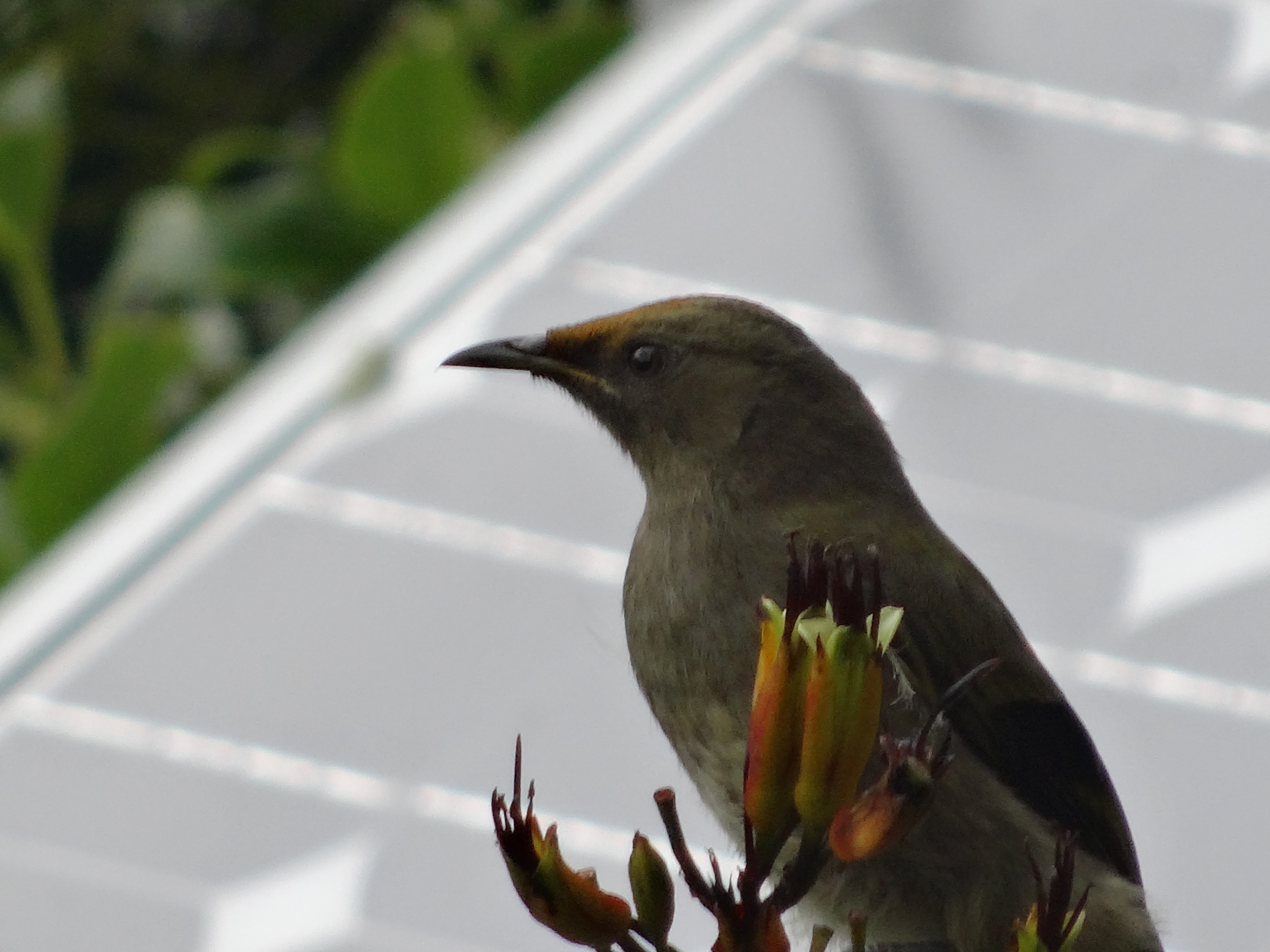
    New Zealand Bellbird. Photo CC0 Max G.W. Verheij. https://www.inaturalist.org/observations/162255122

    For this, Jennifer placed DOC AR4 audio recorders at 59 locations. 29 locations were in the Port Hills, where recording took place in autumn. Sites were everywhere from Rapanui Bush in the east to Ahuriri Reserve in the west, totalling 15 km around the Port Hills. The other 30 recording locations were in Christchurch city during winter, from as far north as the Groynes, as far east as Sumner, and as far west and south as Lincoln. From this, Jennifer matched dialects in the Port Hills in autumn to those recorded in Christchurch city in winter.

    Christchurch dialects

    Jennifer found four different bellbird dialects in Christchurch.

    Dialect A was the most common dialect. It was spread across the northern region of the Port Hills, as well as in more central areas, such as the Botanic Gardens.

    Dialect B was the next most common. In the Port Hills, it was found in Kennedy’s Bush, and in the city, it was in south-western areas, such as Halswell and Hoon Hay.

    Dialect C was the least common dialect that Jennifer observed. In the Port Hills, it was found in Omahu Bush, and in Christchurch, it was found outside of the city, but only as far as Tai Tapu and Lincoln.

    Dialect D was the last dialect. This pattern is unusual because it was not found in the autumn Port Hills recordings, but was found in the winter Christchurch recordings around the eastern and northern parts of Christchurch, such as Sumner, the Groynes, and Riccarton Bush, but because it was not found in the autumn recordings, it is not known where they went after winter.

    Map of Dialect Locations in Christchurch. Photo CC-BY Jennifer Dent https://researcharchive.lincoln.ac.nz/server/api/core/bitstreams/82c22265-dec3-419b-8880-4eb37f1aaee2/content

    Why don’t the dialects overlap?

    It’s surprising that four different dialects were found both so close together and with very little overlap, especially since there are no geographic barriers stopping members of one group from flying to another. Jenny suggested that there could be two main reasons for this: limited dispersal and vocal imitation.

    Limited dispersal, or philopatry, is the theory that states that birds remain in the areas where they were born and raised perhaps because it is harder to survive outside their own groups. A second theory is that vocal imitation by bellbirds occurs when birds move between groups, but we don’t notice it because they are so quick to pick up on the new dialect. It is possible that both of these theories are occurring simultaneously.

    Following bellbirds into the city

    The presence of all Port Hills dialects in the Christchurch recordings suggests that seasonal dispersal from the Port Hills to Christchurch is a shared behaviour among all populations. Furthermore, as shown by the map, dispersing to the nearest suitable location rather than spreading across all of Christchurch also seems to be a shared behaviour.

    Bellbirds in Christchurch likely remember foraging areas for different times of the year, but rather than remembering many locations across Christchurch, they remember only a few patches that are close together. This is referred to as patch-scale resource tracking, and it has been shown to be a low-work, high-reward technique for foraging by bellbirds.

    Next time you hear a bellbird singing, you aren’t just hearing background noise, you’re hearing a local neighbour. That bellbird might be a Cashmere regular or a member of the Tai Tapu community. It makes Christchurch a more lively city, as it’s not only just a place for us, but for birds following their own routines, singing their songs as they go about their day.

    This article was prepared by Master of Science student Max Mulvihill as part of the ECOL608 Research Methods in Ecology course.

    Paper reference: Dent, J. M. (2019). Information use during foraging by New Zealand bellbirds (Anthornis melanura) : A thesis submitted in partial fulfilment of the requirements for the Degree of Doctor of Philosophy at Lincoln University. Lincoln University. https://researcharchive.lincoln.ac.nz/server/api/core/bitstreams/82c22265-dec3-419b-8880-4eb37f1aaee2/content
  • Wasps aren’t all aggressive, just misunderstood

    Wasps aren’t all aggressive, just misunderstood

    Uncategorized, behaviour, conservation, entomology, student blog, wildlife management

    If you had asked me four years ago where I would be today, I would not have said ‘planning to study wasps’, and I would NOT have said ‘New Zealand’! But here I am and that’s what I’m doing.

    My interest in this field originates from my research on ants, and more specifically their unique behaviour. Ants belong to the order Hymenoptera, the same order as bees and wasps.

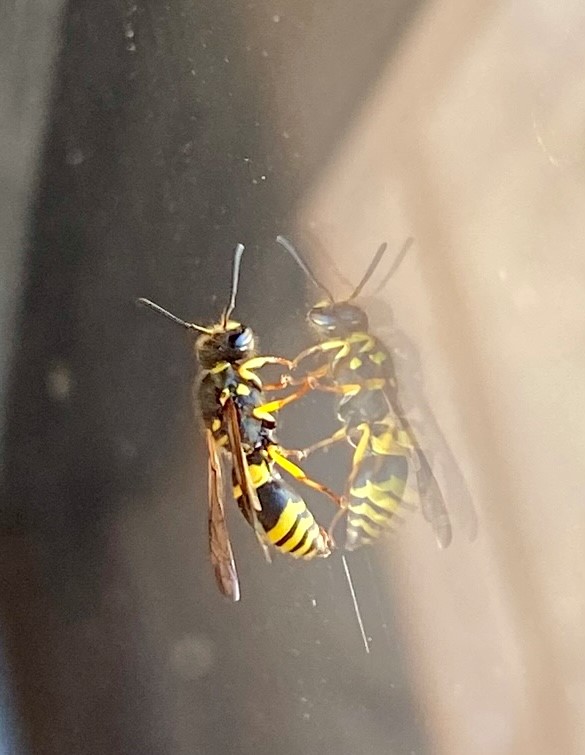
    Just like humans, wasps can be social creatures, and just like humans they display different levels of aggression (although most types of wasps are not social). Despite there being around 100,000 described wasp species, only around 1,000 of them are social. Which seems crazy, because when you see one wasp, you always seem to see more.

    Vespula wasps are what’s called eusocial, this means that they are organised into groups and all work together under a single queen. Eusociality is impressively efficient. E.O Wilson, a famed ant biologist, once said that humans display a weak form of eusociality, and I have to say I agree with him.

    Now, back to how wasps display different levels of aggression. Have you ever noticed that when you walk past a nest or sit near a wasp sometimes you will be harassed while other times they will completely ignore you? That’s because different colonies of wasps display their own levels of aggression!

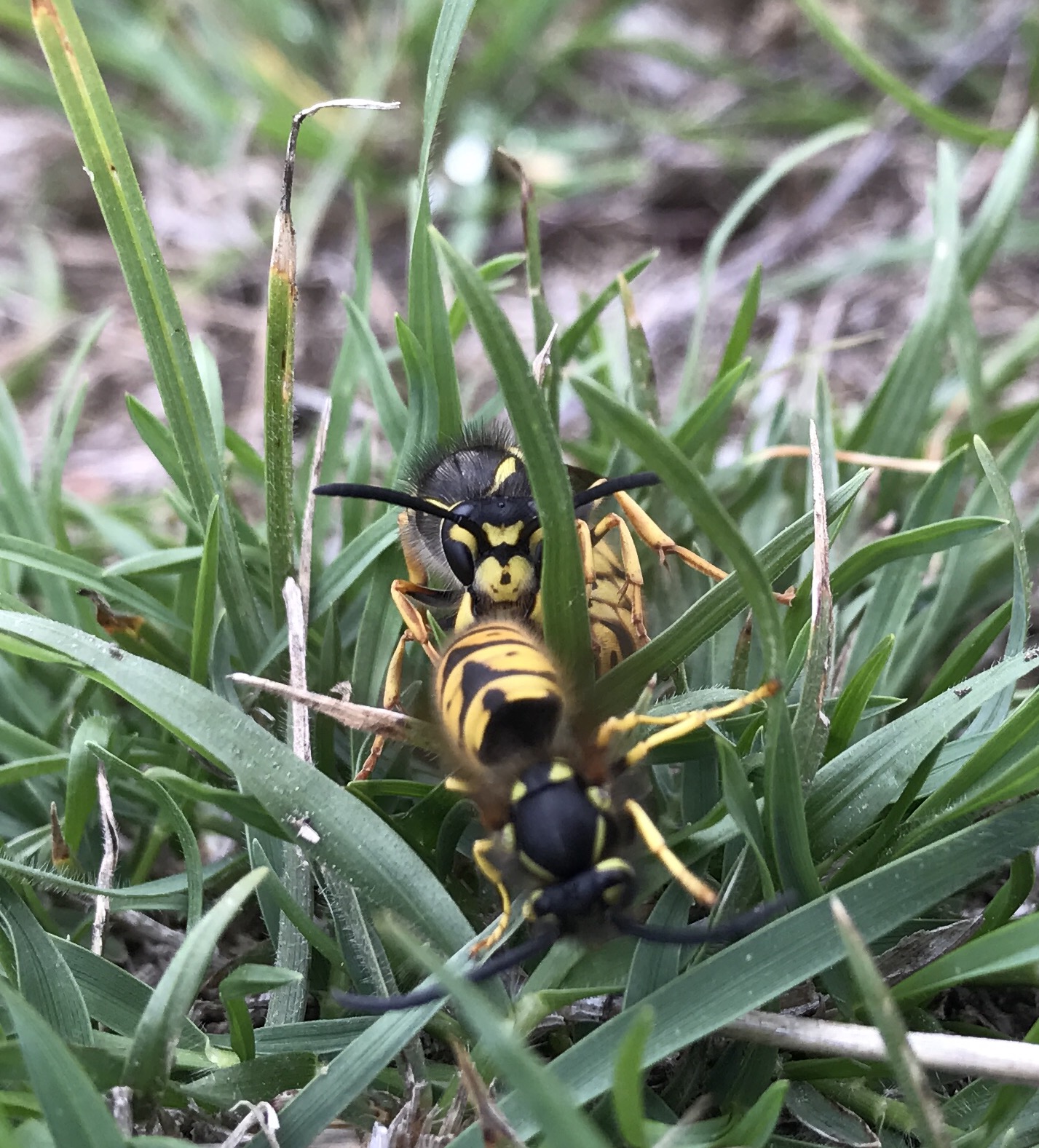
    Vespula germanica, David Nicholls, Ratby garden, 22 April 2016

    There are many reasons why wasps may vary in aggression. Some may be more aggressive to drive away predators or outcompete other colonies. Others may be more passive to hide from mammals who could destroy their nests.

    A group of brave researchers, including Mateus Detoni from Lincoln University, put themselves in harm’s way to determine what factors cause wasps to display varying levels of aggression.

    One hypothesis that they developed was that foraging and temperature could increase aggression because that is when wasps are the most active. The methods used for testing the aggression of the wasps included a target made from two black plastic plates that had been clasped together and a black cloth. Inside the plates was an omnidirectional microphone that had been connected to a camera.

    As you may know, wasps are a super invasive pest species in New Zealand. Since the early 1900s they have been having a devastating impact on the beech forests and the native ecosystem as a whole. There are two species in New Zealand Vespula vulgaris and Vespula germanica, both having colonised from Europe in the 20th Century.

    To survive, wasps need sugars and protein, so they go hunting. The main thing wasps are foraging for, especially in beech forests, is honeydew. This is a type of sugar that has been pooped out by scale insects, which live on and inside beech trees. The main source of protein for wasps is, well, anything that is soft enough for them to bring back to their nest.

    Wasp foraging for honey dew on a southern beech tree. Image from Adrian Paterson.

    The study found that, surprisingly, neither foraging activity nor temperature seemed to have any role in indicating whether a colony would be particularly more aggressive than another. So, the researchers turned to the next question, could it have something to do with nest and colony size? Unfortunately, this lead was also a bust. Yes, the larger colony size did allow for higher foraging activity but there was still no indication that a larger nest and colony would increase aggression.

    Did aggression have something to do with the age of wasps? Eusocial insect colonies span generations of individuals meaning there are both juvenile and mature workers alive simultaneously. This was a topic that Mateus had previously studied. Age can play a role in aggression, as the older wasps have more experience defending the nest, which can cause them to have a more aggressive response when agitated.

    Vespula wasp colonies were observed through their life, and it was concluded that the behaviour on a colony level is consistent throughout development. However, one key thing was noted “behaviour can change as an individual, or colony develops” and “consistent differences within a population can still be observed”.

    Aggressiveness could depend on the ratio of aggressive to nonaggressive individuals in the colony. Wasps having their own individual personalities is not something that most people consider, as they are often thought of as all being worker drones. But I guess a lot of that can be attributed to the media shaping how we view wasps, bees, and ants.

    In Europe, wasps have predators that both keep the population in check and give them a reason to be aggressive. The researchers suggested that external pressures may cause certain behaviour to be passed down through generations. In a place where they do not have predators, such as New Zealand, they can learn to pass on behaviour that is less aggressive.

    Wasps are insects that have individual personalities influencing the aggression levels of the colonies that they live in. Eusociality truly is one of the most interesting concepts in the animal kingdom.

                    This article was prepared by Postgraduate Diploma in Applied Science student Jack Gregorian as part of the ECOL608 Research Methods in Ecology course.

    Reference:

    Jandt, J. M., Detoni, M., Loope, K. J., & Santoro, D. (2020). Vespula wasps show consistent differences in colony-level aggression over time and across contexts. Insectes Sociaux, 67(3), 367–381. https://doi.org/10.1007/s00040-020-00768-3

  • Fake terns for real conservation change

    Fake terns for real conservation change

    Not just for ducks

    For myself, a plastic decoy is first, and foremost, synonymous with hunting. Perhaps to some this hobby seems counterintuitive coming from an ecologist, but rest assured, we pride ourselves on habitat protection and pest population management (with the added benefit of free-range tucker).

    Over years of game-bird chasing, I have put out dozens of decoys. Never once did it cross my mind that a tool like them could be used for conservation.

    But when you think about it critically, why would decoys not be useful? Decoys and callers are first and foremost attractants, playing on the target species’ keen senses and basic behavioural responses. As ecologists, we already familiar with attractants. The tried and true Pics peanut butter bait in tracking tunnels, enticing a wiry old possum to investigate, or the sprinkling of icing sugar in front of a wax tag, are very common in our conservation landscape.

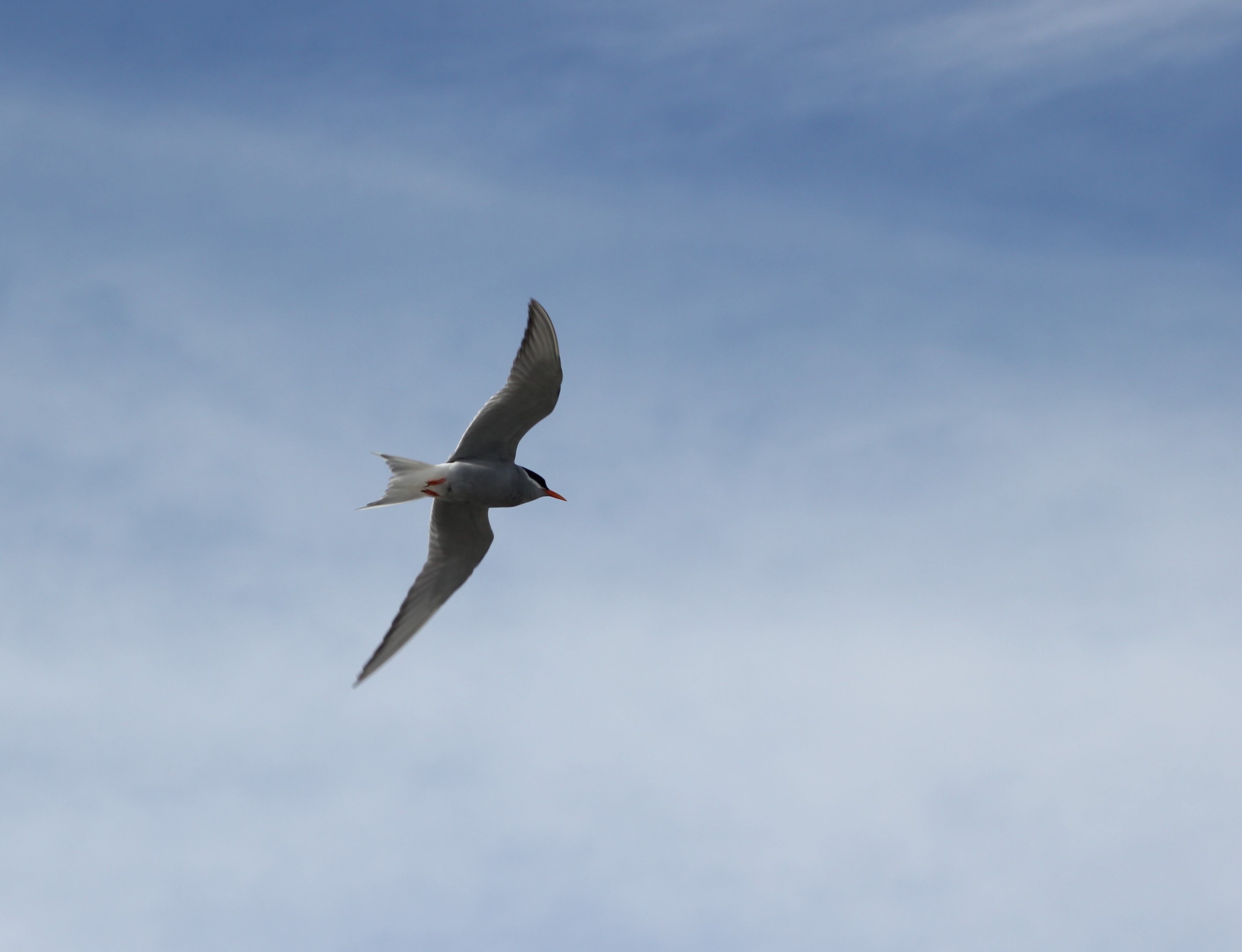
    Black-fronted terns (Chlidonias albostriatus)- credit Carey Knox (CC0 no rights reserved)

    Social attraction – when decoys come into play

    Species of birds that live within colonies use cues from peers to gauge habitat quality. To put it plainly, think of it like a review on a hotel. You’re probably more likely to go to one that your mate rated higher, right? So if your bird mates hang out in an area then this is probably a sign that it is a great place for a nest. These cues have the added benefit for colony birds of improved breeding success and survival.

    Historically, conservation for colony-forming birds, such as the Kororā and Black-fronted tern in New Zealand, has underused this behaviour, relying heavily on predator control and habitat enhancement instead. These techniques are both particularly costly and need extensive upkeep for continued positive results. How about instead of focusing on getting the number of living birds up, we focus first on increasing the number of their plastic alternatives? … Have conservationists lost their minds? Quite the opposite.

    Benefits of social attractants

    Social attractants, such as decoys and audio players, can work effectively to encourage threatened species to inhabit more desirable areas. Decoys can mimick the cues that gauge habitat quality by colony-forming birds.

    By actively encouraging individuals to inhabit these areas, this may reduce the number of birds attempting to nest in more dangerous locations. Those dangerous places could include a particularly low-lying section of coast where nests would be swept away during severe weather events, or an area without predator control.

    Attractants could be used in combination with predator-proof fences, weeding and predator control, to create nesting sanctuaries. This is particularly useful for our more aeronautically inclined natives that are not confined by fencing, as opposed to their flightless counterparts. Nests and attractants would give them a reason to stay within these safe havens, which would improve survival and breeding success.

    For our rarer species, social attractants may further aid breeding success by encouraging a higher number of individuals into a particular area. This would help boost reproduction rates due to more breeding-age adults being close together.

    Illustration by Author (CC0 no rights reserved)

    Trialing social attractants for black-fronted tern conservation

    Social attractants were used in a Lincoln University study to identify their effects on black-fronted terns (Chlidonias albostriatus). This study was completed by Courtney Hamblin in 2019.

    The types of social attractants that Courtney used included a sound anchor system, which played a variety of black-fronted tern calls, including fishing, begging, and kit calls, on a looped playback. Her study also used plastic decoys as visual attractants.

    Courtney’s experiment used nine braided rivers within the Canterbury region, with ten locations each for both untreated (without attractants) and treated (with attractants) sites.

    First up, Courtney needed to pick her sites on these braided rivers. She selected sites that best fit tern nesting, but without terns having nested there before. She also wanted the sites to be safe for terns to nest at if they chose to do so. It wouldn’t have been a good look if nests had started floating away!

    Courtney then compared tern behaviour between sites with and without attractants. To do this, patience had to be a virtue. Over fortnightly 1-hour sessions for each site, she looked for interactions, particularly terns circling/hovering over these areas, landing within plots (land-in) and landing close by (land-out).

    Diagram of the audio playback setup (Above) and example of a decoy used in the project (Below). Photo credits – Courtney Hamblin (CC BY – NC 4.0)

    When the study had concluded, Courtney, and her supervisors Adrian Paterson (LU), James Ross (LU) and Richard Maloney (DoC), found that there was over nine times more activity recorded within plots with attractants than within plots that lacked any attractants.

    Black-fronted tern nesting was also found to have occurred near eight out of ten treated sites. Of these, five sites had terns nesting within 300 m, which was significantly closer than distances from the untreated sites.

    Unfortunately for me, as they were used together, there was no speculation on whether the decoys or the audio playback setup had the greater effect. So for now, I won’t be trading in my trusty wooden duck caller for a fancy electronic apparatus.

    These results show that black-fronted terns do interact with social attractants. They could be useful for black-fronted tern conservation by helping to attract individuals into desirable areas to nest.

    So social attractants could provide us with huge gains for black-fronted tern conservation, now that we understand all their neat uses!

    Diagram of the treated plot – note there would be an equally sized area used for the untreated plots without decoys and speakers. Credit – Courtney Hamblin (CC BY – NC 4.0)

    So what are the opportunities for social attractants? Endless!

    Social attractants already have success stories. A notable win was their use in helping to restore the iconic Atlantic puffin to Eastern Egg Rock in Maine. But let’s ponder the future.

    Think about the possibilities, such as their use in protecting species against climate change effects. Social attractants could readily be employed to move nesting locations away from at-risk coastal areas or encourage nesting within predator-proof sanctuaries to avoid exotic threats that are likely to arrive in New Zealand ecosystems.

    Final thoughts

    Even with all the prospective benefits, the study also made me think about issues that may arise with social attractants. Sure, they encourage some native colony birds to interact with them, but would this not be the same for native/exotic predators? They too key off cues from their target species, such as sounds and visuals.

    This sparks memories of harriers circling over my decoys, ready to pounce on any shot birds, as if they were using my decoys as a marker for a prospective feast.

    To me, this was a particularly poignant thought, which I would love to see investigated.

    This article was prepared by Master’s of Bio protection student, Jonathan Morriss, as part of the ECOL608 Research Methods in Ecology course.

    Hamblin, C., Paterson, A., Ross, J., Maloney, R. (2019). Social Attractants, a Conservation Tool for Black‐Fronted Terns. Wildlife Society Bulletin. 1-8. https://doi.org/10.1002/wsb.989

    Additional Information:

    Bonbaci, S., Pejchar, L., Innes, J. (2018). Fenced sanctuaries deliver conservation benefits for most common and threatened native island birds In New Zealand. Ecosphere. 9(11). https://doi.org/10.1002/ecs2.2497

    Buxton, V., Enos, J., Sperry, J., Ward, M. (2020). A review of conspecific attraction for habitat selection across taxa. Ecology and Evolution. 10(23). 12690–12699. 10.1002/ece3.6922

    Handley, S. (2022). Technical options for marine coastal habitat restoration in Te Tauihu. NIWA. https://www.envirolink.govt.nz/assets/Envirolink/2203-MLDC161-Technical-options-for-marine-coastal-habitat-restoration-in-Te-Tauihu.pdf

    Herrera-Giraldo, J., Figuerola-Hernández, C., Wolf, C., Colón-Merced, R., Ventosa-Febles, E., Silander, S., Holmes, N. (2021). The use of social attraction techniques to restore seabird colonies on Desecheo Island, Puerto Rico. Ecological Solutions and Evidence. 2(2). https://doi.org/10.1002/2688-8319.12058

    Lapin, K., Konrad, H., Leeb, C., Oettel, J. (2025). Species on the Move: Migration, Range Shifts, and Dispersal of Species. Ecological Connectivity of Forest Ecosystems. 23-38. https://link.springer.com/chapter/10.1007/978-3-031-82206-3_2

    Taylor, G. (2000). Action Plan for Seabird Conservation in New Zealand. Department of Conservation. 16. https://www.doc.govt.nz/documents/science-and-technical/tsop16.pdf

  • It’s not you, it’s your species: Mate choice in fishing spiders

    It’s not you, it’s your species: Mate choice in fishing spiders

    Dating is hard and confusing for most… but especially for these guys.

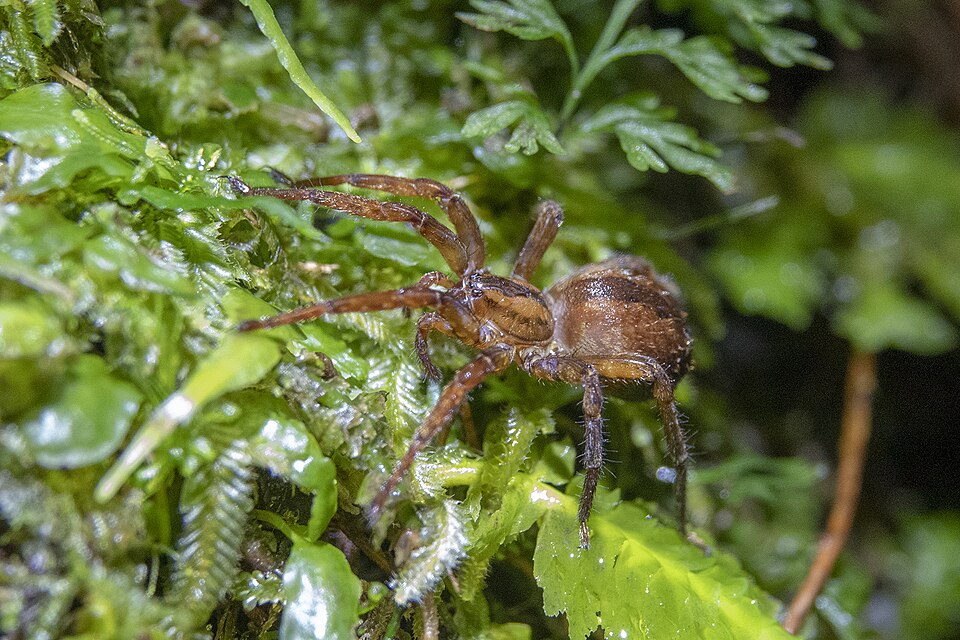
    A recent study on two native semi aquatic spiders, Dolomedes aquaticus and Dolomedes minor, revealed that spider dating is dramatic, but beneficial for their evolution. These spider species spend a lot of time diving for their prey in rivers and streams.

    Male fishing spiders (Dolomedes species) perform complex courtship displays for their partners, which include vibratory, visual, and chemical signals, all just to avoid being killed by the female they are trying to impress, and just so he gets the opportunity to copulate.

    D. aquaticus at Boyle River. Photo by Nicky Lowther (CC BY-NC)

    Unfortunately for these eight-legged boys, their ladies are often aggressive, sexual cannibalism common, and dates often making up a significant portion of these feisty ladies diets.

    These fishing spider species are found throughout New Zealand. In a particular area in the lower South Island, something interesting is going on… they are hybridising!… but only in one direction.

    DNA analysis has revealed that mitochondrial introgression has occurred between D. aquaticus females and D. minor males. Introgression is when DNA moves from one species to another. But why, and why only one way? This study investigated the one way introgression between these two species, coauthored by one of New Zealand’s preeminent arachnologists, the one and only Cor Vink.

    These species are closely related and have been observed to interbreed. This causes genes from one species to pass to the other; this process is called introgression. Introgression between these species has only been observed in one direction between female D. aquaticus and male D. minor. Introgression has also only been seen in one location, in the south of the South Island, the “introgression zone.”

    Distribution of D. aquaticus and D. minor within New Zealand, with introgressed D. minor specimens shown. Data from Vink and Dupérré
2010 and Lattimore et al 2011. Also shows collection locations of spiders for laboratory experiments, and Waipara field monitoring site. The introgression
zone is shown by the square box.
    Distribution of Dolomedes aquaticus and D. minor within New Zealand, with introgressed D. minor specimens shown. Data from Vink and Dupérré 2010 and Lattimore et al 2011. Also shows collection locations of spiders for laboratory experiments, and Waipara field monitoring site. The introgression zone is shown by the square box. (Content subject to copyright: please see the study image notes for details)

    The purpose of this study was to investigate life history traits and mating behaviour that promoted and limited introgression that occurs only one way and is limited to one area.

    Spiders were collected from within and outside the introgression zone and mating behaviour was tested in a lab.

    From these experiments, it was found that males from outside the introgression zone were less willing to continue courtship once realising the female was of a different species from themselves, often ghosting halfway through, an experience familiar to those of us in the dating pool. On the other hand, D. minor males within the introgression zone were happy to flirt with any female. This unfussy selection seems familiar. Whether this is a spider phenomenon or a southern cultural trait remains unclear.

    Another interesting find was that female D. minor were more short tempered when it comes to D. aquaticus males, having much higher attack and rejection rates towards D. aquaticus males than the opposite pairing. When a D. aquaticus male attempted courtship, the females often attacked and ate him. This suggests the differences in female behaviour between the two species may have just as much influence on gene flow as mate choice.

    Female receptiveness to male courtship is key for introgression to occur, including female ability to recognise male courtship, female choice, and premating aggressive behaviour, these could all prevent interbreeding in ways that could vary throughout the species’ range.

    Pairings were more successful if the pairings were similar in size. Females in both species are much larger than males, although D. aquaticus is larger overall. It was suggested that one way introgression could be because a female D. aquaticus assumes that a smaller male would be an easier snack, not a great mate!

    D. aquaticus at Boyle River. Photo by Nicky Lowther (CC BY-NC)

    Other potential factors could include that partners in the south could be less choosy in their mate selection as their breeding seasons may be shorter due to natural conditions. D. aquaticus females may think males of their species are rarer, or D. aquaticus male and D. minor female genitalia may not be compatible.

    In summary, it is likely that mating behaviour has a strong influence on the dynamics of introgression gene transfer between these species within the introgression zone.

    Male behaviour may limit introgression one way, preventing mating between D. minor females and D. aquaticus males. Also, female behaviour and choice may limit introgression because of a preference: mate or meal?

    In the end, these spiders prove one thing: rejection is natural selection, and preference is important in evolution. So, next time you have a bad date, consider yourself grateful that your rejection did not end in sexual cannibalism. 🕷️

    This article was prepared by Master of Bioprotection student  Nicky Lowther as part of the ECOL608 Research Methods in Ecology course

    Connolly, S. J., Hunt, J., Curtis, K. M., Painting, C. J., Cooney, C., & Vink, C. (2025). Mating behaviour influences the direction and geographic extent of introgression in New Zealand fishing spiders (Dolomedes). Journal of Evolutionary Biology38(3), 291–304. https://doi.org/10.1093/jeb/voae147  

  • Kiwi: now in 3D

    Kiwi: now in 3D

    ‘Coming soon in 3D!’ Periodically throughout my life movie-makers have dabbled with making films that we can watch in three dimensions. You would get your special glasses before the movie session and then sit there wondering when to put them on until the action got going.

    To be honest I don’t remember many of the movies that I saw like this. The Avatar movies have always had the option and I watched at least the second movie this way. Spears and monsters would lunge out of the screen at you.

    Other than that I am drawing a blank. This is not to say that every 3D movie is bad but just that 3D on its own doesn’t make a film more memorable.

    Avatar Adrian! Look out for the arrow!

    I don’t even dislike the experience despite having to wear the 3D glasses over my own glasses. There is something immersive about dodging things ‘coming out of the screen’. However, I seldom choose this option if 2D is available. It all seems a bit too much like work perhaps?

    Adding a third dimension can help with appreciating scale and movement though. It can also help with identifying who’s who in the screen – there’s just a bit more information that your brain can use.

    Identifying individuals is a big deal in biology, especially conservation. When you have a small population you are interested in individuals. How are they doing? Are they breeding? Who do they hang out with?

    Of course, for many species there are not a lot of features to differentiate between individuals. They are similar in height, uniform in coloration, and have similar behaviours.

    To make them more distinctive we could always band our target with bright colours or paint an obvious mark on them but this involves capturing and interacting with the individual. This causes a great deal of stress and catching individuals is not always simple.

    Ideally we could use cameras to take pictures that we could measure features in that are unique to an individual. Two dimensional pictures require an individual to be in an exact place with an exact orientation for this to work. So this is not a reliable method.

    Bit wait! … Coming soon in 3D!

    It turns out that if you take pictures with different devices from slightly different angles at the same moment then you can much more accurately calculate measurements on individuals. At least in theory.

    Jane Tansell with her trusty kiwi dog. Picture from Jane Tansell.

    Jane Tansell, a recently completed PhD student at Lincoln University, and her supervisors, Adrian Paterson and James Ross, set out to see if we could use this idea to identify kiwi. Kiwi populations and individuals are difficult to measure. They are nocturnal, usually found in scrubby terrain, are reasonably featureless, and spend a lot of time in burrows. We can use trained dogs to find them but this is quite stressful for kiwi. We can listen to their calls during the night but this is difficult to split into different individuals and certain parts of the population don’t call anyway.

    Trail cameras have been used to successfully locate kiwi. Jane wondered if she could pair cameras 12-25 cm apart, taking images that could be used to essentially create a 3D image of features on each bird. Jane knew that kiwi bills vary between individuals and can be used as an ID.

    Jane worked with the more technically literate Maurice Kasprowsky and Tom Gray to cobble together the cameras and get them to work together.

    Jane, as reported in NZ Journal of Zoology, first tried the setup on a taxidermied kiwi in good light conditions. She found that the cameras could be used to measure the bills to within 1.5% of their actual length. This was a great achievement and would certainly be able to determine individuals.

    In theory we should be able to photograph kiwi and recognise them by measuring their bills. Image from Adrian Paterson.

    Jane then set up field trials with live kiwi. In the real world, with low light and moving birds the cameras were less efficient. At worst they were terrible but often they were within 3-4% of the actual bill length. This is not good enough to replace current field identification methods but it was still quite impressive given the relatively jury-rigged setup.

    Improvements in cameras, especially 3D cameras, are happening quite quickly. With some more trial and error Jane should be able to start reducing the error enough for this to be a viable noninvasive method for following kiwi in the field.

    While this is not as exciting as an arrow flying at you from an Avatar movie, this use of 3D does have real world uses that will help with understanding a national icon!

    The author, Adrian Paterson, is a lecturer in the Department of Pest-management and Conservation at Te Whare Wānaka o Aoraki Lincoln University. Adrian is a kiwi but unfortunately has no bill to measure.

  • Tackling feral cats in Aotearoa New Zealand

    Tackling feral cats in Aotearoa New Zealand

    Feral cats (Felis catus) are among the most proficient and effective hunters in the world. In Aotearoa New Zealand (NZ), their skills are lethal to native species that have evolved without mammalian predators. Feral cats have been linked to significant biodiversity declines across the country. Cats are opportunistic predators that hunt ground-breeding species, like birds, bats, reptiles and even some insects- many of which are endemic.

    Fig 1: It looks like siblings fighting over a small bird, a moment that captures the competitive behavior of feral cats (Image by- Gilbert Mercier, Flicker User

    The extinctions of six endemic birds are linked to feral cats. Well-known cases include a single cat, Tibble, that caused the extinction of NZ’s only flightless song bird: Lyall’s Wren on Stephens Island. A single cat killed 120 endangered native short-tailed bats in one week on Mt. Ruapehu. Dotterel populations on Stewart Island, Grand and Otago skink populations in southern ANZ are at risk due to feral cats. The list of species pushed to the verge of extinction by cats is long and growing.

    Yet despite their impact, feral cats are not currently included in NZ’s Predator Free 2050 campaign. This raises a major question: how is NZ tackling the feral cat problem? 

    With growing concern for native wildlife,  the government has implemented several methods to eradicate or control cats: lethal baiting, trapping, shooting, and fencing. While putting these methods into action is necessary, it’s equally important to ask their effectiveness: Are they actually working? And how can we tell?

    Fig 2: Feral cat awareness at Arthur’s Pass Wildlife Trust (Photo credit: Muhammad Waseem (used with permission)).

    These were the very questions a group of researchers from Lincoln University set out to explore. Using camera traps, they conducted a study on Hawke’s Bay farmland to test whether trapping and shooting could effectively control feral cat population, and whether the area will be re-invaded over time, to measure the effectiveness of the method.

    Forty motion-sensitive cameras stood beside the traps like sentinels, monitoring everything. Cats walked into the view, lured by rabbit meat and ferret scent. The cameras recorded activities before, during, and six months after the control operation. Before the operation 20 cats were detected. 17 feral cats were then removed (shot). The result? An 84% drop in both cat numbers and camera detections.

    Aware of the risk of reinvasion, the researchers monitored the site again six months later- and detected only three new cats. The outcome was encouraging and demonstrated how proper methods combined with well-monitored action can make real difference. With the help of camera traps, the research could measure the effectiveness of the control operation and can suggest similar methods in areas facing feral cat issues.

    Today, thanks to advanced technology like camera traps, monitoring has become much more efficient and convenient. This allows conservationists to evaluate their methodologies, observe activities remotely, and respond effectively.

    How did cats become a serious ecological problem in NZ?

    In my home country of Nepal, cats are seen as beloved pet and, traditionally, the guardians of grain stores, not as an ecological threat. As someone new to NZ conservation practice, I initially found the conservation method used in this study confronting. But the more I learned, the more curious I became: how did a country with no native mammalian predators come to see cats as such a serious problem?

    Fig 3: Stray cat basking sun on Fairmaid Street, Lincoln (Photo: Author 04/01/2025)

    Cats didn’t arrive in NZ until the mid-1800s. Earlier cats had visited along with Captain James Cook. His ship, plagued by rodents, carried cats as a solution to control pests and protect food supplies.

    European settlers brought cats as companions. Some escaped or were abandoned, eventually forming a wild population. Ironically, many animals (and even people) arriving by ships ended up becoming invasive. Over time, their arrival became strongly linked with biodiversity loss.

    Today the feral cats are  officially recognised as invasive predators. They not only kill native wildlife but also spread disease. It is no coincidence that many native birds began to disappear after cats were introduced. In the NZ conservation story, it’s not unusual to say: “To solve one problem often means creating another!”.

    Although some early impacts were noticed, such as the extinction of the Stephen Island wren, surprising these events were simply viewed with the mindset  as nature improving, where invasive species were seen as improvement rather than threats.

    Cats, whether brought to control rodents or to ease the settler’s solitude, may have served a short-term purpose, but over time introducing them proved to be a double-edged sword, causing severe harm to NZ’s native wildlife.

    Learning this made me realize that today’s conservation challenges are deeply connected to historical choices!

    Moving ahead

    While we cannot re-write history, we can certainly learn from it!

    Fig 4: Who decided which story to tell? The Great Hall stained-glass window at University of Canterbury made from 4,000 pieces of glass, showing Captain James Cook at number 19 (Photo: author 02/05/2025).

    The journey of cats in NZ is a classic reminder of how small actions can have a large ecological impact. The feral cat issue isn’t just about one species nor is it the only invasive challenge NZ faces, it’s about how we approach conservation in a complex and ever-changing environment.

    Looking back, we don’t know how much damage to NZ’s biodiversity could have been prevented or reduced if the scale of damage was understood earlier. As the country continues its battle against introduced species to conserve biodiversity through Predator Free 2050 campaign, integrating reliable monitoring tools like camera traps will be crucial in making informed and effective conservation decisions.

    The author, Pareena Khadka, is a postgraduate student in the Master of Applied Science at Te Whare Wānaka o Aoraki Lincoln University. This article was written as an assessment for ECOL 608 Research Methods in Ecology.

    Paper reference: Nichols, M., Glen, A. S., Ross, J., Gormley, A. M., & Garvey, P. M. (2023). Evaluating the effectiveness of a feral cat control operation using camera trapsNew Zealand Journal of Ecology, 47(1), Article 3501. https://dx.doi.org/10.20417/nzjecol.47.3501

  • Our plants are not being poisoned by 1080 possum baits

    Our plants are not being poisoned by 1080 possum baits

    I’ll admit, before taking the 16 hour flight from Arizona to Christchurch, I didn’t know much about New Zealand besides ‘What We Do in the Shadows’, Karl Urban, and affordable yarn. I was especially excited to get my hands on possum yarn.  

    Possum yarn is coveted by the knitting community for its lightweightedness and warmth, only surpassed by the fur of arctic foxes and polar bears. And let me say that I absolutely think that the possum yarn was worth every dollar. With just 400 meters (one skein/ball) I was able to knit up a cabled hat, mittens, and still have some left over for some ankle length socks!  

    The feeling of possum yarn is incredibly soft and the natural brown color of the possum fur mixed with merino sheep wool makes for a more muted (in a good way) color palette. However, I recognise that the brushtail possum is a prevalent pest in New Zealand; so much so that drastic measures like Compound 1080 poison baits have been used since the mid-1950’s to control this introduced species. 

    Common Brushtail Possum by Catching The Eye, 2014 (CC BY-NC) 

    Compound 1080 for pest control in New Zealand 

    To put it simply, sodium fluoroacetate (AKA Compound 1080) is a vertebrate pesticide used to control introduced mammal species, such as rats, mice, feral cats, and possums. Without Compound 1080, these species decimate the population of endemic plants and animals only found in New Zealand. The compound is dispersed by aircraft(i.e. helicopters or fixed-wing planes) in either a carrot or cereal bait.  

    According to my professors, everyone has an opinion on the use of 1080. While Compound 1080 is great when it works, there are concerns from both the general public and Māori communities. From a public perspective, 1080 does have the real danger of killing people’s cats and dogs if accidentally ingested. As a pet owner myself, this is especially scary because my cat and dog would likely eat the bait before I’d have a chance to recognise what it was. Additionally, the Māori community has concerns about Compound 1080 leaching into the soil and then poisoning plants used for food or medicinal purposes.  

    Back in September 2003, a cooperative effort was made in New Zealand by the Ecology Department at Lincoln University, Landscape Research, Lake Waikaremoana Hapu Restoration Trust, and the Tūhoe Tuawhenua Trust to determine if Compound 1080 negatively impacts plant species used by the Ngāi Tūhoe Māori and if not, how to get this information spread among the iwi. To achieve this, a study was conducted on wild-growing pikopiko (AKA hen and chicken fern) and Karamuramu plants in State Forest Block 100, just south of Lake Waikaremoana. 

    Hen and Chickens FernAsplenium bulbiferum by John B, 2016 (CC BY-NC) 

    Ten individuals of each plant species were chosen and placed underneath wire mesh as protection against herbivory. Of the twenty plants, 3 of each species were exposed to a single Whanganui No. 7 cereal 1080 bait. Samples were taken from the plants throughout the study (days 0, 3, 7, 14, 28, and 56) as well as bait samples at the very beginning and end, to test for potential shift in potency over time.  

    More than 99% of the 1080 had disappeared from the baits by day 56 and all but one plant sample had no remaining amounts of 1080 within their systems. Of the twenty plants sampled, only one Karamuramu plant retained the toxin; and that was at most 5 parts per billion (ppb) and was completely gone by day 28.  

    Foodweb database 

    Karamuramu plantCoprosma robusta by eyemac23, 2025 (CC BY-NC) 

    I don’t know about you, but I’ve never been a huge fan of reading scientific articles. They’re always confusing, too long, and to be honest, a bit dry. Sometimes I wish I could, instead, just scroll through a presentation with all the information presented short and sweetly.  

    Oh wait, this article did just that and made up not only a comprehensive food web on the interactions of the forest environment with 1080, but also added hyperlinks to it that opens a PowerPoint!(Note: the article did not include the link to the original PowerPoint, only an image of one of the slides.) Each PowerPoint slide focuses on a single plant or animal species impacted by 1080, the intensity of 1080 impact, and additional reference sources. It’s easy to digest and leaves room for more research if one wanted to do so.  

    Concerns from the Māori community 

    In conclusion, I get why using Compound 1080 is necessary against invasive species, like the brushtail possum and it will likely never impact me on a personal level unless it somehow leaches into a batch of yarn or something. However, I also can understand why the Ngāi Tūhoe Māori tribe are still hesitant as 1080 is still a toxin and we may not know the full impacts. While the decision to use Compound 1080 in the Te Urewera area is complicated, in 2016 those from the Ngāi Tūhoe tribe largely oppose aerial drops since it cannot be controlled.  

    Final thoughts 

    I think it’s important to note that for a 70 kg person to actually die from consuming 1080 that has remained in a Karamuramu plant, (and even in this example the probability of death is only 50%), they would have to eat 28 tons (28,000 kg) of the stuff. And that’s also if the plant is eaten raw, normally it’s boiled in water as a tea and diluted even more. Personally, after reading this I wouldn’t be too worried about Compound 1080 in my plants but I will still leave the risk assessment up to those in the Māori community on an individual level. 

    For now, I will continue to enjoy knitting with the luxurious possum yarn until the pests are eradicated from New Zealand once and for all.  

    This article was prepared by Master of International Nature Conservation student Marie Frackiewicz as part of the ECOL608 Research Methods in Ecology course.

    OGILVIE, S.C., ATARIA, J.M., WAIWAI, J., DOHERTY, J., MILLER, A., ROSS, J.G. and EASON, C.T. (2010), Vertebrate pesticide risk assessment by indigenous communities in New Zealand. Integrative Zoology, 5: 37-43. https://doi.org/10.1111/j.1749-4877.2010.00190.x  

  • The three bird-iteers: all for monitoring and monitoring for all!

    The three bird-iteers: all for monitoring and monitoring for all!

    My time at Lincoln University has taught me that when it comes to bird monitoring, the most common practice is the 5 minute bird count (5MBC). This method is a simple and effective way of counting birds within a specific area by recording sightings and calls. Much of the time, using 5BMC, it is likely that you will not see the bird you are hearing, which is why being able to identify New Zealand birds just by sound is a very good skill.

    Lincoln University legend Jon Sullivan did a study on different bird data collection methods that could also mahi together to build a more accurate picture of birds in an area. The study focused on wider Christchurch, beginning in 2003, and recorded patterns in bird species within the area.

    One method that was used was the stationary method , which is pretty much the same as the 5MBC but is extended to 20 minutes. The other method used was the ‘mobile method’, also known as the ‘line-transect method’, where you collect data while moving at a fast pace, perhaps by bike, car, or running.

    Now to the fun stuff – birds!!

    In Jon’s study there was a focus on three bird species, which I call the three bird-iteers (with apologies to Alexandre Dumas). These are the grey warbler, fantail and the bellbird. These endemic birds are very adaptable to recent changes for forest bird species.

    Grey Warbler

    The grey warbler (Gerygone igata, riroriro) are found throughout New Zealand. They are small, grey/brown with a more pale shade of grey for the face to throat. They weigh approximately 6.5 g (lighter than a mouse) and their diet consists of insects and spiders.

    Grey Warbler (Gerygone igata)

    Grey Warbler. Photo CC BY Mikullashbee, Flickr

    Fantail/pīwakawaka

    Fantails are one of my many favourite bird species, as they love to follow humans around when you are on bush walks. Fantails are able to adapt to environments that have been changed by humans, which is not very common for New Zealand native birds. Fantails (Rhipidura fuliginosa, piwakawaka) are often found in open native bush, exotic plantation forests, orchards and gardens. Their diet consists of insects, especially small species. Fantails are a small bird about the size of a house sparrow, but what makes them so distinctive? Well the answer is in their name…. Yes their tails, like their name suggests they have a long tail that fans out like a well a fan.

    Fantail

    Fantail. Photo CC By Chris S, Flickr

    Bellbird/ Korimako

    Bellbirds(Anthornis melanura, koromiko)are commonly found in the South Island. These birds have a short, curved beak and are green with a slightly forked tail. Bellbirds, similar to Tūī’, have a distinctive song, it is like a high ringing that’s also kind of smooth, and the repeat the same tune. Bellbirds reside throughout native and exotic forest, scrubs and shelter belts of New Zealand. Their diet is nectar from native and exotic plants, although they do consume fruit in late summer and autumn. Also their diet consists of honeydew that’s found on beech trees.

    Bellbird

    Bellbird. Photo CC By Glenda Rees, Flickr

    Back to the study

    Jon Sullivan wanted to understand how nature responds to a forever changing world. He collected distribution and abundance information for many species with these three species being the focus. This is where the methods came into play as a standardised method and a repeatable one is needed to accurately tell us if a species is present or not. The methods talked about above were to work alongside each other.

    Around 100,000 bird counts were collected. The approach used helped to summarise data that was from one location, a certain time each week, and one daily route. The results showed that this approach was effective and just as effective as the 5 minute bird count. Counting birds while riding your bike along a road was just as effective at estimating and following trends as more traditional methods.

    Fantails, grey warblers, and bellbirds (but not to the same extent as the other 2) are majorly restricted to their forest biotopes and native plantings, particularly in spring.

    Like any good study, more data are needed to get a better and clearer understanding. This could create a good opportunity at Lincoln University to teach students doing ecology to learn how to use different techniques besides just the 5MBC methods. Then we too can collect decades long information on our favourite birds.

    This article was prepared by postgraduate student Caitlan Christmas, Masters of Science in Ecology and Conservation, for an assignment in ECOL608 Research Methods in Ecology.

    Sullivan,JJ(2012). Recording birds in real time: a convenient method for frequent bird recording https://researcharchive.lincoln.ac.nz/server/api/core/bitstreams/04dc8df3-2e34-4fe9-96a6-ea8a505ad0cc/content

  • Silent hunters on the wetland edge: urban cats and nature conservation

    Silent hunters on the wetland edge: urban cats and nature conservation

    The dark side of the cat

    A cat carrying a bird in its mouth while another cat observes nearby, set in a garden with stone pathways and decorative animal statues.
    Cats doing what cats do.
    Photo by Robert | Visual Diary | Berlin on Unsplash

    In the autumn evening, a cat lies on the fence, with focused eyes and slightly wagging tail, this patient hunter is quietly locking onto a target and preparing to attack.

    Cats are the standard feature in almost neighbourhoods in New Zealand. They are elegant, lazy, affectionate, and sometimes unpredictable. Some of them are pretty welcomed , moving freely around neighbourhoods everyday, accepting feeding and petting.

    Behind these soft furs and friendlypurring, there is an ancient, untamed instinct hidden – hunting. Hunting is not just about hunger. Most cats were are well-fed—some are even fed multiple times a day. Yet, the urge to stalk, chase, and kill remains.

    Travis Wetland: A natural island in the city

    Wetlands, green spaces, and bushes are the last shelter for local plants and animals. These “ecological islands” are often located right next to the communities where we live.

    Travis Wetland is a freshwater ecological oasis, located on the edge of Christchurch. Surrounded by residential areas, roads, and commercial development, it remains a vital refuge for more than 53 species of birds and many native invertebrates.

    Living around this wetland, there are hundreds of free-moving domestic cats living. They can walk through the grass without permission, quietly enter the ecological core area, and become hunters of these small lives.

    A sleek black cat crouches on a wooden fence, focused with its golden eyes, poised as if ready to pounce, surrounded by lush green foliage.
    A Patient Hunter
    Photo by Kristin O Karlsen on Unsplash

    Silent pressure & hidden trail

    It is easy for people to imagine a cat lazily lying in the sun by a windowsill, but what about the other side of their life when they step out the door?

    Over the course of a year, 21 pet cats living near Travis Wetland were installed with GPS collars as part of a study by Lincoln University and the Christchurch City Council. The research, led in part by Shelley Morgan and Adrian Paterson, revealed some surprising results.

    Researchers did not capture many cats with prey in their mouths (although more than a few did bring their prey back to their home). But there were other situations: cats were often visiting the edge of the ecological core of the wetland, where native birds, lizards and insects breed.

    A close-up of a small bird with dark brown feathers and a distinctive long tail, perched on a log in a green and grassy environment.
    Fantail(Rhipidura fuliginosa)
    Photo by Callum Hill on Unsplash

    The cat threat does not necessarily come from killing, sometimes, just “attending” is enough. Birds may abandon their nests if they sense a nearby predator. Lizards may interrupt their mating if they feel targeted. In nature, energy is precious, and fear itself is also consumes energy.

    More than half of the monitored cats entered Travis wetland at least once. Some of them went more than 200 metres into the wetland while their owners sleeping, crossing habitats and breeding areas for rare native lizards, insects and ground-nesting birds.

    More than half of the monitored cats entered Travis Wetland at least once. Some of them went more than 200 metres into the wetland while their owners sleeping, crossing habitats and breeding areas for rare native lizards, insects and ground-nesting birds.

    But not every cat causes the same amount of harm.The study found that younger cats—those under six years old—were more active and risky. They travelled further, spent longer inside the wetland, and brought home more prey. Some even swam across water to reach nesting islands. In contrast, older cats tended to stay near home and moved less.

    A small number of energetic cats were doing most of the damage. Researchers called them “super-predators”. This suggests that cat behaviour and age both matter. While most cats seem harmless, a few individuals can quietly cause serious impacts to local wildlife.

    This means the cat you see curled up by the fireplace in the afternoon may be walking the narrow line between urban life and ecological harm at night. It’s not the cat’s fault, and it’s not your fault, but it’s keep happening.

    A cat with black and white fur is sitting behind a window screen, looking outside. The window frame is made of weathered wood, giving a rustic feel to the scene.
    Cat by the Window
    Photo by Aleksandar Popovski on Unsplash

    Night walkers & tiny bells

    Cats are typical “crepuscular” animals, that is, they are most active in the dawn and dusk. This explains why you see cats running around the living room at 10 pm or staring at the wall at 5 am. They don’t listen to a clock, they listen to the call of instinct.

    Sunset and just after is also the time when many cats go out for their “night patrols”. According to the data from the study’s cat GPS tracking, cats move more frequently and walk farther at night. Some cats hardly go out during the day, only sneaking through the garden and visiting the fields after dark.

    So, what can we do to reduce the impact of out furry friends? Some owners hang small bells on their cats’ collars, hoping that the sound will alert potential prey and give them time to escape. This method seems simple and effective, but the effect actually varies from species to species.

    There is a study by University of Otago have shown that bells have a certain deterrent effect on birds and the study by Geiger shown that have little effect on lizards or insects because they are not sensitive to sound. Also some smart cats can even learn to “walk silently” – so that the bell doesn’t ring at all.

    A black cat peeking from behind a concrete structure, with one green eye visible and a blurred background showing hints of light.
    Nightwalker Cat
    Photo by amir esfahanian on Unsplash

    So, while bells may help a little, they are not a panacea. As with everything in this story, the answers are never simple.

    Draw a ceasefire zone

    Some solutions are simple, and others need some creativity.

    In some parts of New Zealand, there is talk of creating a cat-isolation buffer zones — areas around nature reserves where cats are either required to be kept indoors full-time, or where cats are banned or a curfew(Wellington City Council. 2024) is imposed on cats near reserves (although curfews seem not work for protecting birds or lizards)

    This idea is not to punish cat owners but to protect the most vulnerable parts of the ecosystem. Because may be the problem is that house cats may be found curled up in warm blankets, purring softly, eyes half-closed, and when just hours earlier, those paws may have landed a fatal blow on a small bird, or pinned a native skink to the ground.

    Free-roaming cats in New Zealand are subject to different local management depending on their relationship with humans (such as companion cats, stray cats, and wild cats), but there is currently a lack of unified national laws(Sumner, C. L. 2022).

    Threatened-Nationally Critical Skink: Alborn Skinks(Oligosoma albornense)
    Photo by James Reardon

    Some newly built areas even state in the purchase agreement that cats are not allowed to roam freely, and sometimes even completely prohibit cats(Preston, N. 2023).

    To some people, such regulations may sounds really extreme. But to naturalists, it is a way of respecting boundaries, a quiet commitment to leave even a small area and keep distance for the creatures that have lived here long before we came here.

    We would much rather have this scenario: ‘In the autumn evening, a cat looks out of a window at a fence, with focused eyes and slightly wagging tail, this patient hunter is quietly locking onto a target that it would love to attack. Frustrated, it curls up and goes back to sleep.’

    This article was prepared by Master of Pest Management  postgraduate student Linfeng Yu as part of the ECOL608 Research Methods in Ecology course.

    Research paper: Morgan, S. A., Hansen, C. M., Ross, J. G., Hickling, G. J., Ogilvie, S. C., & Paterson, A. M. (2009). Urban cat (Felis catus) movement and predation activity associated with a wetland reserve in New Zealand. Wildlife Research, 36(7), 574–580. https://doi.org/10.1071/WR09023

    References

    Geiger, M., Kistler, C., Mattmann, P., Jenni, L., Hegglin, D., & Bontadina, F. (2022). Colorful Collar-Covers and Bells Reduce Wildlife Predation by Domestic Cats in a Continental European Setting. Frontiers in Ecology and Evolution, 10. https://doi.org/10.3389/fevo.2022.850442

    Housing development near Auckland imposes cat ban to protect wildlife. (n.d.). 1News. Retrieved 5 May 2025, from https://www.1news.co.nz/2021/08/11/housing-development-near-auckland-imposes-cat-ban-to-protect-wildlife/

    Preston, N. (2023, July 1). No cats allowed: Growing number of new neighbourhoods banning pets. Oneroof. https://www.oneroof.co.nz/news/no-cats-allowed-growing-number-of-new-neighbourhoods-banning-pets-43855


    Responsible cat ownership. (2024, October 17). Wellington City Council. https://wellington.govt.nz/dogs-and-other-animals/cats/responsible-cat-ownership


    Sumner, C. L., Walker, J. K., & Dale, A. R. (2022). The Implications of Policies on the Welfare of Free-Roaming Cats in New Zealand. Animals, 12(3), Article 3. https://doi.org/10.3390/ani12030237

  • Cat conundrum: Conservation, cameras, and capricious companions

    Cat conundrum: Conservation, cameras, and capricious companions

    You are probably well aware of the feral cat issues here in Aotearoa New Zealand and the detrimental impact that cats are causing in our unique whenua (land). However, if you are new here, let me get you up to speed. The popularity of these adorable companions –1,134,000 companion cats and 196,000 strays, to be accurate – has come with a tremendous cost to native wildlife in Aotearoa New Zealand.

    With over a decade of experience in the veterinary industry, I’ve witnessed animal welfare concerns from both perspectives. I’ve seen the devastating impact cats can have on native wildlife, as well as the suffering of unwell, neglected feral cats. This dual perspective made becoming a cat owner myself all the more meaningful, thanks to a foster failure named Professor (pictured below), who quickly stole my heart. After adopting him, it was an easy decision to create a comfortable indoor life for him. Knowing the toll that cats can take on wildlife populations and thinking about his health and safety, it was an obvious decision for me to keep him as an indoor cat. But unfortunately, 196,000 cats in Aotearoa New Zealand do not have the cushy indoor lifestyle that Professor has become accustomed to.

    Learn about what the experts have to say on cat management here: https://predatorfreenz.org/stories/animal-welfare-agencies-views-on-cat-management/

    Professor the foster failure. Original image by Chloe Mc Menamin.

    Now what does the science say about monitoring cats that don’t have a cushy indoor lifestyle? In 2019 a team of scientists at Lincoln University carried out a study to better understand just that. They deployed a camera detection system across two pastoral sites in the Hawke’s Bay region. One system was placed systematically (on a grid) and the other strategically (placement where the researchers believed cat activity would be the highest). Their goal was to compare which camera trap placements would be the most effective method for monitoring feral cat populations. While feral cats are notoriously difficult to detect due to their low densities and cryptic behaviours, these researchers did get some interesting results!

    During a telephone interview, with primary author Dr. Margaret Nichols (Maggie), Maggie cheerfully shared how she began to question the use of her time after processing countless images of hedgehogs enjoying the smell and feel of the ferret pheromones used to lure in the cats. Then things took a surreal turn when she found herself pondering reality itself—prompted by turkeys performing what looked suspiciously like synchronised dances.

    But, dear reader, that wasn’t the only captivating creature caught on camera. No! The top-featured animal was… you guessed it… a sheep! Yes, you read that correctly. A single sheep nearly drove Maggie to madness after it camped out in front of one of her cameras for four entire days, triggering over 500,000 images. Poor Maggie! I’d be pulling the wool from my jumper too if I had to process that many sheep shots. Surprisingly, cats turned out to be the least detected animals of all—truly showcasing their cryptic behaviour and highlighting just how important this research was to carry out.

    Against all odds Maggie and her colleagues persevered – through the thousands of sheep, hedgehogs and dancing turkey’s images to reveal a striking discovery. Camera traps placed at the forest margins detected more cats compared to those in mixed scrub or open farmland. Specifically, at forest margin an average of 3 cats were detected per night at Site 1 (Toronui Station made up of a mixture of open farmland and native forest) and 1.7 cats at Site 2 (Cape to City ecological restoration area). This compelling pattern suggests that strategic placement of cameras in these areas is likely to maximise cat detection. Hats off to Maggie and the team, what a cool discovery.

    Hedgehog self-anointing after contact with the pheromone. Image source Research Gate (Garvey., nd)

    Well, there you have it reader – strategic camera placement at forest margins in the Hawke’s Bay area is the most effective way to monitor feral cats, but this is just the beginning of cat monitoring research in Aotearoa New Zealand. If you are like me and feeling inspired by Maggie and her colleagues’ findings, you might also be wondering where to even start tackling the feral cat population in your local area.

    While science and data are fascinating, the telephone interview with Maggie wisely reminded me that the best part of her research experience were the organisations and the people involved along the way, particularly the Hawke’s Bay Regional Council , Predator Free South Westland, and Lincoln University. She reported that working with various stakeholders made the project not only successful but also deeply rewarding. She also noted that all research projects take more time than you think and to never underestimate the possibility of processing 500,000 sheep photos when doing camera monitoring!

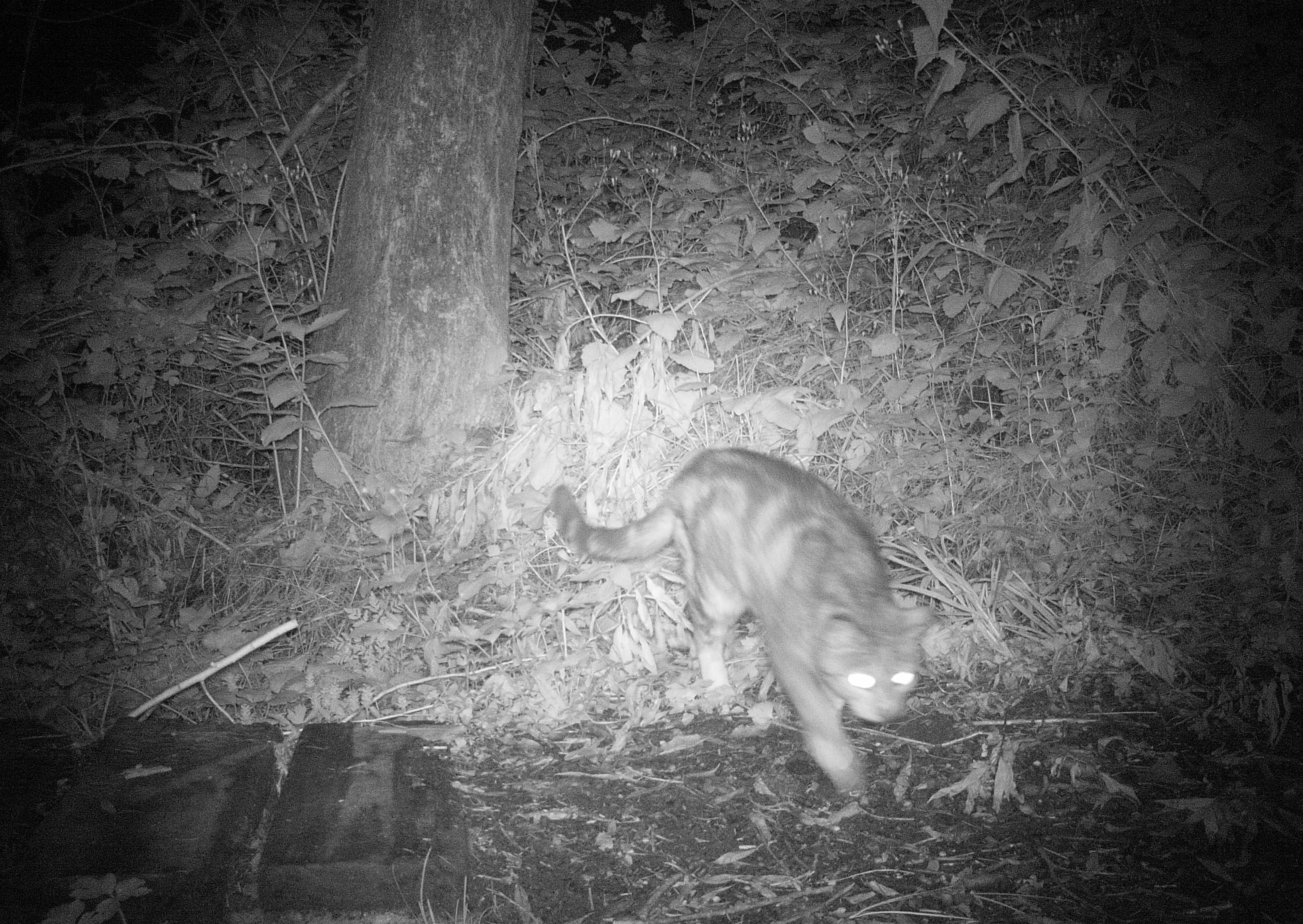
    Image of feral cat caught on camera during study. Orginal image provided by Dr. Margaret Nichols

    What a great reminder that in life it’s not just about success or how long things take; it’s about the experiences and friendships you make along the way. Thank you, Maggie, for sharing that wisdom.

    This article was prepared by Postgraduate Diploma in Applied Science student Chloe McMenamin as part of the ECOL608 Research Methods in Ecology course.

    Now reader it is over to you, want to learn more about how you can help? Check out the The National Cat Management Strategy Group, or if you want to learn more about feral cats here in Aotearoa New Zealand check out what the Department of Conservation has to say.

    Read full study here:
    Nichols, M., Ross, J., Glen, A. S., & Paterson, A. M. (2019). An evaluation of systematic versus strategically-placed camera traps for monitoring feral cats in New Zealand. Animals, 9(9), 687. https://doi.org/10.3390/ani9090687

    Image refernce:

    Garvey, P,M. (nd). FigS3: Hedgehog self-anointing after contact with the pheromone/kairomone vial [Supplemental material]. ResearchGate. https://www.researchgate.net/publication/311713979_FigS3_Hedgehog_self-anointing_after_contact_with_the_pheromone_kairomone_vial