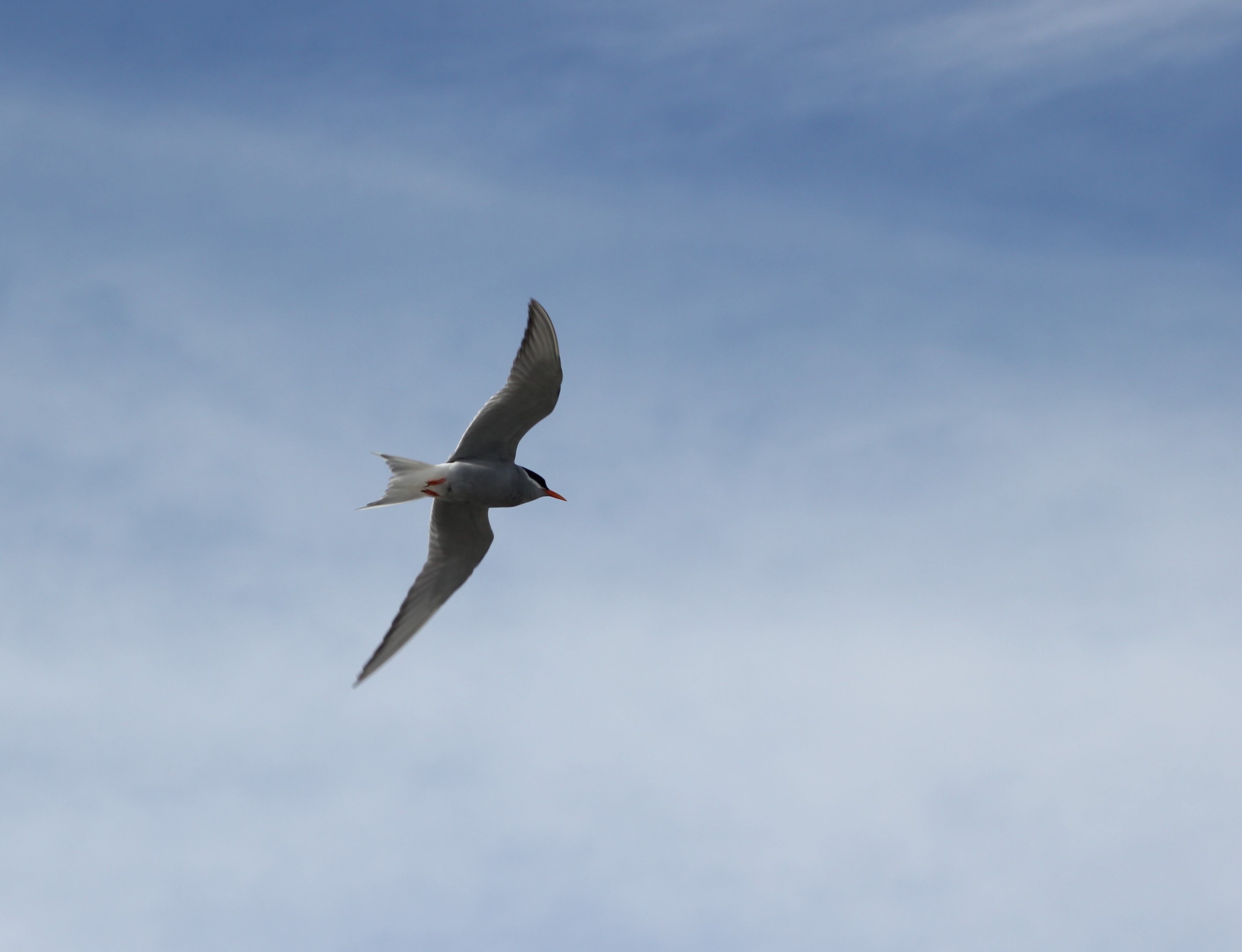
Not just for ducks
For myself, a plastic decoy is first, and foremost, synonymous with hunting. Perhaps to some this hobby seems counterintuitive coming from an ecologist, but rest assured, we pride ourselves on habitat protection and pest population management (with the added benefit of free-range tucker).
Over years of game-bird chasing, I have put out dozens of decoys. Never once did it cross my mind that a tool like them could be used for conservation.
But when you think about it critically, why would decoys not be useful? Decoys and callers are first and foremost attractants, playing on the target species’ keen senses and basic behavioural responses. As ecologists, we already familiar with attractants. The tried and true Pics peanut butter bait in tracking tunnels, enticing a wiry old possum to investigate, or the sprinkling of icing sugar in front of a wax tag, are very common in our conservation landscape.

Social attraction – when decoys come into play
Species of birds that live within colonies use cues from peers to gauge habitat quality. To put it plainly, think of it like a review on a hotel. You’re probably more likely to go to one that your mate rated higher, right? So if your bird mates hang out in an area then this is probably a sign that it is a great place for a nest. These cues have the added benefit for colony birds of improved breeding success and survival.
Historically, conservation for colony-forming birds, such as the Kororā and Black-fronted tern in New Zealand, has underused this behaviour, relying heavily on predator control and habitat enhancement instead. These techniques are both particularly costly and need extensive upkeep for continued positive results. How about instead of focusing on getting the number of living birds up, we focus first on increasing the number of their plastic alternatives? … Have conservationists lost their minds? Quite the opposite.
Benefits of social attractants
Social attractants, such as decoys and audio players, can work effectively to encourage threatened species to inhabit more desirable areas. Decoys can mimick the cues that gauge habitat quality by colony-forming birds.
By actively encouraging individuals to inhabit these areas, this may reduce the number of birds attempting to nest in more dangerous locations. Those dangerous places could include a particularly low-lying section of coast where nests would be swept away during severe weather events, or an area without predator control.
Attractants could be used in combination with predator-proof fences, weeding and predator control, to create nesting sanctuaries. This is particularly useful for our more aeronautically inclined natives that are not confined by fencing, as opposed to their flightless counterparts. Nests and attractants would give them a reason to stay within these safe havens, which would improve survival and breeding success.
For our rarer species, social attractants may further aid breeding success by encouraging a higher number of individuals into a particular area. This would help boost reproduction rates due to more breeding-age adults being close together.

Trialing social attractants for black-fronted tern conservation
Social attractants were used in a Lincoln University study to identify their effects on black-fronted terns (Chlidonias albostriatus). This study was completed by Courtney Hamblin in 2019.
The types of social attractants that Courtney used included a sound anchor system, which played a variety of black-fronted tern calls, including fishing, begging, and kit calls, on a looped playback. Her study also used plastic decoys as visual attractants.
Courtney’s experiment used nine braided rivers within the Canterbury region, with ten locations each for both untreated (without attractants) and treated (with attractants) sites.
First up, Courtney needed to pick her sites on these braided rivers. She selected sites that best fit tern nesting, but without terns having nested there before. She also wanted the sites to be safe for terns to nest at if they chose to do so. It wouldn’t have been a good look if nests had started floating away!
Courtney then compared tern behaviour between sites with and without attractants. To do this, patience had to be a virtue. Over fortnightly 1-hour sessions for each site, she looked for interactions, particularly terns circling/hovering over these areas, landing within plots (land-in) and landing close by (land-out).


When the study had concluded, Courtney, and her supervisors Adrian Paterson (LU), James Ross (LU) and Richard Maloney (DoC), found that there was over nine times more activity recorded within plots with attractants than within plots that lacked any attractants.
Black-fronted tern nesting was also found to have occurred near eight out of ten treated sites. Of these, five sites had terns nesting within 300 m, which was significantly closer than distances from the untreated sites.
Unfortunately for me, as they were used together, there was no speculation on whether the decoys or the audio playback setup had the greater effect. So for now, I won’t be trading in my trusty wooden duck caller for a fancy electronic apparatus.
These results show that black-fronted terns do interact with social attractants. They could be useful for black-fronted tern conservation by helping to attract individuals into desirable areas to nest.
So social attractants could provide us with huge gains for black-fronted tern conservation, now that we understand all their neat uses!

So what are the opportunities for social attractants? Endless!
Social attractants already have success stories. A notable win was their use in helping to restore the iconic Atlantic puffin to Eastern Egg Rock in Maine. But let’s ponder the future.
Think about the possibilities, such as their use in protecting species against climate change effects. Social attractants could readily be employed to move nesting locations away from at-risk coastal areas or encourage nesting within predator-proof sanctuaries to avoid exotic threats that are likely to arrive in New Zealand ecosystems.
Final thoughts
Even with all the prospective benefits, the study also made me think about issues that may arise with social attractants. Sure, they encourage some native colony birds to interact with them, but would this not be the same for native/exotic predators? They too key off cues from their target species, such as sounds and visuals.
This sparks memories of harriers circling over my decoys, ready to pounce on any shot birds, as if they were using my decoys as a marker for a prospective feast.
To me, this was a particularly poignant thought, which I would love to see investigated.
This article was prepared by Master’s of Bio protection student, Jonathan Morriss, as part of the ECOL608 Research Methods in Ecology course.
Hamblin, C., Paterson, A., Ross, J., Maloney, R. (2019). Social Attractants, a Conservation Tool for Black‐Fronted Terns. Wildlife Society Bulletin. 1-8. https://doi.org/10.1002/wsb.989
Additional Information:
Bonbaci, S., Pejchar, L., Innes, J. (2018). Fenced sanctuaries deliver conservation benefits for most common and threatened native island birds In New Zealand. Ecosphere. 9(11). https://doi.org/10.1002/ecs2.2497
Buxton, V., Enos, J., Sperry, J., Ward, M. (2020). A review of conspecific attraction for habitat selection across taxa. Ecology and Evolution. 10(23). 12690–12699. 10.1002/ece3.6922
Handley, S. (2022). Technical options for marine coastal habitat restoration in Te Tauihu. NIWA. https://www.envirolink.govt.nz/assets/Envirolink/2203-MLDC161-Technical-options-for-marine-coastal-habitat-restoration-in-Te-Tauihu.pdf
Herrera-Giraldo, J., Figuerola-Hernández, C., Wolf, C., Colón-Merced, R., Ventosa-Febles, E., Silander, S., Holmes, N. (2021). The use of social attraction techniques to restore seabird colonies on Desecheo Island, Puerto Rico. Ecological Solutions and Evidence. 2(2). https://doi.org/10.1002/2688-8319.12058
Lapin, K., Konrad, H., Leeb, C., Oettel, J. (2025). Species on the Move: Migration, Range Shifts, and Dispersal of Species. Ecological Connectivity of Forest Ecosystems. 23-38. https://link.springer.com/chapter/10.1007/978-3-031-82206-3_2
Taylor, G. (2000). Action Plan for Seabird Conservation in New Zealand. Department of Conservation. 16. https://www.doc.govt.nz/documents/science-and-technical/tsop16.pdf
Leave a Reply