
Like most people, I hate going to the dentist. Every time I have a check-up, they poke and prod around my mouth, trying to find something wrong. Most of the time, they end up telling me the same thing: I don’t floss enough.
Despite all those check-ups and the money that went into braces, I rarely find myself thinking about what actually goes on inside our mouths. They are the first point of contact for everything, from breaths of fresh air to the good (and bad) choices about what we eat. But our mouths have a lot more going on than we credit them with.
Our mouths are home to over 700 different species of microbes – tiny microscopic organisms that can be anything from bacteria to fungi to viruses. While that might sound like a bad thing, these microbial communities contain both helpful and harmful organisms. Many beneficial microbes assist with digestion and help regulate harmful microbes, even in food!

These diverse oral communities exist in almost all animals, and their roles go far beyond digestion. They can also influence immune responses and even host behaviour. In turn, oral microbiomes themselves are shaped by a host’s genetics, physiology, environment, and diet. As microbiomes co-evolve with their hosts, we can potentially understand genetic variation and evolutionary processes in host species by looking at these small passengers.

These interesting, yet poorly understood, communities were studied by a group of nine scientists, including researchers from Lincoln University. They wanted to understand the oral microbiomes of two invasive to New Zealand mammals: the stoat and the common brushtail possum. Stoats and possums are both notorious pests in Aotearoa. They disrupt our vulnerable ecosystems, killing native plants and animals. While extensive research has examined the species themselves, little attention has been given to their microbiomes, let alone their oral microbiomes.

Led by Arsalan Emami-Khoyi, the researchers aimed to characterise the diversity, content, and variation of oral microbiota in the animals. With ethics approval from the Lincoln University Animal Ethics Committee, they live-captured five stoats and five possums from Banks Peninsula. Unlike a typical trip to the dentist, the animals were sedated before researchers swabbed their mouths. The researchers then used a DNA technique called 16S rRNA metabarcoding to discover and record microbial communities. This complex technique identifies the abundance of different groups of microbes.
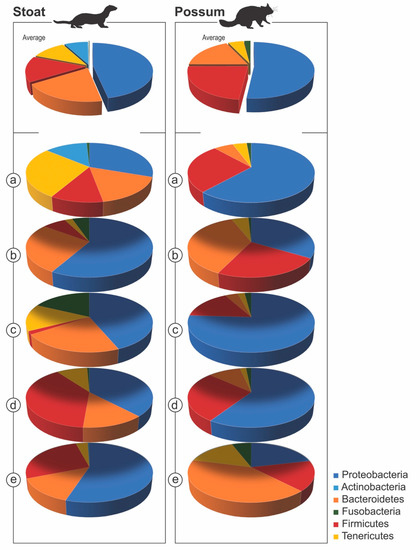
All of the animals captured were healthy apart from gum inflammation – my dentist would be horrified by how little they brush their teeth. As published in the journal Diversity, the researchers identified 19 different major microbial groups (phyla), and 51 known species in the animals’ mouths. Despite this high diversity, a small number of microbes dominated each mouth fauna in both animals. These same groups are abundant across other mammal species, representing a ‘core’ set of microbes across mammals. Some of these core groups are Proteobacteria and Firmicutes.
The researchers also found clear differences in microbial composition between stoats and possums. This suggested a link between diet and microbes, with omnivorous possums having plant-metabolising bacteria, such as Treponema sp., which were completely absent in the carnivorous stoat. At the same time, the high diversity in both species suggests that other factors, such as genetics, environment and physiology, also play an important role in shaping oral microbiomes.

This high variation in the oral microbiome could help us understand evolutionary responses of introduced species to new environments. Because of their short lifespan and fast reproduction, microbial communities can change more rapidly than their host genetics. So focusing on them could teach us about how much these invasive species have adapted to New Zealand’s environment.
Understanding the oral microbiomes of these invasive mammals could also have practical applications in pest control. Microbes can influence how animals process toxins and other chemicals, which may influence how well poisons work. In New Zealand, we often rely on poisons, such as 1080 and brodifacoum, to control our mammalian populations. Future research on this could help us improve the effectiveness of control tools.
Work has already been done beyond this study. The lead author and colleagues have developed a device that collects DNA from possums in the field, allowing us to sample DNA without capturing the animal directly. Alongside collecting host DNA, this approach can also provide insights into possum health by analysing oral microbial DNA.

Personally, I think this study could help us understand population connectivity. Comparing microbial samples from different locations could provide a new way to understand population connectivity and how invasive species spread.
There is a wide range of potential applications from this research, and microbiomes will likely play an increasingly important role in future pest management.
It turns out we can learn a lot from what’s happening inside an animal’s mouth. So maybe my dentist is right to look so closely after all.
This article was prepared by Master of Bioprotection student Sam Bonney as part of the ECOL608 Research Methods in Ecology course
Emami-Khoyi, A., Benmazouz, I., Paterson, A. M., Ross, J. G., Murphy, E. C., Bothwell, J., Alizadeh, H., van Vuuren, B. J., & Teske, P. R. (2020). Oral Microbiome Metabarcoding in Two Invasive Small Mammals from New Zealand. Diversity, 12(7), 278. https://doi.org/10.3390/d12070278
Leave a Reply