Category: conservation

  • Wasps aren’t all aggressive, just misunderstood

    Wasps aren’t all aggressive, just misunderstood

    Uncategorized, behaviour, conservation, entomology, student blog, wildlife management

    If you had asked me four years ago where I would be today, I would not have said ‘planning to study wasps’, and I would NOT have said ‘New Zealand’! But here I am and that’s what I’m doing.

    My interest in this field originates from my research on ants, and more specifically their unique behaviour. Ants belong to the order Hymenoptera, the same order as bees and wasps.

    Just like humans, wasps can be social creatures, and just like humans they display different levels of aggression (although most types of wasps are not social). Despite there being around 100,000 described wasp species, only around 1,000 of them are social. Which seems crazy, because when you see one wasp, you always seem to see more.

    Vespula wasps are what’s called eusocial, this means that they are organised into groups and all work together under a single queen. Eusociality is impressively efficient. E.O Wilson, a famed ant biologist, once said that humans display a weak form of eusociality, and I have to say I agree with him.

    Now, back to how wasps display different levels of aggression. Have you ever noticed that when you walk past a nest or sit near a wasp sometimes you will be harassed while other times they will completely ignore you? That’s because different colonies of wasps display their own levels of aggression!

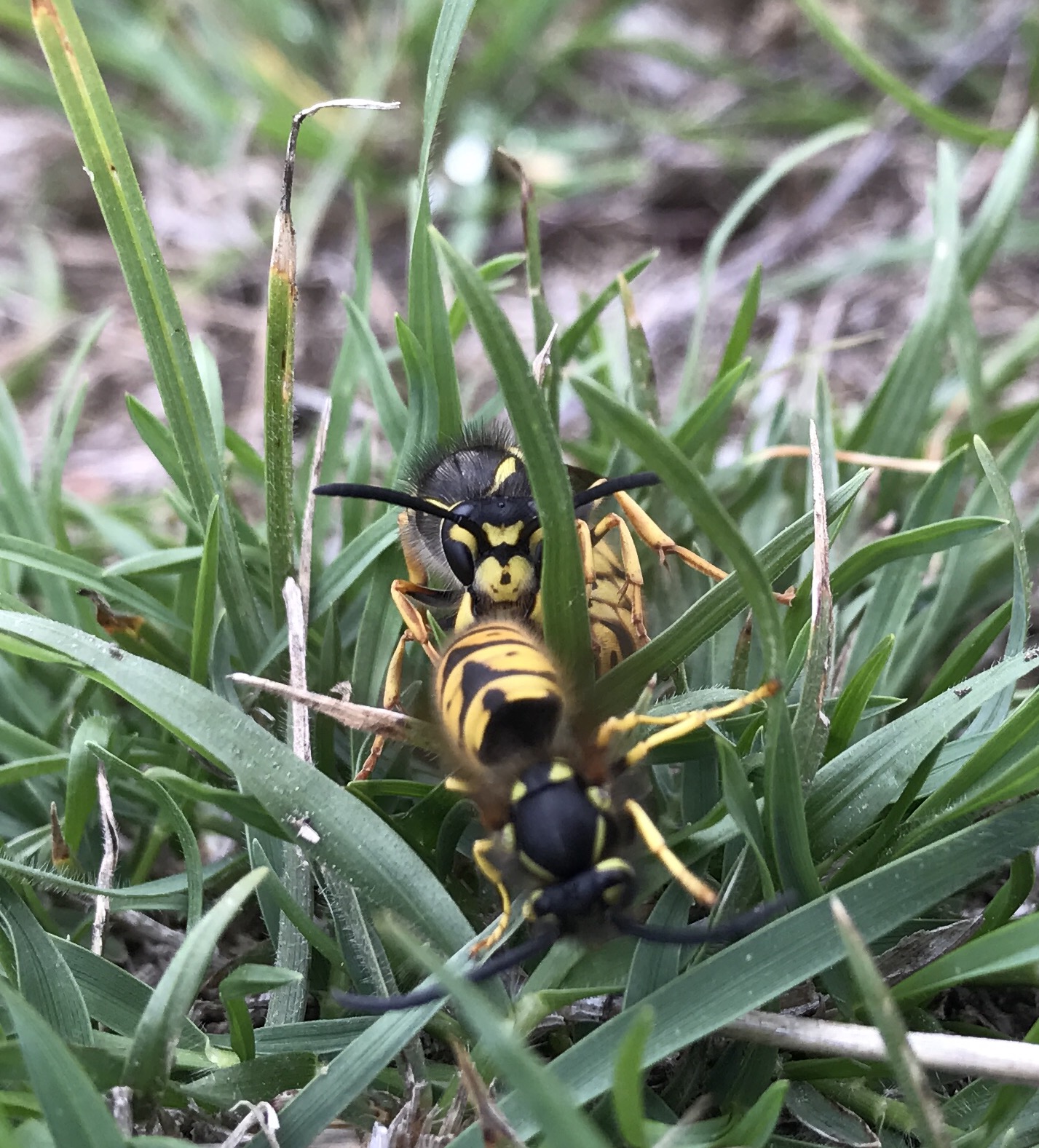
    Vespula germanica, David Nicholls, Ratby garden, 22 April 2016

    There are many reasons why wasps may vary in aggression. Some may be more aggressive to drive away predators or outcompete other colonies. Others may be more passive to hide from mammals who could destroy their nests.

    A group of brave researchers, including Mateus Detoni from Lincoln University, put themselves in harm’s way to determine what factors cause wasps to display varying levels of aggression.

    One hypothesis that they developed was that foraging and temperature could increase aggression because that is when wasps are the most active. The methods used for testing the aggression of the wasps included a target made from two black plastic plates that had been clasped together and a black cloth. Inside the plates was an omnidirectional microphone that had been connected to a camera.

    As you may know, wasps are a super invasive pest species in New Zealand. Since the early 1900s they have been having a devastating impact on the beech forests and the native ecosystem as a whole. There are two species in New Zealand Vespula vulgaris and Vespula germanica, both having colonised from Europe in the 20th Century.

    To survive, wasps need sugars and protein, so they go hunting. The main thing wasps are foraging for, especially in beech forests, is honeydew. This is a type of sugar that has been pooped out by scale insects, which live on and inside beech trees. The main source of protein for wasps is, well, anything that is soft enough for them to bring back to their nest.

    Wasp foraging for honey dew on a southern beech tree. Image from Adrian Paterson.

    The study found that, surprisingly, neither foraging activity nor temperature seemed to have any role in indicating whether a colony would be particularly more aggressive than another. So, the researchers turned to the next question, could it have something to do with nest and colony size? Unfortunately, this lead was also a bust. Yes, the larger colony size did allow for higher foraging activity but there was still no indication that a larger nest and colony would increase aggression.

    Did aggression have something to do with the age of wasps? Eusocial insect colonies span generations of individuals meaning there are both juvenile and mature workers alive simultaneously. This was a topic that Mateus had previously studied. Age can play a role in aggression, as the older wasps have more experience defending the nest, which can cause them to have a more aggressive response when agitated.

    Vespula wasp colonies were observed through their life, and it was concluded that the behaviour on a colony level is consistent throughout development. However, one key thing was noted “behaviour can change as an individual, or colony develops” and “consistent differences within a population can still be observed”.

    Aggressiveness could depend on the ratio of aggressive to nonaggressive individuals in the colony. Wasps having their own individual personalities is not something that most people consider, as they are often thought of as all being worker drones. But I guess a lot of that can be attributed to the media shaping how we view wasps, bees, and ants.

    In Europe, wasps have predators that both keep the population in check and give them a reason to be aggressive. The researchers suggested that external pressures may cause certain behaviour to be passed down through generations. In a place where they do not have predators, such as New Zealand, they can learn to pass on behaviour that is less aggressive.

    Wasps are insects that have individual personalities influencing the aggression levels of the colonies that they live in. Eusociality truly is one of the most interesting concepts in the animal kingdom.

                    This article was prepared by Postgraduate Diploma in Applied Science student Jack Gregorian as part of the ECOL608 Research Methods in Ecology course.

    Reference:

    Jandt, J. M., Detoni, M., Loope, K. J., & Santoro, D. (2020). Vespula wasps show consistent differences in colony-level aggression over time and across contexts. Insectes Sociaux, 67(3), 367–381. https://doi.org/10.1007/s00040-020-00768-3

  • If friend-shaped, why not friend?

    If friend-shaped, why not friend?

    It’s a fair question.

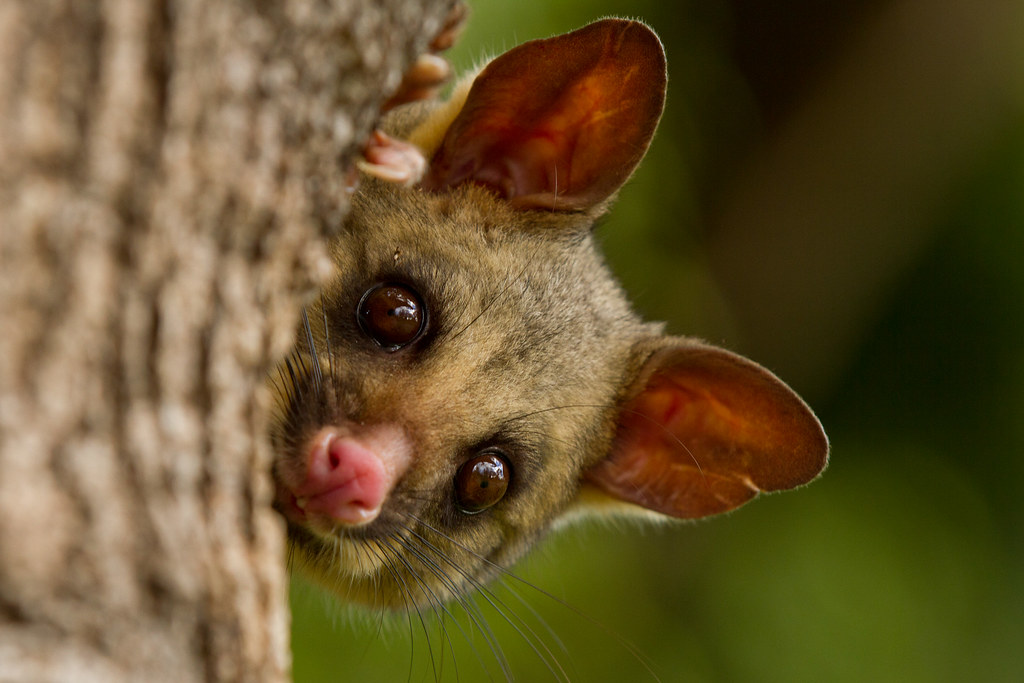
    If an animal looks soft, furry, and, let’s be honest, kind of adorable… why wouldn’t we treat it like a friend? Picture a common brush-tailed possum, fluffy and wide-eyed, or a spiky little hedgehog snuffling through the undergrowth, both undeniably friend-shaped. They don’t exactly look like villains. In fact, they look like animals we might want to protect.

    But here’s the uncomfortable truth: in Aotearoa/New Zealand, these “friend-shaped” animals are responsible for some of the most devastating environmental damage across the country.

    A curious little hedgehog (Erinaceus europaeus). It doesn’t look dangerous, but they are surprisingly harmful predators.
    Copyright CC BY-SA 3.0, by Tony Willis, from Wikimedia Commons

    Early in my veterinary career, I realised just how complicated it can be to care about the environment. I’d signed up to help animals, not to think about how their populations should be controlled. But here in Aotearoa, even the cutest animals can be a big environmental problem.

    The scale of the problem means pest management is essential. Conservationists must find a balance between the effectiveness of pest control techniques and animal welfare. This article explores how emerging technologies may help meet this challenge.

    Cute… but catastrophic

    Aotearoa’s wildlife is unique because it evolved for millions of years without land mammals. The only land mammals native to Aotearoa are, in fact, two species of bats. This isolation means many native birds nest on the ground, can’t fly well, and have limited natural defences against mammalian predators.

    When humans arrived, they brought mammals, like hedgehogs, rats, stoats, and possums, with them. This is when everything changed. A stoat might seem sweet and harmless, but it will kill more than it needs. Possums, while wide-eyed and cuddly, can change the types of trees in native forests.

    The stoat (Mustela erminea) is an adorable but efficient killer.
    Copyright CC BY-SA, 2.0 by Soumyajit Nandy, from Wikimedia Commons

    Introduced mammals have had a significant impact, contributing to widespread loss of biodiversity (variety of animals and plants) across Aotearoa. They have had a hand to play in the extinction of many native bird species and continue to threaten many more.

    So, while these mammals might look adorable and harmless, their impact is anything but. It’s not that these animals are bad, they’re just in the wrong place.

    Why we can’t just leave them alone

    It’s tempting to think, “can’t we just let nature take its course?” The problem is, this isn’t how nature originally worked here. These species were suddenly introduced by humans, and native birds didn’t have time to adjust. So the decline in bird species isn’t natural, it’s our fault, and without intervention, many more native species will be lost.

    The huia (Heteralocha acutirostris). A bird now extinct, lost in part to predation by introduced mammal predators.
    Copyright public domain (CC0-style, no known copyright restrictions in place), by Johannes Keulemans, from Wikimedia Commons

    This is why pest control is necessary. It’s not because we don’t like these animals, but rather we are trying to protect something even more vulnerable and important to Aotearoa’s history.

    The challenges of traditional methods

    Traditionally, pest control has relied on traps and toxins. While these methods are effective, they are not without their downsides. They can be costly, need regular checking and resetting, and pests often return quickly once control efforts stop.

    These methods have been under scrutiny for several reasons. One concern is how humane these methods are. Animal welfare remains an important consideration even when trying to reduce or eliminate pest populations. There are also concerns about their environmental impact, including whether the toxins are retained in the soil and waterways. In addition, is the risk of harm to non-target animals, including native birds and other wildlife not intended to be affected.

    Traditional DOC 200 trap. Using traditional traps requires substantial staff time, meaning that ongoing funding is needed to maintain them.
    Copyright CC BY-SA 4.0, by Kimberley Collins, from Wikimedia Commons

    Looking for better solutions

    The good news is that things are changing in some really exciting ways! A 2014 study by Dr Helen Blackie and her team reviewed a range of emerging technologies and research for long-term mammalian pest management, several of which are discussed below. The team brought together scientists, university researchers, commercial pest management organisations and iwi (indigenous Māori tribal groups) who worked collaboratively to design new tools that are more humane, better targeted to specific pest species, and more effective over long timeframes.

    Helen and her team develop new toxins to minimise animal distress. Some are even based on natural toxins derived from native plants, blending science with mātauranga Māori (traditional knowledge).

    Highly poisonous Tutu plant (Coriaria arborea) has been investigated as a potential source of new toxins.
    Copyright CC BY-SA 3.0 by Rudolph89, from Wikimedia Commons

    Another innovation presented in the study is “set and forget” traps. While these devices have existed for some time. Newer versions use artificial intelligence (AI) to ensure only target pest species activate them. Once installed, these traps can remain in place for long periods without the need for frequent checks or bait replacement, a big advantage over traditional traps.

    Smart trap that uses AI to target pest species while avoiding non-target species.
    Photograph by Dr Helen Blackie, used with permission.

    In the study, the group also helped develop traps that utilise new toxins in a clever way. When the specific pest interacts with the trap, a small dose of toxin is placed onto its coat. The animal then ingests it through grooming, reducing the risk of environmental contamination.

    In addition, the group is learning more about pest behaviour, specifically how animals move, feed, and interact at different population numbers. This helps determine the best places for traps, increasing the likelihood that pests will interact with them.

    People power in action

    As this study has shown, pest control isn’t just about technology. It’s about how people work together to protect the environment. In Aotearoa, pest control programmes rely on collaboration between iwi, conservation groups, and scientists. Each group brings different expertise to the work, from scientific knowledge to local and cultural understanding.

    When I discussed the new innovations with Dr Helen Blackie, she highlighted that some of the most successful pest control initiatives come from community-led groups. She emphasised that even though these groups may have fewer resources than larger programmes, they are still often highly effective. They work closely together with a strong commitment, enabling them to share ideas and adapt their approaches as needed. At the end of the day, pest control only works if people are willing to take part!

    So…why not friend?

    It’s okay to think these introduced mammals are cute, and the instinct to care about all animals is a good one. But, in Aotearoa, protecting native birds and plants requires managing introduced mammals. Not because they’re bad, not because they don’t deserve compassion, but because the balance has already been tipped, and without action, the consequences could be irreversible.

    With better tools, smarter strategies, and more collaboration, we’re moving toward a future where pest control is more effective, more humane, and more sustainable.

    And maybe that’s the real answer to the question, “if friend-shaped, why not friend?” Because sometimes, protecting one part of nature means making hard choices about another.

    Tough decisions need to be made in order to protect tiny native birds like the titipounamu (Acanthisitta chloris).
    Copyright CC BY-SA 4.0  by Melissa Boardman, from Wikimedia Commons

    How can you help?

    Looking after our environment is a shared effort, the more each of us does, the bigger the impact we can make. If you’re keen to take it further, organisations like Predator Free 2050, Department of Conservation, and Forest & Bird offer opportunities to get involved right across the country. Tools like Trap.NZ can also help you protect your own backyard and track your impact. Karawhiua!

    Written by veterinarian and animal lover, Kim Telford, a student at Te Whare Wānaka o Aoraki/Lincoln University. Inspired by a curiosity for how humans and animals intersect, as part of the ECOL 608 Research Methods in Ecology course.

    Explore the science: Blackie H, M., MacKay J.W., Allen W.J., Smith D.H., Barrett B., Whyte B.I., Murphy E.C., Ross J., Shapiro L., Ogilvie S., Sam S., MacMorran D., Inder S., Eason C.T. (2014) Innovative developments for long-term mammalian pest control. Pest Management Science, 70(3), 345-51. doi: 10.1002/ps.3627.

  • Fake terns for real conservation change

    Fake terns for real conservation change

    Not just for ducks

    For myself, a plastic decoy is first, and foremost, synonymous with hunting. Perhaps to some this hobby seems counterintuitive coming from an ecologist, but rest assured, we pride ourselves on habitat protection and pest population management (with the added benefit of free-range tucker).

    Over years of game-bird chasing, I have put out dozens of decoys. Never once did it cross my mind that a tool like them could be used for conservation.

    But when you think about it critically, why would decoys not be useful? Decoys and callers are first and foremost attractants, playing on the target species’ keen senses and basic behavioural responses. As ecologists, we already familiar with attractants. The tried and true Pics peanut butter bait in tracking tunnels, enticing a wiry old possum to investigate, or the sprinkling of icing sugar in front of a wax tag, are very common in our conservation landscape.

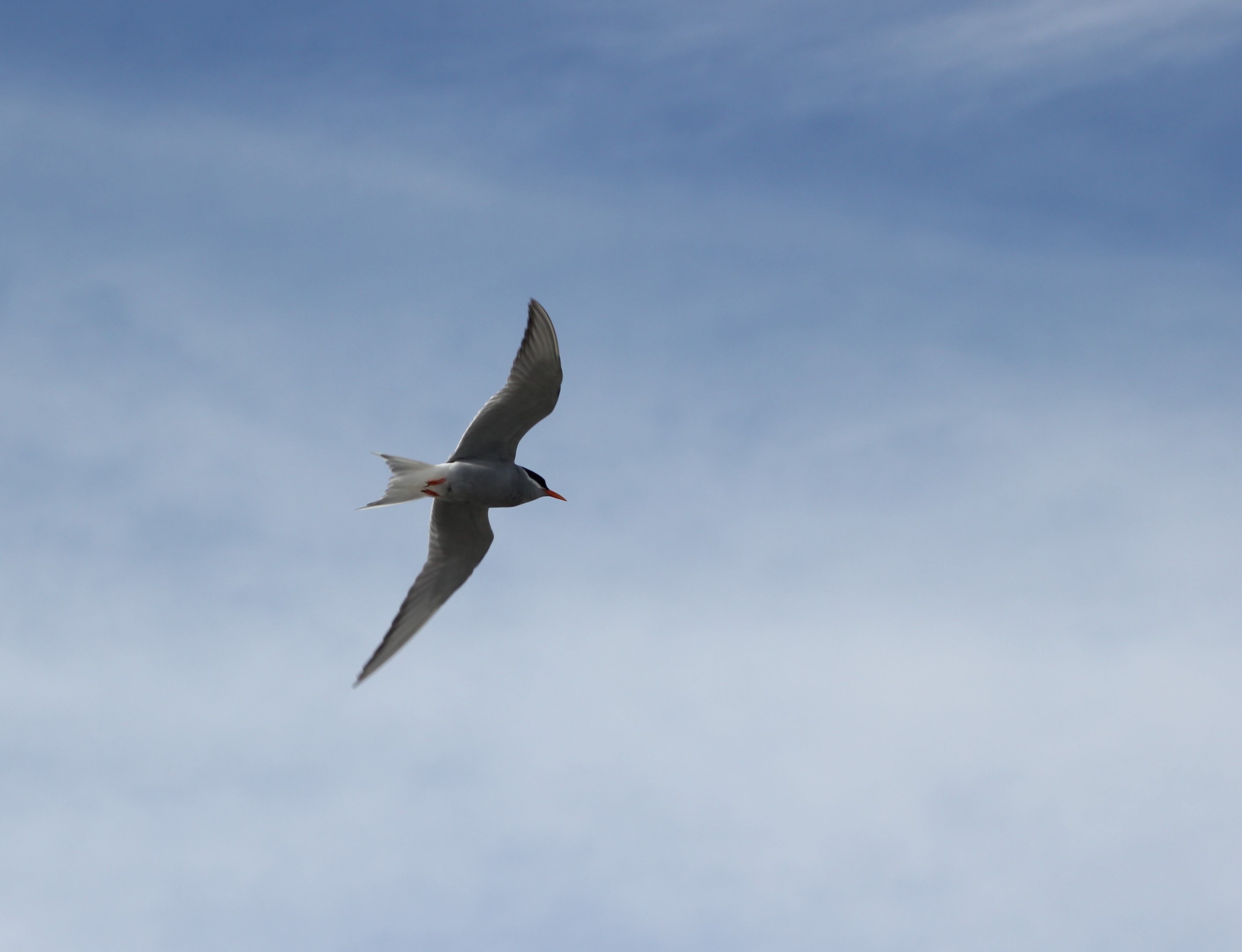
    Black-fronted terns (Chlidonias albostriatus)- credit Carey Knox (CC0 no rights reserved)

    Social attraction – when decoys come into play

    Species of birds that live within colonies use cues from peers to gauge habitat quality. To put it plainly, think of it like a review on a hotel. You’re probably more likely to go to one that your mate rated higher, right? So if your bird mates hang out in an area then this is probably a sign that it is a great place for a nest. These cues have the added benefit for colony birds of improved breeding success and survival.

    Historically, conservation for colony-forming birds, such as the Kororā and Black-fronted tern in New Zealand, has underused this behaviour, relying heavily on predator control and habitat enhancement instead. These techniques are both particularly costly and need extensive upkeep for continued positive results. How about instead of focusing on getting the number of living birds up, we focus first on increasing the number of their plastic alternatives? … Have conservationists lost their minds? Quite the opposite.

    Benefits of social attractants

    Social attractants, such as decoys and audio players, can work effectively to encourage threatened species to inhabit more desirable areas. Decoys can mimick the cues that gauge habitat quality by colony-forming birds.

    By actively encouraging individuals to inhabit these areas, this may reduce the number of birds attempting to nest in more dangerous locations. Those dangerous places could include a particularly low-lying section of coast where nests would be swept away during severe weather events, or an area without predator control.

    Attractants could be used in combination with predator-proof fences, weeding and predator control, to create nesting sanctuaries. This is particularly useful for our more aeronautically inclined natives that are not confined by fencing, as opposed to their flightless counterparts. Nests and attractants would give them a reason to stay within these safe havens, which would improve survival and breeding success.

    For our rarer species, social attractants may further aid breeding success by encouraging a higher number of individuals into a particular area. This would help boost reproduction rates due to more breeding-age adults being close together.

    Illustration by Author (CC0 no rights reserved)

    Trialing social attractants for black-fronted tern conservation

    Social attractants were used in a Lincoln University study to identify their effects on black-fronted terns (Chlidonias albostriatus). This study was completed by Courtney Hamblin in 2019.

    The types of social attractants that Courtney used included a sound anchor system, which played a variety of black-fronted tern calls, including fishing, begging, and kit calls, on a looped playback. Her study also used plastic decoys as visual attractants.

    Courtney’s experiment used nine braided rivers within the Canterbury region, with ten locations each for both untreated (without attractants) and treated (with attractants) sites.

    First up, Courtney needed to pick her sites on these braided rivers. She selected sites that best fit tern nesting, but without terns having nested there before. She also wanted the sites to be safe for terns to nest at if they chose to do so. It wouldn’t have been a good look if nests had started floating away!

    Courtney then compared tern behaviour between sites with and without attractants. To do this, patience had to be a virtue. Over fortnightly 1-hour sessions for each site, she looked for interactions, particularly terns circling/hovering over these areas, landing within plots (land-in) and landing close by (land-out).

    Diagram of the audio playback setup (Above) and example of a decoy used in the project (Below). Photo credits – Courtney Hamblin (CC BY – NC 4.0)

    When the study had concluded, Courtney, and her supervisors Adrian Paterson (LU), James Ross (LU) and Richard Maloney (DoC), found that there was over nine times more activity recorded within plots with attractants than within plots that lacked any attractants.

    Black-fronted tern nesting was also found to have occurred near eight out of ten treated sites. Of these, five sites had terns nesting within 300 m, which was significantly closer than distances from the untreated sites.

    Unfortunately for me, as they were used together, there was no speculation on whether the decoys or the audio playback setup had the greater effect. So for now, I won’t be trading in my trusty wooden duck caller for a fancy electronic apparatus.

    These results show that black-fronted terns do interact with social attractants. They could be useful for black-fronted tern conservation by helping to attract individuals into desirable areas to nest.

    So social attractants could provide us with huge gains for black-fronted tern conservation, now that we understand all their neat uses!

    Diagram of the treated plot – note there would be an equally sized area used for the untreated plots without decoys and speakers. Credit – Courtney Hamblin (CC BY – NC 4.0)

    So what are the opportunities for social attractants? Endless!

    Social attractants already have success stories. A notable win was their use in helping to restore the iconic Atlantic puffin to Eastern Egg Rock in Maine. But let’s ponder the future.

    Think about the possibilities, such as their use in protecting species against climate change effects. Social attractants could readily be employed to move nesting locations away from at-risk coastal areas or encourage nesting within predator-proof sanctuaries to avoid exotic threats that are likely to arrive in New Zealand ecosystems.

    Final thoughts

    Even with all the prospective benefits, the study also made me think about issues that may arise with social attractants. Sure, they encourage some native colony birds to interact with them, but would this not be the same for native/exotic predators? They too key off cues from their target species, such as sounds and visuals.

    This sparks memories of harriers circling over my decoys, ready to pounce on any shot birds, as if they were using my decoys as a marker for a prospective feast.

    To me, this was a particularly poignant thought, which I would love to see investigated.

    This article was prepared by Master’s of Bio protection student, Jonathan Morriss, as part of the ECOL608 Research Methods in Ecology course.

    Hamblin, C., Paterson, A., Ross, J., Maloney, R. (2019). Social Attractants, a Conservation Tool for Black‐Fronted Terns. Wildlife Society Bulletin. 1-8. https://doi.org/10.1002/wsb.989

    Additional Information:

    Bonbaci, S., Pejchar, L., Innes, J. (2018). Fenced sanctuaries deliver conservation benefits for most common and threatened native island birds In New Zealand. Ecosphere. 9(11). https://doi.org/10.1002/ecs2.2497

    Buxton, V., Enos, J., Sperry, J., Ward, M. (2020). A review of conspecific attraction for habitat selection across taxa. Ecology and Evolution. 10(23). 12690–12699. 10.1002/ece3.6922

    Handley, S. (2022). Technical options for marine coastal habitat restoration in Te Tauihu. NIWA. https://www.envirolink.govt.nz/assets/Envirolink/2203-MLDC161-Technical-options-for-marine-coastal-habitat-restoration-in-Te-Tauihu.pdf

    Herrera-Giraldo, J., Figuerola-Hernández, C., Wolf, C., Colón-Merced, R., Ventosa-Febles, E., Silander, S., Holmes, N. (2021). The use of social attraction techniques to restore seabird colonies on Desecheo Island, Puerto Rico. Ecological Solutions and Evidence. 2(2). https://doi.org/10.1002/2688-8319.12058

    Lapin, K., Konrad, H., Leeb, C., Oettel, J. (2025). Species on the Move: Migration, Range Shifts, and Dispersal of Species. Ecological Connectivity of Forest Ecosystems. 23-38. https://link.springer.com/chapter/10.1007/978-3-031-82206-3_2

    Taylor, G. (2000). Action Plan for Seabird Conservation in New Zealand. Department of Conservation. 16. https://www.doc.govt.nz/documents/science-and-technical/tsop16.pdf

  • More than teeth: mouth microbiomes of stoats and possums

    More than teeth: mouth microbiomes of stoats and possums

    Like most people, I hate going to the dentist. Every time I have a check-up, they poke and prod around my mouth, trying to find something wrong. Most of the time, they end up telling me the same thing: I don’t floss enough.

    Despite all those check-ups and the money that went into braces, I rarely find myself thinking about what actually goes on inside our mouths. They are the first point of contact for everything, from breaths of fresh air to the good (and bad) choices about what we eat. But our mouths have a lot more going on than we credit them with.

    Our mouths are home to over 700 different species of microbes – tiny microscopic organisms that can be anything from bacteria to fungi to viruses. While that might sound like a bad thing, these microbial communities contain both helpful and harmful organisms. Many beneficial microbes assist with digestion and help regulate harmful microbes, even in food!

    Our mouths are home to hundreds of different microorganisms. Image from Tjandrawinata et al., (2025) licensed under CC BY 4.0

    These diverse oral communities exist in almost all animals, and their roles go far beyond digestion. They can also influence immune responses and even host behaviour. In turn, oral microbiomes themselves are shaped by a host’s genetics, physiology, environment, and diet. As microbiomes co-evolve with their hosts, we can potentially understand genetic variation and evolutionary processes in host species by looking at these small passengers.

    Common Brushtail Possum (Trichosurus vulpecula) – JJ Harrison (CC-BY-SA-2.5)

    These interesting, yet poorly understood, communities were studied by a group of nine scientists, including researchers from Lincoln University. They wanted to understand the oral microbiomes of two invasive to New Zealand mammals: the stoat and the common brushtail possum. Stoats and possums are both notorious pests in Aotearoa. They disrupt our vulnerable ecosystems, killing native plants and animals. While extensive research has examined the species themselves, little attention has been given to their microbiomes, let alone their oral microbiomes.

    Stoat (Mustela erminea) – James Lindsey (CC BY-SA 3.0)

    Led by Arsalan Emami-Khoyi, the researchers aimed to characterise the diversity, content, and variation of oral microbiota in the animals. With ethics approval from the Lincoln University Animal Ethics Committee, they live-captured five stoats and five possums from Banks Peninsula. Unlike a typical trip to the dentist, the animals were sedated before researchers swabbed their mouths. The researchers then used a DNA technique called 16S rRNA metabarcoding to discover and record microbial communities. This complex technique identifies the abundance of different groups of microbes.

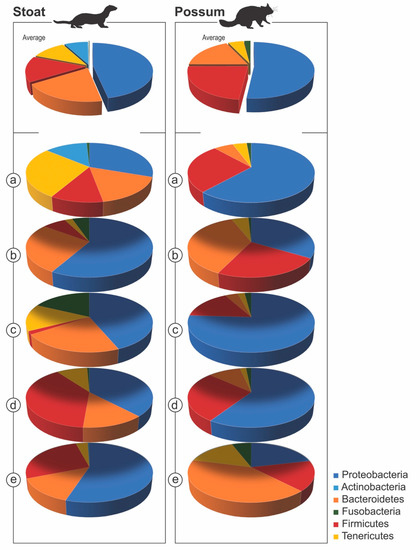
    All of the animals captured were healthy apart from gum inflammation – my dentist would be horrified by how little they brush their teeth. As published in the journal Diversity, the researchers identified 19 different major microbial groups (phyla), and 51 known species in the animals’ mouths. Despite this high diversity, a small number of microbes dominated each mouth fauna in both animals. These same groups are abundant across other mammal species, representing a ‘core’ set of microbes across mammals. Some of these core groups are Proteobacteria and Firmicutes.

    The researchers also found clear differences in microbial composition between stoats and possums. This suggested a link between diet and microbes, with omnivorous possums having plant-metabolising bacteria, such as Treponema sp., which were completely absent in the carnivorous stoat. At the same time, the high diversity in both species suggests that other factors, such as genetics, environment and physiology, also play an important role in shaping oral microbiomes.

    The variation of the five core oral bacteria in stoats and possums found in the study (CC BY 4.0).

    This high variation in the oral microbiome could help us understand evolutionary responses of introduced species to new environments. Because of their short lifespan and fast reproduction, microbial communities can change more rapidly than their host genetics. So focusing on them could teach us about how much these invasive species have adapted to New Zealand’s environment.

    Understanding the oral microbiomes of these invasive mammals could also have practical applications in pest control. Microbes can influence how animals process toxins and other chemicals, which may influence how well poisons work. In New Zealand, we often rely on poisons, such as 1080 and brodifacoum, to control our mammalian populations. Future research on this could help us improve the effectiveness of control tools.

    Work has already been done beyond this study. The lead author and colleagues have developed a device that collects DNA from possums in the field, allowing us to sample DNA without capturing the animal directly. Alongside collecting host DNA, this approach can also provide insights into possum health by analysing oral microbial DNA.

    The device developed by Arsalan Emami-Khoyi and colleagues for capturing DNA in the field (Arsalan Emami-Khoyi et al., 2021)(CC BY 4.0).

    Personally, I think this study could help us understand population connectivity. Comparing microbial samples from different locations could provide a new way to understand population connectivity and how invasive species spread.

    There is a wide range of potential applications from this research, and microbiomes will likely play an increasingly important role in future pest management.

    It turns out we can learn a lot from what’s happening inside an animal’s mouth. So maybe my dentist is right to look so closely after all.

    This article was prepared by Master of Bioprotection student  Sam Bonney as part of the ECOL608 Research Methods in Ecology course

    Emami-Khoyi, A., Benmazouz, I., Paterson, A. M., Ross, J. G., Murphy, E. C., Bothwell, J., Alizadeh, H., van Vuuren, B. J., & Teske, P. R. (2020). Oral Microbiome Metabarcoding in Two Invasive Small Mammals from New Zealand. Diversity, 12(7), 278. https://doi.org/10.3390/d12070278

  • Kiwi: now in 3D

    Kiwi: now in 3D

    ‘Coming soon in 3D!’ Periodically throughout my life movie-makers have dabbled with making films that we can watch in three dimensions. You would get your special glasses before the movie session and then sit there wondering when to put them on until the action got going.

    To be honest I don’t remember many of the movies that I saw like this. The Avatar movies have always had the option and I watched at least the second movie this way. Spears and monsters would lunge out of the screen at you.

    Other than that I am drawing a blank. This is not to say that every 3D movie is bad but just that 3D on its own doesn’t make a film more memorable.

    Avatar Adrian! Look out for the arrow!

    I don’t even dislike the experience despite having to wear the 3D glasses over my own glasses. There is something immersive about dodging things ‘coming out of the screen’. However, I seldom choose this option if 2D is available. It all seems a bit too much like work perhaps?

    Adding a third dimension can help with appreciating scale and movement though. It can also help with identifying who’s who in the screen – there’s just a bit more information that your brain can use.

    Identifying individuals is a big deal in biology, especially conservation. When you have a small population you are interested in individuals. How are they doing? Are they breeding? Who do they hang out with?

    Of course, for many species there are not a lot of features to differentiate between individuals. They are similar in height, uniform in coloration, and have similar behaviours.

    To make them more distinctive we could always band our target with bright colours or paint an obvious mark on them but this involves capturing and interacting with the individual. This causes a great deal of stress and catching individuals is not always simple.

    Ideally we could use cameras to take pictures that we could measure features in that are unique to an individual. Two dimensional pictures require an individual to be in an exact place with an exact orientation for this to work. So this is not a reliable method.

    Bit wait! … Coming soon in 3D!

    It turns out that if you take pictures with different devices from slightly different angles at the same moment then you can much more accurately calculate measurements on individuals. At least in theory.

    Jane Tansell with her trusty kiwi dog. Picture from Jane Tansell.

    Jane Tansell, a recently completed PhD student at Lincoln University, and her supervisors, Adrian Paterson and James Ross, set out to see if we could use this idea to identify kiwi. Kiwi populations and individuals are difficult to measure. They are nocturnal, usually found in scrubby terrain, are reasonably featureless, and spend a lot of time in burrows. We can use trained dogs to find them but this is quite stressful for kiwi. We can listen to their calls during the night but this is difficult to split into different individuals and certain parts of the population don’t call anyway.

    Trail cameras have been used to successfully locate kiwi. Jane wondered if she could pair cameras 12-25 cm apart, taking images that could be used to essentially create a 3D image of features on each bird. Jane knew that kiwi bills vary between individuals and can be used as an ID.

    Jane worked with the more technically literate Maurice Kasprowsky and Tom Gray to cobble together the cameras and get them to work together.

    Jane, as reported in NZ Journal of Zoology, first tried the setup on a taxidermied kiwi in good light conditions. She found that the cameras could be used to measure the bills to within 1.5% of their actual length. This was a great achievement and would certainly be able to determine individuals.

    In theory we should be able to photograph kiwi and recognise them by measuring their bills. Image from Adrian Paterson.

    Jane then set up field trials with live kiwi. In the real world, with low light and moving birds the cameras were less efficient. At worst they were terrible but often they were within 3-4% of the actual bill length. This is not good enough to replace current field identification methods but it was still quite impressive given the relatively jury-rigged setup.

    Improvements in cameras, especially 3D cameras, are happening quite quickly. With some more trial and error Jane should be able to start reducing the error enough for this to be a viable noninvasive method for following kiwi in the field.

    While this is not as exciting as an arrow flying at you from an Avatar movie, this use of 3D does have real world uses that will help with understanding a national icon!

    The author, Adrian Paterson, is a lecturer in the Department of Pest-management and Conservation at Te Whare Wānaka o Aoraki Lincoln University. Adrian is a kiwi but unfortunately has no bill to measure.

  • Silent hunters on the wetland edge: urban cats and nature conservation

    Silent hunters on the wetland edge: urban cats and nature conservation

    The dark side of the cat

    A cat carrying a bird in its mouth while another cat observes nearby, set in a garden with stone pathways and decorative animal statues.
    Cats doing what cats do.
    Photo by Robert | Visual Diary | Berlin on Unsplash

    In the autumn evening, a cat lies on the fence, with focused eyes and slightly wagging tail, this patient hunter is quietly locking onto a target and preparing to attack.

    Cats are the standard feature in almost neighbourhoods in New Zealand. They are elegant, lazy, affectionate, and sometimes unpredictable. Some of them are pretty welcomed , moving freely around neighbourhoods everyday, accepting feeding and petting.

    Behind these soft furs and friendlypurring, there is an ancient, untamed instinct hidden – hunting. Hunting is not just about hunger. Most cats were are well-fed—some are even fed multiple times a day. Yet, the urge to stalk, chase, and kill remains.

    Travis Wetland: A natural island in the city

    Wetlands, green spaces, and bushes are the last shelter for local plants and animals. These “ecological islands” are often located right next to the communities where we live.

    Travis Wetland is a freshwater ecological oasis, located on the edge of Christchurch. Surrounded by residential areas, roads, and commercial development, it remains a vital refuge for more than 53 species of birds and many native invertebrates.

    Living around this wetland, there are hundreds of free-moving domestic cats living. They can walk through the grass without permission, quietly enter the ecological core area, and become hunters of these small lives.

    A sleek black cat crouches on a wooden fence, focused with its golden eyes, poised as if ready to pounce, surrounded by lush green foliage.
    A Patient Hunter
    Photo by Kristin O Karlsen on Unsplash

    Silent pressure & hidden trail

    It is easy for people to imagine a cat lazily lying in the sun by a windowsill, but what about the other side of their life when they step out the door?

    Over the course of a year, 21 pet cats living near Travis Wetland were installed with GPS collars as part of a study by Lincoln University and the Christchurch City Council. The research, led in part by Shelley Morgan and Adrian Paterson, revealed some surprising results.

    Researchers did not capture many cats with prey in their mouths (although more than a few did bring their prey back to their home). But there were other situations: cats were often visiting the edge of the ecological core of the wetland, where native birds, lizards and insects breed.

    A close-up of a small bird with dark brown feathers and a distinctive long tail, perched on a log in a green and grassy environment.
    Fantail(Rhipidura fuliginosa)
    Photo by Callum Hill on Unsplash

    The cat threat does not necessarily come from killing, sometimes, just “attending” is enough. Birds may abandon their nests if they sense a nearby predator. Lizards may interrupt their mating if they feel targeted. In nature, energy is precious, and fear itself is also consumes energy.

    More than half of the monitored cats entered Travis wetland at least once. Some of them went more than 200 metres into the wetland while their owners sleeping, crossing habitats and breeding areas for rare native lizards, insects and ground-nesting birds.

    More than half of the monitored cats entered Travis Wetland at least once. Some of them went more than 200 metres into the wetland while their owners sleeping, crossing habitats and breeding areas for rare native lizards, insects and ground-nesting birds.

    But not every cat causes the same amount of harm.The study found that younger cats—those under six years old—were more active and risky. They travelled further, spent longer inside the wetland, and brought home more prey. Some even swam across water to reach nesting islands. In contrast, older cats tended to stay near home and moved less.

    A small number of energetic cats were doing most of the damage. Researchers called them “super-predators”. This suggests that cat behaviour and age both matter. While most cats seem harmless, a few individuals can quietly cause serious impacts to local wildlife.

    This means the cat you see curled up by the fireplace in the afternoon may be walking the narrow line between urban life and ecological harm at night. It’s not the cat’s fault, and it’s not your fault, but it’s keep happening.

    A cat with black and white fur is sitting behind a window screen, looking outside. The window frame is made of weathered wood, giving a rustic feel to the scene.
    Cat by the Window
    Photo by Aleksandar Popovski on Unsplash

    Night walkers & tiny bells

    Cats are typical “crepuscular” animals, that is, they are most active in the dawn and dusk. This explains why you see cats running around the living room at 10 pm or staring at the wall at 5 am. They don’t listen to a clock, they listen to the call of instinct.

    Sunset and just after is also the time when many cats go out for their “night patrols”. According to the data from the study’s cat GPS tracking, cats move more frequently and walk farther at night. Some cats hardly go out during the day, only sneaking through the garden and visiting the fields after dark.

    So, what can we do to reduce the impact of out furry friends? Some owners hang small bells on their cats’ collars, hoping that the sound will alert potential prey and give them time to escape. This method seems simple and effective, but the effect actually varies from species to species.

    There is a study by University of Otago have shown that bells have a certain deterrent effect on birds and the study by Geiger shown that have little effect on lizards or insects because they are not sensitive to sound. Also some smart cats can even learn to “walk silently” – so that the bell doesn’t ring at all.

    A black cat peeking from behind a concrete structure, with one green eye visible and a blurred background showing hints of light.
    Nightwalker Cat
    Photo by amir esfahanian on Unsplash

    So, while bells may help a little, they are not a panacea. As with everything in this story, the answers are never simple.

    Draw a ceasefire zone

    Some solutions are simple, and others need some creativity.

    In some parts of New Zealand, there is talk of creating a cat-isolation buffer zones — areas around nature reserves where cats are either required to be kept indoors full-time, or where cats are banned or a curfew(Wellington City Council. 2024) is imposed on cats near reserves (although curfews seem not work for protecting birds or lizards)

    This idea is not to punish cat owners but to protect the most vulnerable parts of the ecosystem. Because may be the problem is that house cats may be found curled up in warm blankets, purring softly, eyes half-closed, and when just hours earlier, those paws may have landed a fatal blow on a small bird, or pinned a native skink to the ground.

    Free-roaming cats in New Zealand are subject to different local management depending on their relationship with humans (such as companion cats, stray cats, and wild cats), but there is currently a lack of unified national laws(Sumner, C. L. 2022).

    Threatened-Nationally Critical Skink: Alborn Skinks(Oligosoma albornense)
    Photo by James Reardon

    Some newly built areas even state in the purchase agreement that cats are not allowed to roam freely, and sometimes even completely prohibit cats(Preston, N. 2023).

    To some people, such regulations may sounds really extreme. But to naturalists, it is a way of respecting boundaries, a quiet commitment to leave even a small area and keep distance for the creatures that have lived here long before we came here.

    We would much rather have this scenario: ‘In the autumn evening, a cat looks out of a window at a fence, with focused eyes and slightly wagging tail, this patient hunter is quietly locking onto a target that it would love to attack. Frustrated, it curls up and goes back to sleep.’

    This article was prepared by Master of Pest Management  postgraduate student Linfeng Yu as part of the ECOL608 Research Methods in Ecology course.

    Research paper: Morgan, S. A., Hansen, C. M., Ross, J. G., Hickling, G. J., Ogilvie, S. C., & Paterson, A. M. (2009). Urban cat (Felis catus) movement and predation activity associated with a wetland reserve in New Zealand. Wildlife Research, 36(7), 574–580. https://doi.org/10.1071/WR09023

    References

    Geiger, M., Kistler, C., Mattmann, P., Jenni, L., Hegglin, D., & Bontadina, F. (2022). Colorful Collar-Covers and Bells Reduce Wildlife Predation by Domestic Cats in a Continental European Setting. Frontiers in Ecology and Evolution, 10. https://doi.org/10.3389/fevo.2022.850442

    Housing development near Auckland imposes cat ban to protect wildlife. (n.d.). 1News. Retrieved 5 May 2025, from https://www.1news.co.nz/2021/08/11/housing-development-near-auckland-imposes-cat-ban-to-protect-wildlife/

    Preston, N. (2023, July 1). No cats allowed: Growing number of new neighbourhoods banning pets. Oneroof. https://www.oneroof.co.nz/news/no-cats-allowed-growing-number-of-new-neighbourhoods-banning-pets-43855


    Responsible cat ownership. (2024, October 17). Wellington City Council. https://wellington.govt.nz/dogs-and-other-animals/cats/responsible-cat-ownership


    Sumner, C. L., Walker, J. K., & Dale, A. R. (2022). The Implications of Policies on the Welfare of Free-Roaming Cats in New Zealand. Animals, 12(3), Article 3. https://doi.org/10.3390/ani12030237

  • Cat conundrum: Conservation, cameras, and capricious companions

    Cat conundrum: Conservation, cameras, and capricious companions

    You are probably well aware of the feral cat issues here in Aotearoa New Zealand and the detrimental impact that cats are causing in our unique whenua (land). However, if you are new here, let me get you up to speed. The popularity of these adorable companions –1,134,000 companion cats and 196,000 strays, to be accurate – has come with a tremendous cost to native wildlife in Aotearoa New Zealand.

    With over a decade of experience in the veterinary industry, I’ve witnessed animal welfare concerns from both perspectives. I’ve seen the devastating impact cats can have on native wildlife, as well as the suffering of unwell, neglected feral cats. This dual perspective made becoming a cat owner myself all the more meaningful, thanks to a foster failure named Professor (pictured below), who quickly stole my heart. After adopting him, it was an easy decision to create a comfortable indoor life for him. Knowing the toll that cats can take on wildlife populations and thinking about his health and safety, it was an obvious decision for me to keep him as an indoor cat. But unfortunately, 196,000 cats in Aotearoa New Zealand do not have the cushy indoor lifestyle that Professor has become accustomed to.

    Learn about what the experts have to say on cat management here: https://predatorfreenz.org/stories/animal-welfare-agencies-views-on-cat-management/

    Professor the foster failure. Original image by Chloe Mc Menamin.

    Now what does the science say about monitoring cats that don’t have a cushy indoor lifestyle? In 2019 a team of scientists at Lincoln University carried out a study to better understand just that. They deployed a camera detection system across two pastoral sites in the Hawke’s Bay region. One system was placed systematically (on a grid) and the other strategically (placement where the researchers believed cat activity would be the highest). Their goal was to compare which camera trap placements would be the most effective method for monitoring feral cat populations. While feral cats are notoriously difficult to detect due to their low densities and cryptic behaviours, these researchers did get some interesting results!

    During a telephone interview, with primary author Dr. Margaret Nichols (Maggie), Maggie cheerfully shared how she began to question the use of her time after processing countless images of hedgehogs enjoying the smell and feel of the ferret pheromones used to lure in the cats. Then things took a surreal turn when she found herself pondering reality itself—prompted by turkeys performing what looked suspiciously like synchronised dances.

    But, dear reader, that wasn’t the only captivating creature caught on camera. No! The top-featured animal was… you guessed it… a sheep! Yes, you read that correctly. A single sheep nearly drove Maggie to madness after it camped out in front of one of her cameras for four entire days, triggering over 500,000 images. Poor Maggie! I’d be pulling the wool from my jumper too if I had to process that many sheep shots. Surprisingly, cats turned out to be the least detected animals of all—truly showcasing their cryptic behaviour and highlighting just how important this research was to carry out.

    Against all odds Maggie and her colleagues persevered – through the thousands of sheep, hedgehogs and dancing turkey’s images to reveal a striking discovery. Camera traps placed at the forest margins detected more cats compared to those in mixed scrub or open farmland. Specifically, at forest margin an average of 3 cats were detected per night at Site 1 (Toronui Station made up of a mixture of open farmland and native forest) and 1.7 cats at Site 2 (Cape to City ecological restoration area). This compelling pattern suggests that strategic placement of cameras in these areas is likely to maximise cat detection. Hats off to Maggie and the team, what a cool discovery.

    Hedgehog self-anointing after contact with the pheromone. Image source Research Gate (Garvey., nd)

    Well, there you have it reader – strategic camera placement at forest margins in the Hawke’s Bay area is the most effective way to monitor feral cats, but this is just the beginning of cat monitoring research in Aotearoa New Zealand. If you are like me and feeling inspired by Maggie and her colleagues’ findings, you might also be wondering where to even start tackling the feral cat population in your local area.

    While science and data are fascinating, the telephone interview with Maggie wisely reminded me that the best part of her research experience were the organisations and the people involved along the way, particularly the Hawke’s Bay Regional Council , Predator Free South Westland, and Lincoln University. She reported that working with various stakeholders made the project not only successful but also deeply rewarding. She also noted that all research projects take more time than you think and to never underestimate the possibility of processing 500,000 sheep photos when doing camera monitoring!

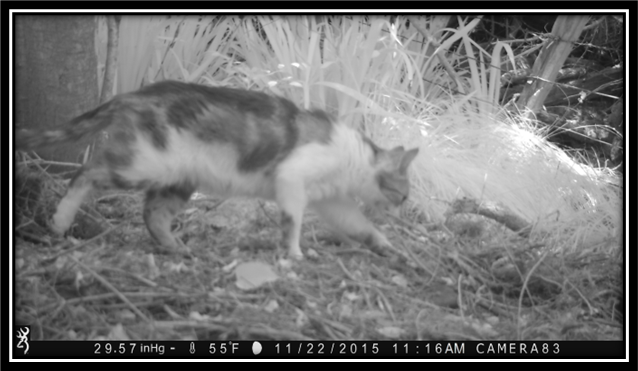
    Image of feral cat caught on camera during study. Orginal image provided by Dr. Margaret Nichols

    What a great reminder that in life it’s not just about success or how long things take; it’s about the experiences and friendships you make along the way. Thank you, Maggie, for sharing that wisdom.

    This article was prepared by Postgraduate Diploma in Applied Science student Chloe McMenamin as part of the ECOL608 Research Methods in Ecology course.

    Now reader it is over to you, want to learn more about how you can help? Check out the The National Cat Management Strategy Group, or if you want to learn more about feral cats here in Aotearoa New Zealand check out what the Department of Conservation has to say.

    Read full study here:
    Nichols, M., Ross, J., Glen, A. S., & Paterson, A. M. (2019). An evaluation of systematic versus strategically-placed camera traps for monitoring feral cats in New Zealand. Animals, 9(9), 687. https://doi.org/10.3390/ani9090687

    Image refernce:

    Garvey, P,M. (nd). FigS3: Hedgehog self-anointing after contact with the pheromone/kairomone vial [Supplemental material]. ResearchGate. https://www.researchgate.net/publication/311713979_FigS3_Hedgehog_self-anointing_after_contact_with_the_pheromone_kairomone_vial

  • To bait, or not to bait…: wētā foraging and brodifacoum

    To bait, or not to bait…: wētā foraging and brodifacoum

    I am lucky that my parents live right down the road from the Brook Waimārama Sanctuary. This 690 hectare fenced sanctuary is home to many native species and is about to be home to 40 spotted kiwis (Exciting!!!!). Within this Sanctuary there are “wētā hotels” that offers a haven for wētā, although I have also seen a giant leopard slug in there as well. I often visit the Sanctuary, it has a lot of history and diversity. Sanctuaries offer a safe space for vulnerable native species away from large predators. The surrounding predator-proof fence keeps the bad things out and the good things in. Unfortunately, the rest of New Zealand isn’t exactly pest free, with a lot of our native species being hunted down every day by introduced pests.

    Predator Free 2050 is an exciting goal that is only 25 years away. With our unique flora and fauna, why wouldn’t we want our beautiful country to be predator free? Predator Free 2050 has a focus on removing several pest species (rats, mustelids and possums). Pest Free Banks Peninsula (PFBP) is a local project focused on protecting our beautiful coast, islands and land within Banks Peninsula. PFBP has several methods and tools to eradicate and monitor pests. A common toxin used by PFBP is brodifacoum.

    File:Female tree weta on tree fern.jpg
    A Tree Weta (Image from Avenue , 2010, CC BY S.A 3.0)

    There are concerns about whether toxins, specifically brodifacoum, is killing our native species. These tasty but deadly treats are targeted at mammalian pests, but native invertebrates have also been munching away at the cereal baits that contain the toxin when they come across it. Brodifacoum-laced baits became a popular pest control toxin in the 1990s.

    Quail Island is an island found near Lyttelton. The original vegetation was believed to be a broadleaf-podocarp forest, a rare forest type seen only in small areas around New Zealand. Since 1998 volunteers have been working at restoring the native ecology of the island by regularly planting native trees and targeting pests with toxins. Evidence of native birds breeding would be a good indication that restoration efforts are working and that pest control can make Quail Island a place where native species can flourish.

    Two tree wētā spotted in a wētā hotel at the Brook Waimārama Sanctuary (Photo taken by Author: Kayla Valentine)

    Brodifacoum bait has been used on Quail Island. It is highly effective at reducing mammalian pests. Its purpose on Quail Island was to stop reintroduction of rodents. Due to Quail Island being close to the mainland, mammalian pest are able to cross over at low tide. This slow invasion prevents Quail Island from being completely predator free.

    On Quail Island the brodifacoum baits were found to have been nibbled by wētā and other invertebrates! This discovery flustered scientists. How many other native invertebrates have yet to be identified for consuming the bait?

    This discovery led to increasing concern for our wētā species, many endangered or threatened. How many have died due to our toxic baits?

    A monitoring tool showing possible wētā trails within the Brook Waimārama Sanctuary (Photo taken by Author: Kayla Valentine)

    Studies focused on invertebrate consumption of baits have primarily used baits containing 1080. The studies that involve brodifacoum have also only focused on short-term effects (14-21 days) and one-off consumption of the bait. These hungry invertebrates are likely going for more than one course of their bait snack.

    Mike Bowie and James Ross wanted to determine whether wētā were regularly consuming these forbidden snacks and whether they would survive when they did. They tested in the field and did a laboratory experiment too. The laboratory experiment consisted of wētā being fed either baits with or without brodifacoum and then monitored for 60 days for insect mortality. The field test involved monitoring traps around Quail Island for invertebrate activity.

    Unfortunately, the wētā were hungry. For the field test they found that wētā and invertebrates would line up and wait their turn to eat! The wētā had distinct bite patterns when eating the bait, compared to pests such as mice. Wētā bite marks were easy to identify. In the laboratory test there was no significant difference in mortality of wētā (50% survived that were fed bait, 71% survived that were fed the control ). Mike and James determined more research was needed to be done in order for results to be more conclusive.

    Quail Island from the Peninsula at low tide. (Image from Greg Hewgill, 2006, CC BY 2.0, Flickr)

    So, what does that tell us exactly? The baiting methods we use to get rid of the bad things are also attracting the good things! Our native species are eating the toxins we are using to remove the pests that are eating our native species! We need to find a compromise, a less risky option for our often overlooked native invertebrates.

    Brodifacoum is also a risk to birds’ species! If a bird eats an invertebrate that has eaten brodifacoum, they will be affected by the poison as well. Joanne Hoare and Kelly Hare agree with this and suggest using non-toxic or less toxic methods for pests to protect native species. There seems to be a common theme with studies done on brodifacoum… its toxic for every species! There are several concerns, not just about birds and wētā consuming the bait but many other invertebrates and species consuming it as well.

    So, to bait or not to bait? Mike Bowie and James Ross showed that although there were no significant differences in mortality through the laboratory test, the wētā were eating the bait in the field test and laboratory test. I believe that in order to protect our native species, a less toxic baiting method should be considered. This will reduce long-term harm to species such as wētā. All though brodifacoum is highly successful at getting rid of pests, it can also harm other species. If there are other methods that reduce that risk, we should start with those methods then move to toxic baits as a last resort option on ecologically sensitive areas, such as Quail Island.

    The author, Kayla Valentine, is a postgraduate student in the Postgraduate Diploma of Science at Te Whare Wānaka o Aoraki Lincoln University. This article was written as an assessment for ECOL 608 Research Methods in Ecology.

  • Wings of change: Protecting parrots where they belong

    Wings of change: Protecting parrots where they belong

    I had always wanted a parrot as a kid.

    My obsession was inspired by Meena, a Bangladeshi animated TV series created by UNICEF, where the protagonist, Meena, had a clever parrot named Mithu who could speak and even help with homework from school. In the very first episode, Meena wishes to go to school, but her parents don’t think it is worth educating a female, a sad reality in many Asian countries, even now.

    Determined to learn, Meena finds a creative solution: Mithu goes to class for her, memorising the lessons and teaching her later. Having grown up with this story and often seeing parrots caged in people’s houses, I had subconsciously believed that parrots were meant to be pets, friends to humans rather than untamed animals.

    That belief was shattered the first time I saw a flock of parrots flying freely in the jungle. As I saw them calling to one another, I came to see that they were more than simply colourful birds living in cages; they had families, friendships, and a world of their own.

    And then another surprising revelation struck me: Mithu wasn’t even a parrot; he was a parakeet! I discovered the distinction during my first birdwatching trip as an undergraduate. In that moment, I realised how early influences, particularly those from television, can shape, and sometimes mislead our views of the natural world.

    Indian Rose-Ringed Parakeet
    A caged rose-ringed parakeet © Geoff McKay / Flickr

    This memory came flooding back as I read about kea (Nestor notabilis), a playful and highly intelligent alpine parrot of New Zealand. Unlike the caged parakeets of Nepal, kea are renowned for their curious nature, a trait that has both fascinated and frustrated humans. Kea are unique among parrots. Their sharp intelligence and flexibility have allowed them to survive in the harsh alpine conditions of the South Island of New Zealand.

    Using observations in a plantation-native forest matrix, a team of researchers led by Aitken in 2023 conducted a study in the Whakatipu Kā Tuka (Dart-Rees Watershed) area and discovered that kea were commonly seen in plantation forests. These birds, although strongly associated with alpine and native forest habitats, spent a surprising amount of time in exotic plantation woods, probably because these managed landscapes offered new foraging options.

    Aitken also tracked individual kea and mapped their home range and habitat use using VHF (Very High Frequency) radio transmitters that were attached to three individuals as lightweight backpacks. This method confirmed the keas’ active usage of plantation forests, not only for foraging but also as part of their usual range, and helped to better understand how they navigate various settings over time.

    This kind of fine-scale tracking is relatively new for kea and adds an important layer to our understanding of their behaviour in human-modified landscapes. However, it is worth noting that catching wild kea for such work is not a small feat – thanks to their sharp beaks and mischievous personalities!

    Kea
    A kea in its natural habitat CC BY-NC-SA 2.0 fremat/Flickr

    Kea are opportunistic omnivores that consume a wide variety of foods, ranging from seeds, native fruits, nectar, to even meat from dead animals. Jodanne Aitken, a PhD student at Lincoln University, found that although kea frequently fed on seeds from Pinus radiata trees in plantation forests, their poop told a fuller story. The faeces was full of insects and other invertebrates, showing just how flexible and opportunistic their diet really is. In plantation forests, they take advantage of exotic tree species and the insects that come with them.

    In contrast to many birds that avoid human-dominated landscapes, kea seem to do OK in them; curious and always eager to explore.The study also found that kea were more active in the morning and that their behavior changes with seasons, possibly linked to food availability or breeding. What’s truly fascinating is how their sharp intelligence allows them to survive not just in harsh alpine conditions, but also learn how to make the most out of new environments, like the pine plantations.

    Jodanne in action detecting kea. Image by Adrian Paterson

    Just like Mithu, the parakeet from my childhood who memorized lessons for Meena, kea are constantly learning from their surroundings. It is this intelligence, combined with their bold and exploratory nature that makes them such incredible survivors.

    While plantation forests provide new foraging grounds, they may also expose kea to new threats. This raises a vital question: are we simply giving kea new places to forage, or are we asking them to survive in habitats that may not fully meet their needs? Human-modified landscapes, while rich in opportunity, also bring risks such as increased exposure to toxins like lead or conflict with people. These findings offer hope for kea resilience in human-altered habitats, while also informing future forest management practices.

    On the other hand, the parakeets of Nepal, such as the Alexandrine and Rose-ringed parakeets, are often kept as pets, and their social skills and intellect are used for human entertainment rather than for their survival. The thought of birds with such intricate habits and close social ties being denied their natural life saddens me.

    Wild parakeets form large flocks, communicating and interacting in their own ways across wide-ranging Himalayan landscapes. Unfortunately, they face growing threats from habitat loss due to urban expansion, deforestation and especially the illegal pet trade. In fact, both Alexandrine and Rose-ringed parakeets are among the most commonly trapped and sold birds in south Asia. Without stronger awareness and conservation action, their role as seed dispersers and forest connectors may be lost.

    While it is heartbreaking to see parakeets in cages, it is crucial to remember that simply releasing pet birds into the wild isn’t the solution. Doing so can introduce diseases to native bird populations or create invasive species that disrupt ecosystems, as has happened in parts of the world where feral parrot colonies now compete with native wildlife. The real solution is prevention: parrots should never be taken from the wild in the first place. Instead, our focus should be on protecting their habitats and fostering respect for their role in nature.

    What if we saw Nepal’s parakeets not as possessions but as individuals with a right to freedom? Kea, despite facing habitat loss and human-wildlife conflicts, still roam wild, adapting to changing landscapes. Their ability to explore, learn, and interact with their environment is a reminder of what many of Nepal’s parakeets have lost.

    An AI generated image of Nepal’s parakeet and New Zealand’s kea in their natural habitat © OpenAI

    Kea’s willingness to venture into plantation forests for sustenance demonstrates their adaptability, but they are not immune to human pressures. Habitat changes, exposure to toxins, and climate change are pushing their predators higher into alpine zones, creating new challenges for their survival.

    Meanwhile parakeets in Nepal often face shrinking natural habitats with fewer options for survival. While kea find new ways to navigate a changing world, Nepal’s parakeets are being held back by cages or by degraded ecosystems. If we could foster the same appreciation for the natural behaviors of our own native birds, perhaps we could shift away from the practice of caging them and towards efforts that protect their wild populations.

    Kea are naughty, sometimes destructive, but ultimately, they are wild; free to roam and explore. Nepal’s parakeets deserve the same fate. Instead of keeping them as pets, we should prioritize protecting their habitats, enabling them to play and be curious in the Himalayan forests of Nepal. The lesson is clear: birds, whether in Nepal or New Zealand, belong in the sky, not behind bars.

    This article was prepared by Master of Science student Naresh Shrestha as part of the ECOL608 Research Methods in Ecology course.

    Read full research article here:
    Aitken, J., Paterson, A., Ross, J., Orr-Walker, T., & Young, L. (2023). A preliminary study of kea (Nestor notabilis) habitat use and diet in plantation forests of Nelson, New Zealand. New Zealand Journal of Zoology. https://doi.org/10.1080/03014223.2023.2251904

  • Keeping up with the Kiwis: Translocations and their forever holiday homes

    Keeping up with the Kiwis: Translocations and their forever holiday homes

    New Zealanders, also known as the ‘kiwis’, are known for tramping up great mountains, and travelling around the globe. For the actual kiwi bird, their adventures are limited to islands and protected environments. Even our New Zealand mascot, Goldie the kiwi, manages to ‘fly’ all around the world, which I’m sure would make the national birds jealous.

    That’s not to say that actual kiwi don’t get around. Our national icon is the most translocated bird in New Zealand. We have been translocating kiwi since not long after the Treaty of Waitangi (1840) due to predation and habitat loss, often with limited success. When we try our hardest to save populations through transfers, most or all birds die. So, we created protected (fenced) sanctuaries that allow a safe environment for kiwi and other native species to thrive. But after decades of conservation work and relocating kiwis out of their homes to a safer habitat, are they truly happy in their new homes?

    Fenced Sanctuary – Zealandia. Image by Russellstreet

    Methods for successful translocations have been developed. Methods, including the introduction of Operation Nest Egg (ONE), allows the hatching chicks to become mature before releasing into the wild. These methods has required the involvement of community groups, iwi and hapū. However… there are no resources that include information from past kiwi translocations, so we don’t know the past outcomes, whether they were effective, or how to improve them — which is wild!

    Researchers at Lincoln University, Peter Jahn and James Ross, and other colleagues reviewed 102 kiwi translocation projects (mainly from the last four decades — older information having been lost or ‘poorly documented’), and they examined the mitigation translocations and rehabilitation releases. But how do you define a ‘successful’ translocation?

    We can’t assume that if we release birds into a new environment that everything will magically lead to success. We must investigate if the kiwi population can settle in, grow in numbers and maintain a healthy balance on their own for it to succeed long-term. The primary goal of translocations is to “establish or restore a population with a high probability of persistence”. Unfortunately, kiwi behaviours have made it hard to grow a population, as they are irregular breeders and take several years to reach sexual maturity.

    To address this, objectives were set for releases:

    • To grow all kiwi populations by at least 2% per year.
    • To sustain genetic diversity, each translocation will have at least 40 unrelated individuals released (a ‘founder population’).
    • A minimum timeframe of 15 years is required for the population to grow (and adapt to its new environment).

    By collecting data and analysing the translocation trends over the decades, we can better understand how different projects affect the survival of kiwi taxa.

    Stewart Island Brown Kiwi (Tokoeka). Image by Jake Osborne

    Since 1863, there have been 102 translocations, with an impressive 76 kiwi translocations just in the last 20 years. Translocated kiwi species included: Rowi, Great Spotted Kiwi, Little Spotted Kiwi, Tokoeka, and Brown Kiwi. Most of the release sites (63% since the 1860s) were in the North Island or on offshore islands (sorry Lincoln — too much farmland). However, 20 of these projects’ reports do not exist or are unavailable. But here’s what is fascinating… just over half of the translocations (58%) introduced kiwi taxa where they were not seen before (a giant leap of ‘kiwi-kind’)!

    In the past, effects to reduce harm for the kiwi were deemed as an ‘emergency’ to secure populations. Recent translocations cited ecological restoration and supporting kiwi taxa across different areas as a priority (which supports natural differences, and resilience – perfect for long-term conservation outcomes)!

    Unfortunately, not all kiwi species have received the same level of attention. Those with more attention are spoilt with support (more management) and obtain an improvement in their conservation status. Other kiwi species are not as lucky, such as the Great Spotted Kiwi, Fiordland Tokoeka and Rakiura Tokoeka, as their conservation status has worsened. So even though translocation effort aims for an improvement in kiwi populations, other factors, such as population sizes and lack of predator control, make this already difficult job… even more challenging.

    If you look at past scientific literature on initial survival of released birds, these translocations will be reported as ‘successful’, which seems good, right? But are they ‘self-sustaining populations’? Only one project (Zealandia) has been considered as ‘successful’ due to having an increased population. Even worse…. there is little information on the genetic make-up of the new population (which defeats the purpose of becoming a long-term project).

    Little Spotted kiwi at Zealandia. Image by Kimberley Collins

    For future translocations, the number of releases should be adjusted (by changing the total number kiwi released in a specific area) depending on the situation — for example, when there is a low founder population, or a high mortality rate. If a population is not looked after, this can result in reduced fitness and genetic variability. Having a database that holds the records of all the kiwi translocations would make it easier to analyse the factors that could influence kiwi populations.

    So, what does the future hold for kiwi translocations? The main recovery goal, which was “restoring former distributions of all kiwi taxa”, has shown an increase in populations through translocations. Translocations have created new populations on islands, which can “fill in the gaps” in nature, which is a huge win! Guidelines suggest releasing 40 kiwi into a new population and that they are not related to the ‘founder population’ (this number can vary depending on specific factors to maintain high diversity).

    As translocations start from newly established populations, it’s only through time that we will see if kiwi populations can further grow and maintain sufficient genetic diversity.

    This article was prepared by Master of Science student Jessica Przychodzko as part of the ECOL608 Research Methods in Ecology course.

    Jahn, P., Fernando Cagua E., Molles, L. E., Ross, J. G., & Germano, J .M. (2022). Kiwi translocation review: are we releasing enough birds and to the right places? New Zealand Journal of Ecology, 46(1): 3454. https://dx.doi.org/10.20417/nzjecol.46.1