Category: Uncategorized

  • Bellbird Babel: Dialect differences in NZ bellbirds

    Bellbird Babel: Dialect differences in NZ bellbirds

    Bellbirds love to sing; they sing for everything that they do. Communicating, courtship, foraging, defending their homes, it’s almost like they’re living in a musical. I’ve always been captivated by the song of bellbirds. Whether I’m on a walk in the Port Hills, or at Willowbank Wildlife Reserve looking at the capybara and otters, I hear bellbirds singing in the background.

    The New Zealand Bellbird, or Anthornis melanura, is a honeyeater species and a close relative of New Zealand’s Tūī (Prosthemadera novaeseelandiae). They have a variable diet, feeding primarily on nectar, but also fruits, insects, and scale insect honeydew. In Christchurch, bellbirds spend their summers in the Port Hills, feeding from the large nectar supplies that come from flowering native vegetation. Then, in the winter, some move to the city, where urbanisation creates a warmer environment, and sugar feeders and exotic plantings provide food.

    In 2019, PhD student Jennifer Dent studied foraging and migratory patterns of bellbirds in Christchurch for her thesis, using their calls to determine where different groups were. Bellbirds in different areas make different calls, basically a different accent, language, or singing a song in a different key, and this is referred to as dialect.

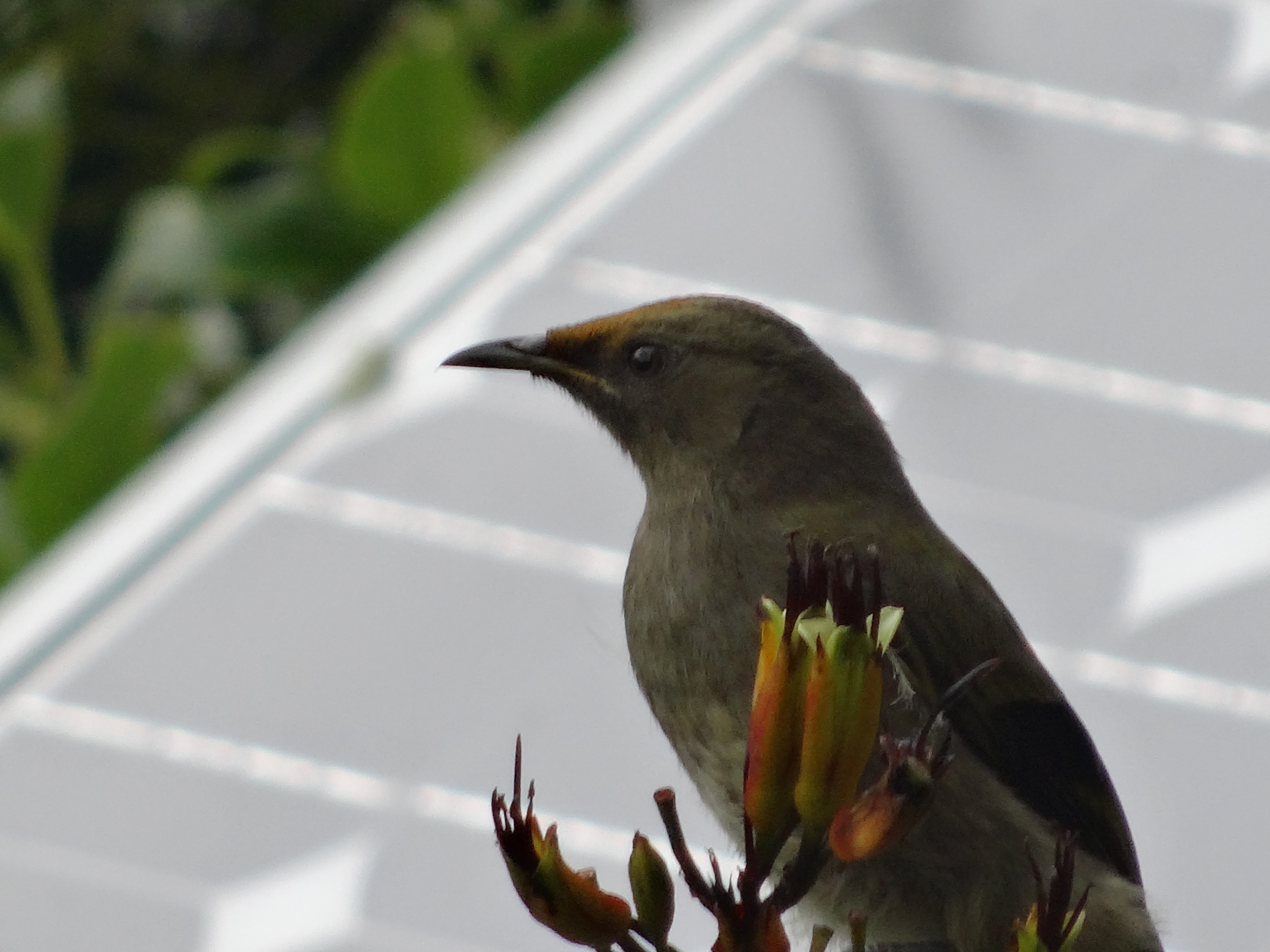
    New Zealand Bellbird. Photo CC0 Max G.W. Verheij. https://www.inaturalist.org/observations/162255122

    For this, Jennifer placed DOC AR4 audio recorders at 59 locations. 29 locations were in the Port Hills, where recording took place in autumn. Sites were everywhere from Rapanui Bush in the east to Ahuriri Reserve in the west, totalling 15 km around the Port Hills. The other 30 recording locations were in Christchurch city during winter, from as far north as the Groynes, as far east as Sumner, and as far west and south as Lincoln. From this, Jennifer matched dialects in the Port Hills in autumn to those recorded in Christchurch city in winter.

    Christchurch dialects

    Jennifer found four different bellbird dialects in Christchurch.

    Dialect A was the most common dialect. It was spread across the northern region of the Port Hills, as well as in more central areas, such as the Botanic Gardens.

    Dialect B was the next most common. In the Port Hills, it was found in Kennedy’s Bush, and in the city, it was in south-western areas, such as Halswell and Hoon Hay.

    Dialect C was the least common dialect that Jennifer observed. In the Port Hills, it was found in Omahu Bush, and in Christchurch, it was found outside of the city, but only as far as Tai Tapu and Lincoln.

    Dialect D was the last dialect. This pattern is unusual because it was not found in the autumn Port Hills recordings, but was found in the winter Christchurch recordings around the eastern and northern parts of Christchurch, such as Sumner, the Groynes, and Riccarton Bush, but because it was not found in the autumn recordings, it is not known where they went after winter.

    Map of Dialect Locations in Christchurch. Photo CC-BY Jennifer Dent https://researcharchive.lincoln.ac.nz/server/api/core/bitstreams/82c22265-dec3-419b-8880-4eb37f1aaee2/content

    Why don’t the dialects overlap?

    It’s surprising that four different dialects were found both so close together and with very little overlap, especially since there are no geographic barriers stopping members of one group from flying to another. Jenny suggested that there could be two main reasons for this: limited dispersal and vocal imitation.

    Limited dispersal, or philopatry, is the theory that states that birds remain in the areas where they were born and raised perhaps because it is harder to survive outside their own groups. A second theory is that vocal imitation by bellbirds occurs when birds move between groups, but we don’t notice it because they are so quick to pick up on the new dialect. It is possible that both of these theories are occurring simultaneously.

    Following bellbirds into the city

    The presence of all Port Hills dialects in the Christchurch recordings suggests that seasonal dispersal from the Port Hills to Christchurch is a shared behaviour among all populations. Furthermore, as shown by the map, dispersing to the nearest suitable location rather than spreading across all of Christchurch also seems to be a shared behaviour.

    Bellbirds in Christchurch likely remember foraging areas for different times of the year, but rather than remembering many locations across Christchurch, they remember only a few patches that are close together. This is referred to as patch-scale resource tracking, and it has been shown to be a low-work, high-reward technique for foraging by bellbirds.

    Next time you hear a bellbird singing, you aren’t just hearing background noise, you’re hearing a local neighbour. That bellbird might be a Cashmere regular or a member of the Tai Tapu community. It makes Christchurch a more lively city, as it’s not only just a place for us, but for birds following their own routines, singing their songs as they go about their day.

    This article was prepared by Master of Science student Max Mulvihill as part of the ECOL608 Research Methods in Ecology course.
    Paper reference: Dent, J. M. (2019). Information use during foraging by New Zealand bellbirds (Anthornis melanura) : A thesis submitted in partial fulfilment of the requirements for the Degree of Doctor of Philosophy at Lincoln University. Lincoln University. https://researcharchive.lincoln.ac.nz/server/api/core/bitstreams/82c22265-dec3-419b-8880-4eb37f1aaee2/content

  • The pines are invading! Planting non-native species increases re-invasion

    The pines are invading! Planting non-native species increases re-invasion

    Soil is life

    I’m not sure if you’re aware, as I was not aware of this before coming to Lincoln University, but soil is very much alive. There are millions of organisms in a single handful of soil. These critters perform the majority of the ecosystem services provided by soils.

    In New Zealand, these organisms range from burrowing animals, to soil-dwelling invertebrates, to fungi, to microscopic bacteria and much more. So next time you walk on soil, think about how much life is beneath your feet.

    For plants, a major component of successful growth and survivability is the soil microbiota, such as bacteria, fungi, viruses, nematodes (tiny worms), and many more. I have much love for fungi in the soil microbiota, especially mycorrhizal fungi that are essential for plant growth.

    Mycorrhizal fungi form mutualistic relationships (beneficial for both organisms) with plant roots. The fungi extend their network to increase the nutrient intake in exchange for carbohydrates that the fungi cannot produce itself.

    There are two major types of mycorrhizal fungi, ectomycorrhizal fungi, which infect the outside of plant roots, and arbuscular mycorrhizal fungi (AMF or endomycorrhizal), which infect the inside of plant roots.

    I did a project on ectomycorrhizal fungi abundance on red beech tree roots for SCIE393 where I took this photo of an ectomycorrhizal fungal fruiting body (mushroom) under the microscope (which I thought was very cool). This is really where my love for mycorrhizal fungi started to blossom.

    Ectomycorrhizal fruiting body under the microscope – Photo by Lucas Watkin (CC-BY-NC)

    Exotic plants are strong invaders

    That’s enough about me for now, time to talk about invasions from non-native plants. As I’m sure everyone who lives in New Zealand is aware, we live in an invaded country, full of exotic predators, pests, and weeds.

    While everyone tends to think of the worst invaders are pests like possums and mustelids, the worst invaders are actually the weeds. Approximately half of all the vascular plants in the wild in New Zealand are non-native. There are around 25,000 exotic plant species that have been introduced to New Zealand, with around 2,700 of these becoming wild. Compared to around 2,500 native plants, this is an insane numbers of exotic plants and so to conserve our native species, we must do something about all of these exotic species.

    From grassland to pineland: The rapid invasion of black pine into well grazed high country pasture – Photo by Jon Sullivan (CC BY-NC 2.0)

    One of the worst exotic plant species are wilding pines, such as lodgepole pine and radiata pine. Lodgepole pine was introduced into New Zealand in 1880 to combat erosion. Burning of forests, overgrazing, and introduced browsers, such as deer, goats and rabbits, were clearing the hillsides of our native plants, leading to more slips. The New Zealand government decided to plant exotic plants, specifically Douglas-fir and lodgepole pine to cover the hillsides and reduce erosion.

    These pines did stop the erosion, however, what was not anticipated was the enormous dispersal ability of these wilding pines. Seeds of wilding pines can survive for a decade in their cones, grow roughly anywhere, and can travel kilometers from their parent. There is now roughly 800,000 hectares of wilding exotics in the South Island alone, two thirds of which is lodgepole pine!

    Wilding pines of Flock Hill Station: The very many wilding pines coming out from the experimental forestry plots in adjacent Craigieburn Forest Park – Photo by Jon Sullivan (CC BY-NC 2.0)

    Be careful what you plant!

    This paper headed by Joanna Green has contributions from my lovely thesis supervisor Lauren Waller. In it they describe the effects of planting non-native plants on the soil microbiota, and how that can impact what grows there afterwards. They were specifically looking at how well lodgepole pines grow in soils that have been used and conditioned by exotic plant species.

    Joanna and Lauren started by using soils that had already been conditioned by 19 native and 20 exotic plant species from another two experiments by Warwick Allen and Lauren Waller. The soil microbiota, the nutrients in the soil, and other factors, like the pH of the soil, had been changed to best suit the plant that had been grown in that soil.

    An example of part of the soil microbiota that was conditioned were the ectomycorrhizal fungi. These fungi are required for successful growth by some of our native species, such as our beech, mānuka, and kānuka species. However, exotic species use different species of ectomycorrhizal fungi than our native species. Therefore, when exotic species are grown in soil they will grow well with their species of ectomycorrhiza.

    Basically, think of it like this. If you owned a garden and really liked roses, you would grow a lot of roses. You might grow some other plants but the focus of the garden would be on roses. Now, if someone else came in and took over the garden for themselves, they might not like roses as much but might really like petunias. They will then plant petunias in place of where the roses used to be, altering the state of that garden.

    In terms of ectomycorrhiza, they require associations to survive, so the native ectomycorrhiza species that were in the soil will die after their native plant partners are gone. Exotic ectomycorrhiza species associated with exotic plant species will then survive. Due to this, it will become a lot more difficult for our native species to grow back in that soil due to a lack of ectomycorrhiza that they can grow with. Conversely, it will be a lot easier for exotic plant species to grow in partnership with a large number of exotic ectomycorrhiza.

    Anyway, back to the paper. The researchers found that lodgepole pine grew better in soils that had been conditioned by exotic species, such as black alder, cocks-foot, spear thistle, gorse, and many more. And this was regardless of whether pines had been planted there or not! Lodgepole pine will have a much easier time establishing and invading into areas that have previously had exotic species growing there.

    Lodgepole pine tree near Lake Benmore – Photo by abcdefgewing (CC-BY-NC)

    So why does this matter?

    To conserve our native plants, sometimes we must plant them in areas that have previously grown exotic species. Joanna and Lauren’s research shows that the soil will be conditioned to favour growth of exotic species, and so growing native plants will be more difficult. It will also be a lot easier for exotic species, such as lodgepole pine, to re-invade and take over the conservation site. Therefore, conservation managers must be aware of this soil legacy and decisions must be made in order to manage this re-invasion potential.

    So, next time you want to plant an exotic plant, think about the soil, and whether you would rather plant a native instead.

    This article was prepared by postgraduate student Lucas Watkin, Master of Science in Conservation and Ecology, for an assignment in ECOL608 Research Methods in Ecology.

    Green, J. L., Waller, L. P., Allen, W. J., Orwin, K. H., Pelser, P. B., Smaill, S., & Dickie, I. A. (2025). Plant-soil feedback from non-native communities increases pine invasion and re-invasion potential. Plant Soil, 514(2), 2461-2474. https://doi.org/10.1007/s11104-025-07528-x

    Featured image: Did somebody order pines? The rapid invasion of black pine into well grazed high country pasture – Photo by Jon Sullivan (CC BY-NC 2.0)

  • Wasps aren’t all aggressive, just misunderstood

    Wasps aren’t all aggressive, just misunderstood

    Uncategorized, behaviour, conservation, entomology, student blog, wildlife management

    If you had asked me four years ago where I would be today, I would not have said ‘planning to study wasps’, and I would NOT have said ‘New Zealand’! But here I am and that’s what I’m doing.

    My interest in this field originates from my research on ants, and more specifically their unique behaviour. Ants belong to the order Hymenoptera, the same order as bees and wasps.

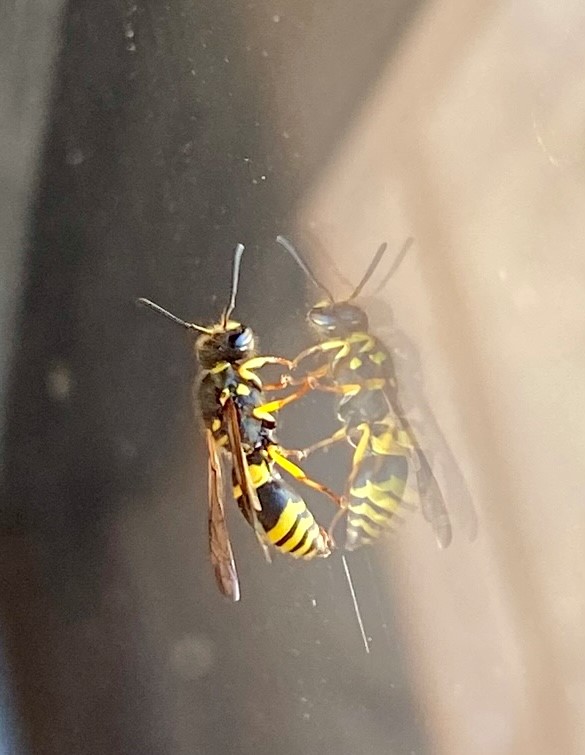
    Just like humans, wasps can be social creatures, and just like humans they display different levels of aggression (although most types of wasps are not social). Despite there being around 100,000 described wasp species, only around 1,000 of them are social. Which seems crazy, because when you see one wasp, you always seem to see more.

    Vespula wasps are what’s called eusocial, this means that they are organised into groups and all work together under a single queen. Eusociality is impressively efficient. E.O Wilson, a famed ant biologist, once said that humans display a weak form of eusociality, and I have to say I agree with him.

    Now, back to how wasps display different levels of aggression. Have you ever noticed that when you walk past a nest or sit near a wasp sometimes you will be harassed while other times they will completely ignore you? That’s because different colonies of wasps display their own levels of aggression!

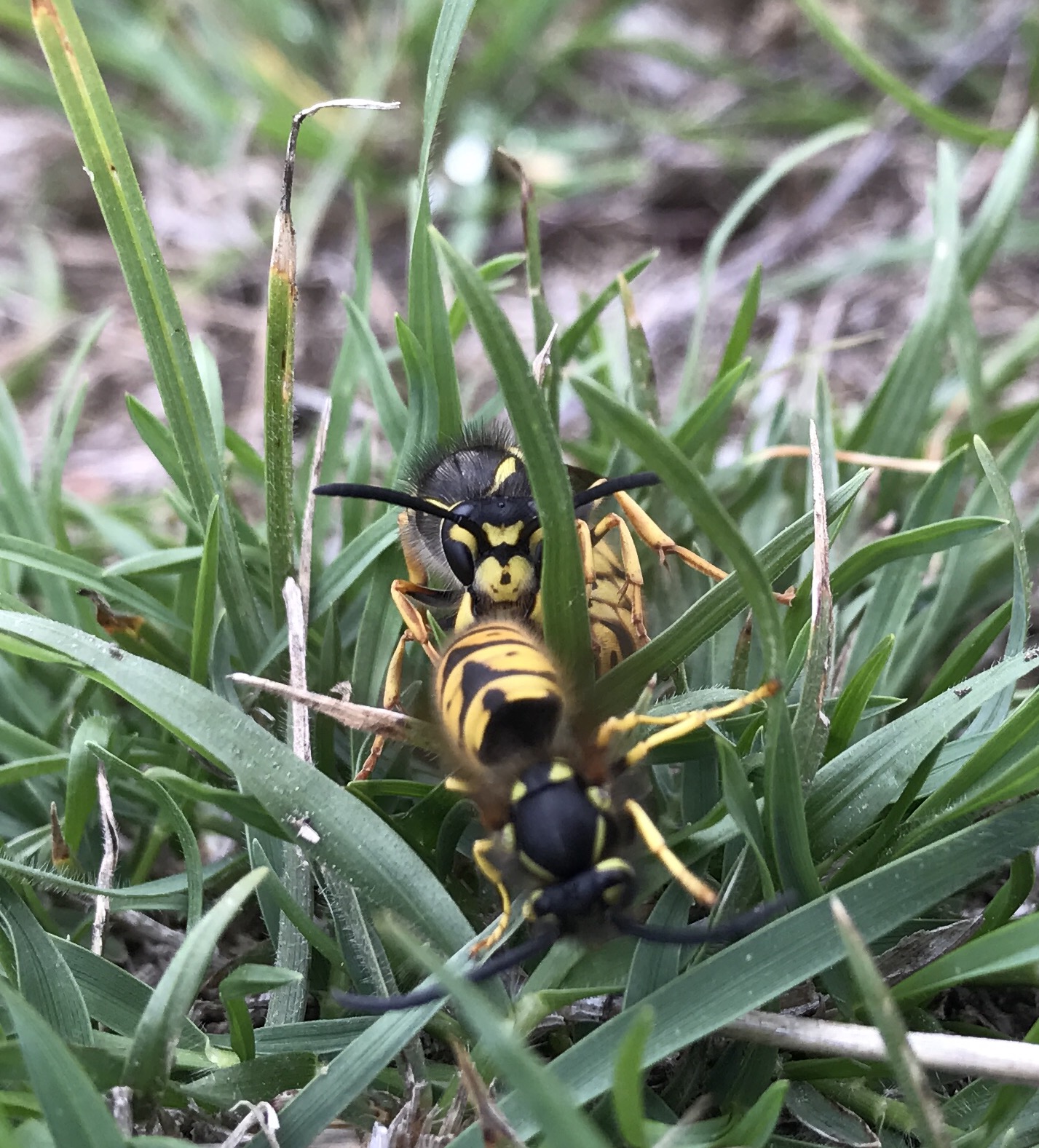
    Vespula germanica, David Nicholls, Ratby garden, 22 April 2016

    There are many reasons why wasps may vary in aggression. Some may be more aggressive to drive away predators or outcompete other colonies. Others may be more passive to hide from mammals who could destroy their nests.

    A group of brave researchers, including Mateus Detoni from Lincoln University, put themselves in harm’s way to determine what factors cause wasps to display varying levels of aggression.

    One hypothesis that they developed was that foraging and temperature could increase aggression because that is when wasps are the most active. The methods used for testing the aggression of the wasps included a target made from two black plastic plates that had been clasped together and a black cloth. Inside the plates was an omnidirectional microphone that had been connected to a camera.

    As you may know, wasps are a super invasive pest species in New Zealand. Since the early 1900s they have been having a devastating impact on the beech forests and the native ecosystem as a whole. There are two species in New Zealand Vespula vulgaris and Vespula germanica, both having colonised from Europe in the 20th Century.

    To survive, wasps need sugars and protein, so they go hunting. The main thing wasps are foraging for, especially in beech forests, is honeydew. This is a type of sugar that has been pooped out by scale insects, which live on and inside beech trees. The main source of protein for wasps is, well, anything that is soft enough for them to bring back to their nest.

    Wasp foraging for honey dew on a southern beech tree. Image from Adrian Paterson.

    The study found that, surprisingly, neither foraging activity nor temperature seemed to have any role in indicating whether a colony would be particularly more aggressive than another. So, the researchers turned to the next question, could it have something to do with nest and colony size? Unfortunately, this lead was also a bust. Yes, the larger colony size did allow for higher foraging activity but there was still no indication that a larger nest and colony would increase aggression.

    Did aggression have something to do with the age of wasps? Eusocial insect colonies span generations of individuals meaning there are both juvenile and mature workers alive simultaneously. This was a topic that Mateus had previously studied. Age can play a role in aggression, as the older wasps have more experience defending the nest, which can cause them to have a more aggressive response when agitated.

    Vespula wasp colonies were observed through their life, and it was concluded that the behaviour on a colony level is consistent throughout development. However, one key thing was noted “behaviour can change as an individual, or colony develops” and “consistent differences within a population can still be observed”.

    Aggressiveness could depend on the ratio of aggressive to nonaggressive individuals in the colony. Wasps having their own individual personalities is not something that most people consider, as they are often thought of as all being worker drones. But I guess a lot of that can be attributed to the media shaping how we view wasps, bees, and ants.

    In Europe, wasps have predators that both keep the population in check and give them a reason to be aggressive. The researchers suggested that external pressures may cause certain behaviour to be passed down through generations. In a place where they do not have predators, such as New Zealand, they can learn to pass on behaviour that is less aggressive.

    Wasps are insects that have individual personalities influencing the aggression levels of the colonies that they live in. Eusociality truly is one of the most interesting concepts in the animal kingdom.

                    This article was prepared by Postgraduate Diploma in Applied Science student Jack Gregorian as part of the ECOL608 Research Methods in Ecology course.

    Reference:

    Jandt, J. M., Detoni, M., Loope, K. J., & Santoro, D. (2020). Vespula wasps show consistent differences in colony-level aggression over time and across contexts. Insectes Sociaux, 67(3), 367–381. https://doi.org/10.1007/s00040-020-00768-3

  • Polka dots, patches and pinstripes? Productive pasture patterns

    Polka dots, patches and pinstripes? Productive pasture patterns

    Do I need to apologise for the overly alliterative title? The excessive use of P’s aside, this title is still ridiculous, who has seen a polka dot pasture? Or a pinstripey paddock? They sound like a figment of Dr. Seuss’ imagination!

    But they’re not, it’s science – an ingenious recipe, mixing landscape design, with a pinch of ecology, and a tablespoon of agriculture. Let’s get cooking!

    When did we (and by we I mean the human race/ Homo sapiens/ mankind/ womankind/ humanity/ Earthlings), when did we decide that livestock grazing pastures were to be squares of fenced grass? It was probably somewhere around 12,000 years ago when we stopped being nomadic and started agricultural farming.

    Fenced grass pastures work, they have been working for thousands of years. But times they are a’changing (insert a “back in my day…” quote here). The human population (no more we’s, it’s getting serious now) has swelled into the billions (8,286,120,266 at the time of writing), requiring massive agricultural landscape expansion to sustain us.

    There is no better example of this than where I live; the Canterbury Plains of Aotearoa New Zealand. Less than 0.5% of Canterbury Plains’ native bushland has survived the ever-expanding agricultural and residential landscapes. This is where we run into our big pinch of ecology – if we were to put the native plants and animals back, where would they go?

    The answer – into polka dots, patches and pinstripes.

    I’ll explain what the patterns are about, as I know you’ve been waiting patiently. They are landscape design patterns of native woody plants within an agricultural livestock pastural setting. They are the answer – cohabitation of native habitats and productive farming, all within one landscape.

    Lincoln University‘s multi-disciplinary researchers, James Eggers, Shannon Davis, Crile Doscher and Pablo Gregorini, are the large brains behind this pioneering conceptual design. In their study, they list ideal native woody plant species that can be used to both enhance livestock welfare and restore bush habitats for native birds.

    Now we’re cooking with renewable energy, and we’re baking three cakes in one pan – through increasing foraging opportunities for livestock, providing shade and shelter for these livestock, and establishing native bird sanctuaries. Wow!

    Picture this – you’re a farmer and this is your Canterbury Plains farm. Nice, right! You have multiple grass paddocks where you graze sheep and cattle. In reality, this is Lincoln University’s Ashley Dene Farm which was used as a case study for this research, but in this virtual Blog, it’s yours.

    Figure 1: Aerial view of Ashley Dene Farm Image © 2023 by J. Eggers et. al. Licensee MDPI, Basel, Switzerland. CC-BY 4.0

    Let’s say you want to increase foraging opportunities for your livestock. You know that foraging woody vegetation has long been recognised as beneficial. Woody vegetation tolerates poor soils and weather conditions. It provides a range of nutrients and medicinal properties for optimal livestock health. Also, a diversity of forage enhances livestock consumption and can lengthen the grazing season. Finally, foraging allows livestock to exhibit natural browsing behaviour, thereby boosting welfare.

    Lucky for you, thanks to this research, we have a list of optimal foraging native shrubs and small trees (shorter plants for livestock access) selected for palatability, tolerance for browsing and growth rate. Now for the fun part – how to arrange these plants. We have three patterns…

    Polka dots (or patches): vary in size and are placed within pastures. The central area is fenced to prevent overgrazing and to accommodate natural seedling regeneration.

    Figure 2: Polkadots. Image © 2023 by J. Eggers et. al. Licensee MDPI, Basel, Switzerland. CC-BY 4.0

    Spreading: balances access to forage, preventing over browsing through the use of a central fenced off strip. It preserves maximal grazing pasture by running along pre-existing fence lines. Livestock can be moved between paddocks/sides of the spreading forage to allow for regeneration on one side whilst the other is browsed.

    Figure 3: Spreading. Image © 2023 by J. Eggers et. al. Licensee MDPI, Basel, Switzerland. CC-BY 4.0

    Pinstripes (or just stripes): maximises foraging opportunities and is compatible with farming that uses large machinery. The stripes are within a single paddock, placed 40 m apart for optimal browsing, and temporary fencing is used to designate/restrict feeding areas.

    Figure 4: Stripes. Image © 2023 by J. Eggers et. al. Licensee MDPI, Basel, Switzerland. CC-BY 4.0

    Back to your hypothetical farm, you now have an amazing amount of native forage for your livestock. However, with your farm being on the Canterbury Plains, it is constantly hounded by northeasterly, hot northwesterly, and cold southwesterly winds. Your animals need shelter. Shade and shelter for livestock reduces heat/cold stress, excess moisture loss, improves animal wellbeing, increases feed intake and lamb survival rate.

    Here is a native solution with multiple benefits, no more English hedgerows that provide little to no food for wildlife. Native trees and dense shrubs are selected for their height, shade, canopy, and provision of shelter. Unlike the foraging designs, these shelter patterns are fully fenced off to allow for optimal plant growth without the pressure of grazing.

    Straight shelter: a pretty straight-forward design (see what I did there) providing shelter in areas of limited space.

    Figure 5: Straight shelter. Image © 2023 by J. Eggers et. al. Licensee MDPI, Basel, Switzerland. CC-BY 4.0

    Meandering shelter: similar to the straight design, however, with a greater width to act as a wildlife corridor and habitat.

    Figure 6: Meandering shelter. Image © 2023 by J. Eggers et. al. Licensee MDPI, Basel, Switzerland. CC-BY 4.0

    In-paddock shade trees: taller trees are placed through paddocks, in groups or individually, to provide shade. There is no underplanting to allow for a cooling breeze.

    Figure 7: In-paddock shade trees. Image © 2023 by J. Eggers et. al. Licensee MDPI, Basel, Switzerland. CC-BY 4.0

    Ah, that’s nice. Now your sheep and cattle are well fed and comfortable. The productive capacity of your farm is in order. But, you also care deeply about native wildlife and want to do everything you can to protect them (but not with a loss of productivity for your farm). Is this possible? Well, let’s see…

    James and his team designed native bird bush habitats around a wetland corridor, an area of pre-existing mature trees, and a densely planted area. Densely planting native bushland are better at dealing with edge effects, reducing the distance that light and sound pollution can travel into the patch, and increasing bushland’s suitability for sensitive birds (like kererū). The mature trees act as nurse species for the native seedlings and the wetlands will breed waterborne insects – an additional snack for many bird species.

    Whilst the forage and shelter plantings were determined by the needs and landscape of the farm, placement of bush habitats required consideration of the wider landscape. Preference was given to the native bird habitat locations as they had specific requirements. Native bird habitats must connect to a wider established ecological network for birds to be able to travel to the site (within 5-25km distance dependent on the bird species). Amazingly, native bird abundance can almost quadruple with the addition of restored bushland to agricultural landscapes. This research identified ultimate native plants that provide bird food sources and nesting sites.

    Figure 8: A comparison of your farm with and without native woody vegetation additions in a combination of design patterns for livestock forage, shade and shelter and native bird bush habitats. Image © 2023 by J. Eggers et. al. Licensee MDPI, Basel, Switzerland. CC-BY 4.0

    So now you have an ideal farm! It balances livestock productivity and native bird habitats through adding an abundance and variety of native plants (an increase of 30% woody vegetation in the case study farm). And yes, there may be a reduction in the grazing land area, but, this is offset by increased forage vegetation, combined with fallen organic matter improving soil health and productivity. The addition of native bird habitats will likely have little impact on farming operations.

    Forage patterns can be integrated into shelter patterns to maximise land use for grazing. Likewise, forage plantings can be placed next to bush habitats to create multifunctional areas. Shelter and forage plantings can complement the bush habitats, by acting as wildlife corridors, edge habitats, and increase plant species diversity. Your imagination is the limit when it comes to combining and implementing the design patterns, however, site specifications, soil types, climate conditions, livestock density, paddock use, and wildlife reserve proximity need to be considered… so maybe your imagination isn’t the limit, as every farming landscape has different specifications.

    We are achieving an agricultural ecological landscape in one location, with broader ecosystem benefits. Restoring and integrating native habitats into farming practice can encourage others to follow, and together we can support the revival of native birds to our currently fragmented landscape. This research kneads together two strong cultural identities of Aotearoa New Zealand – its rich farming history and outstanding natural biodiversity – fortifying and concentrating both.

    As these Patches, Polka dots, and Pinstripes do sound like a Dr. Seuss story, it is only appropriate to end with,

    “Unless someone like you cares a whole awful lot,

    nothing is going to get better.

    It’s not.” – Dr. Seuss’ The Lorax

    So thanks to all of you reading this, farmers or not, I know that you care a whole awful lot.

    This article was prepared by Klara Royster, Master of International Nature Conservation student, for an assignment in ECOL608 Research Methods in Ecology.

    Reference Research Journal Article: Eggers, J., Davis, S., Doscher, C., Gregorini, P. (2023). Enhancing Multifunctionality in Agricultural Landscapes with Native Woody Vegetation. Sustainability Journal, 15, 11295.

  • It’s not you, it’s your species: Mate choice in fishing spiders

    It’s not you, it’s your species: Mate choice in fishing spiders

    Dating is hard and confusing for most… but especially for these guys.

    A recent study on two native semi aquatic spiders, Dolomedes aquaticus and Dolomedes minor, revealed that spider dating is dramatic, but beneficial for their evolution. These spider species spend a lot of time diving for their prey in rivers and streams.

    Male fishing spiders (Dolomedes species) perform complex courtship displays for their partners, which include vibratory, visual, and chemical signals, all just to avoid being killed by the female they are trying to impress, and just so he gets the opportunity to copulate.

    D. aquaticus at Boyle River. Photo by Nicky Lowther (CC BY-NC)

    Unfortunately for these eight-legged boys, their ladies are often aggressive, sexual cannibalism common, and dates often making up a significant portion of these feisty ladies diets.

    These fishing spider species are found throughout New Zealand. In a particular area in the lower South Island, something interesting is going on… they are hybridising!… but only in one direction.

    DNA analysis has revealed that mitochondrial introgression has occurred between D. aquaticus females and D. minor males. Introgression is when DNA moves from one species to another. But why, and why only one way? This study investigated the one way introgression between these two species, coauthored by one of New Zealand’s preeminent arachnologists, the one and only Cor Vink.

    These species are closely related and have been observed to interbreed. This causes genes from one species to pass to the other; this process is called introgression. Introgression between these species has only been observed in one direction between female D. aquaticus and male D. minor. Introgression has also only been seen in one location, in the south of the South Island, the “introgression zone.”

    Distribution of D. aquaticus and D. minor within New Zealand, with introgressed D. minor specimens shown. Data from Vink and Dupérré
2010 and Lattimore et al 2011. Also shows collection locations of spiders for laboratory experiments, and Waipara field monitoring site. The introgression
zone is shown by the square box.
    Distribution of Dolomedes aquaticus and D. minor within New Zealand, with introgressed D. minor specimens shown. Data from Vink and Dupérré 2010 and Lattimore et al 2011. Also shows collection locations of spiders for laboratory experiments, and Waipara field monitoring site. The introgression zone is shown by the square box. (Content subject to copyright: please see the study image notes for details)

    The purpose of this study was to investigate life history traits and mating behaviour that promoted and limited introgression that occurs only one way and is limited to one area.

    Spiders were collected from within and outside the introgression zone and mating behaviour was tested in a lab.

    From these experiments, it was found that males from outside the introgression zone were less willing to continue courtship once realising the female was of a different species from themselves, often ghosting halfway through, an experience familiar to those of us in the dating pool. On the other hand, D. minor males within the introgression zone were happy to flirt with any female. This unfussy selection seems familiar. Whether this is a spider phenomenon or a southern cultural trait remains unclear.

    Another interesting find was that female D. minor were more short tempered when it comes to D. aquaticus males, having much higher attack and rejection rates towards D. aquaticus males than the opposite pairing. When a D. aquaticus male attempted courtship, the females often attacked and ate him. This suggests the differences in female behaviour between the two species may have just as much influence on gene flow as mate choice.

    Female receptiveness to male courtship is key for introgression to occur, including female ability to recognise male courtship, female choice, and premating aggressive behaviour, these could all prevent interbreeding in ways that could vary throughout the species’ range.

    Pairings were more successful if the pairings were similar in size. Females in both species are much larger than males, although D. aquaticus is larger overall. It was suggested that one way introgression could be because a female D. aquaticus assumes that a smaller male would be an easier snack, not a great mate!

    D. aquaticus at Boyle River. Photo by Nicky Lowther (CC BY-NC)

    Other potential factors could include that partners in the south could be less choosy in their mate selection as their breeding seasons may be shorter due to natural conditions. D. aquaticus females may think males of their species are rarer, or D. aquaticus male and D. minor female genitalia may not be compatible.

    In summary, it is likely that mating behaviour has a strong influence on the dynamics of introgression gene transfer between these species within the introgression zone.

    Male behaviour may limit introgression one way, preventing mating between D. minor females and D. aquaticus males. Also, female behaviour and choice may limit introgression because of a preference: mate or meal?

    In the end, these spiders prove one thing: rejection is natural selection, and preference is important in evolution. So, next time you have a bad date, consider yourself grateful that your rejection did not end in sexual cannibalism. 🕷️

    This article was prepared by Master of Bioprotection student  Nicky Lowther as part of the ECOL608 Research Methods in Ecology course

    Connolly, S. J., Hunt, J., Curtis, K. M., Painting, C. J., Cooney, C., & Vink, C. (2025). Mating behaviour influences the direction and geographic extent of introgression in New Zealand fishing spiders (Dolomedes). Journal of Evolutionary Biology38(3), 291–304. https://doi.org/10.1093/jeb/voae147  

  • The shrubland invasion: What’s driving it?

    The shrubland invasion: What’s driving it?

    Plant communities dominated by mānuka/kāhikatoa (Leptospermum species)or kānuka (Kunzea species) are an extremely common feature of New Zealand’s native biodiversity. They are found in all manner of shapes, sizes, and habitats – dry and wet, high and low, warm and cold. We’ll call these communities ‘shrublands‘ throughout this text. Reality is much more complex with other types of native shrublands made up of different plant species as well as kānuka and mānuka also forming forests or scrub. There’s a great piece here if you want some more details.

    If you’ve ever bashed through young, dense, mānuka/kānuka shrublands whilst out tramping you might have noticed they aren’t very diverse. That’s because during this young phase they form such a thick canopy and dense shade that other plants find it difficult to establish. Once these stands age the canopy opens up and lets light in allowing other species to take off.

    A natural landscape featuring a mixture of shrubs and grassy terrain, with a mountainous background under a cloudy sky.
    The weed Spanish heath (Erica lusitanica), the lighter yellow-brown plants near the ground, invading gaps in mānuka (Leptospermum scoparium var. scoparium) shrubland on Bealey Spur. Photo Will Todhunter

    These shrublands are important for our native biodiversity. Some are remnants from before humans arrived. Others have expanded following human induced forest clearance and subsequent regeneration. These regenerating shrublands are what we call seral, an intermediate stage in ecological succession.

    Succession occurs when an intact ecosystem is disturbed and doesn’t immediately go back to its final climax vegetation. Instead subsequent vegetation communities gradually replace one another until a climax, or stable, state is reached. Under the right set of conditions kānuka and mānuka can shade out introduced grass species and support a transition of landscapes back to native forest.

    Banks Peninsula has many classic examples of this phenomenon, and if you go for a walk up Bowenvale Valley, in Christchurch, you should be able to spot large areas of planted kānuka where Christchurch City Council is trying to jumpstart this process.

    Including these shrubland species, Aotearoa has a grand total of 2,522 native vascular plant species. This total is far outnumbered by the staggering amount of introduced plant species, with at least 24,744.

    In many cases introduced plants can establish in the wild and invade natural ecosystems, including native shrublands. We will call these invasive introduced species weeds. These exotic weeds can negatively impact our biodiversity, displacing native plants and changing the ways our ecosystems function. Weed invasion has been well studied in forest and grassland ecosystems in New Zealand, but less so in shrublands. It is important to understand what drives weeds to invade shrublands, as this can help guide us when considering actions to protect these habitats.

    Laureline Rossignaud and Philip Hulme are researchers from Lincoln University who focus their research efforts on biological invasions, including weeds. They looked at information from 247 monitoring plots placed within shrublands across the country to better understand weed invasion into these habitats. Many studies have already investigated whether the number of native plant species in an ecosystem is related to weed invasions, but few studies have also considered the influence of climate, landscape features and the structure of the plant community in question. So, when this pair dived deeper into this topic, what did they find?

    Both the number of different species (species richness) and the size of the area covered by a species (its cover) play a role, but they don’t always align. Some shrublands had high numbers of species with low cover, whilst others had low numbers of exotic species but these were high in cover. This second example can be seen when a few aggressive weeds dominate.

    Dense forest scene with bare trees and lush green undergrowth.
    Shrubland on Banks Peninsula. Photo by Will Todhunter CC BY

    Low species richness, high species cover. The above image captures this, showing vegetation in a mature kānuka stand on Banks Peninsula. An open canopy of kānuka sits above a lower tier of native saplings of māhoe (Melicytus ramiflorus subsp. ramiflorus), poroporo (Solanum laciniatum) and kawakawa (Piper excelsum subsp. excelsum), and a dense ground cover of the highly invasive exotic veldt grass (Ehrharta erecta). The veldt grass forms such dense mats that it limits the establishment of most other plants and was once voted NZ’s worst weed!

    A clear takeaway from the study was that the physical structure of shrublands plays a big role in determining how susceptible they are to exotic plants. Shrublands with dense canopies and multiple layers of vegetation act like a shield, limiting open ground and leaving less space for weeds. Shrublands with open areas let in more sunlight and have more available options for weeds to gain a foothold.

    The surrounding land cover and land use heavily influenced weed invasions. Where shrublands were close to human modified landscapes ,weed invasion increased, and the same when shrublands were close to rivers. Modified landscapes typically had a higher number of weed species, providing a seed source that can then move into more natural areas.

    Size and shape of shrublands matters. Shrublands with long edges experienced higher levels of weed invasion, with edges often having more disturbance and being more accessible to invaders. This is known as an “edge effect“. Topography is another contributor, with lower and flatter areas more invaded than those that are steep and/or at higher elevation

    Unsurprisingly, climate also played a major role. Warmer temperatures were shown to increase weed invasion, and many introduced plants thrived in mild conditions. The expansion of suitable habitat ranges of weeds through a warming climate is yet another reason to be concerned about climate change!

    Scrubland on Onawe Peninsula, Banks Peninsula. Photo by Adrian Paterson

    Lastly, these researchers found that no single factor could fully explain weed invasion, it’s all about a combination of various factors. Something that readers might have expected.

    Through my work in conservation I’ve been lucky enough to spend time in a range of shrublands. Some of the most special are the fragmented remains of the once extensive kanuka drylands of the Canterbury Plains, such as Motukānuka Scientific Reserve. Research has found that intensive land use change adjacent to these remnants has strongly contributed to increased weed invasion on the edges. Irrigation changing water availability and increased nitrogen availability from surrounding farms were attributed as two of the main drivers here.

    There’s a couple things we can learn from these studies when thinking about protecting shrublands. To reduce the impacts of exotic plant invasion, the larger the area of shrubland the better. Dense, structurally rich vegetation is going to be more resilient to invasion. However, often small fragments of biodiversity are all that are left to work with, so factoring in a buffer from surrounding land use then becomes important.

    In many situations active management of weeds, such as physical control using herbicide, is essential to protect native species and ecosystem function’s from their impacts.

    So now that you know a bit more about shrublands, keep an eye out for some of the features discussed here. Keep learning about the native and introduced plants of New Zealand, and get out there with the right people and deal to some weeds!

    This article was prepared by Will Todhunter, Postgraduate Diploma in Applied Science student, for an assignment in ECOL608 Research Methods in Ecology.

    Rossignaud, L., & Hulme, P. E. (2023). Native vegetation structure, landscape features and climate shape non-native plant richness and cover in New Zealand native shrublands. Diversity and Distributions, 29(8), 1009–1020. https://doi.org/10.1111/ddi.13713

  • It’s only forever, not long at all

    It’s only forever, not long at all

    Time has very much been on my mind lately.

    To be exact, it is probably the comprehension of time that has been at the forefront.

    I just went to the 40th anniversary of the movie ‘Labyrinth’, a quirky movie by Jim Henson of muppets fame, written by Monty Python Terry Jones, and starring David Bowie as the Goblin King (and who also wrote the songs) and Jennifer Connolly in her first role. Essentially a teen babysitting her baby half-brother wishes the goblins would take him when he cries to much. They do and many dream-like twists and turns occur in the goblin labyrinth as Sarah finally outwits the Goblin King to get the baby back.

    I was 19 when I went to the cinemas to see this movie. It’s a little intimidating to think that 40 years have passed since that that fresh-faced Adrian was starting his honours year at Otago. In some ways it seems like yesterday, in others a lifetime has passed by. I mean I’ve done a PhD, got married, became a lecturer, raised three sons to independence, supervised 78 postgraduates to completion, travelled, read a lot of Tolkien, listened to a lot of Kate Bush, played a lot of games, coached a lot of cricket and so on.

    Adrian in 1989 – starting his research career with behavioural work on native bees. Image by Adrian.

    (By the way the movie holds up well, the practical effects are still amazing, the songs catchy, Bowie’s pants are still alarmingly tight, although there are parts that have not aged well, especially the early computer effects – I’d like to think of that as a metaphor for something!)

    At a smaller scale, my granddaughter is about to turn one. (Note even the idea of being a grandfather makes me contemplate time a lot!) As an evolutionary biologist I have always said to my classes that, from an evolutionary fitness point of view, becoming a grandparent is the goal – you have reproduced and your children have reproduced. There’s not much more that you can do.

    I’ve also found that being a grandfather is a wonderful job in its own right! It feels like the most important thing that I could be doing. So yah for evolution!

    The last year has whizzed by and granddaughter has changed from an organic lump into a moving, noise-making, interactive Individual. Biology is amazing. But where did that year go?

    The perception of time is a funny old thing. With regards to my granddaughter the last year has sped by. On the other hand, I got a bad concussion last January (I zigged when I should have zagged) and the recovery from that, still ongoing, seems to have taken a decade. Same period of time but contrasting experiences!

    Adrian in 2026 with granddaughter. Image by Julie Paterson.

    Our poor human perception of passing time can really get in the way of understanding science, especially the sciences that take place over long periods, such as evolution, geology, astronomy. A particular issues is getting our minds to comprehend just how much time there has been.

    In my teaching I have used several analogies to try and get across the sheer scope of time. You want to take something familiar and use that as a metaphor. I’ve walked around the classroom where every step is 50 million years, I’ve used a rugby game where every minute is 25 million years. Usually, I am trying to emphasise that the dramatic stuff that we are most interested in happened recently and a looooooong time from the beginning.

    So here I go again trying to give a sense of the time available for the history of the Earth! This time let’s think about ‘The Lord of the Rings‘. Most people know the basic story: Bilbo gives Frodo a magic ring which turns out to be the source of the Big Bad of the world’s power that must be destroyed in the volcano where it was made. Shenanigans ensue.

    So, lets say we start with Chapter one and finish when the hobbits destroy the ring at Mount Doom (I know there is a prologue and there are several chapters after this but let’s stick with this basic journey of Shire to Mordor). In my copy of the ‘The Lord of the Rings‘ (LotR)this part of the story takes 916 pages. If the Earth forms with the first sentence of Chapter 1 “When Mr Bilbo Baggins of Bag End announced…” we are at 4.5 billion years ago.

    Each subsequent page is then the equivalent of 5 million years (still a period of time that is unimaginably long!).

    First evidence of life on Earth appears around page 54/916. In our read through of LotR this is in the The Fellowship of the Ring – Three is Company where Sam and Frodo meet Gildor and the elves within the Shire​ as they camp after leaving Bag End.

    Before long the elves came down the lane towards the valley” ​

    Prokaryote fossils (bacteria) appear in the fossil record​ around page 114/916 where Tom Bombadil rescues the hobbits from the clutches of a barrow wight. (The Fellowship of the Ring – Fog on the Barrow Downs)

    “At these words there was a cry and part of the inner end of the chamber fell in with a crash.”

    We finally see complex cells (eukaryotes) – the kind that would lead to you, me and the trees over half way through on page 503/916. Gandalf and Aragorn are talking to a defeated Saruman in the wreck of Isengard (​The Two Towers – The Voice of Saruman).

    “They came now to the foot of Orthanc.”

    Note that we have missed the hobbits fleeing the Nazgul and the Shire, Rivendell, the Mines of Moria, Lothlorien, Boromir’s death, the breaking of the Fellowship, Gollum, Ents, Rohan and Helms Deep!

    Gollum by Julie Paterson

    Multicellularity, sticking more than one cell together to form more complex organisms occurs on page 709/916. Pippin and Gandalf have ridden to Gondor and are meeting with Lord Denethor​ (The Return of the King – The Siege of Gondor).

    “Before long he was walking with Gandalf once more down the long cold corridor to the door of the Tower Hall.”

    The Cambrian Explosion, a point in time where we see fossils suddenly appear for almost all modern groups happens on page 803/916. We have sped past the journeys with Gollum, the encounter with Faramir and the Oliphaunt, and Gollum’s betrayal of the hobbits to Shelob and arrive at Sam rescuing Frodo from orcs after he has been poisoned by the spider (The Return of the King – The Tower of Cirith Ungol)

    “At that rage blazed in Sam’s heart to a sudden fury.”

    Land is colonised by plants and animals on page 833/916.The siege of Gondor is in full swing and Denethor perishes in a bonfire meant for the wounded Faramir (The Return of the King – The Pyre of Denethor).

    “Gandalf in grief and horror turned his face away and closed the door.”

    Reptiles, particularly lineages leading to dinosaurs become dominant by page 847/916 (The Return of the King – The Houses of Healing). Aragorn, Gandalf, Pippin and the wounded Merry reunite after the Battle of the Pellenor Fields​ where the Mordor forces have been beaten back and the Witch King destroyed.

    “And get the pipe out of my pack, if it is unbroken.”

    The extinction of the dinosaurs and many other things occurs on page 893/916 where Frodo and Sam are lost in the mountain border of Mordor (The Return of the King –The Land of Shadow).

    “The tops of the Morgai were grassless, bare, jagged, barren as a slate.” ​

    The Primate lineage that becomes the Hominids, our ancestors, evolves​ on page 906/916. Frodo and Sam, starving and thirsty, approach Mount Doom through the surrounding wasteland (The Return of the King – Mount Doom).​

    “Then let me carry it a bit for you.”

    Finally, on page 916 we come to the last 5 million year. Frodo and Sam are slumped on the slope of an erupting Mount Doom after destroying the ring (The Return of the King –Mount Doom). All of human history​ fits into the last sentence

    “Here at the end of all things, Sam.”

    So is this effective? I guess one needs to know the story to get the full effect but even just looking at the page numbers will give you the right idea. Most of the interesting stuff happens in the last few pages. Almost nothing much happens in the first two thirds. Life, itself, arrives surprisingly early.

    I feel like it helps me with to work with the notion of lots of time.

    It’s only forever, not long at all

    sings David Bowie in the song Underground in the Movie Labyrinth. The more I think about it, the more I think that this is a very perceptive line.

    Still, I am out of time for now. I’m off to celebrate my granddaughter’s birthday.

     The author, Adrian Paterson, is a lecturer in the Department of Pest-management and Conservation at Te Whare Wānaka o Aoraki Lincoln University. He has experienced a lot of time.

  • Kiwi: now in 3D

    Kiwi: now in 3D

    ‘Coming soon in 3D!’ Periodically throughout my life movie-makers have dabbled with making films that we can watch in three dimensions. You would get your special glasses before the movie session and then sit there wondering when to put them on until the action got going.

    To be honest I don’t remember many of the movies that I saw like this. The Avatar movies have always had the option and I watched at least the second movie this way. Spears and monsters would lunge out of the screen at you.

    Other than that I am drawing a blank. This is not to say that every 3D movie is bad but just that 3D on its own doesn’t make a film more memorable.

    Avatar Adrian! Look out for the arrow!

    I don’t even dislike the experience despite having to wear the 3D glasses over my own glasses. There is something immersive about dodging things ‘coming out of the screen’. However, I seldom choose this option if 2D is available. It all seems a bit too much like work perhaps?

    Adding a third dimension can help with appreciating scale and movement though. It can also help with identifying who’s who in the screen – there’s just a bit more information that your brain can use.

    Identifying individuals is a big deal in biology, especially conservation. When you have a small population you are interested in individuals. How are they doing? Are they breeding? Who do they hang out with?

    Of course, for many species there are not a lot of features to differentiate between individuals. They are similar in height, uniform in coloration, and have similar behaviours.

    To make them more distinctive we could always band our target with bright colours or paint an obvious mark on them but this involves capturing and interacting with the individual. This causes a great deal of stress and catching individuals is not always simple.

    Ideally we could use cameras to take pictures that we could measure features in that are unique to an individual. Two dimensional pictures require an individual to be in an exact place with an exact orientation for this to work. So this is not a reliable method.

    Bit wait! … Coming soon in 3D!

    It turns out that if you take pictures with different devices from slightly different angles at the same moment then you can much more accurately calculate measurements on individuals. At least in theory.

    Jane Tansell with her trusty kiwi dog. Picture from Jane Tansell.

    Jane Tansell, a recently completed PhD student at Lincoln University, and her supervisors, Adrian Paterson and James Ross, set out to see if we could use this idea to identify kiwi. Kiwi populations and individuals are difficult to measure. They are nocturnal, usually found in scrubby terrain, are reasonably featureless, and spend a lot of time in burrows. We can use trained dogs to find them but this is quite stressful for kiwi. We can listen to their calls during the night but this is difficult to split into different individuals and certain parts of the population don’t call anyway.

    Trail cameras have been used to successfully locate kiwi. Jane wondered if she could pair cameras 12-25 cm apart, taking images that could be used to essentially create a 3D image of features on each bird. Jane knew that kiwi bills vary between individuals and can be used as an ID.

    Jane worked with the more technically literate Maurice Kasprowsky and Tom Gray to cobble together the cameras and get them to work together.

    Jane, as reported in NZ Journal of Zoology, first tried the setup on a taxidermied kiwi in good light conditions. She found that the cameras could be used to measure the bills to within 1.5% of their actual length. This was a great achievement and would certainly be able to determine individuals.

    In theory we should be able to photograph kiwi and recognise them by measuring their bills. Image from Adrian Paterson.

    Jane then set up field trials with live kiwi. In the real world, with low light and moving birds the cameras were less efficient. At worst they were terrible but often they were within 3-4% of the actual bill length. This is not good enough to replace current field identification methods but it was still quite impressive given the relatively jury-rigged setup.

    Improvements in cameras, especially 3D cameras, are happening quite quickly. With some more trial and error Jane should be able to start reducing the error enough for this to be a viable noninvasive method for following kiwi in the field.

    While this is not as exciting as an arrow flying at you from an Avatar movie, this use of 3D does have real world uses that will help with understanding a national icon!

    The author, Adrian Paterson, is a lecturer in the Department of Pest-management and Conservation at Te Whare Wānaka o Aoraki Lincoln University. Adrian is a kiwi but unfortunately has no bill to measure.

  • Tackling feral cats in Aotearoa New Zealand

    Tackling feral cats in Aotearoa New Zealand

    Feral cats (Felis catus) are among the most proficient and effective hunters in the world. In Aotearoa New Zealand (NZ), their skills are lethal to native species that have evolved without mammalian predators. Feral cats have been linked to significant biodiversity declines across the country. Cats are opportunistic predators that hunt ground-breeding species, like birds, bats, reptiles and even some insects- many of which are endemic.

    Fig 1: It looks like siblings fighting over a small bird, a moment that captures the competitive behavior of feral cats (Image by- Gilbert Mercier, Flicker User

    The extinctions of six endemic birds are linked to feral cats. Well-known cases include a single cat, Tibble, that caused the extinction of NZ’s only flightless song bird: Lyall’s Wren on Stephens Island. A single cat killed 120 endangered native short-tailed bats in one week on Mt. Ruapehu. Dotterel populations on Stewart Island, Grand and Otago skink populations in southern ANZ are at risk due to feral cats. The list of species pushed to the verge of extinction by cats is long and growing.

    Yet despite their impact, feral cats are not currently included in NZ’s Predator Free 2050 campaign. This raises a major question: how is NZ tackling the feral cat problem? 

    With growing concern for native wildlife,  the government has implemented several methods to eradicate or control cats: lethal baiting, trapping, shooting, and fencing. While putting these methods into action is necessary, it’s equally important to ask their effectiveness: Are they actually working? And how can we tell?

    Fig 2: Feral cat awareness at Arthur’s Pass Wildlife Trust (Photo credit: Muhammad Waseem (used with permission)).

    These were the very questions a group of researchers from Lincoln University set out to explore. Using camera traps, they conducted a study on Hawke’s Bay farmland to test whether trapping and shooting could effectively control feral cat population, and whether the area will be re-invaded over time, to measure the effectiveness of the method.

    Forty motion-sensitive cameras stood beside the traps like sentinels, monitoring everything. Cats walked into the view, lured by rabbit meat and ferret scent. The cameras recorded activities before, during, and six months after the control operation. Before the operation 20 cats were detected. 17 feral cats were then removed (shot). The result? An 84% drop in both cat numbers and camera detections.

    Aware of the risk of reinvasion, the researchers monitored the site again six months later- and detected only three new cats. The outcome was encouraging and demonstrated how proper methods combined with well-monitored action can make real difference. With the help of camera traps, the research could measure the effectiveness of the control operation and can suggest similar methods in areas facing feral cat issues.

    Today, thanks to advanced technology like camera traps, monitoring has become much more efficient and convenient. This allows conservationists to evaluate their methodologies, observe activities remotely, and respond effectively.

    How did cats become a serious ecological problem in NZ?

    In my home country of Nepal, cats are seen as beloved pet and, traditionally, the guardians of grain stores, not as an ecological threat. As someone new to NZ conservation practice, I initially found the conservation method used in this study confronting. But the more I learned, the more curious I became: how did a country with no native mammalian predators come to see cats as such a serious problem?

    Fig 3: Stray cat basking sun on Fairmaid Street, Lincoln (Photo: Author 04/01/2025)

    Cats didn’t arrive in NZ until the mid-1800s. Earlier cats had visited along with Captain James Cook. His ship, plagued by rodents, carried cats as a solution to control pests and protect food supplies.

    European settlers brought cats as companions. Some escaped or were abandoned, eventually forming a wild population. Ironically, many animals (and even people) arriving by ships ended up becoming invasive. Over time, their arrival became strongly linked with biodiversity loss.

    Today the feral cats are  officially recognised as invasive predators. They not only kill native wildlife but also spread disease. It is no coincidence that many native birds began to disappear after cats were introduced. In the NZ conservation story, it’s not unusual to say: “To solve one problem often means creating another!”.

    Although some early impacts were noticed, such as the extinction of the Stephen Island wren, surprising these events were simply viewed with the mindset  as nature improving, where invasive species were seen as improvement rather than threats.

    Cats, whether brought to control rodents or to ease the settler’s solitude, may have served a short-term purpose, but over time introducing them proved to be a double-edged sword, causing severe harm to NZ’s native wildlife.

    Learning this made me realize that today’s conservation challenges are deeply connected to historical choices!

    Moving ahead

    While we cannot re-write history, we can certainly learn from it!

    Fig 4: Who decided which story to tell? The Great Hall stained-glass window at University of Canterbury made from 4,000 pieces of glass, showing Captain James Cook at number 19 (Photo: author 02/05/2025).

    The journey of cats in NZ is a classic reminder of how small actions can have a large ecological impact. The feral cat issue isn’t just about one species nor is it the only invasive challenge NZ faces, it’s about how we approach conservation in a complex and ever-changing environment.

    Looking back, we don’t know how much damage to NZ’s biodiversity could have been prevented or reduced if the scale of damage was understood earlier. As the country continues its battle against introduced species to conserve biodiversity through Predator Free 2050 campaign, integrating reliable monitoring tools like camera traps will be crucial in making informed and effective conservation decisions.

    The author, Pareena Khadka, is a postgraduate student in the Master of Applied Science at Te Whare Wānaka o Aoraki Lincoln University. This article was written as an assessment for ECOL 608 Research Methods in Ecology.

    Paper reference: Nichols, M., Glen, A. S., Ross, J., Gormley, A. M., & Garvey, P. M. (2023). Evaluating the effectiveness of a feral cat control operation using camera trapsNew Zealand Journal of Ecology, 47(1), Article 3501. https://dx.doi.org/10.20417/nzjecol.47.3501

  • Our plants are not being poisoned by 1080 possum baits

    Our plants are not being poisoned by 1080 possum baits

    I’ll admit, before taking the 16 hour flight from Arizona to Christchurch, I didn’t know much about New Zealand besides ‘What We Do in the Shadows’, Karl Urban, and affordable yarn. I was especially excited to get my hands on possum yarn.  

    Possum yarn is coveted by the knitting community for its lightweightedness and warmth, only surpassed by the fur of arctic foxes and polar bears. And let me say that I absolutely think that the possum yarn was worth every dollar. With just 400 meters (one skein/ball) I was able to knit up a cabled hat, mittens, and still have some left over for some ankle length socks!  

    The feeling of possum yarn is incredibly soft and the natural brown color of the possum fur mixed with merino sheep wool makes for a more muted (in a good way) color palette. However, I recognise that the brushtail possum is a prevalent pest in New Zealand; so much so that drastic measures like Compound 1080 poison baits have been used since the mid-1950’s to control this introduced species. 

    Common Brushtail Possum by Catching The Eye, 2014 (CC BY-NC) 

    Compound 1080 for pest control in New Zealand 

    To put it simply, sodium fluoroacetate (AKA Compound 1080) is a vertebrate pesticide used to control introduced mammal species, such as rats, mice, feral cats, and possums. Without Compound 1080, these species decimate the population of endemic plants and animals only found in New Zealand. The compound is dispersed by aircraft(i.e. helicopters or fixed-wing planes) in either a carrot or cereal bait.  

    According to my professors, everyone has an opinion on the use of 1080. While Compound 1080 is great when it works, there are concerns from both the general public and Māori communities. From a public perspective, 1080 does have the real danger of killing people’s cats and dogs if accidentally ingested. As a pet owner myself, this is especially scary because my cat and dog would likely eat the bait before I’d have a chance to recognise what it was. Additionally, the Māori community has concerns about Compound 1080 leaching into the soil and then poisoning plants used for food or medicinal purposes.  

    Back in September 2003, a cooperative effort was made in New Zealand by the Ecology Department at Lincoln University, Landscape Research, Lake Waikaremoana Hapu Restoration Trust, and the Tūhoe Tuawhenua Trust to determine if Compound 1080 negatively impacts plant species used by the Ngāi Tūhoe Māori and if not, how to get this information spread among the iwi. To achieve this, a study was conducted on wild-growing pikopiko (AKA hen and chicken fern) and Karamuramu plants in State Forest Block 100, just south of Lake Waikaremoana. 

    Hen and Chickens FernAsplenium bulbiferum by John B, 2016 (CC BY-NC) 

    Ten individuals of each plant species were chosen and placed underneath wire mesh as protection against herbivory. Of the twenty plants, 3 of each species were exposed to a single Whanganui No. 7 cereal 1080 bait. Samples were taken from the plants throughout the study (days 0, 3, 7, 14, 28, and 56) as well as bait samples at the very beginning and end, to test for potential shift in potency over time.  

    More than 99% of the 1080 had disappeared from the baits by day 56 and all but one plant sample had no remaining amounts of 1080 within their systems. Of the twenty plants sampled, only one Karamuramu plant retained the toxin; and that was at most 5 parts per billion (ppb) and was completely gone by day 28.  

    Foodweb database 

    Karamuramu plantCoprosma robusta by eyemac23, 2025 (CC BY-NC) 

    I don’t know about you, but I’ve never been a huge fan of reading scientific articles. They’re always confusing, too long, and to be honest, a bit dry. Sometimes I wish I could, instead, just scroll through a presentation with all the information presented short and sweetly.  

    Oh wait, this article did just that and made up not only a comprehensive food web on the interactions of the forest environment with 1080, but also added hyperlinks to it that opens a PowerPoint!(Note: the article did not include the link to the original PowerPoint, only an image of one of the slides.) Each PowerPoint slide focuses on a single plant or animal species impacted by 1080, the intensity of 1080 impact, and additional reference sources. It’s easy to digest and leaves room for more research if one wanted to do so.  

    Concerns from the Māori community 

    In conclusion, I get why using Compound 1080 is necessary against invasive species, like the brushtail possum and it will likely never impact me on a personal level unless it somehow leaches into a batch of yarn or something. However, I also can understand why the Ngāi Tūhoe Māori tribe are still hesitant as 1080 is still a toxin and we may not know the full impacts. While the decision to use Compound 1080 in the Te Urewera area is complicated, in 2016 those from the Ngāi Tūhoe tribe largely oppose aerial drops since it cannot be controlled.  

    Final thoughts 

    I think it’s important to note that for a 70 kg person to actually die from consuming 1080 that has remained in a Karamuramu plant, (and even in this example the probability of death is only 50%), they would have to eat 28 tons (28,000 kg) of the stuff. And that’s also if the plant is eaten raw, normally it’s boiled in water as a tea and diluted even more. Personally, after reading this I wouldn’t be too worried about Compound 1080 in my plants but I will still leave the risk assessment up to those in the Māori community on an individual level. 

    For now, I will continue to enjoy knitting with the luxurious possum yarn until the pests are eradicated from New Zealand once and for all.  

    This article was prepared by Master of International Nature Conservation student Marie Frackiewicz as part of the ECOL608 Research Methods in Ecology course.

    OGILVIE, S.C., ATARIA, J.M., WAIWAI, J., DOHERTY, J., MILLER, A., ROSS, J.G. and EASON, C.T. (2010), Vertebrate pesticide risk assessment by indigenous communities in New Zealand. Integrative Zoology, 5: 37-43. https://doi.org/10.1111/j.1749-4877.2010.00190.x