Category: behaviour

  • Life near the edge: same dung, different day

    Although I was vaguely aware of dung beetles and their role in the ecosystem, I finally became interested in them while participating in giraffe research in South Africa. I’ll never forget the time when I was finishing up my giraffe work for the day and I stopped to watch a couple of dung beetles who were squabbling over a single ball of dung (poop). What I had perceived to be a relatively gentle disagreement escalated quickly when I watched one demolish the other with a long-time favourite move from the World Wrestling Foundation, the Brainbuster. You know the one.
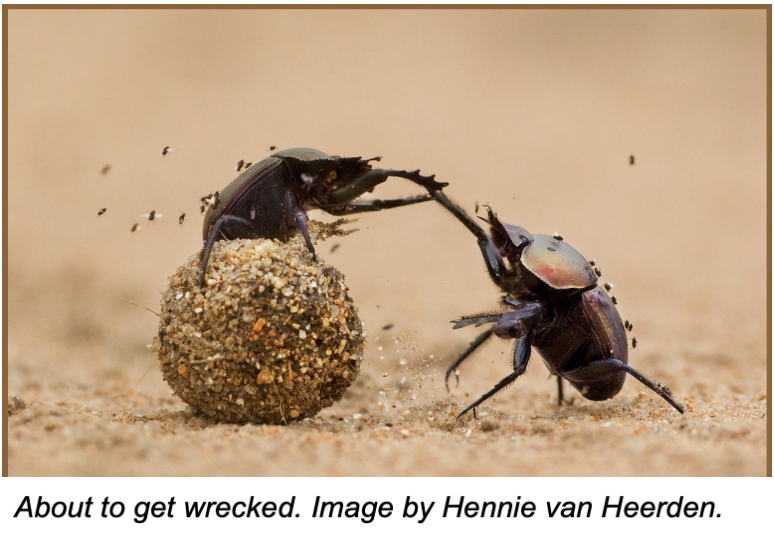

    Dung beetles play an essential role in the environment. However, they fly a bit under the radar, which is why they are often called nature’s “unsung heroes.” There are over 100 species of dung beetle, each choosing one of three strategies: rolling, tunneling, or dwelling in dung. Not only do they eat and live in animal dung, but they increase the freak by reproducing in it and burying it. This ensures their offspring have plenty of food for when they hatch. 

    As gross as it is, this burying behavior strongly limits the growth of vertebrate parasites, which is tremendously helpful to the rest of the ecosystem. They help remove animal dung from the surface environment with incredible efficiency and speed. In some places, the beetles can eliminate a pile of dung in less than 10 minutes, where the ground would otherwise be carpeted with it.

    Dung beetles are very widespread, found in many different habitats across all continents except Antarctica. Like many species, dung beetles appear to be harmed by the break-up of natural environments. This fragmentation reduces the size of undisturbed, or core, habitat in the centre and creates isolated habitat patches. The environment along the edge of a habitat is usually quite different from the core. In forests, for example, it’s typically windier and sunnier at the edge of the forest than in the centre. 

    Edges are not only susceptible to environmental challenges, but also to human impacts. They are more vulnerable to fire, as well as illegal harvesting or collecting of plants or animals by humans, simply because they are more easily accessible. Some of these impacts along the edges don’t stay localized, but can radiate into the core habitat as well.

    Edges are in fact an important habitat, because they support species that like transitions between different habitats. However, as humans continue to break up large habitats, with roads or communities for example, the amount of edge habitat increases, while core habitat shrinks. This challenges the animals that rely on core habitat. Additionally, the edges of habitats typically support fewer species than the core. We don’t want to consistently change habitats around the world to ones that support similar and fewer species. 

    Buffer zones are areas around a sensitive, often legally protected, environment that are typically managed to reduce edge impacts on the borders of a sensitive area. Sometimes buffer zones have methods to exclude humans or livestock, such as fences. Sometimes they are simply designated areas without active protection measures. Relatively little is understood about how effective buffer zones actually are for some species.

    Back to dung beetles, we typically see fewer individuals and a less diverse group of dung beetles along habitat edges than in the core, because they are a group that tends to be quite affected by human activities. For example, because they are in constant contact with dung, they are exposed to pesticides that livestock ingest, which has been causing population declines. But how do buffer zones impact dung beetle diversity and density along the edge of protected habitats?
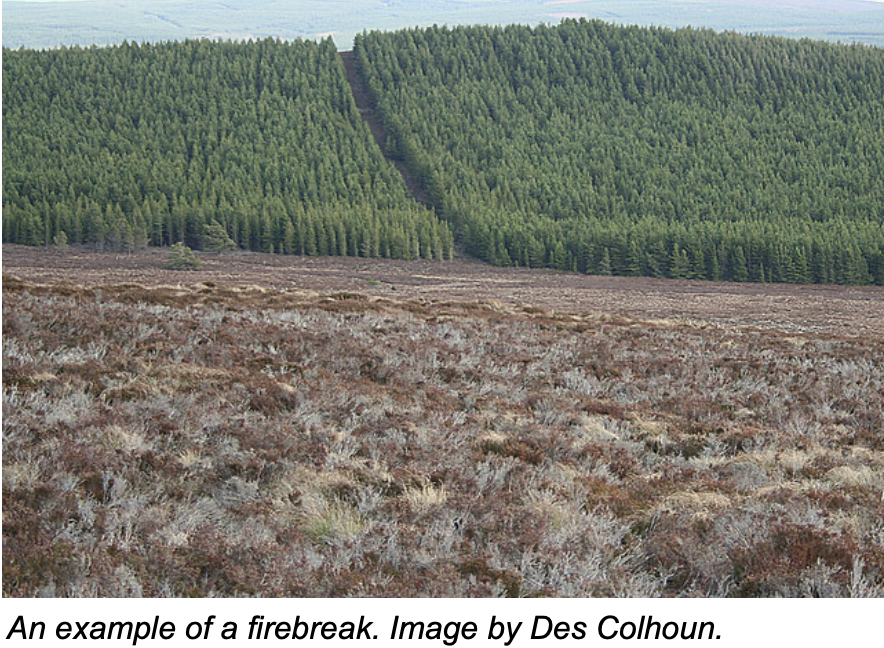
    Andrew Barnes and his colleagues, including the late Rowan Emberson from Lincoln University, decided to find out. The montane rainforests in Sub-Saharan Africa are shrinking rapidly, largely due to deforestation for agriculture and grazing. There is also nearby habitat decline that often comes with agriculture. The Ngel Nyaki forest reserve in Nigeria is a heavily fragmented area. To test how dung beetles would respond to increasing edge effects, the researchers applied experimental habitat restoration treatments to certain areas along the edges. For the restoration, researchers excluded livestock with fencing, created and maintained firebreaks to help block fire, and allowed passive natural regrowth of the floral community. This combined restoration occurred in 200 metre buffer zones over the course of three years.

    The impact of these buffer zones was remarkable. In the forest next to the restoration area, the dung beetle population size increased by over 50% compared to the unrestored areas. Perhaps more important was the difference between dung beetle populations in the edge and habitats. Before the restoration, there were many more species of dung beetles in the habitat core and relatively few in the edge. After the restoration, that difference disappeared, meaning that the buffer zones successfully mitigated the challenges that are typical of edges for dung beetles. The restoration also led to the return of certain species that had previously locally disappeared in the degraded habitat.

    These changes are incredibly pronounced and occurred after only three years and with small levels of restoration. While firebreaks do require active maintenance, it is encouraging that even relatively minor land-use changes around protected areas can make a world of difference for many species. Relatively few studies have been completed about the effectiveness of buffer zones, so this is a single, but vital, drop in a much larger pot of conservation decisions. 

    After all, we want all dung beetle species to survive, no matter how gross or freaky, to tidy up after vertebrates and perhaps to get more inspiration for wrestling moves.

    This article was prepared by Master of International Nature Conservation student Julia Criscuolo as part of the ECOL608 Research Methods in Ecology course.

    Barnes, A.D., Emberson, R.M., Chapman, H.M., Krell, F-T., & Didham, R.K. (2014). Matrix habitat restoration alters dung beetle species responses across tropical forest edges. Biological Conservation, 170: 28-37. DOI: http://dx.doi.org/10.1016/j.biocon.2013.12.006

  • Testing new bait coatings for conservation

    Mickey Mouse and Scabbers the Rat, are causing biodiversity loss in Aotearoa, New Zealand. They are committing crimes against some of our most endangered wildlife and arriving uninvited to the party. Protecting our taonga falls into the hands of conservationists and wildlife managers. New research plays a vital role in protecting our precious taonga.

    Menacing mouse – a little creature creating a big problem. Photo by Nils Fleischeuer (CC BY-NC)

    Would you be surprised to read that mice (Mus musculus) have been recorded eating live albatross (300 times their size)? I sure was! How could a little mouse possibly kill a bird known for having the largest wingspan in the world? Sadly, lots of albatross die from mouse predation every year. When mice aren’t eating albatross, they dine on many species of insects, chicks, eggs and lizards.

    If mice are so terrible, what about rats? There are three species of rat in Aotearoa, the Norway rat Rattus norvegicus, Black rat Rattus rattus and the Polynesian rat Rattus exulans. They are all bad news – they kill adult birds, chicks, snails and insects. They also compete for food that should be there for our native fauna.

    Due to the negative impacts of these rodents, and other introduced predators, many of New Zealand’s most critically endangered fauna are whisked away to predator-free off-shore islands. Some are protected behind expensive predator-resistant fences. PHEW, job completed, right? Not so fast!

    Despite eviction notices, Micky and Scabbers can wriggle their way back into our protected areas. Maybe it’s a quick hop along a fallen tree that bridges the now not so “predator-resistant” fence or a long swim to an off-shore island. When they do appear, we need to have proven tools in the toolbox to deal with them. One of the tools to control them is cereal poison bait.

    These baits are like your breakfast cereal in that they are made from similar ingredients – apart from the poison! Picture this: you reach for your new box of breakfast cereal in the morning and notice an open, very much neglected, box of cereal sitting at the back of your pantry. It’s been there for so long you can’t remember opening it (or you’ve just been ignoring it for many months). It smells stale and has gone slightly soggy, so you bin it, knowing full well that it will taste nasty.

    A good rat is a dead rat! Photo by Jacqui Geux, iNaturalist NZ, (CC-BY)

    Bait stations are used to protect the bait from the rain. However, just like you with your open box of stale cereal, mice and rats also have preferences when it comes to eating their cereal. The longer that bait is stored inside bait stations, the less palatable it is to rodents, the less they eat and the longer it continues to sit and weather.

    To make things worse, the bait stations are often irregularly serviced, so wildlife managers need a bait that stays palatable to mice and rats for as long as possible. This is an issue on remote predator-free islands and fenced predator-resistant sanctuaries that have difficult access and limited funds. Stale or mouldy bait in particular will not control rodents if they aren’t even going to eat it.

    If only there was a way to prevent baits from absorbing moisture and going mouldy – keeping the bait fresh for longer so that mice and rats were more likely to eat it when they come across it …

    This is where researchers at Lincoln University (NZ), James Ross and colleagues, had an idea to coat the baits in a material that will do just these things. Also the material will not reduce the palatability of the baits to mice and rats. To test this idea, they created an experiment using two coatings, Polyvinyl butyral (PVB) and Shellac. Shellac is already used as a food glaze and as a coating to mask the bitter taste of Paracetamol/Acetaminophen. Shellac is also fully biodegradable, which makes it environmentally friendly.

    The coatings were tested using four combinations of the aforementioned substances. First, they had to ensure the new coatings didn’t reduce the palatability compared to uncoated baits. If mice and rats do not eat the new bait coatings, it would be a waste of time to test them further. If Whitakers coated your favourite chocolate bar in something strange, you might take one bite and decide that the new “sardines & whipped cream” coated chocolate bar was not your vibe.

    This image has an empty alt attribute; its file name is 518244606_bcc3409a3a_c.jpg
    An easy pill to swallow – A Panadol tablet, commonly coated in Shellac. (CC BY-NC-SA 2.0) Photo by venana, Flickr. 

    The researchers also had to measure whether coated pellets remained palatable after extended environmental exposure because this is highly likely how mice and rats will find the baits in the real world. In the experiment the coatings were placed on the food the captive rats and mice were fed on. Mice, and more so rats, are neophobic (afraid of new things). So placing new food in their cages might affect the results in such a way that the researchers are measuring the wrong thing. Putting the coatings on their food means their wary responses will be minimised, since they eat rodent pellets every day. After the mice and rats had munched their way through their favourite snacks, the bowls were weighed, and the results were in – Shellac for the win.

    There were differences between the bait coating combinations; Shellac was the most palatable, it performed the best for both mice and rats. Shellac out preformed the PVB coating and the mix of PVB/Shellac. This experiment demonstrated that mice and rats are picky eaters and highlights the importance of testing the different coating types. Coatings, although no thicker than 500 micrometers (really thin), will affect how much mice and rats will eat. Ironic given that mice and rats will eat out of a trash can – now we know they are fussily searching for the “best rubbish”.

    This research is a step in the right direction for conservation in Aotearoa. I call it a small win for the native fauna. With Shellac showing promising signs, researchers and wildlife managers can test the new bait coatings in the field. Wild Mickey and Scabbers can try out some of the mould free, ‘fresh as can be’ Shellac bait. So next time Mickey and Scabbers arrive uninvited to the party, it may be the last thing they do.

    This article was prepared by Master of Pest Management student Nils Fleischeuer as part of the ECOL608 Research Methods in Ecology course.

  • When grapes lead to war

    Would you steal a loaf of bread to feed your hungry family? Fair enough. What about a couple of grapes to save yourself the misery of wasting nine dollars on sour fruit?

    Grapes, waiting to be sampled.
    © Colin Jensen

    “Try ‘em before I buy ‘em,” is my dad’s usual response to that question, as he pops grapes from three different bags one-by-one into his mouth. A red one here, a green one there, maybe even a dark purple if the season is right. In spite of earnest pleadings from embarrassed children and grocery store placards, there would be no purchase of grapes unless a thorough investigation of both quality and taste had been completed. 

    As weird as it may sound, it turns out my dad is not alone in his grocery store grape grabbing. A quick google search yields numerous articles, blogs, polls and debates on the topic. A more recent article used an extensively rigorous survey of 40 people on Facebook to tackle the question, with results showing that half of respondents advocated for, and actively participated in, grape sampling while shopping. As for the other half? Some seemed to side with this NZ Herald article which refers to grape samplers as both thieves and stealers, while others suggested that this type of behaviour is a “hanging offense”. As a conservation biologist, I am not typically one for philosophical debates, so I’ll leave the ethics of grape sampling and capital punishment up for you to decide. 

    Unfortunately, a jump back into the conservation sphere does not make me immune to grape stealing dramatics. As it turns out, nature, just like the produce aisle of my parent’s local grocery store, is home to its own collection of fruity felons. Among those felons is the European starling. You may know starlings for their incredible vocal range, beautiful coloration, or the massive flocks (or mumurations) they sometimes form (check them out if you haven’t). But to winemakers in New Zealand, starlings may be more well-known for being “vicious” and “wasters of fruit.” Unfortunately the problem that starlings cause in vineyards is nothing new, and in fact, it was this very problem that was the inspiration for research at Lincoln University over 20 years ago. 

    European Starling CC courtesy of Eric Ellingson on Flickr

    Flashback to 1999 – Napster is in its heyday, Brittney Spears’ “Baby One More Time” is on the radio, and, besides a little bit of Y2K hysteria, life is good. Amidst the excitement of a new millennia, researchers Yuki Fukuda, Graham Hickling, and Chris Frampton from Lincoln University were hard at work trying to solve the problem of the grape stealing starlings. To do so, they tested out two devices designed specifically for scaring birds away from agriculture areas – the Peaceful Pyramid and eye-spot balloons. The Peaceful Pyramid, as the name suggests, was meant to be a “peaceful” alternative to other more aggressive bird deterrents like “noisy gas guns”. It featured a rotating pyramid with mirrored sides, which would reflect rays of sunlight towards incoming birds. The goal was to overload the birds vision to the point that they would no longer have the desire to land and feed. The eyespot balloon was a large balloon with yellow and black patterning designed to mimic the eyes of a large predator. 

    Peaceful Pyramid
    © Great Expectations

    Both devices were tested at a vineyard in Dunsandel, and at the University vineyard here in Lincoln. Although both were found to scare starlings away from the grapes initially, within a few days almost all the birds had become habituated to both scarers, and they quickly became ineffective. Ultimately, it was determined that both the eyespot balloon and the Peaceful Pyramid were not practical methods for protecting vineyards. Although these researchers did not find a solution to counteract the stealing starlings, they at least helped re-affirm the idea that anti-bird measures need to be thoroughly tested before they are trusted for protection. 

    In the 24 years since the research at Lincoln was done, there has been no shortage of innovation and testing of bird scaring devices. There has also been some work (here and here) on what birds are doing in the vine-yards. Among the myriad of devices tested, we have seen air cannons, chemical repellents, introduced falcons, large-scale netting, and a few of my favourites, the sci-fi sounding laser scarecrow (unfortunately, this doesn’t look as cool as it sounds), and the RobotFalcon (fortunately, this does look as cool as it sounds). 

    All of these projects have had the same goal: deter birds from pillaging in agricultural settings. Unfortunately, despite each of these ideas producing some level of protection, they all come with limitations. One is too expensive, another is too time and labour intensive, and some only work in good weather. For many, it seems as if finding a fix-all solution to the crop stealing problem is a fruitless endeavour. If it’s not the Peaceful Pyramid, and it’s not the laser scarecrow, then really what more can we do? 

    Well, researchers from the University of Sydney think that they have finally found the answer. (If you have been surprised by any of the bird scaring techniques already described, you may want to sit down for what comes next). Like something out of a Stanley Kubrick film, these researchers have employed techniques that they can only describe as “psychological warfare.” 

    The weapons of war used in this study consist of a stuffed bird attached to a drone (UAV), which is flown through the vineyard whilst playing recorded distress calls of pest birds from a loudspeaker (see image below). The idea is that visual and auditory stimuli on their own are not effective long-term. By tapping into the birds psychology through visual (dead bird) and audio (distress call) cues, they might be able to trigger the birds anti-predator behaviour, and keep them away for good.

    Early results show that crop damage in areas patrolled by this flying fearmongerer are up to four times less than areas which used visual scarers alone. It also appears that this system is just as effective as large-scale netting (currently the most effective way to protect grapes), but is much more cost effective. While these results are preliminary, and further testing is still needed, it seems that hope may be flying (and screaming) in on the horizon. 

    © Zihao Wong – UAV bird scarer as used in: Psychological warfare in vineyard: Using drones and bird psychology to control bird damage to wine grapes

    So there you have it. Starting with a couple of grapes at the grocery store, we end with a weapon of war designed to create fear and confusion. While we may not be any closer to answering the debate about grocery store grape sampling, we at least seem closer to solving the grape stealing starling situation. Will psychological warfare finally be the fix-all solution? Perhaps, but only time (and research) will tell. 

    As for me, I still don’t quite understand what it is about grapes that causes both the starlings and my dad to lose all sense of self-control. Maybe with 24 more years of research, innovation and whatever military tactic comes after psychological warfare, we will finally find that out. I am sure it will be a wild ride. 

    This article was prepared by Master of International Nature Conservation student Colin Jensen as part of the ECOL608 Research Methods in Ecology course.

    Citation: Y. Fukuda , C. M. Frampton & G. J. Hickling (2008) Evaluation of two visual birdscarers, the Peaceful Pyramid® and an eye‐spot balloon, in two vineyards, New Zealand Journal of Zoology, 35:3, 217-224, DOI: 10.1080/03014220809510117

  • A giant pest problem: elephants in the backyard

    New Zealand has a huge agricultural industry. It also has a pest problem. I myself have been out to a friends’ farm and was told to “squash a mouse if you see one”! Which I think we can all empathise with to an extent. When the little b*stards are eating your food, they might as well be infesting your wallet.

    Image CC-BY-SA Diego Delso on Wikimedia Commons: Elephants and humans live in close contact in Africa

    Now, think about scaling that up a couple of levels. You no longer have nuisance, albeit damaging, mice scurrying around your farm shed. Instead you have elephants, in herds of 11+, munching through entire fields and even ripping doors off your grain sheds. Stomping won’t quite suffice here (and may go the other way).

    This is an issue that Abel Mamboleo and his PhD supervisors, Chile Doscher and Adrian Paterson, at Lincoln University investigated in their JOJ wildlife and Biology paper in 2020. Instead of the standard numbers, quantities and figures you may expect in a science paper, here they take a slightly alternative approach to the topic. What do people think is happening in their backyards? After all, fear and perceptions are powerful things.

    To start with a bit of context – who are we talking about when referring to people? This study interacted with people in the region of Bunda, a very densely populated region in Tanzania. Much of its land is a part of the idyllic Serengeti ecosystem, and boasts an internationally renowned tourism hotspot.

    Bunda location within Tanzania – right next to the Serengeti: Image CC-BY-SA Macabe 5387 on Wikimedia commons

    These people rely heavily on farming. In fact, 80% of annual income in Bunda comes from this industry. You can imagine how devastating it is to have these creatures, as amazing and majestic as elephants may be, decimate their fields of crops.

    Elephants eating crops is not a new story. In fact, there are even somewhat humorous accounts of elephants eating rotten fruit in orchards and getting themselves rather drunk in the process. Thieving behaviour may even be tolerated – these giants are big money for tourism. However, in this particular context, such interactions are becoming more and more problematic. In this area, as the human population grows, human-elephant interactions also increase.

    Mamboleo went to this area to ask local people their thoughts about these interactions. Using interviews and questionnaires in local languages to ensure clear messages, they found that 88% of those asked thought these human-elephant interactions were on the increase. Furthermore, 79% of respondents reported these events were most common on farms.

    This in and of itself is not necessarily an issue. Local people had described the elephants as generally ‘docile’ and can even be safely approached to within 50 m. In the past, farmers have sometimes been able to simply scare elephants away themselves using traditional techniques, such as patrolling and fencing. Elephant ‘friendliness’ has even been suggested in other parts of Africa, with some suggesting elephants are going as far as to domesticate themselves. However, now, elephants are beginning to ignore these scaring techniques, some becoming bolder and potentially more dangerous.

    How is this affecting people?

    You can begin to see how conflicts between elephants and humans are likely to grow, with 32% of people thinking that elephants will react to seeing a person by killing them, and guarding crops being a main way for these people to protect their livelihoods. And for another large minority, 42% of those asked, they experienced elephants simply continuing to eat their crops in the presence of humans. Evidently, these people don’t have effective tools to deter elephants and protect their farms.

    Extreme measures: what to do next?

    We can see how people would be having a hard time with their elephant neighbours here. But what about the elephants?

    Elephants are protected in Tanzania. The people of Bunda know this. However, desperate times sometimes call for desperate measures. Therefore, occasionally, when an elephant is raiding crops, people may turn to lethal measures. Whilst few people who were interviewed list this as a response to seeing elephants raiding crops, Mamboleo raises the valid point that this number could be higher. Local people know that there could be consequences of authorities finding that illegal elephant kills had taken place in the Bunda region.

    Elephants & mice – really that different? Image by GlobalP from iStock

    This may seem like a drastic response. However, killing pests such as rats, rabbits and mice that eat crops in NZ doesn’t seem so drastic, does it? Of course, this is a very different situation – elephants are native to this area, and are endangered and protected. But this comparison does make you realise that wanting to kill the problem can be a fairly universal response.

    Mamboleo notes that cheap responses can be turned to in the absence of timely support from conservation authorities…so what can be done about that?

    Well, there are some cool things being done across Africa to help with these conflicts. For example, do you know that elephants are scared of bees? Who’d have thought. Some projects actually exist to build bee hives around fences to keep elephants away, and this seems to work pretty well. It also turns out that elephants don’t like spicy food – so chilli can be used in a similar way.

    Image by Kengee8 on Wikimedia Commons: Example of elephant-bee fence

    More ideas, such as this would, be very useful to help in these situations. Answering questions such as when are elephants most likely to visit the farms may also be helpful for targeted responses, Mamboleo says.

    Knowing how people feel, how they’re responding to the situation, and what they need to do to help them resolve the situation for the best outcomes for people and wildlife is a great first step here. That’s the valuable context needed to now take the next steps and make solutions that will work. Especially when we can’t just stomp on the problem!

    This article was prepared by Master of International Nature Conservation student Sally Sinclair as part of the ECOL608 Research Methods in Ecology course.

  • Kea pine for a new home?

    Kea, our smart alpine parrots, are sometimes a little too clever for their own good. They are a species struggling to maintain large and healthy populations. Part of their problem is that they are very curious and seem to be fascinated by what humans do, and more importantly, often live in human-influenced habitat. This is not such a good trait when it leads them to interact with hazards like lead or toxins, nor is it useful if they find human ‘junk’ food.

    This curiosity is also not helpful when we want to study kea. Many of the approaches that work with other bird species just fail for kea. Instead of going about their business they come and see what you are doing, and that’s not great for understanding key aspects of their life histories.

    Spot the kea at the top of the tree! Image by Adrian Paterson.

    I has some first-hand experience with researching kea about twenty five years ago, when I was a newly minted Lincoln University lecturer. I was helping Kerry-Jayne Wilson to supervise a masters student, Mark Jarratt. Mark was interested in how much lead, and other nasty waste, the kea were finding in the local Arthur’s Pass area, and consuming, in their habitat. For example, lead was present in paints, shotgun pellets and rubbish in the tips and kea were often observed eating it.

    Mark had to catch kea to take blood samples to check for lead contamination. Catching kea can be fairly challenging. They are not easily fooled and they can learn by observing others. Adding to the difficulty was that we had to keep the birds in captivity for an hour or so as part of the procedure. And this was a problem.

    We initially used a cage. We would capture a kea, put it in a holding cage, and then go and try and capture the next one. However, each kea would often figure out how to escape the cage. We would return to find a cage open and our patient free (and not likely to be so easily caught again). So then we took the cage with a kea into a small hut nearby, thinking that if the bird got out of the cage then they would at least be in the hut. Unfortunately, some of the kea managed to figure out how to open the windows in the hut. Moral: don’t work with animals smarter than you are!

    So, when PhD student Jodanne Aitken came to James Ross and me and wanted to do a project on kea, I was a little hesitant. However, Jodanne is nothing if not persistent, passionate and persuasive, and a project on kea was begun.

    Early morning in the plantation. The native forest in the distance was often commuted to and from by kea. Image by Adrian Paterson.

    Jodanne was interested in how kea move about and utilise the landscape. Much of her PhD work is in the Southern Alps around Arthur’s Pass, where she is using transmitters to figure out just how mobile kea can be. Is that kea you see gnawing your car wiper blades from the local valley or could it be from several mountain ranges away? More on that in future EcoLincNZ articles!

    Jodanne’s initial work was in looking at how kea might be using plantations of introduced pine and Douglas fir in the Nelson region. Forestry has become a dominant part of many regional landscapes, often hilly and where native forests once grew (and kea once flew). This is especially the case in the Nelson region. The question that Jodanne wanted to answer was whether these forestry plantations, typically monocultures with a lot of human activity, provide a net gain or loss for kea.

    Jodanne filming kea foraging behaviour. Image by Adrian Paterson.

    Are plantations the equivalent of barren wastes for kea, where there is little food and high densities of mammalian predators (not to mention hazards that humans introduce into an area)? Alternatively, do plantations offer new food resources and places to roost and nest? Of course there could be a range of outcomes from positive to negative.

    Jodanne was able to work in forestry blocks run by Nelson Forestry Limited. Local workers were key to providing Jodanne with almost real-time information on kea presence within blocks that were being actively harvested. One advantage of working in plantations were the forestry roads that gave rapid, if a little hair-raising, access to most of these areas.

    Jodanne was able to capture three kea and mount GPS trackers in fancy backpacks to collect movement data. She also observed kea during the morning and late afternoon-early evening periods for several months, mostly to record their feeding. Jodanne used direct and video observations to observe their foraging. Kea poo was also collected when available to get some physical information about diet.

    The kea with transmitters spread their time between the plantation areas and neighbouring native forest. The majority of time was spent in the pines where they foraged, roosted and nested. Kea were observed eating pine seed, as well as tissue stripped off newly harvested Douglas fir logs. The faecal samples, well the bits that could be identified, contained lots of invertebrates.

    Kea have discovered that they can strip the bark of newly harvested logs, scrape off the cambion tissue, chew this and get something nice out of it. (Maybe a bit like eating sweets?) This may be one of the attractions of being in plantations. Image by Adrian Paterson.

    In short, as summarised in a NZ Journal of Zoology paper, kea seemed to be using the pine plantations in similar ways to more natural areas. Good news! However, one of three kea that carried a GPS recorder was killed by a cat. So, there may be some significant risks for kea spending a lot of their time in these areas. ‘Swings and roundabouts’ as they say.

    Despite this being a relatively small scale study, it does indicate that we could learn a lot more about kea in these highly modified landscapes. Jodanne has taken this training and shifted her sights to a much larger scale project on kea movement in the Southern Alps and southern Westland.

    Kea are one of the smartest bird species on the planet but they still need our help to let them survive the arrival of the smartest mammal species and the changes that we have made. Understanding this clever species is fundamental to helping them. This tricky challenge has been accepted by Jodanne and her research colleagues.

    Article by Adrian Paterson, an Associate Professor in the Department of Pest-management and Conservation at Lincoln University.

  • Kiwi calling: when listening is not enough

    I don’t know about your’s, but my mum gets worried when I don’t respond to her phone calls for a few hours. Once, I can’t remember what I was doing, but I didn’t hear the phone ringing. When I finally checked my phone I saw about 17483 missed calls, oops. I can only wonder what went through her mind when I wasn’t responding: she was probably picturing me skydiving, in an ambulance, or lost in the woods during a hike.

    But what if she’d had a more statistical mindset and thought about why I hadn’t responded? Or even better: what if she’d thought about reasons why she could not detect me?

    Ecologists and conservationists consider something similar when analysing data obtained from searching an area for a certain animal species. An animal could be present at a certain site, but still go undetected. First, they have to consider what ecological reasons might have determined where the species was present or absent (for instance, where is there suitable habitat within the considered area). Second, they have to take into account what factors might have influenced the likelihood of actually observing the species (such as the distance from the observer, or the fact that the surveyor may not be skilled enough to recognise the species). These are defined, respectively, as occupancy (which is the same as saying “presence”) and detection probabilities, and can be estimated by using statistical models.

    Occupancy probability and detection probability are described by two different models and both of them will influence what will be observed during a survey. Taking into account that not all the animals will be observed is very important when attempting to accurately assess a species’ presence, which could otherwise be underestimated.

    A young roroa being released as part of the Operation Nest Egg programme. Image by Jon Sullivan on Flickr.

    Peter Jahn, James Ross, Darryl MacKenzie and Laura Molles, in a study published in 2022, wanted to know how accurate acoustic surveys of roroa-great spotted kiwi (Apteryx maxima) were between 2011-2015. During this time, 18 birds were translocated from the Hawdon Valley, in Arthur’s Pass National Park, to the Nina Valley, in Lake Sumner Forest Park, representing one of the initial efforts of the Operation Nest Egg programme. The researchers also wanted to compare kiwi presence before and after 2015, and between the two areas.

    They gathered data from a survey conducted in 2012-2013 by DOC in both the valleys and then repeated the methodology in 2017-2018. The technique they used was passive acoustic monitoring (PAM). PAM is effective when studying elusive species such as kiwi. Automatic recorders were deployed in the two study areas and left there for up to three weeks, activating just before sunset and switching off shortly after sunrise.

    The team analysed the kiwi calls recorded in each of the valleys. The goal was to find a model that would best describe the obtained data, and use it as a base to estimate occupancy and detection probability. Peter Jahn and colleagues wanted to know which factors were important in detecting the kiwi and looked at the study area (Nina and Hawdon Valleys), year, length of the survey night, breeding/non-breeding season, precipitation, wind speed, night length, varying recorder battery capacity.

    Similarly, my mum could have considered the fact that my phone may have been in silent mode, or had no service, or estimated the actual likelihood of me being in an ambulance. All of these factors could have influenced her imperfect detection of me.

    In both the study areas, the detection probability was found to be higher during the breeding season, to increase with longer survey nights and to be influenced by wind speed, rain accumulation and recorder sensitivity. Also, as expected, kiwi presence in the Nina Valley increased after the translocation, as it did in the Hawdon Valley. Moreover, it was found that the number of sites where kiwi calls were recorded increased in 2017-2018 in both the areas and that, in total, many more calls were detected in the Hawdon Valley than in the Nina Valley.

    The Hawdon Valley in Arthur’s Pass National Park. Image CC-BY-NC by Jon Sullivan on Flickr.

    Wait, the number of sites where calls were recorded and the presence of kiwi increased in the Hawdon Valley after kiwi were removed from there? How is that possible? Yeah, that was one surprising finding of the study. In fact, the researchers were expecting that occupancy would decrease after the birds’ removal, but what they found actually suggests that new pairs re-occupied the territories left inhabited by the translocated individuals.

    This is a promising result, because it means that such conservation strategy doesn’t necessarily negatively influence the population from which the individuals are taken. Also, the ongoing pest mammal control in the Hawdon Valley could have balanced the negative effect of the translocation. I guess the only thing left to do now is find out what makes kiwi desire those territories so much that they can’t stay away: maybe they have the most delicious earthworms of New Zealand?

    To conclude, these findings demonstrate that the species is reacting well to this reintroduction programme, considered that kiwi presence increased in the Nina Valley too. Furthermore, this study showed that combining occupancy estimates through statistical models with acoustic monitoring is very useful when studying the outcomes of kiwi’s translocations. However, if you, reader, can’t wait to know more about what happens to our dear kiwi when we move them around, sit back and read Peter Jahn’s PhD thesis: never stop learning.

    Finally, going back to my mum trying to “detect” me: I suggest the probability would increase a lot if she learned to call outside of my usual napping times!

    This article was prepared by Master of International Nature Conservation student Francisco Bini as part of the ECOL608 Research Methods in Ecology course.

    Jahn, P., Ross, J. G., MacKenzie, D. I., & Molles, L. E. (2022). Acoustic monitoring and occupancy analysis: Cost-effective tools in reintroduction programmes for roroa-great spotted kiwi. New Zealand Journal of Ecology, 46(1), 3466.

  • A foreign threat: New Zealand’s Invasive insects

    One of the many great fascinations of New Zealand is the absurd number of bugs found here that are found no where else on Earth. What’s a bug, you might ask? They’re the six-legged creepy crawlies you find everywhere. They are a part of your life, from the obnoxious house fly in your room to the big, bold beetle in the garden! Well, technically, I mislead you with the name bug. Bugs are a single group of piercing-sucking insects; the correct term to describe errant creepy crawlies is insects.

    Aside from being a nuisance in the home, what do New Zealand’s insects do? They provide excellent services to our ecosystem, whether churning up dirt, pollinating flowers, or controlling noxious weeds. They also serve as an essential part of the food web and are a key to the survival of many birds and lizards.

    A friendly, Robust grasshopper says hello! This photo I took in the Mackenzie district shows one of our largest grasshoppers. They’re excellent grazers of lichens and mosses. Historically they provided great nutrition for many birds and lizards.

    Despite their abundance, insects are massively understudied both globally and in New Zealand. We must understand how our insects contribute to our ecosystems and what might happen when new insect species arrive in our country. Species not previously found in New Zealand (nonindigenous creatures) have been a massive threat to New Zealand’s native biodiversity over the past 200 years.

    Of the non-indigenous species in New Zealand, much of the focus has been on mammals, like stoats, and plants, like wilding pines. This work is essential because these sorts of species have huge impacts on our environment and our economy. But what effects do the over 2000 introduced insect species have on New Zealand? A study by Brockerhoff (in 2009) featuring Lincoln University’s Dr Cor Vink, attempts to determine the threat of new insects to New Zealand’s ecosystems.

    The threat of introduced insects was recognised soon after European arrival. From what we know few of these species are capable of affecting native ecosystems aside from the well-studied Vespula wasp.

    The currently accepted view is that new insects do not generally hurt our ecosystems. However, as New Zealand’s ecosystems are often so understudied there is little way for us to measure the effects of new insects on the environment. Across most of the world, the arrival of new insects can be a catastrophe with substantial environmental and economic impacts.

    A photo by Will Frost of a typical Mackenzie Basin floodplain grassland. A habitat type threatened by new species of weevils and the expansion of dairy farming.

    So far New Zealand has avoided such a catastrophic invasion. Brockerhoff (2009) suggests that perhaps our intact native ecosystems repel insect invasions well compared to other parts of the world. While our forests have repelled invaders so far, the threat of climate change may alter the balance in the war of plants and insects.

    Brockerhoff (2009) aimed to investigate the effects of insect invaders across a range of New Zealand’s habitats. It was found that over 200 insects capable of damaging forests have been found in New Zealand but have had minimal impact on our native ecosystems. Several generalist moth species and a passion vine hopper have had minor effects without significant damage. In grasslands, several weevil species have been found all over New Zealand, even as high as 2800 metres, but their impact on the surrounding environment so far seems to be minor. These results suggest that all is well for New Zealand’s ecosystems. However, with rising temperatures creating more optimal conditions for invaders there could be an increase in foreign insect invaders.

    When species reach more significant numbers, their effects can start to worsen. Vespula wasps are well documented for their disruptive effects in beech forests. They feed on honey sap and compete with native birds for this resource. Worse still, these wasps predate on many native insects, some requiring a 90% reduction in Vespula wasps to survive.

    The Argentine ant spreading through New Zealand and is also of grave concern. In large numbers this ant has the ability to displace native ants and often eradicate many other native insects in the soil ecosystem.

    A photo by Will Frost showing a honey-dew beech forest from Craigieburn Forest Park which is threatened by Vespula wasps.

    So far many of the more harmful insect species are isolated to human-altered habitats. And insects which make it to intact ecosystems fail to make an impact. As these insect’s populations build over time and more begin to enter the country as temperatures warm the threat of invasion into native forests may increase.

    Many insects are selective of the plants they consume due to plant defences and palatability. This is true even for generalist insects that specialise on many plants. This likely explains why so far our plants have provided protection from so many would-be insect invaders.

    Honey dew being produced by scale insects. A rich food source for wasps. Photo from Adrian Paterson

    Brockerhoff (2009) suggests that for these reasons the greatest risks to our ecosystems now are from generalist insects, especially those which don’t rely upon plants. Generalist predators, like Vespula wasps, threaten the whole ecosystem’s natural processes. Due to their ability to consume the sugar produced by scale insects. These wasps prey on the majority of native fauna in beech forests to provide food for their young. When in huge abundances the composition of insects in the forest and availability of sugar sap is hugely reduced. If more generalist insect species with no natural predators were to arrive within New Zealand the impacts would be even greater.

    To reduce the threats to our ecosystems in future, introduction of more insects for biocontrol should not be taken lightly. We are fortunate that few exotic insects have been established in New Zealand’s native habitats. However, many of the subtle effects caused by invasive insects are not yet known, more study is needed to grasp how these effects are impacting the ecosystem.

    In the future, climate change and habitat disturbance could allow new insects to arrive and threaten our native ecosystems. We know enough now to say our environment is safe from hugely adverse effects; however, the future is uncertain. Developing a greater understanding of how these creepy crawlies subtly affect our ecosystems is paramount.

    This article was prepared by Master of Science postgraduate student Will Frost as part of the ECOL608 Research Methods in Ecology course.

    Brockerhoff, E. G., Barratt, B. I. P., Beggs, J. R., Fagan, L. L., (Nod) Kay, M.,K., Phillips, C. B., & Vink, C. J. (2010). Impacts of exotic invertebrates on new zealand’s indigenous species and ecosystems. New Zealand Journal of Ecology, Suppl.Special Issue: Feathers to Fur, 34(1), 158-174. https://newzealandecology.org/nzje/2916

  • Fantastic mantids and where to find them 

    This past year I have been reading a lot of papers about mantids because I will be doing my Masters thesis on the New Zealand mantis. They are very interesting animals that fill the niche of a top predator in many habitats.

    New Zealand only has one native species of mantid which is called te whē/rō in te reo Māori. Te whē/rō is a name shared with the stick insect. This relates to a tradition that Māori have where, depending on which of these insect species lands on you, this will indicate which gender your child will be. Maybe New Zealanders could bring it back for some niche (and traditional) gender reveals?

    Image from Ken Vernon

    The New Zealand mantis isn’t the only mantid species in New Zealand though. Since the 1970s we have had a second species in our country. Spreading from Auckland and across the North Island, the South African mantis quickly established itself in New Zealand. This South African invader is also well established in Nelson on the South Island.

    These invasive mantids have caused the decline of our native mantis on the North Island. This impact is likely driven by the female South African mantis that eat our native mantis males. These males follow their noses to the exotic female only to find out that it is a dinner date, and they are on the menu.  

    NZ ootheca (Jon Sullivan)

    The native mantis is more of a gentle species, where the females are unlikely to try and eat their mate. They don’t live for very long, perhaps six months in the wild. Mantids need a way to survive the winter and ootheca (little mantid egg cartons) protect their eggs while they develop. Both mantid species in NZ have ootheca, though they can easily be told apart. The South African mantis has a puffy white ootheca, which looks like a small meringue, while the New Zealand mantis has a brown ootheca that is smaller and more geometric.

    Mike Bowie, and his son Matthew Bowie, looked at where the New Zealand mantis laid their ootheca. Mike recently retired after over 40 years at Lincoln University, working on many native species, including the habits of New Zealand mantids.  

    The Bowies found that the New Zealand mantis preferred kowhai, native broom, lancewood, and cabbage tree, which together had 78% of the oothecae. Over half of the ootheca were found on smaller branches, predominantly non-shaded. They found that these spots were warmer and brighter than other parts of the trees and this would help with development.

    Oothecae were also centred on true north, which works with most New Zealand houses and fences since most properties are also facing true north. Ootheca are attached to houses and fences that face north, maximising their sunlight. This allows developing mantids to grow quickly. 

    The Bowies also found that there was a size difference between ootheca in Lincoln compared to those in Palmerston North. The Lincoln oothecae were significantly larger than the egg cases up north. There could be a few reasons for this and one of them is that a larger size helps them handle the colder temperatures down here. This size difference also allowed the southern population to fit a few more eggs in their ootheca giving them a bit of an advantage.  

    South African ootheca (Jon Sullivan).

    The study shows that our mantis has various adaptions that allow them to survive the New Zealand winters, especially by using the modified habitat we have created in New Zealand. Despite this, the New Zealand mantis is in decline. The South African mantis lay their ootheca in more sheltered spaces and produce oothecae that are larger than the locals, giving them advantages. They can even lay an ootheca without mating and it will hatch successfully.

    Just like those male mantids, we’ll be praying for a happy ending!

    This article was prepared by Master of Science postgraduate student George Gibbs as part of the ECOL608 Research Methods in Ecology course.

    Bowie, M. K.; Bowie, Michael H. 2003. Where does the New Zealand praying mantis, Orthodera novaezealandiae (Colenso) (Mantodea: Mantidae), deposit its oothecae? New Zealand Entomologist 26(1): 3–5. (https://doi.org/10.1080/00779962.2003.9722103)

    Further reading:

    https://academic.oup.com/beheco/article/27/3/851/2365697

    https://traviswetland.org.nz/about-travis/scientific-papers/praying-mantis-in-new-zealand/

  • I see you: Sauron and the panda

    “I wish we could get away from these hills! I hate them. I feel all naked on the east side, stuck up here with nothing but the dead flats between me and that Shadow yonder. There’s an Eye in it. Come on! We’ve got to get down today somehow.” JRR Tolkien, The Lord of the Rings

    We’ve all had that feeling of being watched, of something that has taken an interest in what we are doing, and not perhaps with our best interests. It makes us fell uncomfortable, awkward, and we often change our behaviour in response, become more cautious, less spontaneous.

    Tolkien knew the power of the watching individual. Sauron, the chief antagonist in The Lord of the Rings, is literally portrayed as the Great Eye – “The Eye was rimmed with fire, but was itself glazed, yellow as a cat’s, watchful and intent, and the black slit of its pupil opened on a pit, a window into nothing. Then the Eye began to rove, searching this way and that; and Frodo knew with certainty and horror that among the many things that it sought he himself was one.” Knowing that someone can see you wherever you are is about as big a threat as we can imagine, whether it is Sauron, your boss, or your mother! We generally hate the concept that someone is watching us.

    Tolkien loved the word ‘watch’ (he used it over 330 times in the Lord of the Rings!). The watch-tower of Weathertop is the site of Frodo’s wounding, a Watcher-in-the-water nearly ends the journey at the entrance to Moria, there are Silent Watchers at the gates of Cirith Ungol, the menace of the Old Forest, Fangorn (known as the Watchwood to the Ents). Threats are usually described in the language around the feeling of being watched. And it works, it quickens the pulse of the reader. We know the feeling and respond.

    Ever get that feeling that something was looking for you?

    The problem with knowing that you are observed (or can be observed) is that you behave in ways that are different to your normal behaviour. Many species will respond to observation by not performing rarer sorts of behaviour, like play or reproduction, or by moving away from the observer.

    Gollum knows all about the watching eye and this makes him much more cautious in his movements. “His Eye watches that way all the time. It caught Smeagol there, long ago.’ Gollum shuddered. ‘But Smeagol has used his eyes since then, yes, yes: I’ve used eyes and feet and nose since then. I know other ways. More difficult, not so quick; but better, if we don’t want Him to see. Follow Smeagol! He can take you through the marshes, through the mists, nice thick mists. Follow Smeagol very carefully, and you may go a long way, quite a long way, before He catches you, yes perhaps.’ Gollum scuttles about because he does not want to be observed.

    Frodo, under the wearying influence of the ring as he stumbles through Mordor, almost completely changes his normal behaviour under the threat of constant detection. “Anxiously Sam had noted how his master’s left hand would often be raised as if to ward off a blow, or to screen his shrinking eyes from a dreadful Eye that sought to look in them. And sometimes his right hand would creep to his breast, clutching, and then slowly, as the will recovered mastery, it would be withdrawn.” If not for Sam, who does not have this anxiety, Frodo would not make it to Mt Doom.

    In animal behaviour we have a similar problem. We usually want to observe an animal’s ‘normal’ behaviour but they will often change their behaviour if they can see a human watching them. Today, technology can come to our aid.

    Yes, yes we realise you are the cutest species… Red Panda resting. Image from Kat Bugler.

    One of the more powerful new-ish tools available to those that study animal behaviour are trail cameras. These devices allow us to observe animals in the field 24/7 (just as long as they wander past the unsleeping gaze of the lens and trigger the image capture). This is a huge improvement for behavioural studies, as we can watch without the actual presence of human observers. We have used cameras in many studies here at Lincoln, mostly in understanding the life history and behaviour of nocturnal mammalian pest species..

    Recently, we used trail cameras to find out more about red panda in Nepal. Cameras were placed on red panda latrine trees (which are exactly what you are imagining). We were able to record activity patterns of wild red panda in their natural environment. Such data is useful in working out management plans to help with their conservation. We were also able to record other wild species that share their habitat.

    In some of these captured images, it appeared that the red pandas were looking at the trail cameras. If they are aware of the cameras then this might alter their behaviour. Maybe they are curious and spend more time loitering in the areas? Maybe they are frightened and don’t behave in their normal way?

    Kat Bugler, as part of her MSc at Lincoln University (with supervisors Adrian Paterson and James Ross), decided to examine whether red pandas were camera shy. Kat was able to get permission from zoos in New Zealand and Australia to observe their captive red panda in their enclosures. Each habitat was different but Kat was able to set up trail cameras to record behaviour around the main activity areas and platforms. She had a more powerful camera set up out of the enclosure to record behaviour of the pandas in these areas and around the trail cameras. Kat also spent time recording her own observations.

    Trail camera setup in a zoo enclosure. Image from Kat Bugler.

    In a paper published in Animals, Kat was able to show that there was a difference in red panda behaviour when a human observer was watching them, compared to a camera. When red panda were being watched by an individual they defecated less, ate less, moved less, played less, rested less, and slept more than when they were only being ‘watched’ by the trail cameras. Red panda were much slower to change behaviours when being observed. Interestingly, there were similar differences, if not as large, when comparing behaviour recorded by the outside camera compared to the enclosure trail cameras. The presence of people changes red panda behaviour, but so does the presence of a trail camera.

    These are subtle changes. Trail cameras are hardly the eye of Sauron: “And suddenly he felt the Eye. There was an eye in the Dark Tower that did not sleep. He knew that it had become aware of his gaze. A fierce eager will was there. It leaped towards him; almost like a finger he felt it, searching for him.” Are trail cameras useful for monitoring red panda behaviour if they can cause changes in behaviour? Absolutely, they do record all of the behaviour that red pandas exhibit, they just may alter the duration and frequency of occurrence. As long as we bear that in mind then we have a great tool to use in the wilds of the Himalayas and in understanding more about the red panda.

    “He did not feel invisible at all, but horribly and uniquely visible; and he knew that somewhere an Eye was searching for him” Maybe Sauron would have been better off putting trail cameras on all of the paths into Mordor!

  • Fishing for possum DNA

    When I was a child, I was fixated on animals. In fact, 5-year-old me would go around telling all the primary school mums that I wanted to be a Palaeontologist. This was often met with some strange looks, quite possibly because they didn’t even know what a Palaeontologist was themselves. Since then, I have been less focused on digging up dead animals and more interested in protecting the ones that are still alive.

    In New Zealand, tourism and agriculture are arguably the biggest money-maker industries. People flood from overseas to check out the clean green image being advertised in their home countries for themselves. The ‘Great Walks’ lead tourists through the rugged bush that New Zealand has to offer. Along the way they might even see some of our diverse flora and fauna, of which most can not be found elsewhere on Earth.

    On the other hand, the dairy, sheep and beef industries in New Zealand, earn large amounts of overseas revenue. This all started when Samuel Marsden introduced shorthorn dairy cattle to New Zealand from New South Wales and the rest is history.

    https://www.australiangeographic.com.au/topics/wildlife/2017/04/killer-possums/

    This brings me to the devious, but very cute looking, Brushtail Possum, Trichosurus vulpecula. In Australia, the Brushtail Possum is a protected species. In New Zealand they are a serious threat to our homegrown species. Possums compete with our native bird species for food and inhabit the same areas. These fluff balls are omnivores. In addition to eating the leaves off trees, they rob the nests of birds and eat the chicks and eggs.

    Bovine tuberculosis is a disease that affects many farm animal species. Possums are the biggest carriers of tuberculosis and can infect herds of dairy cows, causing serious illness to the animals and a large vet bill for the farmer. Due to these factors, New Zealand tries incredibly hard to get rid of these furry mammals. One important thing that we need to know is where these possums are present and and in what numbers. For a nocturnal and relatively cryptid species, this is a lot harder to do than simply call a roll!

    The use of trace DNA to monitor animals, such as possums, is a relatively new concept. However, a trial was held in Canterbury where researchers collected DNA from saliva left on WaxTags and Chewcards to determine the number of possums in an area and check whether these individuals were Tuberculosis carriers. From the initial field study, it was found that multiple possums would bite the WaxTag and Chew cards which made it difficult for the lab team to isolate certain animals. A new device to collect data was needed.

    A mechanical collection device was created which would remove the bait after one animal had bitten into it, which protected the saliva and therefore the individual DNA could be distinguished. The device was a bit like a fishing line, catching its prey and then reeling in the DNA! Researchers found that the mechanical device allowed the DNA to be collected and more easily sequenced. They also found that the genetic material was more easily recovered from covered WaxTags than on the uncovered WaxTags.

    Mechanical device created to protect DNA sample on the WaxTag.
Image from: A New Non-Invasive Method for Collecting DNA From Small Mammals in the Field, and Its Application in Simultaneous Vector and Disease Monitoring in Brushtail Possums
    Mechanical device created to protect DNA sample on the WaxTag.
    Image from: A New Non-Invasive Method for Collecting DNA From Small Mammals in the Field, and Its Application in Simultaneous Vector and Disease Monitoring in Brushtail Possums

    Cameras used in the field trials picked up that the possums interacted with the new WaxTags, and 87% of the devices were triggered after the first interaction. This is a positive point because in order for a monitoring device to be useful, the target has to interact with it.

    This new way of collecting trace DNA samples was a success. DNA from Brushtail Possums was able to be amplified for genetic identification and was able to detect if diseases were present. The combination of the device being interesting enough for the targets to interact with, and the subsequent DNA extracted being protected until collection, means that it is ever more likely that technology like this can be used for other pest species to determine their disease risk.

    The current study is the first to collect trace amounts of possum DNA and keep it protected from the elements until genetic analysis has taken place. This is a pretty big step for DNA collection methods. However, transmission of infectious diseases by vectors, such as possums, is density dependant. More collection devices need to be installed in these areas being studied to create ‘encounter’ history for individuals to determine population density and to calculate the likeliness for for transmission of these vector carried diseases.

    This research suggests that there are new ways for non-invasive monitoring pest populations. The road to New Zealand being predator free by 2050 is a long one, but is shortened by the impressive new technologies being developed in the pest management space. This technology is key for determining the populations of pests in their area and how likely their livestock are to contracting devastating diseases such as Bovine Tuberculosis.

    Dealing with pests may not be the most fun thing to do week to week, however, determining where populations are and where the risks lie can help experienced personal to more effectively manage pest populations and get New Zealand back to where we should be, mammal predator free.

    This article was prepared by postgraduate student Rebecca Anderson as part of the ECOL608 Research Methods in Ecology course.

    Emami-Khoyi A, Agnew TW, Adair MG, Murphy EC, Benmazouz I, Monsanto DM, Parbhu SP, Main DC, Le Roux R, Golla TR, Schnelle C, Alizadeh H, Csányi S, Heltai M, Jansen van Vuuren B, Paterson AM, Teske PR and Ross JG (2021) A New Non-invasive Method for Collecting DNA From Small Mammals in the Field, and Its Application in Simultaneous Vector and Disease Monitoring in Brushtail Possums. Front. Environ. Sci. 9:701033. https://doi.org/10.3389/fenvs.2021.701033