Category: entomology

  • Life near the edge: same dung, different day

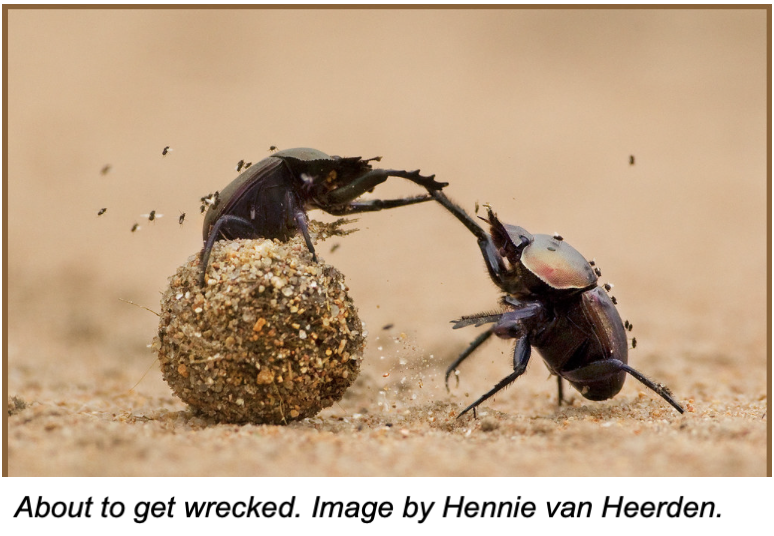
    Although I was vaguely aware of dung beetles and their role in the ecosystem, I finally became interested in them while participating in giraffe research in South Africa. I’ll never forget the time when I was finishing up my giraffe work for the day and I stopped to watch a couple of dung beetles who were squabbling over a single ball of dung (poop). What I had perceived to be a relatively gentle disagreement escalated quickly when I watched one demolish the other with a long-time favourite move from the World Wrestling Foundation, the Brainbuster. You know the one.


    Dung beetles play an essential role in the environment. However, they fly a bit under the radar, which is why they are often called nature’s “unsung heroes.” There are over 100 species of dung beetle, each choosing one of three strategies: rolling, tunneling, or dwelling in dung. Not only do they eat and live in animal dung, but they increase the freak by reproducing in it and burying it. This ensures their offspring have plenty of food for when they hatch. 

    As gross as it is, this burying behavior strongly limits the growth of vertebrate parasites, which is tremendously helpful to the rest of the ecosystem. They help remove animal dung from the surface environment with incredible efficiency and speed. In some places, the beetles can eliminate a pile of dung in less than 10 minutes, where the ground would otherwise be carpeted with it.

    Dung beetles are very widespread, found in many different habitats across all continents except Antarctica. Like many species, dung beetles appear to be harmed by the break-up of natural environments. This fragmentation reduces the size of undisturbed, or core, habitat in the centre and creates isolated habitat patches. The environment along the edge of a habitat is usually quite different from the core. In forests, for example, it’s typically windier and sunnier at the edge of the forest than in the centre. 

    Edges are not only susceptible to environmental challenges, but also to human impacts. They are more vulnerable to fire, as well as illegal harvesting or collecting of plants or animals by humans, simply because they are more easily accessible. Some of these impacts along the edges don’t stay localized, but can radiate into the core habitat as well.

    Edges are in fact an important habitat, because they support species that like transitions between different habitats. However, as humans continue to break up large habitats, with roads or communities for example, the amount of edge habitat increases, while core habitat shrinks. This challenges the animals that rely on core habitat. Additionally, the edges of habitats typically support fewer species than the core. We don’t want to consistently change habitats around the world to ones that support similar and fewer species. 

    Buffer zones are areas around a sensitive, often legally protected, environment that are typically managed to reduce edge impacts on the borders of a sensitive area. Sometimes buffer zones have methods to exclude humans or livestock, such as fences. Sometimes they are simply designated areas without active protection measures. Relatively little is understood about how effective buffer zones actually are for some species.

    Back to dung beetles, we typically see fewer individuals and a less diverse group of dung beetles along habitat edges than in the core, because they are a group that tends to be quite affected by human activities. For example, because they are in constant contact with dung, they are exposed to pesticides that livestock ingest, which has been causing population declines. But how do buffer zones impact dung beetle diversity and density along the edge of protected habitats?

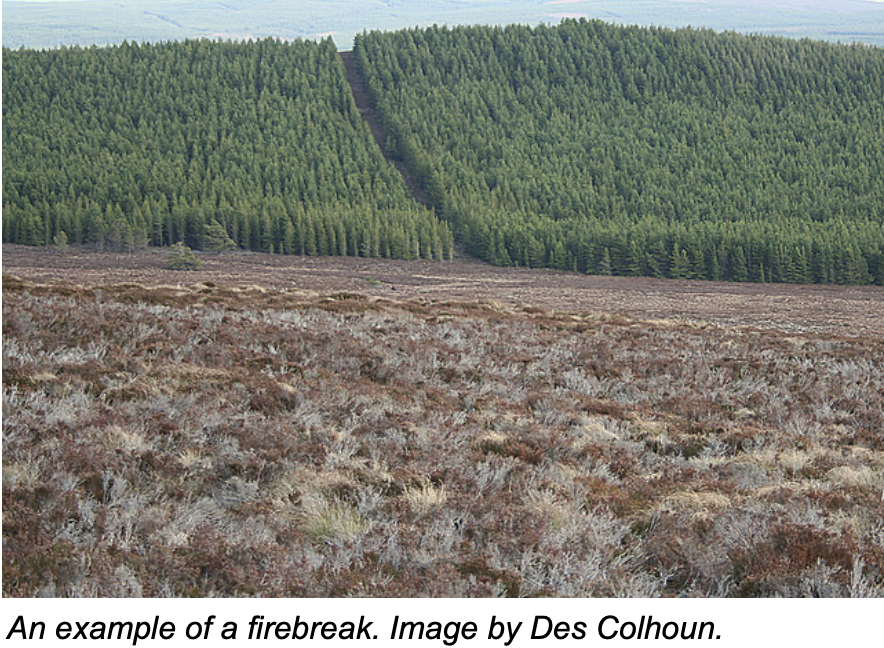
    Andrew Barnes and his colleagues, including the late Rowan Emberson from Lincoln University, decided to find out. The montane rainforests in Sub-Saharan Africa are shrinking rapidly, largely due to deforestation for agriculture and grazing. There is also nearby habitat decline that often comes with agriculture. The Ngel Nyaki forest reserve in Nigeria is a heavily fragmented area. To test how dung beetles would respond to increasing edge effects, the researchers applied experimental habitat restoration treatments to certain areas along the edges. For the restoration, researchers excluded livestock with fencing, created and maintained firebreaks to help block fire, and allowed passive natural regrowth of the floral community. This combined restoration occurred in 200 metre buffer zones over the course of three years.

    The impact of these buffer zones was remarkable. In the forest next to the restoration area, the dung beetle population size increased by over 50% compared to the unrestored areas. Perhaps more important was the difference between dung beetle populations in the edge and habitats. Before the restoration, there were many more species of dung beetles in the habitat core and relatively few in the edge. After the restoration, that difference disappeared, meaning that the buffer zones successfully mitigated the challenges that are typical of edges for dung beetles. The restoration also led to the return of certain species that had previously locally disappeared in the degraded habitat.

    These changes are incredibly pronounced and occurred after only three years and with small levels of restoration. While firebreaks do require active maintenance, it is encouraging that even relatively minor land-use changes around protected areas can make a world of difference for many species. Relatively few studies have been completed about the effectiveness of buffer zones, so this is a single, but vital, drop in a much larger pot of conservation decisions. 

    After all, we want all dung beetle species to survive, no matter how gross or freaky, to tidy up after vertebrates and perhaps to get more inspiration for wrestling moves.

    This article was prepared by Master of International Nature Conservation student Julia Criscuolo as part of the ECOL608 Research Methods in Ecology course.
    Barnes, A.D., Emberson, R.M., Chapman, H.M., Krell, F-T., & Didham, R.K. (2014). Matrix habitat restoration alters dung beetle species responses across tropical forest edges. Biological Conservation, 170: 28-37. DOI: http://dx.doi.org/10.1016/j.biocon.2013.12.006

  • A foreign threat: New Zealand’s Invasive insects

    One of the many great fascinations of New Zealand is the absurd number of bugs found here that are found no where else on Earth. What’s a bug, you might ask? They’re the six-legged creepy crawlies you find everywhere. They are a part of your life, from the obnoxious house fly in your room to the big, bold beetle in the garden! Well, technically, I mislead you with the name bug. Bugs are a single group of piercing-sucking insects; the correct term to describe errant creepy crawlies is insects.

    Aside from being a nuisance in the home, what do New Zealand’s insects do? They provide excellent services to our ecosystem, whether churning up dirt, pollinating flowers, or controlling noxious weeds. They also serve as an essential part of the food web and are a key to the survival of many birds and lizards.

    A friendly, Robust grasshopper says hello! This photo I took in the Mackenzie district shows one of our largest grasshoppers. They’re excellent grazers of lichens and mosses. Historically they provided great nutrition for many birds and lizards.

    Despite their abundance, insects are massively understudied both globally and in New Zealand. We must understand how our insects contribute to our ecosystems and what might happen when new insect species arrive in our country. Species not previously found in New Zealand (nonindigenous creatures) have been a massive threat to New Zealand’s native biodiversity over the past 200 years.

    Of the non-indigenous species in New Zealand, much of the focus has been on mammals, like stoats, and plants, like wilding pines. This work is essential because these sorts of species have huge impacts on our environment and our economy. But what effects do the over 2000 introduced insect species have on New Zealand? A study by Brockerhoff (in 2009) featuring Lincoln University’s Dr Cor Vink, attempts to determine the threat of new insects to New Zealand’s ecosystems.

    The threat of introduced insects was recognised soon after European arrival. From what we know few of these species are capable of affecting native ecosystems aside from the well-studied Vespula wasp.

    The currently accepted view is that new insects do not generally hurt our ecosystems. However, as New Zealand’s ecosystems are often so understudied there is little way for us to measure the effects of new insects on the environment. Across most of the world, the arrival of new insects can be a catastrophe with substantial environmental and economic impacts.

    A photo by Will Frost of a typical Mackenzie Basin floodplain grassland. A habitat type threatened by new species of weevils and the expansion of dairy farming.

    So far New Zealand has avoided such a catastrophic invasion. Brockerhoff (2009) suggests that perhaps our intact native ecosystems repel insect invasions well compared to other parts of the world. While our forests have repelled invaders so far, the threat of climate change may alter the balance in the war of plants and insects.

    Brockerhoff (2009) aimed to investigate the effects of insect invaders across a range of New Zealand’s habitats. It was found that over 200 insects capable of damaging forests have been found in New Zealand but have had minimal impact on our native ecosystems. Several generalist moth species and a passion vine hopper have had minor effects without significant damage. In grasslands, several weevil species have been found all over New Zealand, even as high as 2800 metres, but their impact on the surrounding environment so far seems to be minor. These results suggest that all is well for New Zealand’s ecosystems. However, with rising temperatures creating more optimal conditions for invaders there could be an increase in foreign insect invaders.

    When species reach more significant numbers, their effects can start to worsen. Vespula wasps are well documented for their disruptive effects in beech forests. They feed on honey sap and compete with native birds for this resource. Worse still, these wasps predate on many native insects, some requiring a 90% reduction in Vespula wasps to survive.

    The Argentine ant spreading through New Zealand and is also of grave concern. In large numbers this ant has the ability to displace native ants and often eradicate many other native insects in the soil ecosystem.

    A photo by Will Frost showing a honey-dew beech forest from Craigieburn Forest Park which is threatened by Vespula wasps.

    So far many of the more harmful insect species are isolated to human-altered habitats. And insects which make it to intact ecosystems fail to make an impact. As these insect’s populations build over time and more begin to enter the country as temperatures warm the threat of invasion into native forests may increase.

    Many insects are selective of the plants they consume due to plant defences and palatability. This is true even for generalist insects that specialise on many plants. This likely explains why so far our plants have provided protection from so many would-be insect invaders.

    Honey dew being produced by scale insects. A rich food source for wasps. Photo from Adrian Paterson

    Brockerhoff (2009) suggests that for these reasons the greatest risks to our ecosystems now are from generalist insects, especially those which don’t rely upon plants. Generalist predators, like Vespula wasps, threaten the whole ecosystem’s natural processes. Due to their ability to consume the sugar produced by scale insects. These wasps prey on the majority of native fauna in beech forests to provide food for their young. When in huge abundances the composition of insects in the forest and availability of sugar sap is hugely reduced. If more generalist insect species with no natural predators were to arrive within New Zealand the impacts would be even greater.

    To reduce the threats to our ecosystems in future, introduction of more insects for biocontrol should not be taken lightly. We are fortunate that few exotic insects have been established in New Zealand’s native habitats. However, many of the subtle effects caused by invasive insects are not yet known, more study is needed to grasp how these effects are impacting the ecosystem.

    In the future, climate change and habitat disturbance could allow new insects to arrive and threaten our native ecosystems. We know enough now to say our environment is safe from hugely adverse effects; however, the future is uncertain. Developing a greater understanding of how these creepy crawlies subtly affect our ecosystems is paramount.

    This article was prepared by Master of Science postgraduate student Will Frost as part of the ECOL608 Research Methods in Ecology course.
    Brockerhoff, E. G., Barratt, B. I. P., Beggs, J. R., Fagan, L. L., (Nod) Kay, M.,K., Phillips, C. B., & Vink, C. J. (2010). Impacts of exotic invertebrates on new zealand’s indigenous species and ecosystems. New Zealand Journal of Ecology, Suppl.Special Issue: Feathers to Fur, 34(1), 158-174. https://newzealandecology.org/nzje/2916

  • Fantastic mantids and where to find them 

    This past year I have been reading a lot of papers about mantids because I will be doing my Masters thesis on the New Zealand mantis. They are very interesting animals that fill the niche of a top predator in many habitats.

    New Zealand only has one native species of mantid which is called te whē/rō in te reo Māori. Te whē/rō is a name shared with the stick insect. This relates to a tradition that Māori have where, depending on which of these insect species lands on you, this will indicate which gender your child will be. Maybe New Zealanders could bring it back for some niche (and traditional) gender reveals?

    Image from Ken Vernon

    The New Zealand mantis isn’t the only mantid species in New Zealand though. Since the 1970s we have had a second species in our country. Spreading from Auckland and across the North Island, the South African mantis quickly established itself in New Zealand. This South African invader is also well established in Nelson on the South Island.

    These invasive mantids have caused the decline of our native mantis on the North Island. This impact is likely driven by the female South African mantis that eat our native mantis males. These males follow their noses to the exotic female only to find out that it is a dinner date, and they are on the menu.  

    NZ ootheca (Jon Sullivan)

    The native mantis is more of a gentle species, where the females are unlikely to try and eat their mate. They don’t live for very long, perhaps six months in the wild. Mantids need a way to survive the winter and ootheca (little mantid egg cartons) protect their eggs while they develop. Both mantid species in NZ have ootheca, though they can easily be told apart. The South African mantis has a puffy white ootheca, which looks like a small meringue, while the New Zealand mantis has a brown ootheca that is smaller and more geometric.

    Mike Bowie, and his son Matthew Bowie, looked at where the New Zealand mantis laid their ootheca. Mike recently retired after over 40 years at Lincoln University, working on many native species, including the habits of New Zealand mantids.  

    The Bowies found that the New Zealand mantis preferred kowhai, native broom, lancewood, and cabbage tree, which together had 78% of the oothecae. Over half of the ootheca were found on smaller branches, predominantly non-shaded. They found that these spots were warmer and brighter than other parts of the trees and this would help with development.

    Oothecae were also centred on true north, which works with most New Zealand houses and fences since most properties are also facing true north. Ootheca are attached to houses and fences that face north, maximising their sunlight. This allows developing mantids to grow quickly. 

    The Bowies also found that there was a size difference between ootheca in Lincoln compared to those in Palmerston North. The Lincoln oothecae were significantly larger than the egg cases up north. There could be a few reasons for this and one of them is that a larger size helps them handle the colder temperatures down here. This size difference also allowed the southern population to fit a few more eggs in their ootheca giving them a bit of an advantage.  

    South African ootheca (Jon Sullivan).

    The study shows that our mantis has various adaptions that allow them to survive the New Zealand winters, especially by using the modified habitat we have created in New Zealand. Despite this, the New Zealand mantis is in decline. The South African mantis lay their ootheca in more sheltered spaces and produce oothecae that are larger than the locals, giving them advantages. They can even lay an ootheca without mating and it will hatch successfully.

    Just like those male mantids, we’ll be praying for a happy ending!

    This article was prepared by Master of Science postgraduate student George Gibbs as part of the ECOL608 Research Methods in Ecology course.

    Bowie, M. K.; Bowie, Michael H. 2003. Where does the New Zealand praying mantis, Orthodera novaezealandiae (Colenso) (Mantodea: Mantidae), deposit its oothecae? New Zealand Entomologist 26(1): 3–5. (https://doi.org/10.1080/00779962.2003.9722103)

    Further reading:

    https://academic.oup.com/beheco/article/27/3/851/2365697

    https://traviswetland.org.nz/about-travis/scientific-papers/praying-mantis-in-new-zealand/