Category: wildlife management

  • What went wrong with Himalayan tahrs in New Zealand?  

    What went wrong with Himalayan tahrs in New Zealand?  

    How would you feel if an animal deeply respected and protected in your homeland was treated as a trophy animal and hunted in another country for being invasive? I was heartbroken to discover the fate of Himalayan tahrs when I first arrived here in New Zealand.

    A proud Sherpa with Chhomolungma (Mt. Everest) in the background (Hey! He looks exactly like the author of this blog!!!) Photo: ©Author

    Being from a native Sherpa community in the Khumbu region (popularly known to the world as The Everest region), I grew up roaming around the high alpine environment of the Himalayas. The region lies in the Sagarmatha National Park and Buffer Zone (SNPBZ) and is home to majestic mountains including the highest peak in the world, Khangri Chhomolungma (Mt. Everest in English), as well as stunning rugged terrains, glaciers, lakes and diverse flora and fauna.

    A photo of male Himalayan Tahr taken on the way to Everest base camp trail Photo: ©Author

    The Khumbu region is habitat to many endangered wild animals including snow leopards, musk deer and red pandas. Due to its rugged environment and mountain slopes, the region is also a suitable native habitat of the Himalayan tahr (Hamitragus jemlahicus). We call them “Ri Rau” in Sherpa language meaning “Wild Goat”.

    A herd of Himalayan Tahr seen on the way to Everest Base Camp Trail Photo: ©Author

    I was around 6-7 years old when I first saw a herd of the Himalayan tahrs grazing on the hills near my hometown Lukla while walking with my father. I remember watching and admiring them for hours hiding behind a rock. I was immediately mesmerized by their presence. The male stood out with their glossy thick brown coat of straight hair as if they came straight out of a salon, with strong dark horns surrounded by the females and their young ones. I was especially stunned by their ability to move confidently and swiftly across the rocky slopes. That moment still relives fresh in my memory. Since then, whenever I saw them, I always paused for a moment to admire their elegance and capturing the moments for memories.

    The Himalayan tahr is currently listed as Near threatened on the IUCN Red list. In their native habitat they are mostly predated by common leopards and snow leopards. Due to anthropogenic activities such as habitat loss and illegal poaching, their population have been declining, and they are now protected in their native Himalayan environments.

    When I first arrived in New Zealand, I discovered that the Himalayan tahrs are considered as invasive species, and they are hunted for recreational purpose in the country. I was really surprised by this as they are protected in the region that I come from. After doing some digging, I found out that the Himalayan tahrs were introduced in New Zealand in the early days of European settlements for sport, gifted by Duke of Bedford to help with recreational hunting option for emigrating Englishmen and released near the Hermitage at Mt Cook in 1909. As New Zealand doesn’t have any natural predators of Himalayan Tahrs, their population escalated rapidly reaching a population size of tens of thousands over the Southern Alps.

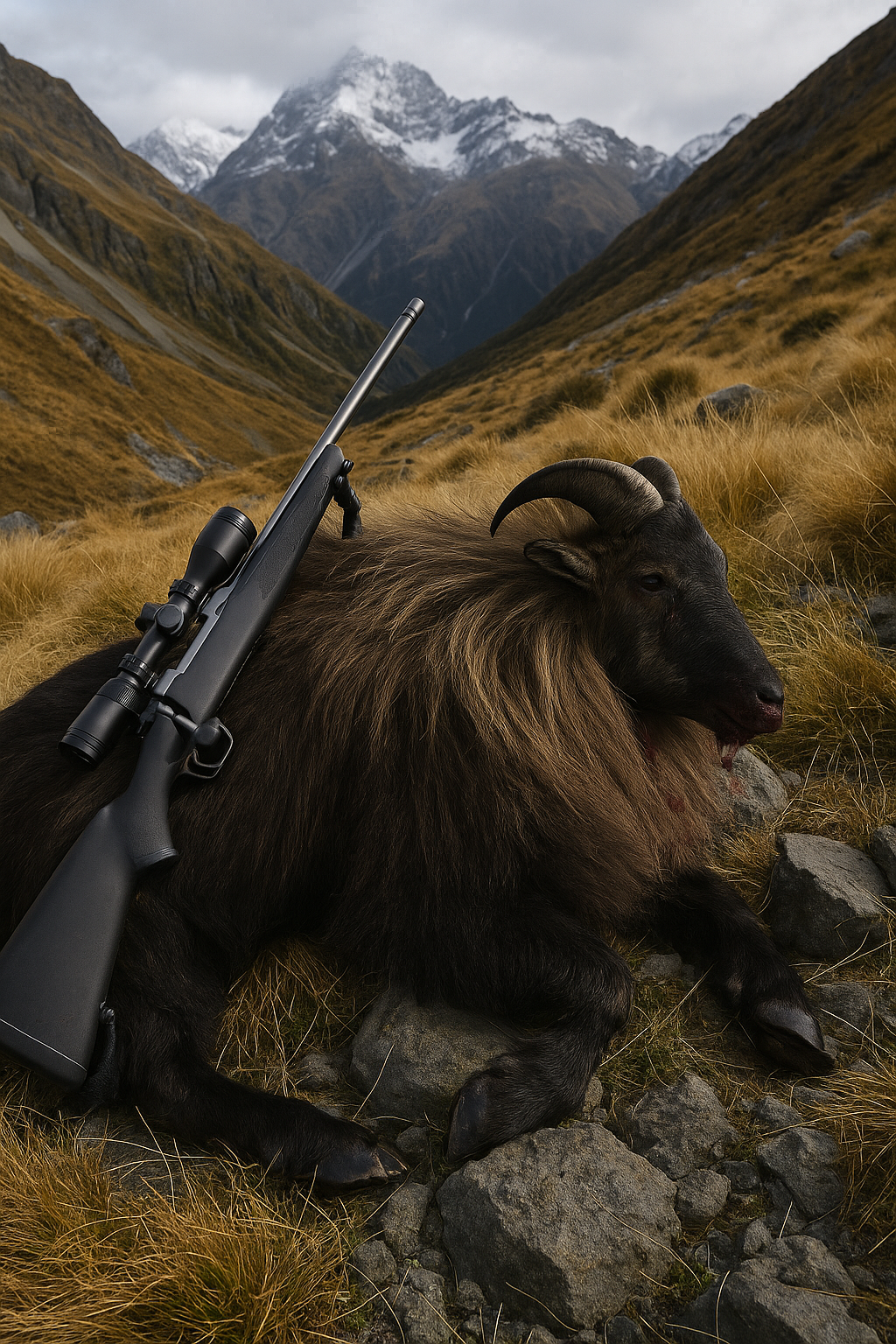
    A Trophy Hunted Tahr
    Photo: Image generated by ChatGPT (DALL-e) by OpenAI

    The Department of Conservation of New Zealand (DOC) has been working on Himalayan Tahr population control since 1993 under the Himalayan Tahr Control Plan (DOC, 1993: HTCP) which allows limited population of around 10,000 tahrs within the seven defined management units. However, the tahr population has grown beyond the limitation of management plan in recent years, making it difficult to control them. The HTCP also includes a defined feral range to contain their population and permits farming or holding in game estates for commercial hunting only within the designated range.

    A report from Lincoln University, conducted in 2020 by Geoff Kerr, Garry Ottmann and Fraser Cunningham studied the potential for containing tahrs in game estates outside their feral range to reduce demand on the wild tahr resource as recommended by the Game Animal Council (GAC, 2014). Three GPS tracked male tahrs were released in the High Peak Game Estate on 19th December 2018 to monitor their behavior and movement pattern inside the enclosure over a twelve-month period. While one tahr died of unknown causes, the remaining two were kept there until 24th December 2019. The study was done on the hypothesis that tahr containment within a game estate outside of their feral range would be successful.

    The trial was successful showing that Himalayan thar can be effectively contained in game estates outside their feral range. GPS data showed minimal fence interaction, and the tahrs quickly adapted to their new territory. Most boundary activity occurred during the breeding season. The study also suggested potential for larger scale commercial operations due to their herding behaviour.

    Despite extensive research and ongoing control efforts, Himalayan tahr continues to threaten New Zealand’s native biodiversity by heavily grazing on tussocks, alpine herbs, and shrubs, plants that have no evolutionary history of mammalian herbivory, thereby disrupting the natural ecological balance.

    This problem also raises a serious question of human intervention with nature. More than wondering how to manage tahr populations, I find myself asking: What are they even doing here in the first place? Himalayan tahr has become invasive in New Zealand because people introduced them here without realizing its future consequences and it has backfired us, leaving us to manage the aftermath of our own decisions.

    Witnessing the realities of a Himalayan tahr changing from a revered mountain dweller in my homeland to trophy hunted invasive species in New Zealand, has been an emotional and eye-opening experience for me. Looking at the conservation dilemma of tahrs between two different countries has challenged my perception and shown how the value of wildlife depends on the context. The Himalayan tahr’s journey, much like my own, has crossed oceans and adapted well into the new environment but the only difference is that the tahrs didn’t choose to come here. The Himalayan tahr’s story is a very powerful reminder of how human actions can disrupt the natural ecosystem. As someone who grew up admiring their beauty in the Himalayas, I hope their fate improves in the future.

    The author, Ngima Chhiri Sherpa, is a postgraduate student in the Master of Applied Science (Environmental Management) at Te Whare Wānaka o Aoraki Lincoln University. This article was written as an assessment for ECOL 608 Research Methods in Ecology.

    ​Paper Reference: Kerr, G. N. ., Ottmann, Garry., & Cunningham, Fraser. (2020). Himalayan tahr on game estates outside the tahr feral range. Centre for Land, Environment & People, Lincoln University. https://digitalnz.org/records/44715317 

  • Kiwi Hedgehogs : A Journey of Curiosity and Connection

    Kiwi Hedgehogs : A Journey of Curiosity and Connection

    Curiosity often starts with a sense of wonder and a desire to understand the world around us. If you are a parent, I hope you have noticed and observed this in your children. Their endless questions and fascination with the world are a beautiful reminder of the joy and excitement that comes with learning and discovery.

    I have four lovely daughters, among them four-year-old Arshifa Gul is a bundle of curiosity and always gives me a tough time replying to all her unexpected questions. She also loves watching animated movies, stories and travelling. Back in 2023, I took her to the Pakistan Museum of Natural History for the first time. She was shocked by seeing the animal models and skeleton structures, especially the huge dinosaurs and their roaring, Asiatic lions and their growling, and the realistic models of sharks and dolphins. At first, she was quiet, observing closely, making sure they couldn’t attack. Then, her surprising questions began. “Why is the dolphin here? Who made the dinosaur roar? How did they get so big? When did they live?”

    As a wildlife biologist, I’ve worked with animals for years, but her questions confused me! It was the first time that I struggled to explain my own field. Her curiosity pushed me to think deeper and find ways to explain complex concepts in simple terms. Our trip ended but Arshifa Gul’s questions did not. Her curiosity shifted to linking the roars and growls to the human voice of the animals she heard in the animated movies


    AI-generated image (Grok) of Arshifa Gul standing in awe before a towering dinosaur skeleton in a museum, her eyes wide with wonder, surrounded by animal models like lions and dolphins.

    The next morning at breakfast, Arshifa Gul excitedly shared her thoughts about the characters from her favourite animated movie, “Allahyar and the Legend of Markhor”, set in Pakistan. She talked about the boy Allahyar and his animal friends, then asked where these animals lived, how big they were in real life, what their calls sounded like, and if we could visit them. I said yes we could, but explained that Khunjerab National Park, home to the markhor and snow leopard, was seven hours away.


    Landscape of Khunjrab National Park, Pakistan © Nisar Ahmed

    Her curiosity turned our breakfast into an adventure planning session. I gathered information on the park’s history, species like snow leopards, ibex, and Marco Polo sheep, and conservation efforts, including a trophy hunting program initiated by IUCN and WWF. 80% of the total benefits from this hunting initiative goes to the local communities while the remaining 20% is invested in habitat protection and improvement.

    We visited the site, and she enjoyed the trip thoroughly and I answered most of her questions and her confusion cleared regarding voices and the original habitat of different species. Answering her is always tough, but it makes me see the world through her bright, wondering eyes, full of love for animals. She makes me realise how important it is to nurture this curiosity, not just in her, but in all children.

    Curiosity is a powerful force that drives us to explore, learn, and grow. Arshifa Gul’s curiosity inspired me to write about the introduction of European hedgehogs into New Zealand. The European hedgehog, also known as the West European hedgehog, is a charming little creature native to Europe.

    Hedgehogs can live in a variety of terrestrial habitats and are mostly active at night. They have a slow, hesitant way of walking and often stop to sniff the air. Unlike other hedgehog species that 

    Hedgehogs have fascinated people for centuries. Their spiky charm has made them popular in history, from ancient amulets to modern pop culture icons, like Sonic the Hedgehog. Did you know that New Zealand is the only country outside Europe where European hedgehogs have successfully been established in the wild? This fascinating story of how these spiky little creatures made their way to both the North and South Islands of New Zealand is filled with twists and turns.

    Back in the 1869, acclimatisation societies in New Zealand introduced European hedgehogs to control pests. For a long time, it was believed that hedgehogs were first introduced to the South Island and later spread to the North Island. However, a molecular study in 2013 challenged this view and suggested that hedgehogs were independently introduced to both the islands directly from Europe. This means that the North Island had its own separate introduction of hedgehogs, rather than receiving them from the South Island.

    To uncover the truth, researchers from various universities, including Lincoln University, turned to historical records, especially old newspaper articles. They discovered that there were at least four independent shipments of hedgehogs into the North Island before 1900 (which were not documented in the first publication back in 1975). These findings confirmed that the North Island’s hedgehog population did not originate from the South Island. This study highlights the importance of combining observational data, molecular studies, and historical records to understand the introduction pathways of species.


    Hedgehog searching for food © Author

    The European hedgehog population thrived well in NZ, too well, as it has now become problematic for native wildlife. For example, they prey on ground-nesting birds and compete with native species for food. Leading conservationists have classified them as a pest, and the Department of Conservation New Zealand has launched a campaign to protect native species from hedgehogs.


    Arshifa Gul’s questions and the hedgehog share a common thread. Curiosity drives us to explore and learn. Whether it’s a child marvelling at a museum exhibit or scientists unravelling ecological puzzles, curiosity bridges wonder and action. It reminds us that conservation isn’t just about saving species—it’s about nurturing the spark that makes us care. As parents, educators, or stewards of the planet, or a teacher we can foster curiosity by encouraging, sharing stories, and exploring nature together by using interactive technologies.

    The author, Muhammad Waseem, is a postgraduate student in the Master of Science at Te Whare Wānaka o Aoraki Lincoln University. This article was written as an assessment for ECOL 608 Research Methods in Ecology.

    Reference: Pipek, P., Pysek, P., Bacher, S., Cerna Bolfikova, B., & Hulme, P. E. (2020). Independent introductions of hedgehogs to the North and South Island of New Zealand. New Zealand Journal of Ecology, 44(1), 3396. https://doi.org/10.20417/nzjecol.44.7

  • Tips for wildlife paparazzi

    Tips for wildlife paparazzi

    How camera angles reveal the secret lives of elusive predators

    On my first visit to New Zealand, I was amused to see fellow backpackers flipping through glossy magazines filled with paparazzi shots of A-listers. I remember thinking, what a strange profession, hiding in the bushes to snap a shot of someone and follow their day-to-day routes.

    Fast forward a couple of decades and here I am, fascinated by research articles on the optimal camera angle to capture elusive creatures. Turns out, the world of conservation has its own paparazzi. Moreover, I feel everyone should know their tricks!

    When it comes to elusive predators, capturing them in their tracks is more than a curiosity, it’s a conservation tool. Camera traps are effective in estimating animal densities, before and after control even in the most adverse habitats, like wetlands.

    CC BY-NC-SA 2.0 Image by Gábor

    The A-listers in this article are elusive foreign predators, feral cats and mustelids (stoats, ferrets and weasels), always on the move and few and far between, like true celebrities. The red carpet is the New Zealand bush – an exclusive venue lined with a crowd of endemic icons watching in fear as the foreign stars steal the spotlight. The photographers? Not screaming paparazzi, but silent, motion-triggered camera traps, stationed like field agents waiting for a predator in sight.

    But here’s the million-dollar question: Does the camera angle make or break the shot?

    Just like in Hollywood, where a low angle shot can flatter or fail, the positioning of a trail camera can dramatically influence what gets captured in the frame. Nichols et al. (2016) asked exactly that: Should camera traps aimed at cryptic predators, like feral cats and mustelids, be set up horizontally or vertically for the best results?

    The red carpet

    Conducted in the pastoral Toronui Station, Hawke’s Bay, the researchers placed 20 pairs of camera traps—each pair with one camera horizontally and the other vertically. A horizontal camera faces forward at animal eye level. A vertical camera looks downward, much like a security camera.

    To increase the chances of a sighting, the cameras were positioned at the ecotones or edges of forest fragments where possible.

    To lure the stars, they used bait: not truffles, caviar or fur coats but rabbit meat and ferret-scented bedding. The cameras were left running for two months, waiting for their moment to shine.

    Setup of horizontal and vertical cameras, Toronui Station, New Zealand, in 2014. Photo Nichols et al. 2016

    The Scoop: Horizontal lands the money shot

    When the footage was reviewed, the results were clear:

    • Horizontal cameras recorded about 1.5 times more images of the target predators than vertical ones.
    • They also captured significantly more independent encounters—meaning more unique visits, not just a burst of shots from one animal loving the spotlight.
    • Total photos (including non-target species) were also higher with horizontal setups.
    • False triggers (empty shots) were similar between both orientations.

    In short, if you’re trying to catch a predator in the act, horizontal cameras are your go-to paparazzi.

    But vertical isn’t out of the picture

    Interestingly, vertical cameras had an unexpected benefit: image clarity. Because they face straight down, they often captured finer detail—like coat patterns on cats. This could be important when trying to identify individual animals, for tracking their movements or population size estimates based on mark–recapture.

    CC BY-NC 2.0 Image by Kari Nousiainen

    However, there’s a catch. Cats are big. The narrow vertical field of view meant that 63% of cat photos taken from above only caught part of the animal.

    Tips for conservation’s paparazzi

    This study is more than a technological tweak. It is a lesson in field strategy. For conservationists using camera traps to monitor invasive species, the setup matters:

    • Horizontal orientation is best for maximizing detection rates.
    • Vertical orientation may still be helpful for species or individual identification, if the field of view can be adjusted.

    And crucially, the orientation didn’t affect the rate of false triggers, so there’s no trade-off there.

    Final frame

    Whether you’re tailing Taylor Swift in LA or tracking a mustelid in the New Zealand bush, one thing is clear:

    It’s all about the angle.

    For conservation science, that angle could mean the difference between missing a species or getting the data needed to protect native wildlife. For our most wanted A-listers the red carpet might be made of forest floor, but the flash of a camera still tells a powerful story.

    This article was prepared by Postgraduate Diploma in Applied Science student Ine Schils as part of the ECOL608 Research Methods in Ecology course in the Department of Pest-Management and Conservation.

    Reference

    Nichols, M., Glen, A. S., Garvey, P., & Ross, J. (2017). A comparison of horizontal versus vertical camera placement to detect feral cats and mustelids. New Zealand Journal of Ecology, 41(1), 145–150.

  • Under Cover of Darkness: Moon Brightness and Mammalian Predator Activity

    Under Cover of Darkness: Moon Brightness and Mammalian Predator Activity

    Written by Kate McDowell

    Last June, I found myself several hours into what would end up being a sixteen-hour run, in the middle of the night, on the coldest weekend of the year. As the ground visibly started to freeze in front of me, I realised that my head torch was struggling in the negative temperatures. Its battery couldn’t cope with the cold exposure. But you know what, I had a trick up my sleeve; it was a full moon.

    I was guided by the incredible illumination of the moon on a clear winter night, and by how few animals I saw apart from the sheep and cattle of Lake Taylor station. As I left the station and entered Lake Sumner Forest Park, my headtorch flickered in the biting sub-zero temps of mid-winter New Zealand near the Southern Alps. I had barely heard a sound since nightfall, apart from my own crunching footfalls on freshly frozen tussock.

    There were no pest animals dancing in the moonlight that chilly midwinter run, and I found myself wondering if our mammalian pests changed their activity based on how bright that big ball of cheese in the sky was. In 2016, Shannon Gilmore did a neat study on the effects of moon phase and illumination on activity of five introduced NZ mammals (cats, rats, mustelids, possums, hedgehogs) for her thesis at Lincoln University. 

    A trail runner foolishly runs 16 hours over an alpine pass, whilst being watched by introduced predators who may or may not be contemplating consuming the body of said runner. [Source: Chat GPT AI, Kate McDowell]

    I seemed to be one of the few introduced mammals blatantly puffing my way up the North Branch Hurunui riverbed. I have this strong memory of looking down and watching myself be followed by my own moon shadow. It made me question – how many eyes were following me in the dark canopy of the nearby beech forest?

    Gilmore found that increased vegetation cover and rain were contributing factors to pest detection. Sites with dense canopies had higher detection rates, potentially because they provide better shelter and reduced exposure from threats like light. While rainfall was not a statistically significant factor, pest activity generally decreased with rainfall. Gilmore suggested this may be because it is cold or the rain might be disrupting the animal’s sense of smell.

    So maybe my paranoia about forest animals staring me down wasn’t so crazy after all. It was certainly interesting to think back on the run and how many introduced predators there could have been in the nearby beech forests. The conservation implications for understanding where predators are and why they might change their activities also gave me some things to mull over the next day.

    Detecting these introduced predators is essential for informing control efforts; we need to know where predators are and how many of them are in a given area. Environmental conditions may be obscuring the predator’s true activity levels. Gilmore added to previous studies of moon phase effects on mammals by accounting for interaction effects of weather and vegetation. Whether these effects were caused by the lower light levels or by something else not explored in this study is yet to be answered.

    Many studies have looked at the role of moon phase and animal activity, but in 2016 few studies had investigated the additional factor of the moon’s brightness. Gilmore was the first to measure hourly light levels through the night and looked at how it affected the activity level of the nocturnal pest species. A highly sensitive light meter (Sky Quality Meter, or SQM) to measure illumination levels between moon phases in the Blue Mountains (Otago), Banks Peninsula (Canterbury) and Hawkes Bay.

    Gilmore found that while moon phase could not explain pest activity, moon illumination did. As the dark side of the moon grew larger, pests seemed to thrive under cover of darkness and became far more active. When the moon hits a mammal’s eyes, Gilmore theorised that they may be spurred to hide. Most introduced mammals in NZ are prey in their native countries and it is hard to say whether a single century of living without their native predators has changed their behaviour.

    SQM successfully managed to detect differences in illumination between moon phases and under different canopy cover levels. Canopy cover was found to have a larger impact on illumination than moon phase. SQM findings on Banks Peninsula suggested that on darker nights a pest is more likely to be active.

    Building on earlier research, Farnworth, Innes and Waas (2016) released a paper looking at the effect of light on mouse foraging behaviour. This study agreed with Gilmore’s results, finding that mice displayed strong preferences for foraging in unlit areas. Farnworth et al. further built on Gilmore’s conclusions by contemplating that artificial light could provide protection from predators in ecologically sensitive areas – for instance, in areas where predator proof fences have been breached by a tree limb dropping on it.

    Predator proof fence study by ZIP scientists showing a rat trying to escape. [Source: ZIP (Zero Invasive Predators Ltd), used with permission]

    The innovative organisation Zero Invasive Predators (ZIP) completed an interesting follow up study in 2018, focusing on whether or not light could deter rats from entering an area. They found that although light did not limit rats passing through, they were less likely to linger in lit zones. Their conclusion: illumination could be used in a layered deterrent system, where light is used to slow down pests.

    Conservation in NZ is generally hamstrung by lack of funding. Efficiency is key to making the most of the meagre dollars on offer, so studies like Gilmore’s can help optimise monitoring and control operations. So when that bad moon comes a-rising, you can bet that pest control and monitoring will be less effective, and it would be more useful to focus efforts during darker nights.

    I definitely felt exposed running through a riverbed under a full moon, so I can appreciate how light can serve as a useful predator deterrent. It’s another tool we should add to the belt as we work toward a predator-free country.

    We’ve reached the end of our illuminating lunar article, but the real question now is how many song references did you pick up on? 😉

    This article was prepared by Master of Science student Kate Morrison as part of the ECOL608 Research Methods in Ecology course.

    Paper: Gilmore, S. (2016). The influence of illumination and moon phase on activity levels of nocturnal mammalian pests in New Zealand (Master’s thesis, Lincoln University).

  • Detecting red panda, dancing with Kate Bush

    Detecting red panda, dancing with Kate Bush

    I’ve been a fan of Kate Bush since she released ‘Wuthering Heights’ when I was 10 years old. She famously does not tour or give shows and so I have never had the chance to see her live. A couple of weeks ago a tribute act ‘An evening without Kate Bush’ came through Christchurch. Great! I booked tickets and dragged Julie along.

    My wife is a long suffering SOKF (spouse of Kate fan), but she was happy to indulge me. Little did she know what was in store. It was a great show. Sarah-Louise Young danced and sang very well and was quite funny. Kate Bush always walks a fine line between quirky and bonkers. The Piano audience had a good time.

    The show was quite interactive. At one point Sarah-Louise asked what our favourite Kate song was. I stuck up my hand and she came over. In addition to the song (Get out of my house), she was interested in whether Julie was a fan (not particularly) and how long we had been married (30 years).

    As she turned to go, Julie added “Oh and Adrian proposed to me in a Kate Bush way.” Well that was that. Julie was then explaining The Dreaming album cover, the ring, the kiss and so on. Much hilarity ensued.

    The show continued on. We got to ‘Don’t give up‘, the song sung by Peter Gabriel with Kate. Sarah-Louise wanted a couple to come onstage and of course that was us. We had to slow dance for the song (much as happens in the video). That’s 6.5 minutes, or an eternity on the stage.

    So, there we were, literally, in the spot light, in front of 325 people. I didn’t find it too bad. I focused in the dancing and not tripping over. Julie was very uncomfortable and most definitely not herself. We reflected later that I am more used to ‘performing’ as a lecturer in front of crowds. Julie is a teacher but only has much smaller groups to perform to.

    I think that we did OK. It turned out that there were a couple of people in the audience who new us and messaged that we did some good dancing (probably they were just happy that they hadn’t been picked to do it).

    As we quietly swayed and turned on stage I did reflect on how the knowledge of being observed really does affect the behaviour of individuals. This links through to my research where I am often making observations of individual birds and mammals.

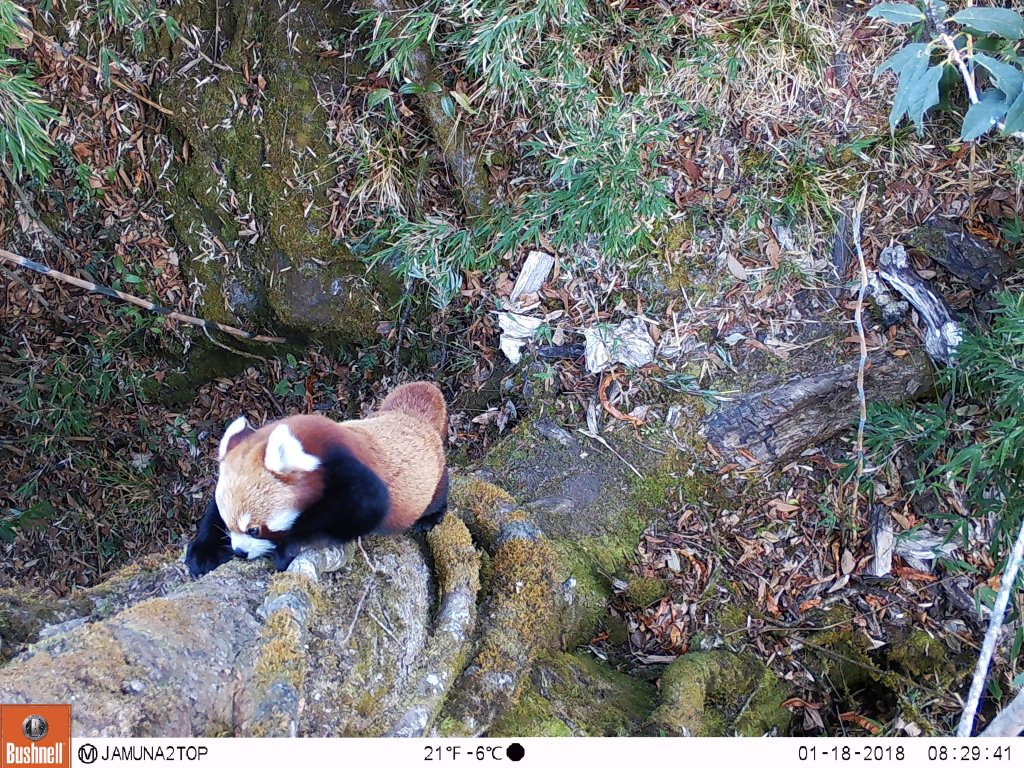
    A gaggle of red panda! Image from Sonam Tashi Lama

    Recently, we have been using trail cameras to get a better understanding of red panda, and other mammals, in their habitat of eastern Nepal. In these areas red panda are relatively cryptic and declining. Grids of cameras offer a way of observing red panda over long periods of time without humans needing to be nearby.

    Cameras can tell us about the distribution of species over daily and seasonal cycles (Collecting mammals: camera traps in eastern Nepal). We also observed that panda do notice the cameras and that this can lead to subtle changes in their behaviour (I see you: Sauron and the panda).

    In this work with Sonam Tashi Lama (Red Panda Network), and published in the Wildlife Society Bulletin, we set up 19 sites in the alpine forests of eastern Nepal. At each site we had two cameras, one set up in a typical manner at ground level and the other in the tree canopy 5 m above. The cameras collected data over several months.

    We found that red panda were active over the whole day (gotta eat a lot of bamboo and other vegetation!) but activity peaked around dawn and again at midday.

    Arboreal cameras took four times as many photos as ground cameras. These were mostly of leaves blowing in the wind but they were eight times more effective at capturing red panda images. These behaviours included action activities (e.g. tree climbing), clear images of faces, and motion‐lite activities, like sleeping and grooming.

    Image from Sonam Tashi Lama

    So, now we know that cameras can affect the behaviour of red panda being observed and that the placement of the cameras can affect how successful our observations are. Is this a problem? Perhaps, but it is better to know there is a problem when we conduct future research. Also, the information that we are gathering, even if there is some biases, is still way better than not knowing anything.

    We will take the net gain in what we now know about red panda and that can help us with managing them and their habitat.

    It was nice to be reminded about how it feels to be observed. Whether it is 300 Kate Bush fans or a trail camera, there is a physical reaction to knowing that something is out there and perhaps it is watching you. It’s something to keep in mind when designing these studies.

    Oh and don’t put your hand up when you are in the audience of these kinds of interactive shows!

    Adrian Paterson is in the Department of Pest-management and Conservation at Lincoln University. Now that he thinks about it, he has spent a lot of his research prying into the private lives of animals.

  • How to help lizards in your back yard/paddock

    How to help lizards in your back yard/paddock

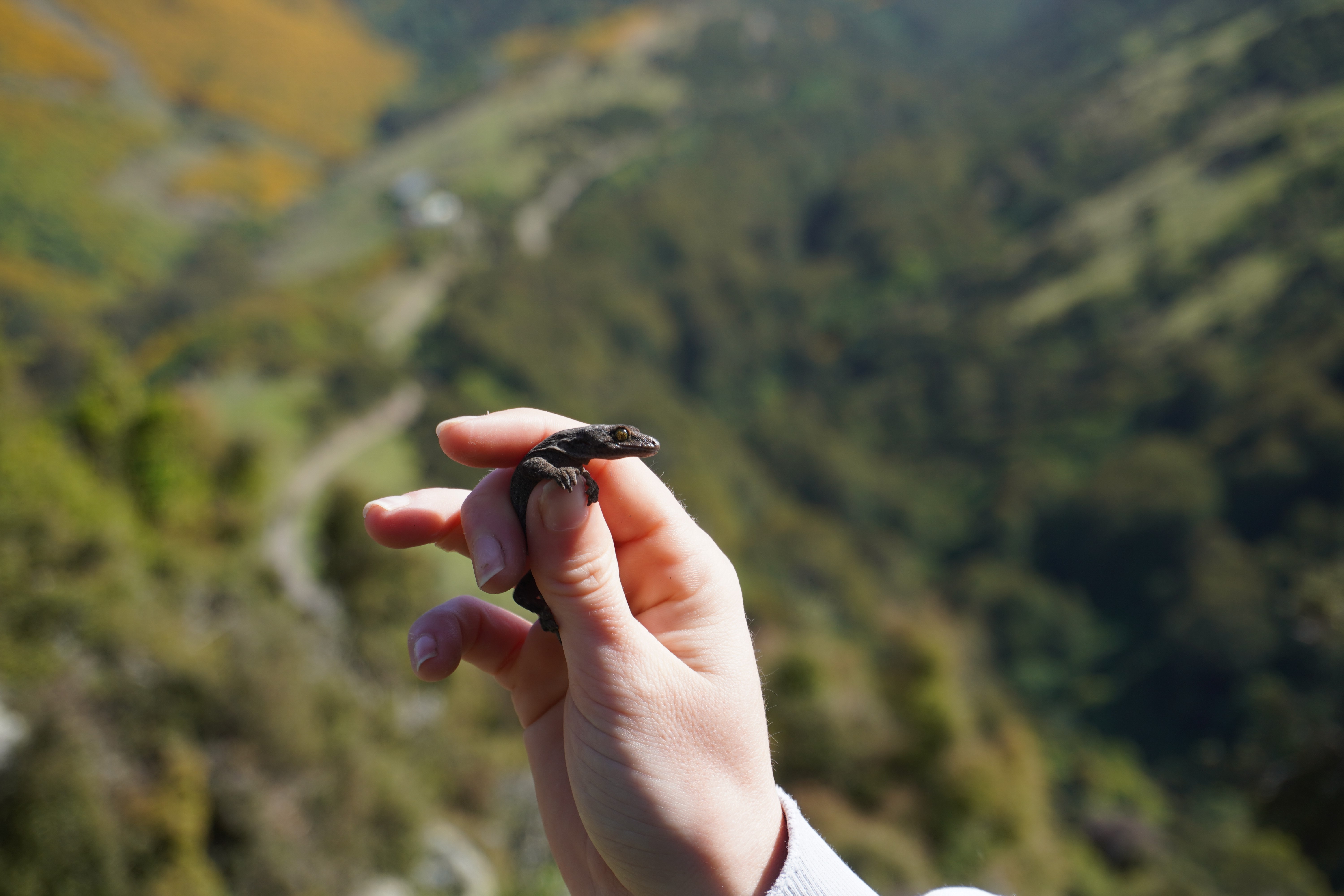
    Has your cat ever brought in a nice present only for you to find it’s a lizard? Have you seen a lizard scutling away on a nice sunny summer’s day while walking around the garden? Well, you may have lizards residing in your back yard!

    In New Zealand we have over 125 different lizard species, 76 are skinks and 48 are geckos, all but one one skink species is native. Of these 126 species, 49 (~36%) are Threatened and a further 67 (~50%) are At Risk (Hitchmough et al., 2021). Therefore 86% of our lizard species are threatened by various factors, such as predation, urbanisation, habitat fragmentation, and agricultural intensification.

    We all need to play our part to ensure that lizards do not continue to decline.

    There are simple tools we can use that can help the lizards in our back yard. Skinks love to hide under rocks and in small gaps when startled. Geckos love to live in tight crevices, like spaces in wood, stone and even in various human-made structures (e.g. power boxes and garages).

    We can create structures called Artificial Retreats (ARs) that mimic these natural retreats that lizards love so much. Artificial Retreats are a tool that we can easily implement that can support vulnerable lizards.

    Currently, artificial retreats have been designed for scientific monitoring and are commonly constructed from roof-cladding Onduline sheets, which isn’t an easily accessible or cheap material. My thesis investigated two other alternative designs that are constructed in a manner that is easily accessible to landowners and public members keen to do their part in lizard conservation.

    One AR type was constructed from a stack of three bricks (Figure 1) that have a 10 mm wooden dowel stuck between each layer so that the lizards can easily move between them.

    The second was constructed from two plywood sheets (Figure 2), bolted together, with the 10mm dowel in between the sheets.

    The third was the common Onduline design (Figure 3). I tested these ARs across Canterbury farms located at Cleardale Station in the Rakaia Gorge, as well as Flea Bay and Goughs Bay on Banks Peninsula.

    I captured 26 lizards to test in the three AR designs and there was no preference among the three. However, the geckos at Cleardale Station preferred some designs more than the Flea Bay lizards. At Flea Bay, the lizards were more commonly found in the brick (46%  of all geckos) whereas at Cleardale they didn’t use the brick ARs. At Cleardale Station, a equal number (17%) were found in both Onduline and wooden ARs. At Flea Bay, 17% lizards were captured and only 4% of lizards were found in the Onduline design at Flea Bay.

    Depending on the location of the property and the species of lizards present, there will be differences in which AR they prefer. Having an option of several different AR designs is preferable. 

    During the field trials I found that the ARs did not withstand heavy stock (cattle)interactions and were frequently interfered with. However, I did not have any problems with ARs placed in sheep paddocks.

    Landholders can implement any or all three of the designs into their property and all have a chance of lizard occupation. A variety of designs means that landholders can choose which AR design to use based on what available materials they have.

    Having a choice of AR designs make it accessible to whomever wants to conserve lizard species on their properties without having to spend large amounts of money or spending valuable time having to source the materials to construct the AR.

    Key design components and considerations when planning and building lizard ARs.

    • The ARs need to have at least one gap that has a 10mm gap.
    • Placed in an area where lizards or their poo have been seen.
    • Recommended not to be placed in a paddock in cattle.

    Acknowledgements: A massive thank you to the financial support for this project from The Brian Mason Trust and the North Canterbury Forest and Bird Trust.

    Reference

    Hitchmough, R., Barr, B., Knox, C., Lettink, M., Monks, J., Patterson, G., Reardon, J., van Winkel, D., Rolfe, J., & Michel, P. (2021). Conservation status of New Zealand reptiles, 2021.  

    Written by Sam Fitzgerald, a MSc student in the Department of Pest-management and Conservation at Lincoln University.

  • Collecting mammals: camera traps in eastern Nepal

    Collecting mammals: camera traps in eastern Nepal

    Collecting things seems to have deep roots in the human brain. There are few things more satisfying than finding something unexpected that you really need for your collection. The shock (woah!), the excitement (at last!), the surprise (how did this get here?), the urgency (I better grab this before someone else does), even though anyone standing close to you probably won’t care about this!

    My youngest son had a few years of thrifting where he would scour second-hand stores for ‘cool clothes’ that he could buy and then sell on for a reasonable profit to people who wanted that retro look but didn’t want to spend time searching. Edgar trained me up to spot certain brands, labels, styles and so on. For about five or six years I spent a lot of time browsing ‘dead peoples’ clothes’ as my middle son Arthur called them. I still remember a great trip with Edgar as I took him to a university semester in Dunedin. We struck gold in Waimate (a little off the beaten track) and found 30+ items!

    A small selection of Tanith Lee.Active from the 1970s till the 2010s – prolific and great for collecting! The Winter Players and Companions on the Road are two of my favourite (short) books ever. Image from Adrian.

    What do I collect? I guess there is a distinction between hobbies and collecting? I have a lot of small plastic figures that I love painting but I am not searching for some elusive or rare halfling commando. I buy a lot of boardgames and there are some older games that I might keep an eye out for, but I would count these as hobbies not collecting.

    Books, I have a lot of books…. Some of that is hobby – reading the latest books by Tad Williams or Lindsey Davis, for example. But I definitely collect some authors (Tanith Lee, Robert Howard) and spend time in second hand book shops with a list…. I still remember the day that I found the original D&D colouring book in absolutely mint, uncoloured condition! So rare! So elusive! All mine! (Sadly it has somehow gone missing from my collection in recent years!).

    Collected on camera – a red panda. Image by Sonam Lama

    As a zoologist interested in natural history, you are also dealing with collecting. Typically you want to collect the types of species found in an area. This tells us a lot about species diversity and richness, conservation, ecological interactions, evolutionary adaptations and so much more! This collection could be physical (like the hundreds of thousands of insect specimens found in our LU Entomology Research Museum) or it could be observational, where spotting an individual from a species can be logged (like with iNaturalist). But it certainly scratches the collecting itch.

    Observations can be direct (e.g. I saw that animal) or indirect (e.g. I found a footprint of that animal). Either way these are data that tell us that a species is found in the area. We are increasingly relying on indirect methods to collect observations – in fact much of our wildlife research here in Pest-management and Conservation is around developing better ways to monitor our mammal pests.

    Sonam Lama was a Master of International Nature Conservation student at Lincoln University. He had spent a lot of time working for the Red Panda Network back in Nepal. As part of his research, with Adrian Paterson and James Ross, he was interested in being better able to monitor red panda in the wild (but that will be another story!). Sonam was also keen to find what other species share the red panda habitat in far eastern Nepal. Were there many predators? Were there many competitors?

    Sonam in the forest of eastern Nepal. Image by Sonam Lama

    Sonam worked within the high altitude (between 2-4000 m abs) forests of Ilam, Panchthar and Taplejung, which provide a corridor between the rest of Nepal and India. Over this large area Sonam identified sites where he could put his 60 cameras. Typically the cameras were attached to the base of a tree. Observations from these camera traps were made through winter and spring. Results have now been published in the European Journal of Wildlife Research.

    So what did Sonam collect? Over 3000 camera trap days about 90000 images were recorded. Two thirds were false triggers (vegetation moving in the wind, sudden changes in temperature with sunrise and sunset) – such is the bane of the camera approach. About 11000 were of local people moving through the forest. Amongst all of this were over 5000 images of mammals, including 23 different species, and 3600 images of birds, including 37 species.

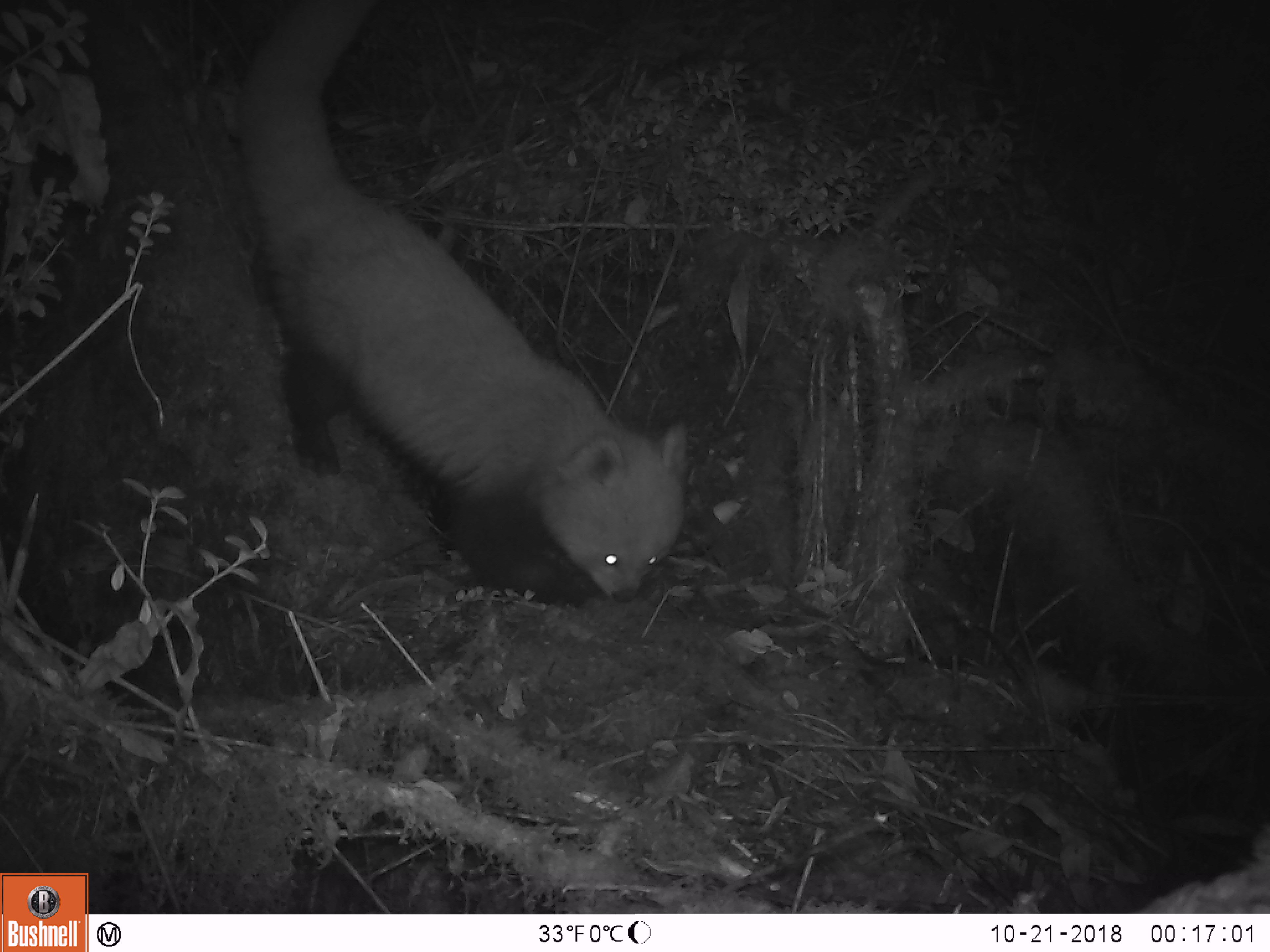
    Seventeen of these mammals were medium to large and could be identified. Red panda were observed. The commonly seen species were a deer – northern red muntjac, wild boar and leopard cats. The rarest were other cats: marbled cat (first record in Nepal), Asiatic golden cat and common leopard. The spotted lingsang was also collected for the first time, as was the first melanic (black) leopard.

    Collecting images and video also allows us to look at behaviour. We can get a sense of when species are active. We can see which species move around in groups. Wild boar foraged for tubers in front of the camera, red panda marked their territory, two porcupines mated! Red panda and macaques were active during the day, red foxes and porcupines were nocturnal.

    Collected on camera, a melanic form of leopard. A first for the region. Image by Sonam Lama.

    All of these collected images and videos provide little snapshots of natural history for these species, many of which are difficult to find any other way. Our understanding of potential threats for red panda has also increased. They definitely share their habitat with several potential predator species (and we found a few that were not even known from Nepal). Perhaps more importantly we were able to show that people are common in these habitats and that they are often accompanied by dogs. Good to know from a conservation point of view!

    Collecting images of different species using trail cameras is an increasingly common tool around the globe. It is becoming an essential tool for monitoring species. It doesn’t hurt that there is that thrill of the collector when you find an image of something surprising in amongst all of those misfires.

    This article was written by Adrian Paterson (Pest-management and Conservation at Lincoln University). Yes he is a collector ( I guess you could argue that he collects EcoLincNZ articles!).

  • Pesty plastics: Removing a problem from wildlife management

    Pesty plastics: Removing a problem from wildlife management

    We often put up with bad situations because they stop something worse happening. This can be as big as having nuclear weapons to stop major wars occurring. Paying taxes is a burden but it keeps a society healthy and connected. Not eating so much chocolate seems wrong but will give you better long-term health.

    And then we have plastic. Plastic must rank as one of the most successful of human inventions. It can be used in myriads of applications, keeps foods hygienic for longer, and allows more people to have the luxuries of the modern world. Plastic also causes incredible waste and we are still learning about the ongoing and long-lasting impacts that occur from the breakdown of plastics into smaller and smaller molecules.

    One of the biggest shifts in day to day life over the last decade or so is the movement away from plastic where possible. Many countries have banned (or are banning) single use plastics. I would doubt that there is anyone unaware of plastics as an issue for our sustainable future.

    Plastic figures from Cthulhu: Death May Die! A great game with great plastic figures (but some guilt comes with it!). Image from Adrian Paterson.

    One of my hobbies is in collecting and playing board games. Historically there has been a lot of plastic in games. Lately, there has been a real effort by gaming companies to make as much as possible from cardboard and wood and to remove stuff like shrink-wrap. (Although I do love me some great detailed plastic miniatures some of the time. I try to add use by painting them. Unfortunately, there is still nothing quite as good for sculpting as plastic. Hopefully that will change (see this approach using mostly wood shavings as a building matrix called re-wood).)

    As we have mentioned many times on EcoLincNZ, we do a lot of research on vertebrate pest management, especially in monitoring and detecting mammals, like stoats, deer, possums, hedgehogs (even elephants and leopards). Controlling these pests is vital for conserving New Zealand’s endemic biodiversity. We are very good at doing this and improving all of the time. Unfortunately, we use a lot of plastic.

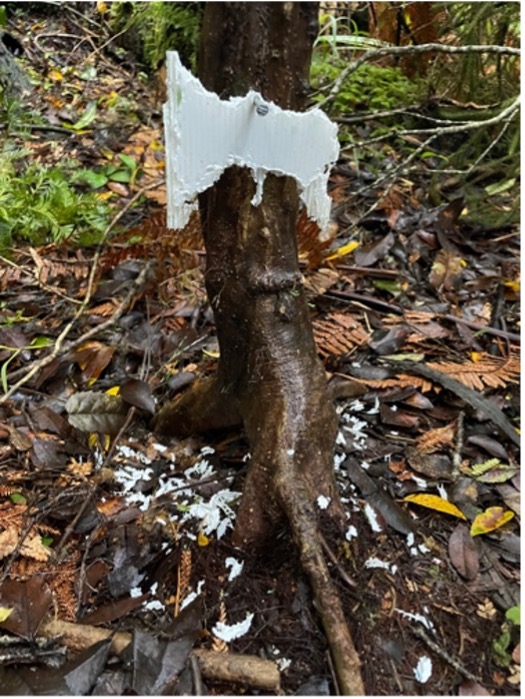
    Our tracking tunnels, chew cards and wax tags all have significant plastic components. Some of these are single use, some can be used a few times, but there are always some that get left in the environment. Also, many of the places that we are interested in monitoring are, by definition, in areas that have low human impacts and very little exposure to plastic. And here we are bringing the plastic there.

    Tracking tunnels are made of plastic. Typically they can be used multiple times but many are left in the monitoring areas. Image from Adrian Paterson.

    Now, you could argue that a few negatives of using a relatively small amount of plastic is far outweighed by the good that using these devices does. And you would be correct. But what if we could have our cake and eat it too?

    Katie Pitt is a PhD student at Lincoln University. She and her supervisors, James Ross and Adrian Paterson, have just published a paper in New Zealand Journal of Zoology where they question the use of plastic in wildlife management and ask whether we can do better.

    Katie looked at how much plastic is munched up by species, like rats and mice, when they interact with chew cards placed in various habitats. These bits of plastic remain in the rats and then the environment even if the cards are retrieved. The plastic fragments are also much reduced in size by the nibbling and can move around much easier, through wind, rain and rodent stomachs. The removed chew card will also end up in landfills.

    Katie found that chew cards in Canterbury and Taranaki typically left 15% of their volume behind in the environment as nibbled bits. Given the scale of monitoring throughout New Zealand this can quickly add up to a lot of plastic in areas that typically have no plastics.

    A well nibbled chew-card. All that missing plastic is now on the forest floor or in the faeces of rodents. Image from Katie Pitt.

    There may be an alternative. Katie tested some new chew cards made from wood pulp, and so fully biodegradable. Of course we don’t want to use a product that is inferior to what we already use, especially for something as important as protecting our biodiversity. Katie tested the use of wood pulp chew cards alongside plastic models. She consistently found that they performed just as well in a range of conditions (including with a lot of rain!). Katie also found that prices per chew card were similar with scope for the wood pulp cards to eventually become cheaper.

    Is this a problem that people want to solve? Katie asked individuals from 30 organisations that work in pest monitoring and found that 97% were keen to move away from single-use plastics, as long as there was no major reduction in functionality and cost.

    So we have a problem, people want to solve this problem, we have an alternative, and this alternative seems to work as well as what we already have. Eat that cake and have it as well!

    There is still a bit of work to do to scale this up to the levels that we need if this is to replace the status quo. Katie is also looking at how we would replace tracking tunnels. But the future is looking bright. And plastic-free.

    Adrian Paterson is a lecturer in the Department of Pest-management and Conservation at Lincoln University. As a Twin Peaks fan from way back, he really wanted to use “She’s dead, wrapped in plastic” in this article.

  • PAPP: A humane toxin for feral cats in New Zealand?

    Can a cute-looking animal turn into a fierce demon? Yes, when cat moves from a snoring heap on your couch to hunting birds and reptile species. Cats have been silent killers in New Zealand for decades. It is estimated that 100 million of birds are killed by cats every year in New Zealand. As the sun sets, here comes the giant, big-eyed bully— FERAL CATS.

    At night, birds and other native species seek shelter in their homes, shutting their doors, but feral cats can break the lock and drag them out of their houses, feasting on them. That sounds demonic!

    Justice may be on the horizon. A charming, dashing, handsome saviour of the birds is coming. Ladies and gentlemen, of the bird world, and reptiles as well, let me introduce to you your saviour. Para-aminopropiophenone! That’s a big name for a saviour; let’s shorten this to PAPP (say it like ”pap”).

    PAPP being developed as a new, humane poison for feral cats by Connovation NZ Ltd. Importantly, mammals are more susceptible to PAPP than birds are. PAPP kills feral cats more humanely than previous toxins, as it acts faster and is less aversive.

    Two fierce demons hunting a poor little bird (Image by- Gilbert Mercier, Flickr user)

    News of the introduction of a new toxin on the market is spreading like wildfire in the wildlife world. “But we should never celebrate too early,” an old Kea is saying, and Old Ben Kokako adds “We must be cautious“.

    To measure PAPP’s effectiveness, a two-phase trial was conducted by researchers Murphy, Shapiro, Hix, MacMorran, and Eason. The first trial was undertaken at two sites in North Canterbury. The second trial was undertaken on the central plateau in the North Island. Cats were trapped in Havahart live capture traps and were radio-collared to monitor their activities. Submarine bait stations, which are designed to target cats only, were stationed in the field. Three infrared monitoring cameras were also placed to monitor cats’ activities in the field area.

    And the hunt begins… (Image by- Pinke, Flickr user)

    The cats were first pre-fed so that they got used to the bait. Toxic baiting was then carried out by placing meat baits (minced beef and minced rabbit) containing 80 mg of PAPP at bait stations. The birds were eagerly waiting for the results of the trials. “Patience is a virtue” is an old saying in the reptile family.

    Five out of eight radio-collared cats and six other cats were poisoned found dead at the site. That was a huge success for the team, as the trial results showed the efficiency of PAPP. Another result from the North Island was just as promising. 13 cats out of sixteen radio-collared were found dead, and there were three more without the radio collar. So, a total of 27 cats from both islands were found dead. The remaining radio-collared cats appear to have left the area before the poison-baiting trial started.

    The result was great news for the bird and reptile world. Some of the birds were still suspicious about PAPP’s effectiveness. The matter was solved when the researchers showed the results of an earlier cage trial in which 18 out of 20 cats died and suggested that PAPP is an effective new tool for feral cat control in the field. During this trial, the cats who partly ate the bait also died, which shows PAPP’s overall effectiveness.

    Another question raised by an old Canterbury gecko was "what about the susceptibility of birds and reptiles to PAPP?". As in Australia, studies suggested that bandicoots (small marsupial mammals) and varanid lizards were highly susceptible to PAPP. It was a matter of great concern for both researchers and the native animal world. But it was also resolved as there was no evidence that some non-target species were also eating PAPP in the NZ trials, as the submarine bait stations used in the trials helped ensure targeted delivery.
    cute but alert… (Image by- patrickkanavagh, Flickr user)

    The researchers concluded their findings by addressing the non-target delivery of PAPP by developing efficient delivery systems, like bait stations, tunnel systems, or specific bait presentations that exploit the cats’ foraging behaviour. They also found that PAPP is the most humane way to kill feral cats among all the toxins found on the market as cats died within one to two hours. It acts fast and is less aversive.

    It was a sigh of relief for birds and reptiles because they had found a saviour. PAPP is a great solution to eradicating feral cats more efficiently. It is a true silent killer and a good alternative to sodium monofluoroacetate 1080 (another toxin used for poisoning). 1080 also affects non-target species, when delivered aerially, whereas no such effects were seen in the case of PAPP when delivered through submarine bait station for targeted delivery. So, PAPP isn’t just a funny name, it’s a glimmer of hope for New Zealand’s wildlife, and a demon-slayer!

    This article was prepared by postgraduate student Sikander Nagal as part of the ECOL 608 Research Methods in Ecology course in his Postgraduate Diploma in Applied Science degree.

    Original Article- Control and eradication of feral cats: field trials of a new toxin

    Share this:

  • Echoes of misunderstanding: Invasive species or welcome guests?

    In a new age of ‘fake news’, the exponentially growing ChatGPT, and being talked at by your climate change-denier uncle at the dinner table, how do we know who to trust? Well, the scientists obviously. But what happens when the scientists get it wrong?

    An article released in January of 2024 “Systematic and persistent bias against introduced species” by Patricio Pereyra and colleagues, ruthlessly called out conservation biologists for demonstrating a bias against introduced species. Researchers were accused of shedding a negative light on introduced species no matter their taxonomy, habitat, time of introduction, and regardless of their attributed harm.

    Photo: Amelia Geary / Design: Archi Banal

    Pereyra speculated that the invasion of zebra mussels in North America had a strong impact on the establishment of the bias. Most cases of negative framing in publications were from North America.

    A month later, a counterargument article, led by Dan Simberloff and including Phil Hulme from Lincoln University, was submitted to the same journal. This response tore Pereyra’s article to shreds. For example, there is so much more published material labelling invasive species as harmful simply because most research is driven by funding to deal with harmful species.

    The “guilty until proven innocent” was seen by Pereyra as a bias, whereas Simberloff argued that it was the safest approach. Better to prevent outbreaks first rather than assume innocence and scramble to clean up the mess later.

    The validity of Pereyra’s research methods was also called into question. In their assessment of 300 publications, Pereyra and colleagues based their assessments on only the introduction of each paper, the section where no current research is reported. Pereyra stated that no non-native species have caused any type of extinction, by citing a study that only assessed their impact on native plants. This would be news to those in New Zealand dealing with the impacts of introduced mammalian predators. In addition, all of the assessments made in this article were made by two authors, with a third brought in when those two disagreed.

    Photo: Author

    Pereyra and colleagues continued to selectively use evidence that matched their hypothesis by making continual reference to the ‘tens rule’. This states that only 1% of non-native species will become pests. As more research on more diverse taxa was undertaken, this rule became a misleadingly low estimate. In fact, it is estimated that 50% of invasive vertebrates lead to harm. So while modern conservationists are able to recognise that the tens rule is outdated, the average person reading at home will not.

    This is just a tiny example of a much larger problem science is facing right now; the power of a harmful narrative in science and its implications for the general public. The science world has been struggling for a while now with issues like P-hacking (selecting data analyses that produce results aligning with their hypothesis), fraudulent scientific papers making it to publication (fabricating research that has not taken place to boost career accolades and experience in industry), and like the mentioned article, lack of rigorous scientific procedure.

    False science can turn certain areas of science into a debate to be had by those who are not fully equipped enough to have it. By now I believe just about everyone in the Western World knows about the reports that vaccines cause autism, an idea that originated from two academic physicians in the 1950s.

    Image: outtacontext

    Over 70 years later there is a massive group of people who still believe this to be true, despite countless modern scientists disproving this idea. Not only do scientists have to conduct research to further the field, they now have to spend countless years using countless resources trying to prove to the public that the beliefs they are so desperately holding on to are, in fact, not accurate.

    While the article accusing scientists of holding a bias against non-native species may not have such a wide reach as the vaccine debacle, it does have the ability to change the minds of people. It can change the environmental beliefs they hold, the way they look at conservation, and the future research they conduct, as well as aligning with their personal beliefs outside the world of science. It creates issues that would otherwise not have arisen; spreading misinformation, fostering unwarranted skepticism, and contributing to the polarisation of environmental issues.

    For example, the Pereyra paper could cause shifts in perception, such as questioning established ecological principles, potentially undermining conservation efforts aimed at preserving native biodiversity. This can have a ripple effect, influencing policy decisions, funding allocations, and public support for important conservation initiatives. While openness and debate in the scientific community is important and should be encouraged, you simply have to get your facts right.

    So again I ask, what happens when even the scientists get it wrong? Actually, it happens all the time. Trial and error are the engine of science! Scientific theories are tested to be disproven to ensure we actually have a full understanding of whatever it is we are studying.

    People at home can also look to disprove scientific theories. Pay attention to the transparency of the method and study size, credibility of sources, and citations from reputable journals and research institutions. It may not save your life, but it will save you from a lifetime of ill-informed conversation around the dinner table. You don’t want to be that relative.

    This article was prepared by Master of International Nature Conservation student Alexandra Paish as part of the ECOL608 Research Methods in Ecology course.