I’ve been a fan of Kate Bush since she released ‘Wuthering Heights’ when I was 10 years old. She famously does not tour or give shows and so I have never had the chance to see her live. A couple of weeks ago a tribute act ‘An evening without Kate Bush’ came through Christchurch. Great! I booked tickets and dragged Julie along.
My wife is a long suffering SOKF (spouse of Kate fan), but she was happy to indulge me. Little did she know what was in store. It was a great show. Sarah-Louise Young danced and sang very well and was quite funny. Kate Bush always walks a fine line between quirky and bonkers. The Piano audience had a good time.
The show was quite interactive. At one point Sarah-Louise asked what our favourite Kate song was. I stuck up my hand and she came over. In addition to the song (Get out of my house), she was interested in whether Julie was a fan (not particularly) and how long we had been married (30 years).
As she turned to go, Julie added “Oh and Adrian proposed to me in a Kate Bush way.” Well that was that. Julie was then explaining The Dreaming album cover, the ring, the kiss and so on. Much hilarity ensued.
The show continued on. We got to ‘Don’t give up‘, the song sung by Peter Gabriel with Kate. Sarah-Louise wanted a couple to come onstage and of course that was us. We had to slow dance for the song (much as happens in the video). That’s 6.5 minutes, or an eternity on the stage.
So, there we were, literally, in the spot light, in front of 325 people. I didn’t find it too bad. I focused in the dancing and not tripping over. Julie was very uncomfortable and most definitely not herself. We reflected later that I am more used to ‘performing’ as a lecturer in front of crowds. Julie is a teacher but only has much smaller groups to perform to.
I think that we did OK. It turned out that there were a couple of people in the audience who new us and messaged that we did some good dancing (probably they were just happy that they hadn’t been picked to do it).
As we quietly swayed and turned on stage I did reflect on how the knowledge of being observed really does affect the behaviour of individuals. This links through to my research where I am often making observations of individual birds and mammals.

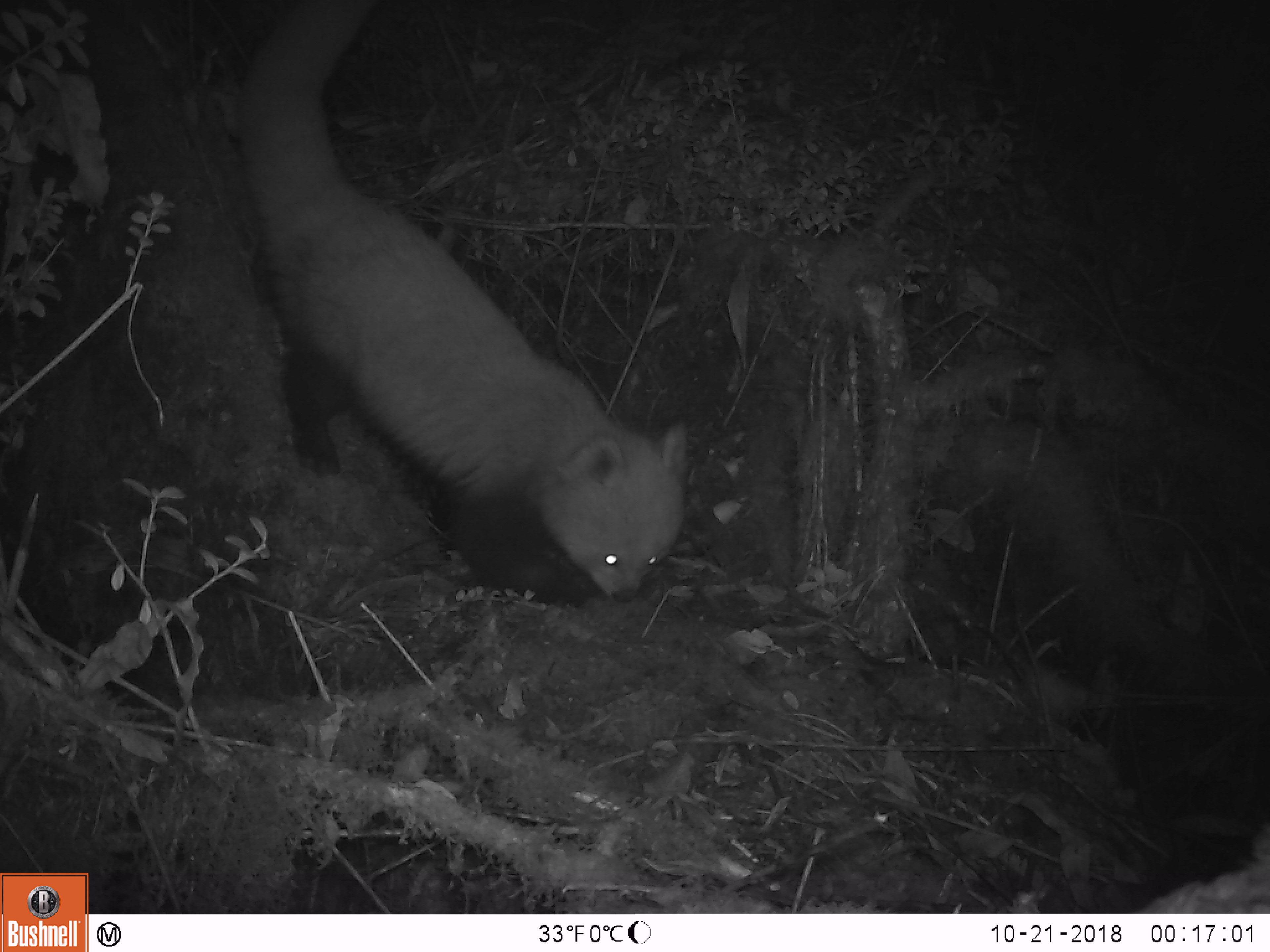
Recently, we have been using trail cameras to get a better understanding of red panda, and other mammals, in their habitat of eastern Nepal. In these areas red panda are relatively cryptic and declining. Grids of cameras offer a way of observing red panda over long periods of time without humans needing to be nearby.
Cameras can tell us about the distribution of species over daily and seasonal cycles (Collecting mammals: camera traps in eastern Nepal). We also observed that panda do notice the cameras and that this can lead to subtle changes in their behaviour (I see you: Sauron and the panda).
In this work with Sonam Tashi Lama (Red Panda Network), and published in the Wildlife Society Bulletin, we set up 19 sites in the alpine forests of eastern Nepal. At each site we had two cameras, one set up in a typical manner at ground level and the other in the tree canopy 5 m above. The cameras collected data over several months.
We found that red panda were active over the whole day (gotta eat a lot of bamboo and other vegetation!) but activity peaked around dawn and again at midday.
Arboreal cameras took four times as many photos as ground cameras. These were mostly of leaves blowing in the wind but they were eight times more effective at capturing red panda images. These behaviours included action activities (e.g. tree climbing), clear images of faces, and motion‐lite activities, like sleeping and grooming.

Image from Sonam Tashi Lama
So, now we know that cameras can affect the behaviour of red panda being observed and that the placement of the cameras can affect how successful our observations are. Is this a problem? Perhaps, but it is better to know there is a problem when we conduct future research. Also, the information that we are gathering, even if there is some biases, is still way better than not knowing anything.
We will take the net gain in what we now know about red panda and that can help us with managing them and their habitat.
It was nice to be reminded about how it feels to be observed. Whether it is 300 Kate Bush fans or a trail camera, there is a physical reaction to knowing that something is out there and perhaps it is watching you. It’s something to keep in mind when designing these studies.
Oh and don’t put your hand up when you are in the audience of these kinds of interactive shows!
Adrian Paterson is in the Department of Pest-management and Conservation at Lincoln University. Now that he thinks about it, he has spent a lot of his research prying into the private lives of animals.
Leave a Reply