We are currently living in the sixth mass extinction event. Human activities are driving a global reduction of species and a rapid loss of natural biodiversity. One of the significant contributors to this crisis is the intensification of agriculture, as farmers have resorted to chemical inputs to increase their yields. This approach is not environmentally or economically sustainable, with one million species facing extinction in the coming decade.
But hope is far from lost. In order to combat this decline, there is a growing transition to Integrated Pest Management (IPM). IPM applies a strategic approach to pest control, integrating knowledge of plant-pest interactions and a combination of biological, cultural, and chemical methods.
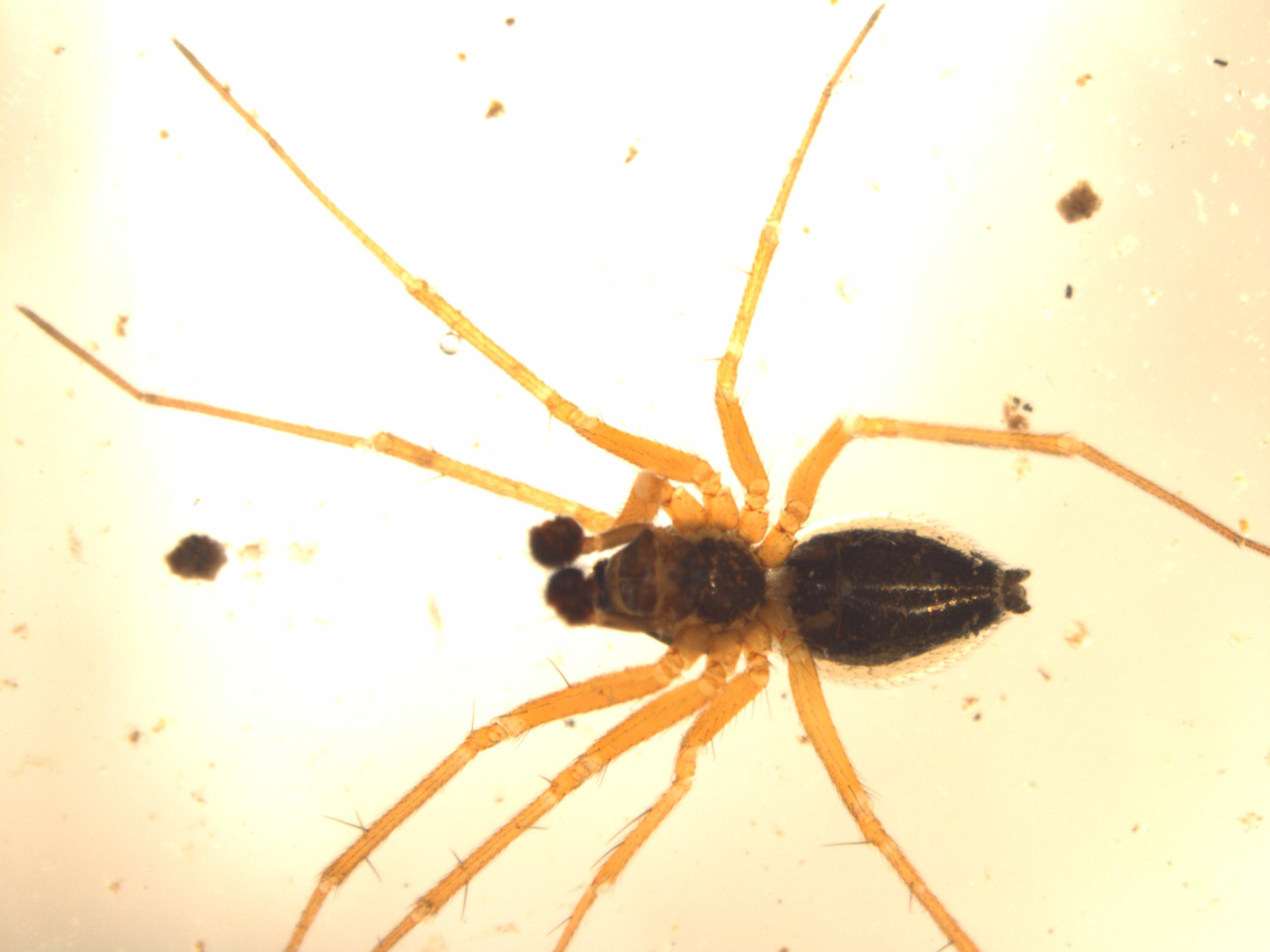
IPM enables natural ecosystems to function alongside, or within, productive food systems. Recent research suggests that spiders could play a key role in IPM, acting as a natural defence against pests in horticulture systems, reducing the need to rely on harmful chemicals.

Since the end of World War II, the area of land used for agriculture has plateaued, yet the global population has continued to increase. In order to support the growing demand for food, agricultural systems have utilised chemical inputs, such as fertilisers, pesticides, and herbicides, to increase yields. But this efficiency has come at a cost.

Pesticides are different types of poison applied in agriculture and horticulture to treat pests, diseases, and weeds. Their application is not, typically, exclusive to a target, resulting in unintended harm to other species. The use of pesticides to increase efficiency has come at the expense of declining species and biodiversity, as well as our own health as humans.
Despite the associated negative impacts, maintaining a productive agriculture and horticulture industry is critical for national food security, ensuring a reliable food supply to sustain the health and wellbeing of the population. In Aotearoa New Zealand, we are reliant on domestic production, for approximately 99% of our fresh vegetable supply, due to the perishable nature of vegetables and our distance from export markets.
Horticulture also supports our economic well-being through significant export earnings, contributing $6.85 billion for the 2025 export season.

How, then, do we ensure the success of our horticulture industry without jeopardising natural ecosystems and biodiversity?
The answer to this question may be hidden in our childhood favourites. From the treacherous Shelob residing in the mountains near Mordor (Lord of the Rings), to Aragog and his kin haunting Hogwarts from the Forbidden Forest (Harry Potter), or the talented weaver Arachne embedded in Greek mythology. What all these characters have in common is: (1) they are spiders, and (2) they are infamous villains. Spiders have a reputation for being an enemy. This perception may actually be their greatest advantage.
A team from Lincoln University and Plant and Food Research recently published a paper in the New Zealand Journal of Ecology (June 2025), reviewing the current literature available, on the use of spiders in pest management in Aotearoa New Zealand. The lead author, Nicola Sullivan, told Radio New Zealand (RNZ) that “Spiders are the most diverse and most abundant generalist predators in horticultural systems that have been seen overseas.”

International research shows that spiders, as per their reputation, are great natural predators against pests in horticulture systems. Spiders are generalist predators, preying on a range of species at different levels of the food chain and across all stages of life. Spiders are versatile, and able to live in a range of different environments. In order to capture prey spiders, deploy diverse hunting strategies, often killing prey in excess, capturing non-target species, or wounding prey.
These traits increase the effectiveness of spiders in pest management by reducing the number of pests in the ecosystem that eat and damage crops.
The world’s population of spiders, weighs 25 million tonnes, and are collectively responsible for hunting and eating between 400–800 million tonnes of insects annually. To put this into perspective, that is the equivalent of spiders eating the weight of 80–160 million elephants annually.
The spiders’large appetite shows the potential benefits that they could provide if harnessed for pest management. In addition to being great predators, they are also an important food source to other predators, helping to support a thriving ecosystem.
So, is the ancient proverb correct, is the enemy of my enemy my friend? Sadly, this question remains largely unanswered in New Zealand, with only eight studies focused on spiders in agroecosystems. None of these eight focus on the opportunities that spiders can provide for ecosystem functioning. This highlights a significant gap in our knowledge and the need for research in this critical subject area.

A few of the many benefits that spiders can provide in agroecosystems are demonstrated by the research of Hooks et al. (2003), who reported an 89% reduction in plant damage, and Zhang (1992), who successfully used spiders to control aphid populations.
We must move fast to protect the endangered species, ecosystems, and the health of consumers. Future research should first look at understanding which species are present in New Zealand horticultural systems and in what quantities.
This foundation would enable further research into how effective spiders are as a biological control agent, what factors influence their control effectiveness, whether they reduce the need for chemical inputs, and how their presence impacts other species in the ecosystem?
Today, I leave you to ponder if maybe spiders are not the villains we perceive them to be. Is it possible that the perseverance shown by the Incy Wincy Spider is exactly what the horticulture industry needs to protect our declining biodiversity?
This blog was prepared by Brehana Venimore, a Master of Bioprotection student at Lincoln University, as part of an assignment for ECOL608 Research Methods in Ecology.
Paper Reference: Sullivan, N. J., Stringer, L. D., Black, A., & Vink, C. (2025). Harnessing spider biodiversity for sustainable horticulture: A call for research and conservation in Aotearoa New Zealand. New Zealand Journal of Ecology, 49(1), 3600. https://doi.org/10.20417/nzjecol.49.3600
Leave a Reply